





Lista de verificación de mantenimiento para emulsionadores de vacío con elevación hidráulica de 50 l
- Lista de verificación de mantenimiento para emulsionadores de vacío con elevación hidráulica de 50 l
- Descripción general: Por qué es importante el mantenimiento regular de su mezclador de emulsión
- Entendiendo su emulsionador de vacío de elevación hidráulica de 50L: componentes clave en los que debe centrarse
- Lista de verificación diaria: pasos rápidos para mantener su mezclador de emulsión listo para la producción
- Lista de verificación semanal: inspecciones más detalladas
- Lista de verificación mensual: cuidados preventivos y calibración
- Lista de verificación trimestral y anual: mantenimiento en profundidad
- Programa de mantenimiento de un vistazo (tabla)
- Solución de problemas comunes con su emulsionante
- Seguridad y cumplimiento del mantenimiento
- Repuestos, herramientas y mantenimiento de registros
- Cómo el mantenimiento preserva la calidad del producto para lotes de alta viscosidad
- Ventajas de la marca: ¿por qué elegir el emulsionador de vacío con elevación hidráulica Yuanyang 50L?
- Consejos prácticos para prolongar la vida útil y reducir los costos operativos
- Preguntas frecuentes (FAQ)
- Referencias y recursos autorizados
- Contáctanos / Ver producto
Lista de verificación de mantenimiento para emulsionadores de vacío con elevación hidráulica de 50 l
Descripción general: Por qué es importante el mantenimiento regular de su mezclador de emulsión
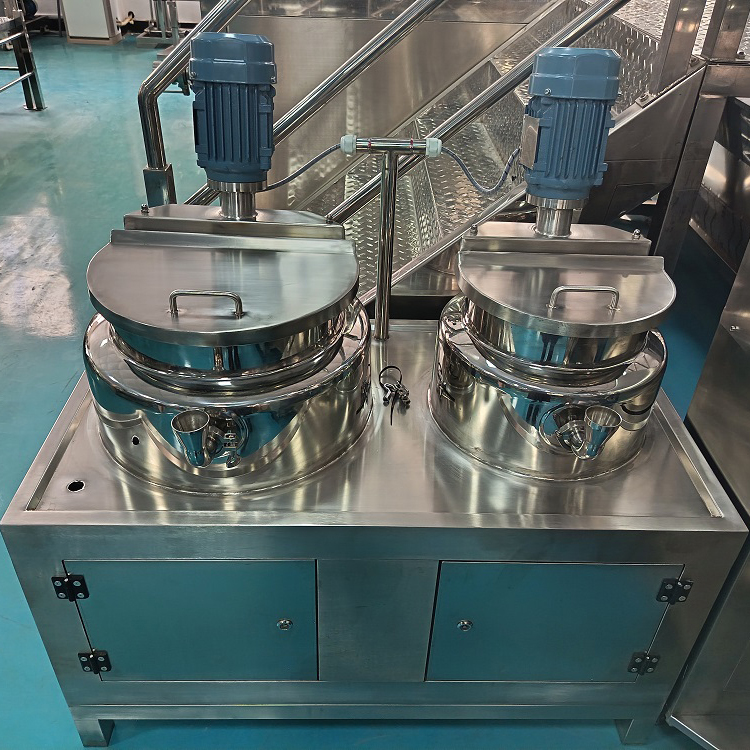
El elevador hidráulico de 50LEmulsionante al vacíoes una combinaciónequipo de mezclacon un principalhomogeneizador de vacíoUn tanque, un tanque de agua y un tanque de aceite. Está integrado con sistemas de mezcla, dispersión, homogeneización, emulsión, aspiración y absorción de polvo, y se utiliza ampliamente en los sectores cosmético, alimentario, farmacéutico y químico. El mantenimiento regular de este...mezclador de emulsiónProtege la calidad del producto, garantiza la seguridad del operador, reduce los costos operativos a largo plazo y prolonga la vida útil del equipo. Un homogeneizador de vacío bien mantenido previene la contaminación, reduce el tiempo de inactividad y mantiene el tamaño de partícula y la viscosidad deseados para lotes repetibles. Un mantenimiento adecuado también contribuye a reducir los costos operativos, especialmente al aplicar...Estrategias de eficiencia energética para la industriamezcladores de emulsión.
Entendiendo su emulsionador de vacío de elevación hidráulica de 50L: componentes clave en los que debe centrarse
Antes de realizar el mantenimiento, identifique y comprenda los componentes críticos del mezclador de emulsión: el recipiente principal del homogeneizador con el conjunto rotor-estator, el sistema hidráulico de elevación e inclinación, la bomba de vacío y las tuberías, los agitadores en los tanques de agua y aceite, el sistema de control eléctrico, los sellos y los sellos mecánicos, las camisas de calentamiento/refrigeración y los sensores, y el sistema de absorción de polvo. Las tareas de mantenimiento se centran en la conservación de los sellos y cojinetes, la verificación de la integridad del vacío, la limpieza de los cabezales del homogeneizador y el funcionamiento seguro de los sistemas hidráulico y eléctrico.
Lista de verificación diaria: pasos rápidos para mantener su mezclador de emulsión listo para la producción
Estas comprobaciones diarias deben ser realizadas por el operador al inicio y al final del turno. Su objetivo es prevenir fallos inmediatos y garantizar una calidad constante del lote.
- Inspección visual del recipiente y las superficies externas para detectar fugas, abolladuras o residuos inusuales.
- Verifique que el elevador hidráulico funcione correctamente y que no haya fugas de aceite alrededor de los cilindros o accesorios.
- Confirme que la bomba de vacío funcione y mantenga el vacío objetivo; inspeccione el manómetro de vacío.
- Verificar que los agitadores y el rotor-estator del homogeneizador giren libremente sin ruidos ni vibraciones anormales.
- Asegúrese de que el panel de control muestre el estado normal; verifique la parada de emergencia y los enclavamientos.
- Limpie las superficies en contacto con el producto después de cada lote siguiendo procedimientos de limpieza validados para evitar la contaminación cruzada.
Lista de verificación semanal: inspecciones más detalladas
Las tareas semanales deben ser realizadas por personal capacitado y documentadas en el registro de mantenimiento. Estos pasos reducen la acumulación de desgaste y detectan problemas en sus primeras etapas.
- Inspeccione los sellos mecánicos y las juntas tóricas para detectar desgaste; reemplácelos si detectan hinchazón, grietas o fugas.
- Lubrique los cojinetes y los puntos de pivote según las recomendaciones del fabricante.
- Verifique el nivel de aceite hidráulico y el estado básico; busque espuma o decoloración.
- Examine las conexiones eléctricas para detectar terminales sueltos y signos de sobrecalentamiento.
- Pruebe el aceite de la bomba de vacío (si está sellado con aceite) y rellénelo o reemplácelo si hay contaminación.
- Ejecute un ciclo de prueba corto para verificar que el rendimiento de la emulsión y la distribución del tamaño de partículas estén dentro del rango esperado.
Lista de verificación mensual: cuidados preventivos y calibración
Las inspecciones mensuales son preventivas e incluyen pruebas de funcionamiento y calibraciones simples para preservar la consistencia del producto en viscosidades entre 10.000 y 50.000 cps.
- Realice una inspección detallada de los conjuntos rotor-estator; retire y mida los espacios libres si son accesibles.
- Revise los filtros del sistema hidráulico y reemplácelos si están moderadamente contaminados.
- Verifique la precisión de los sensores de temperatura y los medidores de presión/vacío; calibre cuando se detecte desviación.
- Inspeccione las tuberías y las líneas de vacío para detectar grietas o bloqueos; límpielas o reemplácelas según sea necesario.
- Confirmar el funcionamiento de la olla basculante y de los mecanismos de bloqueo en condiciones de carga.
Lista de verificación trimestral y anual: mantenimiento en profundidad
Estas tareas deben ser realizadas por técnicos de servicio cualificados. El mantenimiento anual suele estar correlacionado con los programas de producción y las auditorías regulatorias.
- Desmontaje completo e inspección del cabezal del homogeneizador y del rotor-estator. Reemplazo de piezas desgastadas para mantener un tamaño de partícula perfecto de 2 micras y una distribución uniforme.
- Servicio del sistema hidráulico: cambiar aceite, reemplazar filtros, inspeccionar sellos y probar el rendimiento del cilindro bajo cargas nominales.
- Revisión de la bomba de vacío: reemplazar aceite, dar servicio a los álabes o diafragmas y probar la clasificación de vacío.
- Diagnóstico de sistemas eléctricos y de control: actualizar firmware, inspeccionar PLC/controles, verificar umbrales de alarma y enclavamientos de seguridad.
- Pruebe la presión de las camisas y tuberías cuando corresponda para verificar corrosión o fugas.
Programa de mantenimiento de un vistazo (tabla)
| Tarea | A diario | Semanalmente | Mensual | Trimestral / Anual |
|---|---|---|---|---|
| Inspección visual y de fugas | Sí | Sí | Sí | Sí |
| Limpiar las superficies en contacto con el producto | Después de cada lote | — | — | Limpieza profunda |
| Comprobación del sello mecánico y la junta tórica | — | Sí | Sí | Reemplazar si está desgastado |
| Aceite hidráulico y filtros | Comprobación rápida | Inspeccionar | Recargar/reemplazar | Reemplazar y dar servicio |
| Servicio de bomba de vacío | Comprobar funcionamiento | Inspeccionar | Cambio de aceite si es necesario | Revisión |
| Calibración de sensores/medidores | — | — | Comprobar y calibrar | Calibración completa |
Solución de problemas comunes con su emulsionante
Cuando surgen problemas, la resolución rápida y sistemática de problemas minimiza el tiempo de inactividad. A continuación, se presentan síntomas comunes y acciones de primera respuesta centradas en el mezclador de emulsión.
- Vacío bajo o pérdida de vacío: verifique si hay fugas en las juntas, válvulas de vacío y mangueras; verifique el nivel y el estado del aceite de la bomba de vacío; asegúrese de que la secuencia de la válvula de vacío sea correcta.
- Mala emulsión o tamaño de partícula inconsistente: inspeccione el juego y el desgaste del rotor y el estator; confirme los ajustes de velocidad del homogeneizador; verifique las temperaturas de alimentación, ya que la viscosidad cambia con la temperatura.
- Lentitud o deriva del elevador hidráulico: verifique el nivel de aceite hidráulico y la contaminación, aire en las líneas o sellos y válvulas desgastados.
- Vibración o ruido anormal: detenga la operación, inspeccione los cojinetes y el equilibrio del rotor, verifique si hay materiales extraños atrapados en el conjunto rotor-estator.
- Fallas eléctricas o alarmas: consulte los registros del sistema de control, reinicie después de un apagado seguro e inspeccione los fusibles, contactores y cableado para detectar daños.
Seguridad y cumplimiento del mantenimiento
Se deben seguir los procedimientos de seguridad durante cualquier tarea de mantenimiento. Es obligatorio el aislamiento eléctrico mediante bloqueo y etiquetado (LOTO) antes del trabajo, la despresurización y ventilación de los circuitos de vacío y la seguridad de los sistemas hidráulicos. En la producción de cosméticos, alimentos o productos farmacéuticos, siga las buenas prácticas de fabricación (BPF) y los procedimientos de limpieza sanitaria pertinentes para evitar la contaminación. Utilice repuestos certificados para sellos mecánicos, rodamientos y componentes de control para garantizar el cumplimiento normativo y la seguridad del producto.
Repuestos, herramientas y mantenimiento de registros
Mantenga un inventario de repuestos críticos: conjuntos rotor-estator, sellos mecánicos, juntas tóricas, piezas de bombas de vacío, filtros hidráulicos y kits de rodamientos. Mantenga un registro digital con fechas, operadores, acciones tomadas y mediciones de torque/holgura, cuando corresponda. Los registros respaldan el análisis de causa raíz, la mejora continua y las inspecciones regulatorias. Una matriz de piezas con números de pieza y un punto de reorden recomendado reducirá el tiempo de inactividad cuando se requieran reemplazos.
Cómo el mantenimiento preserva la calidad del producto para lotes de alta viscosidad
Este mezclador de emulsiones es apto para productos con una viscosidad de 10 000 a 50 000 cps y alcanza un tamaño de partícula perfecto de 2 micras cuando funciona correctamente. El mantenimiento de la integridad del rotor y el estator, así como las holguras ajustadas, garantiza una distribución uniforme de la energía de cizallamiento y homogeneización. Un rendimiento de vacío adecuado elimina el aire atrapado y mejora la estabilidad del producto. La calibración regular del sensor de temperatura garantiza que los materiales sensibles al calor se procesen a la temperatura correcta para evitar la degradación o las variaciones de viscosidad.
Ventajas de la marca: ¿por qué elegir el emulsionador de vacío con elevación hidráulica Yuanyang 50L?
El emulsionador de vacío con elevación hidráulica Yuanyang está diseñado como una solución integral para mezclar, dispersar, homogeneizar, emulsionar, aspirar y absorber polvo. Sus principales ventajas incluyen:
- Tapa elevadora hidráulica integrada y recipiente inclinable para una carga y descarga segura y ergonómica.
- Sistema de vacío robusto que favorece la desgasificación y la inducción de polvo eficientes, mejorando la calidad del producto y el rendimiento del lote.
- Sistema de control eléctrico con interfaz fácil de usar para recetas repetibles y enclavamientos de seguridad.
- Capacidad para manejar un amplio rango de viscosidad mientras proporciona un tamaño de partícula constante de 2 micrones para emulsiones finas.
- Versatilidad de aplicaciones en la fabricación de cosméticos, alimentos, productos farmacéuticos y químicos.
Consejos prácticos para prolongar la vida útil y reducir los costos operativos
- Capacitar a los operadores en controles diarios y documentar las desviaciones para detectar problemas menores de forma temprana.
- Estandarizar los procedimientos de limpieza y CIP para reducir la degradación del sello y la superficie.
- Utilice el monitoreo basado en la condición del aceite hidráulico y la vibración para programar un mantenimiento proactivo en lugar de reparaciones reactivas.
- Mantenga en el sitio repuestos OEM o equivalentes aprobados para elementos de desgaste críticos.
Preguntas frecuentes (FAQ)
P1: ¿Con qué frecuencia debo reemplazar las piezas del rotor y el estator del emulsionador de vacío de elevación hidráulica de 50 L?
A1: La frecuencia de reemplazo depende del uso y la abrasividad del producto. Para cremas cosméticas estándar, inspeccione mensualmente y planifique el reemplazo anualmente o cuando las holguras superen las tolerancias del fabricante. Para formulaciones abrasivas o con alto contenido de sólidos, inspeccione con mayor frecuencia y mantenga juegos de repuesto.
P2: ¿Puedo hacer funcionar el emulsionador sin vacío para algunos productos?
A2: Sí. Algunas formulaciones no requieren vacío; sin embargo, este mejora la desgasificación y la absorción del polvo, además de mejorar considerablemente la estabilidad y la apariencia del producto. Siga la validación del proceso para determinar su necesidad.
P3: ¿Cuáles son los signos de un sello mecánico defectuoso?
A3: Las señales incluyen fugas de producto en la entrada del eje, aumento de la fricción y el ruido, y en ocasiones, contaminación del aceite hidráulico o de vacío. Repare el problema de inmediato para evitar daños mayores.
P4: ¿Cómo mantengo la higiene y evito la contaminación cruzada entre lotes?
A4: Implementar procedimientos de limpieza in situ (CIP) validados o procedimientos de limpieza manual validados. Utilizar ciclos de limpieza documentados, verificar con pruebas de hisopado o muestreo microbiológico si así lo exige la normativa, y mantener registros.
Q5: ¿Quién debe realizar el mantenimiento mayor del sistema hidráulico y de la bomba de vacío?
A5: El mantenimiento de las bombas hidráulicas y de vacío debe ser realizado por técnicos cualificados o personal de servicio autorizado. Estos sistemas suelen requerir herramientas y conocimientos especializados, y pueden anular la garantía si se realizan de forma incorrecta.
Referencias y recursos autorizados
- Wikipedia — Homogeneizador: https://en.wikipedia.org/wiki/Homogenizer
- Administración de Alimentos y Medicamentos de EE. UU. — Cosméticos: https://www.fda.gov/cosmetics
- Alfa Laval — Guías de información y mantenimiento de homogeneizadores: https://www.alfalaval.com
- Organización Mundial de la Salud — Buenas prácticas de fabricación para equipos farmacéuticos y afines: https://www.who.int
- Cosmetics Europe — Guía sobre las mejores prácticas de fabricación: https://www.cosmeticseurope.eu
Contáctanos / Ver producto
Si desea comprar o conocer más sobre el emulsionador de vacío de elevación hidráulica de 50 L, solicitar un manual de mantenimiento o programar una visita de servicio, contacte con nuestro equipo de ventas y servicio. Nuestros expertos pueden proporcionarle listas de repuestos, procedimientos de mantenimiento validados y capacitación in situ para garantizar que su mezclador de emulsiones funcione a su máximo rendimiento.
Llame o envíe un correo electrónico a nuestro equipo de ventas para solicitar una cotización, descargar la hoja de datos del producto u organizar una demostración del mezclador de emulsión en acción.
YUANYANG, los mejores fabricantes y proveedores profesionales de tratamiento de agua por ósmosis inversa en Estados Unidos.
Fabricante y proveedor mayorista de mezcladores de polvo verde
Cómo iniciar un negocio de etiquetado semiautomático en Europa
YUANYANG Mejores fabricantes y proveedores de mezcladores emulsionantes profesionales en Asia
Tanque de almacenamiento portátil
¿Puedes agregar una tapa al tanque de almacenamiento?
Sí, se puede añadir y personalizar la tapa. Por ejemplo, con un orificio central para el mezclador superior o con una tolva para añadir polvo o líquidos.
Industrias
¿Ofrecen capacitación operativa?
Sí, proporcionamos manuales operativos detallados y capacitación integral para garantizar el funcionamiento seguro y eficiente del equipo.
Productos químicos
¿El equipo cumple con los estándares ambientales?
Sí, nuestros equipos cumplen con los estándares ambientales para la industria química, reduciendo las emisiones contaminantes.
Máquina para fabricar cosméticos
¿Cómo lograr un ambiente de vacío?
La bomba de vacío es un dispositivo que genera vacío y extrae el gas del recipiente para crear un ambiente de vacío. Cierre las válvulas de la tubería de pared, abra únicamente la válvula de paso de la tubería de vacío, abra también la entrada de agua de la bomba de vacío y, a continuación, accione el botón de vacío. Una vez que el tanque alcance la presión estándar de -0,05 MPa (verifique el manómetro), detenga el vacío y cierre la válvula de paso.
Máquina selladora de papel de aluminio
¿Cuál es el método de enfriamiento de la máquina selladora de tapas de botellas?
Este sellador de tapas de botellas adopta el método de enfriamiento por aire.
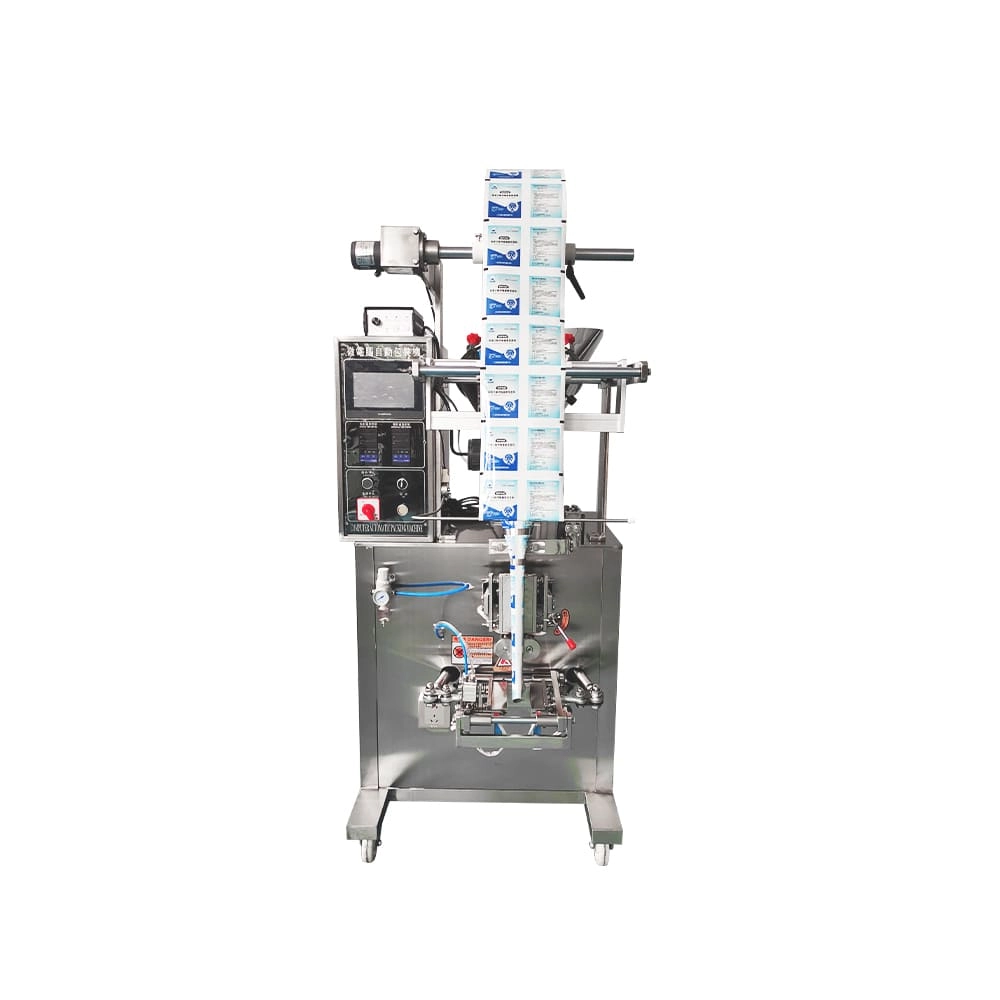
Máquina envasadora de bolsitas de polvo a la venta
La envasadora de sobres Yuanyang es un equipo automático para el envasado de polvos, utilizado principalmente para medir, llenar y sellar materiales de envasado en bolsitas pequeñas. Esta máquina se ha convertido en un equipo indispensable en la producción moderna de alimentos, medicamentos, productos químicos y otros sectores.
Características:
⦁ Controlado por microcomputadora;
⦁ Velocidad rápida automatizada;
⦁ Integración multifunción.
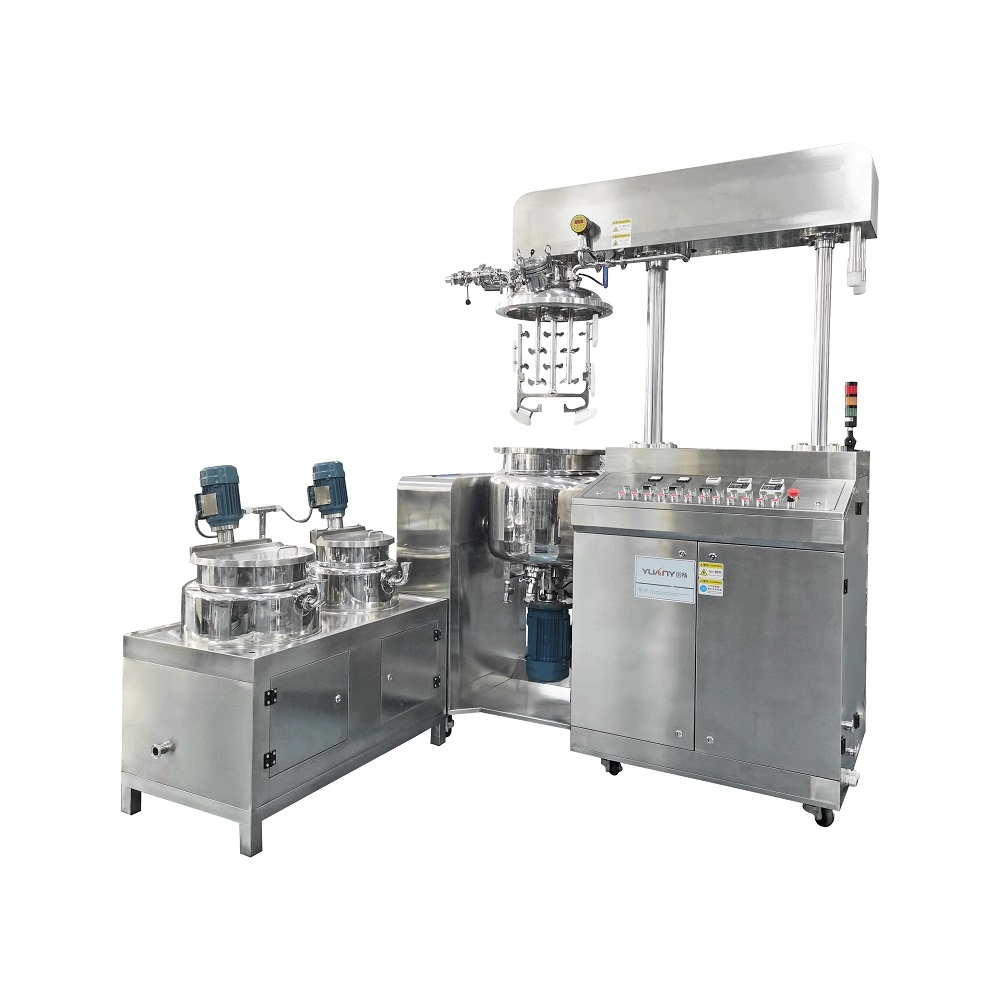
Emulsionador de vacío con elevación hidráulica de 50 litros
El emulsionador de vacío con elevador hidráulico Yuanyang es un equipo de mezcla combinado con un tanque homogeneizador de vacío principal, un tanque de agua y un tanque de aceite, que es un equipo integrado con un sistema de mezcla, dispersión, homogeneización, emulsificación, vacío y absorción de polvo que se utiliza ampliamente en los campos cosmético, alimentario, farmacéutico y químico.
Características:
⦁ Con tapa elevable hidráulica y recipiente basculante, sistema de vacío y sistema de control eléctrico.
⦁ Adecuado para productos con una viscosidad de entre 10.000 y 50.000 cps.
⦁ Tamaño de partícula perfecto de 2 micras y distribuida uniformemente.
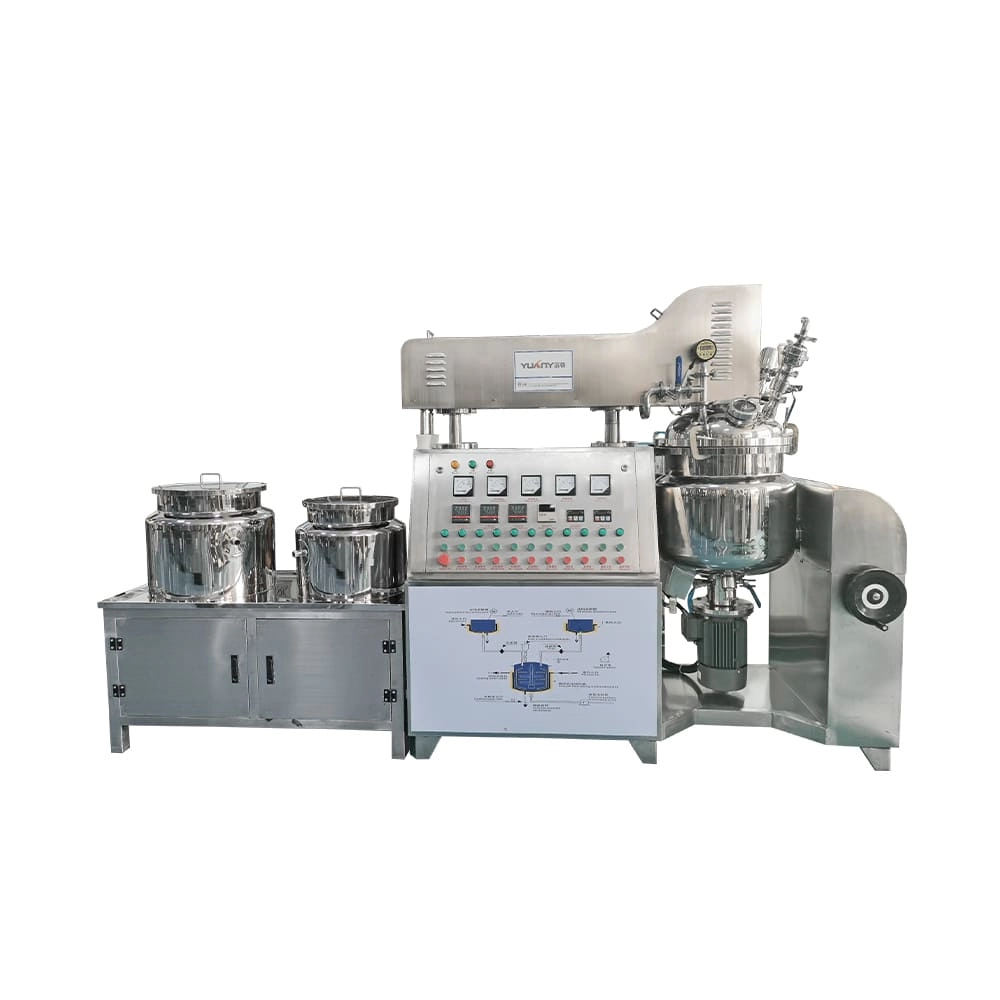
Mezclador emulsionante al vacío en venta
El mezclador emulsionante al vacío Yuanyang es un tipo de máquina emulsionante, el equipo de producción de cosméticos más popular para hacer cremas, productos para el cuidado de la piel, ungüentos, pastas y emulsiones.
Características:
⦁ Compuesto por un recipiente emulsionador principal, un recipiente para agua y un recipiente para aceite.
⦁ Con sistema de elevación hidráulico, sistema de vacío y sistema de control eléctrico.
⦁ Adecuado para productos con una viscosidad de entre 10.000 y 50.000 cps.
⦁ Tamaño de partícula perfecto de 2 micras y distribuida uniformemente.
Mezclador homogeneizador en venta
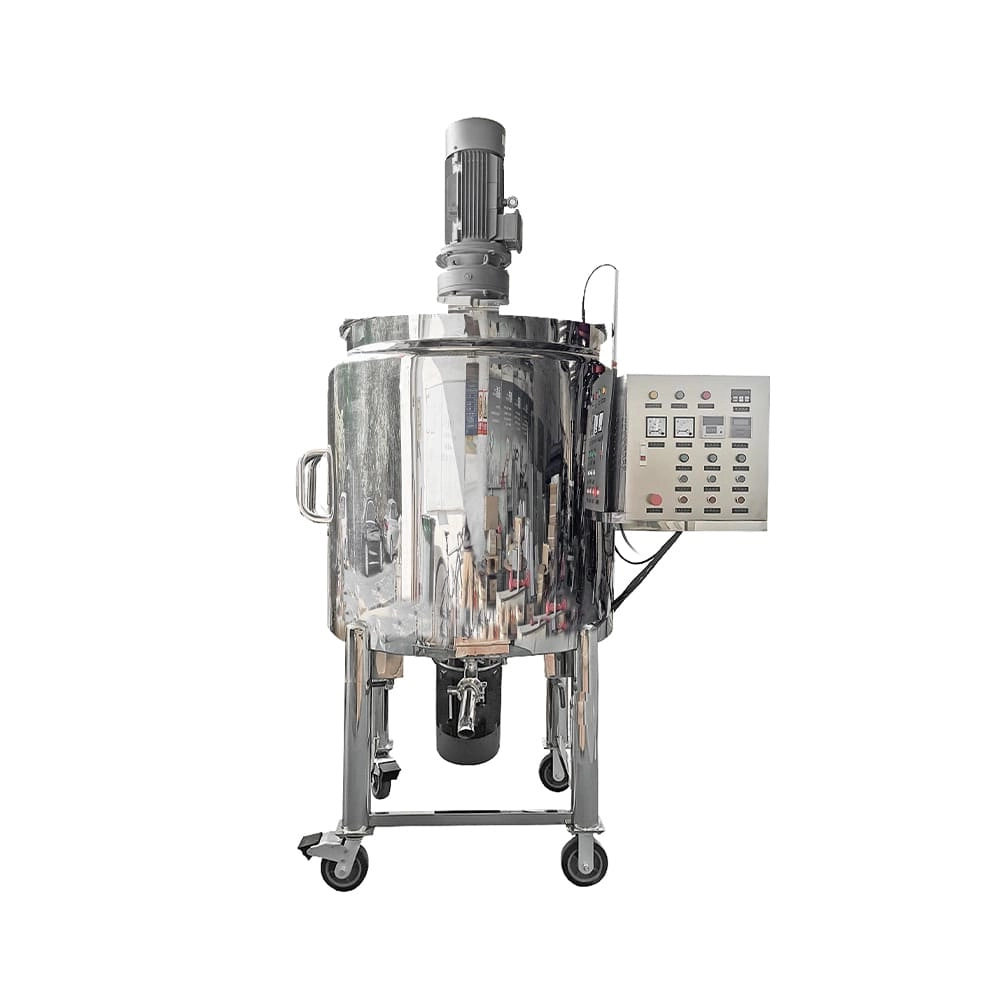
El mezclador homogeneizador Yuanyang es un tanque mezclador de líquidos con un homogeneizador de alto cizallamiento. Esta máquina mezcladora homogénea es el componente principal de la línea de producción de jabón líquido para champú, gel de ducha, detergente para ropa, lavavajillas, desinfectante de manos y otros líquidos espesos.
Características:
⦁ Tapa plana semiabierta, sistema de control eléctrico.
⦁ Adecuado para diversos productos de limpieza líquidos y salsas.
⦁ Raspadores de pared de PTFE que agitan en la parte superior y homogeneizador de alto cizallamiento en la parte inferior.
Copyright © 2025 YUANYANG Derechos reservados.
 Escanear código QR
Facebook
YouTube
LinkedIn
WhatsApp: +8613434139712
Maquinaria Guangzhou Yuanyang