





Maintenance Checklist for 50L Hydraulic Lift Vacuum Emulsifiers
- Maintenance Checklist for 50L Hydraulic Lift Vacuum Emulsifiers
- Overview: Why regular maintenance of your emulsion mixer matters
- Understanding your 50L Hydraulic Lift Vacuum Emulsifier — key components to focus on
- Daily checklist — quick steps to keep your emulsion mixer production-ready
- Weekly checklist — more detailed inspections
- Monthly checklist — preventive care and calibration
- Quarterly and annual checklist — in-depth maintenance
- Maintenance schedule at-a-glance (table)
- Troubleshooting common problems with your emulsifier
- Maintenance safety and compliance
- Spare parts, tools, and record keeping
- How maintenance preserves product quality for high-viscosity batches
- Brand advantages — why choose the Yuanyang 50L Hydraulic Lift Vacuum Emulsifier
- Practical tips to extend service life and reduce operating costs
- Frequently Asked Questions (FAQ)
- References and authoritative resources
- Contact us / View product
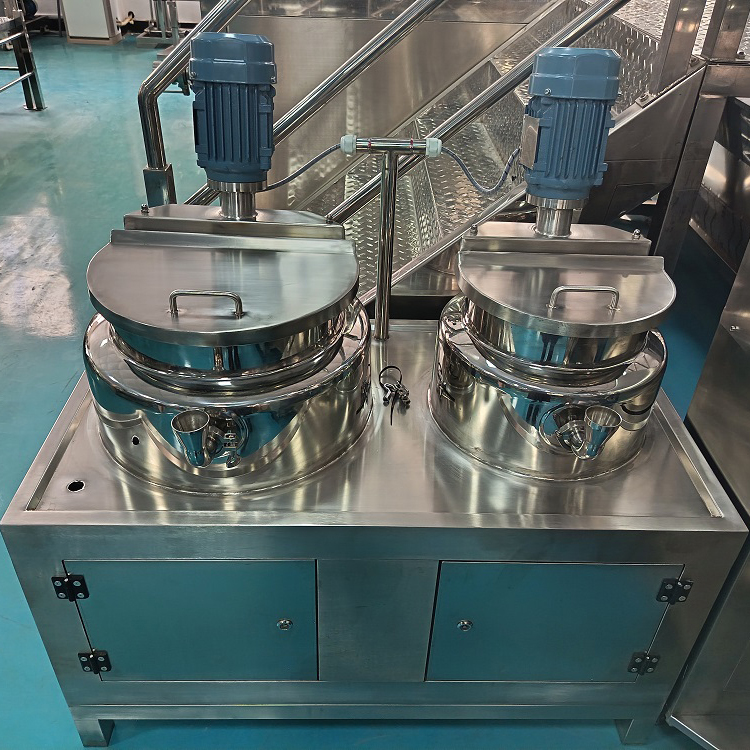
Maintenance Checklist for 50L Hydraulic Lift Vacuum Emulsifiers
Overview: Why regular maintenance of your emulsion mixer matters
The 50L Hydraulic Lift Vacuum Emulsifier is a combined mixing equipment with a main vacuum homogenizer tank, a water tank, and an oil tank. It is integrated with mixing, dispersing, homogenizing, emulsifying, vacuumizing and powder absorption systems and is widely used in cosmetics, food, pharmaceutical, and chemical fields. Regular maintenance of this emulsion mixer protects product quality, ensures operator safety, lowers long-term operating costs, and improves equipment lifespan. A well-maintained vacuum homogenizer prevents contamination, reduces downtime, and maintains the target particle size and viscosity for repeatable batches. Proper maintenance also supports lower operating costs, especially when applying energy efficiency strategies for industrial emulsion mixers.
Understanding your 50L Hydraulic Lift Vacuum Emulsifier — key components to focus on
Before performing maintenance, identify and understand the critical components of the emulsion mixer: the main homogenizer vessel with rotor-stator assembly, hydraulic lift and tilting system, vacuum pump and piping, agitators in water and oil tanks, electric control system, seals and mechanical seals, heating/cooling jackets and sensors, and powder absorption system. Maintenance tasks focus on preserving seals and bearings, verifying vacuum integrity, keeping the homogenizer heads clean, and ensuring hydraulic and electrical systems are functioning safely.
Daily checklist — quick steps to keep your emulsion mixer production-ready
These daily checks should be performed by the operator at shift start and end. They are designed to prevent immediate failures and ensure consistent batch quality.
- Visual inspection of vessel and external surfaces for leaks, dents, or unusual residue.
- Check hydraulic lift for smooth operation and verify no oil leaks around cylinders or fittings.
- Confirm vacuum pump runs and holds target vacuum; inspect vacuum gauge.
- Verify agitators and homogenizer rotor-stator spin freely without abnormal noise or vibration.
- Ensure control panel shows normal status; check emergency stop and interlocks.
- Clean product-contact surfaces after each batch following validated cleaning procedures to avoid cross-contamination.
Weekly checklist — more detailed inspections
Weekly tasks should be done by trained personnel and documented in the maintenance log. These steps reduce wear accumulation and detect early-stage problems.
- Inspect mechanical seals and O-rings for wear; replace if swelling, cracking, or leakage are apparent.
- Lubricate bearings and pivot points according to manufacturer recommendations.
- Check hydraulic oil level and basic condition; look for foam or discoloration.
- Examine electrical connections for loose terminals and signs of overheating.
- Test vacuum pump oil (if oil-sealed) and top up or replace if contamination is present.
- Run a short test cycle to verify emulsifying performance and particle size distribution is within expected range.
Monthly checklist — preventive care and calibration
Monthly inspections are preventive and include function testing and simple calibrations to preserve product consistency at viscosities between 10,000 and 50,000 cps.
- Perform a detailed inspection of rotor-stator assemblies; remove and measure clearances if accessible.
- Check the hydraulic system filter(s) and replace if moderately contaminated.
- Verify temperature sensors and pressure/vacuum gauges for accuracy; calibrate when drift is detected.
- Inspect piping and vacuum lines for cracks or blockages; clean or replace as needed.
- Confirm function of tilting pot and locking mechanisms under load conditions.
Quarterly and annual checklist — in-depth maintenance
These tasks should be performed by qualified service technicians. Annual maintenance often correlates with production schedules and regulatory audits.
- Full teardown and inspection of homogenizer head and rotor-stator. Replace worn parts to maintain perfect particle size of 2 microns and uniform distribution.
- Hydraulic system service: change oil, replace filters, inspect seals, and test cylinder performance under rated loads.
- Vacuum pump overhaul: replace oil, service vanes or diaphragms, and test vacuum rating.
- Electrical and control system diagnostics: update firmware, inspect PLC/controls, verify alarm thresholds and safety interlocks.
- Pressure test jackets and piping where applicable to check for corrosion or leaks.
Maintenance schedule at-a-glance (table)
| Task | Daily | Weekly | Monthly | Quarterly / Annual |
|---|---|---|---|---|
| Visual & leak inspection | Yes | Yes | Yes | Yes |
| Clean product-contact surfaces | After each batch | — | — | Deep clean |
| Mechanical seal & O-ring check | — | Yes | Yes | Replace if worn |
| Hydraulic oil & filters | Quick check | Inspect | Top-up/replace | Replace & service |
| Vacuum pump service | Check operation | Inspect | Oil change if required | Overhaul |
| Calibration of sensors/gauges | — | — | Check & calibrate | Full calibration |
Troubleshooting common problems with your emulsifier
When issues occur, quick and systematic troubleshooting minimizes downtime. Below are common symptoms and first-response actions focused on the emulsion mixer.
- Low vacuum or loss of vacuum: check for leaks at gaskets, vacuum valves, and hoses; verify vacuum pump oil level and health; ensure the vacuum valve sequencing is correct.
- Poor emulsification or inconsistent particle size: inspect rotor-stator clearance and wear; confirm homogenizer speed settings; check feed temperatures, as viscosity changes with temperature.
- Hydraulic lift slowness or drift: check hydraulic oil level and contamination, air in lines, or worn seals and valves.
- Abnormal vibration or noise: stop operation, inspect bearings and rotor balance, check for foreign materials trapped in rotor-stator assembly.
- Electrical faults or alarms: consult control system logs, reset after safe shutdown, and inspect fuses, contactors, and wiring for damage.
Maintenance safety and compliance
Safety procedures must be followed during any maintenance task. Lockout-tagout (LOTO) electrical isolation before work, depressurizing and venting vacuum circuits, and securing hydraulic systems are mandatory. For cosmetic, food, or pharmaceutical production, follow relevant GMP (Good Manufacturing Practice) and sanitary cleaning procedures to prevent contamination. Use certified spare parts for mechanical seals, bearings, and control components to maintain regulatory compliance and product safety.
Spare parts, tools, and record keeping
Keep an inventory of critical spare parts: rotor-stator sets, mechanical seals, O-rings, vacuum pump parts, hydraulic filters, and bearing kits. Maintain a digital logbook with dates, operators, actions taken, and torque/clearance measurements where applicable. Records support root-cause analysis, continuous improvement, and regulatory inspections. A parts matrix with part numbers and a recommended reorder point will reduce downtime when replacements are required.
How maintenance preserves product quality for high-viscosity batches
This emulsion mixer is suitable for products of 10,000 to 50,000 cps viscosity and achieves a perfect particle size of 2 microns when operating properly. Maintaining rotor-stator integrity and tight clearances ensures shear and homogenization energy are delivered consistently. Proper vacuum performance removes air entrainment and improves product stability. Regular temperature sensor calibration ensures heat-sensitive materials are processed at the correct temperature to avoid degradation or viscosity shifts.
Brand advantages — why choose the Yuanyang 50L Hydraulic Lift Vacuum Emulsifier
Yuanyang hydraulic lift vacuum emulsifier is engineered as an integrated solution for mixing, dispersing, homogenizing, emulsifying, vacuumizing and powder absorption. Key advantages include:
- Integrated hydraulic lift lid and tilting pot for safe and ergonomic loading and unloading.
- Robust vacuum system that supports efficient degassing and powder induction, improving product quality and batch yield.
- Electric control system with user-friendly interface for repeatable recipes and safety interlocks.
- Capability to handle a wide viscosity range while delivering consistent 2-micron particle size for fine emulsions.
- Application versatility across cosmetics, food, pharmaceutical, and chemical manufacturing.
Practical tips to extend service life and reduce operating costs
- Train operators on daily checks and document deviations to catch minor issues early.
- Standardize cleaning and CIP procedures to reduce seal and surface degradation.
- Use condition-based monitoring for hydraulic oil and vibration to schedule proactive maintenance rather than reactive fixes.
- Keep OEM spare parts or approved equivalents on-site for critical wear items.
Frequently Asked Questions (FAQ)
Q1: How often should I replace rotor-stator parts on the 50L Hydraulic Lift Vacuum Emulsifier?
A1: Replacement frequency depends on usage and product abrasiveness. For standard cosmetic creams, inspect monthly and plan replacement annually or when clearances exceed manufacturer tolerances. For abrasive or high-solid formulations, inspect more often and maintain spare sets.
Q2: Can I run the emulsifier without vacuum for some products?
A2: Yes. Some formulations do not require vacuum; however, vacuum improves degassing and powder absorption and can materially improve product stability and appearance. Follow process validation to determine necessity.
Q3: What are the signs of a failing mechanical seal?
A3: Signs include product leakage at the shaft entry, increased friction/noise, and sometimes contamination in hydraulic or vacuum oil. Address immediately to avoid further damage.
Q4: How do I maintain hygiene and avoid cross-contamination between batches?
A4: Implement validated cleaning-in-place (CIP) or manual validated cleaning procedures. Use documented cleaning cycles, verify with swab tests or microbial sampling if required by regulation, and keep logs.
Q5: Who should perform major maintenance on the hydraulic system and vacuum pump?
A5: Qualified technicians or authorized service personnel should perform major hydraulic and vacuum pump maintenance. These systems often require specialized tools and knowledge and may void warranties if serviced incorrectly.
References and authoritative resources
- Wikipedia — Homogenizer: https://en.wikipedia.org/wiki/Homogenizer
- U.S. Food and Drug Administration — Cosmetics: https://www.fda.gov/cosmetics
- Alfa Laval — Homogenizer information and maintenance guides: https://www.alfalaval.com
- World Health Organization — Good Manufacturing Practices for pharmaceutical and related equipment: https://www.who.int
- Cosmetics Europe — Guidance on manufacturing best practice: https://www.cosmeticseurope.eu
Contact us / View product
If you want to buy or learn more about the 50L Hydraulic Lift Vacuum Emulsifier, request a maintenance manual, or schedule a service visit, contact our sales and service team. Our experts can provide spare part lists, validated maintenance procedures, and onsite training to ensure your emulsion mixer performs at peak levels.
Call or email our sales team to request a quote, download the product datasheet, or arrange a demo of the emulsion mixer in action.
Everything You Need to Know About labeling machine for vials
How to start a semi auto labeling machine business in Europe
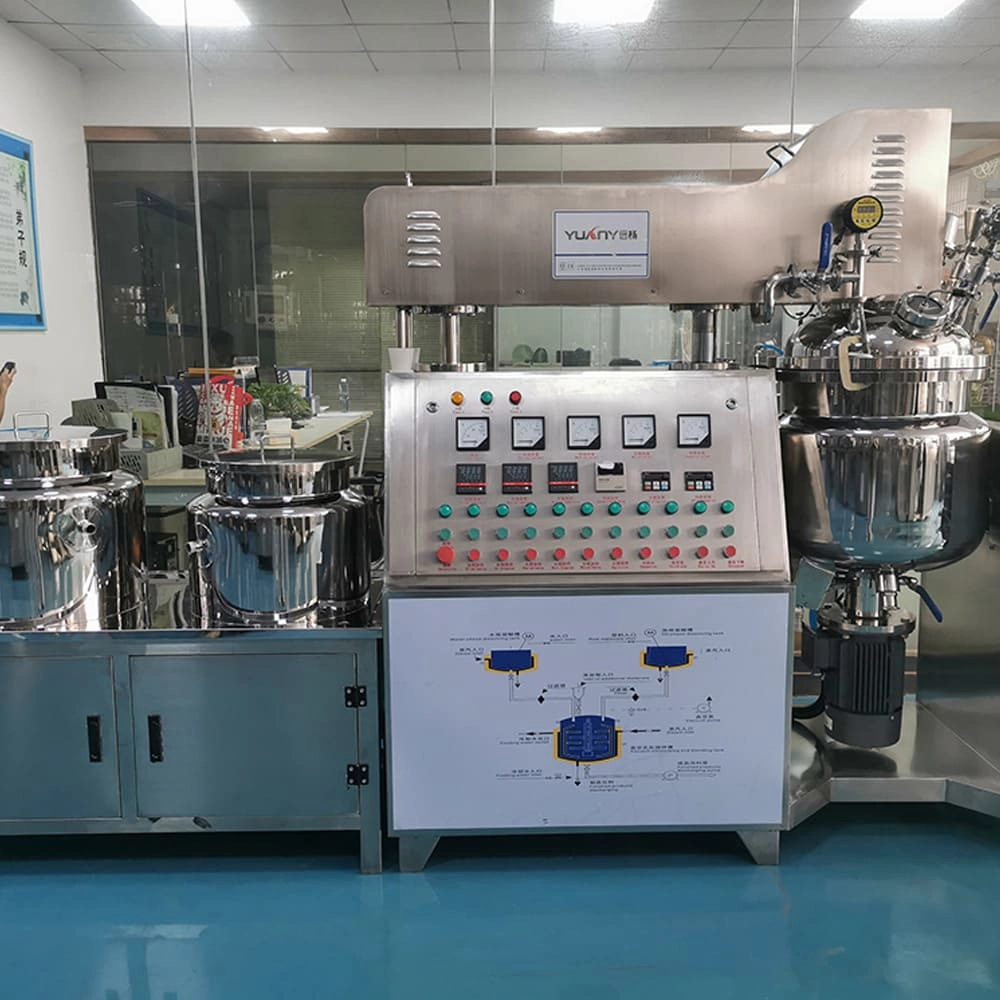
Improving Energy Efficiency of Vacuum Emulsifying Mixers
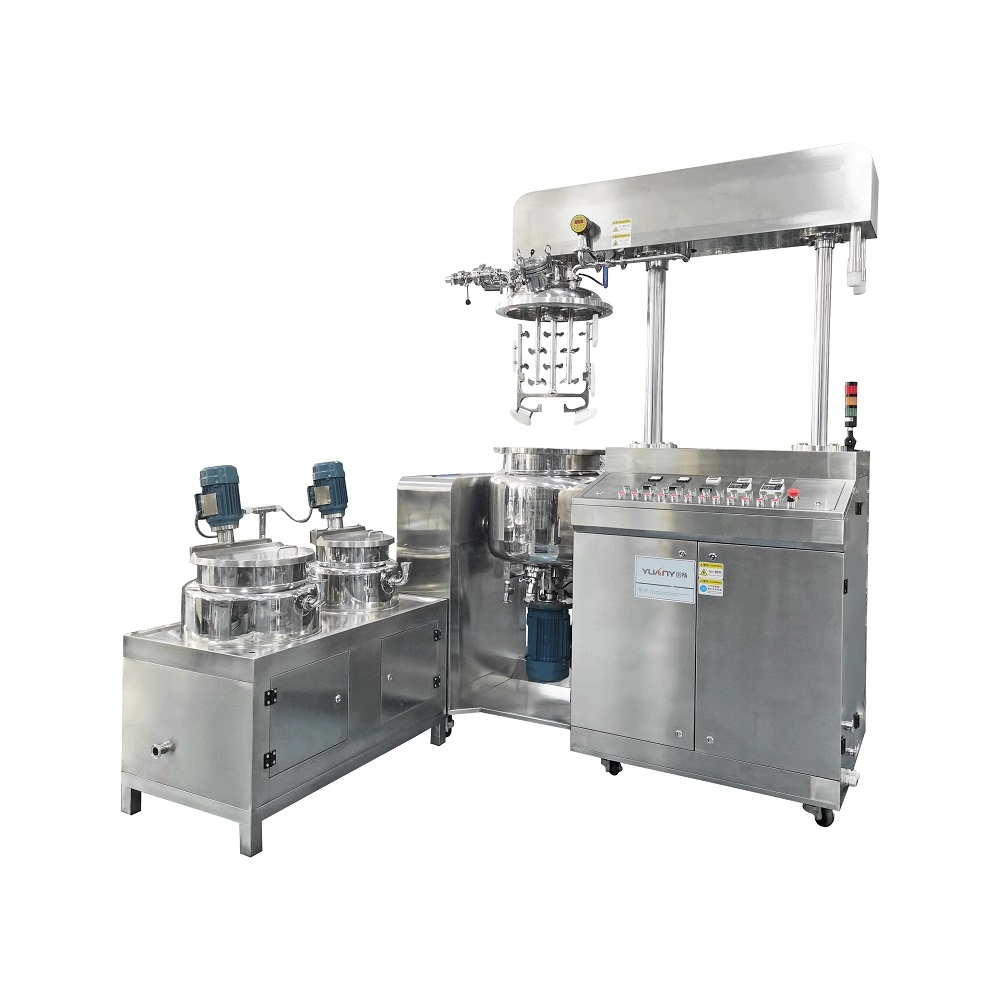
Formulation Tips for Using a Vacuum Emulsifying Machine
Sachet Packaging Machine
Can I use this liquid packing machine to pack if my product is like paste which is quite thick and viscous?
Yes, heating function and mixing function can be added based on materials.
Sealed Storage Tank
Can you add a card slot to put the name card of each kind of products.
Yes, there is indeed a card slot for the standard storage tanks.
Liquid Mixing Tank
Can the agitator speed be adjustable with VFD?
Yes,the agitator mixer is equipped with frequency converter. Speed can be variable by adjusting the speed regulation panel. If you want to save cost, or not variable speed is needed, there is no need to add VFD device.
Automatic auger feeder machine
What’s the material of the screw feeding machine?
The feeding machine for powder is maid of stainless steel 304, which meet GMP standards.
Ribbon mixer
How to dry the mixed powder?
If the raw powder is not dry, and client wants to dry it during mixing, a jacket will be added with heater to achieve drying purpose.
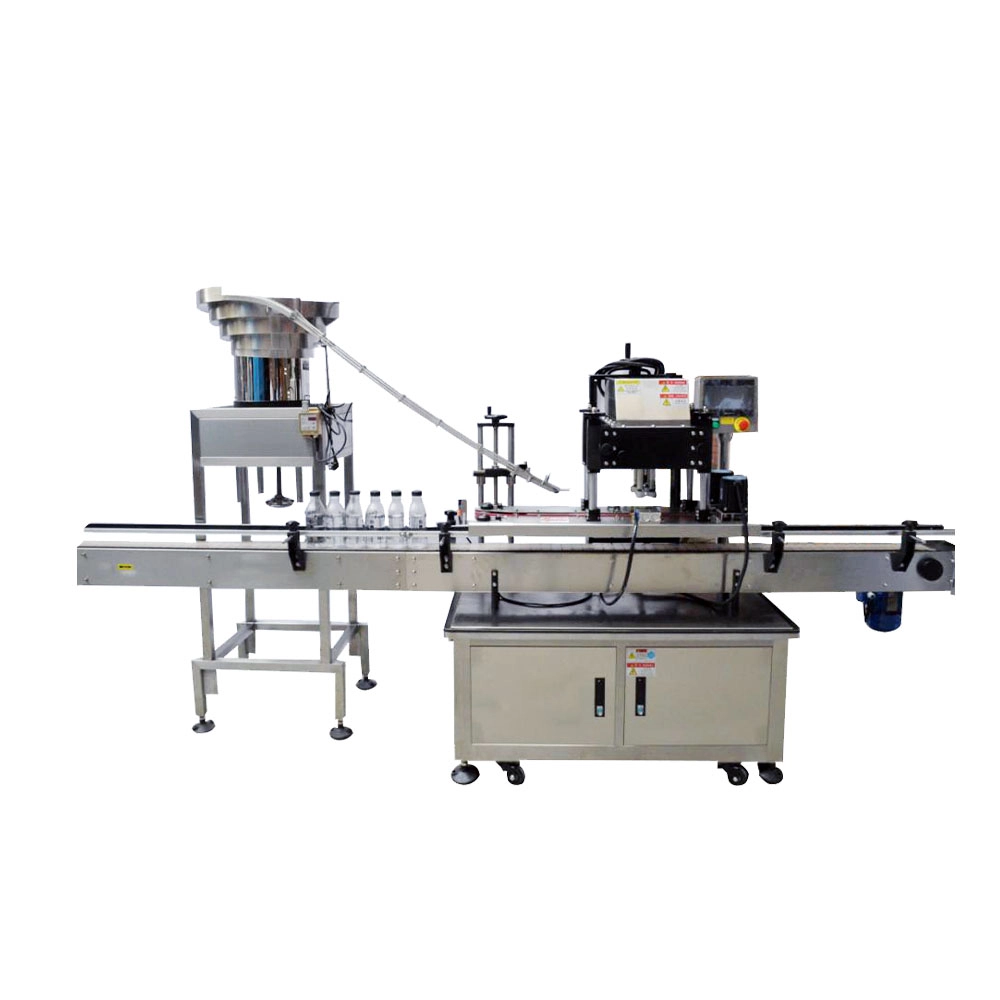
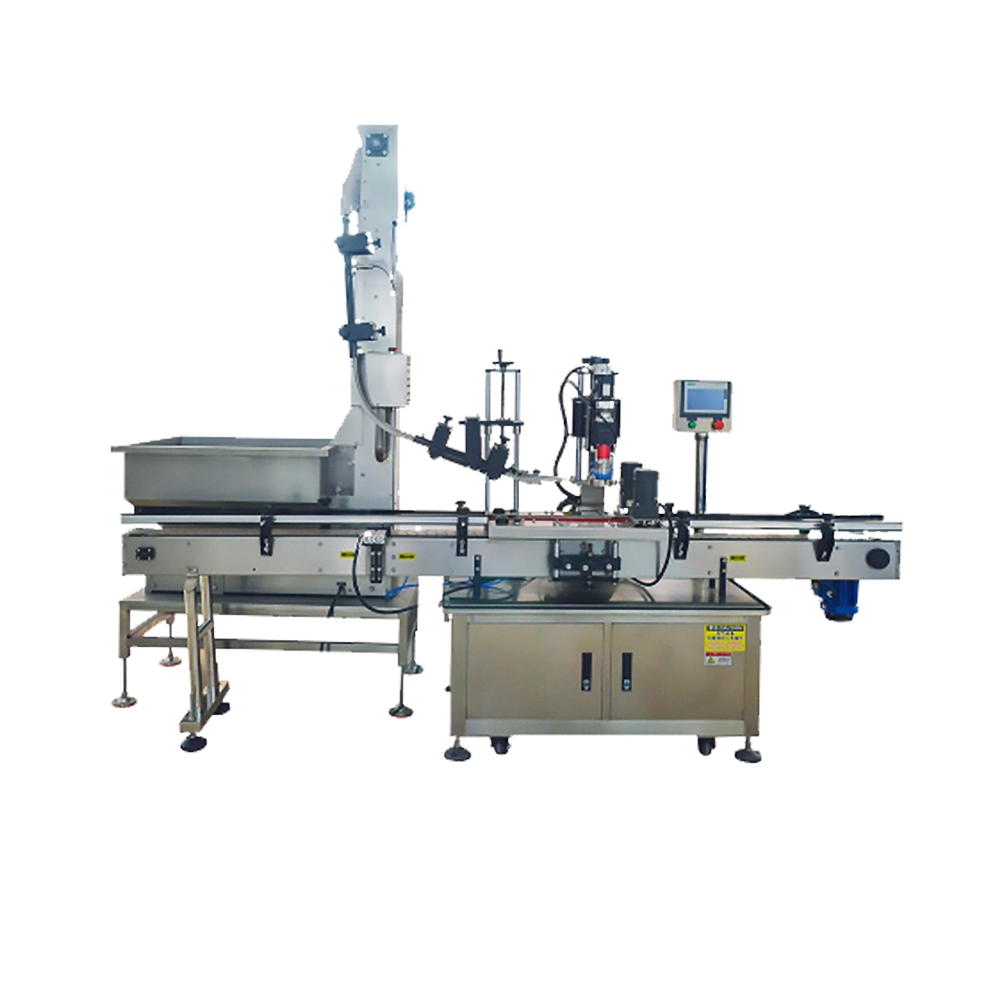
Automatic Plastic Caps Capping Machine with Vibrating Cap Feeder for Sale
Yuanyang automatic screw capping machine is a kind of four-wheel bottle capping machine. The automatic screw capper is often used to close lids of containers such as bottles and jars, especially for plastic bottles, which are widely used in food, medicine, chemical, cosmetic, and other industries for mass production and continuous production lines.
Features:
⦁ Full pneumatic drive;
⦁ Automated fast speed;
⦁ Suitable for various screw caps, pumps, and spray bottles.
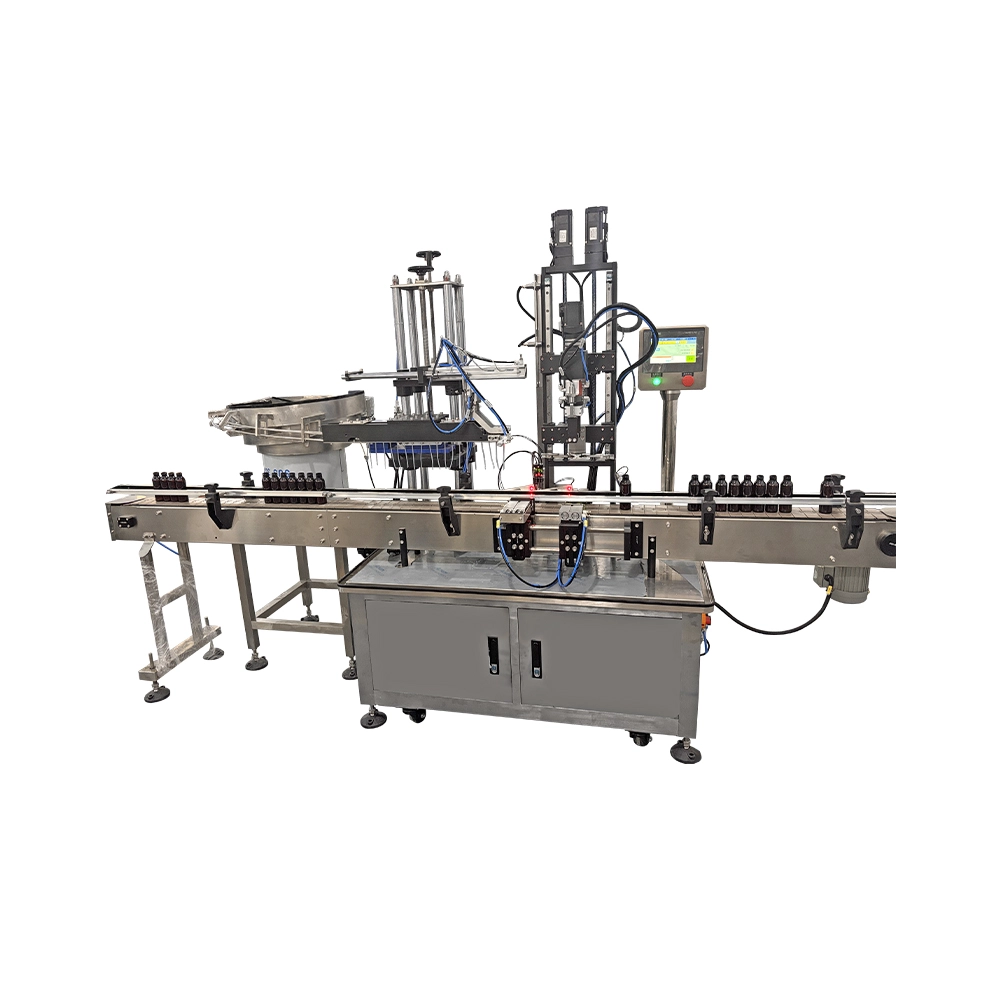
Automatic Metal Caps Capping Machine for Sale
Yuanyang automatic metal cap capping machine is a bottle capper for bottles with metal caps, which is often used to close lids of containers such as bottles and jars. The glass bottle metal capping machine is widely used in food, medicine, chemical, cosmetic, and other industries for mass production and continuous production line .
Features:
⦁ Pneumatic and electric drive;
⦁ Automated fast speed;
⦁ Suitable for glass bottles with metal caps.
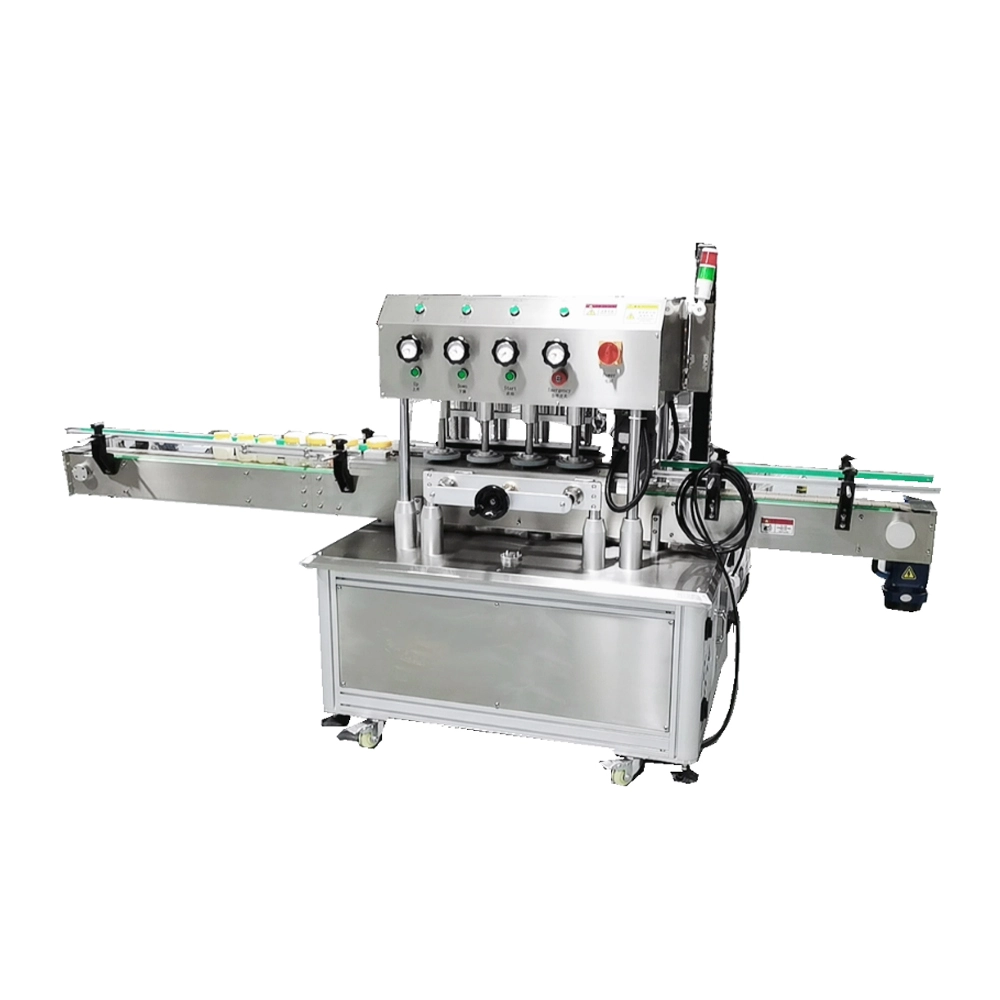
Automatic Pump Head Feeding and Capping Machine for Sale
Yuanyang automatic pump head feeding and capping machine is a bottle cap sorter and capper for bottles with pump heads, which is often used to close lids of containers such as nail polish, sprayers, and shampoo. The capping machine with a pump head feeder is widely used in food, medicine, chemical, cosmetic, and other industries for mass production and continuous production line .
Features:
⦁ Pneumatic and electric drive;
⦁ Automated fast speed;
⦁ Suitable for various types of caps.
Automatic High Speed Capping Machine for Sale
The Yuanyang automatic high-speed capping machine is a kind of 8-wheel bottle-capping machine with fast working efficiency. The automatic capper is often used to close lids of containers such as bottles and jars, especially for plastic bottles, which are widely used in food, medicine, chemical, cosmetic, and other industries for mass production and continuous production lines.
Features:
⦁ Electric drive;
⦁ Automated fast speed;
⦁ Suitable for various screw caps, pumps, and spray bottles.
 Scan QR Code
Facebook
YouTube
LinkedIn
Whatsapp: +8613434139712
Guangzhou Yuanyang Machinery