





Machine d'emballage en sachets à vendre : garantie et assistance
- Comprendre la couverture de garantie et ses implications pour la production
- Ce que couvre une garantie typique
- Exclusions et limitations courantes
- Pourquoi les conditions de garantie sont importantes pour le retour sur investissement
- Modèles de soutien : services à distance, sur site et préventifs
- Diagnostic à distance et assistance technique
- Service sur site et accords de niveau de service (SLA)
- Services de maintenance préventive et de formation
- Pièces de rechange, consommables et disponibilité
- Quelles pièces de rechange stocker sur site
- Délais de livraison et logistique mondiale
- Planification du cycle de vie et des coûts des consommables
- Conformité, validation et documentation pour les industries réglementées
- Validation réglementaire et assistance IQ/OQ/PQ
- Documentation : manuels, procédures opérationnelles standard et traçabilité
- Certifications et conformité en matière de sécurité
- Garantie et assistance : exemples pratiques et comparaison
- Garantie standard vs garantie étendue vs contrats d'assistance complète
- Étude de cas : minimiser les temps d’arrêt grâce à un plan de support de haute qualité
- Conseils de négociation lors de l'achat d'une machine d'emballage de sachets
- Stratégie de mise en service, de formation et de maintenance à long terme
- Mise en service correcte pour préserver la garantie
- Formation des opérateurs et de la maintenance
- Élaboration d'un plan de maintenance à long terme
- FAQ — Questions fréquentes concernant la garantie et l'assistance des machines d'emballage en sachets
- Q1 : Quelle est la durée de la garantie standard pour les machines d'emballage de sachets ?
- Q2 : Les réparations sur site sont-elles couvertes, ou seulement le remplacement de pièces ?
- Q3 : La garantie couvre-t-elle les dommages causés lors de l'installation ?
- Q4 : Que dois-je faire si une pièce de rechange essentielle a un long délai de livraison ?
- Q5 : Comment puis-je valider la machine pour un usage pharmaceutique ?
- Contactez le service commercial et l'assistance / Voir le produit
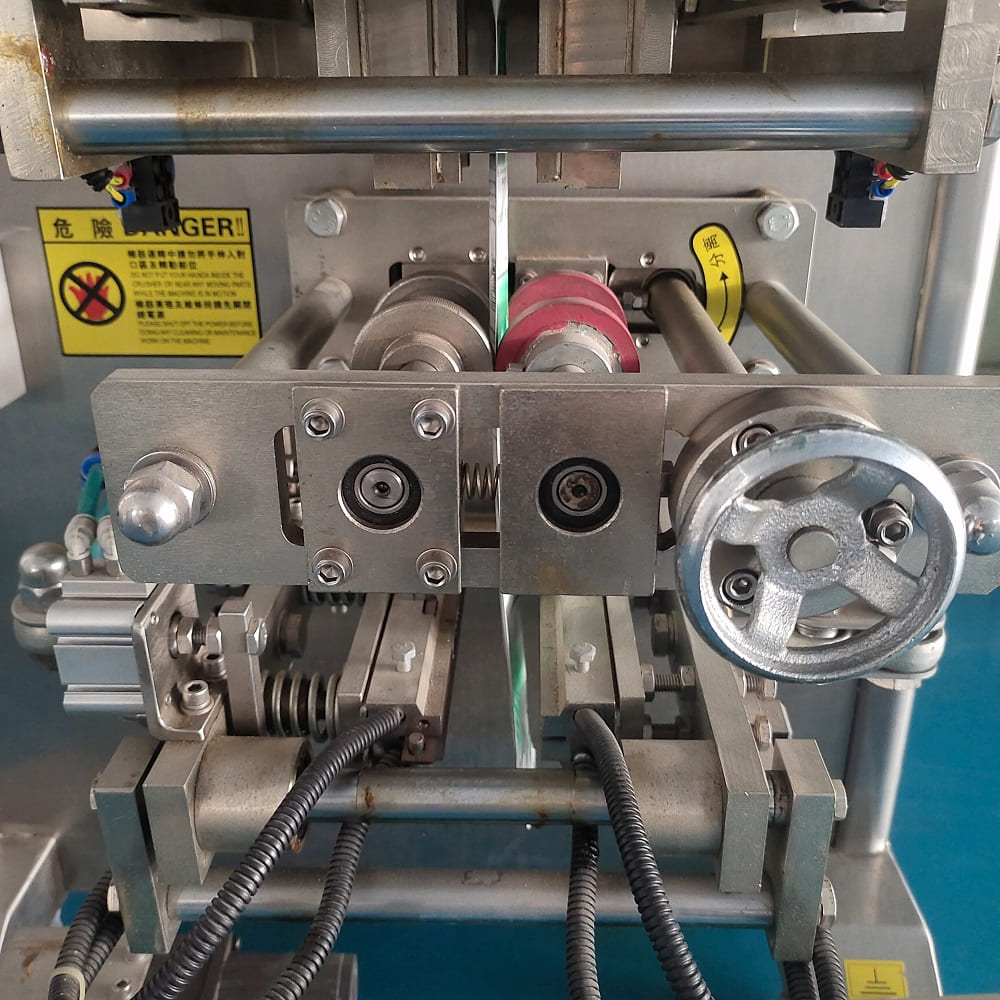
La machine d'emballage en sachets proposée à la vente est une solution automatisée à haute cadence pour le conditionnement de doses unitaires et de petits sachets. Pour les acheteurs et les responsables de production, la garantie et le service après-vente sont aussi importants que les spécifications techniques de la machine : des conditions de garantie claires, un approvisionnement rapide en pièces détachées, une assistance technique réactive et une maintenance préventive ont un impact direct sur la disponibilité, la conformité et le coût total de possession. Ce guide explique les structures de garantie, les niveaux de service et les bonnes pratiques d'assistance auxquels vous pouvez vous attendre lors de l'achat d'une machine d'emballage en sachets, vous aidant ainsi à prendre une décision d'achat plus sûre et à minimiser les risques de production.
Comprendre la couverture de garantie et ses implications pour la production
Ce que couvre une garantie typique
Lors de l'évaluation d'une machine d'emballage de sachets, il est important de comprendre l'étendue de la garantie de base. La plupart des fabricants proposent une garantie limitée qui couvre généralement les défauts de fabrication liés aux matériaux et à la main-d'œuvre pendant une période prédéfinie (souvent de 12 à 24 mois ou un nombre fixe d'heures de fonctionnement de la machine). Les éléments couverts comprennent généralement :
- Composants mécaniques défectueux (engrenages, arbres, roulements)
- Systèmes électriques et de contrôle (automate programmable, capteurs, câblage) si les dommages sont liés à la fabrication
- Soudage et intégrité structurelle
Les consommables (joints, lames, courroies, guides-films), les pièces d'usure courante et les dommages résultant d'une mauvaise utilisation sont généralement exclus de la garantie. Vérifiez si le fabricant prend en charge la main-d'œuvre, les interventions sur site ou uniquement le remplacement de pièces.
Exclusions et limitations courantes
Soyez clair sur les exclusions afin d'éviter toute surprise. Les exclusions typiques comprennent :
- Pièces d'usure consommables (mâchoires d'étanchéité, lames de coupe, courroies)
- Dommages causés par une installation incorrecte, des défauts électriques ou des services publics de mauvaise qualité
- Modifications effectuées par des tiers ou réparations non autorisées
- Utiliser en dehors des paramètres de produit spécifiés (viscosité, taille des particules, type de film)
Pour que la garantie reste valide, veuillez demander un document de garantie écrit ainsi qu'une description claire des conditions de fonctionnement requises (tension, qualité de l'air, limites environnementales).
Pourquoi les conditions de garantie sont importantes pour le retour sur investissement
La garantie implique un transfert de risque. Une garantie plus longue et plus complète réduit les dépenses d'investissement imprévues et favorise des frais d'exploitation prévisibles. Lorsque vous comparez les offres pour une machine de remplissage de sachets ou une machine d'emballage en sticks, tenez compte des différences de garantie dans votre calcul du coût total de possession (CTP) et considérez la réputation du fabricant en matière de prise en charge des sinistres.
Modèles de soutien : services à distance, sur site et préventifs
Diagnostic à distance et assistance technique
L'assistance à distance réduit les temps d'arrêt et les retards liés aux déplacements. De nombreuses machines modernes de conditionnement de sachets sont équipées d'automates programmables et d'interfaces homme-machine (IHM) permettant l'accès à distance pour le dépannage, les mises à jour logicielles et le réglage des paramètres. Une politique d'assistance à distance efficace inclut des engagements de temps de réponse et des procédures d'accès à distance sécurisées. Assurez-vous que le fabricant documente les options de connectivité et les mesures de cybersécurité.
Pour obtenir des conseils sur les exigences en matière de validation et de documentation dans les environnements réglementés, consultez les directives de la FDA sur la validation des processus ici :Guide de validation des processus de la FDA.
Service sur site et accords de niveau de service (SLA)
Les SLA définissent les délais de réponse et de réparation garantis pour l'assistance sur site. Les niveaux typiques comprennent :
- Standard : Assistance à distance et visites sur site planifiées dans la semaine ouvrable.
- Priorité : Intervention sur site le jour ouvrable suivant
- Haute qualité : Intervention d'urgence 24h/24 et 7j/7 avec des délais d'arrivée définis (par exemple, 4 à 8 heures).
Négociez des SLA adaptés à l'importance de votre production. Pour les lignes de production de sachets alimentaires ou pharmaceutiques à haut volume, visez une couverture prioritaire ou de haute qualité afin de garantir le débit.
Services de maintenance préventive et de formation
Les contrats de maintenance préventive (MP) comprennent généralement des inspections planifiées, la lubrification, le nettoyage, le remplacement des pièces d'usure et l'optimisation des performances. Une MP bien mise en œuvre réduit les pannes machine et prolonge la durée de vie de la tête de scellage, de la fraise et du système d'entraînement. Des formations pour les opérateurs et le personnel de maintenance – portant sur les contrôles de routine, les procédures de changement d'outillage et le dépannage de base – sont souvent proposées et devraient être incluses dans le contrat d'achat.
Pièces de rechange, consommables et disponibilité
Quelles pièces de rechange stocker sur site
Établissez une liste des pièces de rechange critiques avant la mise en service. Stocks généralement recommandés pour une machine à sachets :
- mâchoires d'étanchéité et éléments d'étanchéité
- Lames et couteaux de coupe
- Courroies, chaînes de transmission et tendeurs
- Capteurs et cellules photoélectriques
- Modules et fusibles PLC
Le stockage de ces articles peut réduire considérablement le temps moyen de réparation (MTTR).
Délais de livraison et logistique mondiale
Demandez au fournisseur les délais de livraison moyens pour les pièces courantes et critiques. Les fabricants disposant de centres de distribution internationaux proposent généralement des délais plus courts. Privilégiez les fournisseurs qui offrent un portail de pièces détachées pour faciliter les commandes et le suivi des expéditions. Si vous exploitez plusieurs usines ou sites distants, choisissez un fournisseur disposant d'entrepôts régionaux ou de distributeurs agréés.
Planification du cycle de vie et des coûts des consommables
Les consommables tels que le ruban adhésif, le film plastique pour sachets et les lubrifiants doivent être inclus dans les budgets opérationnels. Demandez la durée de vie estimée (en heures d'utilisation ou en lots) des consommables ainsi que des exemples de taux d'utilisation afin de prévoir correctement les coûts récurrents et d'assurer un approvisionnement continu.
Conformité, validation et documentation pour les industries réglementées
Validation réglementaire et assistance IQ/OQ/PQ
Pour les applications pharmaceutiques, nutraceutiques ou alimentaires (dans certains secteurs), les équipements doivent être livrés avec la documentation IQ (Qualification d'installation), OQ (Qualification opérationnelle) et PQ (Qualification de performance). De nombreux fournisseurs proposent des offres IQ/OQ/PQ ainsi qu'une assistance à la validation sur site. Demandez un devis détaillé pour l'assistance à la validation si votre ligne de production doit répondre aux normes d'audit réglementaires.
Se référer aux normes internationales et aux bonnes pratiques de fabrication telles que les normes ISO et les BPF de l'OMS :Normes de sécurité des machines ISOet les directives de l'OMS sur les BPF àBonnes pratiques de fabrication de l'OMS.
Documentation : manuels, procédures opérationnelles standard et traçabilité
La documentation complète doit inclure les manuels d'utilisation, les schémas électriques et pneumatiques, les listes de pièces détachées, les versions des logiciels et micrologiciels, ainsi que les procédures opératoires normalisées (SOP) de changement de format. Dans les secteurs agroalimentaire et pharmaceutique, les déclarations de contact avec les matériaux et la documentation de traçabilité des aciers inoxydables ou des revêtements sont essentielles. Ces documents simplifient les audits et réduisent le temps de qualification lors des inspections réglementaires.
Certifications et conformité en matière de sécurité
Assurez-vous que la machine de conditionnement en sachets est conforme aux certifications applicables (CE, UL ou autres homologations régionales) et aux directives de sécurité des machines. Les fabricants doivent fournir une déclaration de conformité et les certificats d'essai/d'inspection des composants critiques, le cas échéant. Pour plus d'informations sur les machines d'emballage et le contexte industriel, consultez :Machine d'emballage - Wikipédia.
Garantie et assistance : exemples pratiques et comparaison
Garantie standard vs garantie étendue vs contrats d'assistance complète
Vous trouverez ci-dessous un tableau comparatif simple qui vous permettra de traduire les options de garantie et d'assistance en résultats opérationnels. Utilisez-le pour choisir le plan qui correspond à votre tolérance au risque et à votre valeur de production.
| Emballer | Durée typique | Couverture | Temps de réponse | Idéal pour |
|---|---|---|---|---|
| Garantie standard | 12 à 24 mois | défauts de fabrication ; remplacement de pièces uniquement ou main-d’œuvre limitée | jours ouvrables standard | Lignes à faible volume ou à faible criticité |
| Garantie prolongée | +1 à 3 ans | Pièces et main-d'œuvre ; pièces parfois à prix réduit | Plus rapide (le jour ouvrable suivant) | Volume moyen/élevé avec budgets planifiés |
| Contrat de soutien complet | 1 à 5 ans | Pièces, main-d'œuvre, maintenance préventive, SLA prioritaire, surveillance à distance | 4 à 24 heures selon le SLA | Lignes de production pharmaceutique/alimentaire essentielles |
Étude de cas : minimiser les temps d’arrêt grâce à un plan de support de haute qualité
Une entreprise de boissons a constaté une réduction de 60 % des arrêts de production imprévus après avoir opté pour un contrat d'assistance haute qualité pour sa ligne de remplisseuses automatiques de sachets. Les principaux éléments de ce contrat étaient des visites de maintenance préventive planifiées tous les trois mois, un stock de pièces détachées critiques et un accès à distance 24 h/24 et 7 j/7 pour un diagnostic rapide. La réduction des pertes de production a permis d'amortir le contrat haute qualité en seulement onze mois.
Conseils de négociation lors de l'achat d'une machine d'emballage de sachets
- Demandez une garantie écrite et un SLA avant l'achat et incluez-les dans le bon de commande.
- Clarifiez ce qui constitue une usure normale par rapport à un défaut afin de pouvoir planifier votre stock de pièces détachées.
- Négocier les lots de pièces détachées ou les kits de pièces détachées initiaux au prix d'achat.
- Demandez des références à des clients existants dans des secteurs similaires afin d'évaluer leur réactivité en cas de réclamation.
Stratégie de mise en service, de formation et de maintenance à long terme
Mise en service correcte pour préserver la garantie
La mise en service supervisée par le fabricant garantit une installation, un alignement et un réglage initial corrects des paramètres — souvent une condition de la garantie. Assurez-vous que les exigences relatives aux installations électriques, pneumatiques et aux fondations sont respectées. Obtenez un rapport de mise en service signé confirmant que la machine a été installée conformément aux instructions du fabricant et que les opérateurs ont été formés.
Formation des opérateurs et de la maintenance
La formation doit être adaptée aux rôles : les opérateurs apprennent les changements de production, le nettoyage et le dépannage de base ; le personnel de maintenance acquiert des compétences plus approfondies en diagnostic mécanique et électrique. Demandez des supports de formation et des listes de contrôle intégrables à vos procédures opérationnelles standard (POS). Un personnel bien formé réduit les erreurs de manipulation susceptibles d’annuler les garanties.
Élaboration d'un plan de maintenance à long terme
Créez un planning de maintenance associant les tâches de maintenance préventive à la durée d'exécution (en heures) ou aux cycles de production. Exemples d'éléments de planning :
- Quotidiennement : contrôles visuels, nettoyage, inspection du chemin du film
- Hebdomadaire : lubrification des points de graissage, nettoyage des capteurs, vérification de la tension des courroies
- Mensuellement : contrôles d'alignement, audit des stocks de pièces détachées
- Trimestriellement : inspection approfondie par le fabricant ou un technicien certifié
FAQ — Questions fréquentes concernant la garantie et l'assistance des machines d'emballage en sachets
Q1 : Quelle est la durée de la garantie standard pour les machines d'emballage de sachets ?
A: Les garanties standard s'étendent généralement de 12 à 24 mois ou correspondent à un nombre d'heures de fonctionnement spécifié. Il est toujours conseillé de vérifier la durée exacte sur le contrat d'achat et de vérifier si elle débute à la livraison ou à la mise en service.
Q2 : Les réparations sur site sont-elles couvertes, ou seulement le remplacement de pièces ?
R : La couverture dépend de la garantie. Certains fournisseurs incluent la main-d'œuvre sur site pendant une période limitée, tandis que d'autres ne couvrent que les pièces. Les garanties prolongées et les contrats d'assistance complète incluent généralement la main-d'œuvre sur site.
Q3 : La garantie couvre-t-elle les dommages causés lors de l'installation ?
R : Généralement non. La plupart des garanties exigent que l'installation soit effectuée conformément aux instructions du fabricant. La mise en service supervisée par le fabricant vous protège souvent contre ce problème, car le fournisseur assume la responsabilité des problèmes liés à l'installation.
Q4 : Que dois-je faire si une pièce de rechange essentielle a un long délai de livraison ?
A : Négociez un kit de pièces de rechange initial au moment de l'achat ou choisissez un fournisseur disposant d'entrepôts locaux. Vous pouvez également inclure dans votre contrat d'assistance une clause garantissant l'expédition prioritaire des pièces critiques.
Q5 : Comment puis-je valider la machine pour un usage pharmaceutique ?
A : Demandez à votre fournisseur la documentation IQ/OQ/PQ et une assistance pour la validation. Respectez les directives de validation des procédés de la FDA et les BPF de l'OMS, le cas échéant ; exigez de votre fournisseur une documentation détaillée et une assistance sur site.
Contactez le service commercial et l'assistance / Voir le produit
Si vous souhaitez évaluer la machine d'emballage en sachets disponible à la vente ou consulter les options de garantie et d'assistance adaptées à votre établissement, contactez notre équipe commerciale ou notre support technique pour obtenir une proposition personnalisée. Nous proposons des vidéos de démonstration, des essais sur site et des modèles de garantie/SLA écrits à examiner avant l'achat. Consultez les détails du produit ou demandez un devis sur notre page produit :Machine d'emballage de sachets à vendrePour une assistance immédiate, veuillez envoyer un courriel.[email protégé]ou appelez le +1-800-555-0100.
Références : Guide de validation des processus de la FDA (FDA), sécurité des machines ISO (ISO), les directives de l'OMS sur les BPF (OMS), Aperçu de la machine d'emballage (Wikipédia).
La machine d'emballage en sachets Yuanyang est un équipement automatique principalement utilisé pour mesurer, remplir et sceller les matériaux d'emballage de petits sacs. Elle est devenue un équipement indispensable dans la production moderne, notamment dans les secteurs de l'alimentation, de la médecine et de la chimie.
Caractéristiques:
⦁ Contrôlé par micro-ordinateur ;
⦁ Vitesse rapide automatisée ;
⦁ Intégration multifonctionnelle.
Meilleurs mélangeurs émulsifiants sous vide pour cosmétiques en 2026
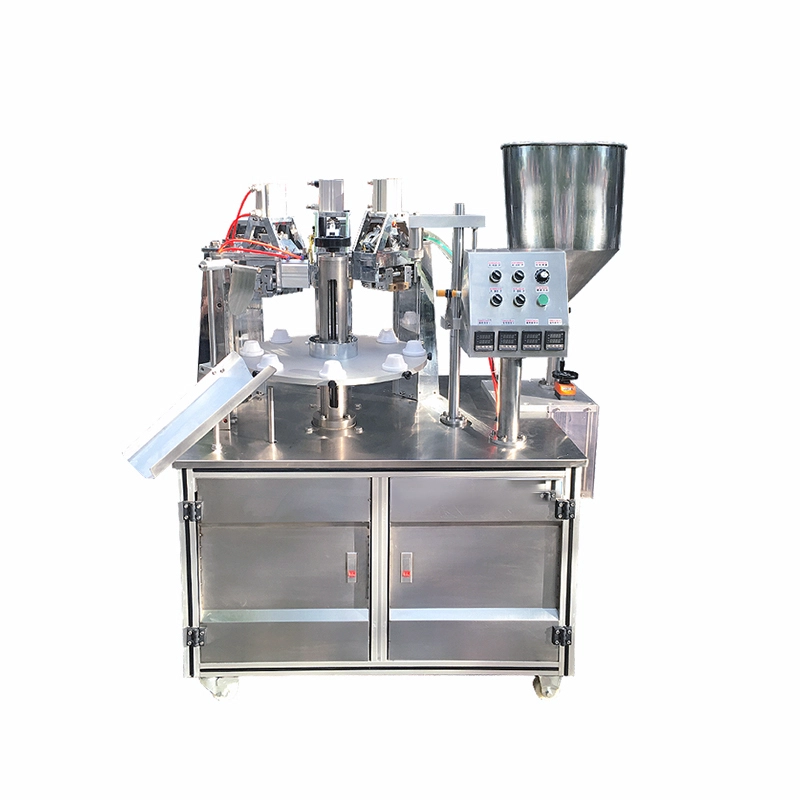
Comment évaluer les spécifications des machines de scellage pour les lignes de production de tubes
Quels sont les scénarios d'application de la machine de mélange de liquide ?
Comment choisir le bon fabricant et fournisseur de machines d'étiquetage double face en Afrique ?
Réservoir d'agitateur monocouche
Le réservoir avec mélangeur possède-t-il également un chauffage ?
Le modèle est de type non chauffant, les réservoirs mélangeurs chauffants sont d'un autre type avec 3 couches, une enveloppe chauffante et une enveloppe isolante.
Médecine
Comment puis-je garantir que mon processus de production est exempt de contamination ?
Nos équipements utilisent des matériaux conformes aux normes strictes de l'industrie pharmaceutique et sont conçus pour un nettoyage et un entretien faciles. Tous nos équipements sont soigneusement conçus pour minimiser les risques de contamination croisée.
Cuve mélangeuse homogénéisatrice
Quel produit peut-il produire ?
Le mélangeur liquide avec homogénéisateur est principalement utilisé pour la production de savon liquide, de shampoing, de lessive, de gel douche, de savon pour les mains, de sauce, de ketchup, de savon à vaisselle, de gel douche...
Homogénéisateur sous vide
Existe-t-il des dispositifs de sécurité pour la cuve de l'homogénéisateur ?
Oui, il existe des soupapes de sécurité pour la pression de l'enveloppe et la pression du vide. Lorsque la pression atteint la limite de pression prévue, les soupapes de sécurité protègent la machine en libérant le gaz.
Et un dispositif de protection de circuit est équipé dans le boîtier de commande, lorsque l'alimentation électrique de l'usine dépasse la tension conçue de la machine, ou qu'un court-circuit se produit, il activera le système d'autoprotection.
Machine de remplissage horizontale
Le tuyau peut-il être utilisé pour remplir des liquides à haute température ?
Le tuyau peut supporter une température de 70 degrés.
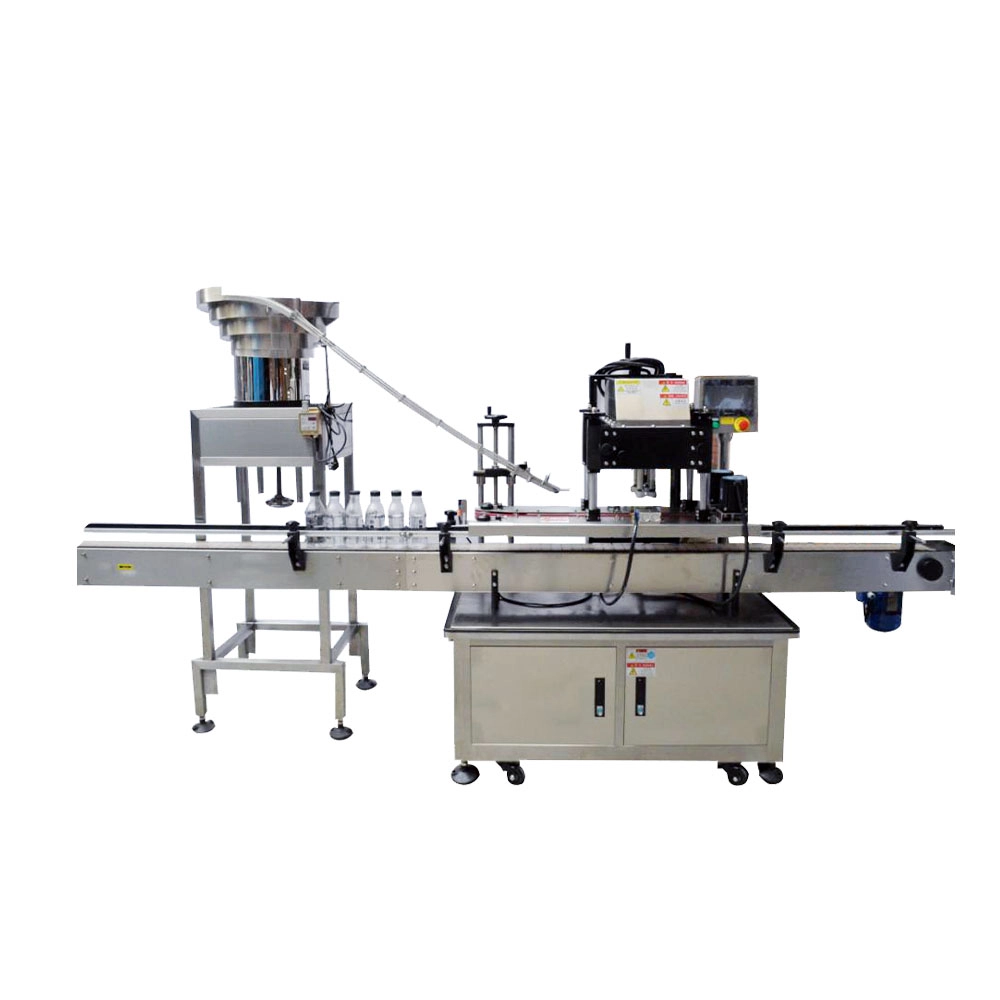
Machine de capsulage automatique de bouchons en plastique avec doseur vibrant à vendre
La capsuleuse à vis automatique Yuanyang est une capsuleuse à quatre roues. Elle est souvent utilisée pour fermer les couvercles de contenants tels que les bouteilles et les bocaux, notamment les bouteilles en plastique. Ces dernières sont largement utilisées dans les industries agroalimentaire, médicale, chimique, cosmétique et autres, pour la production de masse et la production continue.
Caractéristiques:
⦁ Entraînement entièrement pneumatique ;
⦁ Vitesse rapide automatisée ;
⦁ Convient à divers bouchons à vis, pompes et vaporisateurs.
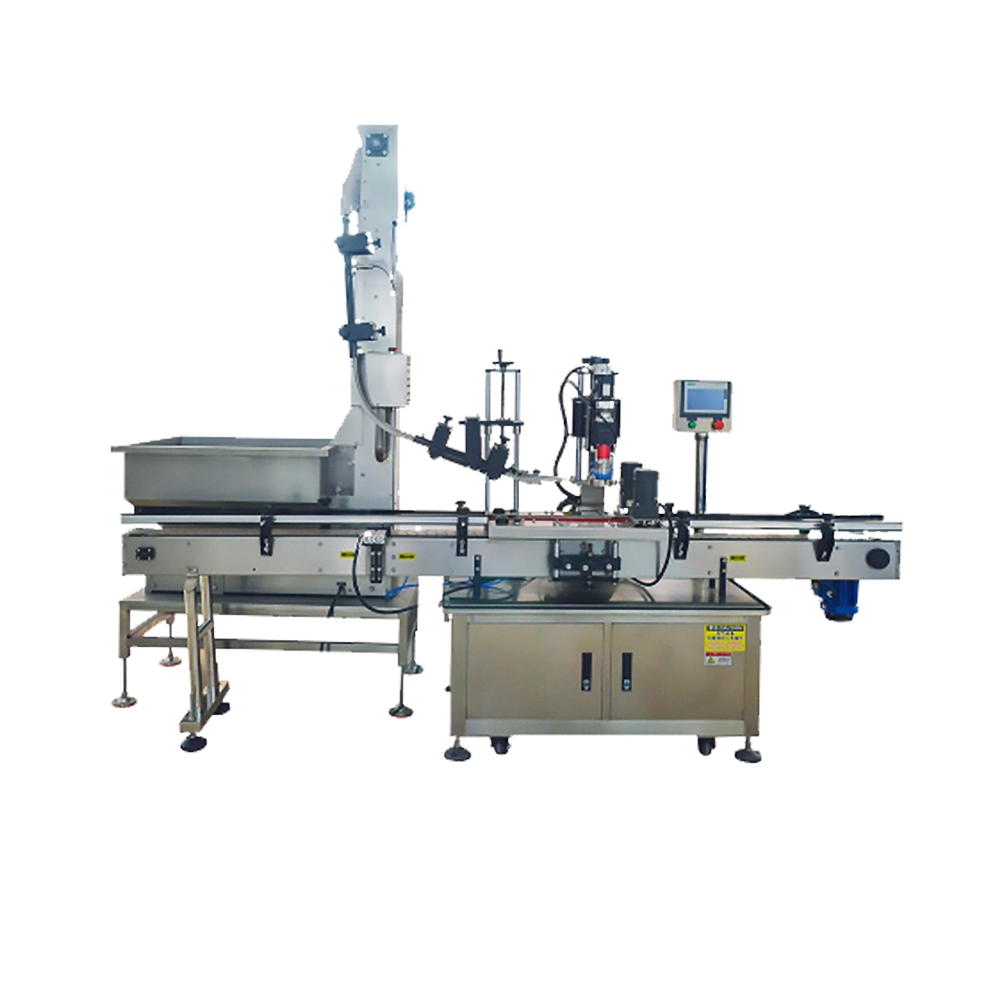
Machine de capsulage automatique de capsules métalliques à vendre
La capsuleuse automatique Yuanyang est une capsuleuse pour bouteilles métalliques, souvent utilisée pour fermer les couvercles de contenants tels que les bouteilles et les bocaux. Elle est largement utilisée dans les industries agroalimentaire, médicale, chimique, cosmétique et autres, pour la production de masse et la production continue.
Caractéristiques:
⦁ Entraînement pneumatique et électrique ;
⦁ Vitesse rapide automatisée ;
⦁ Convient aux bouteilles en verre avec bouchons en métal.
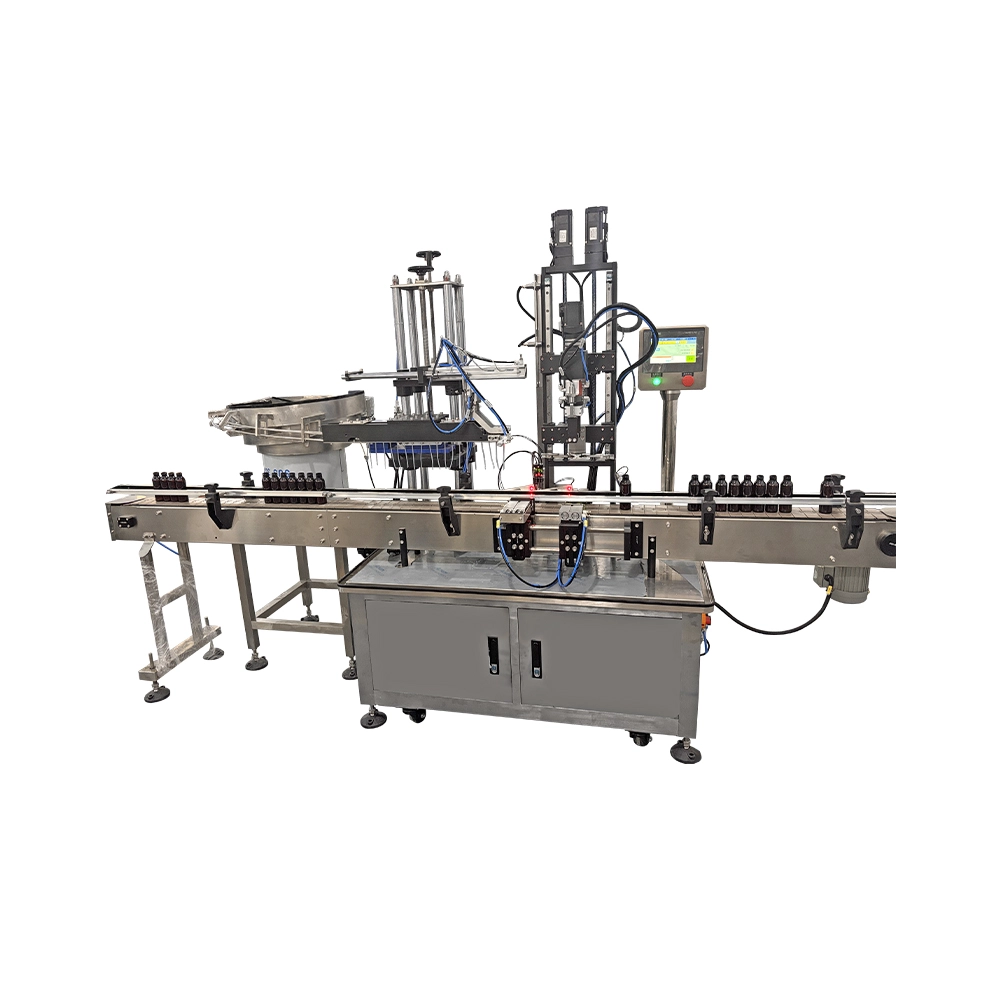
Machine automatique d'alimentation et de bouchage de têtes de pompe à vendre
La capsuleuse automatique Yuanyang est une trieuse et capsuleuse de bouchons pour bouteilles à tête de pompe, souvent utilisée pour fermer les couvercles de contenants tels que les vernis à ongles, les vaporisateurs et les shampoings. Cette capsuleuse est largement utilisée dans les industries agroalimentaire, médicale, chimique, cosmétique et autres, pour la production de masse et la production continue.
Caractéristiques:
⦁ Entraînement pneumatique et électrique ;
⦁ Vitesse rapide automatisée ;
⦁ Convient à différents types de casquettes.
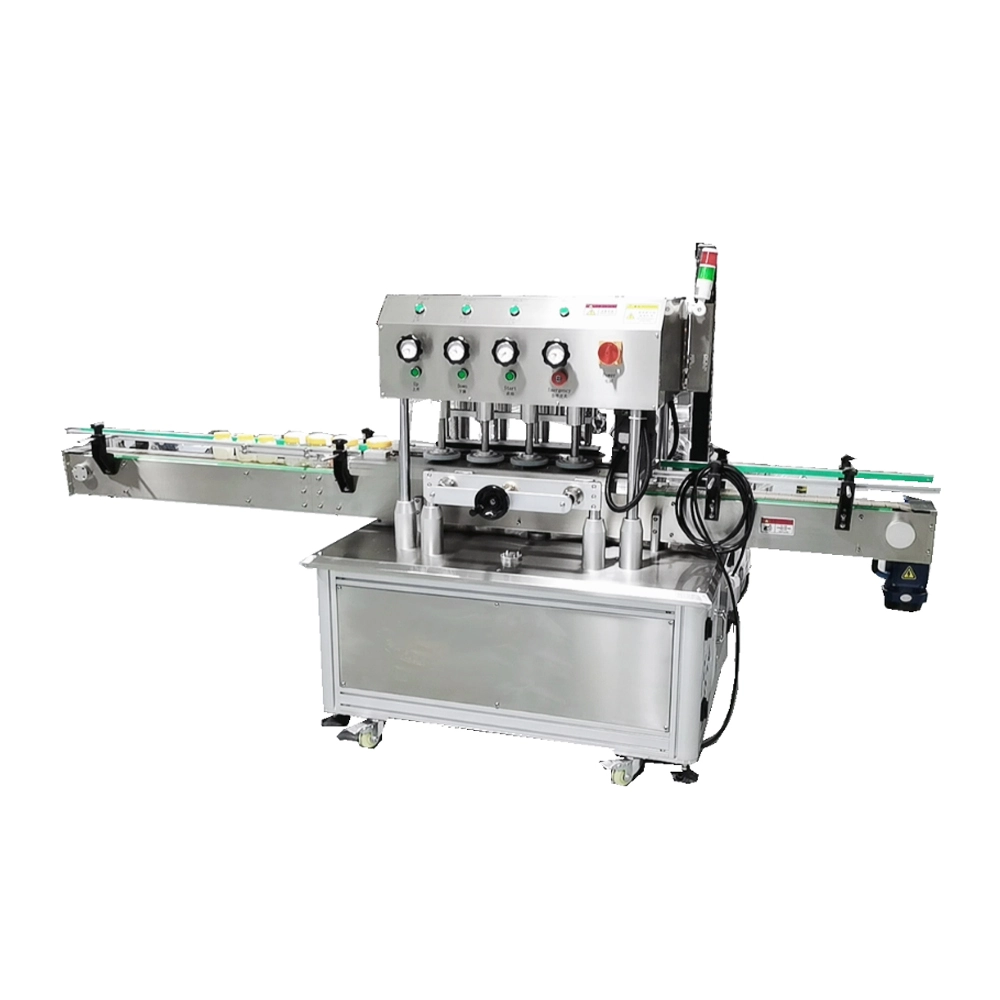
Machine de capsulage automatique à grande vitesse à vendre
La capsuleuse automatique à grande vitesse Yuanyang est une capsuleuse à 8 roues offrant une grande efficacité. Elle est souvent utilisée pour fermer les couvercles de contenants tels que les bouteilles et les bocaux, notamment les bouteilles en plastique, largement utilisées dans les industries agroalimentaire, médicale, chimique, cosmétique et autres, pour la production de masse et la production continue.
Caractéristiques:
⦁ Entraînement électrique;
⦁ Vitesse rapide automatisée ;
⦁ Convient à divers bouchons à vis, pompes et vaporisateurs.
Copyright © 2025 YUANYANG Droits réservés.
 Scanner le code QR
Facebook
YouTube
LinkedIn
WhatsApp : +8613434139712
Machines de Guangzhou Yuanyang