





Sachet Packaging Machine for Sale: Warranty and Support
- Understanding Warranty Coverage and What It Means for Production
- What a typical warranty covers
- Common exclusions and limitations
- Why warranty terms matter to ROI
- Support Models: Remote, On‑site, and Preventive Services
- Remote diagnostics and technical support
- On‑site service and Service Level Agreements (SLAs)
- Preventive maintenance and training services
- Spare Parts, Consumables, and Availability
- Which spare parts to stock on site
- Lead times and global logistics
- Consumables lifecycle and cost planning
- Compliance, Validation and Documentation for Regulated Industries
- Regulatory validation and IQ/OQ/PQ support
- Documentation: manuals, SOPs and traceability
- Certifications and safety compliance
- Warranty and Support: Practical Examples and Comparison
- Standard vs Extended Warranty vs Full Support Contracts
- Case study: minimizing downtime with a High Quality support plan
- Negotiation tips when buying a sachet packaging machine
- Commissioning, Training and Long‑term Maintenance Strategy
- Proper commissioning to protect warranty
- Operator and maintenance training
- Building a long-term maintenance plan
- FAQ — Common Questions about Sachet Packaging Machine Warranty & Support
- Q1: How long is the standard warranty for sachet packaging machines?
- Q2: Are on-site repairs covered, or only parts replacement?
- Q3: Will warranty cover damage caused during installation?
- Q4: What should I do if a critical spare part has a long lead time?
- Q5: How do I validate the machine for pharmaceutical use?
- Contact Sales & Support / View Product
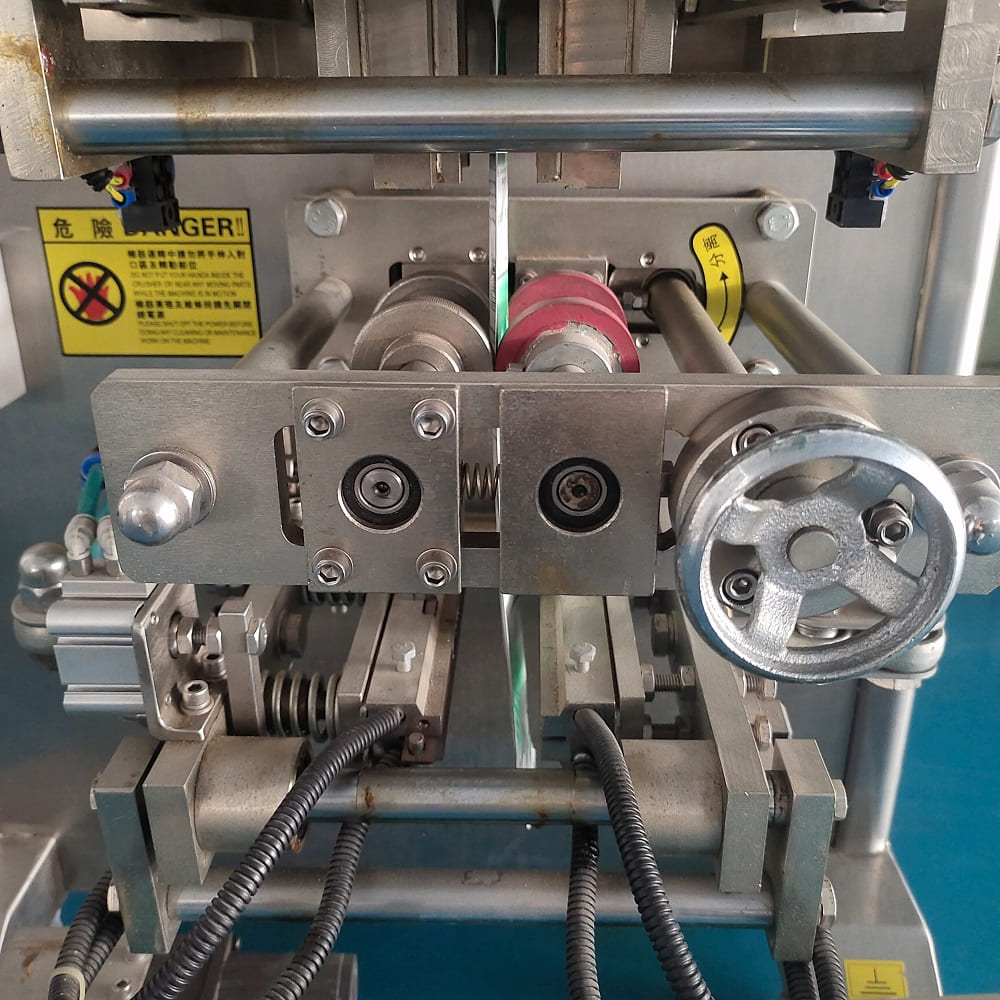
The Sachet Packaging Machine for Sale is an automated, high-speed solution for single-dose and small-pouch packaging. For buyers and plant managers, warranty and after-sales support are as important as machine specifications: clear warranty terms, fast spare-part supply, responsive technical support, and preventative maintenance directly affect uptime, compliance, and total cost of ownership. This guide explains the warranty structures, service levels, and support best practices you should expect when purchasing a sachet packaging machine, helping you make a safer procurement decision and minimize production risk.
Understanding Warranty Coverage and What It Means for Production
What a typical warranty covers
When evaluating a sachet packaging machine, understand the baseline warranty scope. Most manufacturers include a limited warranty that typically covers manufacturing defects in materials and workmanship for a preset period (often 12–24 months or a fixed number of machine hours). Covered items commonly include:
- Defective mechanical components (gears, shafts, bearings)
- Electrical and control systems (PLC, sensors, wiring) if damage is manufacturing-related
- Welding and structural integrity
Consumables (seals, knives, belts, film guides), routine wear items, and damage from misuse are usually excluded. Verify whether the manufacturer provides repair labor, on-site visits, or only parts replacement under the warranty.
Common exclusions and limitations
Be explicit about exclusions so there are no surprises. Typical exclusions include:
- Consumable wear (sealing jaws, cutting blades, belts)
- Damage from improper installation, electrical faults, or poor utilities
- Modifications by third parties or unauthorized repairs
- Use outside specified product parameters (viscosity, particle size, film type)
Request a written warranty document and a clear description of required operating conditions (voltage, air quality, environmental limits) to keep warranty valid.
Why warranty terms matter to ROI
Warranty translates to risk transfer. A longer warranty with comprehensive coverage reduces unexpected capital expenditure and favors predictable operating expenses. When comparing offers for a sachet filling machine or stick pack machine, normalize warranty differences in your total cost of ownership (TCO) calculation — and consider the manufacturer's reputation for honoring claims.
Support Models: Remote, On‑site, and Preventive Services
Remote diagnostics and technical support
Remote support reduces downtime and travel-related delays. Many modern sachet packaging machines have PLCs and HMIs that support remote access for troubleshooting, software updates, and parameter tuning. A robust remote support policy includes response time commitments and secure remote access procedures. Ensure the manufacturer documents connectivity options and cybersecurity measures.
For guidance on validation and documentation expectations in regulated environments, see FDA guidance on process validation here: FDA Process Validation Guidance.
On‑site service and Service Level Agreements (SLAs)
SLAs define guaranteed response and repair times for on‑site support. Typical tiers include:
- Standard: Remote support plus scheduled on-site visits within a business week
- Priority: Next-business-day on-site response
- High Quality: 24/7 emergency response with defined hours to arrival (e.g., 4–8 hours)
Negotiate SLAs that match your production criticality. For high-volume food or pharmaceutical sachet lines, aim for priority or High Quality coverage to protect throughput.
Preventive maintenance and training services
Preventive maintenance (PM) contracts typically include scheduled inspections, lubrication, cleaning, replacement of wear items, and performance tuning. Well-implemented PM reduces machine failures and extends sealing head, cutter, and drive system life. Training packages for operators and maintenance staff—covering routine checks, changeover procedures, and basic troubleshooting—are often offered and should be part of the procurement bundle.
Spare Parts, Consumables, and Availability
Which spare parts to stock on site
Determine a critical spare-parts list before commissioning. Common recommended stock for a sachet pouch machine:
- Sealing jaws and sealing elements
- Cutter blades and knives
- Belts, drive chains, and tensioners
- Sensors and photo eyes
- PLC modules and fuses
Stocking these items can reduce mean time to repair (MTTR) significantly.
Lead times and global logistics
Ask the vendor for average lead times for both common and critical parts. Manufacturers with global distribution centers usually offer shorter delivery windows. Consider vendors who provide a parts portal for easy ordering and trackable shipments. If you operate multiple plants or remote sites, choose a supplier with regional warehouses or authorized distributors.
Consumables lifecycle and cost planning
Consumables like sealing tape, pouch film, and lubrication items should be included in operational budgets. Ask for estimated lifespan (in operating hours or batches) for consumables and example usage rates to properly forecast recurring costs and ensure uninterrupted supply.
Compliance, Validation and Documentation for Regulated Industries
Regulatory validation and IQ/OQ/PQ support
For pharmaceutical, nutraceutical, or certain food applications, equipment must be delivered with IQ (Installation Qualification), OQ (Operational Qualification), and PQ (Performance Qualification) documentation. Many suppliers offer IQ/OQ/PQ packages and on-site validation assistance. Request explicit deliverables and pricing for validation support when your line must meet regulatory audit standards.
Refer to international standards and good manufacturing practice guidance such as ISO standards and WHO GMP: ISO machinery safety standards, and WHO GMP guidance at WHO GMP.
Documentation: manuals, SOPs and traceability
Comprehensive documentation should include user manuals, electrical and pneumatic schematics, spare-parts lists, software/firmware versions, and changeover SOPs. For food and pharma, material contact declarations and traceability documentation for stainless-steel grades or coatings are important. These documents streamline audits and reduce qualification time during regulatory inspections.
Certifications and safety compliance
Ensure the sachet packaging machine meets applicable certifications (CE, UL, or other regional approvals) and machine-safety directives. Manufacturers should provide a Declaration of Conformity and test/inspection certificates for critical components where applicable. For more background on packaging machinery and industry context, see Packaging machine - Wikipedia.
Warranty and Support: Practical Examples and Comparison
Standard vs Extended Warranty vs Full Support Contracts
Below is a simple comparison table that helps translate warranty/support options into operational outcomes. Use this to decide which plan aligns with your risk tolerance and production value.
| Package | Typical Duration | Coverage | Response Time | Best For |
|---|---|---|---|---|
| Standard Warranty | 12–24 months | Manufacturing defects; parts-only or limited labor | Standard business days | Low-volume lines or low criticality |
| Extended Warranty | +1–3 years | Parts & labor; sometimes discounted parts | Faster (next business day) | Medium/high-volume with planned budgets |
| Full Support Contract | 1–5 years | Parts, labor, PM, priority SLA, remote monitoring | 4–24 hours depending on SLA | Mission-critical pharmaceutical/food lines |
Case study: minimizing downtime with a High Quality support plan
One beverage company reported a 60% reduction in unplanned downtime after switching to a High Quality support contract for their line of automatic sachet fillers. Key elements were scheduled PM visits every 3 months, stocked critical spares, and 24/7 remote access for rapid diagnostics. The reduction in lost production paid for the High Quality contract within 11 months.
Negotiation tips when buying a sachet packaging machine
- Request a written warranty and SLA before purchase and include them in the purchase order.
- Clarify what constitutes normal wear vs defect so you can plan parts inventory.
- Negotiate spare-parts bundles or initial spare kits at purchase price.
- Ask for references from existing customers in similar industries to evaluate claim responsiveness.
Commissioning, Training and Long‑term Maintenance Strategy
Proper commissioning to protect warranty
Manufacturer-supervised commissioning ensures correct installation, alignment, and initial parameter tuning—often a condition of the warranty. Ensure electrical, pneumatic, and foundation requirements are met. Obtain a signed commissioning report to confirm that the machine was installed per factory instructions and that operators were trained.
Operator and maintenance training
Training should be role-based: operators learn changeover, cleaning, and basic troubleshooting; maintenance staff learn deeper mechanical and electrical diagnostics. Request training materials and checklists that can be integrated into your SOPs. Well-trained personnel reduce operator-induced failures that can void warranties.
Building a long-term maintenance plan
Create a maintenance schedule tying PM tasks to runtime (hours) or production cycles. Example schedule items:
- Daily: visual checks, cleaning, film path inspection
- Weekly: lubrication points, sensor cleaning, belt tension checks
- Monthly: alignment checks, spare-parts inventory audit
- Quarterly: in-depth inspection by manufacturer or certified technician
FAQ — Common Questions about Sachet Packaging Machine Warranty & Support
Q1: How long is the standard warranty for sachet packaging machines?
A: Standard warranties typically range from 12 to 24 months or a specified number of operating hours. Always confirm the exact period on the purchase contract and whether it starts at delivery or commissioning.
Q2: Are on-site repairs covered, or only parts replacement?
A: Coverage depends on the warranty. Some vendors include on-site labor for a limited period, while others cover parts only. Extended warranties and full-support contracts generally include on-site labor.
Q3: Will warranty cover damage caused during installation?
A: Not usually. Most warranties require that installation be performed according to the manufacturer’s instructions. Manufacturer-supervised commissioning often protects you from this issue because the vendor accepts responsibility for installation-related problems.
Q4: What should I do if a critical spare part has a long lead time?
A: Negotiate an initial spare kit at the time of purchase or select a vendor with local warehouses. Alternatively, include a clause in your support contract guaranteeing priority shipment for critical parts.
Q5: How do I validate the machine for pharmaceutical use?
A: Request IQ/OQ/PQ documentation and validation assistance from the supplier. Follow FDA process validation guidelines and WHO GMP as applicable; ask your vendor for detailed documentation and on-site support.
Contact Sales & Support / View Product
If you are ready to evaluate the Sachet Packaging Machine for Sale or want to review warranty and support options tailored to your facility, contact our sales team or technical support for a customized proposal. We offer demonstration videos, on-site trials, and written warranty/SLA templates to review before purchase. View the product details or request a quote on our product page: Sachet Packaging Machine for Sale. For immediate assistance, email [email protected] or call +1-800-555-0100.
References: FDA process validation guidance (FDA), ISO machinery safety (ISO), WHO GMP guidance (WHO), Packaging machine overview (Wikipedia).
Yuanyang sachet packaging machine is a kind of automatic equipment, mainly used for measuring, filling, and sealing small bag packing materials. The sachet packing machine has become an indispensable piece of equipment in modern production for food, medicine, chemicals, and other fields.
Features:
⦁ Microcomputer controlled;
⦁ Automated fast speed;
⦁ Multi-function integration.
Sizing Emulsifying Mixers for Scalable Manufacturing
How to start a semi auto labeling machine business in Europe
How to start the vacuum homogenizer cream mixer business ?
Where to Buy ultrasonic sieve machine
Homogneizer mixer tank
What product can it produce?
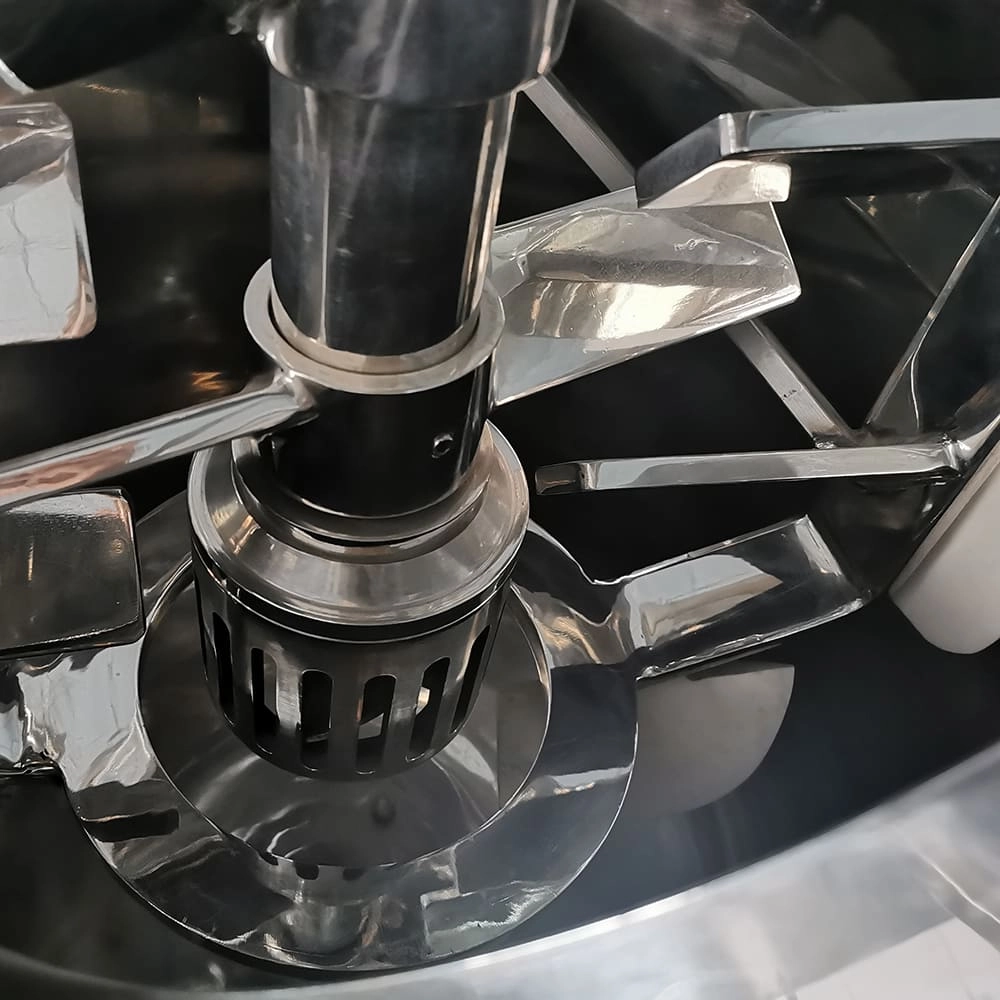
The liquid mixer with homogenizer is mainly used for the production of liquid soap, shampoo, laundry detergent, shower gel, hand wash, sauce, ketchup, dish washing soap,body wash...
One Stage Water Treatment
How long to replace the reverse osmosis membrane and pvc film?
Reverse osmosis membranes are generally recommended to be replaced every year. But it is not a fixed time, the period should be considered according to the actual use environment and operating conditions.
PVC film is recommended to replace every two weeks.
Industries
Are the equipment compliant with industry regulations?
Yes, Yuanyang’s equipment meets GMP, FDA, and other relevant industry regulations, ensuring high-quality and safety standards.
Medicine
What after-sales services does Yuanyang provide?
Yuanyang offers comprehensive after-sales services, including equipment installation, debugging, operation training, regular maintenance, troubleshooting, and technical support, ensuring that your equipment remains in optimal working condition.
Cosmetic
Do your equipment meet GMP and other industry standards?
Yes. Our equipment fully complies with GMP, ISO, and other international industry standards and can be customized to meet specific regulatory requirements based on different markets and customers.
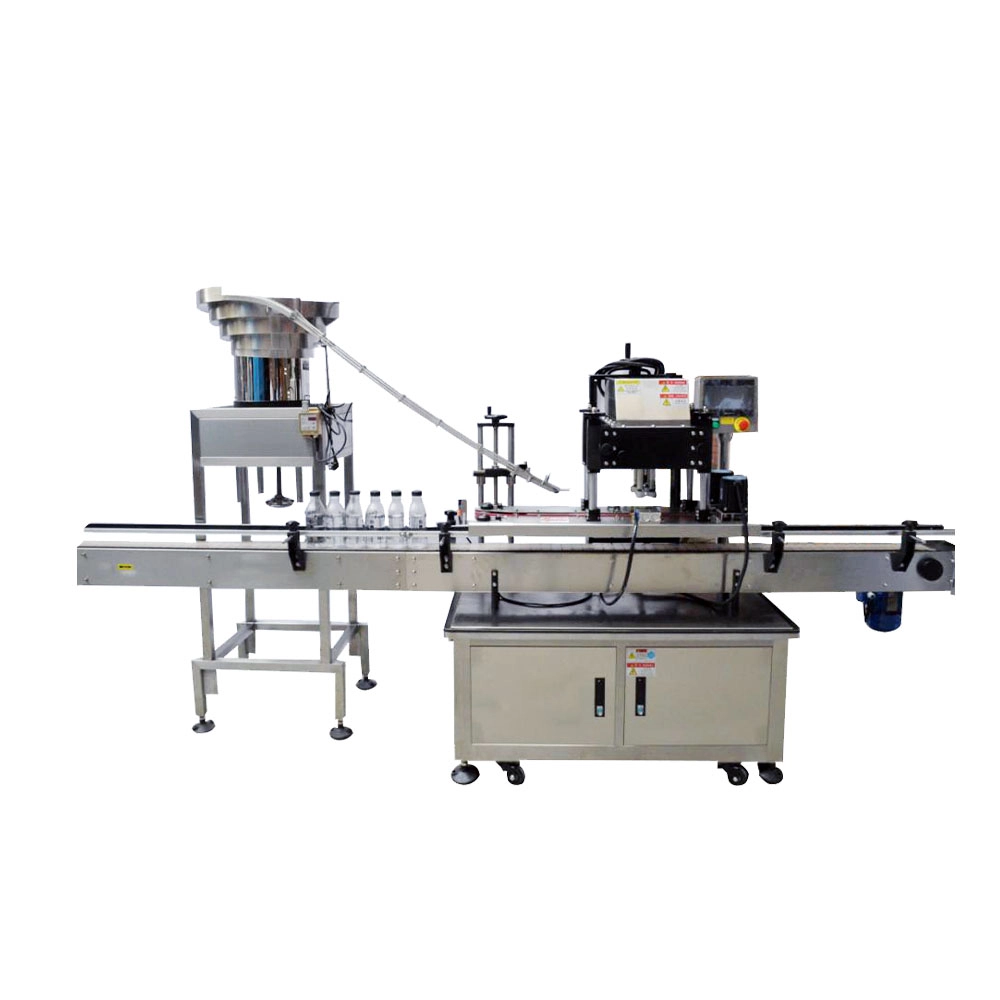
Automatic Plastic Caps Capping Machine with Vibrating Cap Feeder for Sale
Yuanyang automatic screw capping machine is a kind of four-wheel bottle capping machine. The automatic screw capper is often used to close lids of containers such as bottles and jars, especially for plastic bottles, which are widely used in food, medicine, chemical, cosmetic, and other industries for mass production and continuous production lines.
Features:
⦁ Full pneumatic drive;
⦁ Automated fast speed;
⦁ Suitable for various screw caps, pumps, and spray bottles.
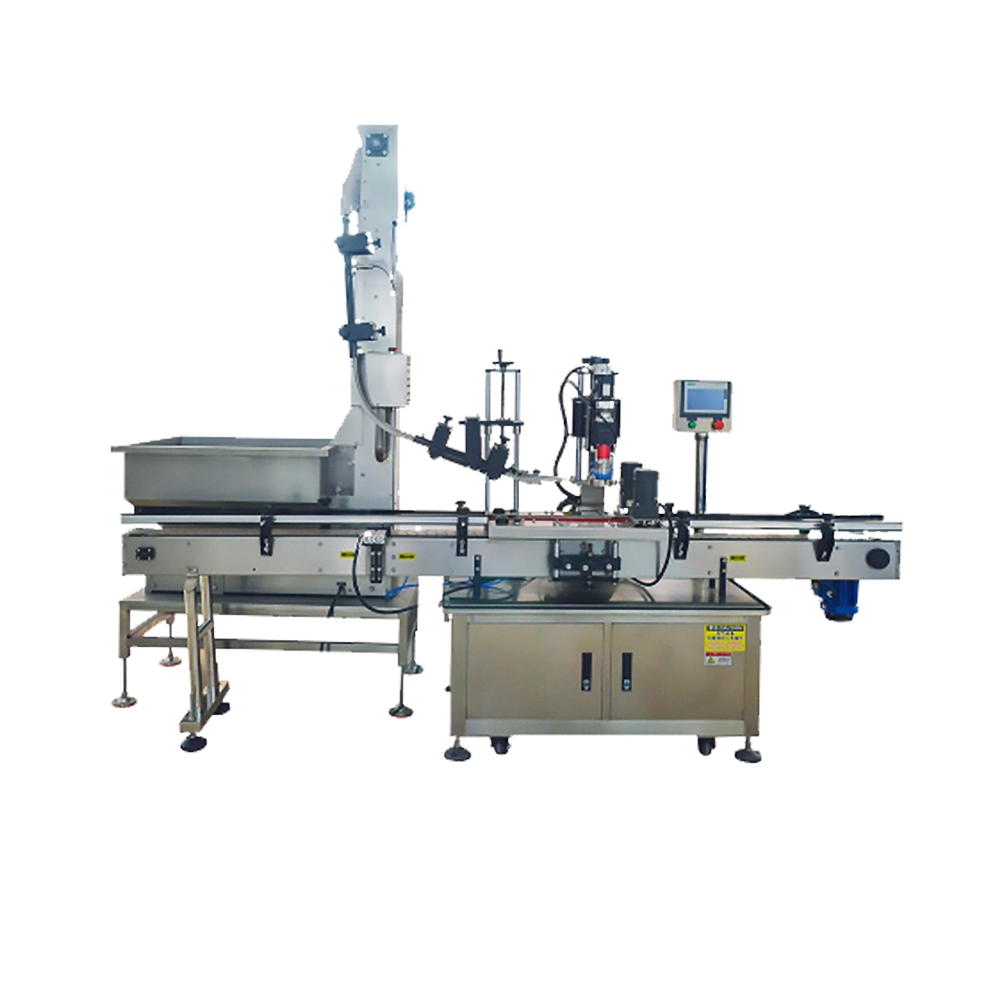
Automatic Metal Caps Capping Machine for Sale
Yuanyang automatic metal cap capping machine is a bottle capper for bottles with metal caps, which is often used to close lids of containers such as bottles and jars. The glass bottle metal capping machine is widely used in food, medicine, chemical, cosmetic, and other industries for mass production and continuous production line .
Features:
⦁ Pneumatic and electric drive;
⦁ Automated fast speed;
⦁ Suitable for glass bottles with metal caps.
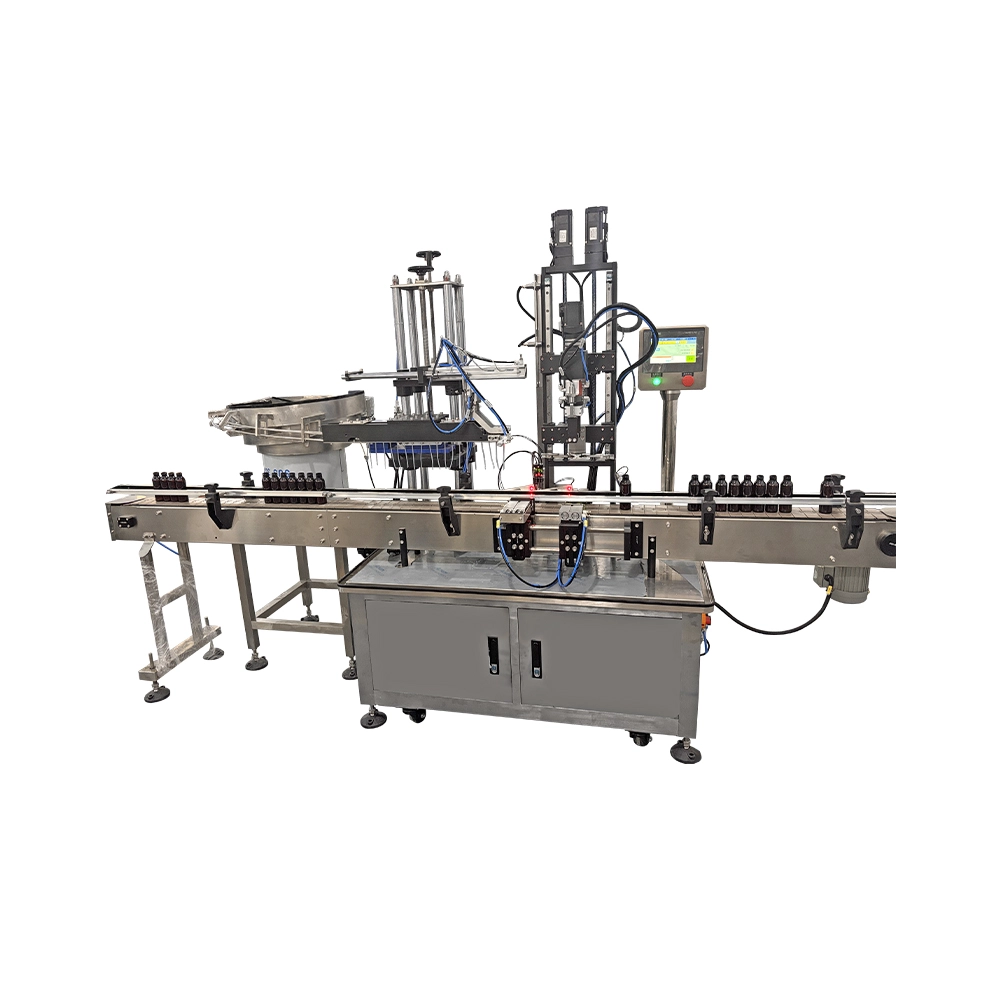
Automatic Pump Head Feeding and Capping Machine for Sale
Yuanyang automatic pump head feeding and capping machine is a bottle cap sorter and capper for bottles with pump heads, which is often used to close lids of containers such as nail polish, sprayers, and shampoo. The capping machine with a pump head feeder is widely used in food, medicine, chemical, cosmetic, and other industries for mass production and continuous production line .
Features:
⦁ Pneumatic and electric drive;
⦁ Automated fast speed;
⦁ Suitable for various types of caps.
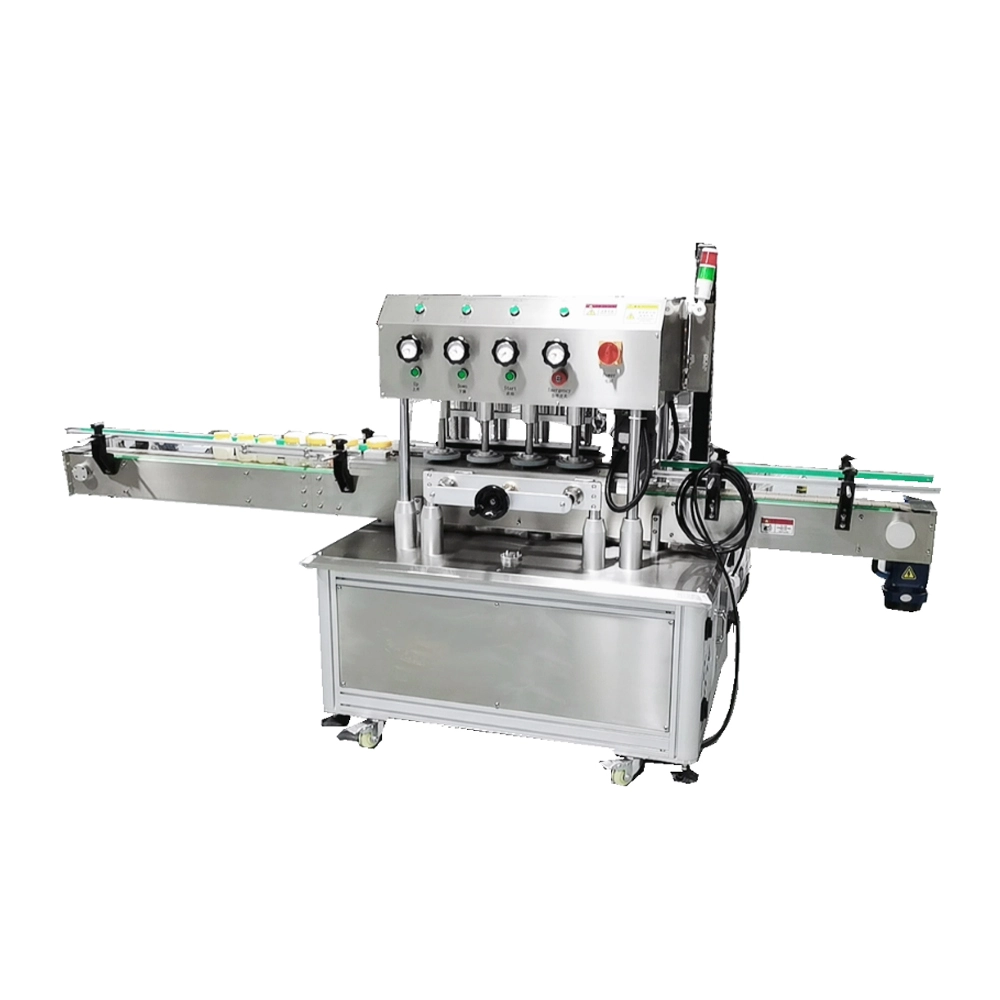
Automatic High Speed Capping Machine for Sale
The Yuanyang automatic high-speed capping machine is a kind of 8-wheel bottle-capping machine with fast working efficiency. The automatic capper is often used to close lids of containers such as bottles and jars, especially for plastic bottles, which are widely used in food, medicine, chemical, cosmetic, and other industries for mass production and continuous production lines.
Features:
⦁ Electric drive;
⦁ Automated fast speed;
⦁ Suitable for various screw caps, pumps, and spray bottles.
 Scan QR Code
Facebook
YouTube
LinkedIn
Whatsapp: +8613434139712
Guangzhou Yuanyang Machinery