





Réduction des temps d'arrêt : Meilleures pratiques de maintenance pour les mélangeurs émulsifiants
- Réduction des temps d'arrêt : Meilleures pratiques de maintenance pour les mélangeurs émulsifiants
- Introduction : Pourquoi la maintenance d'un mélangeur émulsifiant est importante pour la continuité de la production
- À propos du produit : Mélangeur émulsifiant sous vide à vendre — aperçu du produit
- Éléments essentiels à prendre en compte lors de l'entretien d'un mélangeur émulsifiant
- Liste de contrôle quotidienne pour la maintenance des mélangeurs émulsifiants
- Tâches de maintenance préventive hebdomadaires et mensuelles pour réduire les temps d'arrêt
- Activités annuelles et de révision pour prolonger la durée de vie d'un mélangeur émulsifiant
- Dépannage des problèmes courants et comment la maintenance réduit leur récurrence (y compris un focus commercial sur le mélangeur émulsifiant sous vide à vendre)
- Stratégie de gestion des stocks et des pièces de rechange pour minimiser les interruptions de production
- Procédures opérationnelles standardisées et formation du personnel : réduction des temps d’arrêt dus aux erreurs humaines
- Pratiques de nettoyage et de validation des produits cosmétiques : pourquoi la maintenance contribue à la conformité
- Technologies de maintenance prédictive : surveillance de l’état pour éviter les mauvaises surprises
- Coût de maintenance vs temps d'arrêt : un tableau comparatif succinct
- Comment le choix du mélangeur émulsifiant sous vide adapté à la vente permet de réduire les coûts de maintenance.
- Modèle de plan de maintenance pratique pour un mélangeur émulsifiant
- Résumé de la marque : Pourquoi le mélangeur émulsifiant sous vide Yuanyang permet de réduire les temps d’arrêt
- FAQ — Minimiser les temps d'arrêt : Meilleures pratiques de maintenance pour les mélangeurs émulsifiants
- Nous contacter / Voir le produit
- Références faisant autorité et lectures complémentaires
Réduction des temps d'arrêt : Meilleures pratiques de maintenance pour les mélangeurs émulsifiants
Introduction : Pourquoi la maintenance d'un mélangeur émulsifiant est importante pour la continuité de la production
Les arrêts de production sur les lignes utilisant un mélangeur émulsifiant peuvent s'avérer coûteux : pertes de production, gaspillage de matières premières, retards de livraison et atteinte à la réputation. Pour les fabricants de cosmétiques, de produits pharmaceutiques et de produits chimiques de spécialité, la constance de la texture, de la granulométrie et la sécurité microbiologique dépendent d'un équipement d'émulsification fiable. Cet article présente des pratiques de maintenance concrètes et prioritaires permettant de minimiser les temps d'arrêt et de garantir le fonctionnement optimal d'un mélangeur émulsifiant. Pour atteindre les objectifs de production futurs, le dimensionnement est crucial ; il est donc essentiel de procéder à un examen régulier.dimensionnement des mélangeurs émulsifiants pour une fabrication à grande échelle.
À propos du produit : Mélangeur émulsifiant sous vide à vendre — aperçu du produit
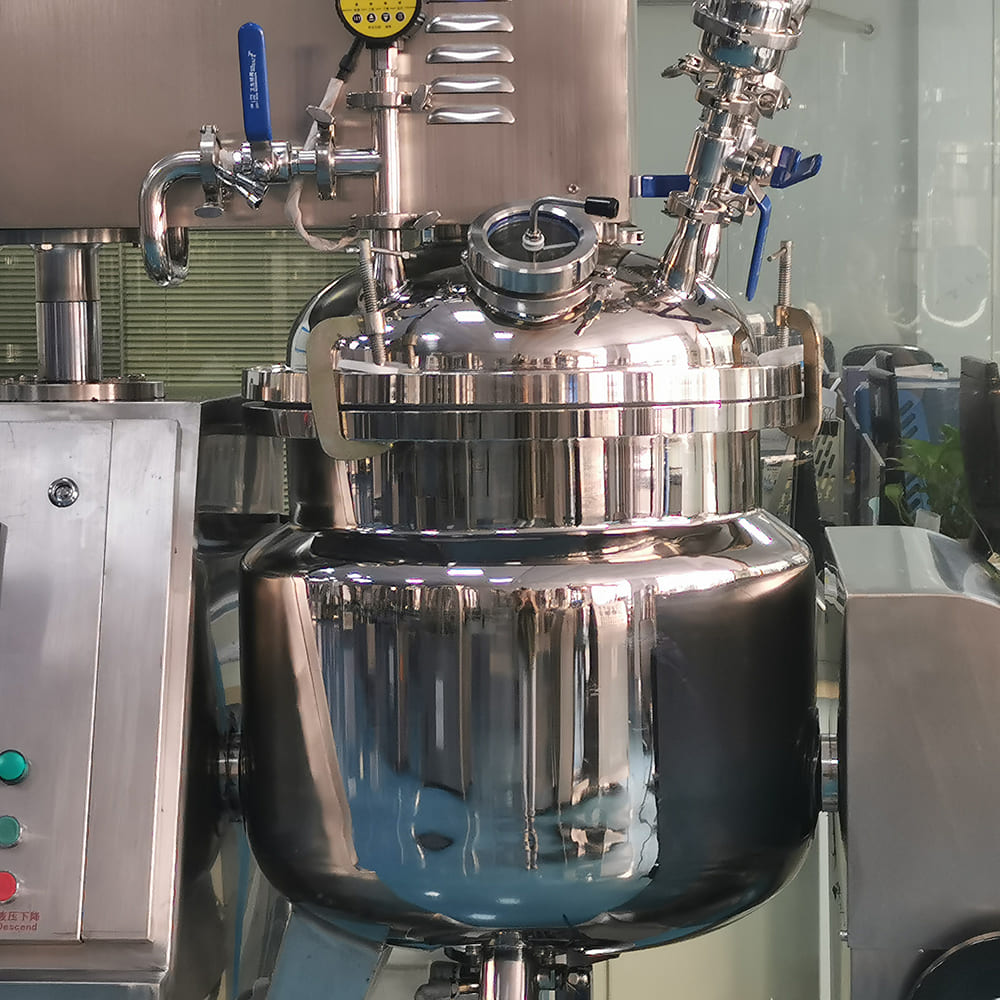
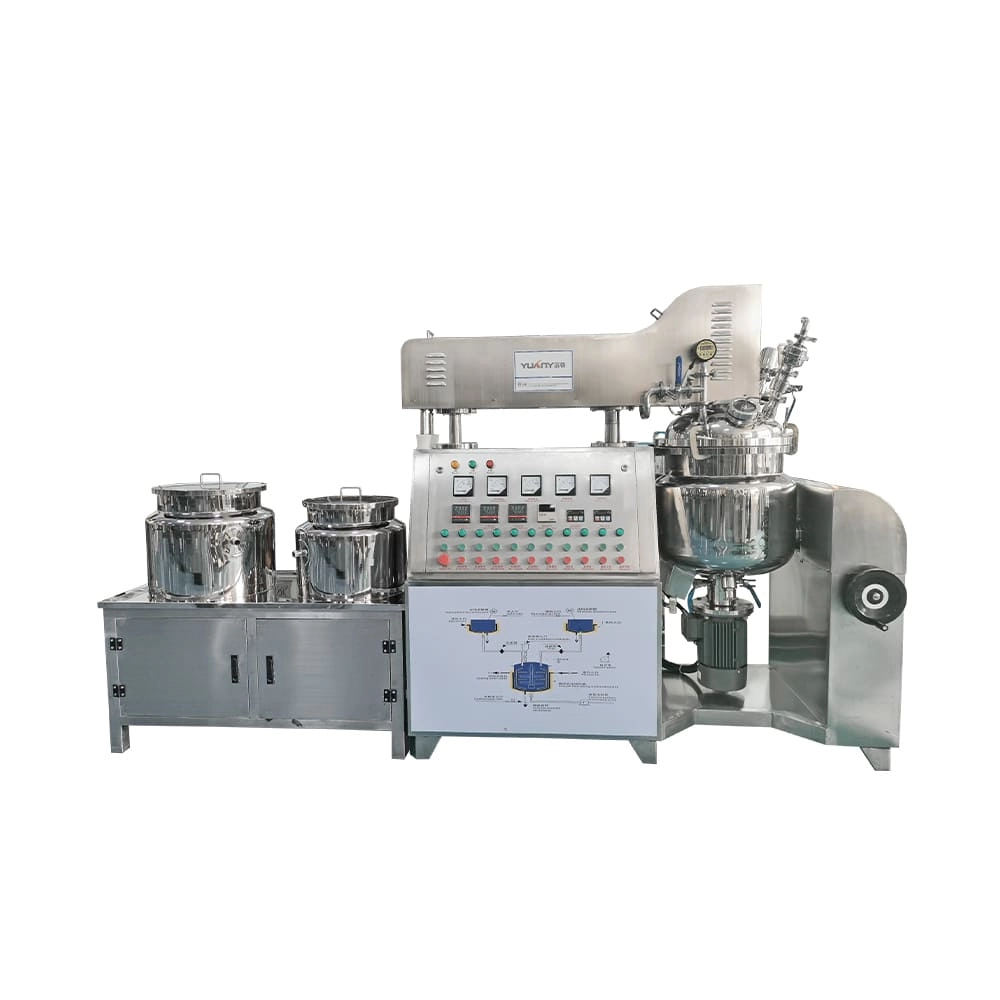
Le mélangeur émulsifiant sous vide Yuanyang est une sorte de machine émulsifiante, l'équipement de production de cosmétiques le plus populaire pour la fabrication de crèmes, de produits de soins de la peau, de pommades, de pâtes et d'émulsions.
Caractéristiques:
⦁ Composé d'un pot émulsifiant principal, d'un pot à eau et d'un pot à huile.
⦁ Avec un système de levage hydraulique, un système de vide et un système de commande électrique.
⦁ Convient aux produits d'une viscosité de 10 000 à 50 000 cps.
⦁ Granulométrie parfaite de 2 microns et uniformément répartie.
Éléments essentiels à prendre en compte lors de l'entretien d'un mélangeur émulsifiant
Pour minimiser les temps d'arrêt, la maintenance doit cibler les composants critiques et sujets aux pannes : la tête d'émulsification (rotor/stator ou disque à cisaillement élevé), l'ensemble homogénéisateur, la pompe à vide et les conduites, les joints d'étanchéité, le système de levage hydraulique, le moteur et le réducteur, les enveloppes de régulation de température, la tuyauterie et les vannes, ainsi que le système de commande électrique. Prioriser ces composants permet d'optimiser l'allocation des ressources et de réduire le risque d'arrêts imprévus.
Liste de contrôle quotidienne pour la maintenance des mélangeurs émulsifiants
Les tâches quotidiennes permettent d'éviter que de petits problèmes ne deviennent des arrêts de production. Les opérateurs doivent remplir une simple liste de contrôle au début et à la fin de leur quart de travail :
- Inspection visuelle pour détecter les fuites dans les réservoirs d'huile/d'eau, les conduites de la chemise et les raccords de vide.
- Vérifiez le niveau et la température d'huile des boîtes de vitesses et des unités hydrauliques.
- Vérifier que le manomètre à vide atteint le point de consigne requis et le maintient pendant un court essai.
- Vérifier que le panneau de commande n'affiche aucun code d'erreur ; noter toute alarme.
- Assurez-vous que la tête d'émulsification tourne sans à-coups, sans bruits ni vibrations anormaux.
- Vérifier que les joints sont intacts et qu'il n'y a pas d'accumulation de produit autour de la zone de mélange.
L'exécution et l'enregistrement des contrôles quotidiens permettent de constituer un historique qui aide à détecter rapidement les tendances de performance.
Tâches de maintenance préventive hebdomadaires et mensuelles pour réduire les temps d'arrêt
Les tâches de niveau supérieur doivent suivre un calendrier basé sur les heures de production. Les éléments hebdomadaires et mensuels typiques comprennent :
- Nettoyer et inspecter les surfaces du rotor/stator et les disques émulsifiants pour détecter toute usure ou piqûre.
- Vérifiez l'huile de la pompe à vide et remplacez-la ou faites l'appoint selon les intervalles préconisés par le fabricant.
- Inspectez les vérins hydrauliques et les joints pour détecter toute fuite ; testez le bon fonctionnement du mécanisme de levage.
- Effectuez un contrôle des vibrations et de la température des moteurs et des boîtes de vitesses afin de détecter rapidement l'usure des roulements.
- Vérifier le débit et la précision du thermostat des circuits de chauffage/refroidissement de la veste.
La documentation des constatations permet de prendre des décisions prédictives au lieu de procéder à des réparations réactives, réduisant ainsi considérablement les temps d'arrêt imprévus.
Activités annuelles et de révision pour prolonger la durée de vie d'un mélangeur émulsifiant
Une ou deux fois par an (selon l'intensité d'utilisation), prévoyez une maintenance plus approfondie ou un arrêt programmé pour les inspections et le remplacement des pièces :
- Démontez la tête d'homogénéisation/émulsification pour inspection et remplacez les rotors, stators ou joints usés.
- Rincer et tester le système hydraulique ; remplacer les filtres et l'huile hydraulique s'ils sont dégradés.
- Effectuer l'entretien du moteur et de la boîte de vitesses : remplacement des roulements, inspection des engrenages, vidange d'huile.
- Tester la pression des conduites à vide et remplacer les tuyaux poreux ou endommagés.
- Valider le système de commande électrique, les systèmes de secours des automates programmables et les arrêts d'urgence.
Les révisions planifiées permettent d'éviter les pannes catastrophiques soudaines et coûtent généralement beaucoup moins cher que les réparations d'urgence.
Dépannage des problèmes courants et comment la maintenance réduit leur récurrence (y compris un focus commercial sur le mélangeur émulsifiant sous vide à vendre)
Les pannes courantes entraînant des arrêts de production comprennent un vide insuffisant, une mauvaise émulsification (taille importante des particules/séparation de phases), une surchauffe et une défaillance hydraulique. Chacune de ces pannes dispose de mesures préventives claires :
- Faible niveau de vide : entretenez régulièrement la pompe à vide, assurez-vous de l’étanchéité du couvercle de la cuve d’émulsification et utilisez des tuyaux de vide de haute qualité adaptés à cet usage. Un mélangeur émulsifiant sous vide bien entretenu et équipé des accessoires appropriés réduit les risques d’arrêt liés au vide.
- Émulsification insuffisante : remplacer les pièces usées du rotor/stator et vérifier la géométrie et les jeux des pales. S’assurer que la formulation et le contrôle de la température correspondent aux paramètres de procédé validés.
- Surchauffe : Maintenez le débit du liquide de refroidissement, vérifiez les thermostats et les capteurs, et assurez-vous que le refroidissement de la boîte de vitesses et du moteur fonctionne correctement.
- Dysfonctionnement hydraulique : Effectuez des inspections régulières des vérins hydrauliques et des soupapes de décharge ; conservez sur place des joints de rechange et une trousse de réparation hydraulique de base.
La résolution des causes profondes par la maintenance (plutôt que par des solutions rapides et répétées) réduit le temps moyen de réparation (MTTR) à long terme.
Stratégie de gestion des stocks et des pièces de rechange pour minimiser les interruptions de production
L'accès rapide aux pièces de rechange critiques est l'un des moyens les plus efficaces de minimiser les temps d'arrêt. Établissez une liste de pièces de rechange priorisées en fonction de la fréquence des pannes et des délais de livraison. Les pièces de rechange généralement recommandées comprennent :
- Joints d'étanchéité rotor/stator ou homogénéisateur et disques interchangeables
- Kits d'entretien pour pompes à vide (joints, garnitures, huile)
- Joints et filtres hydrauliques
- Roulements, courroies (le cas échéant) et fusibles électriques
- Modules de secours du système de contrôle/pièces de rechange pour automate programmable
Stockez les pièces de rechange dans un environnement contrôlé et suivez leur utilisation grâce à un logiciel de gestion des stocks simple afin d'éviter le surstockage tout en garantissant la disponibilité rapide des pièces critiques.
Procédures opérationnelles standardisées et formation du personnel : réduction des temps d’arrêt dus aux erreurs humaines
L'erreur humaine est une cause fréquente d'arrêts de production. Pour réduire ce risque, élaborez des procédures opérationnelles standard (POS) claires pour le démarrage, l'arrêt, le nettoyage en place (NEP) et les procédures d'urgence. Incluez des registres de quart de travail basés sur des listes de contrôle et exigez la signature de l'opérateur.
Des formations pratiques régulières et des tests de compétences pour les opérateurs et les techniciens de maintenance garantissent une utilisation optimale du mélangeur émulsifiant sous vide et réduisent les erreurs susceptibles d'endommager l'équipement ou de le contaminer. Il est recommandé de former plusieurs employés à plusieurs postes afin d'assurer la continuité du service en cas d'absence du personnel principal.
Pratiques de nettoyage et de validation des produits cosmétiques : pourquoi la maintenance contribue à la conformité
En production cosmétique, le nettoyage et la validation sont des impératifs réglementaires et de qualité. Mettez en œuvre un programme NEP (Nettoyage En Place) documenté, avec des procédures validées pour les détergents, les temps de contact et la qualité du rinçage final. Conservez les enregistrements des cycles de nettoyage et de la maintenance du système NEP. Des joints en bon état, des surfaces de cuves polies et un fonctionnement optimal du vide contribuent à une meilleure nettoyabilité et réduisent les temps d'arrêt liés à la contamination.
Technologies de maintenance prédictive : surveillance de l’état pour éviter les mauvaises surprises
La maintenance prédictive réduit les temps d'arrêt imprévus en détectant la détérioration avant la panne. Les principales techniques applicables aux mélangeurs émulsifiants comprennent :
- Analyse vibratoire des moteurs, boîtes de vitesses et pompes pour détecter l'usure des roulements.
- Thermographie infrarouge pour détecter les points chauds dans les panneaux électriques ou les roulements.
- Analyse du courant moteur pour détecter les variations de charge indiquant un blocage mécanique ou une usure des pales.
- Surveillance des tendances du vide pour détecter les fuites ou la dégradation de la pompe.
L'installation de capteurs simples et l'intégration de leurs données dans un tableau de bord de maintenance peuvent fournir des alertes précoces et guider les fenêtres d'arrêt planifiées.
Coût de maintenance vs temps d'arrêt : un tableau comparatif succinct
Vous trouverez ci-dessous un tableau comparatif simple permettant de justifier l'investissement dans la maintenance préventive par rapport aux réparations réactives.
| Aspect | Maintenance préventive | Réparation réactive |
|---|---|---|
| Temps de disponibilité annuel moyen | 95–99% | 80 à 90 % |
| Coût moyen par événement | Faible à modéré (pièces et main-d'œuvre prévues) | Élevée (heures supplémentaires, pièces détachées urgentes, pertes de produits) |
| Risque lié à la qualité du produit | Faible | Haut |
| Délai de récupération | Fenêtre d'indisponibilité planifiée (de quelques heures à quelques jours) | Non planifié (de quelques heures à plusieurs semaines selon les pièces) |
Comment le choix du mélangeur émulsifiant sous vide adapté à la vente permet de réduire les coûts de maintenance.
Lors de l'achat d'un nouveau mélangeur émulsifiant, privilégiez les modèles conçus pour faciliter la maintenance : têtes d'émulsification facilement accessibles, pièces de rechange standardisées, joints robustes et systèmes hydrauliques et de vide fiables. Le mélangeur émulsifiant sous vide Yuanyang, par exemple, est équipé d'un système de levage hydraulique, d'un système de vide intégré et d'un système de commande électrique centralisant les diagnostics ; autant d'atouts qui simplifient la maintenance et réduisent le temps moyen de réparation.
Modèle de plan de maintenance pratique pour un mélangeur émulsifiant
Utilisez ce plan concis comme point de départ et ajustez les intervalles en fonction de votre intensité de production :
- Quotidiennement : Contrôles visuels, test rapide de l'aspirateur, vérification du panneau de commande, consultation des journaux.
- Hebdomadaire : Nettoyer l'extérieur de la tête d'émulsification, vérifier le niveau d'huile hydraulique, inspecter les joints.
- Mensuellement : contrôle des vibrations et de la température, vérification de l'huile de la pompe à vide, resserrage des connexions électriques.
- Trimestriellement : Changer les filtres hydrauliques, vérifier les débitmètres de la chemise, inspecter le jeu rotor/stator.
- Annuel : Démontage et inspection complets de l’homogénéisateur, entretien de la boîte de vitesses, remplacement planifié des pièces de rechange.
Résumé de la marque : Pourquoi le mélangeur émulsifiant sous vide Yuanyang permet de réduire les temps d’arrêt
Le mélangeur émulsifiant sous vide Yuanyang, disponible à la vente, allie conception pratique et fonctionnalités axées sur la production : un ensemble de cuve d'émulsification modulaire pour un accès aisé, un système de levage hydraulique pour un retrait sécurisé de la tête, un système de vide intégré adapté en usine à la géométrie de la cuve et des systèmes de contrôle centralisant les alertes et les journaux de processus. Conçue pour des viscosités de produits comprises entre 10 000 et 50 000 cps et permettant d'obtenir des particules jusqu'à 2 microns, cette machine réduit les risques de retouche et de contamination, deux facteurs critiques de temps d'arrêt.
FAQ — Minimiser les temps d'arrêt : Meilleures pratiques de maintenance pour les mélangeurs émulsifiants
Q1 : À quelle fréquence faut-il remplacer les pièces du rotor et du stator ?
La fréquence de remplacement dépend de l'utilisation et des matériaux traités. Dans les installations cosmétiques à usage intensif, les pièces critiques du rotor/stator peuvent être remplacées tous les 6 à 18 mois. Il convient d'inspecter mensuellement les pièces afin de détecter toute rayure ou modification du jeu et de conserver des pièces de rechange sur site.
Q2 : Peut-on prévoir une panne de pompe à vide ?
Oui. Surveillez l'évolution du niveau de vide, les vibrations de la pompe et l'état de l'huile. Une baisse inattendue du vide ou une augmentation de la température de la pompe sont des signes précoces d'usure.
Q3 : Quelles pratiques de nettoyage minimisent les défaillances d’étanchéité ?
Utilisez des procédures NEP validées, évitez les solvants agressifs sauf s'ils sont approuvés pour les joints, et assurez-vous que les joints sont compatibles avec vos formulations. Rincez abondamment et séchez si nécessaire.
Q4 : Est-il judicieux d'investir dans des capteurs de maintenance prédictive pour un mélangeur émulsifiant ?
Pour les opérations à débit moyen à élevé, oui. Les capteurs réduisent les arrêts imprévus en fournissant des alertes précoces et aident à planifier la maintenance pendant les périodes de faible production.
Q5 : Où puis-je trouver des pièces détachées pour un mélangeur émulsifiant sous vide à vendre ?
Obtenez les pièces auprès du fabricant d'origine ou de distributeurs agréés afin de garantir la compatibilité des matériaux et un montage correct. Établissez une liste de pièces de rechange prioritaires et des seuils de réapprovisionnement pour éviter les interruptions de service prolongées.
Nous contacter / Voir le produit
Si votre objectif est de minimiser les temps d'arrêt et de garantir une production fiable, envisagez d'évaluer le mélangeur émulsifiant sous vide Yuanyang. Pour obtenir des spécifications détaillées, des informations sur les pièces de rechange ou pour planifier un audit de maintenance, contactez notre équipe commerciale ou consultez notre site web : /vacuum-emulsifying-mixer-for-sale
Références faisant autorité et lectures complémentaires
- Émulsification — Wikipédia : https://en.wikipedia.org/wiki/Emulsification
- Aperçu de la réglementation de la FDA sur les cosmétiques : https://www.fda.gov/cosmetics
- ISO 22716 Cosmétiques — Bonnes pratiques de fabrication : https://www.iso.org/standard/36437.
- Commission européenne — Cosmétiques : https://ec.europa.eu/growth/sectors/cosmetics_en
- CosmeticsInfo.org — Ressources sur les ingrédients et la sécurité : https://www.cosmeticsinfo.org
- Administration de la sécurité et de la santé au travail (OSHA) : https://www.osha.gov
L'application de ces bonnes pratiques de maintenance permettra de réduire les arrêts imprévus, de préserver la qualité des produits et de prolonger la durée de vie de votre mélangeur émulsifiant. Une documentation régulière, une stratégie de gestion des pièces de rechange priorisée et un investissement dans la surveillance prédictive garantissent un retour sur investissement optimal pour les environnements de production en continu.
Principaux critères d'achat des machines de scellage automatique de tubes
Comment choisir le fabricant et le fournisseur de mélangeurs de poudre industriels au Royaume-Uni ?
Fabricant et fournisseur de mélangeurs émulsifiants en gros en Europe
Top 10 des fabricants et fournisseurs de machines de dispersion chimique en Amérique
Mélangeur homogénéisateur
Quelle est la vitesse de rotation de l'agitateur supérieur ?
La vitesse standard de notre mélangeur de liquides est de 60 tr/min. Avec un variateur de vitesse (convertisseur de fréquence), la vitesse est variable de 0 à 60 tr/min.
Mélangeur de détergent en poudre
Avez-vous des instructions manuelles pour les mélangeurs de poudre ?
Oui, nous fournissons des instructions manuelles en version anglaise aux clients ainsi que des tests vidéo et des opérations pour une meilleure compréhension.
Machine de capsulage automatique à servomoteur
La vitesse de rotation du séparateur de bouteilles peut-elle être contrôlée pour cette machine de capsulage servo ?
La vitesse de séparation des bouteilles peut être contrôlée par un convertisseur de fréquence sur l'armoire électrique.
Industries
L'équipement peut-il traiter divers matériaux ?
Oui, nos équipements peuvent traiter une large gamme de matériaux, notamment des liquides, des poudres, des pâtes et des substances à haute viscosité.
Machine de tamisage vibrante
Quelle est la maille disponible pour l'écran filtrant ?
La maille varie de 2 à 500 mesh. Le service client recommandera aux clients la maille la plus adaptée en fonction des matériaux et des besoins.
Mélangeur de savon liquide à vendre
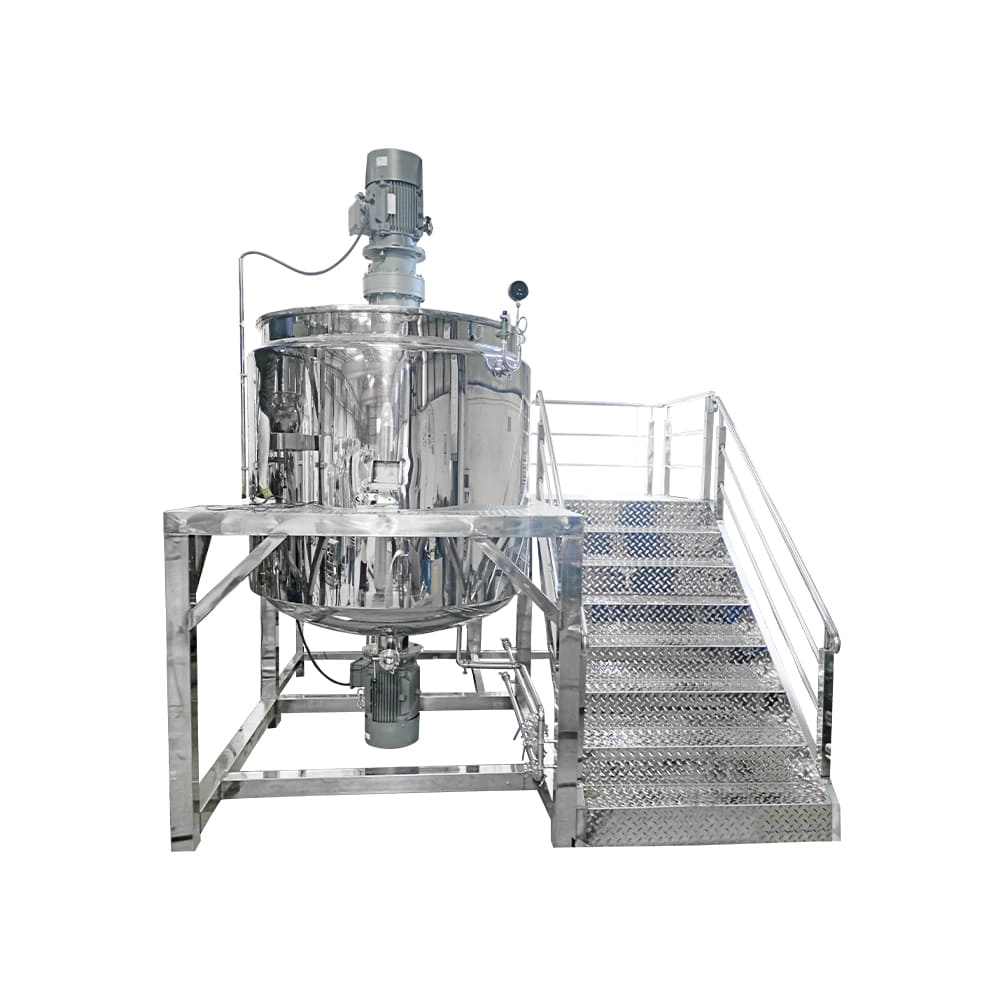
Le mélangeur de savon liquide Yuanyang est un mélangeur industriel homogène destiné à la production de savon liquide. Il est principalement conçu pour la production de produits liquides tels que shampoings, gels douche, lessives, liquides vaisselle, désinfectants pour les mains et autres liquides épais.
Caractéristiques:
⦁ Dessus plat, couvercle semi-ouvert, système de commande électrique.
⦁ Convient à divers produits de nettoyage liquides et sauces.
⦁ Racleurs muraux en PTFE agitant en haut, homogénéisateur à haut cisaillement en bas.
Machine de fabrication de cosmétiques
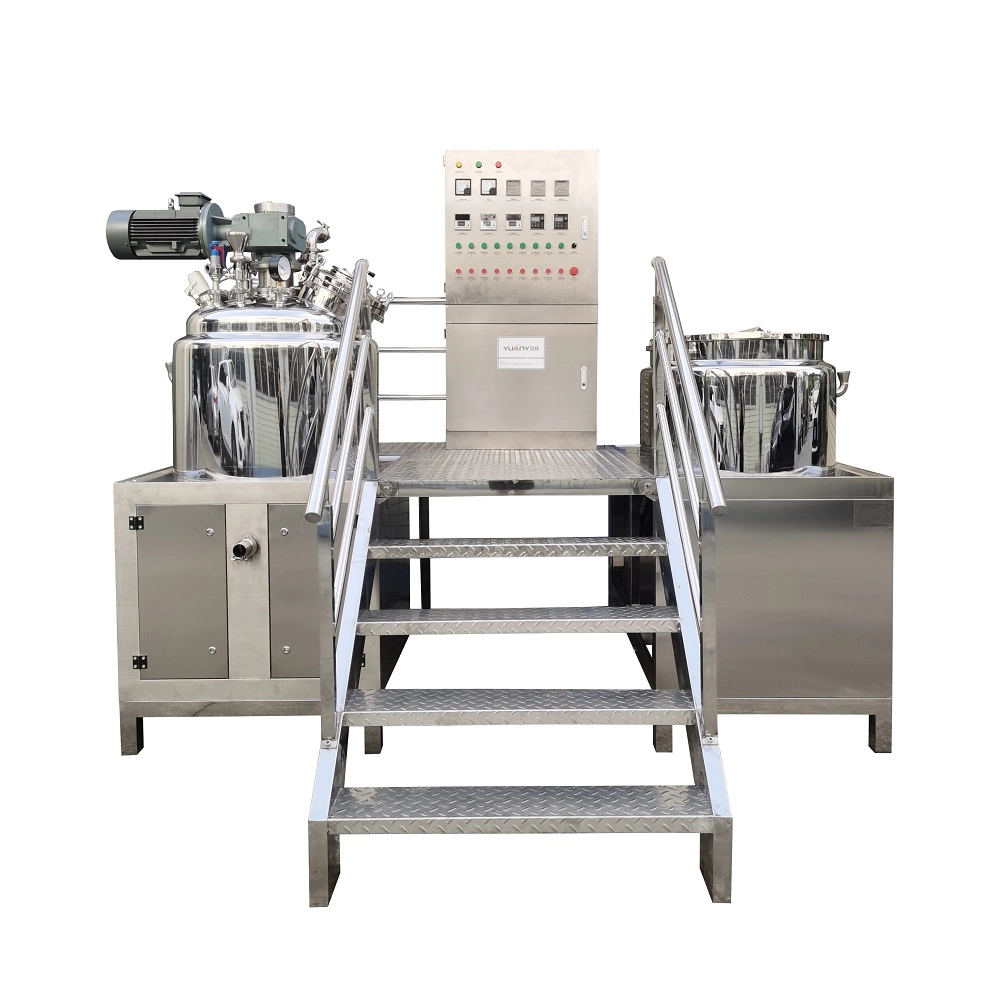
La machine de fabrication de cosmétiques Yuanyang est un équipement de mélange combiné avec un réservoir d'homogénéisateur sous vide principal, un réservoir d'eau et un réservoir d'huile, qui est un équipement intégré avec un système de mélange, de dispersion, d'homogénéisation, d'émulsification, de mise sous vide et d'absorption de poudre qui est largement utilisé dans les domaines cosmétique, alimentaire, pharmaceutique et chimique.
Caractéristiques:
⦁ Avec couvercle fixe, système de vide et système de contrôle électrique.
⦁ Convient aux produits d'une viscosité de 10 000 à 50 000 cps.
⦁ Granulométrie parfaite de 2 microns et uniformément répartie.
Mélangeur émulsifiant sous vide à vendre
Le mélangeur émulsifiant sous vide Yuanyang est une sorte de machine émulsifiante, l'équipement de production de cosmétiques le plus populaire pour la fabrication de crèmes, de produits de soins de la peau, de pommades, de pâtes et d'émulsions.
Caractéristiques:
⦁ Composé d'un pot émulsifiant principal, d'un pot à eau et d'un pot à huile.
⦁ Avec un système de levage hydraulique, un système de vide et un système de commande électrique.
⦁ Convient aux produits d'une viscosité de 10 000 à 50 000 cps.
⦁ Granulométrie parfaite de 2 microns et uniformément répartie.
Émulsificateur à vide à levage hydraulique 50L
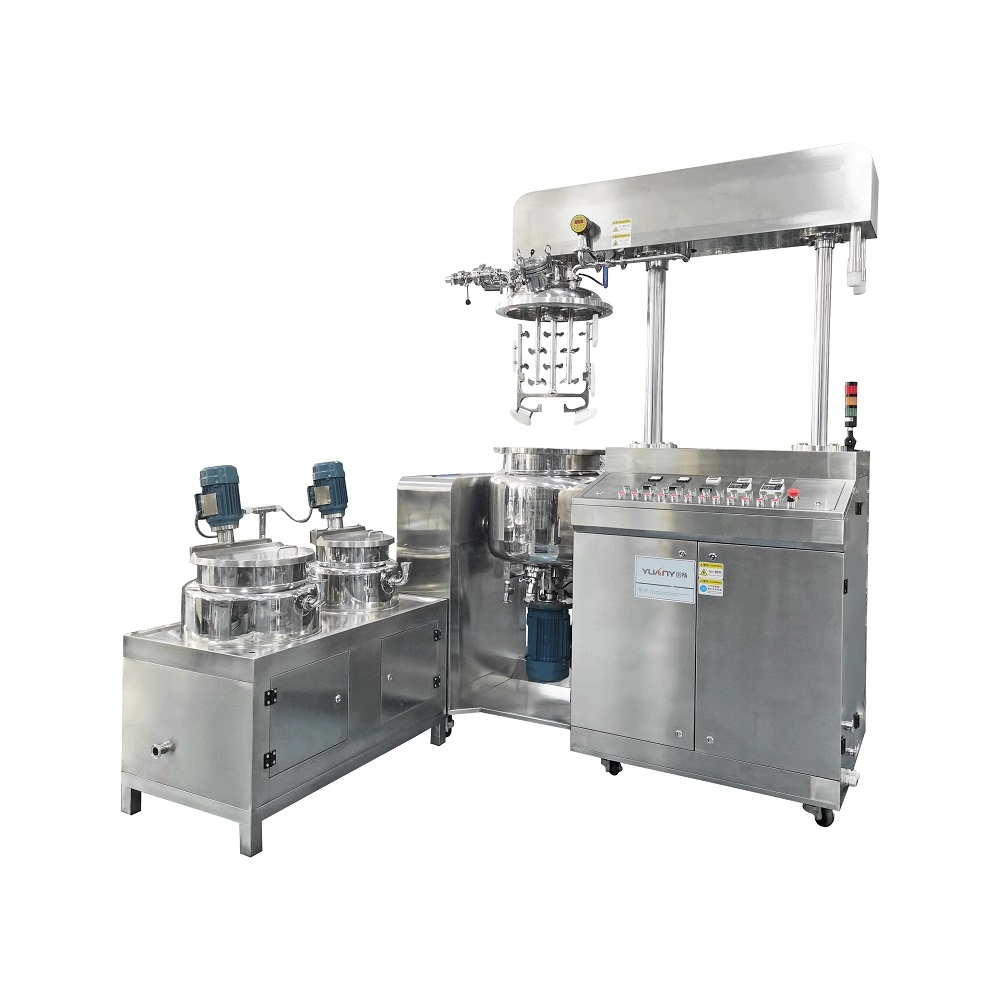
L'émulsificateur sous vide à levage hydraulique Yuanyang est un équipement de mélange combiné comprenant un réservoir d'homogénéisateur sous vide principal, un réservoir d'eau et un réservoir d'huile. Il s'agit d'un équipement intégré doté d'un système de mélange, de dispersion, d'homogénéisation, d'émulsification, de mise sous vide et d'absorption de poudre, largement utilisé dans les secteurs des cosmétiques, de l'alimentation, de la pharmacie et de la chimie.
Caractéristiques:
⦁ Avec un couvercle à levage hydraulique et un pot basculant, un système de vide et un système de commande électrique.
⦁ Convient aux produits d'une viscosité de 10 000 à 50 000 cps.
⦁ Granulométrie parfaite de 2 microns et uniformément répartie.
Copyright © 2025 YUANYANG Droits réservés.
 Scanner le code QR
Facebook
YouTube
LinkedIn
WhatsApp : +8613434139712
Machines de Guangzhou Yuanyang