





دمج خلاطات الاستحلاب الفراغية في الخطوط الآلية
- دمج خلاطات الاستحلاب الفراغية في الخطوط الآلية
- ما هو الخلاط المستحلب ولماذا تعتبر الأتمتة مهمة؟
- نقدم لكم خلاط الاستحلاب الفراغي المعروض للبيع: لمحة عن المنتج
- الفوائد الرئيسية لدمج خلاط الاستحلاب الفراغي في الخطوط الآلية
- الاعتبارات الفنية عند اختيار خلاط مستحلب لأغراض التشغيل الآلي
- مقارنة بين خلاطات الاستحلاب الفراغية الدفعية وأنظمة الاستحلاب المستمرة المدمجة.
- كيفية دمج خلاط استحلاب فراغي في خط تحكم PLC/SCADA
- مراقبة الجودة، والتحقق من الصحة، والاعتبارات التنظيمية
- تخطيط المرافق والبصمة والصيانة
- اعتبارات العائد على الاستثمار وتكاليف التشغيل
- قائمة التحقق من التنفيذ: دمج خلاط استحلاب فراغي
- مزايا العلامة التجارية: لماذا تفكر في شراء خلاط الاستحلاب الفراغي من يوانيانغ؟
- مثال نموذجي لتخطيط خط آلي
- نصائح عملية من الممارسة الصناعية
- الأسئلة الشائعة
- س: ما هو الفرق الرئيسي بين خلاط الاستحلاب الفراغي وخلاط القص العالي القياسي؟
- س: هل يمكن دمج خلاط الاستحلاب الفراغي من يوانيانغ في خطوط الإنتاج الآلية الحالية؟
- س: ما هي لزوجة المنتج التي يمكن لهذا الخلاط المستحلب بالتفريغ التعامل معها؟
- س: كيف يؤدي الوصول إلى حجم جسيمات يبلغ 2 ميكرون إلى تحسين منتجي؟
- س: ما هي أعمال التنظيف والصيانة التي يجب أن أخطط لها؟
- س: أين يمكنني الحصول على الوثائق والاختبارات اللازمة لدعم عمليات التدقيق التنظيمي؟
- تواصل معنا أو اطلع على المنتج
- مراجع موثوقة ومصادر قراءة إضافية

دمج خلاطات الاستحلاب الفراغية في الخطوط الآلية
ما هو الخلاط المستحلب ولماذا تعتبر الأتمتة مهمة؟
خلاط الاستحلاب هو خلاط صناعي متخصص مصمم لدمج السوائل غير القابلة للامتزاج في مستحلب مستقر. في صناعات مستحضرات التجميل والأدوية والمواد الكيميائية المتخصصة، تُعد خلاطات الاستحلاب أساسية لإنتاج الكريمات ومنتجات العناية بالبشرة والمراهم والمعاجين وغيرها من المستحلبات ذات القوام المتجانس والاستقرار. يساهم دمج خلاط الاستحلاب في خط إنتاج آلي في تقليل العمالة، وتحسين قابلية التكرار، وتقصير وقت تغيير خط الإنتاج، وتعزيز مراقبة الجودة، مما يجعله خطوة ضرورية للمصنعين الذين يوسعون نطاق الإنتاج ويلبيون المتطلبات التنظيمية. ومع دمج الآلات، يصبح فهم آلية عملها أكثر أهمية. مقارنة تقنيات الخلاطات المستحلبة: الاستقرار والاتساقيساعد على تحسين كل من جودة العملية وجودة المنتج.
نقدم لكم خلاط الاستحلاب الفراغي المعروض للبيع: لمحة عن المنتج
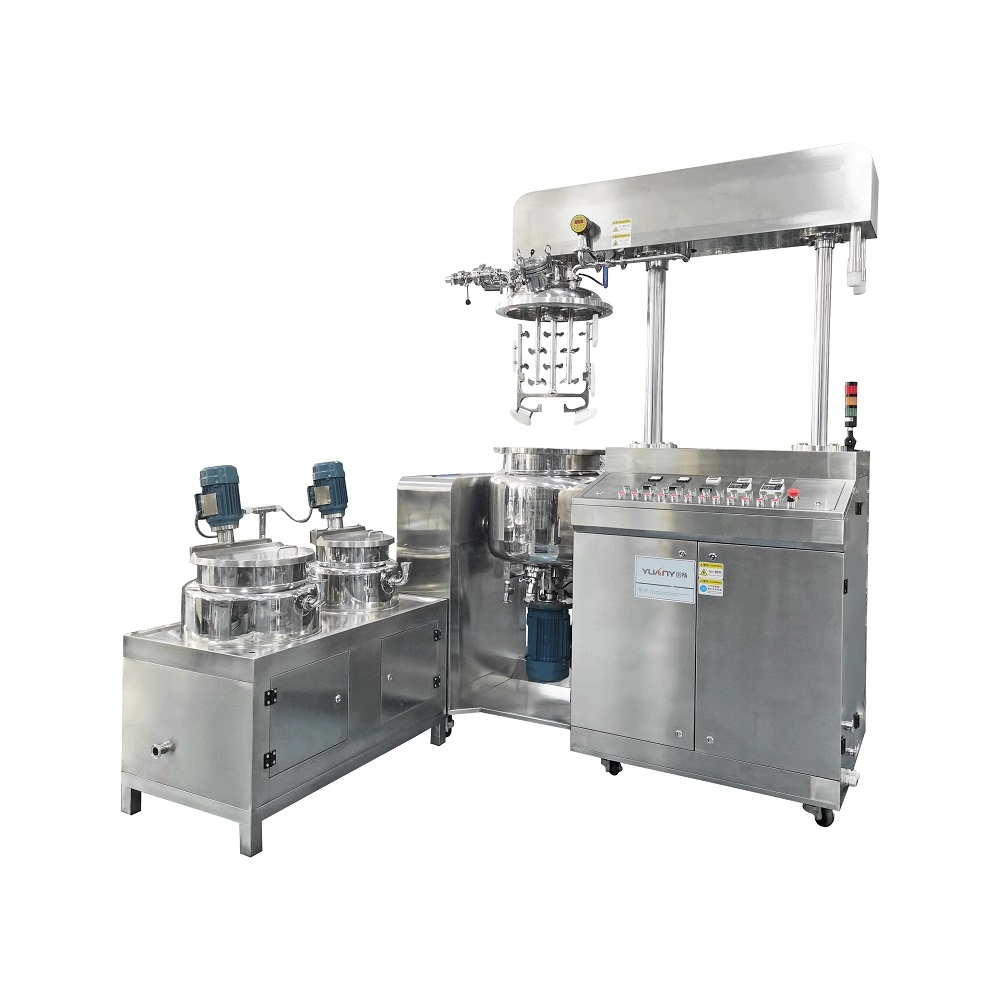
خلاطة المستحلب الفراغية Yuanyang هي نوع من آلات المستحلب، وهي معدات إنتاج مستحضرات التجميل الأكثر شعبية لصنع الكريم ومنتجات العناية بالبشرة والمراهم والمعجون والمستحلبات.
سمات:
⦁ يتكون من وعاء الاستحلاب الرئيسي ووعاء الماء ووعاء الزيت.
⦁ مع نظام الرفع الهيدروليكي، ونظام الفراغ، ونظام التحكم الكهربائي.
⦁ مناسب للمنتجات ذات اللزوجة 10,000~50,000 cps.
⦁ حجم الجسيمات المثالي 2 ميكرون وموزعة بالتساوي.
الفوائد الرئيسية لدمج خلاط الاستحلاب الفراغي في الخطوط الآلية
تُحقق أتمتة عملية الاستحلاب مزايا ملموسة في مجالات الإنتاج والجودة والامتثال. وتشمل الفوائد النموذجية ما يلي:
- جودة وملمس المنتج المتسق من خلال الجرعات الآلية والتجانس الموقوت ومراحل التفريغ المتحكم بها.
- تقليل مخاطر التلوث من خلال تمكين المعالجة الفراغية ذات النظام المغلق وتسلسلات التنظيف الآلي في المكان (CIP).
- تحسين الإنتاجية وتقليل الفاقد بفضل القياس الدقيق للمكونات وتقليل تباين أداء المشغلين.
- إنتاجية قابلة للتوسع من خلال مزامنة دورات المستحلب مع المعدات السابقة واللاحقة مثل الخزانات وآلات التعبئة وخطوط التغليف.
- تسريع وقت الوصول إلى السوق بفضل وصفات العمليات القابلة للتكرار والمخزنة في نظام PLC أو SCADA.
الاعتبارات الفنية عند اختيار خلاط مستحلب لأغراض التشغيل الآلي
يتطلب اختيار خلاط الاستحلاب الفراغي المناسب لخط إنتاج آلي تقييم العديد من المعايير الفنية التي تؤثر على تعقيد التكامل وجودة المنتج النهائي.
عوامل مهمة يجب مراعاتها:
- سعة العملية ووقت الدورة: قم بمطابقة حجم الوعاء وقوة جهاز التجنيس مع أحجام الدفعات المستهدفة والإنتاجية المطلوبة.
- نطاق اللزوجة: تأكد من أن الخلاط يتعامل مع لزوجة المنتج؛ تم تحديد آلات Yuanyang لنطاق 10000 ~ 50000 سنتي بويز، وهو ما يغطي العديد من الكريمات والمراهم.
- حجم الجسيمات وتجانسها: إذا كان مطلوبًا حجم جسيمات أقل من 5 ميكرون أو 2 ميكرون، فتحقق من أداء نظام الدوار الثابت أو نظام القص العالي للمستحلب.
- قدرة التفريغ: تعمل مراحل التفريغ على تقليل دخول الهواء وتحسين مدة الصلاحية؛ تأكد من عمق نظام التفريغ واستقراره لتركيبتك.
- واجهات التشغيل الآلي: PLC، SCADA، الإدخال/الإخراج عن بعد، وتوافق إدارة الوصفات من أجل التكامل السلس مع أنظمة التحكم في المصنع.
- جاهزية CIP و SIP: القدرة على أتمتة دورات التنظيف والتعقيم دون الحاجة إلى تدخل يدوي.
مقارنة بين خلاطات الاستحلاب الفراغية الدفعية وأنظمة الاستحلاب المستمرة المدمجة.
عند تصميم خط إنتاج آلي، يُعدّ اختيار نظام الاستحلاب الدفعي أو المستمر من أولى القرارات. يلخص الجدول أدناه مزايا وعيوب كل نظام.
| يصف | خلاط استحلاب بالتفريغ يعمل على دفعات (مثل يوانيانغ) | جهاز تجانس مستمر مدمج |
|---|---|---|
| الاستخدام النموذجي | مستحضرات التجميل، بكميات صغيرة إلى متوسطة، تركيبات معقدة | مستحلبات بسيطة ذات حجم كبير، معالجة مستمرة |
| المرونة | تغييرات سهلة وسريعة في الوصفات وتنظيف المنتجات | أقل - مُحسَّن للتركيبات المستمرة |
| التحكم في حجم الجسيمات | ممتاز - تحكم دقيق باستخدام الفراغ والقص العالي | جيد - يعتمد على تصميم جهاز التجنيس |
| تعقيد الأتمتة | متوسط - يتطلب جدولة الدفعات والتنظيف في الموقع | زيادة التكامل الأولي - عملية الحالة المستقرة أبسط |
| الأفضل ل | مستحضرات تجميل عالية الجودة، إنتاج حسب الطلب بكميات صغيرة، مكونات حساسة | مستحلبات السلع الأساسية، مصانع الإنتاج المستمر عالية الإنتاجية |
كيفية دمج خلاط استحلاب فراغي في خط تحكم PLC/SCADA
ينبغي التخطيط لخطوات التكامل مع فريق الأتمتة ومورد المعدات لضمان توافق التحكم وتدفق البيانات مع أهداف الإنتاج.
- حدد منطق العملية: ارسم الخطوات المطلوبة للشحن، والتفريغ، والاستحلاب، والتسخين/التبريد، والتفريغ، والتنظيف.
- تصميم الواجهة: الاتفاق على الإشارات والبروتوكولات (Modbus، Profinet، EtherNet/IP) ونقاط الإدخال/الإخراج. التأكد من إمكانية الوصول إلى مشغلات المحركات والصمامات ومضخات التفريغ والأنظمة الهيدروليكية من وحدة التحكم المنطقية القابلة للبرمجة (PLC).
- إدارة الوصفات: تطبيق نظام تخزين الوصفات لضمان إمكانية تكرار التسلسلات، بما في ذلك سرعة الخلط، ومنحنى التسخين، ونقاط ضبط الفراغ.
- تسجيل البيانات وإمكانية التتبع: التقاط الطوابع الزمنية، ومعرفات الدفعات، ودرجات الحرارة، والضغوط، ومعدلات القص، وإجراءات المشغل لعمليات تدقيق الجودة.
- السلامة والأقفال: تنفيذ وظائف السلامة PLC، ومفاتيح التوقف في حالات الطوارئ، وتخفيف الضغط، وأقفال الإغلاق لأغراض الصيانة.
- أتمتة التنظيف في المكان (CIP): دمج الصمامات والمضخات وعناصر التسخين لتشغيل دورات التنظيف الآلية والتحقق من نتائج التنظيف.
مراقبة الجودة، والتحقق من الصحة، والاعتبارات التنظيمية
يمكن لخلاطات الاستحلاب الفراغية الآلية أن تدعم الامتثال التنظيمي، ولكن يجب على الشركة المصنعة والمستخدم إثبات وجود ضوابط مناسبة والتحقق من صحتها.
تشمل إجراءات مراقبة الجودة والامتثال الرئيسية ما يلي:
- تحليل حجم الجسيمات لتأكيد التوزيع المستهدف بحجم 2 ميكرون عند تحديده.
- قياسات اللزوجة عبر الدفعات لضمان الاتساق ضمن نطاق 10000 إلى 50000 سنتي بويز.
- التحقق من صحة درجة الحرارة والضغط أثناء دورات الإنتاج والتنظيف.
- وثائق التحقق من صحة التنظيف لإثبات فعالية نظام التنظيف في المكان (CIP) وعدم وجود تلوث متبادل.
- سجلات التتبع للمواد الخام وأرقام الدفعات ومعايير العملية.
تخطيط المرافق والبصمة والصيانة
خطط للمرافق والصيانة لمنع توقف الإنتاج وضمان استمراريته.
- الكهرباء: تأكد من متطلبات الجهد الكهربائي والطور وبادئ تشغيل المحرك للمحركات الكهربائية ومضخات التفريغ والوحدات الهيدروليكية.
- الهواء المضغوط والتفريغ: قم بتوفير مضخة تفريغ ذات حجم مناسب وتأكد من أن خطوط التفريغ متوافقة مع معايير الأغذية أو مستحضرات التجميل.
- التسخين بالبخار أو الزيت الحراري أو التسخين الكهربائي: اختر طريقة التسخين لأغلفة الماء أو الزيت حسب احتياجات التركيبة.
- مساحة الأرضية والرفع: يتضمن تصميم يوانيانغ نظام رفع هيدروليكي؛ لضمان وجود خلوص علوي كافٍ وقدرة تحمل أرضية مناسبة.
- الصيانة: جدولة فحوصات الأختام الميكانيكية، وفحوصات الدوار والثابت، وصيانة مضخة التفريغ كجزء من الصيانة الوقائية.
اعتبارات العائد على الاستثمار وتكاليف التشغيل
ينبغي تقييم الاستثمار في خلاط استحلاب فراغي آلي باستخدام نموذج واقعي للعائد على الاستثمار يأخذ في الاعتبار ما يلي:
- تكلفة رأس المال مقابل تحسينات الإنتاجية المتوقعة وعائد الإنتاج.
- توفير في تكاليف العمالة نتيجة تقليل عمليات الخلط والمراقبة اليدوية.
- توفير المواد الخام بفضل تركيبات أكثر اتساقاً وتقليل إعادة العمل.
- تكاليف الطاقة للتدفئة والتفريغ والخلط مقارنة بالأنظمة اليدوية أو الأقل كفاءة.
- تكاليف دورة حياة الصيانة وقطع الغيار.
عادة ما يسترد المصنعون تكاليف المعدات بشكل أسرع عندما تقلل الأتمتة من إعادة العمل وتزيد من الإنتاجية المقبولة، خاصة بالنسبة لمنتجات التجميل عالية القيمة.
قائمة التحقق من التنفيذ: دمج خلاط استحلاب فراغي
قائمة مرجعية عملية لفرق المشاريع:
- حدد عائلات المنتجات وأحجام الدفعات للتأكد من قدرة الآلة.
- تأكد من متطلبات اللزوجة وحجم الجسيمات؛ وتأكد من أن المستحلب يفي بهذه المواصفات.
- تصميم بنية الأتمتة وبروتوكولات الاتصال مع الشركة المصنعة للمعدات الأصلية.
- قم بتخطيط المرافق والأساسات ومسارات الوصول لنظام الرفع الهيدروليكي ومضخات التفريغ.
- تطوير وتوثيق الوصفات، ودورات التنظيف في المكان، وخطط أخذ عينات مراقبة الجودة.
- تدريب موظفي التشغيل والصيانة على خلاط الاستحلاب الفراغي والأنظمة الآلية.
- قم بتشغيل اختبار القبول في المصنع (FAT) واختبار القبول في الموقع (SAT) مع سيناريوهات العملية من البداية إلى النهاية.
مزايا العلامة التجارية: لماذا تفكر في شراء خلاط الاستحلاب الفراغي من يوانيانغ؟
عند اختيار مورد لخلاط مستحلب لإدراجه في خط إنتاج آلي، ضع في اعتبارك خبرة المورد، وتصميم المنتج، وخدمات ما بعد البيع. تقدم شركة يوانيانغ خلاط مستحلب فراغي مصمم خصيصًا بميزات تناسب إنتاج مستحضرات التجميل الآلي.
- تصميم النظام الكامل: وعاء الاستحلاب الرئيسي بالإضافة إلى أوعية الماء والزيت المخصصة تبسط خطوات الشحن والتسخين.
- الرفع الهيدروليكي: يسهل عملية التفريغ والصيانة الآمنة، ويتكامل بشكل جيد مع ناقلات النقل الآلية أو المضخات.
- نظام تحكم كهربائي وفراغ مدمج: يقلل من نقاط التكامل ويبسط عملية الربط مع وحدة التحكم المنطقية القابلة للبرمجة (PLC).
- مصمم للزوجة التجميلية الشائعة: يدعم لزوجة من 10000 إلى 50000 سنتي بويز، ويغطي العديد من الكريمات والمراهم.
- أداء استحلاب مثبت: القدرة على تحقيق توزيع لحجم الجسيمات يبلغ 2 ميكرون للحصول على منتجات مستقرة وعالية الجودة.
مثال نموذجي لتخطيط خط آلي
قد يتضمن خط إنتاج مستحضرات التجميل الآلي النموذجي الذي يستخدم خلاط استحلاب بالتفريغ ما يلي:
- محطات تخزين المواد الخام ومحطات الجرعات التي تغذي خزانات الزيت والماء عبر مضخات مزودة بعدادات.
- خلاط استحلاب فراغي من نوع يوانيانغ للخلط والتجانس وإزالة الهواء بالتفريغ.
- مضخة أو صمام نقل آلي إلى خزان تخزين مع التحكم في درجة الحرارة وإعادة التدوير.
- آلة تعبئة متصلة بخط الإنتاج متزامنة مع مخرج المستحلب وحلقة إعادة التدوير في نظام التنظيف الآلي (CIP).
- نظام التحكم المنطقي القابل للبرمجة/نظام التحكم الإشرافي وجمع البيانات المركزي لإدارة الوصفات، وتتبعها، وإعداد تقارير الإنتاج.
نصائح عملية من الممارسة الصناعية
الدروس العملية المستفادة من شركات التكامل ومهندسي المصانع:
- قم بالتحقق من صحة الوصفات الصغيرة على معدات الإنتاج حيثما أمكن ذلك، لأن القص والتفريغ على نطاق واسع يتصرفان بشكل مختلف عن الخلاطات المختبرية.
- تأكد من أن الأنابيب بين الأوعية ذات ميول لطيفة وأقطار مناسبة لتجنب انحشار المنتج مع الكريمات عالية اللزوجة.
- قم بتضمين منافذ أخذ العينات وأجهزة الاستشعار المدمجة للمراقبة في الوقت الفعلي لدرجة الحرارة والضغط واللزوجة لتقليل وقت استكشاف الأخطاء وإصلاحها.
- العمل مع موردي المعدات لتخصيص شاشات وأجهزة إنذار PLC وفقًا لتوقعات المشغلين وإجراءات التشغيل القياسية.
الأسئلة الشائعة
س: ما هو الفرق الرئيسي بين خلاط الاستحلاب الفراغي وخلاط القص العالي القياسي؟
أ: يشتمل خلاط الاستحلاب الفراغي على نظام فراغ متكامل لإزالة الهواء المحتبس، ومنطقة تجانس عالية القص تعمل على تقليل حجم الجسيمات (غالباً إلى أقل من 5 ميكرون)، وعادةً ما يحتوي على عدة أوعية للتحكم في التسخين والشحن. غالباً ما تفتقر الخلاطات القياسية عالية القص إلى إمكانية الفراغ العميق والتحكم الدقيق في التجانس اللازمين لمستحضرات التجميل عالية الجودة.
س: هل يمكن دمج خلاط الاستحلاب الفراغي من يوانيانغ في خطوط الإنتاج الآلية الحالية؟
ج: نعم. تتميز وحدة يوانيانغ بأنظمة تحكم كهربائية وواجهات مناسبة للتكامل مع أنظمة PLC/SCADA، كما أن أنظمة الرفع الهيدروليكية وأنظمة التفريغ شائعة الاستخدام في خطوط الإنتاج الآلية الحديثة. تعاون مع مُكامل أنظمة الأتمتة لديك لمطابقة بروتوكولات الاتصال وتخطيط الإدخال/الإخراج.
س: ما هي لزوجة المنتج التي يمكن لهذا الخلاط المستحلب بالتفريغ التعامل معها؟
ج: تم تصميم خلاط الاستحلاب الفراغي من يوانيانغ خصيصًا للمنتجات ذات اللزوجة من 10,000 إلى 50,000 سنتي بويز، مما يجعله مثاليًا للكريمات والمراهم والمعاجين الكثيفة. تأكد من خصائص تركيبتك المحددة أثناء عملية الاختيار واختبارات القبول في المصنع/المصنع.
س: كيف يؤدي الوصول إلى حجم جسيمات يبلغ 2 ميكرون إلى تحسين منتجي؟
ج: تعمل أحجام الجسيمات الأصغر والأكثر تجانسًا على تحسين الخصائص الحسية مثل النعومة وسهولة الانتشار، وتعزيز استقرار المنتج عن طريق تقليل التكتل، ويمكن أن تحسن التوافر البيولوجي للمكونات النشطة في التركيبات الموضعية.
س: ما هي أعمال التنظيف والصيانة التي يجب أن أخطط لها؟
أ: تطبيق دورات التنظيف الآلي في مكانها (CIP) للوعاء الرئيسي والأنابيب، وجدولة عمليات فحص مكونات الدوار والثابت، والأختام الميكانيكية، ومضخات التفريغ، والأنظمة الهيدروليكية. الحفاظ على مخزون من قطع الغيار للمكونات الحيوية لتقليل وقت التوقف.
س: أين يمكنني الحصول على الوثائق والاختبارات اللازمة لدعم عمليات التدقيق التنظيمي؟
أ: تعاون مع مورد المعدات للحصول على وثائق التصميم، وتقارير اختبار القبول في المصنع، وشهادات المواد للأجزاء الملامسة للسائل، وتقارير معايرة أجهزة الاستشعار، وبيانات التحقق من صحة دورات التنظيف في الموقع. تدعم هذه الوثائق عمليات التدقيق ومتطلبات نظام الجودة.
تواصل معنا أو اطلع على المنتج
لمناقشة كيفية دمج خلاط الاستحلاب الفراغي المعروض للبيع في خط إنتاجك الآلي، أو لطلب عرض سعر، أو لتحديد موعد لاختبار قبول المصنع، تواصل مع فريق المبيعات لدينا أو تفضل بزيارة صفحة المنتج. سيساعدك خبراؤنا في تحديد حجم المعدات، وتخطيط واجهات التشغيل الآلي، وإجراء اختبارات التحقق من صحة العمليات لتحقيق أهدافك الإنتاجية.
مراجع موثوقة ومصادر قراءة إضافية
فيما يلي مصادر موثوقة تم الرجوع إليها للحصول على أفضل الممارسات والخلفية التقنية:
- المستحلب - ويكيبيديا: https://en.wikipedia.org/wiki/Emulsion
- الخلط (عملية) - ويكيبيديا: https://en.wikipedia.org/wiki/Mixing_(process)
- إدارة الغذاء والدواء الأمريكية (مستحضرات التجميل): https://www.fda.gov/cosmetics
- المنظمة الدولية للتوحيد القياسي (ISO): https://www.iso.org
- إدارة السلامة والصحة المهنية (OSHA): https://www.osha.gov
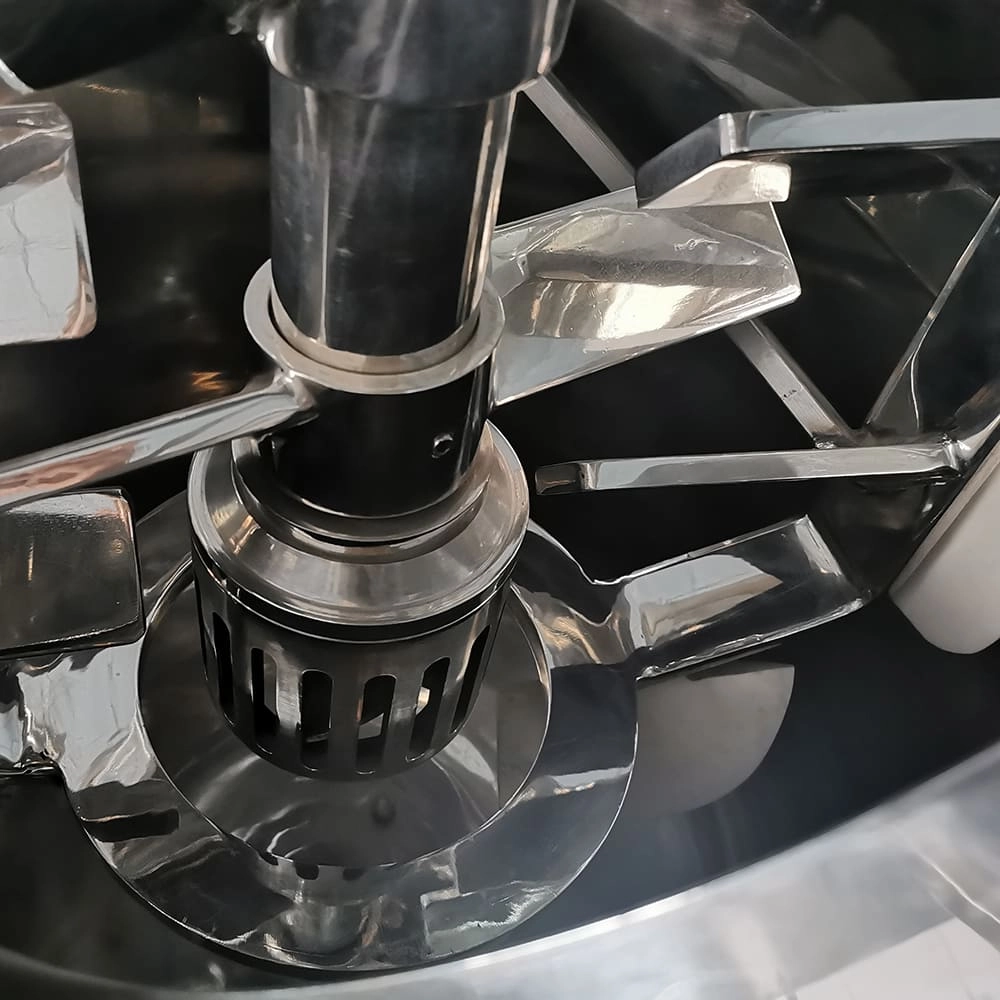
تقييم جودة ومطابقة خلاطات الاستحلاب الفراغية
أفضل 10 شركات تصنيع وتوريد مرشحات المياه المنزلية الكاملة في فرنسا
مصنعي وموردي حشو المسحوق OEM/ODM
ما هي سيناريوهات تطبيق آلة ختم الصينية الأوتوماتيكية؟
آلة ختم الزجاجات المكتبية
هل يتم استخدام آلة إغلاق سطح المكتب قبل التغطية أم بعد التغطية؟
ينبغي استخدام آلة الختم شبه الأوتوماتيكية بعد آلة التغطية، ولكن تذكر وضع بطانة الغطاء قبل التغطية.
آلة تغطية المحرك المؤازر الأوتوماتيكية
هل يمكن التحكم في سرعة دوران فاصل الزجاجة لآلة تغطية السيرفو هذه؟
يمكن التحكم في سرعة فصل الزجاجات باستخدام محول التردد الموجود على الخزانة الكهربائية.
آلة خلط الصابون السائل
هل تقدمون أيضًا تركيبة الصابون السائل والتدريب الفني للمستخدم الجديد؟
نعم، لدى يواني خبرة طويلة في إنتاج الصابون السائل. نقدم تدريبًا احترافيًا وجلسات تعليمية مباشرة لعملائنا. تواصلوا معنا.
خزان الصهر
هل يمكنك إضافة وظيفة الخلط للخزان مع السخان؟
بالتأكيد، يمكن تخصيص خزان التبريد أو خزان التدفئة باستخدام خلاط علوي مثل المضرب أو الإطار أو الكاشطات. ويمكن للعميل اختيار سرعة ثابتة 60 دورة في الدقيقة، أو سرعة قياسية 0-60 دورة في الدقيقة مع إمكانية تعديل السرعة، أو تخصيص سرعات أخرى.
آلة سد البراغي الأوتوماتيكية
هل لديكم آلة تغذية الغطاء الاهتزازي لآلة التغطية الأوتوماتيكية؟
نعم، نوفر وحدة تغذية أغطية اهتزازية أو رافعة لفرز الأغطية. يجب تخصيص وحدة تغذية الأغطية وفقًا لشكل وحجم الغطاء، مثل رأس المضخة مع القش، والأغطية المعدنية، والأغطية البلاستيكية، وما إلى ذلك.
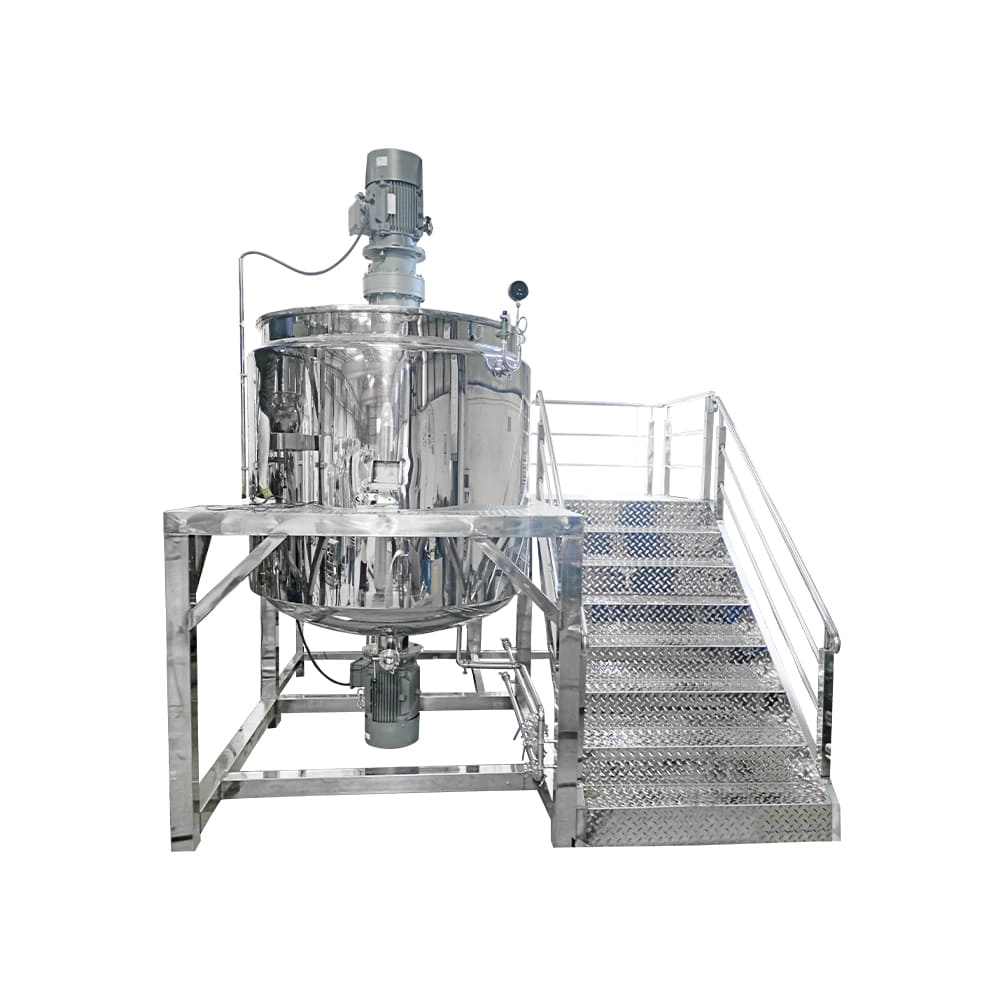
آلة خلط الصابون السائل للبيع
خلاط الصابون السائل "يوانيانغ" هو خلاط صناعي متجانس لإنتاج الصابون السائل. صُمم هذا الخلاط بشكل رئيسي لإنتاج منتجات سائلة مثل الشامبو، وغسول الجسم، ومنظفات الغسيل، وصابون الأطباق، ومعقم اليدين، وغيرها من السوائل الكثيفة.
سمات:
⦁ غطاء مسطح، نصف مفتوح، نظام تحكم كهربائي.
⦁ مناسب لمختلف منتجات التنظيف السائلة والصلصات.
⦁ تحريك مكشطة جدار PTFE في الأعلى، ومجانسة القص العالية في الأسفل.
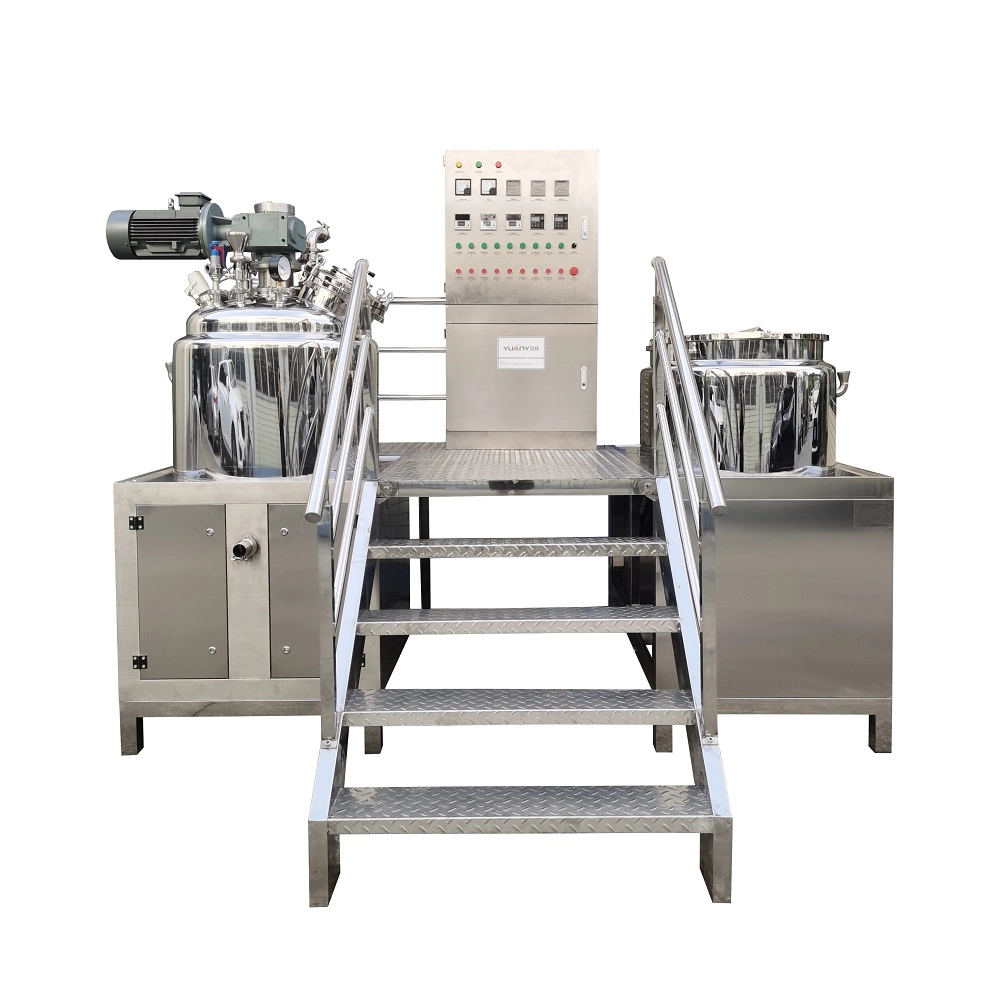
آلة صنع مستحضرات التجميل
آلة صنع مستحضرات التجميل Yuanyang هي عبارة عن معدات خلط مشتركة مع خزان التجانس الفراغي الرئيسي وخزان المياه وخزان الزيت، وهي معدات متكاملة مع نظام الخلط والتشتيت والتجانس والاستحلاب والتفريغ وامتصاص المسحوق الذي يستخدم على نطاق واسع في مستحضرات التجميل والأغذية والأدوية والمجالات الكيميائية.
سمات:
⦁ مع غطاء ثابت ونظام فراغ ونظام تحكم كهربائي.
⦁ مناسب للمنتجات ذات اللزوجة 10,000~50,000 cps.
⦁ حجم الجسيمات المثالي 2 ميكرون وموزعة بالتساوي.
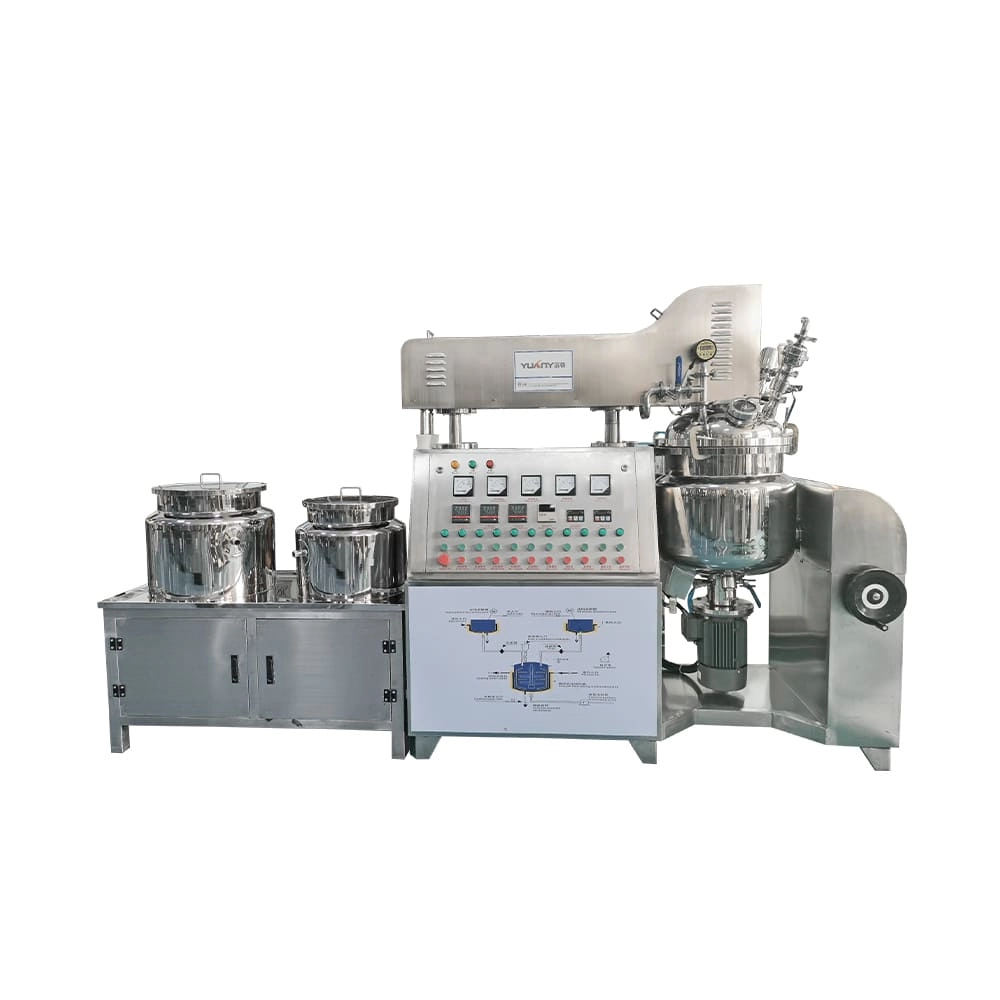
خلاط استحلاب مفرغ للبيع
خلاطة المستحلب الفراغية Yuanyang هي نوع من آلات المستحلب، وهي معدات إنتاج مستحضرات التجميل الأكثر شعبية لصنع الكريم ومنتجات العناية بالبشرة والمراهم والمعجون والمستحلبات.
سمات:
⦁ يتكون من وعاء الاستحلاب الرئيسي ووعاء الماء ووعاء الزيت.
⦁ مع نظام الرفع الهيدروليكي، ونظام الفراغ، ونظام التحكم الكهربائي.
⦁ مناسب للمنتجات ذات اللزوجة 10,000~50,000 cps.
⦁ حجم الجسيمات المثالي 2 ميكرون وموزعة بالتساوي.
مستحلب تفريغ هيدروليكي سعة 50 لترًا
جهاز الاستحلاب الفراغي الهيدروليكي Yuanyang هو عبارة عن معدات خلط مشتركة مع خزان تجانس فراغي رئيسي وخزان مياه وخزان زيت، وهو عبارة عن معدات متكاملة مع نظام خلط وتشتيت وتجانس واستحلاب وتفريغ وامتصاص المسحوق يستخدم على نطاق واسع في مستحضرات التجميل والأغذية والأدوية والمجالات الكيميائية.
سمات:
⦁ مع غطاء رفع هيدروليكي ووعاء مائل ونظام فراغ ونظام تحكم كهربائي.
⦁ مناسب للمنتجات ذات اللزوجة 10,000~50,000 cps.
⦁ حجم الجسيمات المثالي 2 ميكرون وموزعة بالتساوي.
جميع الحقوق محفوظة © 2025 لشركة YUANYANG.
 مسح رمز الاستجابة السريعة
فيسبوك
يوتيوب
لينكد إن
واتساب: +8613434139712
قوانغتشو يوانيانغ الآلات