





Comparing Homogenizer Mixer Designs for Consistent Soap Viscosity
- Comparing Homogenizer Mixer Designs for Consistent Soap Viscosity
- Why consistent viscosity matters when searching for a Liquid Soap Mixer Machine for Sale
- Overview of common homogenizer mixer designs for liquid soap production
- How a homogenizer mixer affects soap viscosity: key mechanisms
- Design comparison: homogenizer mixer types and their effect on soap viscosity (table)
- Practical selection criteria for a Liquid Soap Mixer Machine for Sale
- Operational tips to ensure consistent viscosity with your homogenizer mixer
- Maintenance and troubleshooting for homogenizer mixers used in soap production
- Integrating the Yuanyang Liquid Soap Mixer Machine into production
- Why hybrid designs (scraper + high-shear) are often the best choice for liquid soap
- Case example: reducing variability when switching batches or formulas
- Selecting the right specifications when you look for a Liquid Soap Mixer Machine for Sale
- Brand advantages: why consider Yuanyang Liquid Soap Mixer Machine for Sale
- Frequently Asked Questions (FAQ) about homogenizer mixers and soap viscosity
- Q1: Which homogenizer type is best for liquid soap?
- Q2: Can I adjust viscosity without changing the formula?
- Q3: How do wall scrapers impact viscosity control?
- Q4: Are high-pressure homogenizers necessary for soap?
- Q5: What maintenance is most critical to keep viscosity consistent?
- Contact and product CTA
- Authority references
- Final note

Comparing Homogenizer Mixer Designs for Consistent Soap Viscosity
Why consistent viscosity matters when searching for a Liquid Soap Mixer Machine for Sale
Consistent viscosity is a primary quality parameter for liquid soap, shampoo, handwash and detergent products. Viscosity affects pourability, consumer perception, dosing accuracy, pumpability, and shelf stability. When a manufacturer evaluates a homogenizer mixer, the device's ability to deliver repeatable shear, rapid dispersion of surfactants and thickeners, and good temperature control becomes critical. Selecting the right homogenizer mixer will reduce batch-to-batch variability, lower rework, and increase throughput — all important commercial drivers when buying a Liquid Soap Mixer Machine for Sale.
Overview of common homogenizer mixer designs for liquid soap production
Homogenizer mixers come in several designs that are commonly used in the personal care and household liquid cleaning industries. Each design generates different shear profiles, flow patterns and heat generation characteristics, which influence how particulate ingredients, polymers and surfactants interact and build viscosity in a formulation.
- Rotor-stator (high-shear) mixers — commonly used in batch and in-line configurations.
- High-pressure homogenizers — deliver extremely fine dispersion through pressure-induced cavitation.
- Colloid mills — use adjustable gap shearing between a stator and rotor for controlled particle size reduction.
- Planetary and triple-shaft mixers — more commonly for heavy creams but sometimes used for concentrated soap bases.
- Ultrasonic homogenizers — use cavitation from high-frequency waves for fine emulsification in low-viscosity systems.
How a homogenizer mixer affects soap viscosity: key mechanisms
Viscosity of surfactant-based liquids like liquid soap is controlled by molecular interactions (micelle formation, polymer-surfactant interactions), the degree of dispersion of thickeners (e.g., salt-sensitive rheology modifiers), and entrained air/temperature. Homogenizer mixers influence these via:
- Shear rate and shear history — affecting micelle alignment and polymer conformation.
- Dispersion efficiency — ensuring powders, thickeners and insolubles wet and unfold properly.
- Temperature rise — excessive heat can degrade heat-sensitive additives or change rheology.
- Local pressure/cavitation — can break down agglomerates or create finer droplets in emulsions.
Design comparison: homogenizer mixer types and their effect on soap viscosity (table)
| Design | Typical Shear | Viscosity Control | Best for | Maintenance & Energy |
|---|---|---|---|---|
| Rotor–Stator (Batch or Inline) | High (adjustable) | Excellent — rapid dispersion and salt/polymer activation | Liquid soaps, shampoos, thickeners, surfactant blends | Moderate maintenance; moderate energy |
| High-Pressure Homogenizer | Very high (pressure up to 1000+ bar) | Very fine dispersion; can over-shearmechanical breakdown | Emulsions, very fine particulate reduction | High maintenance and energy |
| Colloid Mill | High (shear via tight gap) | Good — tight control over particle size; may generate heat | Thick suspensions, high-solid formulae | Moderate-high maintenance; wear of rotors/stators |
| Ultrasonic Homogenizer | Localised very high (cavitation) | Good for small-scale emulsions; not ideal for very viscous batches | Lab scale, niche emulsions, additives | Low–moderate; low scalability for high viscosity |
| Planetary / Triple-shaft Mixer | Low–medium | Better for high-viscosity, non-Newtonian systems | Concentrated gels, creams, heavy soap bases | Low–moderate; designed for viscous loads |
Practical selection criteria for a Liquid Soap Mixer Machine for Sale
When selecting a homogenizer mixer, evaluate these practical factors that determine how well the machine will deliver consistent viscosity:
- Target product viscosity range: Low-viscosity hand soaps need different shear than thick dish soaps.
- Batch vs. continuous production: Inline rotor–stator homogenizers are ideal for continuous lines; batch rotor–stator gives flexibility for multiple SKUs.
- Shear sensitivity: Some polymers and fragrances are shear-sensitive and require gentler mixing strategies.
- Scalability: Ensure laboratory or pilot conditions scale predictably to production size.
- Sanitation and cleaning: Clean-in-place (CIP) compatibility reduces downtime in soap production.
- Energy and utility limits: High-pressure units consume more energy and need more infrastructure.
Operational tips to ensure consistent viscosity with your homogenizer mixer
Consistency is not only about picking the right machine — process control and recipe discipline are equally important. Key operational best practices include:
- Standardize ingredient order and addition rates (e.g., pre-wet powders before adding to surfactants).
- Control temperature closely during high-shear steps to prevent polymer degradation or viscosity drift.
- Use repeatable shear profiles: record rotor speed, time and rotor–stator gap settings.
- Allow adequate hydration/dwell time after dispersion; viscosity often develops after a hold period.
- Monitor conductivity/salt levels for salt-thickened systems—small ionic changes can shift viscosity.
Maintenance and troubleshooting for homogenizer mixers used in soap production
Routine maintenance avoids variability caused by worn parts or fouling. Focus on:
- Inspecting rotor and stator wear; replace when tolerances change.
- Checking seals and bearings to prevent leaks and contamination.
- Cleaning and validating CIP cycles to remove polymer build-up.
- Calibrating speed controllers and instrumentation that feed into process recipes.
Common viscosity issues and quick checks:
- Viscosity lower than expected: check ingredient quality, shear over-processing, temperature, or salt imbalance.
- Viscosity higher than expected: incomplete dispersion (agglomerates), over-addition of thickener or incorrect salt level.
- Batch-to-batch drift: inspect machine wear, repeatability of recipe steps, and raw material variability.
Integrating the Yuanyang Liquid Soap Mixer Machine into production
Below is the product introduction for reference:
The Yuanyang liquid soap mixer machine is an industrial homogeneous mixer for liquid soap production. The mixer machine is mainly designed to produce such liquid products as shampoo, body wash, laundry detergent, dish soap, hand sanitizer and other thick liquids.
Features:
⦁ Flat top, half-open lid, electric control system.
⦁ Suitable for various liquid cleaning products and sauces.
⦁ PTFE wall scrapers stirring at top, high shear homogenizer at bottom.
The Yuanyang unit combines top-side PTFE wall scrapers with a high-shear homogenizer at the bottom — a hybrid arrangement that addresses two fundamental needs for reliable soap viscosity: gentle bulk circulation and aggressive local shear for dispersion. Wall scrapers prevent heat and product build-up on vessel walls, improving CIP performance and reducing hotspots that cause polymer degradation. The bottom high-shear element handles fine dispersion of thickeners and surfactant blends so the final viscosity is uniform throughout the batch.
Why hybrid designs (scraper + high-shear) are often the best choice for liquid soap
Hybrid mixers that combine scrapers and high-shear homogenizers offer balanced flow: scrapers maintain bulk homogeneity and prevent stratification, while the bottom high shear quickly disperses powders and fully activates rheology modifiers. This dual-action setup typically yields the most consistent viscosity across a range of soap formulations and production scales. The Yuanyang Liquid Soap Mixer Machine for Sale is an example of such a hybrid approach tailored for soap and detergent manufacturing.
Case example: reducing variability when switching batches or formulas
In practice, manufacturers who switch between concentrated and light formulations benefit from machines that allow adjustable shear and simple speed control. Operators can reduce rotor speed or shorten homogenization time for shear-sensitive fragrances while maintaining PTFE scrapers to keep product moving. This strategy minimizes rework and preserves product characteristics across SKUs.
Selecting the right specifications when you look for a Liquid Soap Mixer Machine for Sale
When requesting quotes or evaluating suppliers, include these technical specifications in your RFP to ensure the machine can achieve consistent viscosity:
- Maximum and variable rotor speed (rpm)
- Rotor–stator geometry and replacement part cadence
- CIP compatibility and materials of construction (316L stainless steel, PTFE scrapers)
- Heating/cooling jackets and temperature control precision
- Control panel with recipe storage and variable speed drives
- Available in-line options for continuous processing
Brand advantages: why consider Yuanyang Liquid Soap Mixer Machine for Sale
Yuanyang’s hybrid design targets the major failure modes that cause viscosity inconsistency: wall build-up, uneven shear distribution and heat-related degradation. Key advantages include:
- PTFE wall scrapers for continuous wall cleaning and better CIP results.
- Bottom high-shear homogenizer that produces rapid, reproducible dispersion for surfactant systems.
- Flat top & half-open lid for convenient material addition and operator access.
- Electric control system with potential recipe management to secure repeatability across batches.
Frequently Asked Questions (FAQ) about homogenizer mixers and soap viscosity
Q1: Which homogenizer type is best for liquid soap?
A1: For most liquid soap formulations, a rotor–stator high-shear homogenizer (batch or inline) with wall scrapers offers the best balance of dispersion, control and cleanability. Extremely fine emulsions may benefit from high-pressure homogenizers, but these are often overkill for standard surfactant systems.
Q2: Can I adjust viscosity without changing the formula?
A2: Minor viscosity adjustments can be achieved by changing shear intensity, mixing time, or temperature. However, for significant or permanent changes, reformulation (altering polymer or salt levels) is usually required.
Q3: How do wall scrapers impact viscosity control?
A3: Wall scrapers prevent product build-up and hotspots on the vessel wall, ensuring homogeneous temperature and shear distribution. This reduces localized over-processing and stabilizes batch viscosity.
Q4: Are high-pressure homogenizers necessary for soap?
A4: Rarely necessary for surfactant-based liquid soaps unless there are very fine emulsions or particulate requirements. High-pressure units consume more energy and require more maintenance; rotor–stator systems are usually sufficient.
Q5: What maintenance is most critical to keep viscosity consistent?
A5: Monitor rotor/stator wear, maintain seals, validate CIP effectiveness, and confirm control systems and sensors are calibrated. Wear or fouling can change shear profiles and cause viscosity drift.
Contact and product CTA
Once the right mixer design is chosen, attention shifts to output reliability. This is where how liquid soap mixer machines improve batch-to-batch quality becomes a key factor for large-scale production.If consistent soap viscosity and reliable production are priorities, request a specification sheet and production demo for the Yuanyang Liquid Soap Mixer Machine for Sale. Contact our sales team to discuss batch sizes, sample trials and integration into your line. View the product or request a quote today to evaluate how the hybrid scraper + high-shear design can stabilize your product viscosity.
Authority references
- Homogenizer — Wikipedia: https://en.wikipedia.org/wiki/Homogenizer
- Mixing (process engineering) — Wikipedia: https://en.wikipedia.org/wiki/Mixing_(process_engineering)
- Surfactant — Wikipedia: https://en.wikipedia.org/wiki/Surfactant
Final note
Choosing the right homogenizer mixer is a combination of understanding your formulation’s rheology, production workflow and required product attributes. For liquid soaps, hybrid systems like the Yuanyang Liquid Soap Mixer Machine for Sale deliver practical, repeatable control of viscosity through combined scraping and high-shear dispersion. When evaluating machines, focus on shear control, sanitation, scalability and supplier support to ensure long-term product consistency.
What is vacuum emulsifying mixer price ? | Ultimate Insight
Best professional sealing cup machine manufacturers and supplier brands
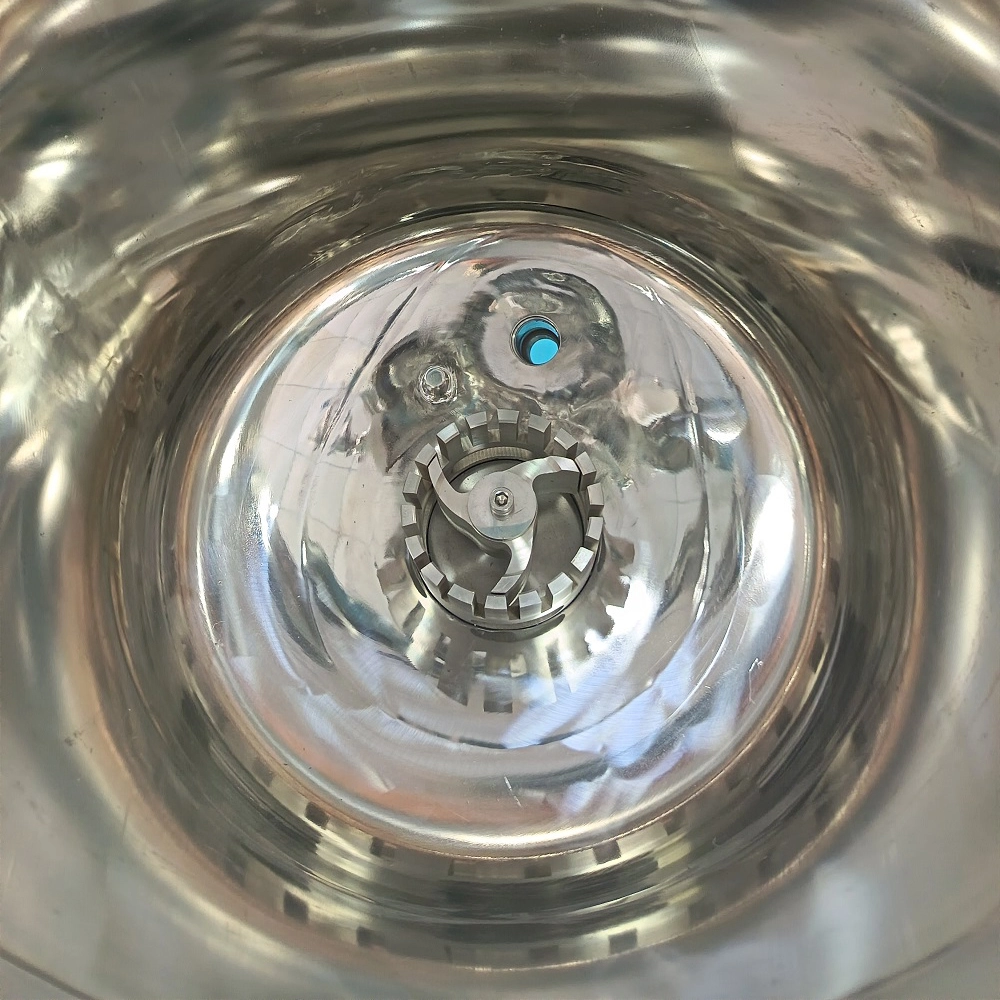
How Emulsifying Machines Improve Cream and Lotion Texture
What are the application scenarios of liquid mixer machine?
Vacuum Homogneizer
Is it necessary to clean for each batch production?
There is no need to clean quite often for the same products. But for different products, it is better to clean every time before the production of different products.
Powder Sachet Packaging Machine
Is the complete set with a conveyor for finished packages?
Yes, the standard auger packing machine is equipped with a conveyor to convey finished packages to other machines?
Vacuum Emulsifying Mixer
Can the lid of this cosmetic cream mixing tank be open and lift up?
Yes, the cover of the sterile cosmetic mixing tank can be open and lift up by hydraulic system. What’s more, the main mixing tank can also tilt down to discharge
Liquid Soap Mixer Machine
Will do test for the machine I order before production?
Yes, every machine will be test and are assured without problems before packing. Therefore, clients will never worry about the quality. Only when clients are satisfied with the finished machine can we pack and ship.
Liquid Soap Making Machine
What’s the main function of the industrial liquid mixer machine?
The liquid soap mixer machine is a functional equipment. Its main function is blending, mixing, homogenizing, heating. Client’s choose function according to specific products.
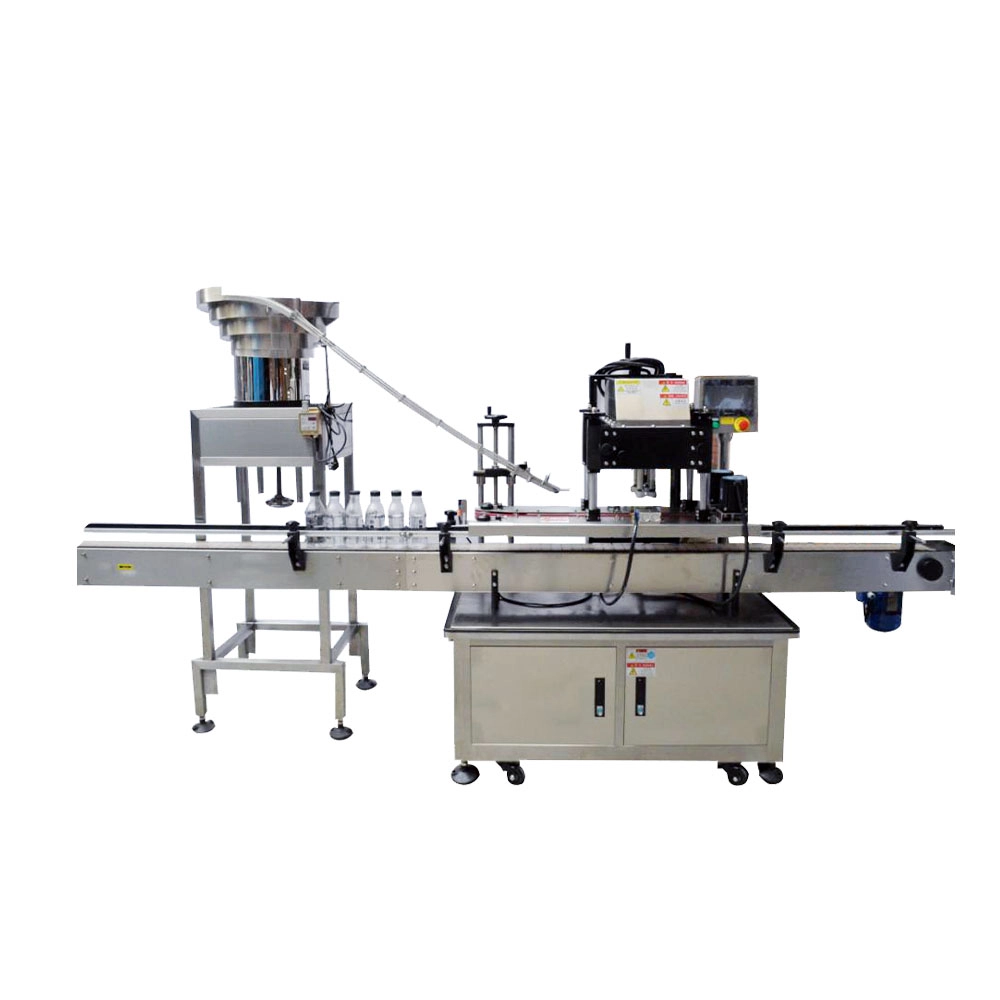
Automatic Plastic Caps Capping Machine with Vibrating Cap Feeder for Sale
Yuanyang automatic screw capping machine is a kind of four-wheel bottle capping machine. The automatic screw capper is often used to close lids of containers such as bottles and jars, especially for plastic bottles, which are widely used in food, medicine, chemical, cosmetic, and other industries for mass production and continuous production lines.
Features:
⦁ Full pneumatic drive;
⦁ Automated fast speed;
⦁ Suitable for various screw caps, pumps, and spray bottles.
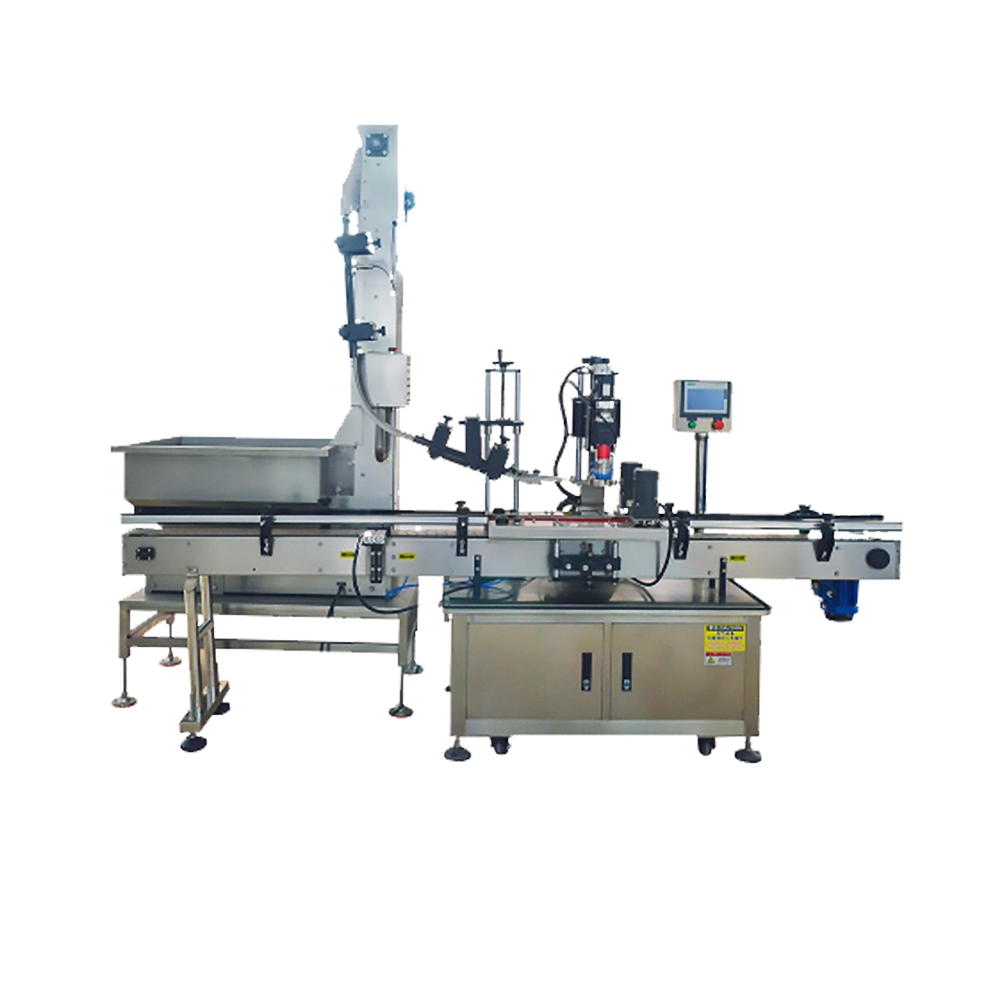
Automatic Metal Caps Capping Machine for Sale
Yuanyang automatic metal cap capping machine is a bottle capper for bottles with metal caps, which is often used to close lids of containers such as bottles and jars. The glass bottle metal capping machine is widely used in food, medicine, chemical, cosmetic, and other industries for mass production and continuous production line .
Features:
⦁ Pneumatic and electric drive;
⦁ Automated fast speed;
⦁ Suitable for glass bottles with metal caps.
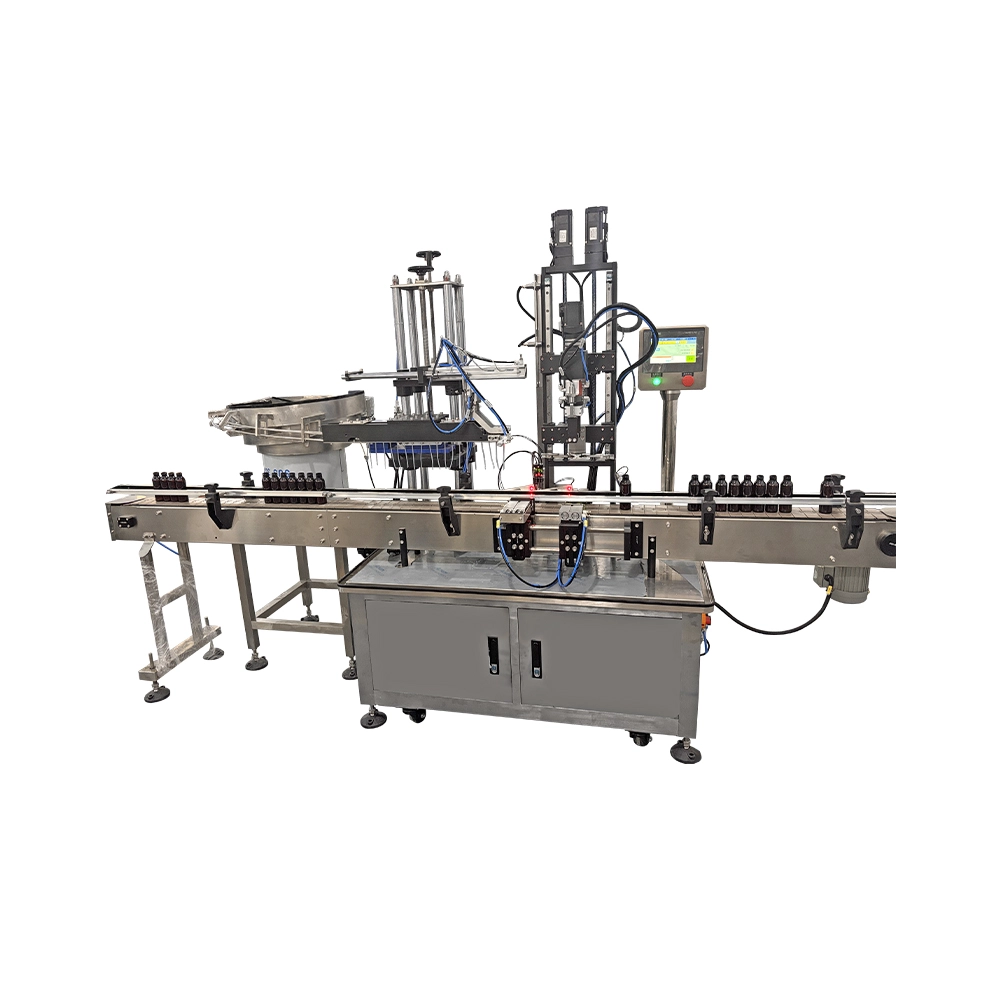
Automatic Pump Head Feeding and Capping Machine for Sale
Yuanyang automatic pump head feeding and capping machine is a bottle cap sorter and capper for bottles with pump heads, which is often used to close lids of containers such as nail polish, sprayers, and shampoo. The capping machine with a pump head feeder is widely used in food, medicine, chemical, cosmetic, and other industries for mass production and continuous production line .
Features:
⦁ Pneumatic and electric drive;
⦁ Automated fast speed;
⦁ Suitable for various types of caps.
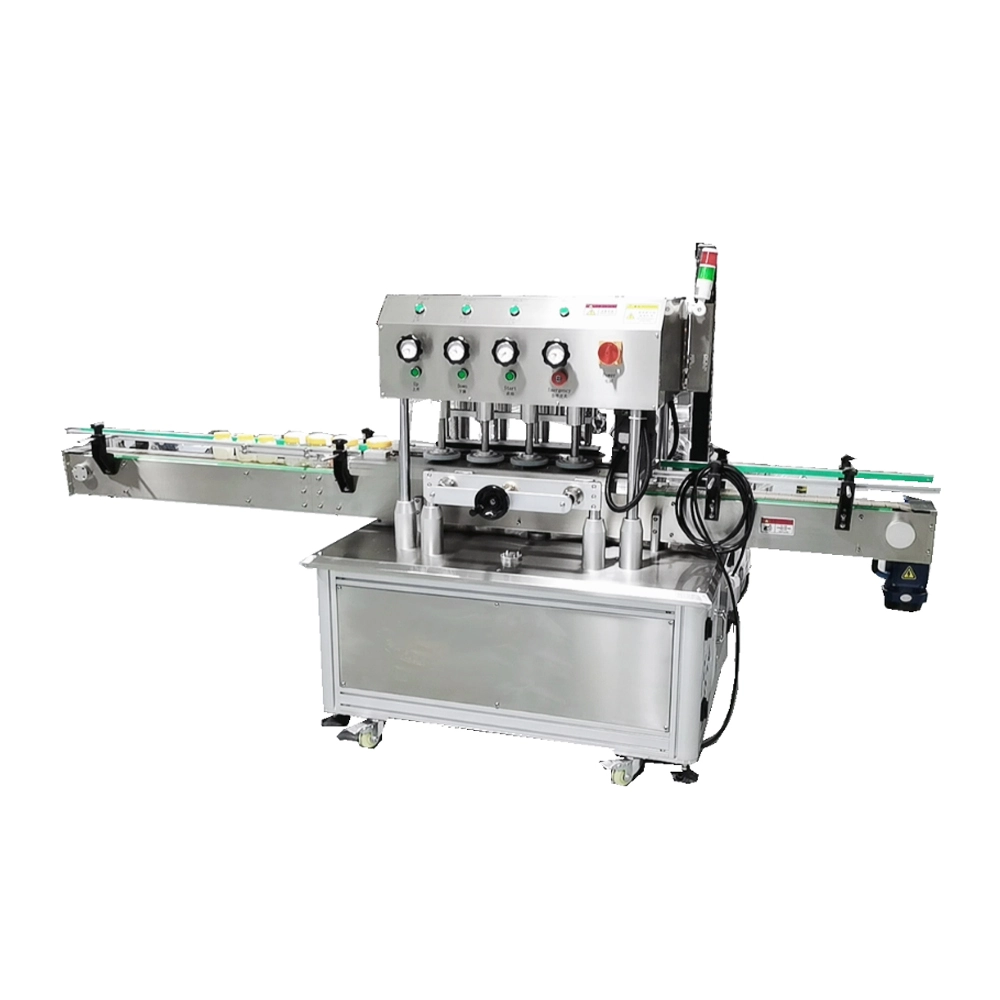
Automatic High Speed Capping Machine for Sale
The Yuanyang automatic high-speed capping machine is a kind of 8-wheel bottle-capping machine with fast working efficiency. The automatic capper is often used to close lids of containers such as bottles and jars, especially for plastic bottles, which are widely used in food, medicine, chemical, cosmetic, and other industries for mass production and continuous production lines.
Features:
⦁ Electric drive;
⦁ Automated fast speed;
⦁ Suitable for various screw caps, pumps, and spray bottles.
 Scan QR Code
Facebook
YouTube
LinkedIn
Whatsapp: +8613434139712
Guangzhou Yuanyang Machinery