





Selecting a Homogenizer Mixer for High-Volume Liquid Soap Production
- Selecting a Homogenizer Mixer for High-Volume Liquid Soap Production
- Understanding the role of a homogenizer mixer in soap production
- Why choose a homogenizer mixer for high-volume liquid soaps
- Key performance criteria when choosing a homogenizer mixer
- 1. Shear intensity and mixing head design
- 2. Throughput and scalability
- 3. Sanitary design and material compatibility
- 4. Heating, cooling and jacketed tanks
- 5. Cleaning (CIP) and maintenance access
- 6. Automation, controls and recipe management
- Comparing homogenizer types: quick reference
- Mixing head and shear considerations
- Material compatibility, sanitary construction and regulatory concerns
- Scale-up and throughput planning
- Cleaning, CIP and maintenance best practices
- Control systems and recipe management
- Case study: Liquid Soap Mixer Machine for Sale — Yuanyang solution
- Why Yuanyang Liquid Soap Mixer Machine for Sale fits high-volume needs
- How the Yuanyang machine addresses common production problems
- Selecting model options and capacity
- Cost of ownership and ROI considerations
- Installation, safety and regulatory compliance
- Conclusion: a practical selection checklist
- FAQ
- Q: What viscosity range can a homogenizer mixer handle for liquid soap?
- Q: Is a high-pressure homogenizer necessary for liquid soap?
- Q: How do PTFE wall scrapers help production?
- Q: Can the Liquid Soap Mixer Machine for Sale be integrated into an automated line?
- Q: What are typical maintenance tasks and intervals?
- Contact & View Product
- Authoritative references

Selecting a Homogenizer Mixer for High-Volume Liquid Soap Production
Understanding the role of a homogenizer mixer in soap production
High-volume liquid soap production requires consistent texture, stable viscosity, uniform distribution of surfactants and additives, and efficient dispersion of thickening agents and particulates. A homogenizer mixer provides controlled high-shear energy to break droplets and agglomerates, ensuring product homogeneity and repeatability from batch to batch. When you search for a homogenizer mixer, your goal is not only mixing but producing a stable, manufacturable product that meets both regulatory and consumer expectations. After selecting a homogenizer mixer for high-volume liquid soap production, manufacturers often look for ways to reduce operating costs, which makes energy-efficient homogenizer mixers for industrial soap manufacturing an important next consideration.
Why choose a homogenizer mixer for high-volume liquid soaps
Compared with low-shear stirrers, a homogenizer mixer reduces processing time, improves tactile qualities (smoothness, foam stability), and yields better product stability against phase separation. For manufacturers scaling from pilot to production, homogenizers maintain performance across different batch sizes, reducing reformulation risk and minimizing post-processing filtration or rework.
Key performance criteria when choosing a homogenizer mixer
1. Shear intensity and mixing head design
Shear intensity determines how well the mixer can disperse thickeners (e.g., xanthan gum), break down agglomerates, and distribute surfactants and pigments. Homogenizer mixers use different head designs—rotor-stator, high-pressure valves, and ultrasonic transducers. For many thick liquid soaps, a high-shear rotor-stator or dedicated high-shear homogenizer is ideal because it combines rapid dispersion with good control over final particle/droplet size.
2. Throughput and scalability
Match the homogenizer's rated throughput to your planned production output. Consider cycle time per batch and whether you need continuous inline homogenization for extremely high volumes. A properly sized homogenizer avoids bottlenecks and reduces labor and energy per liter produced.
3. Sanitary design and material compatibility
Liquid soap production must avoid contamination and be compatible with surfactants and fragrances. Look for stainless steel 316L wetted parts, FDA/EC-compliant seals, PTFE wall scrapers, and smooth surface finishes. Sanitary design reduces dead zones and simplifies cleaning—critical for increased uptime and regulatory compliance.
4. Heating, cooling and jacketed tanks
Many formulations require heating to dissolve certain thickeners or cooling to stabilize fragrances and preservatives. Integrated jackets and efficient heat transfer reduce cycle time and allow precise control of processing temperature.
5. Cleaning (CIP) and maintenance access
Frequent product changeover or strict hygiene needs demand CIP-capable systems with minimal disassembly. Scrapers and mixing heads should be accessible for inspection and replacement. Effective maintenance planning reduces downtime and total cost of ownership.
6. Automation, controls and recipe management
Automated control systems with recipe storage, repeatable parameters (rpm, shear, time, temperature), and data logging support quality control and traceability for audits. PLC or touchscreen HMI options speed operator training and reduce human error.
Comparing homogenizer types: quick reference
Choose the technology that matches your product viscosity, throughput, and quality targets. The table below summarizes common industrial homogenizer types for liquid soap production.
| Technology | Typical Throughput | Shear Level | Best for | Maintenance |
|---|---|---|---|---|
| Rotor-stator (high-shear) | Medium to high (batch/inline) | High | Thick liquids, emulsions, dispersion of gums | Moderate (wear parts) |
| High-pressure valve homogenizer | Low to medium | Very high | Fine droplet sizes, oil-in-water emulsions | High (valves, seals) |
| Ultrasonic homogenizer | Low to medium | Very high (localized) | Lab-scale, speciality dispersions | Moderate |
| Planetary/propeller mixers | High (low shear) | Low | Heat-sensitive mixing, gentle blending | Low |
Mixing head and shear considerations
When evaluating homogenizer mixers for liquid soap, focus on the mixing head geometry, gap control (rotor-stator clearance), and material hardness. Adjustable gaps allow you to tune shear levels for different formulations. PTFE scrapers reduce wall build-up, especially for high-viscosity formulas, maintaining heat transfer and ensuring complete discharge of the tank.
Material compatibility, sanitary construction and regulatory concerns
Choose equipment with smooth internal finishes (Ra ≤ 0.8 µm recommended for many hygienic applications), certified welds, and appropriate gasket materials (EPDM, silicone, PTFE depending on chemicals). For products that are marketed as antimicrobial or for healthcare use, ensure your production process can produce and document consistent quality—this often requires validated cleaning and filling protocols.
Scale-up and throughput planning
Scale-up is not linear with mixer rpm. Maintain geometric similarity and consider power per unit volume (kW/m3) as a scaling parameter for shear-dependent processes. For production planning, calculate required batch size, cycle time (mixing + CIP + filling), and peak hourly throughput to select or configure a homogenizer mixer that matches your line speed.
Cleaning, CIP and maintenance best practices
Effective CIP routines preserve product quality and reduce downtime. Important design features include: smooth tank internals, spray balls or CIP nozzles, accessible scrapers, and the ability to isolate and recirculate cleaning solutions. Schedule regular inspection of rotor-stator wear, bearings, and seals—these are typical wear points in homogenizer mixers.
Control systems and recipe management
Modern homogenizer mixers include PLC-enabled control with recipe libraries, alarms, and data logging. For high-volume production, recipe management reduces batch variability and supports QA. Look for systems that can export batch data for traceability and integrate with MES or ERP platforms.
Case study: Liquid Soap Mixer Machine for Sale — Yuanyang solution
The Yuanyang liquid soap mixer machine is an industrial homogeneous mixer for liquid soap production. The mixer machine is mainly designed to produce such liquid products as shampoo, body wash, laundry detergent, dish soap, hand sanitizer and other thick liquids.
Features:
⦁ Flat top, half-open lid, electric control system.
⦁ Suitable for various liquid cleaning products and sauces.
⦁ PTFE wall scrapers stirring at top, high shear homogenizer at bottom.
Why Yuanyang Liquid Soap Mixer Machine for Sale fits high-volume needs
The Yuanyang design integrates a top-mounted scrapers and a bottom high-shear homogenizer head—this combination ensures that viscous materials do not adhere to tank walls while the homogenizer delivers consistent dispersion and droplet size control. The flat half-open lid expedites ingredient charging and sampling. The electric control system permits recipe programming, timing, and temperature control for repeatability across large batches.
How the Yuanyang machine addresses common production problems
- Wall buildup and uneven heating: PTFE scrapers keep the wall clean for better heat transfer and near-complete product discharge.
- Inconsistent dispersion: Bottom high-shear homogenizer head provides localized high-energy mixing to deagglomerate thickeners and disperse surfactants.
- Scale and repeatability: Electric control system stores recipes and reduces operator variability.
Selecting model options and capacity
Select models based on target batch size and line speed. Consider options such as jacketed tanks for heating/cooling, variable frequency drives (VFDs) for shear control, CIP ports, and sanitary discharge valves. For very high throughput, consider pairing batch homogenizers with an inline homogenizer in a recirculation loop to increase effective processing capacity.
Cost of ownership and ROI considerations
Beyond purchase price, evaluate lifecycle costs: energy consumption (kW), spare parts (rotor-stator sets), downtime for maintenance, and cleaning chemical use. A higher initial investment in more robust seals or automated CIP can reduce operating costs and increase uptime—improving ROI in high-volume production.
| Factor | Lower-cost rotor-stator | Mid-range homogenizer (e.g., Yuanyang) | High-pressure homogenizer |
|---|---|---|---|
| Initial cost | Low | Medium | High |
| Maintenance frequency | Moderate | Moderate | High |
| Energy per batch | Moderate | Moderate | High |
| Best for thick soap | Yes | Yes (advanced) | Less common |
Installation, safety and regulatory compliance
Plan installation with adequate floor loading, piping for steam or glycol, drainage and ventilation for volatile components (fragrance). Include safety interlocks on lids and guards for the homogenizer head. For regulatory compliance, maintain documented SOPs, validate CIP procedures, and implement traceable batch records.
Conclusion: a practical selection checklist
When selecting a homogenizer mixer for high-volume liquid soap production, confirm the following before purchase:
- Shear capability and adjustable gap for your formulations.
- Throughput per batch matches line speed and packaging capability.
- Sanitary materials and designs (316L, PTFE scrapers, smooth welds).
- CIP compatibility and accessible maintenance points.
- Automation and recipe management for batch-to-batch consistency.
- Availability of spare parts and local technical support.
FAQ
Q: What viscosity range can a homogenizer mixer handle for liquid soap?
A: Many industrial homogenizer mixers handle a wide viscosity range—from water-like to tens of thousands of centipoise—depending on the motor power, rotor size and scraper arrangement. For very thick formulas (>50,000 cP), review specific model limits and consult the vendor for recommended configurations.
Q: Is a high-pressure homogenizer necessary for liquid soap?
A: Not usually. High-pressure homogenizers are ideal for producing very fine emulsions and nano-dispersions. For most liquid soaps, a high-shear rotor-stator homogenizer like the Yuanyang design provides the needed dispersion and texture at lower cost and with less maintenance.
Q: How do PTFE wall scrapers help production?
A: PTFE scrapers prevent product buildup on tank walls, which improves heat transfer during heating/cooling cycles, reduces cleaning time, and lowers the risk of localized overheating or degradation of sensitive ingredients.
Q: Can the Liquid Soap Mixer Machine for Sale be integrated into an automated line?
A: Yes. The electric control system supports automation and can be configured to communicate with upstream/downstream equipment. Discuss specific I/O and protocol needs (e.g., PLC, Modbus, ProfiNet) with the manufacturer or systems integrator.
Q: What are typical maintenance tasks and intervals?
A: Routine tasks include inspection of rotor-stator or homogenizing heads, seal checks, scraper condition inspection, bearing lubrication, and verification of sensors and controls. Intervals depend on usage; many manufacturers recommend visual checks daily and part replacement based on operating hours or product abrasiveness.
Contact & View Product
To discuss capacity, configuration or request a quote for the Liquid Soap Mixer Machine for Sale, contact our sales team at [email protected] or visit our product page to view specifications and request a demo. Our engineers can help size the right homogenizer mixer for your production goals and run trial batches when necessary.
Authoritative references
- Wikipedia — Homogenizer
- Wikipedia — Mixing (process engineering)
- American Chemistry Council (industry guidance for chemical manufacturing)
- ISO standards for hygienic equipment design (example reference)
References above are starting points for technical and regulatory information. For equipment-specific validation, request technical datasheets and test reports from your supplier.
Where to Buy ultrasonic sieve machine
Custom 1000 gallon mixing tank Manufacturers and Suppliers
Everything You Need to Know About vacuum and sealing machine
How to start a semi auto labeling machine business in Europe
Cosmetic Making Machine
How to achieve vacuum environment?
The vacuum pump is a device used to generate vacuum, which can draw out the gas in the container to form a vacuum environment. Close wall pipe valves,only open the vacuum pipe pass-by valve,also open the water inlet of vacuum pump,then operate vacuum button. After the the tank get the standard pressure such -0.05Mpa (check the pressure gauge), stop the vacuum operation,close the pass-by valve.
Industries
What after-sales support services are available?
We offer 7×24-hour online support, regular maintenance, and rapid spare parts supply to ensure the equipment functions smoothly.
Semi automatic powder filling machine
What’s the capacity of the material hopper of this filling powder machine?
The standard hopper capacity is 50L.
Vertical Filling Machine
How to adjust the filling weight?
There is weight regulator for client to refer. Just adjust several times until you get the accurate filling weight. Remember the reference number, next time directly use for the same materials and bottles.
Vacuum Homogneizer
Can I operate each function separately?
Yes,each function of mixing,homogenizing,heating,vacuuming can be controlled separately. For example, some of your products don’t requirement heating function, just don’t operate it. When you need heating function, you operate it.
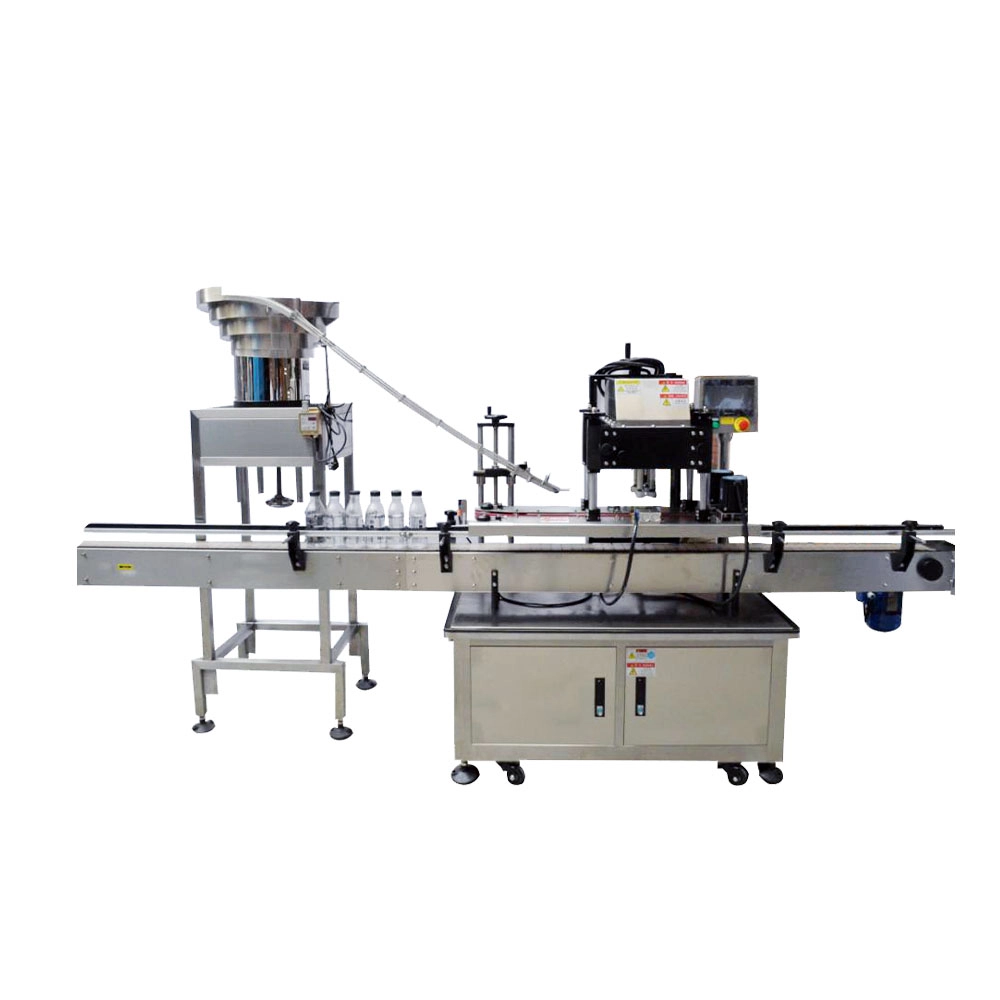
Automatic Plastic Caps Capping Machine with Vibrating Cap Feeder for Sale
Yuanyang automatic screw capping machine is a kind of four-wheel bottle capping machine. The automatic screw capper is often used to close lids of containers such as bottles and jars, especially for plastic bottles, which are widely used in food, medicine, chemical, cosmetic, and other industries for mass production and continuous production lines.
Features:
⦁ Full pneumatic drive;
⦁ Automated fast speed;
⦁ Suitable for various screw caps, pumps, and spray bottles.
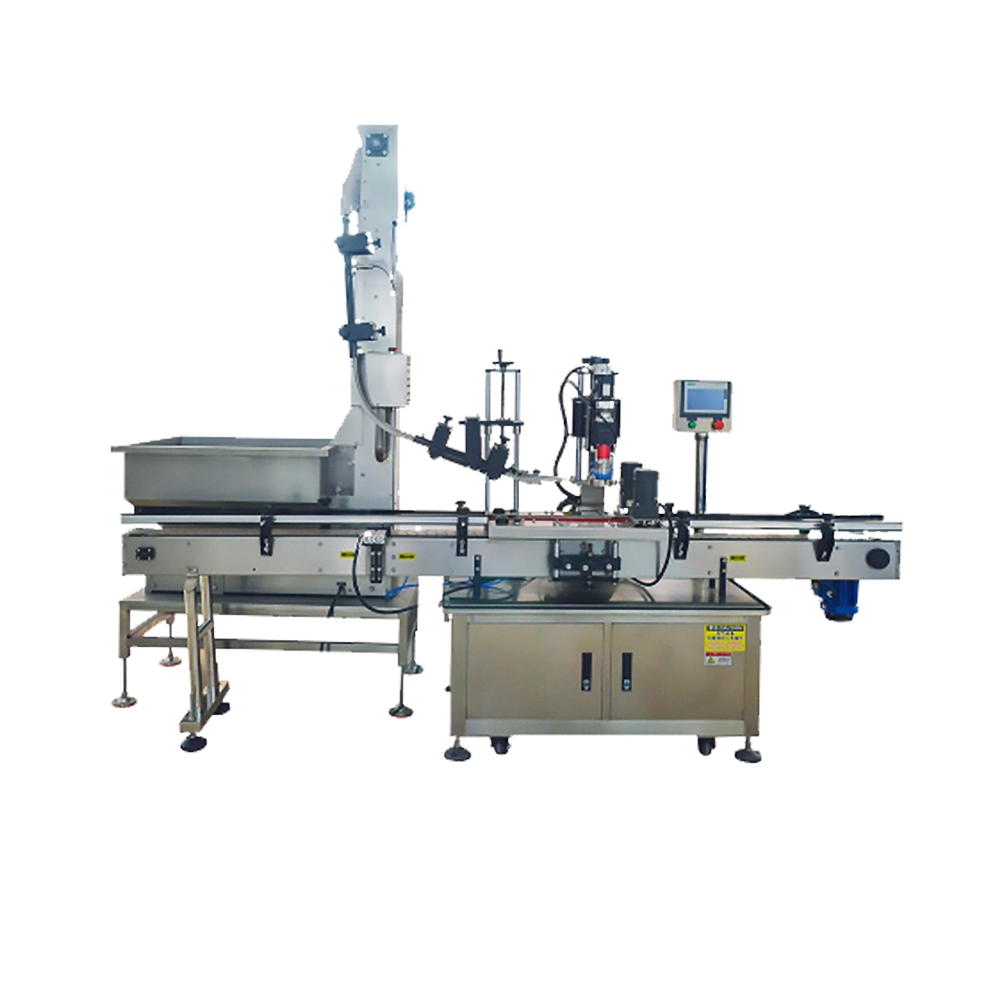
Automatic Metal Caps Capping Machine for Sale
Yuanyang automatic metal cap capping machine is a bottle capper for bottles with metal caps, which is often used to close lids of containers such as bottles and jars. The glass bottle metal capping machine is widely used in food, medicine, chemical, cosmetic, and other industries for mass production and continuous production line .
Features:
⦁ Pneumatic and electric drive;
⦁ Automated fast speed;
⦁ Suitable for glass bottles with metal caps.
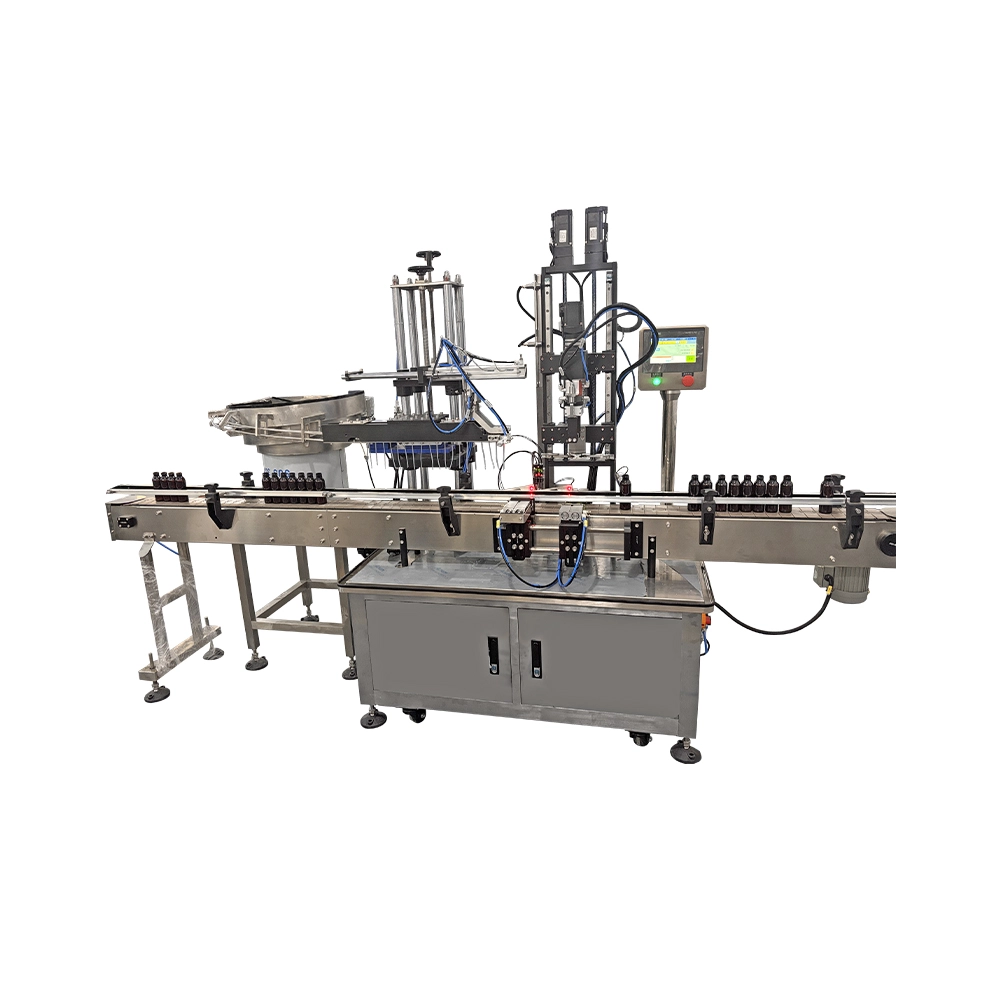
Automatic Pump Head Feeding and Capping Machine for Sale
Yuanyang automatic pump head feeding and capping machine is a bottle cap sorter and capper for bottles with pump heads, which is often used to close lids of containers such as nail polish, sprayers, and shampoo. The capping machine with a pump head feeder is widely used in food, medicine, chemical, cosmetic, and other industries for mass production and continuous production line .
Features:
⦁ Pneumatic and electric drive;
⦁ Automated fast speed;
⦁ Suitable for various types of caps.
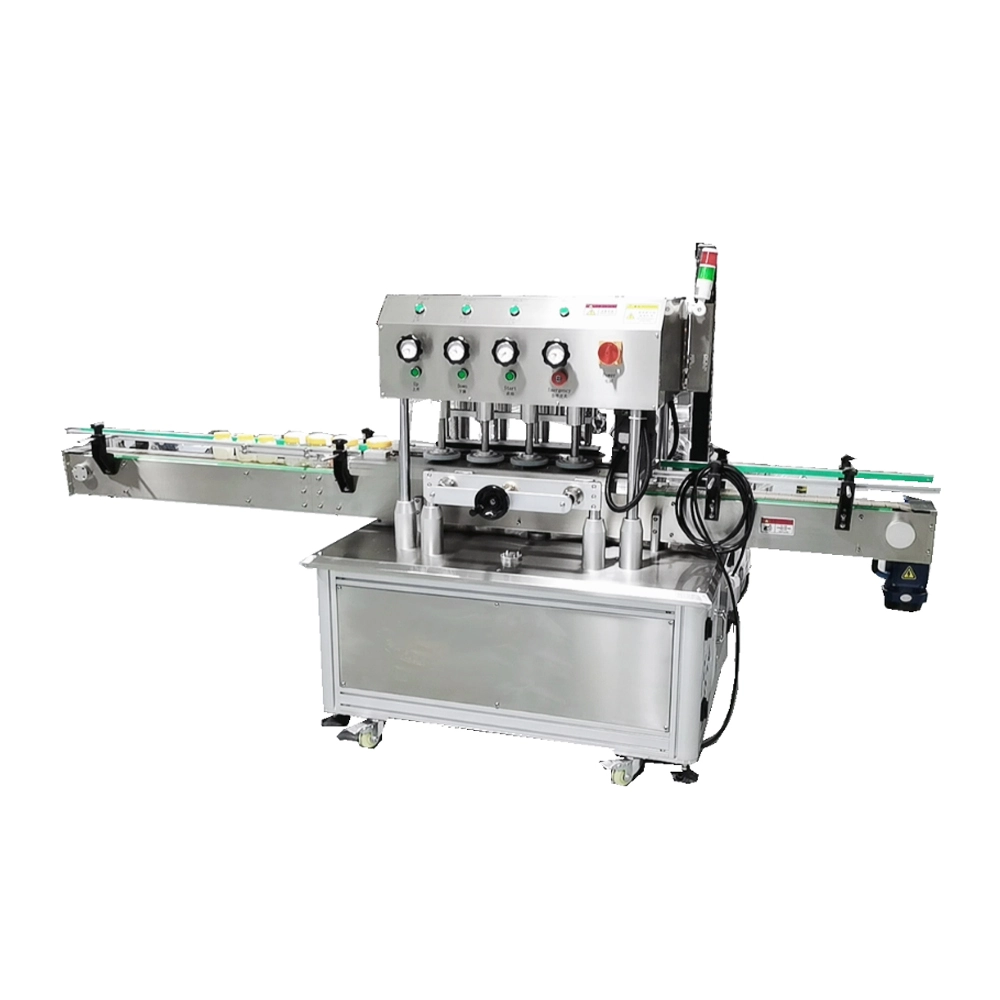
Automatic High Speed Capping Machine for Sale
The Yuanyang automatic high-speed capping machine is a kind of 8-wheel bottle-capping machine with fast working efficiency. The automatic capper is often used to close lids of containers such as bottles and jars, especially for plastic bottles, which are widely used in food, medicine, chemical, cosmetic, and other industries for mass production and continuous production lines.
Features:
⦁ Electric drive;
⦁ Automated fast speed;
⦁ Suitable for various screw caps, pumps, and spray bottles.
 Scan QR Code
Facebook
YouTube
LinkedIn
Whatsapp: +8613434139712
Guangzhou Yuanyang Machinery