





Optimizing Mixing Performance: Agitator Types and Configurations
- Choosing the Right Agitator: Principles and Practical Tips
- Understand the Mixing Objectives
- Match Agitator to Viscosity and Rheology
- Key Performance Metrics: P/V, Tip Speed and Reynolds Number
- Common Agitator Types and Their Applications
- Propellers and Marine-Type Impellers
- Pitched-Blade Turbines and Flat-Blade Turbines
- Anchors, Ribbons and Scrapers
- Tank Configurations, Scale-Up and Performance Optimization
- Single Layer vs. Multi-Layer Agitator Configurations
- Recommended Equipment: Single Layer Agitator Tank for Sale
- Baffles, Inlets, and Discharge Options
- Design Guidelines, Calculations and Selection Checklist
- Practical Selection Checklist
- Example Calculations and a Practical Comparison
- Scale-Up Rules and Tips
- Maintenance, Sanitation and Compliance
- Cleaning and Sanitary Design
- Inspection, Seal Selection and Longevity
- Energy Efficiency and Operational Costs
- Brand Advantages and Why Choose This Single Layer Agitator Tank
- Product Fit for Low-Viscosity Manufacturing
- Sanitary and Operational Benefits
- Service, Customization and Support
- FAQ
- Q: Is a stainless steel mixing tank necessary for cosmetics and pharmaceuticals?
- Q: When should I choose a single-layer agitator versus multi-impeller shafts?
- Q: How do I prevent product buildup on tank walls?
- Q: What are the typical maintenance items for agitator tanks?
- Q: Can the Single Layer Agitator Tank handle shear-sensitive emulsions?
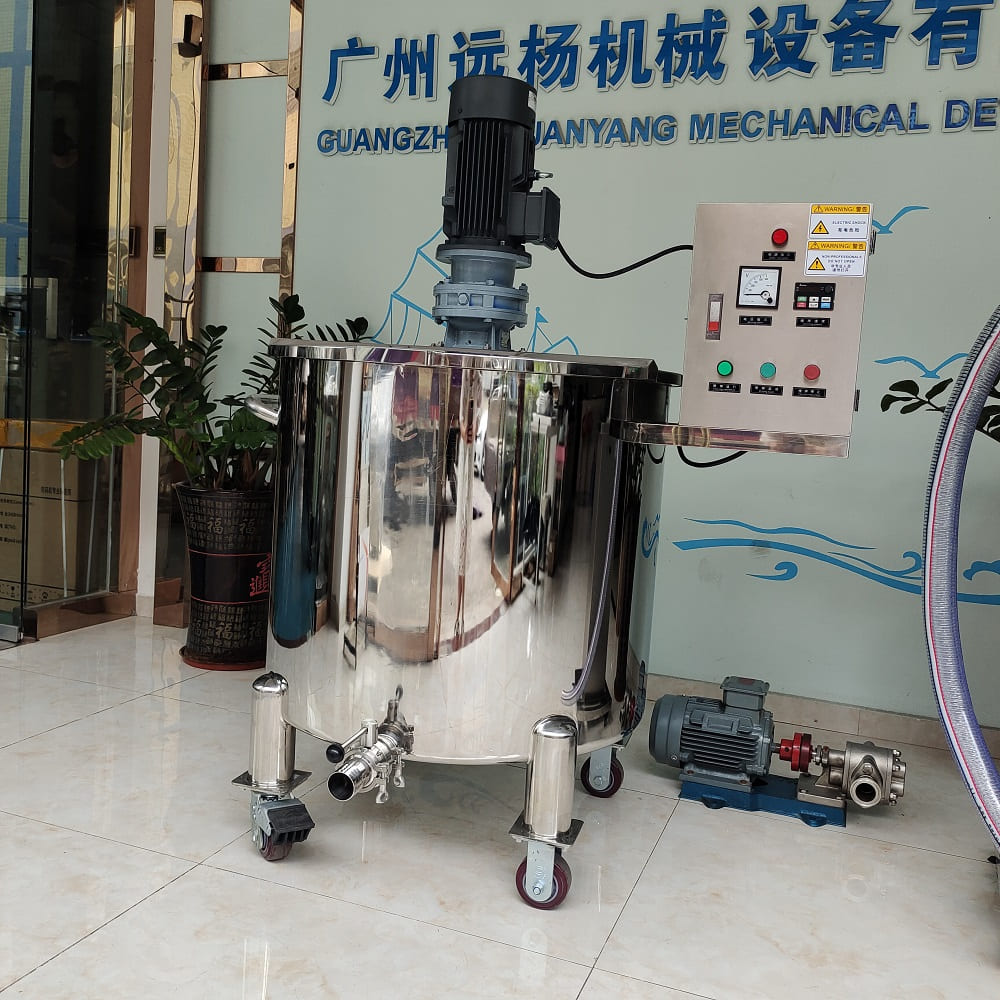
This summary is provided to improve discovery: optimizing mixing performance in a stainless steel mixing tank requires aligning agitator type, impeller geometry, shaft speed and tank configuration with product viscosity, desired flow pattern and process goals. Proper selection reduces mixing time, minimizes shear for sensitive products, improves heat transfer and facilitates cleaning and compliance. Improved mixing efficiency must be supported by effective cleaning, making sanitation and CIP strategies for stainless steel mixing tanks a key operational topic.
Choosing the Right Agitator: Principles and Practical Tips
Understand the Mixing Objectives
Before selecting an agitator, define the primary objectives: homogenization, dissolution, heat transfer, gas dispersion, or suspension. Low-viscosity liquids used in cosmetics or beverages usually require high-circulation, low-shear impellers such as propellers or turbines. If working in a stainless steel mixing tank for pharmaceutical or food-grade production, sanitation and cleanability are equally important, which often pushes design toward smooth surface finishes, sanitary seals and accessible scrapers for dead-zone prevention.
Match Agitator to Viscosity and Rheology
Viscosity is the single most important property for agitator selection. For Newtonian, low-viscosity fluids (< 100 cP), axial-flow impellers (e.g., marine propellers) create bulk flow and rapid circulation. For medium viscosity (100–10,000 cP), pitched-blade turbines and anchor agitators provide better mixing. For high-viscosity systems (>10,000 cP), slow-moving anchors or helical ribbons are used to produce surface scraping and radial mixing. Knowing the product rheology guides the impeller geometry and power requirements.
Key Performance Metrics: P/V, Tip Speed and Reynolds Number
Useful design metrics include power per unit volume (P/V), tip speed and the Reynolds number (Re). P/V helps approximate power needs; tip speed (pi*D*N) influences shear and can damage shear-sensitive products if too high. The Reynolds number (Re = ρND2/μ) indicates flow regime (laminar vs turbulent) and therefore suitable impeller types. For more on the fundamentals of mixing, see the mixing engineering overview on Wikipedia: Mixing (process engineering).
Common Agitator Types and Their Applications
Propellers and Marine-Type Impellers
Propellers are ideal for low-viscosity fluids where bulk flow (axial flow) is required. They offer fast mixing times and low power consumption, making them suitable for clarifying, dissolving and blending operations in a stainless steel mixing tank. Propellers are commonly used in cosmetics and beverage mixing where gentle shear is acceptable.
Pitched-Blade Turbines and Flat-Blade Turbines
Pitched-blade turbines provide a mix of axial and radial flow and are good general-purpose impellers for medium-viscosity liquids and for processes needing better top-to-bottom circulation. Flat-blade turbines create high shear and are useful for gas dispersion or suspending solids, but may generate excessive shear for delicate emulsions.
Anchors, Ribbons and Scrapers
Anchors and helical ribbons are used in higher-viscosity fluids to move material from the tank walls and improve heat transfer. Scraper agitators, including frame mixing with PTFE scrapers, are essential in stainless steel mixing tanks where product buildup on walls must be prevented for sanitary processes or when working with viscous creams or gels.
Tank Configurations, Scale-Up and Performance Optimization
Single Layer vs. Multi-Layer Agitator Configurations
Single-layer agitator tanks, like the Single Layer Agitator Tank for Sale, provide a single shaft with impellers arranged vertically for consistent circulation, which suits low-viscosity liquid products and simpler processes. Multi-layer (multi-impeller) shafts are used when multiple axial planes of mixing are required across tall tanks or for suspending solids. The Single Layer Agitator Tank for Sale is intended for low-viscosity liquids and offers a compact, economical solution for cosmetics, pharmaceuticals, chemicals and food industries.
Recommended Equipment: Single Layer Agitator Tank for Sale
Yuanyang single-layer agitator tank is a mixing tank with agitator paddles, mainly applied for liquid materials mixing and blending, which is widely used to manufacture low-viscosity liquids and prepare for cosmetics, pharmaceuticals, chemicals, and food industries.
Features:
⦁ Half-open cover;
⦁ Frame mixing with PTFE scrapers
⦁ Suitable for products of low viscosity liquid products;
Baffles, Inlets, and Discharge Options
Baffles prevent vortex formation and improve mixing efficiency, particularly with axial-flow impellers. For sanitary stainless steel mixing tanks, choose interior finishes (e.g., 2B or electropolish) and sanitary ports for inlet/outlet to ease cleaning. Bottom discharge valves, side inlets, top-entry agitators and sight glasses should be selected according to process and CIP (clean-in-place) requirements.
Design Guidelines, Calculations and Selection Checklist
Practical Selection Checklist
Use the following quick checklist when specifying an agitator system for a stainless steel mixing tank:
- Define product properties: viscosity, density, solids content, shear sensitivity.
- Define process goals: mixing time, dissolution, gas dispersion, heat transfer.
- Choose impeller type based on viscosity and flow needs (axial for circulation, radial for shear).
- Decide on baffles and tank aspect ratio (height:diameter) to avoid dead zones.
- Select materials and finishes for sanitary or corrosive environments (stainless steel grade, surface finish).
- Include scrapers or frame mixers when wall buildup is likely.
Example Calculations and a Practical Comparison
Below is a comparative table for common agitator types used in low-to-medium viscosity applications. This table helps quantify trade-offs for a stainless steel mixing tank used in cosmetics, food or chemical production.
| Agitator Type | Best For | Typical Mixing Time | Shear | Power per Volume (P/V) | Notes |
|---|---|---|---|---|---|
| Propeller | Low-viscosity, bulk flow | Short | Low | Low | Efficient circulation in stainless steel tanks; good for dissolving |
| Pitched-blade turbine | Medium-viscosity, top-to-bottom mixing | Medium | Moderate | Moderate | Mix of axial/radial flow; versatile |
| Flat-blade turbine | Gas dispersion, suspending solids | Short | High | High | Creates shear — careful with emulsions |
| Anchor / Ribbon | High-viscosity, wall scraping | Long | Low to Moderate | High | Best for creams, gels; scrapers reduce dead zones |
For deeper theory, the Reynolds number and mixing regimes are well summarized in engineering literature and on Wikipedia: Mixing (process engineering).
Scale-Up Rules and Tips
Scale-up from lab to production typically uses one of three rules: constant power per volume (P/V), constant tip speed, or constant Reynolds number. For low-viscosity liquids, matching P/V often yields similar mixing times. For shear-sensitive products, keeping tip speed constant prevents damage during scale-up. Document scale-up assumptions and validate with pilot tests.
Maintenance, Sanitation and Compliance
Cleaning and Sanitary Design
Stainless steel mixing tanks are often used in regulated industries. Choose appropriate stainless grade (304 or 316L) and polished surfaces to minimize contamination and enable CIP. PTFE scrapers reduce residue but must be validated for compatibility with CIP chemicals. For pharmaceutical applications, follow FDA guidance and industry good manufacturing practices — see the FDA site for general regulatory information: U.S. Food & Drug Administration.
Inspection, Seal Selection and Longevity
Select seals (mechanical seals vs magnetic drive) based on product toxicity and containment needs. Magnetic drives avoid shaft seals and are excellent for corrosive or sterile environments but may have torque limits. Regular inspection schedules, vibration monitoring and seal checks prolong operational life and prevent costly downtime.
Energy Efficiency and Operational Costs
Optimizing impeller selection and operating speed reduces energy use. Axial-flow propellers typically consume less electricity for the same mixing result in low-viscosity applications compared with high-shear turbines. For continuous processes, consider variable-frequency drives (VFDs) to adjust speed according to process phase (e.g., gentle mixing during hold).
Brand Advantages and Why Choose This Single Layer Agitator Tank
Product Fit for Low-Viscosity Manufacturing
The Single Layer Agitator Tank for Sale from Yuanyang is tailored to low-viscosity liquid production in cosmetics, pharmaceuticals, chemicals and food. Its frame mixing with PTFE scrapers prevents wall buildup and supports sanitary operations. The half-open cover allows easy access for inspection and ingredient charging while maintaining process control.
Sanitary and Operational Benefits
Designed for stainless steel mixing tank applications, this single-layer design minimizes complexity and maintenance while providing efficient mixing for low-viscosity products. Constructed with industry-appropriate stainless material (specify 304/316L per application), the tank supports CIP and sanitary best practices. The PTFE scrapers and optional surface finishing enhance cleanability and product purity.
Service, Customization and Support
Good suppliers provide engineering support for impeller selection, scale-up calculations and validation testing. Choose a vendor offering documentation, spare parts and local service to reduce time-to-market and compliance risks. For broader industry guidance, trade organizations like the American Institute of Chemical Engineers provide resources: AIChE.
FAQ
Q: Is a stainless steel mixing tank necessary for cosmetics and pharmaceuticals?
A: For most cosmetics and pharmaceutical products, stainless steel mixing tanks are recommended due to corrosion resistance, cleanability and regulatory acceptance. For highly corrosive chemicals, 316L stainless or lined tanks may be required.
Q: When should I choose a single-layer agitator versus multi-impeller shafts?
A: Single-layer agitators suit low-viscosity liquids in moderate-height tanks. If tank height-to-diameter ratio is large or if multiple axial mixing planes are needed (e.g., tall columns, suspension of solids), multi-impeller shafts are preferable.
Q: How do I prevent product buildup on tank walls?
A: Use scrapers (PTFE or stainless), select appropriate impeller geometry to create near-wall flow, maintain slow rotation for viscous products, and adopt CIP procedures and surface finishes to minimize adhesion.
Q: What are the typical maintenance items for agitator tanks?
A: Regular seal inspection, bearing lubrication, impeller alignment checks, surface inspection for pitting or corrosion, and verification of drive motor and VFD function. Schedule CIP validation and mechanical inspections per product regulatory requirements.
Q: Can the Single Layer Agitator Tank handle shear-sensitive emulsions?
A: Yes, if configured with low-shear axial impellers (propellers) and controlled tip speed. If high shear is required for emulsification, consider a high-shear inline mixer or a different impeller configuration.
If you have a specific product formulation or process requirement, contact our technical team for a tailored selection and a quotation. To view product details or request a quote, contact us or check the Single Layer Agitator Tank for Sale product page.
Contact us to discuss options, engineering support and customization. View the product or request a quote today.
OEM/ODM rotary capping machine Manufacturers and Suppliers
What are the application scenarios of multi-function packaging machines?
Wholesale heat induction sealer manufacturer and supplier in Asia
Energy Efficiency Tips for Industrial Homogenizer Mixers
Semi Automatic Capping Machine
Does it must need an air compressor to operate?
Yes, this semi automatic capper machine requires an air compressor. We can also call it pneumatic capping machine.
What type of bottles can it be suitable for ?
The screw capping machine is mainly used for plastic bottles. The cap can be pump head, sprayer, triggers, and various other screw caps.
FAQs
Do you have in-stock or do you produce machines upon order?
Most of our products equipment are non-standard type,which should be made according to requirements,and power supply needs to be customized according to country. Therefore,we normally start to produce the products after you confirm the order.
We also have some standard machines in stock. Just contact us to confirm.
Water Cooling Induction Sealer
What type of film can the bottle sealer machine work for?
The sealing machine is mainly used for heating and sealing polyolefin (such as polyethylene, polypropylene, etc.) as the inner layer of composite film material sealing.
High Speed Dispersion Machine
What’s the production time?
Normally, the production time of the high speed dispersing mixer is 10-15 days. It depends on manufacture’s order tightness.
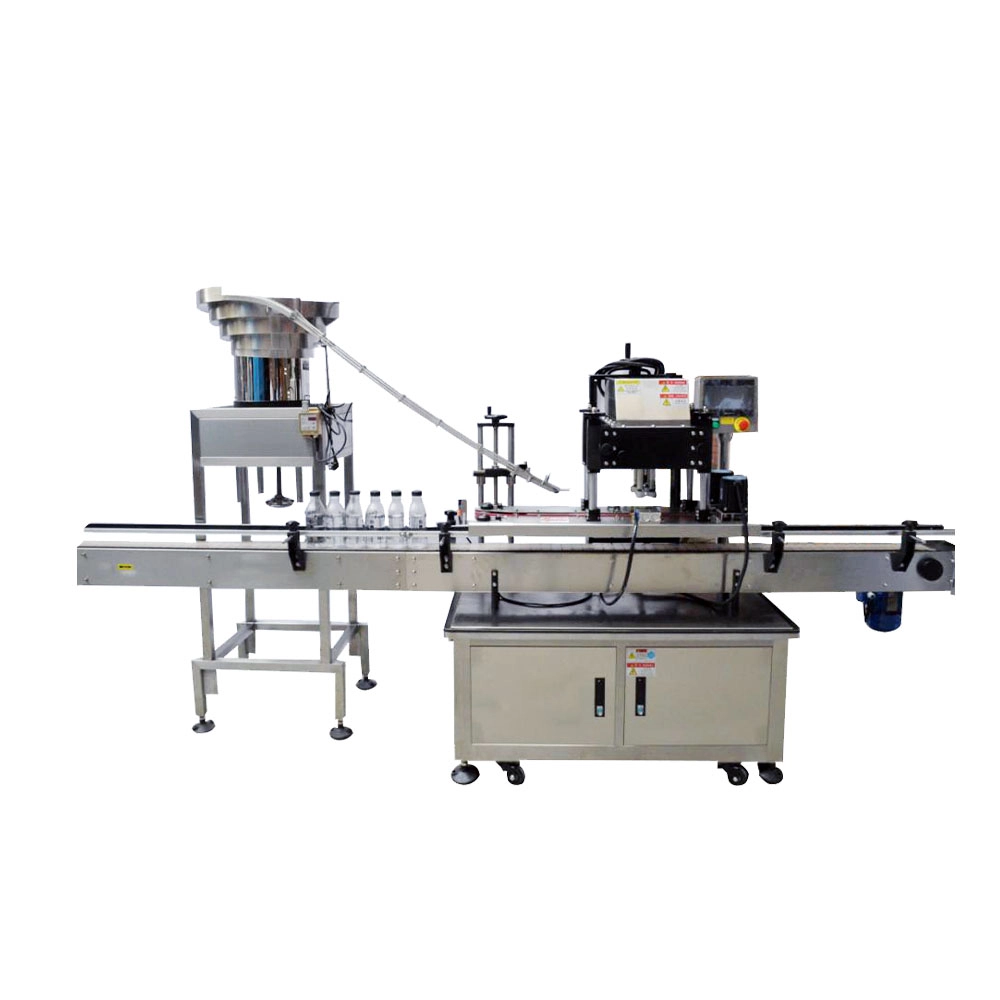
Automatic Plastic Caps Capping Machine with Vibrating Cap Feeder for Sale
Yuanyang automatic screw capping machine is a kind of four-wheel bottle capping machine. The automatic screw capper is often used to close lids of containers such as bottles and jars, especially for plastic bottles, which are widely used in food, medicine, chemical, cosmetic, and other industries for mass production and continuous production lines.
Features:
⦁ Full pneumatic drive;
⦁ Automated fast speed;
⦁ Suitable for various screw caps, pumps, and spray bottles.
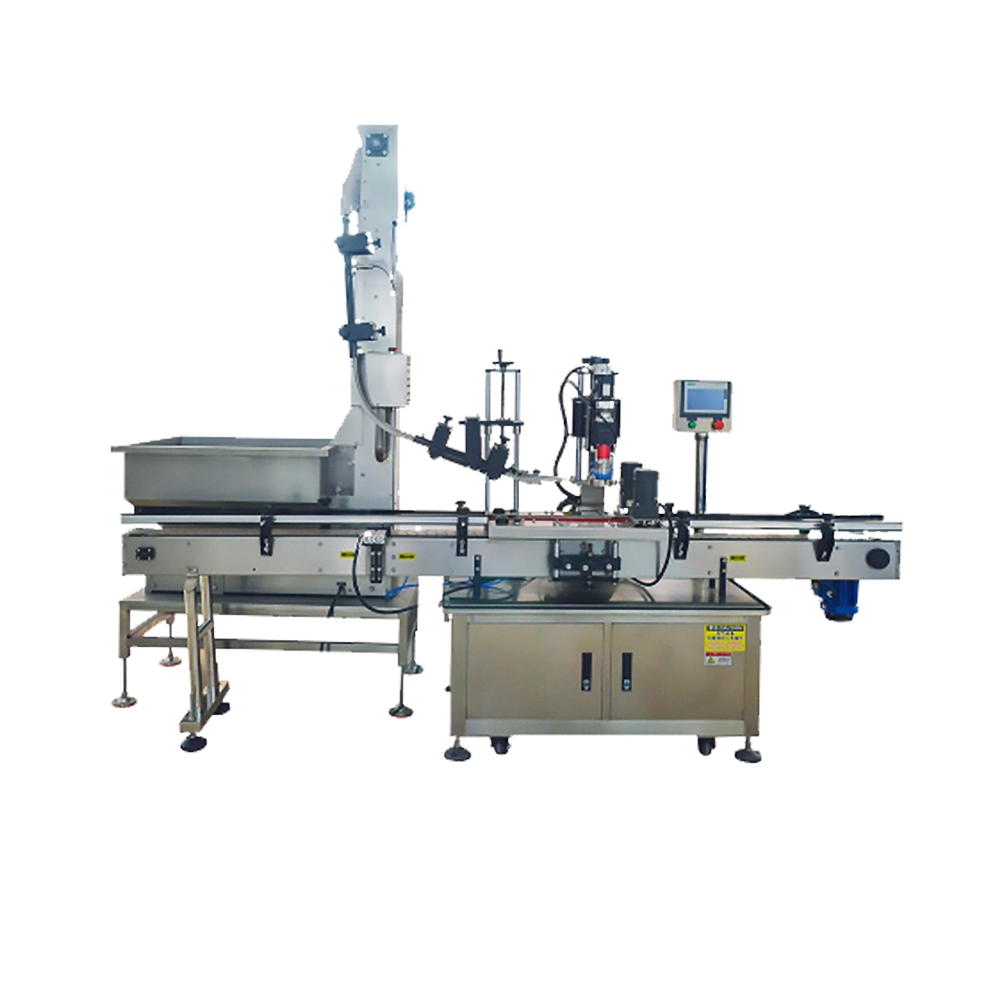
Automatic Metal Caps Capping Machine for Sale
Yuanyang automatic metal cap capping machine is a bottle capper for bottles with metal caps, which is often used to close lids of containers such as bottles and jars. The glass bottle metal capping machine is widely used in food, medicine, chemical, cosmetic, and other industries for mass production and continuous production line .
Features:
⦁ Pneumatic and electric drive;
⦁ Automated fast speed;
⦁ Suitable for glass bottles with metal caps.
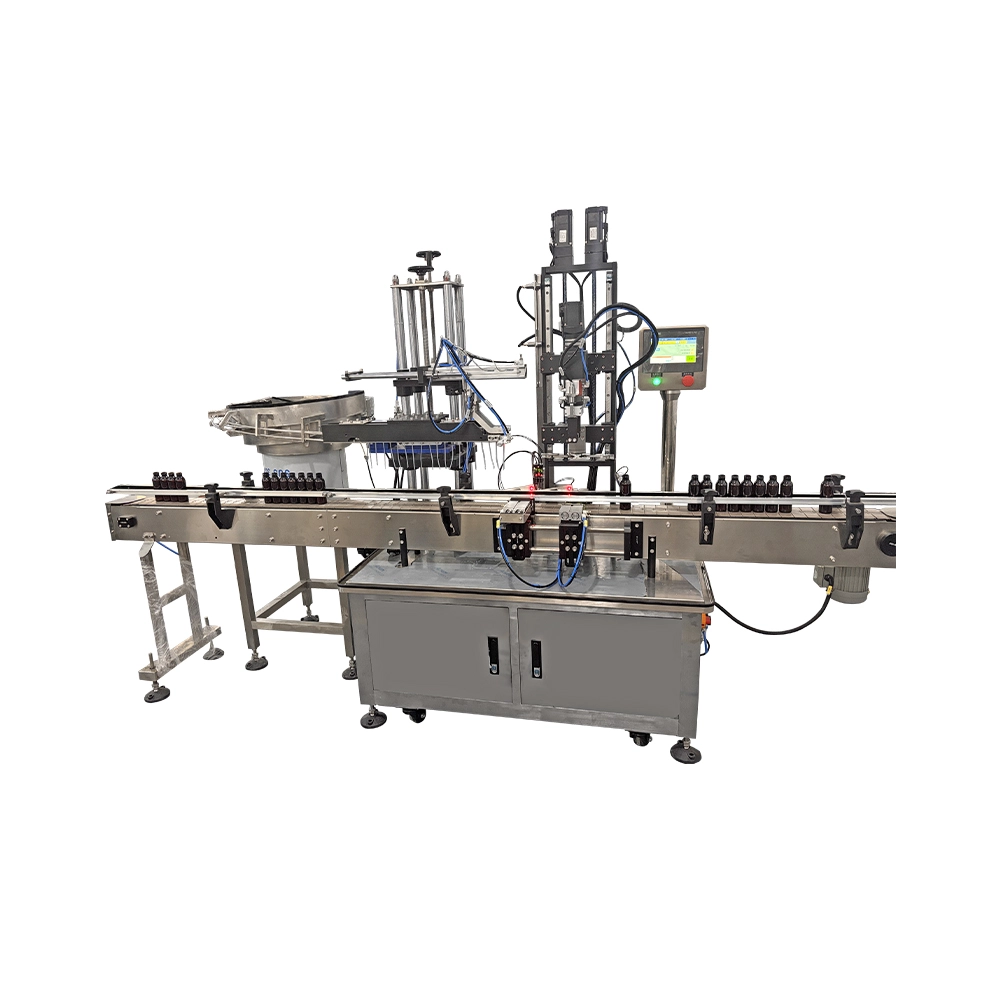
Automatic Pump Head Feeding and Capping Machine for Sale
Yuanyang automatic pump head feeding and capping machine is a bottle cap sorter and capper for bottles with pump heads, which is often used to close lids of containers such as nail polish, sprayers, and shampoo. The capping machine with a pump head feeder is widely used in food, medicine, chemical, cosmetic, and other industries for mass production and continuous production line .
Features:
⦁ Pneumatic and electric drive;
⦁ Automated fast speed;
⦁ Suitable for various types of caps.
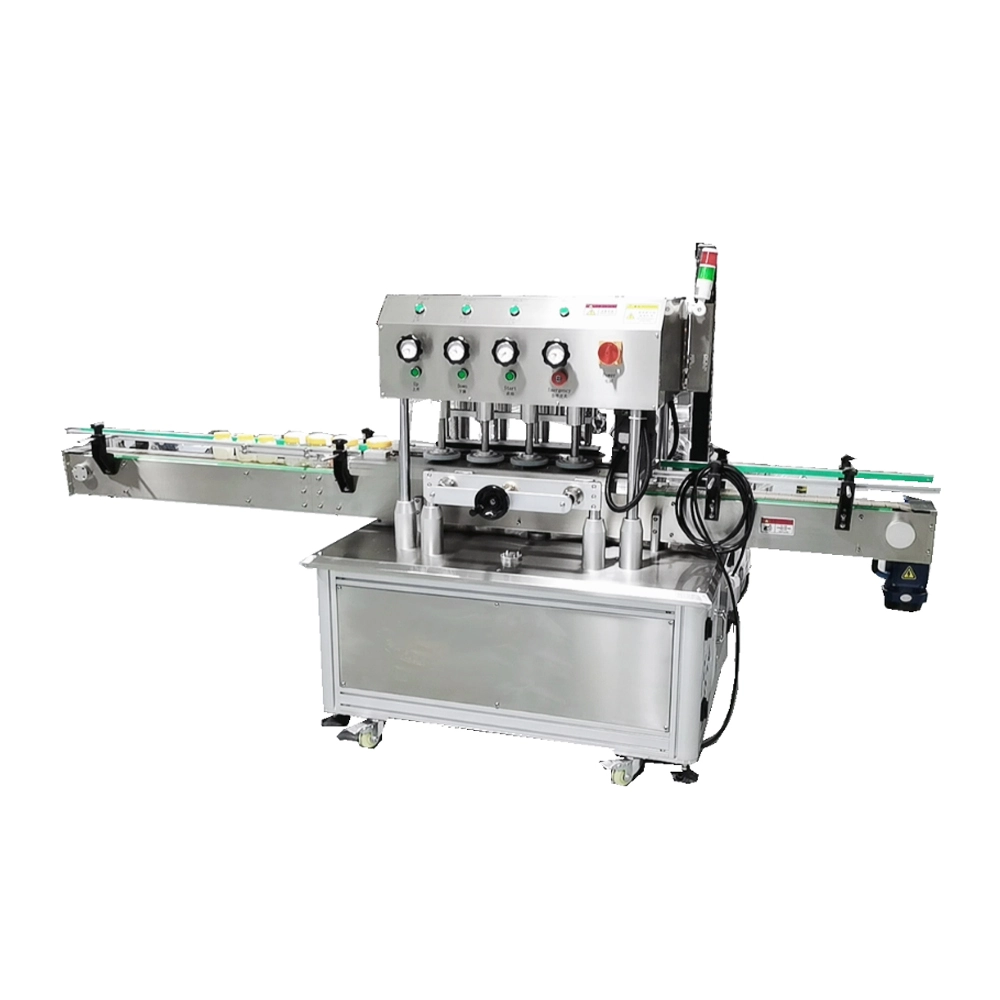
Automatic High Speed Capping Machine for Sale
The Yuanyang automatic high-speed capping machine is a kind of 8-wheel bottle-capping machine with fast working efficiency. The automatic capper is often used to close lids of containers such as bottles and jars, especially for plastic bottles, which are widely used in food, medicine, chemical, cosmetic, and other industries for mass production and continuous production lines.
Features:
⦁ Electric drive;
⦁ Automated fast speed;
⦁ Suitable for various screw caps, pumps, and spray bottles.
 Scan QR Code
Facebook
YouTube
LinkedIn
Whatsapp: +8613434139712
Guangzhou Yuanyang Machinery