





Buyer's Guide: Choosing the Right Stainless Steel Mixing Tank
- Understanding Stainless Steel Mixing Tanks: Materials and Construction
- Which stainless steel is right — 304 vs 316?
- Tank fabrication and surface finish
- Single-layer vs jacketed vs insulated construction
- Agitation Systems and Mixing Performance
- Types of agitators and when to use them
- Understanding impeller size, speed, and power
- Seals, drives, and maintenance
- Sanitary Design, Cleaning, and Regulatory Considerations
- Sanitary features to look for
- Clean-in-place (CIP) and validation
- Regulatory compliance
- Practical Buying Checklist and Comparing Options
- Key questions to ask suppliers
- Cost, delivery, and total cost of ownership
- Comparison table: Which tank suits your process?
- Case Study: Single Layer Agitator Tank for Sale — Where It Fits
- Why choose this single-layer agitator tank?
- Installation and operational tips
- Performance validation and sampling
- Brand Advantages and Why Supplier Selection Matters
- Quality control and fabrication standards
- After-sales support and parts availability
- Testing, references, and compliance
- FAQs
- Q: Is a single-layer tank suitable for pharmaceutical production?
- Q: How do I size a mixing tank for my batch?
- Q: How important is the internal finish?
- Q: Can PTFE scrapers damage stainless steel?
- Q: Where can I find standards for sanitary tank design?

This buyer's guide helps procurement managers, process engineers, and production leads choose the right stainless steel mixing tank for their specific application. It highlights material selection, agitator styles, sanitary design, cleaning options, and installation considerations that affect product quality, regulatory compliance, and total cost of ownership — especially for low-viscosity liquids such as cosmetics, pharmaceuticals, chemicals, and food products. The guide references industry best practices and standards to help you match the right tank to your mixing process and business goals. After reviewing the fundamentals in Buyer’s Guide: Choosing the Right Stainless Steel Mixing Tank, many buyers move on to evaluating specific equipment options such as a single layer agitator tank for sale: key specs to compare.
Understanding Stainless Steel Mixing Tanks: Materials and Construction
Which stainless steel is right — 304 vs 316?
Choosing the correct stainless steel grade is foundational. SS 304 (AISI 304) is commonly used for general chemical and food processing because of good corrosion resistance and affordability. For more aggressive chemistries, salt-containing formulations, or where increased corrosion resistance is required, SS 316 (AISI 316/L) with molybdenum offers superior protection. Review the chemical compatibility of your formulations — many manufacturers and references like Wikipedia: Stainless steel provide general guidance, but consult material compatibility charts when in doubt.
Tank fabrication and surface finish
Welding quality, electropolishing, and internal surface finish (measured in Ra) influence cleanability and product safety. Food, cosmetic and pharmaceutical applications usually require a smooth interior finish (e.g., Ra ≤ 0.8 µm) to minimize microbial niches. Seamless fabrication or full-penetration welds and electropolishing improve clean-in-place (CIP) performance and reduce contamination risk.
Single-layer vs jacketed vs insulated construction
Construction impacts thermal control and process flexibility. A single-layer stainless steel mixing tank is ideal for ambient or non-temperature-controlled mixing, especially for low-viscosity liquids. Jacketed or double-layer tanks support heating/cooling, essential for temperature-sensitive formulations. Consider the process needs and energy implications when selecting tank construction.
Agitation Systems and Mixing Performance
Types of agitators and when to use them
Selection of the agitation system (propeller, anchor, turbine, paddle) depends on fluid viscosity and mixing goals. For low-viscosity liquids, axial-flow propellers or paddle-type agitators provide rapid blending and good circulation. The Single Layer Agitator Tank for Sale uses agitator paddles and a frame mixing design with PTFE scrapers — an effective combination for low-viscosity cosmetics and chemical blends.
Understanding impeller size, speed, and power
Impeller diameter relative to tank diameter, rotational speed (RPM), and motor power define mixing intensity (tip speed and power per volume). Oversizing can cause shear-sensitive product damage; undersizing leads to poor homogeneity. Many suppliers provide mixing charts and calculation tools; ask vendors for performance curves and test data for your product.
Seals, drives, and maintenance
Mechanical seals, packing glands, or magnetic couplings determine leak control and maintenance frequency. Magnetic drives eliminate shaft penetrations and reduce leak risk, beneficial for hazardous or high-purity production. Ensure seal selection aligns with CIP cycles and operating conditions to minimize downtime.
Sanitary Design, Cleaning, and Regulatory Considerations
Sanitary features to look for
For foods, cosmetics, and pharmaceuticals, sanitary design reduces contamination risk. Look for rounded tank bottoms or specialized dished ends for complete drainage, a half-open cover when appropriate for charging and sampling, and smooth welds. The Single Layer Agitator Tank features a half-open cover and PTFE scrapers which facilitate product discharge and minimize wall build-up during mixing.
Clean-in-place (CIP) and validation
CIP capability allows internal cleaning without disassembly, improving uptime and sanitation. Confirm the tank supports CIP nozzles, sprayballs, and validation procedures required under 3-A sanitary standards or your industry norms. For authoritative guidance on sanitary equipment standards, see 3-A Sanitary Standards.
Regulatory compliance
If your products are regulated, ensure materials and finishes comply with local and international regulations such as FDA guidelines for food and pharmaceutical equipment. The US FDA provides device and equipment recommendations relevant to sanitary design — consult regulatory pages and validation documents during procurement to avoid rework later.
Practical Buying Checklist and Comparing Options
Key questions to ask suppliers
When you request quotes, include operational parameters and acceptance criteria: batch volume, target mixing time, viscosity range, temperature requirements, product abrasiveness, required sanitation level (CIP/SIP), material grade, and lead time. Ask for test reports, case studies, and references from customers with similar processes.
Cost, delivery, and total cost of ownership
Beyond purchase price, consider installation, utility consumption (motors, heating/cooling), maintenance, spare parts availability, and expected lifetime. A slightly higher upfront investment in quality materials or a better seal design often reduces long-term operating costs and downtime.
Comparison table: Which tank suits your process?
| Tank Type | Best for | Advantages | Limitations |
|---|---|---|---|
| Single-Layer Agitator Tank | Low-viscosity liquids (cosmetics, basic chemical blends) | Lower cost, simpler construction, easy maintenance | No thermal control — not suitable for heated/cooling processes |
| Jacketed (single jacket) | Processes needing heating or cooling | Temperature control, versatile | Higher cost, more complex cleaning |
| Double-layer / Insulated | Thermal stability & energy efficiency | Better temperature retention, energy savings | Higher initial cost, heavier |
| SIP/CIP-ready sanitary tank | Pharma & high-hygiene food/cosmetic | Validated cleaning, minimized contamination | Higher cost, requires validation and utilities |
Case Study: Single Layer Agitator Tank for Sale — Where It Fits
Product overview:
Yuanyang single-layer agitator tank is a mixing tank with agitator paddles, mainly applied for liquid materials mixing and blending, which is widely used to manufacture low-viscosity liquids and prepare for cosmetics, pharmaceuticals, chemicals, and food industries.
Features:
⦁ Half-open cover;
⦁ Frame mixing with PTFE scrapers
⦁ Suitable for products of low viscosity liquid products;
Why choose this single-layer agitator tank?
For manufacturers of lotions, shampoos, liquid detergents, and other low-viscosity products, a single-layer tank with paddles and PTFE scrapers delivers quick mixing with minimal shear. The half-open cover helps flexible charging and visual inspection during batch runs, while the PTFE scrapers reduce wall deposition and improve yield during discharge.
Installation and operational tips
To maximize performance, mount the tank on a stable foundation, verify motor sizing against expected viscosity, and ensure the scraper clearance is adjustable to avoid excessive wear. Define CIP procedures if used in semi-sterile processes; even single-layer tanks can be adapted for effective cleaning when configured with appropriate spray devices.
Performance validation and sampling
Request mixing validation data or run a lab-scale trial when possible. Key performance indicators include mixing time to achieve homogeneity, power draw, temperature rise due to agitation, and residue remaining after discharge. Suppliers that provide test reports aligned with your product formulation reduce procurement risk.
Brand Advantages and Why Supplier Selection Matters
Quality control and fabrication standards
A reputable supplier maintains documented welding procedures, material traceability, and surface finish verification. These elements are critical for meeting E-E-A-T (experience, expertise, authoritativeness, trustworthiness) criteria: ask vendors for certification documents, weld records, and material mill test certificates.
After-sales support and parts availability
Good vendors offer installation support, commissioning, spare parts, and maintenance guidance. Quick access to seals, impellers, and motors reduces downtime. Check warranty terms and whether onsite service or remote diagnostics are available.
Testing, references, and compliance
Providers with case studies in cosmetics, pharmaceuticals, or food are easier to trust for regulated industries. Ask for references and independent test results. Compliance with recognized sanitary standards like 3-A and traceability to material certifications increases confidence.
FAQs
Q: Is a single-layer tank suitable for pharmaceutical production?
A: Single-layer tanks can be used for non-sterile pharmaceutical intermediates or formulations that do not require strict thermal control or SIP. For sterile products, tanks with sanitary design features, validated CIP/SIP, and appropriate certification are preferred.
Q: How do I size a mixing tank for my batch?
A: Select a tank with working volume typically 60–80% of the tank’s total capacity to allow headspace for mixing and foaming. Work with suppliers to calculate impeller sizing and motor power based on your product viscosity and desired mixing time.
Q: How important is the internal finish?
A: Very important for hygienic applications. Smooth finishes (low Ra), electropolishing, and proper weld finishing improve cleanability and reduce contamination risk. Specify the finish based on your industry’s requirements.
Q: Can PTFE scrapers damage stainless steel?
A: PTFE (Teflon) scrapers are chemically inert and soft relative to stainless steel and are used to remove product build-up without abrading the tank. Ensure scraper supports and adjustment mechanisms are robust to maintain effective contact without causing mechanical damage.
Q: Where can I find standards for sanitary tank design?
A: Industry bodies such as 3-A provide sanitary equipment standards. For material properties and general information, resources like Wikipedia and engineering texts on mixing provide useful background; always confirm with your regulatory team for product-specific regulations.
If you need help selecting the right stainless steel mixing tank for your process, or want detailed specifications and a quote for the Single Layer Agitator Tank for Sale, please contact our sales team or view the product for datasheets and customization options. Our engineers can run process-fit assessments and provide validation support.
How to Choose the pill powder mixer manufacturer and supplier in Asia?
Top stainless steel mixing tank Manufacturers and Suppliers in France
OEM/ODM bottle filling and capping machine Manufacturers and Suppliers
Where to Buy high speed disperser
Aluminum Foil Sealing Machine
What’s the maximum and minimum height can the automatic sealing machine lift up and go down?
The maximum height for the sealing head to the floor is 75-120cm.
Is the plastic bottle sealing machine also suitable for metal cap?
No, It is not suitable for metal cap, because the heat can’t go through the metal, the sealing won’t be achieved.
Vertical Filling Machine
Can it fill 10 liters bottle?
No, the biggest filling volume is 5L. But you can fill twice to achieve you target. Over 5L, another drum filling machine will be recommended.
Chemicals
What types of chemical components does the equipment support?
The equipment can handle liquids, powders, granules, and other components, depending on the equipment model.
Semi Automatic Capping Machine
Are the capping height and wheel distance adjustable?
Yes, the capping wheels can be adjusted higher or lower for different bottle height. The distance between wheels can be wider or narrower for different cap sizes.
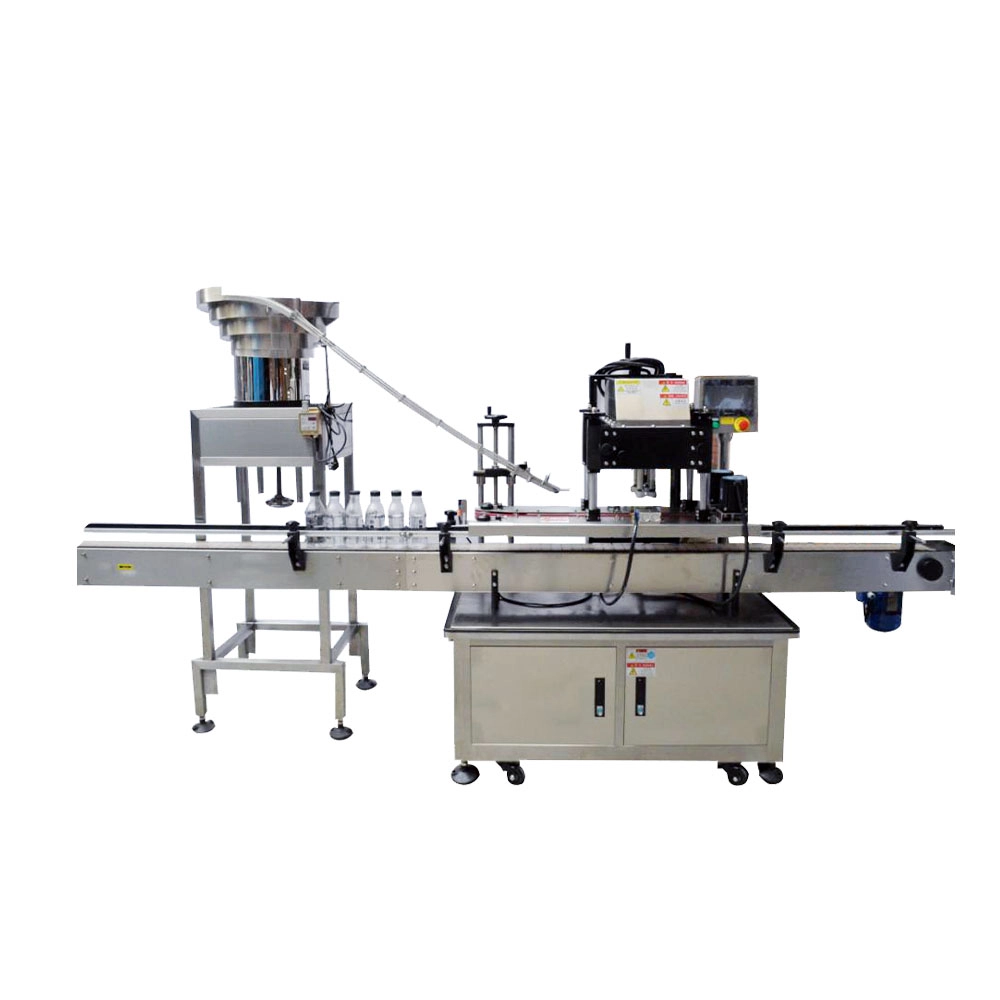
Automatic Plastic Caps Capping Machine with Vibrating Cap Feeder for Sale
Yuanyang automatic screw capping machine is a kind of four-wheel bottle capping machine. The automatic screw capper is often used to close lids of containers such as bottles and jars, especially for plastic bottles, which are widely used in food, medicine, chemical, cosmetic, and other industries for mass production and continuous production lines.
Features:
⦁ Full pneumatic drive;
⦁ Automated fast speed;
⦁ Suitable for various screw caps, pumps, and spray bottles.
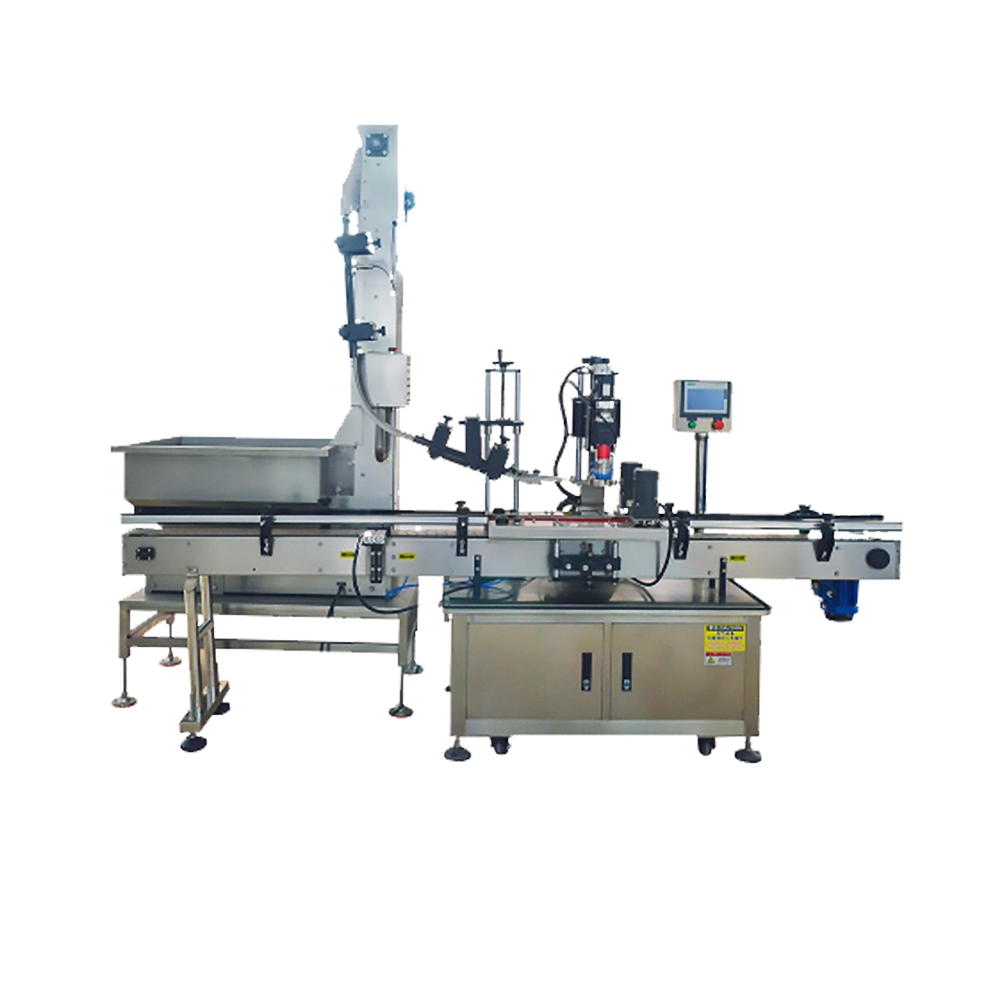
Automatic Metal Caps Capping Machine for Sale
Yuanyang automatic metal cap capping machine is a bottle capper for bottles with metal caps, which is often used to close lids of containers such as bottles and jars. The glass bottle metal capping machine is widely used in food, medicine, chemical, cosmetic, and other industries for mass production and continuous production line .
Features:
⦁ Pneumatic and electric drive;
⦁ Automated fast speed;
⦁ Suitable for glass bottles with metal caps.
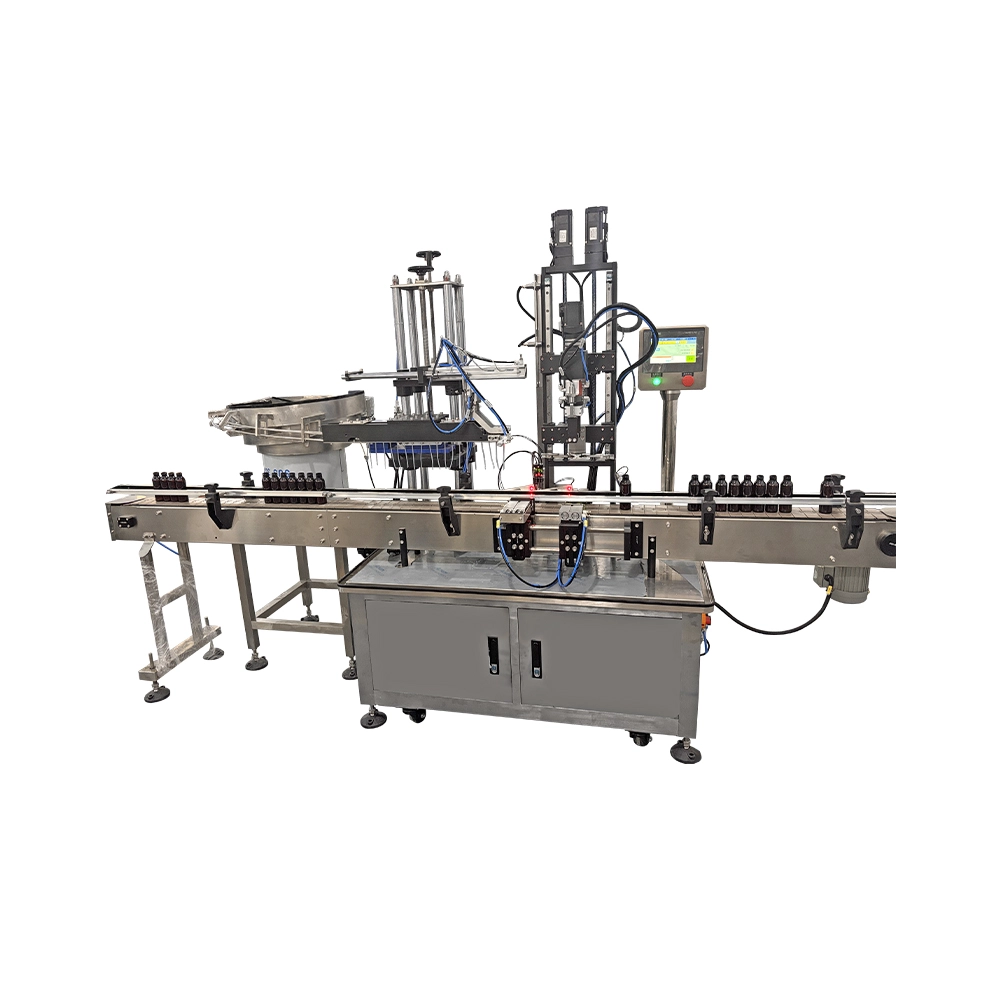
Automatic Pump Head Feeding and Capping Machine for Sale
Yuanyang automatic pump head feeding and capping machine is a bottle cap sorter and capper for bottles with pump heads, which is often used to close lids of containers such as nail polish, sprayers, and shampoo. The capping machine with a pump head feeder is widely used in food, medicine, chemical, cosmetic, and other industries for mass production and continuous production line .
Features:
⦁ Pneumatic and electric drive;
⦁ Automated fast speed;
⦁ Suitable for various types of caps.
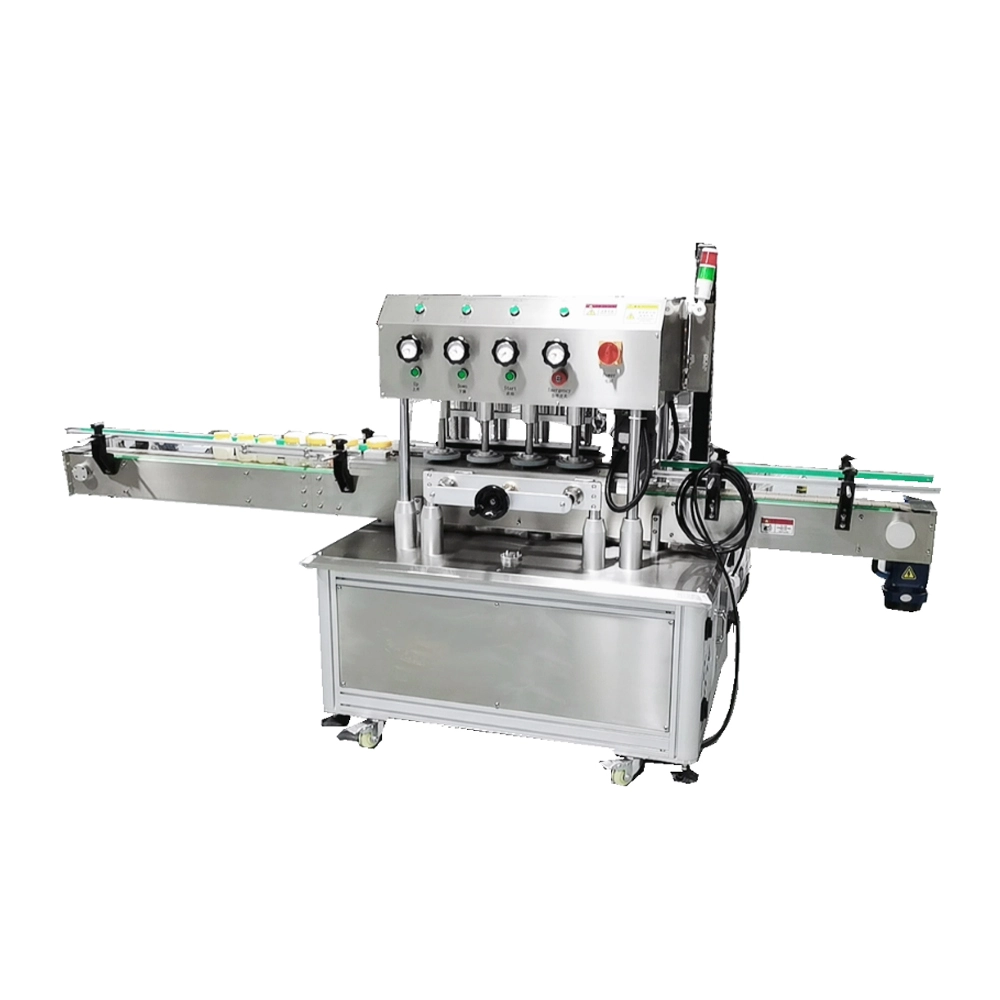
Automatic High Speed Capping Machine for Sale
The Yuanyang automatic high-speed capping machine is a kind of 8-wheel bottle-capping machine with fast working efficiency. The automatic capper is often used to close lids of containers such as bottles and jars, especially for plastic bottles, which are widely used in food, medicine, chemical, cosmetic, and other industries for mass production and continuous production lines.
Features:
⦁ Electric drive;
⦁ Automated fast speed;
⦁ Suitable for various screw caps, pumps, and spray bottles.
 Scan QR Code
Facebook
YouTube
LinkedIn
Whatsapp: +8613434139712
Guangzhou Yuanyang Machinery