





Single Layer Agitator Tank for Sale: Key Specs to Compare
- Understanding the Product: What a Single Layer Agitator Tank Is
- Product overview
- Why stainless steel mixing tank construction matters
- Key Technical Specs to Compare
- Material grade and internal finish
- Agitator type and power
- Scrapers, sealing and cover
- Comparative Table: How Single-Layer Agitator Tanks Stack Up
- How to interpret the table
- Process Compatibility and Regulatory Considerations
- Applications: cosmetics, pharma, food, chemicals
- Sanitation and cleaning (CIP/SIP)
- Documentation and compliance
- Installation, Operation, and Maintenance Best Practices
- Site requirements and installation
- Operation tips for optimal mixing
- Maintenance schedule
- Brand Advantages — Why Choose Yuanyang
- Product-focused design
- Manufacturing quality and documentation
- Service and customization
- FAQ — Common Questions About Single Layer Agitator Tanks
- Q: Is a single-layer agitator tank suitable for heating or cooling products?
- Q: What product viscosities are appropriate for this tank?
- Q: How do PTFE scrapers affect cleaning and product waste?
- Q: What certifications should I ask from a supplier?
- Q: Can this tank be used for pharmaceutical production?
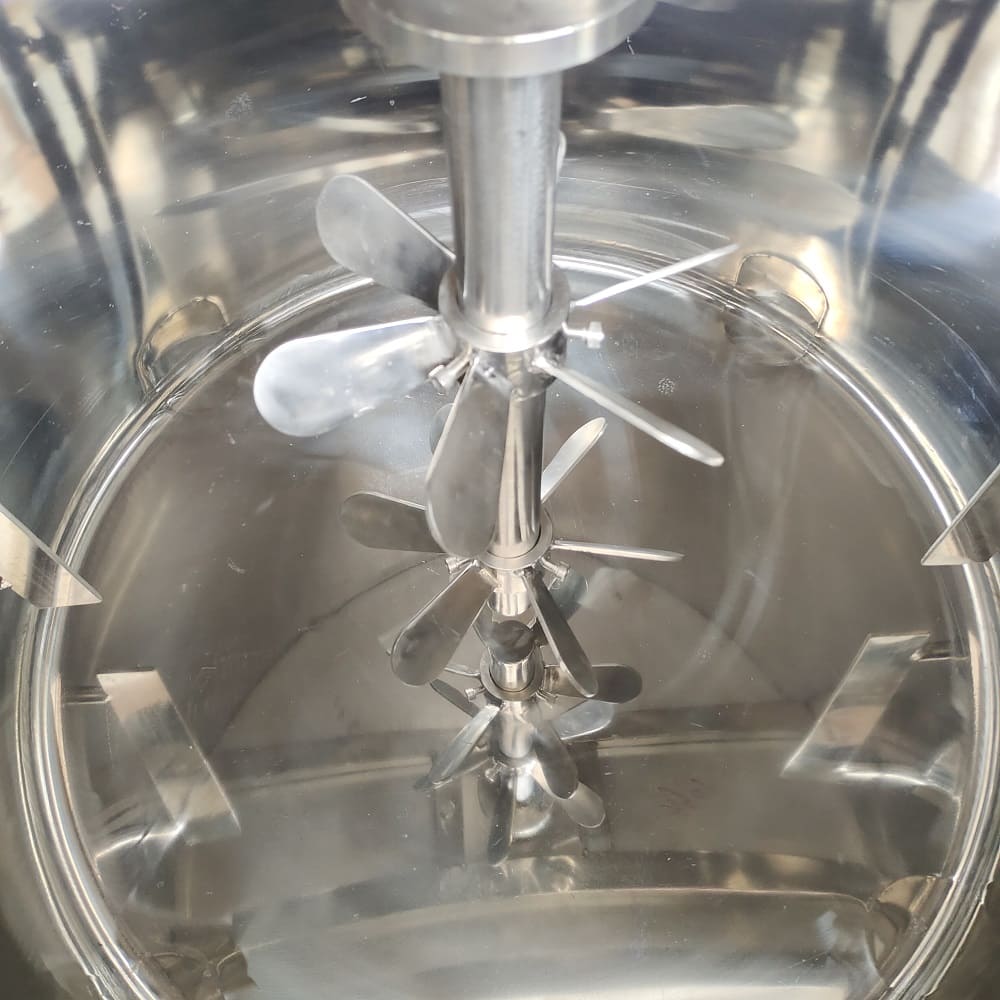
When sourcing a single-layer agitator tank for sale, understanding the technical specifications that directly affect performance, product quality and compliance is essential. This article summarizes the most important specs to compare — construction material (notably stainless steel mixing tank grades), agitator design, sealing and cover options, scrapers, mixing frame configuration, capacity and process compatibility — so purchasing teams can evaluate alternatives quickly and confidently for cosmetics, pharmaceuticals, food and chemical production.
Understanding the Product: What a Single Layer Agitator Tank Is
Product overview
Yuanyang single-layer agitator tank is a mixing tank with agitator paddles, mainly applied for liquid materials mixing and blending, which is widely used to manufacture low-viscosity liquids and prepare for cosmetics, pharmaceuticals, chemicals, and food industries.
Features:
⦁ Half-open cover;
⦁ Frame mixing with PTFE scrapers
⦁ Suitable for products of low viscosity liquid products;
Why stainless steel mixing tank construction matters
Most production environments require equipment made of corrosion-resistant alloys. A stainless steel mixing tank provides hygienic surfaces, chemical resistance and durability. Common grades like 304 and 316L differ in corrosion resistance — 316L is preferred for aggressive chemistries and pharmaceutical applications. For background on stainless steel properties, see the overview on Wikipedia.
Key Technical Specs to Compare
Material grade and internal finish
Compare the tank shell and internal finish: 304 vs 316L, surface roughness (Ra). For food and pharma, an internal finish of Ra ≤ 0.8 μm is typical; pharmaceutical or sterile applications may demand Ra ≤ 0.4 μm and electropolished surfaces. Material selection impacts cleanability, product compatibility and lifecycle cost.
Agitator type and power
Single layer agitator tanks often use frame-style paddle agitators for low-viscosity liquids. Key specs: agitator geometry (paddle, propeller, anchor), rotational speed (RPM), power (kW), and tip speed. These determine mixing time, shear, and vortex formation. For emulsions or shear-sensitive products, choose an agitator with appropriate blade profile and variable speed drive.
Scrapers, sealing and cover
PTFE scrapers mounted on a frame maintain a clean jacket-free wall for single-layer tanks. Scraper material and mounting influence heat transfer (if jacketed) and product loss. Sealing options (mechanical seals, lip seals, magnetic drives) are crucial for preventing leaks and contamination; for sanitary markets, comply with standards such as EHEDG or 3-A. For industry guidance, see EHEDG and 3-A Sanitary Standards.
Comparative Table: How Single-Layer Agitator Tanks Stack Up
The table below compares typical specifications buyers should review when evaluating a stainless steel mixing tank for low-viscosity liquid production.
| Specification | Single Layer Agitator Tank (Yuanyang) | Jacketed Double Layer Tank (for comparison) |
|---|---|---|
| Material | 316L stainless steel (option: 304); electropolish available | 316L with jacket (steam/water) |
| Internal Finish | Ra ≤ 0.8 μm standard; Ra ≤ 0.4 μm optional | Ra ≤ 0.8 μm; enhanced finish for pharma |
| Agitator | Frame mixing with PTFE scrapers; paddle or propeller options | Anchor or turbine with higher torque options |
| Heating/Cooling | No jacket; heating by external circulator or inline heater | Integrated jacket for precise thermal control |
| Suitable viscosity | Low-viscosity liquids (water-like to light syrups) | Low to medium viscosity; heavy products need specialist mixers |
| Sealing | Mechanical seal or sanitary lip seal; magnetic drive optional | High-spec seals; mechanical or magnetic drive |
| Typical applications | Cosmetics, pharmaceuticals, food sauces, liquid chemicals | Pharma formulations, sauces, heat-sensitive products |
How to interpret the table
Use the comparison to decide whether a single-layer stainless steel mixing tank meets your process needs or whether thermal control (jacketed tanks) or heavier duty mixing is required. If your product requires heating/cooling within the vessel, a jacketed design might be the right choice; for straightforward blending of low-viscosity liquids, the single-layer agitator tank is often more cost-effective and easier to clean.
Process Compatibility and Regulatory Considerations
Applications: cosmetics, pharma, food, chemicals
Single-layer agitator tanks are optimised for low-viscosity liquids: lotions, toners, syrups, liquid soaps, and many chemistry intermediates. For pharmaceuticals and food products, prioritize sanitary design: smooth welds, drainability, CIP (clean-in-place) capability and compliant seals. Regulatory standards and best practices can be reviewed through authoritative bodies such as U.S. FDA and WHO when applicable.
Sanitation and cleaning (CIP/SIP)
Assess whether the single-layer tank supports CIP or requires manual cleaning. The tank geometry, nozzle placement, and internal finish determine cleanability. PTFE scrapers reduce residue on sidewalls for products that settle or stick. For validation, you may need to run swab tests and conductivity or TOC measurements after cleaning cycles.
Documentation and compliance
Request documentation from suppliers: material certificates (EN/ASTM), surface finish reports, test records, and welding procedures (WPS/PQR). For pharmaceutical buyers, ask for IQ/OQ/PQ protocols. These documents establish equipment traceability and compliance during audits.
Installation, Operation, and Maintenance Best Practices
Site requirements and installation
Plan for adequate floor loading, foundation, and access for maintenance. Single-layer tanks are lighter than jacketed equivalents but still require level supports and secure anchoring to prevent vibration. Ensure sufficient headroom for half-open covers and agitator drive maintenance.
Operation tips for optimal mixing
Start with recommended fill levels (often 30–80% of tank volume depending on agitator type) to ensure proper vortex and mixing efficiency. Adjust agitator speed to balance mixing time and shear: higher RPM reduces mixing time but increases shear and possibly foaming. Use sampling ports for in-process checks.
Maintenance schedule
Regularly inspect seals, bearings and scrapers. PTFE scrapers wear over time and should be replaced before they damage the inner surface. Lubricate gearbox and verify motor alignment. Keep a log of maintenance activities to support lifecycle management.
Brand Advantages — Why Choose Yuanyang
Product-focused design
Yuanyang single-layer agitator tanks are designed specifically for low-viscosity liquid production with features such as half-open covers for easy access, frame mixing with PTFE scrapers for reduced waste and improved wall-cleaning, and configurable agitator options to match product requirements. The design emphasizes cleanability and operational simplicity, making it suitable for cosmetics, pharma, food and chemical labs and production lines.
Manufacturing quality and documentation
Yuanyang provides material test certificates, welding documentation and surface finish reports on request. Components like motors and seals are sourced from established suppliers to ensure reliability. These practices support traceability and audit readiness for regulated industries.
Service and customization
Yuanyang offers customization for tank volume, surface finish, agitator types and optional drives. After-sales technical support includes installation guidance, commissioning checklists and spare part availability, reducing downtime risk for production facilities.
FAQ — Common Questions About Single Layer Agitator Tanks
Q: Is a single-layer agitator tank suitable for heating or cooling products?
A: Single-layer tanks do not include an integrated jacket, so they are not ideal when precise heating or cooling inside the vessel is required. You can use external heat exchangers or inline heaters/coolers with circulation loops. For processes needing precise thermal control, consider a jacketed tank.
Q: What product viscosities are appropriate for this tank?
A: The Yuanyang single-layer agitator tank is optimized for low-viscosity liquids — from water-like fluids up to light syrups and lotions. Higher viscosities require specialized agitators (anchors, high-torque drives) or different tank designs.
Q: How do PTFE scrapers affect cleaning and product waste?
A: PTFE scrapers maintain a thin film of product on the walls and reduce accumulation, improving drainability and reducing product waste. They also simplify cleaning cycles by minimizing deposit formation on the inner surface.
Q: What certifications should I ask from a supplier?
A: Request material certificates (EN/ASTM), surface roughness test reports, welding procedure documents, and for regulated industries, IQ/OQ/PQ protocols. If applicable, confirm adherence to hygienic design standards from organizations like EHEDG or 3-A Sanitary Standards.
Q: Can this tank be used for pharmaceutical production?
A: Yes — when specified with 316L stainless steel, appropriate surface finish (Ra ≤ 0.4 μm when required), sanitary seals and documented validation support. Discuss required documentation and cleanability validation with the supplier to meet GMP requirements.
Once core specifications are defined, attention often shifts to compliance and cleanliness, making the hygienic design features of stainless steel mixing tanks a critical next consideration.If you are ready to evaluate models or request a quote, contact our sales team to view technical drawings, request a quote, or schedule a demo. For immediate assistance, email [email protected] or view the Single Layer Agitator Tank product page.
How to Choose the food bag sealing machine manufacturer and supplier in America?
The latest trends for trigger spray capping machine
The cosmetic cream storage tank Cost Guide
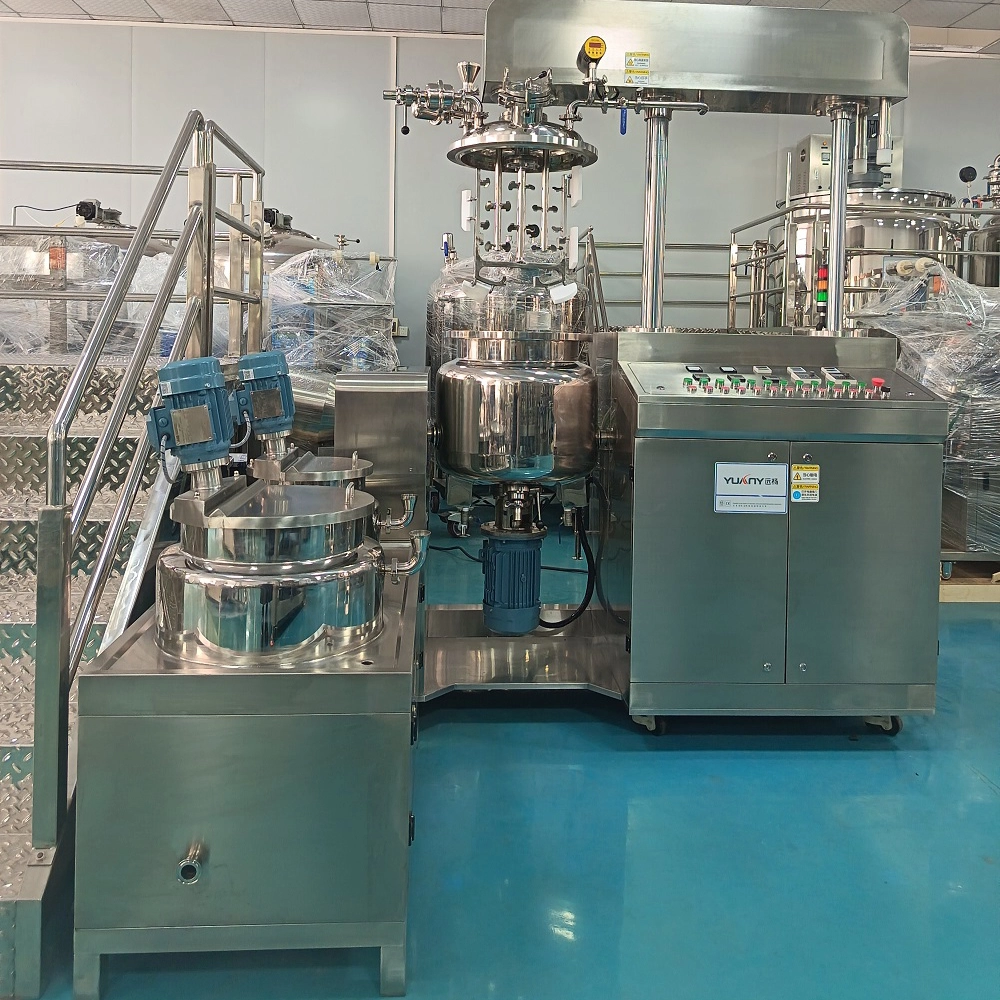
Reducing Batch Time with High-Shear Emulsifying Machines
Automatic Screw Capping Machine
Do you have a vibratory cap feeding machine for the automatic capping machine?
Yes, we provide vibratory cap feeder or elevator type cap feeder to sort caps. The cap feeder machine has to be customized according cap shape and size, like pump head with straw, metal caps,plastic caps and so on.
Homogenizing Mixer
Do you supply steam generator and provide steam and cooling pipes together for the mixing tank with homogenizer machine?
If the mixing tank is with steam heating, we will help to supply steam generator and provide steam and cooling pipes. But this is an optional choice. Client can prepare by steam generator by himself. The steam pipe is usually quoted separately.
Liquid Soap Mixer Machine
When shall we choose electric heating or steam heating?
The electric heating is with bottom electric tubes, the cost is lower compared with steam heating, which requires a steam generator and needs steam pipes. So we recommend small business choose electric heating for small capacity.
Washing Powder
What types of packaging does the equipment support?
Our machines accommodate various packaging formats, including bottles, bags, and small packs, to meet diverse market demands.
Powder Sachet Packaging Machine
Is the length of bag-forming adjustable for this automatic packing machine?
Yes, the bag-forming length can be adjusted on the control panel within certain range of the model.
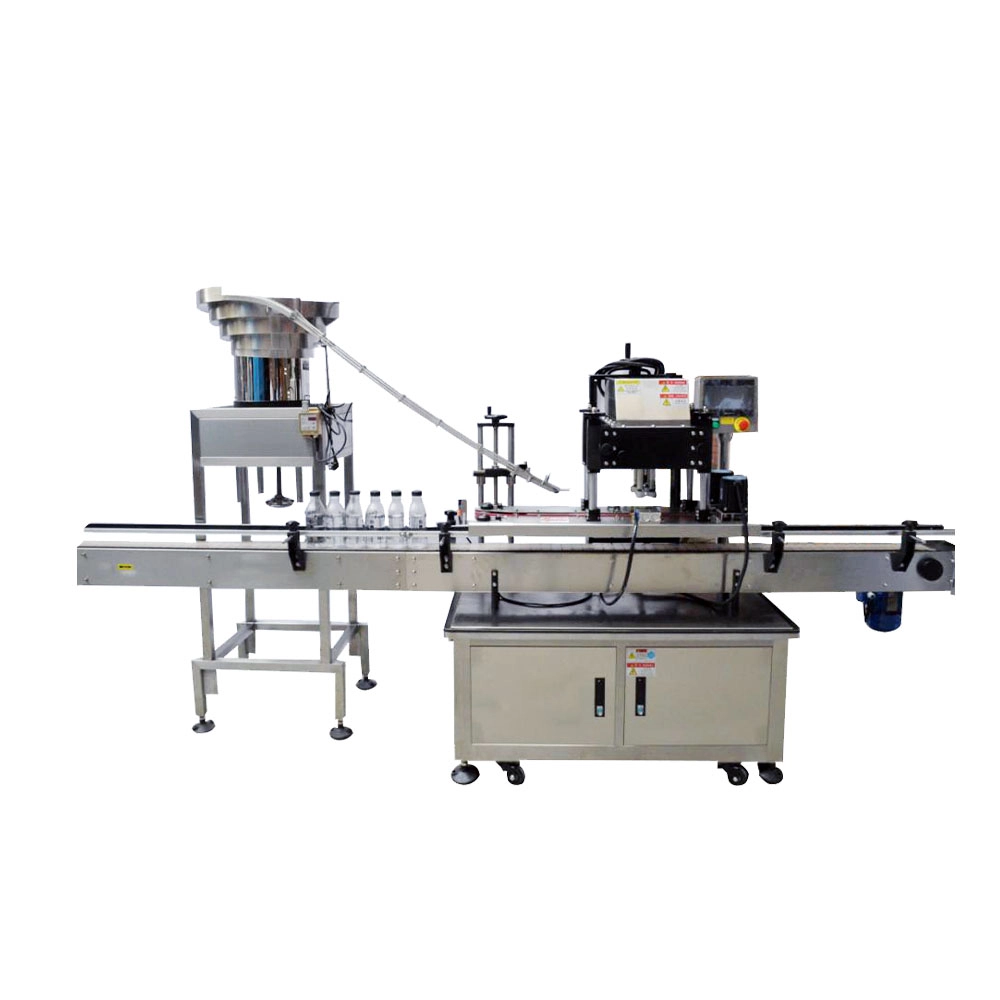
Automatic Plastic Caps Capping Machine with Vibrating Cap Feeder for Sale
Yuanyang automatic screw capping machine is a kind of four-wheel bottle capping machine. The automatic screw capper is often used to close lids of containers such as bottles and jars, especially for plastic bottles, which are widely used in food, medicine, chemical, cosmetic, and other industries for mass production and continuous production lines.
Features:
⦁ Full pneumatic drive;
⦁ Automated fast speed;
⦁ Suitable for various screw caps, pumps, and spray bottles.
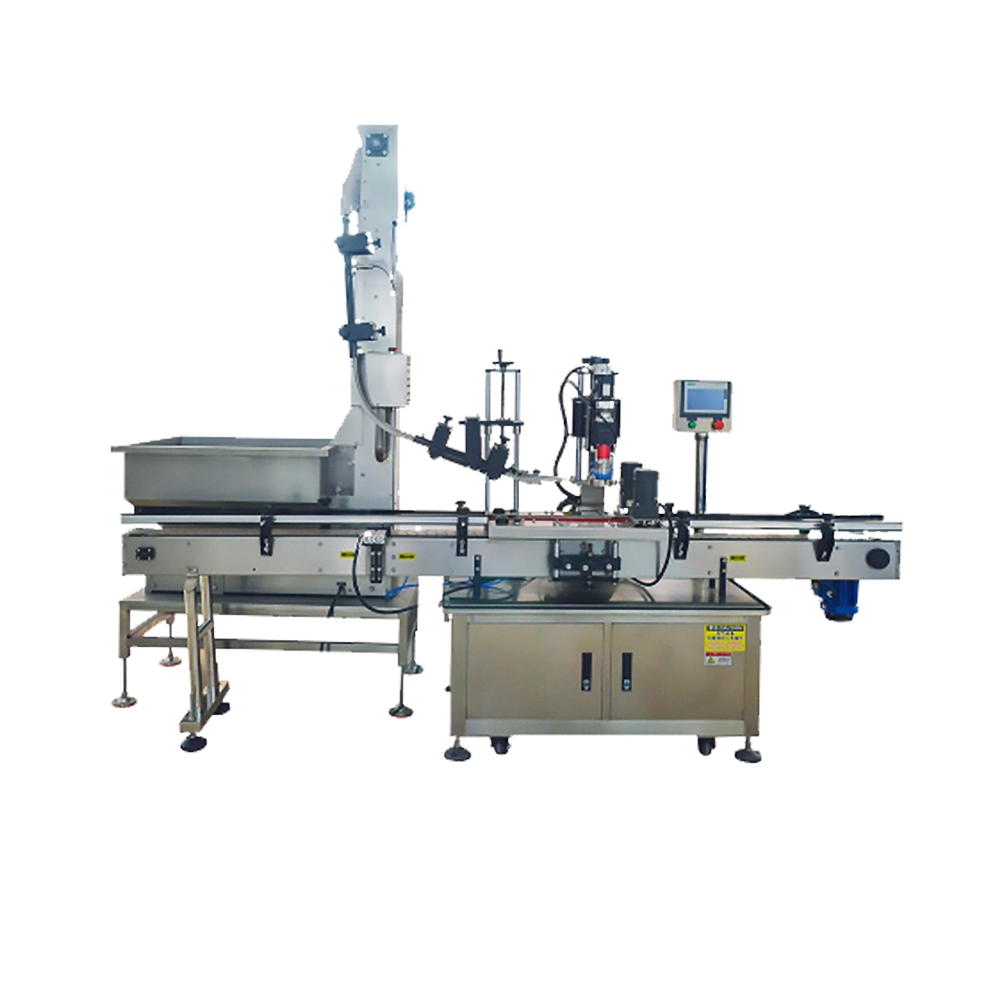
Automatic Metal Caps Capping Machine for Sale
Yuanyang automatic metal cap capping machine is a bottle capper for bottles with metal caps, which is often used to close lids of containers such as bottles and jars. The glass bottle metal capping machine is widely used in food, medicine, chemical, cosmetic, and other industries for mass production and continuous production line .
Features:
⦁ Pneumatic and electric drive;
⦁ Automated fast speed;
⦁ Suitable for glass bottles with metal caps.
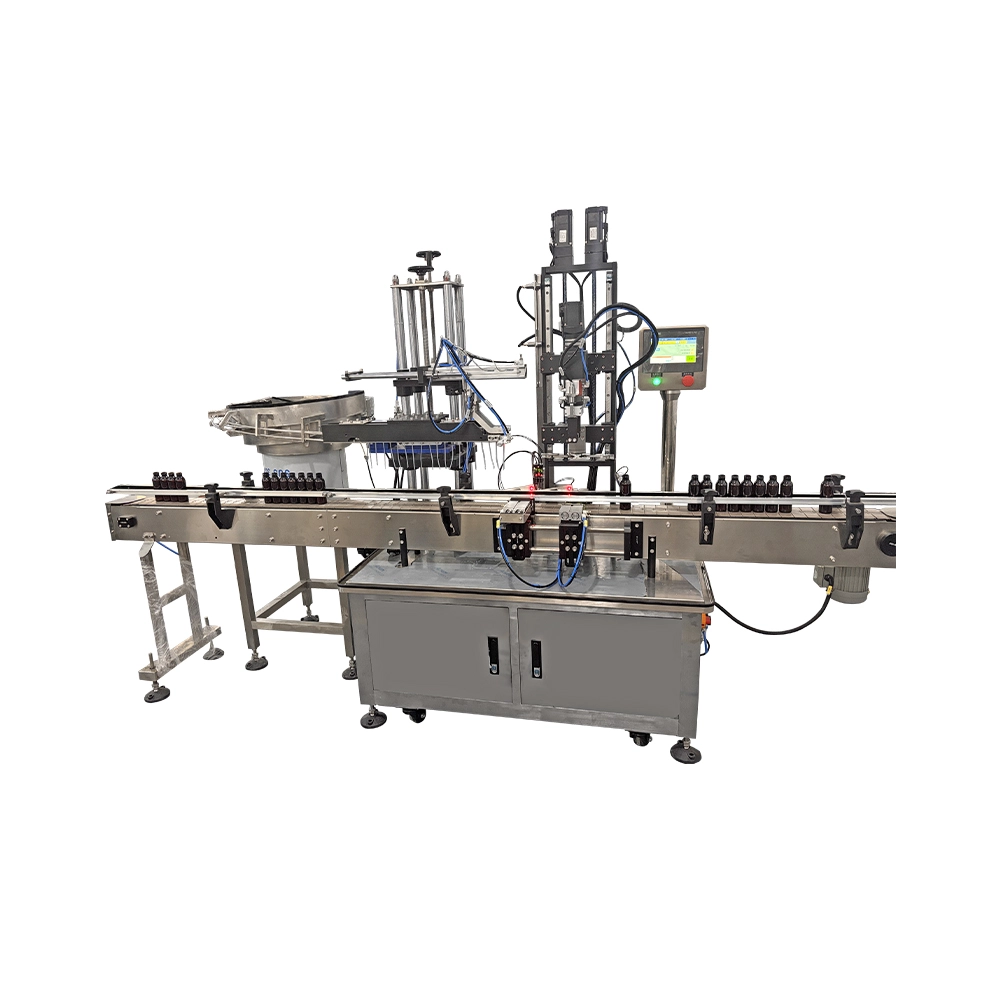
Automatic Pump Head Feeding and Capping Machine for Sale
Yuanyang automatic pump head feeding and capping machine is a bottle cap sorter and capper for bottles with pump heads, which is often used to close lids of containers such as nail polish, sprayers, and shampoo. The capping machine with a pump head feeder is widely used in food, medicine, chemical, cosmetic, and other industries for mass production and continuous production line .
Features:
⦁ Pneumatic and electric drive;
⦁ Automated fast speed;
⦁ Suitable for various types of caps.
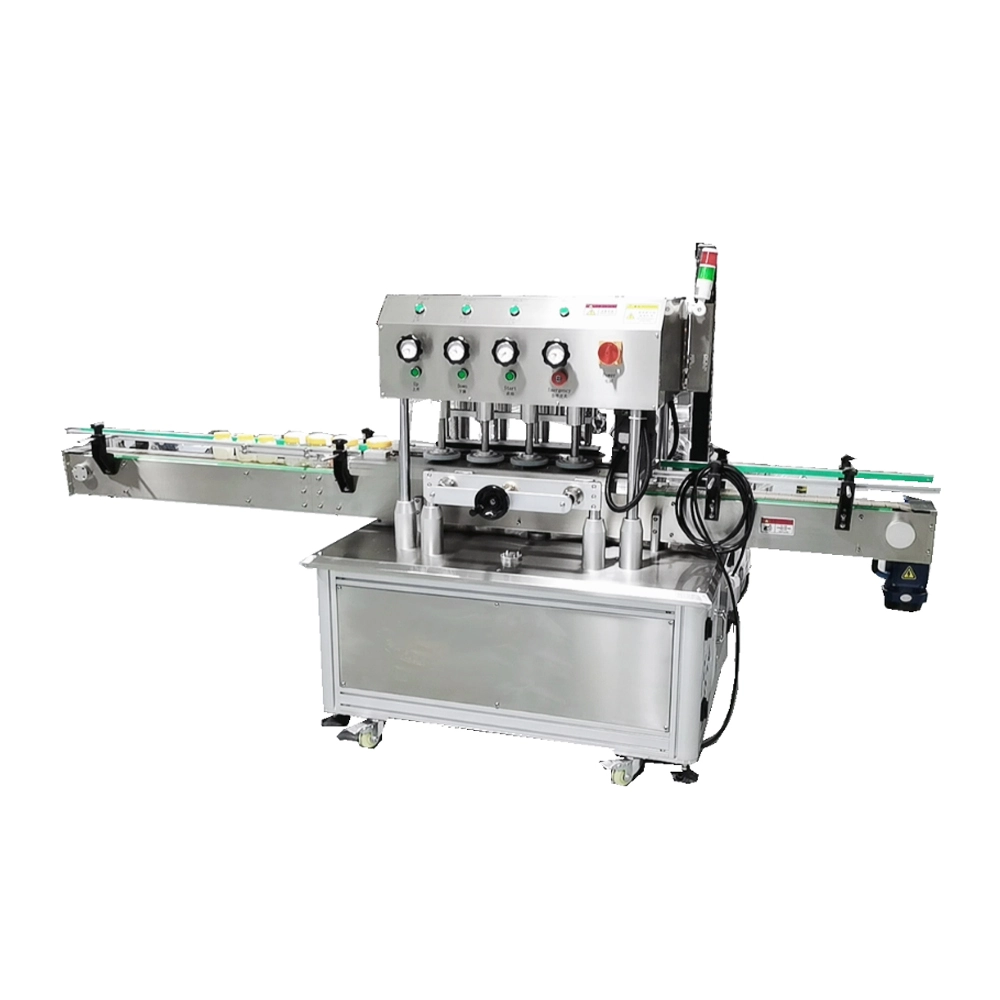
Automatic High Speed Capping Machine for Sale
The Yuanyang automatic high-speed capping machine is a kind of 8-wheel bottle-capping machine with fast working efficiency. The automatic capper is often used to close lids of containers such as bottles and jars, especially for plastic bottles, which are widely used in food, medicine, chemical, cosmetic, and other industries for mass production and continuous production lines.
Features:
⦁ Electric drive;
⦁ Automated fast speed;
⦁ Suitable for various screw caps, pumps, and spray bottles.
 Scan QR Code
Facebook
YouTube
LinkedIn
Whatsapp: +8613434139712
Guangzhou Yuanyang Machinery