





How to Evaluate Sealing Machine Specs for Tube Production Lines
- How to Evaluate Sealing Machine Specs for Tube Production Lines
- Introduction: Why the right sealing machine matters for tube production lines
- Product overview: Automatic Tube Sealing Machine for Sale
- Core performance metrics to compare sealing machine specs (sealing machine)
- Tube compatibility and sealing method: match specs to materials (sealing machine)
- Controls, user interface and automation level: touchscreen and integration (Automatic Tube Sealing Machine for Sale)
- Filling accuracy and dosing control: why pneumatic filling matters (sealing machine)
- Tooling, changeover and maintenance specs: minimize downtime (sealing machine)
- Footprint, utilities and environmental specs: practical plant considerations (sealing machine)
- Quality control, testing and validation: specs that ensure compliance (sealing machine)
- Safety, standards and certification: look for CE/ISO and industry compliance (sealing machine)
- Sample specification comparison table (sealing machine)
- Cost of ownership and ROI: evaluate beyond purchase price (sealing machine)
- Checklist: minimum specs to request from suppliers (sealing machine)
- Brand strengths summary: why choose Yuanyang’s Automatic Tube Sealing Machine for Sale (sealing machine)
- Frequently Asked Questions (FAQ) about sealing machine selection
- Q1: What sealing method is best for aluminum tubes?
- Q2: How do I verify filling accuracy in specs?
- Q3: Can I integrate the sealing machine with my existing production line?
- Q4: How long does changeover between tube sizes typically take?
- Q5: What certifications should I require for pharmaceutical or food production?
- Contact sales / View product CTA
- References and authoritative resources

How to Evaluate Sealing Machine Specs for Tube Production Lines
Introduction: Why the right sealing machine matters for tube production lines
Choosing the right sealing machine for tube production lines directly affects product quality, production uptime, and cost-efficiency. A well-specified sealing machine ensures hermetic seals for aluminum or plastic tubes, consistent fill accuracy for creams, gels and pastes, and smooth integration into automated packaging lines. This guide focuses on practical, technical, and commercial factors to evaluate sealing machine specs and introduces the Automatic Tube Sealing Machine for Sale including its main features and applications. Once you know how to assess machine specifications, focus on top procurement criteria for automatic tube sealing machines, which include throughput, sealing consistency, energy efficiency, and maintenance considerations.
Product overview: Automatic Tube Sealing Machine for Sale
The following product description gives a concise look at the machine we reference throughout this
Yuanyang automatic tube sealing machine is an integrated automatic packaging machine with filling and sealing for aluminum or plastic tubes. The tube packing machine has become an indispensable piece of equipment in modern production for cosmetic, food, medicine, chemical, and other fields.
Features:
⦁ Touchscreen operation, humanized design, simple and intuitive.
⦁ Pneumatic filling control to ensure the accuracy of filling.
⦁ Photoelectric sensing and pneumatic linkage control.
⦁ Pneumatic control valve, efficient and safe. The runner can be adjusted and cleaned separately.
Core performance metrics to compare sealing machine specs (sealing machine)
When evaluating sealing machine specs, focus first on the measurable performance metrics that translate to production capability and product quality:
- Throughput (tubes per minute or hour)—ensures the machine meets line capacity.
- Sealing method and integrity—types include heat crimping, ultrasonic, induction, and laser sealing; each has pros and cons for different tube materials.
- Filling accuracy and repeatability—critical for regulated products (cosmetics, pharmaceuticals, food).
- Changeover time—how quickly the machine can switch between tube sizes or products.
- OEE-related metrics—availability, performance, and quality loss contributors.
Quantify these metrics based on your target run rates and acceptable defect levels before comparing models.
Tube compatibility and sealing method: match specs to materials (sealing machine)
Tube material (aluminum, laminated plastics, PE, etc.) and closure type determine the sealing approach. Key considerations:
- Aluminum tubes often require mechanical crimping and heat sealing; laminated tubes usually use heat-sealable layers.
- Ultrasonic sealing excels for certain thermoplastics but needs precise energy control and tooling.
- Induction sealing may be used for inner seals (foil liners) on some tube caps, not for body crimping.
- Check compatibility lists in spec sheets and ask for sample seals or test runs on your actual tubes.
Controls, user interface and automation level: touchscreen and integration (Automatic Tube Sealing Machine for Sale)
Modern sealing machines use PLCs and touchscreen HMIs for intuitive control and integration into MES/SCADA systems. Evaluate specs for:
- HMI features—recipe management, fault diagnostics, operator permissions.
- Communication protocols—Ethernet/IP, Modbus TCP, Profinet, OPC-UA for line integration.
- Automation extent—does the machine include automatic tube feeding, orientation, filling, sealing, printing, and reject handling?
- Safety and interlocks—emergency stops, guarded access with sensors.
The Automatic Tube Sealing Machine for Sale highlights touchscreen operation and photoelectric sensing—good signs for ease of use and integration.
Filling accuracy and dosing control: why pneumatic filling matters (sealing machine)
For viscous materials used in cosmetics, pharmaceuticals, and food, accurate dosing prevents overfill, waste and regulatory noncompliance. Pneumatic filling control, as featured on the Yuanyang machine, typically offers:
- Stable pressure-driven dosing suitable for a broad viscosity range.
- Simple maintenance and low running costs compared to complex pump systems.
- Fast response and easy integration with photoelectric sensing for tube detection.
When comparing specs, review dosing repeatability (±%), maximum viscosity rating (cP), and sanitation features (CIP compatibility for food/medical applications).
Tooling, changeover and maintenance specs: minimize downtime (sealing machine)
Operational uptime is driven by tooling design and maintenance demand. Look for these specifications:
- Quick-change tooling—reduces changeover time between tube diameters/lengths.
- Accessibility—can critical wear components (runners, filling nozzles, seals) be removed without full disassembly?
- Spare parts availability and MTTR expectations—ask suppliers for typical mean time to repair values.
- Cleaning requirements—sanitary designs and materials (316 stainless wetted parts) are essential for food and pharma.
Footprint, utilities and environmental specs: practical plant considerations (sealing machine)
Physical and utility requirements often constrain choices. Compare machine specs for:
- Footprint and modular expansion options.
- Air consumption (for pneumatic systems) in L/min and required air pressure.
- Power draw (kW), voltage, and single/three-phase requirements.
- Environmental tolerances—operating temperature and humidity ranges.
Quality control, testing and validation: specs that ensure compliance (sealing machine)
For regulated industries, specify features that support quality assurance and traceability:
- Integrated leak testing or visual/laser inspection modules.
- Recipe and batch data logging with exportable audit trails.
- Support for serialization or batch/lot code printing.
- Validation documentation—IQ/OQ/PQ protocols, FAT/SAT support.
Confirm that the sealing machine supplier can provide documentation required for regulatory submissions or audits.
Safety, standards and certification: look for CE/ISO and industry compliance (sealing machine)
Check machine compliance with applicable standards and certifications in your market. Important specs include:
- CE marking for EU markets and machinery directives compliance.
- ISO 9001 for manufacturer quality systems.
- Electrical and EMC certifications (UL, CSA, VDE) as relevant by region.
- Materials suitability certifications for food/pharma (FDA-compliant plastics, 3-A sanitary design recommendations).
Request copies of certificates and test reports before purchase.
Sample specification comparison table (sealing machine)
Use a table to compare shortlisted machines on critical specs. Below is an example template you can request from vendors.
| Spec | Yuanyang Automatic Tube Sealing Machine | Competitor A | Competitor B |
|---|---|---|---|
| Throughput (tubes/min) | 20–60 (model dependent) | 30–80 | 15–50 |
| Sealing Method | Heat crimping / pneumatic control | Ultrasonic | Heat crimping |
| Filling Control | Pneumatic filling control (accurate for viscous products) | Peristaltic pump | Screw pump |
| HMI | Touchscreen | Touchscreen + PLC | Basic HMI |
| Changeover Time | 10–30 minutes (tooling dependent) | 5–20 minutes | 15–45 minutes |
| Certifications | CE / Manufacturer QC | CE / UL | CE |
Cost of ownership and ROI: evaluate beyond purchase price (sealing machine)
When calculating total cost of ownership, include:
- Initial purchase and installation.
- Tooling and spare parts inventory.
- Energy and compressed air consumption.
- Maintenance labor and mean time between failures.
- Product yield improvements and reduction in rework/returns.
Estimate payback by modeling throughput increase × margin improvement minus operating costs. Suppliers should help with ROI projections based on your product and run schedule.
Checklist: minimum specs to request from suppliers (sealing machine)
When engaging vendors, request these items as part of your RFQ:
- Detailed spec sheet including throughput curves by tube diameter/length.
- Material compatibility list and recommended sealing method per material.
- Power and utilities consumption (kW, L/min, pressure).
- Validation support documents (IQ/OQ/PQ), installation drawings and footprint.
- Warranty, spare parts list, typical lead times and service contract options.
- References or case studies in your industry (cosmetics, pharmaceuticals, food).
Brand strengths summary: why choose Yuanyang’s Automatic Tube Sealing Machine for Sale (sealing machine)
Yuanyang's machine offers practical strengths for many tube production lines:
- Integrated filling and sealing reduces line complexity and simplifies sourcing a single supplier for coordinated performance.
- Touchscreen and photoelectric sensing support rapid setup, recipe management and reliable tube alignment.
- Pneumatic filling control is robust for viscous products across cosmetics, food and pharmaceutical applications.
- Modular runner design with separate cleaning capability lowers downtime for product changeovers and maintenance.
These attributes combine to improve operator usability, reduce waste from inaccurate fills, and maintain consistent seal integrity for marketable product quality.
Frequently Asked Questions (FAQ) about sealing machine selection
Q1: What sealing method is best for aluminum tubes?
A1: For aluminum tubes, mechanical crimping combined with heat or pressure sealing is commonly used. Confirm the machine provides proper crimp height and consistent seal compression. For laminated tubes, heat sealing may be more applicable. Request sample seals and perform peel/pressure tests.
Q2: How do I verify filling accuracy in specs?
A2: Ask for the filling repeatability spec (e.g., ±0.5% or ±1g) and request traceable test results using your product viscosity. On-site FAT with your formulation is ideal to verify the pneumatic filling control achieves required tolerances.
Q3: Can I integrate the sealing machine with my existing production line?
A3: Yes, most modern machines support common industrial communication protocols (Ethernet/IP, Modbus, Profinet). Ensure the vendor provides interface documentation and wiring diagrams; ask about mechanical infeed/outfeed conveyor integration and sync capabilities.
Q4: How long does changeover between tube sizes typically take?
A4: Changeover time varies widely—well-designed machines with quick-change tooling can switch in 10–30 minutes; older or more complex machines may take longer. Request a live demo or video of a changeover on the vendor’s machine.
Q5: What certifications should I require for pharmaceutical or food production?
A5: For food and pharma, require material compliance (FDA, EU food contact as applicable), CE and machine safety standards, and validation documentation (IQ/OQ/PQ). Sanitary design and cleanability are essential—ask about wetted material specs and CIP options.
Contact sales / View product CTA
If you are ready to evaluate a machine or request a quote, contact our sales team to schedule a Factory Acceptance Test (FAT) or a product demonstration. View details and request the Automatic Tube Sealing Machine for Sale to compare live sealing samples with your tubes and formulations. Contact: [email protected] | Phone: +1-800-XXX-XXXX
References and authoritative resources
Below are authoritative resources for further reading on tube packaging, machinery directives and packaging standards:
- Tube (container) — Wikipedia: https://en.wikipedia.org/wiki/Tube_(container)
- European Machinery Directive — Official EUR-Lex: https://eur-lex.europa.eu/eli/dir/2006/42/oj
- ISO 9001 Quality management systems — ISO.org: https://www.iso.org/iso-9001-quality-management.
- FDA Guidance on Packaging — U.S. FDA: https://www.fda.gov/medical-devices/general-hospital-devices-and-supplies/packaging
End of document.
Wholesale reverse osmosis water treatment plant manufacturer and supplier in Europe
How to manufacturing bottle filling capping machine in Europe
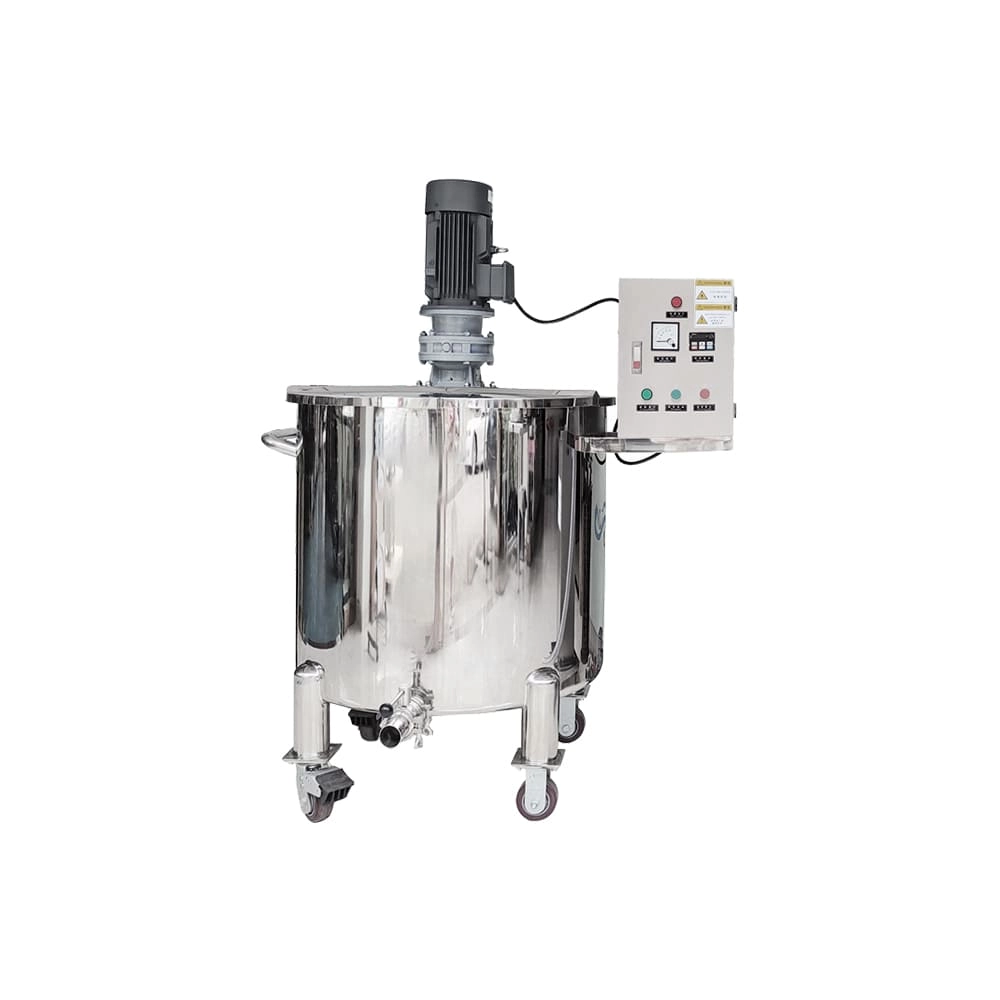
Buyer's Guide: Choosing the Right Stainless Steel Mixing Tank
The B2B Buyer’s Guide to best sealing machine for food
Detergent powder mixer
Can you also help to purchase raw powder for the washing powder mixer?
Sure, we have professional partner who has been engaged in raw powder supply for over 20 years. The price is competitive in the market. If clients need to purchase together, it is recommend to take a container.
High Speed Dispersion Machine
Can the upper smaller blade move up or down?
Yes, the extra blades can be flexible fixed higher or lower based on materials depth.
Vertical Filling Machine
The power supply is 220v 60hz, can I use this paste filling machine?
Sure, the machine is only pneumatic drive, you just use local air compress to connect to it. There is no need to worry about power supply.
One Stage Water Treatment
How do I know the water conductivity?
The reverse osmosis water filter machine can display both raw water conductivity and output water conductivity.
Automatic Round Bottle Labeling Machine
Can you add a date printer for the labeling machine?
Yes, a coding machine for date printing can be added with labeling machine. It can print date on labels with ink. But for more functions,such print code, pictures, bar code, it is suggested to buy a separated ink jet printer.
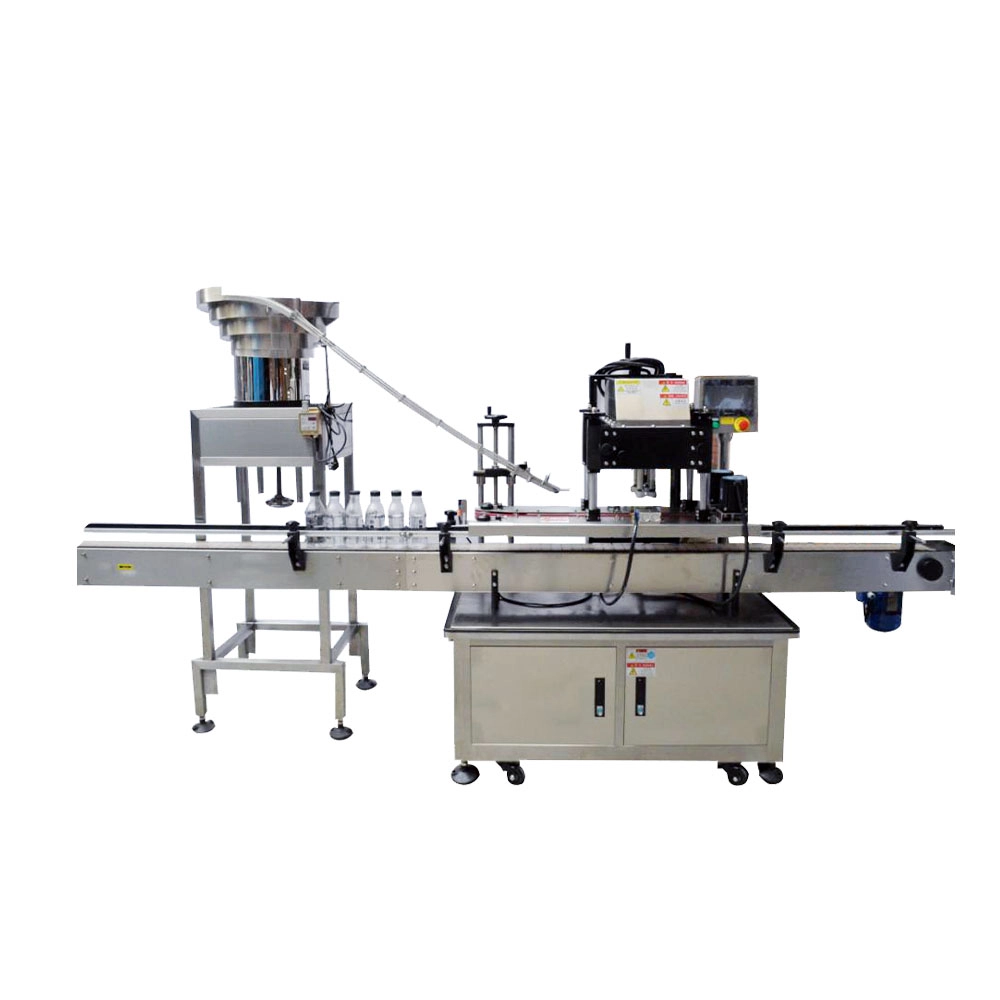
Automatic Plastic Caps Capping Machine with Vibrating Cap Feeder for Sale
Yuanyang automatic screw capping machine is a kind of four-wheel bottle capping machine. The automatic screw capper is often used to close lids of containers such as bottles and jars, especially for plastic bottles, which are widely used in food, medicine, chemical, cosmetic, and other industries for mass production and continuous production lines.
Features:
⦁ Full pneumatic drive;
⦁ Automated fast speed;
⦁ Suitable for various screw caps, pumps, and spray bottles.
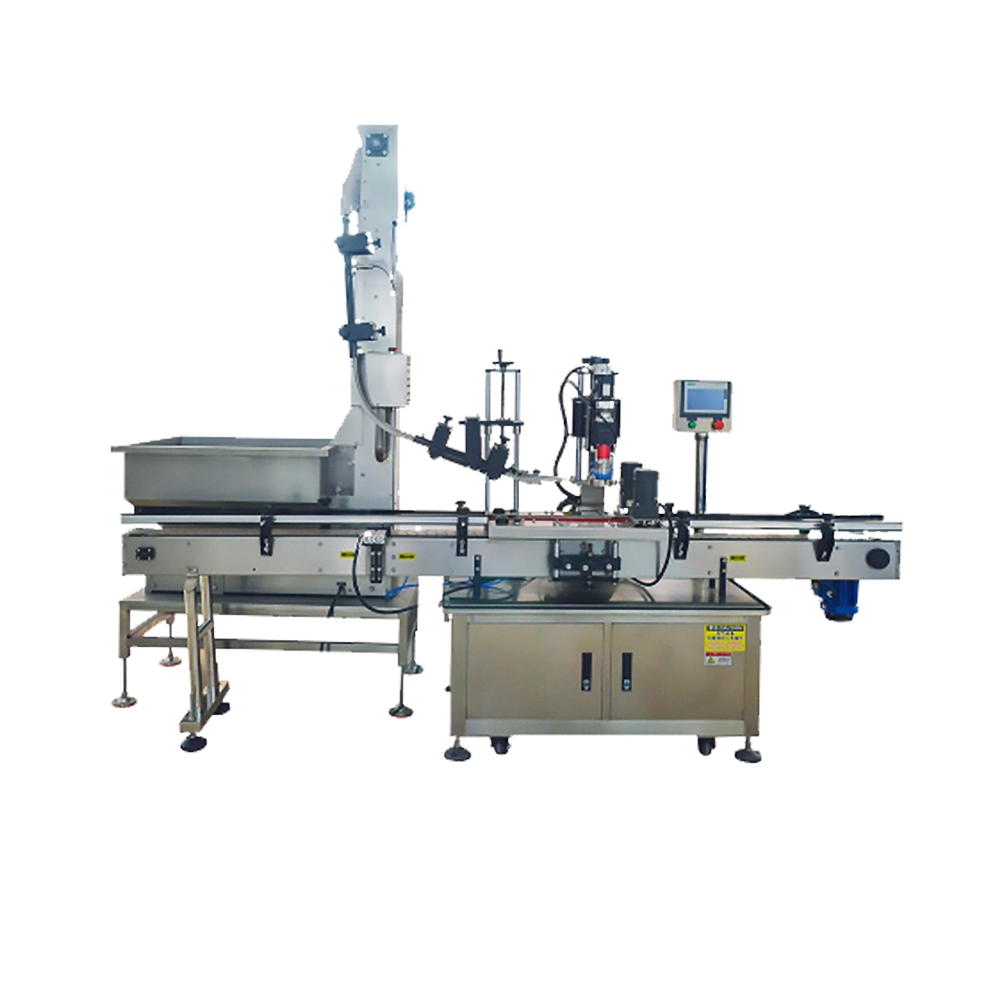
Automatic Metal Caps Capping Machine for Sale
Yuanyang automatic metal cap capping machine is a bottle capper for bottles with metal caps, which is often used to close lids of containers such as bottles and jars. The glass bottle metal capping machine is widely used in food, medicine, chemical, cosmetic, and other industries for mass production and continuous production line .
Features:
⦁ Pneumatic and electric drive;
⦁ Automated fast speed;
⦁ Suitable for glass bottles with metal caps.
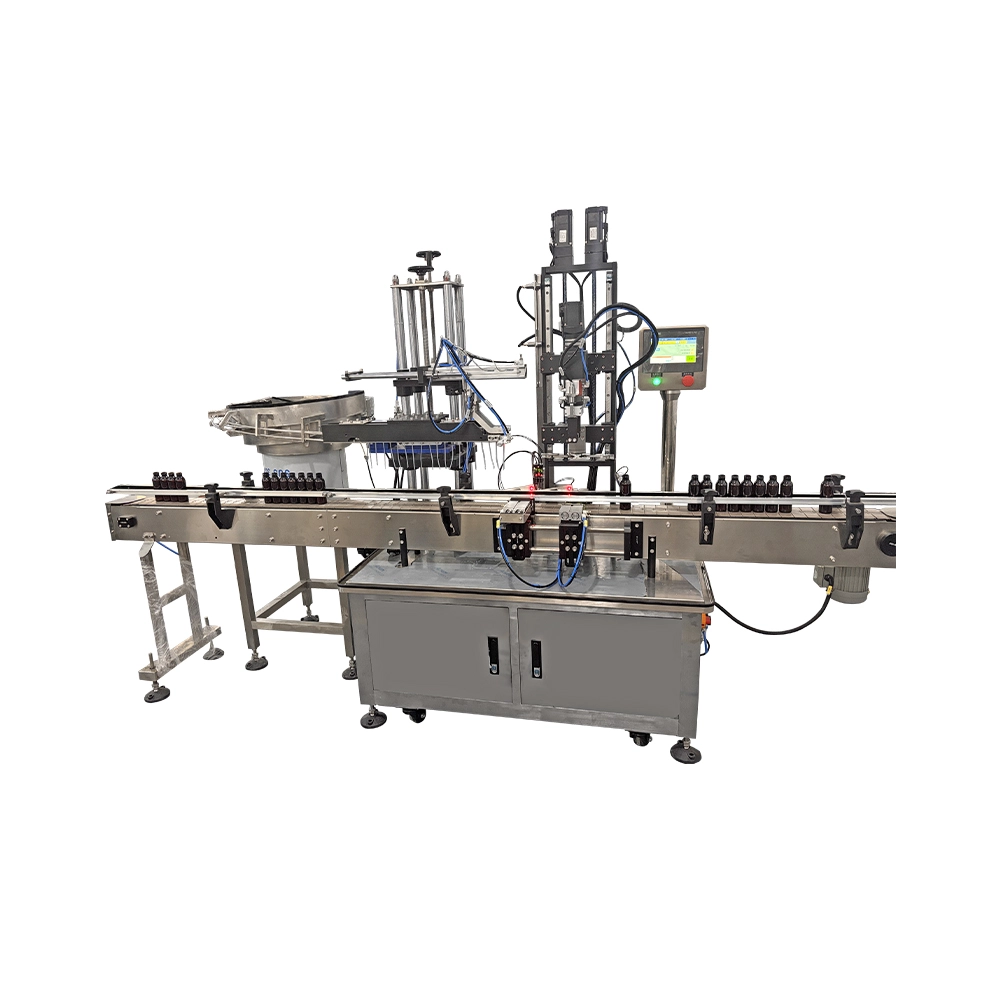
Automatic Pump Head Feeding and Capping Machine for Sale
Yuanyang automatic pump head feeding and capping machine is a bottle cap sorter and capper for bottles with pump heads, which is often used to close lids of containers such as nail polish, sprayers, and shampoo. The capping machine with a pump head feeder is widely used in food, medicine, chemical, cosmetic, and other industries for mass production and continuous production line .
Features:
⦁ Pneumatic and electric drive;
⦁ Automated fast speed;
⦁ Suitable for various types of caps.
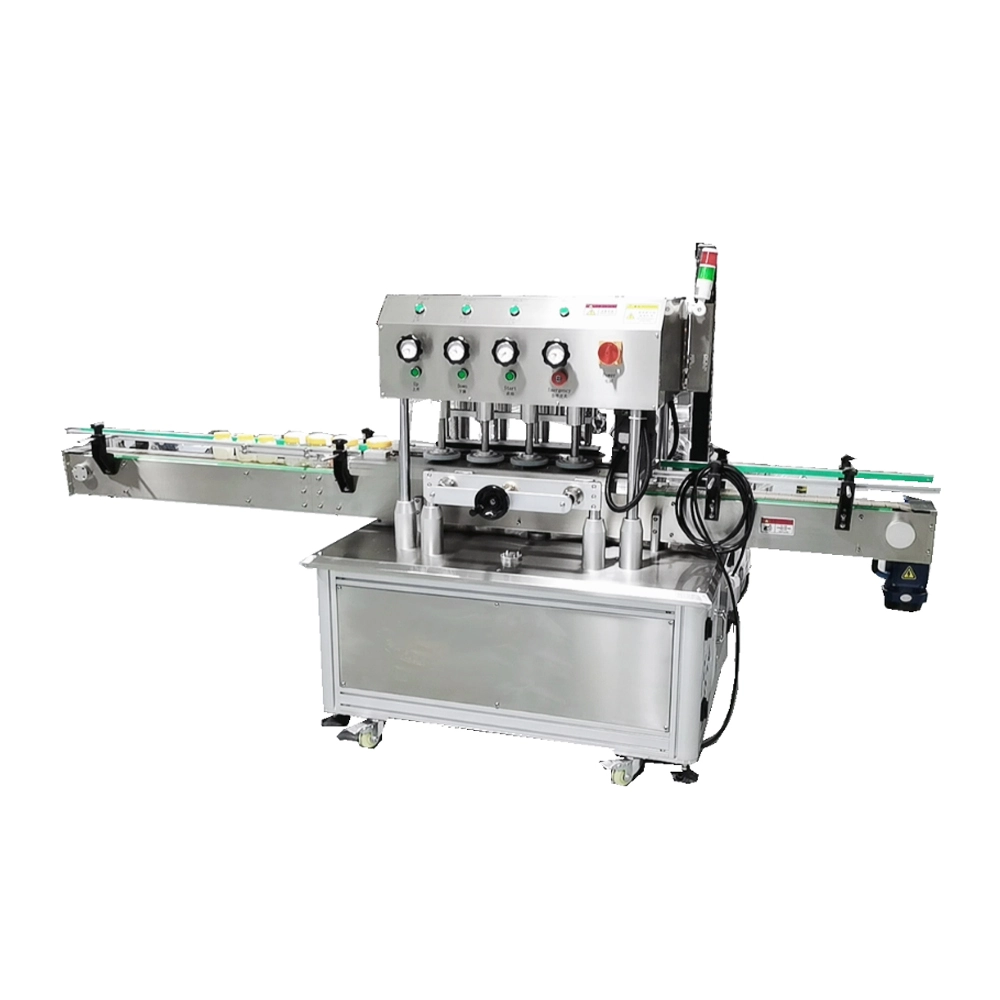
Automatic High Speed Capping Machine for Sale
The Yuanyang automatic high-speed capping machine is a kind of 8-wheel bottle-capping machine with fast working efficiency. The automatic capper is often used to close lids of containers such as bottles and jars, especially for plastic bottles, which are widely used in food, medicine, chemical, cosmetic, and other industries for mass production and continuous production lines.
Features:
⦁ Electric drive;
⦁ Automated fast speed;
⦁ Suitable for various screw caps, pumps, and spray bottles.
 Scan QR Code
Facebook
YouTube
LinkedIn
Whatsapp: +8613434139712
Guangzhou Yuanyang Machinery