





Customization Options and Accessories for Agitator Tanks
Comprehensive guide to customization options and accessories for agitator tanks, focused on stainless steel mixing tank solutions such as the Single Layer Agitator Tank for Sale. Covers design variations, material choices, sanitary options, motor and shaft configurations, scrapers, heating/cooling jackets, instrumentation, compliance standards, and selection criteria to help manufacturers in cosmetics, pharmaceuticals, chemicals, and food industries optimize mixing performance, sanitation, and cost-effectiveness.
- Design Flexibility and Structural Options
- Tank materials and wall configuration
- Cover styles and access
- Mounting and support structures
- Agitator Types, Shafts and Impeller Options
- Impeller designs and mixing goals
- Shaft seals, bearings and sanitary options
- Motor sizing and variable speed drives
- Accessories That Improve Process Control and Sanitation
- PTFE scrapers and wall-scraping systems
- Heating/cooling jackets and thermal control
- Instrumentation: sensors, sampling and automation
- Sanitation, Certification and Regulatory Compliance
- Sanitary design principles
- Material certifications and traceability
- Relevant industry guidance and standards
- Practical Selection Guide: Matching Accessories to Product & Process
- Assessing product properties and process requirements
- Accessory-selection checklist
- Cost vs. benefit: making informed trade-offs
- Accessory Comparison Table
- Yuanyang Single Layer Agitator Tank: Product Overview and Brand Strengths
- Why choose Yuanyang for your stainless steel mixing tank needs
- After-sales support and documentation
- FAQ
- Q: Is a single-layer agitator tank suitable for heating or cooling?
- Q: What makes PTFE scrapers useful in a stainless steel mixing tank?
- Q: Can the Single Layer Agitator Tank for Sale be used in pharmaceutical production?
- Q: How do I choose between a mechanical seal and a magnetic drive?
- Q: What documentation should I request before purchasing?

Comprehensive guide to customization options and accessories for agitator tanks, focused on stainless steel mixing tank solutions such as the Single Layer Agitator Tank for Sale. Covers design variations, material choices, sanitary options, motor and shaft configurations, scrapers, heating/cooling jackets, instrumentation, compliance standards, and selection criteria to help manufacturers in cosmetics, pharmaceuticals, chemicals, and food industries optimize mixing performance, sanitation, and cost-effectiveness. This content reflects industry best practices and standards from recognized sources including process engineering references and sanitary standards.
Design Flexibility and Structural Options
Tank materials and wall configuration
Choosing the right material is the first step in configuring a stainless steel mixing tank. For many low-viscosity liquid processes in cosmetics, pharmaceuticals, food and chemical production, 304 or 316L stainless steel are the common options due to their corrosion resistance, cleanability and regulatory acceptability. 316L is typically recommended where chloride resistance or stronger chemical resistance is required.
Single-layer tanks like the Single Layer Agitator Tank for Sale are cost-effective and ideal for processes that do not require thermal jackets or insulation. For operations requiring heating or cooling, options include double-wall or jacketed tanks. The Yuanyang single-layer agitator tank is optimized for low-viscosity liquids while offering accessory-ready openings for future retrofits.
Cover styles and access
Cover design affects contamination risk and operator convenience. Half-open covers, full manways, and domed lids are standard choices. A half-open cover—featured on the Yuanyang model—balances ease of access for charging and sampling with splash control. For strict sanitary environments, a full sealed manway with gasket and clamp/hinge options is preferable to minimize airborne contamination and facilitate CIP (clean-in-place).
Mounting and support structures
Tank support options include skirt mounts, trunnion supports, and adjustable legs. Frame mixing with PTFE scrapers requires stable supports to maintain consistent scraper pressure on the wall. Consider anti-vibration mounts when using high-speed agitators to reduce noise and structural fatigue.
Agitator Types, Shafts and Impeller Options
Impeller designs and mixing goals
Impeller selection determines flow pattern, shear, and mixing time. Common types include pitched-blade turbines for axial flow, hydrofoil impellers for low-shear circulation, and anchor/propeller combinations for viscous media. For low-viscosity liquids typically processed in a stainless steel mixing tank, hydrofoils or pitched-blade turbines deliver effective dispersion with minimal energy consumption.
Shaft seals, bearings and sanitary options
Shaft sealing choices—mechanical seals, lip seals, or magnetic couplings—affect maintenance and contamination risk. Mechanical seals with appropriate sanitary housings are used widely; magnetic drive mixers eliminate shaft penetrations and reduce leak risk, which is advantageous in pharmaceutical or hazardous chemical settings. Ensure bearings and seals are specified for chemical compatibility and service conditions.
Motor sizing and variable speed drives
Proper motor sizing is essential to achieve desired tip speed and torque. Variable frequency drives (VFDs) enable precise speed control, soft starting, and energy savings. VFDs paired with sensors allow process recipes to be reproduced accurately—critical for cosmetics and pharmaceutical manufacturing.
Accessories That Improve Process Control and Sanitation
PTFE scrapers and wall-scraping systems
For processes where product adhesion to tank walls is a concern, PTFE scrapers mounted on a frame deliver continuous wall contact to improve heat transfer and prevent product buildup. Yuanyang's frame mixing with PTFE scrapers option helps ensure homogeneous mixing and reduces dead zones in low-viscosity systems.
Heating/cooling jackets and thermal control
Depending on the process, you might require single- or double-jacketed tanks or internal coils for temperature control. Jacketed tanks allow circulation of heating media (steam, hot oil) or cooling media (glycol, chilled water). When paired with accurate thermowells and controllers, they enable tight temperature control throughout mixing and storage phases.
Instrumentation: sensors, sampling and automation
Key instruments include temperature probes, level sensors (ultrasonic, radar, or float), pressure/vacuum gauges for closed systems, and torque monitoring on the agitator shaft. Automated control systems—PLC or SCADA—enable recipe management, alarm handling, and data logging for traceability. For sanitary applications, select instruments with hygienic connections and smooth surfaces that do not trap product residues.
Sanitation, Certification and Regulatory Compliance
Sanitary design principles
Sanitary mixers and stainless steel mixing tanks must follow hygienic design: minimal dead legs, sloped surfaces for drainage, polish finishes (e.g., 2B, BA, or electropolished), and hygienic weld profiles. These practices reduce microbial harborage and facilitate CIP. The 3-A Sanitary Standards provides guidance for dairy and food equipment; see 3-A Sanitary Standards.
Material certifications and traceability
Material traceability certificates (MTCs) for stainless steel, certificates of compliance for surface finish, and documentation for weld procedures are often required by regulated industries. For pharmaceutical and food applications, provide documentation demonstrating material grade (e.g., 316L), surface finish, and cleanability.
Relevant industry guidance and standards
Designers reference mixing and agitator engineering literature such as the general overview of agitators and mixing from authoritative sources (see Wikipedia's summary on agitators and process mixing fundamentals: Agitator (device) and Mixing (process engineering)). For food safety and regulatory expectations, refer to the U.S. FDA food safety pages FDA Food.
Practical Selection Guide: Matching Accessories to Product & Process
Assessing product properties and process requirements
Start by categorizing the product: viscosity, solids content, temperature sensitivity, shear sensitivity, and foaming tendency. Low-viscosity liquid products—such as those targeted by the Single Layer Agitator Tank for Sale—require impellers that promote bulk circulation without excessive shear, and typically benefit from hydrofoil or pitched-blade impellers and PTFE scrapers when wall coating is an issue.
Accessory-selection checklist
- Impeller type and diameter (based on tank diameter and desired flow pattern)
- Shaft sealing type (mechanical seal vs magnetic drive)
- Scrapers (PTFE for sticky or heat-sensitive products)
- Heating/cooling requirements (jacketed vs internal coil)
- Instrumentation (temperature, level, torque, sampling ports)
- Surface finish and sanitary connections
Cost vs. benefit: making informed trade-offs
Accessories add upfront cost but can reduce operating costs, improve yield, and simplify cleaning. For example, adding PTFE scrapers may increase capital cost but will minimize product loss on tank walls and speed up CIP cycles—improving overall productivity for products in cosmetics and food industries.
Accessory Comparison Table
| Accessory | Primary Benefit | Best for | Considerations |
|---|---|---|---|
| PTFE Scrapers | Prevents wall buildup; improves heat transfer | Sticky/creamy products | Wear part; replaceable; requires proper frame |
| Magnetic Drive | Leak-free operation (no shaft penetration) | Pharma, hazardous chem | Higher cost; torque limits |
| Jacket/Coil | Tight temperature control | Heat/cool sensitive products | Increases weight and complexity |
| VFD + PLC | Process control, recipe repeatability | Batch production, regulated industries | Requires automation expertise |
Yuanyang Single Layer Agitator Tank: Product Overview and Brand Strengths
Product Name: Single Layer Agitator Tank for Sale
Product Introduction:
Yuanyang single-layer agitator tank is a mixing tank with agitator paddles, mainly applied for liquid materials mixing and blending, which is widely used to manufacture low-viscosity liquids and prepare for cosmetics, pharmaceuticals, chemicals, and food industries.
Features:
⦁ Half-open cover;
⦁ Frame mixing with PTFE scrapers
⦁ Suitable for products of low viscosity liquid products;
Why choose Yuanyang for your stainless steel mixing tank needs
Yuanyang's Single Layer Agitator Tank is purpose-built for low-viscosity mixing and benefits from several practical design choices: a half-open cover for convenient charging and sampling, integrated frame mixing with PTFE scrapers to reduce wall buildup, and construction optimized for easy retrofit with jackets or instrumentation. The company provides documentation and testing data and supports customization—aligning with E-E-A-T expectations for traceability and expert-backed recommendations.
After-sales support and documentation
Yuanyang provides material certificates, surface finish documentation, and optional validation support for regulated customers. Their technical team can advise on impeller selection, motor sizing, and CIP strategy to help customers meet product quality and regulatory requirements.
FAQ
Q: Is a single-layer agitator tank suitable for heating or cooling?
A: Single-layer tanks do not have integrated jackets for thermal media. However, many single-layer tanks are designed with porting or support features that allow retrofit of external jackets, heating blankets, or coil inserts. If precise thermal control is critical, a jacketed or double-walled tank is recommended.
Q: What makes PTFE scrapers useful in a stainless steel mixing tank?
A: PTFE scrapers gently remove product adhered to the tank wall without scratching the surface, improving heat transfer and cleaning efficiency. They are especially useful for sticky or shear-sensitive formulations found in cosmetics and certain food formulations.
Q: Can the Single Layer Agitator Tank for Sale be used in pharmaceutical production?
A: Yes, for non-sterile and many controlled processes—especially for low-viscosity solutions—the tank is suitable with proper material selection (316L), sanitary finishes, and appropriate seals. For aseptic or sterile production, additional design elements (aseptic fittings, validated CIP/SIP systems) may be required.
Q: How do I choose between a mechanical seal and a magnetic drive?
A: Mechanical seals are cost-effective and suitable for many applications but require maintenance. Magnetic drives eliminate shaft penetrations and reduce leak potential—preferred for hazardous or high-purity products—but they have torque and cost limitations. Evaluate process risk, maintenance capacity, and budget.
Q: What documentation should I request before purchasing?
A: Request material certificates (MTC), surface finish reports, weld procedure specifications, test reports (pressure/leak if applicable), and any FAT (Factory Acceptance Test) documentation. For regulated industries, ask for support on validation and CIP/SIP protocols.
After evaluating customization possibilities, buyers often return to Buyer’s Guide: Choosing the Right Stainless Steel Mixing Tank to finalize specifications or plan the next expansion phase.For personalized configuration advice, pricing, or to view the Single Layer Agitator Tank for Sale with its customization options, please contact our sales team or view the product. Our engineers can help size the agitator, recommend accessories, and prepare compliance documentation to meet your project's requirements.
Top cosmetic mixing heating tank Manufacturers and Suppliers in Europe
How to start the 500 gallon mixing tank business in UK ?
Why choose YUANYANG as your powder disperser supplier
How to manufacturing bottle filling capping machine in Europe
Homogenizing Mixer
For the electric heating liquid soap mixing tank, where do you install the heater, how does it work?
The heater tube is installed at bottom. The heating operation is controlled on the control box. Before operation, add tap water into jacket from heater container’s inlet valve. The heater heat water, the hot water conduct heat through inner layer to materials in the tank.
Detergent powder mixer
Do you also supply the complete powder production line machines?
Yes, we provide a solution including: powder feeding machine, powder mixing machine, and powder packing machine which will be recommended according to how client plans to pack the powder.
Industries
Can the equipment handle various materials?
Yes, our equipment can handle a wide range of materials, including liquids, powders, pastes, and high-viscosity substances.
Liquid Soap Mixer Machine
When shall we choose electric heating or steam heating?
The electric heating is with bottom electric tubes, the cost is lower compared with steam heating, which requires a steam generator and needs steam pipes. So we recommend small business choose electric heating for small capacity.
FAQs
How do you ensure consistent product quality during production?
Our equipment features precision control systems that ensure stability and consistency at every stage of production. Automation reduces human error, guaranteeing consistent quality across each batch.
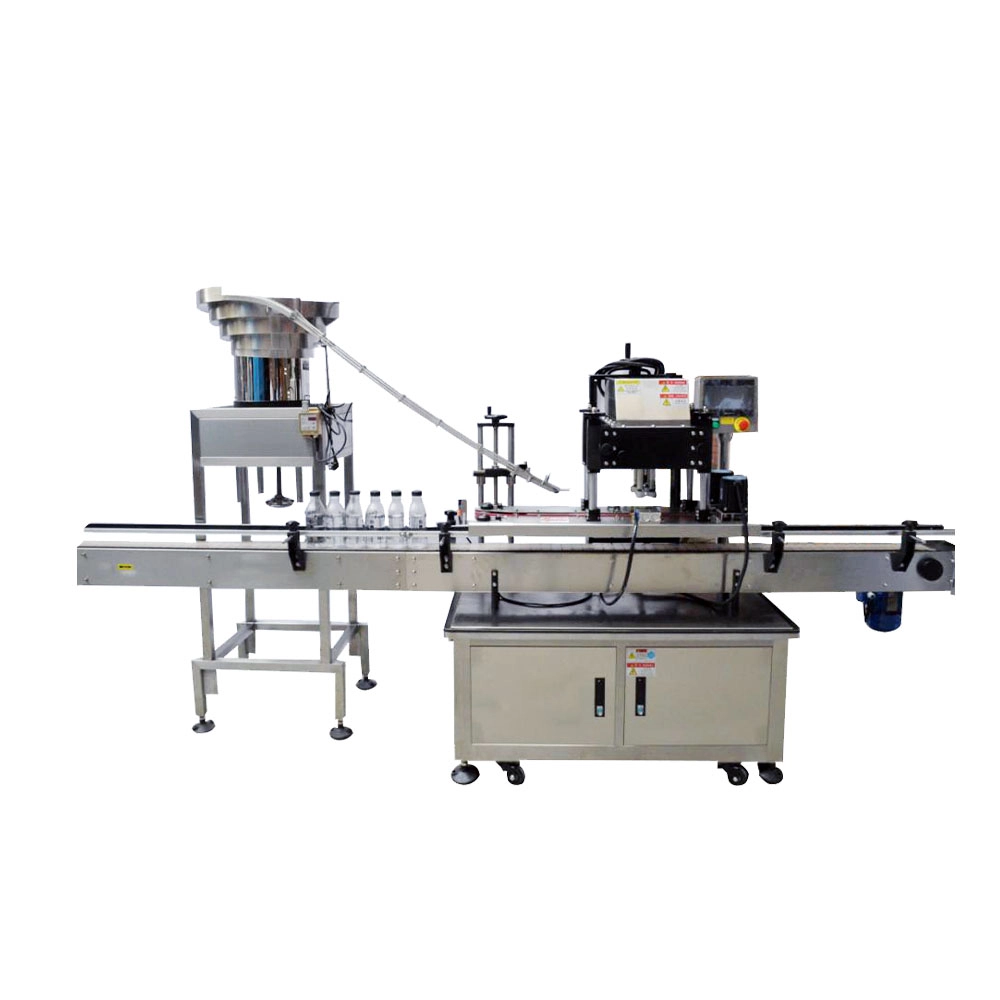
Automatic Plastic Caps Capping Machine with Vibrating Cap Feeder for Sale
Yuanyang automatic screw capping machine is a kind of four-wheel bottle capping machine. The automatic screw capper is often used to close lids of containers such as bottles and jars, especially for plastic bottles, which are widely used in food, medicine, chemical, cosmetic, and other industries for mass production and continuous production lines.
Features:
⦁ Full pneumatic drive;
⦁ Automated fast speed;
⦁ Suitable for various screw caps, pumps, and spray bottles.
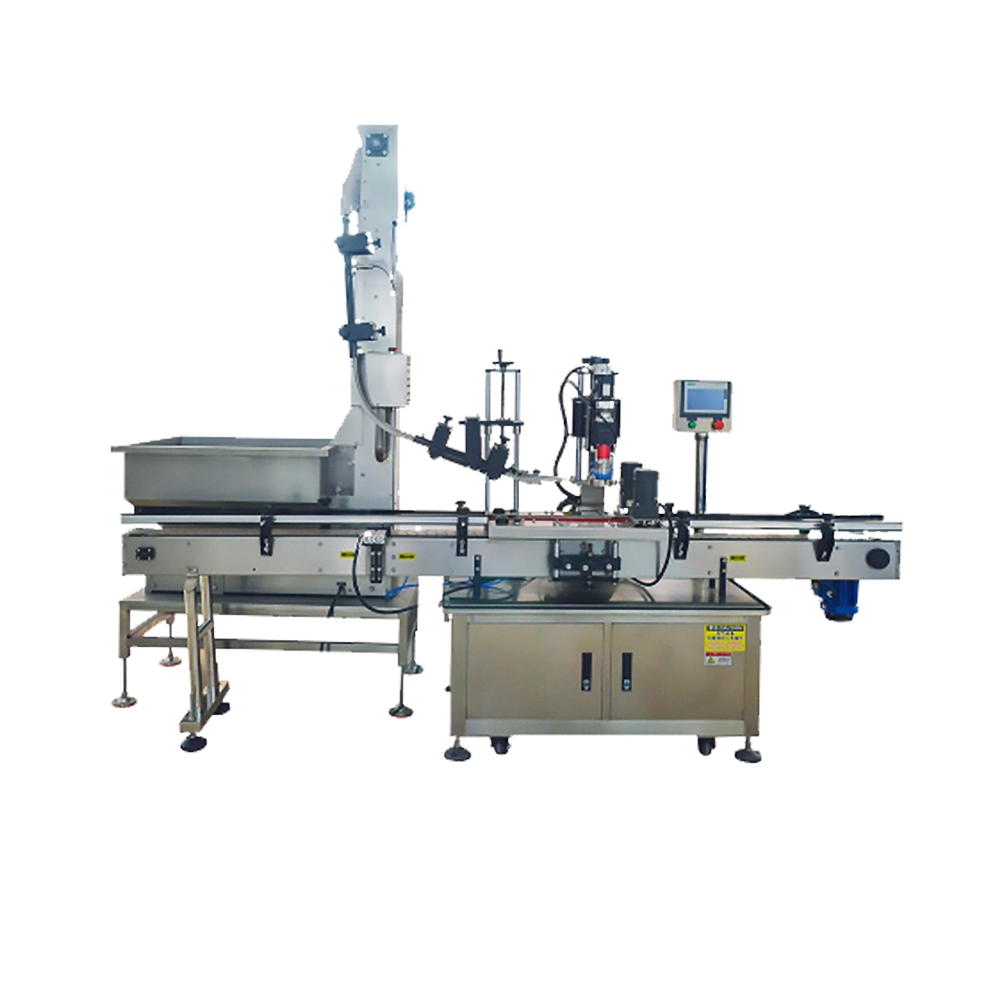
Automatic Metal Caps Capping Machine for Sale
Yuanyang automatic metal cap capping machine is a bottle capper for bottles with metal caps, which is often used to close lids of containers such as bottles and jars. The glass bottle metal capping machine is widely used in food, medicine, chemical, cosmetic, and other industries for mass production and continuous production line .
Features:
⦁ Pneumatic and electric drive;
⦁ Automated fast speed;
⦁ Suitable for glass bottles with metal caps.
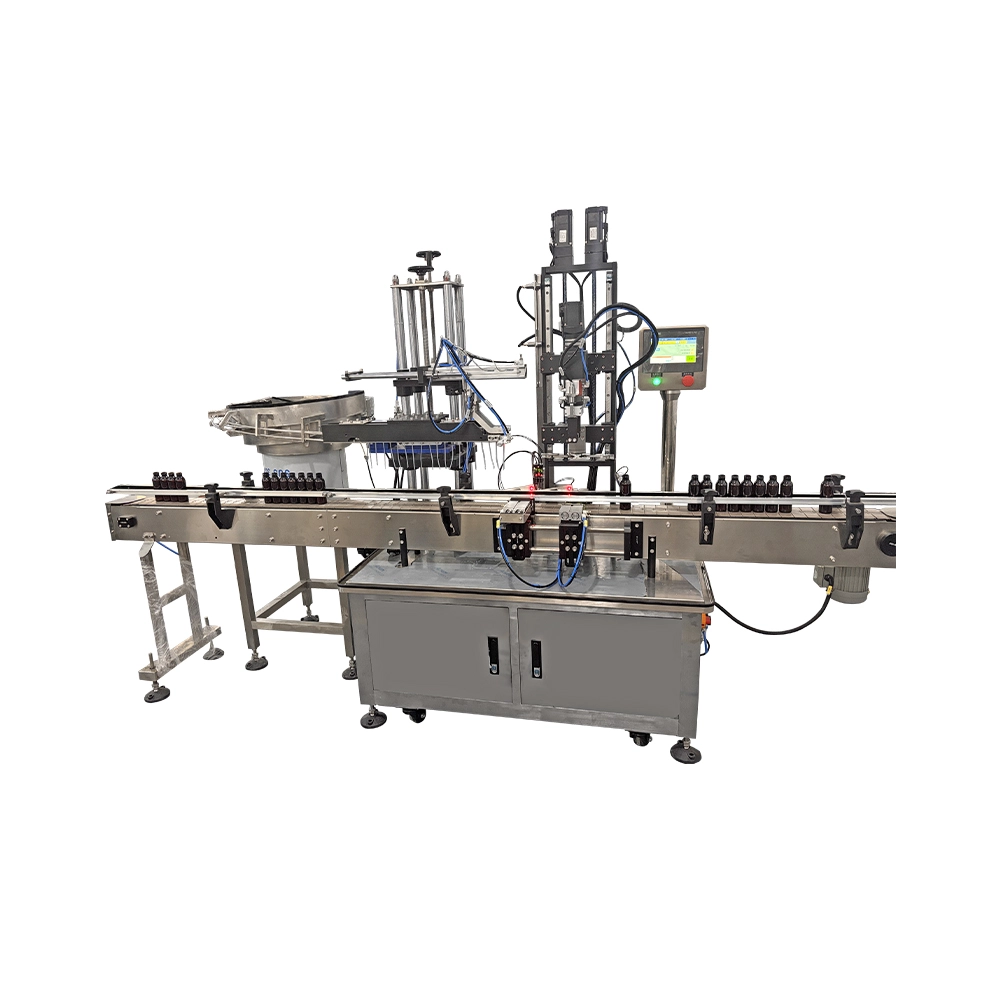
Automatic Pump Head Feeding and Capping Machine for Sale
Yuanyang automatic pump head feeding and capping machine is a bottle cap sorter and capper for bottles with pump heads, which is often used to close lids of containers such as nail polish, sprayers, and shampoo. The capping machine with a pump head feeder is widely used in food, medicine, chemical, cosmetic, and other industries for mass production and continuous production line .
Features:
⦁ Pneumatic and electric drive;
⦁ Automated fast speed;
⦁ Suitable for various types of caps.
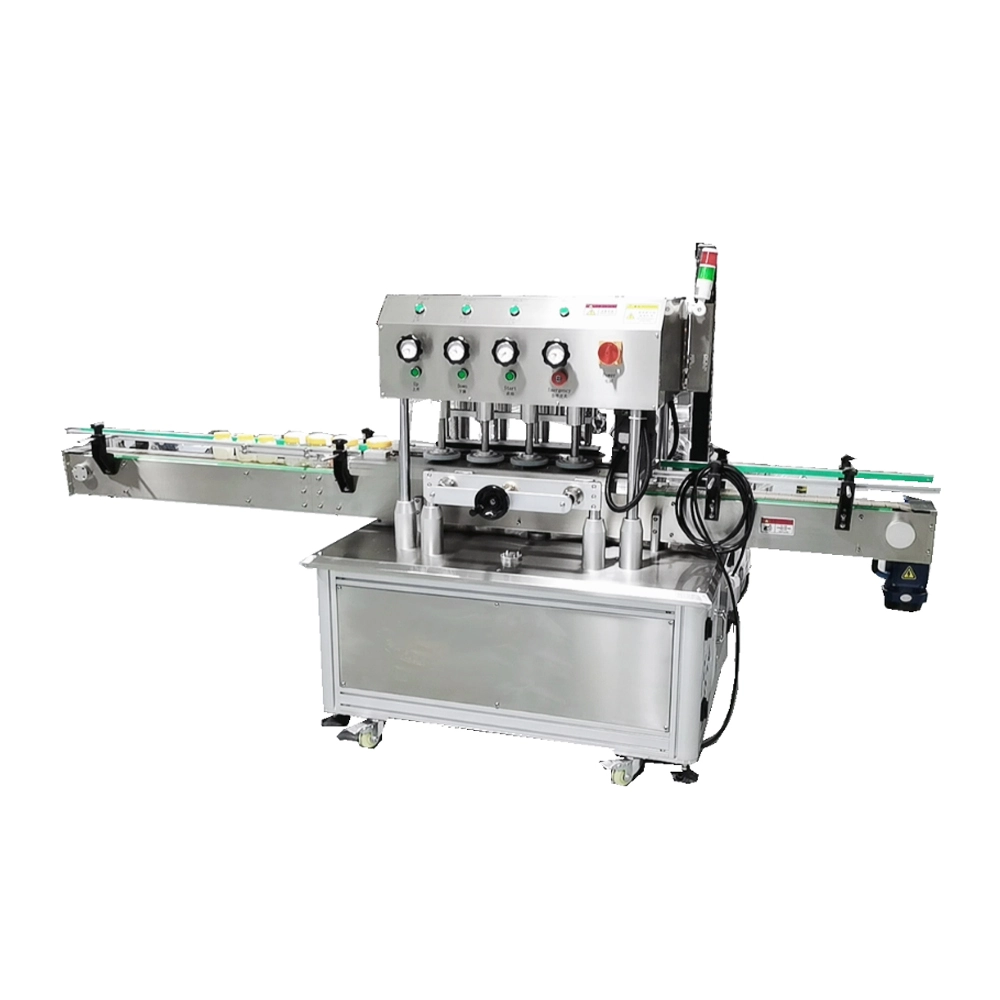
Automatic High Speed Capping Machine for Sale
The Yuanyang automatic high-speed capping machine is a kind of 8-wheel bottle-capping machine with fast working efficiency. The automatic capper is often used to close lids of containers such as bottles and jars, especially for plastic bottles, which are widely used in food, medicine, chemical, cosmetic, and other industries for mass production and continuous production lines.
Features:
⦁ Electric drive;
⦁ Automated fast speed;
⦁ Suitable for various screw caps, pumps, and spray bottles.
 Scan QR Code
Facebook
YouTube
LinkedIn
Whatsapp: +8613434139712
Guangzhou Yuanyang Machinery