





Quality Control Metrics When Evaluating Emulsion Mixers
- Quality Control Metrics When Evaluating Emulsion Mixers
- Why QC Metrics Matter for Emulsion Mixer Selection
- Key Metric: Particle Size Distribution (PSD) and Homogeneity
- Key Metric: Viscosity and Rheology Reproducibility
- Key Metric: Vacuum Level and Degassing Efficiency
- Key Metric: Homogenization Pressure and Energy Input
- Key Metric: Temperature Control and Thermal Profile
- Key Metric: Cleanability and Contamination Control (CIP/SIP)
- Key Metric: Reproducibility, Process Capability (Cp/Cpk) and Batch Records
- Key Metric: Scale-Up Predictability and Model Validation
- Key Metric: Instrumentation, Controls and Data Logging
- Comparison Table: Typical QC Metrics and Target Acceptance Ranges
- Practical Validation Protocol Example (Short)
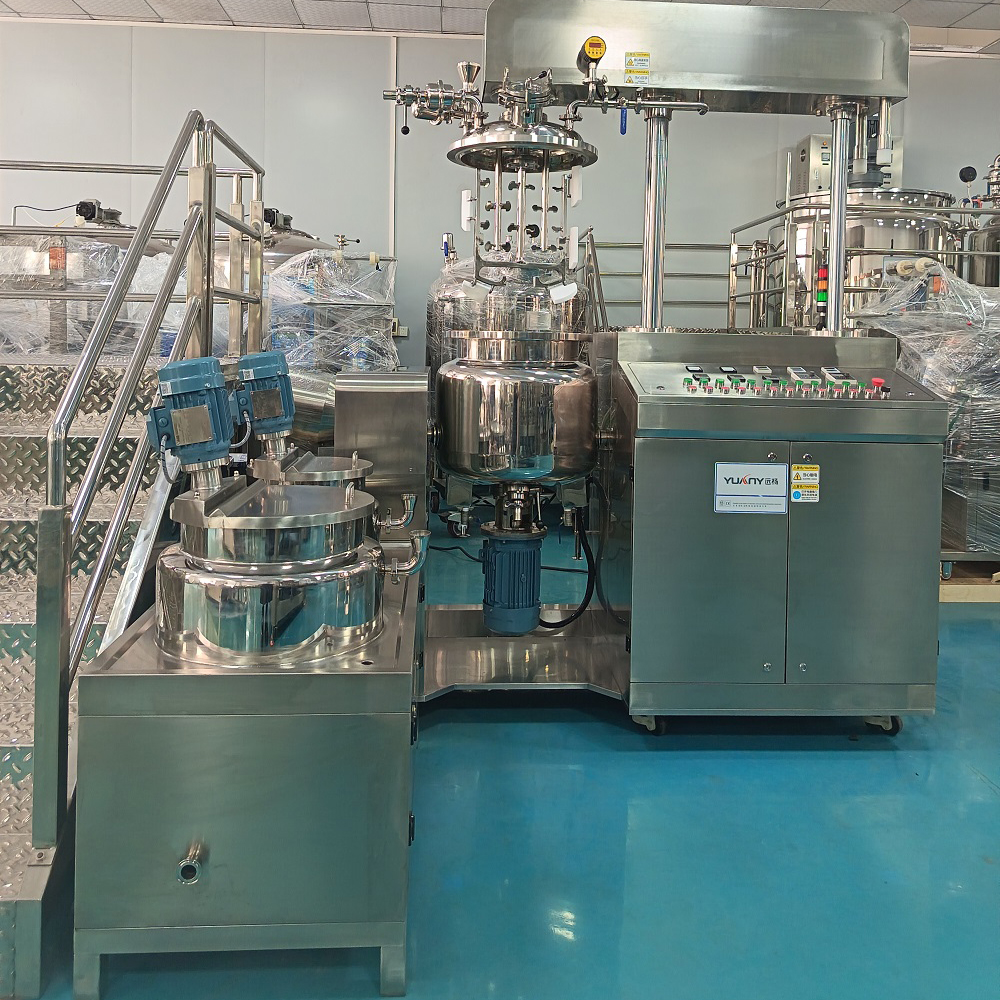
- Brand Integration: Why the 50L Hydraulic Lift Vacuum Emulsifier Supports Strong QC
- Operational Tips to Maintain QC Performance
- Frequently Asked Questions (FAQ)
- Contact Sales / View Product
- Authoritative References and Further Reading
- Product Brief: 50L Hydraulic Lift Vacuum Emulsifier
- Closing Notes
Quality Control Metrics When Evaluating Emulsion Mixers
Why QC Metrics Matter for Emulsion Mixer Selection
Selecting the right emulsion mixer is a critical decision for manufacturers in cosmetics, pharmaceuticals, food and specialty chemicals. An emulsion mixer does more than blend ingredients — it defines final product stability, texture, therapeutic efficacy and shelf life. Quality control (QC) metrics translate equipment capability into predictable, repeatable product attributes. This article focuses on the most important QC metrics you should use when evaluating an emulsion mixer, using the 50L Hydraulic Lift Vacuum Emulsifier as a practical reference point.
Key Metric: Particle Size Distribution (PSD) and Homogeneity
Particle size and distribution directly affect appearance, stability, mouthfeel (food), skin feel (cosmetics), and bioavailability (pharmaceuticals). A reliable emulsion mixer should produce a narrow PSD with a small mean droplet size. For many topical cosmetics and creams, a target mean diameter under 2 microns is typical for a stable, elegant texture. The 50L Hydraulic Lift Vacuum Emulsifier advertises a perfect particle size of 2 microns and even distribution — a meaningful specification when validated with objective measurement.
How to test: Use laser diffraction or dynamic light scattering (DLS) to measure PSD. Record D10, D50, and D90 values and calculate span = (D90 - D10)/D50. A lower span indicates higher homogeneity. Acceptance criteria should be set per product (for example, D50 < 2 μm and span < 1.2 for High Quality emulsions).
Key Metric: Viscosity and Rheology Reproducibility
Viscosity influences pumpability, feel, and application. More importantly, reproducible viscosity batch-to-batch demonstrates consistent mixing energy input and formulation behavior. The 50L Hydraulic Lift Vacuum Emulsifier is suitable for products between 10,000 and 50,000 cps; QC must ensure viscosity falls in the target range and that the shear history is repeatable.
How to test: Employ a rotational viscometer or rheometer. Record viscosity at relevant shear rates (e.g., 10 s-1 and 100 s-1) and test samples after defined rest times to capture thixotropic recovery. Compare within-batch and batch-to-batch relative standard deviation (RSD). Typical acceptance: RSD < 5% at target shear conditions for mature processes.
Key Metric: Vacuum Level and Degassing Efficiency
Vacuum capability is essential to remove entrained air, preventing oxidation, microbial niches, foaming and visual defects. A vacuum emulsifier with a robust vacuum system and control ensures consistent degassing. The 50L Hydraulic Lift Vacuum Emulsifier includes a vacuum system as standard — but performance must be quantified.
How to test: Measure achievable absolute pressure (mbar or Torr) under load and the time-to-degas for a standard formulation. Monitor dissolved oxygen (DO) or entrained air volume in the sample. Acceptance criteria depend on formulation sensitivity; for many cosmetic emulsions, an absolute pressure < 50 mbar with consistent degassing time is acceptable.
Key Metric: Homogenization Pressure and Energy Input
High-shear homogenization (pressure or rotor-stator energy) breaks droplets and sets the PSD. Vacuum homogenizers often combine vacuum and high-shear homogenizing to reach fine particle size. Verify the homogenizer yields consistent energy input to avoid under- or over-processing.
How to test: Log homogenizer RPM, pressure (if applicable), processing time and energy consumption. Correlate these parameters to PSD and viscosity. Establish process windows (lower and upper acceptable bounds) where product QC metrics remain within spec.
Key Metric: Temperature Control and Thermal Profile
Many emulsions require precise temperature control during heating, emulsification and cooling phases. Too-high temperatures can denature active ingredients; too-low temperatures can prevent proper emulsification. The 50L Hydraulic Lift Vacuum Emulsifier includes integrated water and oil tanks, facilitating controlled heating and staged addition — critical for process thermal management.
How to test: Map the temperature profile during a full run with calibrated sensors in the main tank and jacket. Validate heating/cooling rates and hold-times. Acceptance criteria should align with formulation stability: maximum deviation < ±1°C during critical holds is common for sensitive formulations.
Key Metric: Cleanability and Contamination Control (CIP/SIP)
Cleaning validation is a cornerstone of QC, especially when switching products or manufacturing pharmaceuticals. Design features such as smooth interior surfaces, effective drainability, and accessibility for cleaning influence residuals and cross-contamination risk. The hydraulic lift and tilting pot of the 50L Hydraulic Lift Vacuum Emulsifier improve access for manual cleaning; combined with CIP (clean-in-place) designs, you can ensure robust cleaning regimens.
How to test: Perform worst-case residue recovery tests using swab or rinse sampling, then analyze via appropriate assay (HPLC, TOC, microbial tests). Acceptance levels should follow regulatory guidance or internal risk assessments (e.g., carryover < 10 ppm or less depending on potent actives).
Key Metric: Reproducibility, Process Capability (Cp/Cpk) and Batch Records
Reproducibility over time is shown statistically by process capability. Measure key quality attributes (PSD D50, viscosity at specific shear, moisture content) across multiple batches and calculate Cp and Cpk. An equipment/process combination that regularly yields Cpk > 1.33 for critical attributes indicates strong control.
How to test: Run a minimum of 10 production-scale batches, collect data on each critical attribute, and compute Cp/Cpk. If capability is low, investigate equipment maintenance, operator variation, or formulation sensitivity.
Key Metric: Scale-Up Predictability and Model Validation
When designs move from lab to pilot to production, equipment geometric similarity and energy input scaling must be considered. A 50L unit like the 50L Hydraulic Lift Vacuum Emulsifier is useful as a pilot or small-batch production platform — QC should verify that process parameters scale predictably.
How to test: Conduct design-of-experiments (DoE) across scales and map dimensionless numbers (e.g., Reynolds, power per unit volume) where possible. Confirm that PSD and viscosity responses correlate between scales within acceptable limits.
Key Metric: Instrumentation, Controls and Data Logging
Modern QC requires traceability. Electric control systems that log time-stamped data (RPM, vacuum, temperature, homogenizer speed) enable root-cause analysis and regulatory compliance. The 50L Hydraulic Lift Vacuum Emulsifier comes with an electric control system; verify that it can export data in secure, readable formats and that it supports alarms/recipes.
How to test: Validate data integrity (time sync, non-repudiation), recipe management, and alarm functions. Ensure archived data meet internal retention policies and regulatory expectations.
Comparison Table: Typical QC Metrics and Target Acceptance Ranges
| Metric | Typical Test Method | Example Target (cosmetics/cream) |
|---|---|---|
| Particle size (D50) & span | Laser diffraction / DLS | D50 < 2 µm; span < 1.2 |
| Viscosity at defined shear | Rotational rheometer | 10,000–50,000 cps; RSD < 5% |
| Vacuum level | Vacuum gauge, degassing time | < 50 mbar; consistent degas time |
| Temperature control | Calibrated thermocouples/logging | ±1°C during critical holds |
| Cleaning residue | Swab/rinse assay (HPLC/TOC) | Per internal limit; often < 10 ppm |
| Process capability (Cpk) | Statistical analysis | Cpk > 1.33 for critical attributes |
Practical Validation Protocol Example (Short)
Step 1: Define critical quality attributes (CQAs): PSD, viscosity, residuals, microbial. Step 2: Establish acceptance criteria. Step 3: Run three consecutive qualification batches and measure CQAs. Step 4: Perform full cleaning validation and measure residues. Step 5: Log all process parameters; analyze Cp/Cpk after 10 batches. This structured approach ensures the equipment meets production needs and regulatory expectations.
Brand Integration: Why the 50L Hydraulic Lift Vacuum Emulsifier Supports Strong QC
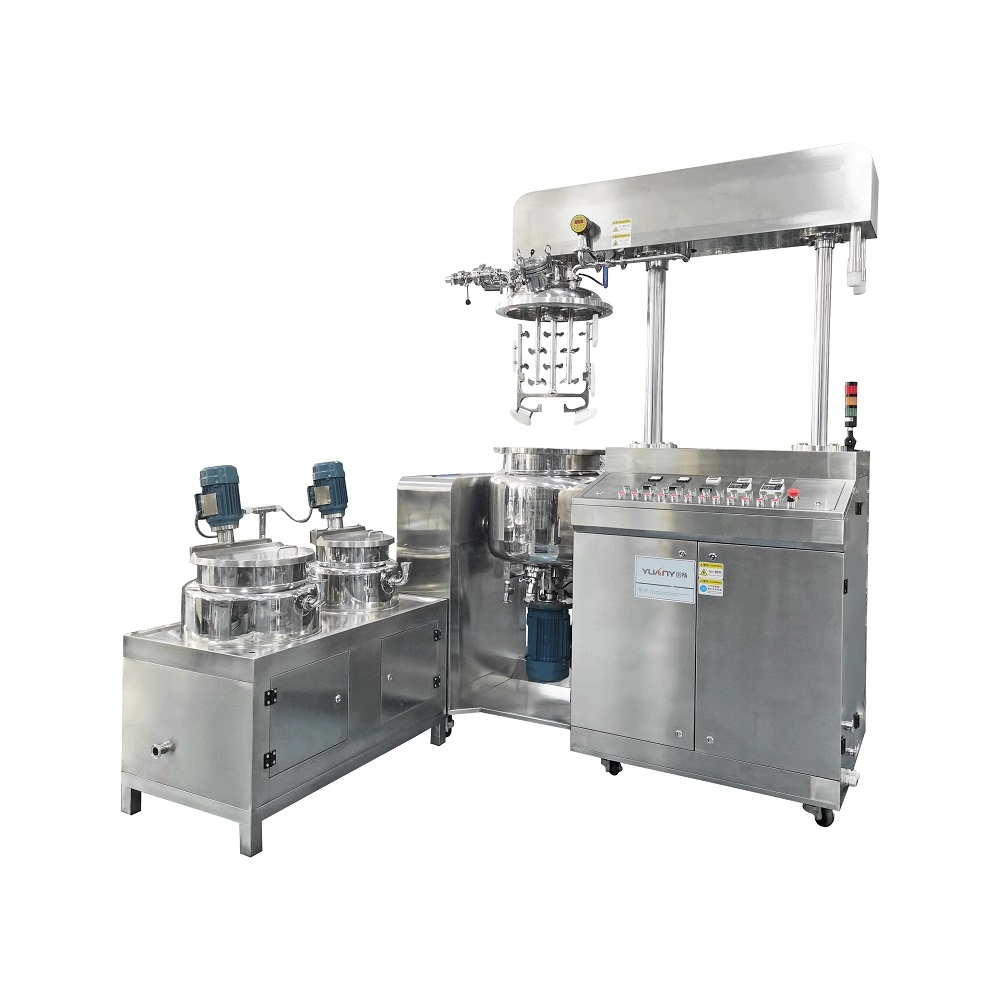
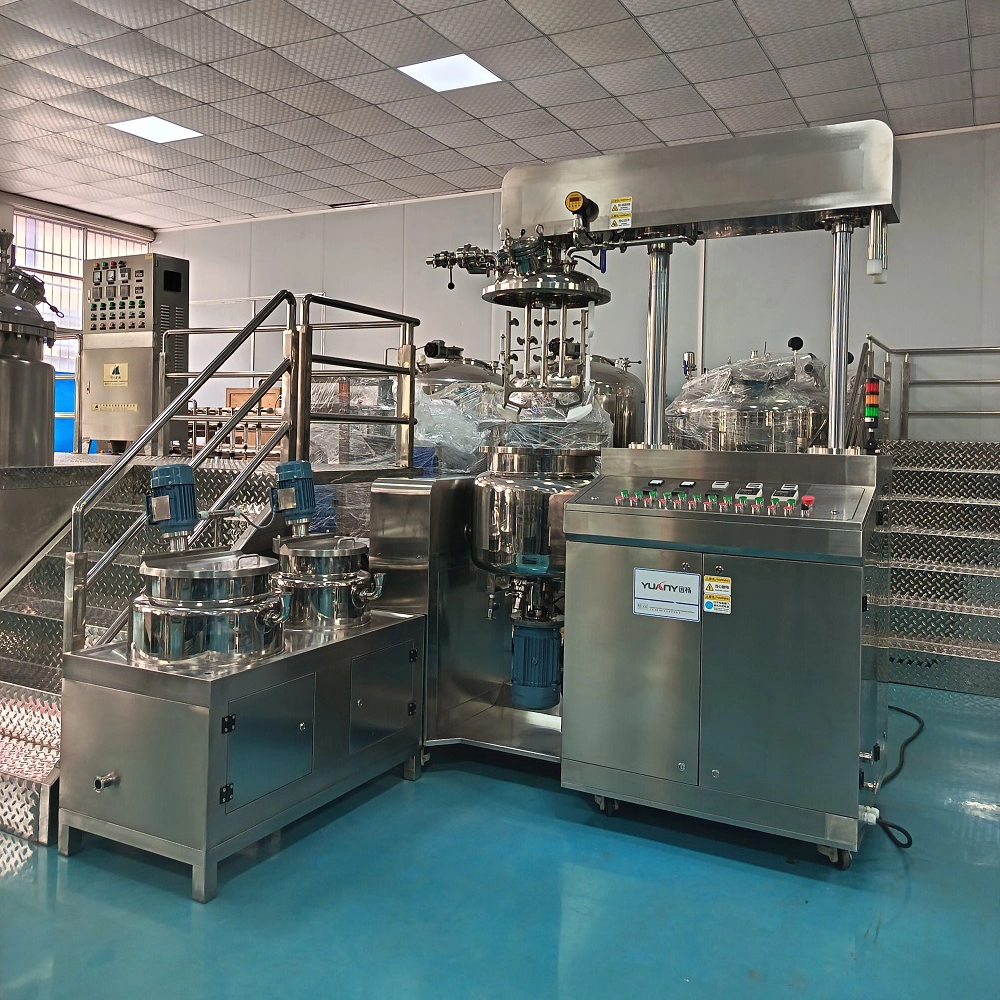
The 50L Hydraulic Lift Vacuum Emulsifier integrates a main vacuum homogenizer tank with water and oil tanks, streamlining the critical phase additions and thermal control needed for reproducible emulsions. Key brand advantages for QC-focused manufacturers include:
- Hydraulic lift lid and tilting pot for improved access, cleaning and sample collection — reducing contamination risk.
- Integrated vacuum system to reduce entrained air and protect sensitive actives.
- Electric control system enabling recipe control and data logging for traceability.
- Suitable viscosity range (10,000–50,000 cps), making it flexible for many cream and gel formulations.
- Claimed particle size performance (2 microns) which, when validated, supports high-end cosmetic textures and pharmaceutical emulsions.
Operational Tips to Maintain QC Performance
1) Standardize raw material pre-treatment and temperatures. 2) Use SOP-driven addition sequences and homogenizer ramp profiles. 3) Maintain preventative maintenance schedules (seals, blades, vacuum pumps). 4) Calibrate sensors regularly. 5) Keep complete batch records and version-controlled recipes. These steps minimize variability and support sustained process capability.
Frequently Asked Questions (FAQ)
Q1: How do I verify the claimed 2-micron particle size?
A1: Run a representative production batch and measure PSD with laser diffraction or DLS. Provide samples for third-party lab confirmation if needed. Correlate homogenizer settings (speed, time) to the PSD results.
Q2: Is a vacuum emulsifier always necessary?
A2: Not always. Vacuum is important for sensitive, foaming, or oxidation-prone formulations. For simple blends where air entrapment is minor, vacuum may be optional. Evaluate by testing degassing efficacy with and without vacuum in your formulation.
Q3: What cleaning validation approach should I use for cosmetic vs pharmaceutical production?
A3: For cosmetics, focus on visual cleanliness, TOC and product-specific assays. For pharmaceuticals, follow stricter cleaning validation protocols (worst-case residue, validated swab/rinse methods, and acceptance criteria based on toxicological limits). Always document and justify your limits.
Q4: Can results on a 50L unit predict large-scale production?
A4: Pilot-scale data are useful for trend and process understanding, but scale-up requires engineering analysis (geometric similarity, power per volume) and validation runs. Use DoE and scale-up modeling to predict outcomes, then confirm with pilot and production runs.
Q5: What routine QC checks should operators run each production day?
A5: Verify instrument calibrations, inspect seals, log vacuum and temperature setpoints, take in-process PSD/viscosity samples at key checkpoints, and confirm recipe selection and data logging integrity.
Contact Sales / View Product
These QC benchmarks become even more important when scaling processes from lab to plant with a 50L vacuum emulsifier.If you want to validate QC metrics on a 50L Hydraulic Lift Vacuum Emulsifier or schedule a demonstration, contact our sales team or request a datasheet. Our technical experts can help design validation protocols tailored to your formulation and regulatory needs.
Authoritative References and Further Reading
- Emulsion — Wikipedia: https://en.wikipedia.org/wiki/Emulsion
- Homogenizer — Wikipedia: https://en.wikipedia.org/wiki/Homogenizer
- U.S. Food & Drug Administration — Drug Manufacturing and Quality: https://www.fda.gov/drugs/pharmaceutical-quality-resources/drug-manufacturing
- European Commission — Cosmetics: https://ec.europa.eu/growth/sectors/cosmetics_en
- Good Manufacturing Practices and cleaning validation principles — FDA and industry guidance documents (see FDA website)
Product Brief: 50L Hydraulic Lift Vacuum Emulsifier
Yuanyang hydraulic lift vacuum emulsifier is a combined mixing equipment with a main vacuum homogenizer tank, a water tank, and an oil tank, which is an integrated equipment with a mixing, dispersing, homogenizing, emulsifying, vacuumizing and powder absorption system that is widely used in cosmetics, food, pharmaceutical, and chemical fields.
Features:
⦁ With a hydraulic lift lid & tilting pot, vacuum system, and electric control system.
⦁ Suitable for products of 10,000~50,000 cps viscosity.
⦁ Perfect particle size of 2 microns and evenly distributed.
Closing Notes
Evaluating an emulsion mixer through objective QC metrics ensures your chosen equipment will deliver consistent product quality, regulatory compliance, and predictable scale-up. The metrics outlined here — PSD, viscosity, vacuum performance, temperature control, cleaning validation, and process capability — form a practical framework for equipment selection and validation. Combining strong equipment features (like those of the 50L Hydraulic Lift Vacuum Emulsifier) with disciplined QC protocols will protect product integrity and brand reputation.
If you have questions about validation protocols or want to schedule a demo, please contact our sales team or request the full technical datasheet and validation support package.
Vacuum Mixing: How It Enhances Air-Free Emulsions
What are the application scenarios of can labeling machine?
50L Hydraulic Vacuum Emulsifier: Key Features Overview
Hydraulic Lift Benefits for 50L Vacuum Emulsifiers
Semi automatic powder filling machine
What’s the capacity of the material hopper of this filling powder machine?
The standard hopper capacity is 50L.
Aluminum Foil Sealing Machine
Is the plastic bottle sealing machine also suitable for metal cap?
No, It is not suitable for metal cap, because the heat can’t go through the metal, the sealing won’t be achieved.
FAQs
I don’t come to the company, how can I learn the machines?
We provide video & manual instructions of the machines you purchase and online service,as well as face-to-face teaching. Any questions or concerns,please feel free to contact our customer service for free information. If you come to the company,our technical staff will teach you hand by hand.
Food
Which types of food can Yuanyang's equipment handle?
Yuanyang's equipment can handle various food types, including liquid, viscous, semi-liquid, and solid foods such as beverages, sauces, dairy products, pastries, candies, etc.
Automatic Screw Capping Machine
Is the plastic bottle capping machine electric drive or pneumatic drive?
This bottle cap closing machine is with both electric drive and pneumatic drive. It requires an air compressor.
Automatic Plastic Caps Capping Machine with Vibrating Cap Feeder for Sale
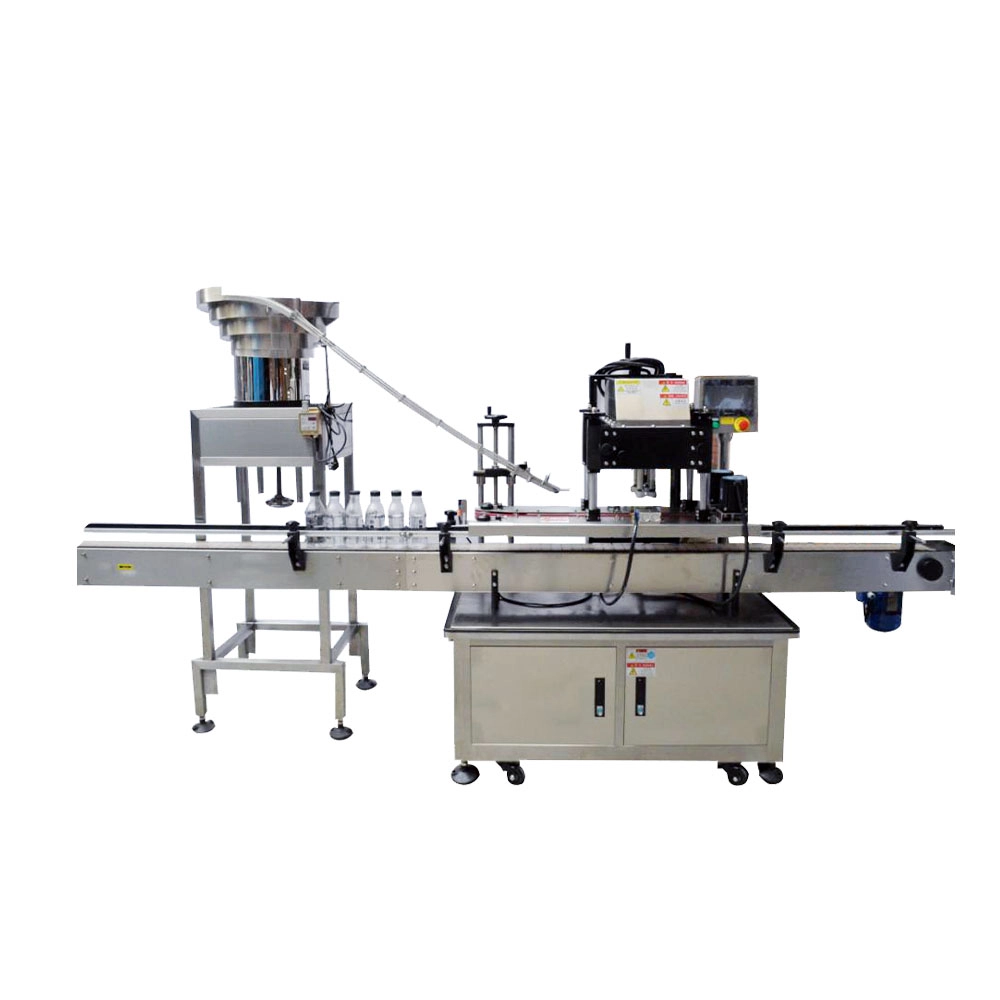
Yuanyang automatic screw capping machine is a kind of four-wheel bottle capping machine. The automatic screw capper is often used to close lids of containers such as bottles and jars, especially for plastic bottles, which are widely used in food, medicine, chemical, cosmetic, and other industries for mass production and continuous production lines.
Features:
⦁ Full pneumatic drive;
⦁ Automated fast speed;
⦁ Suitable for various screw caps, pumps, and spray bottles.
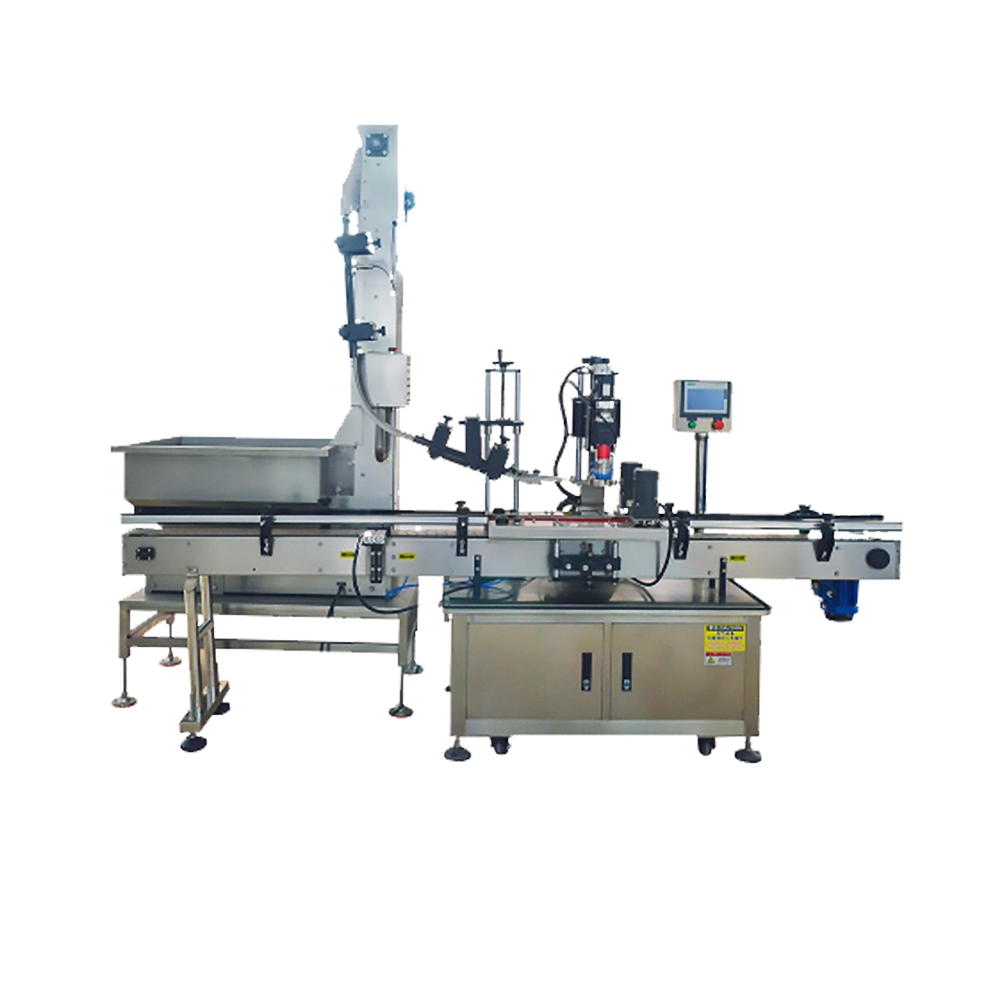
Automatic Metal Caps Capping Machine for Sale
Yuanyang automatic metal cap capping machine is a bottle capper for bottles with metal caps, which is often used to close lids of containers such as bottles and jars. The glass bottle metal capping machine is widely used in food, medicine, chemical, cosmetic, and other industries for mass production and continuous production line .
Features:
⦁ Pneumatic and electric drive;
⦁ Automated fast speed;
⦁ Suitable for glass bottles with metal caps.
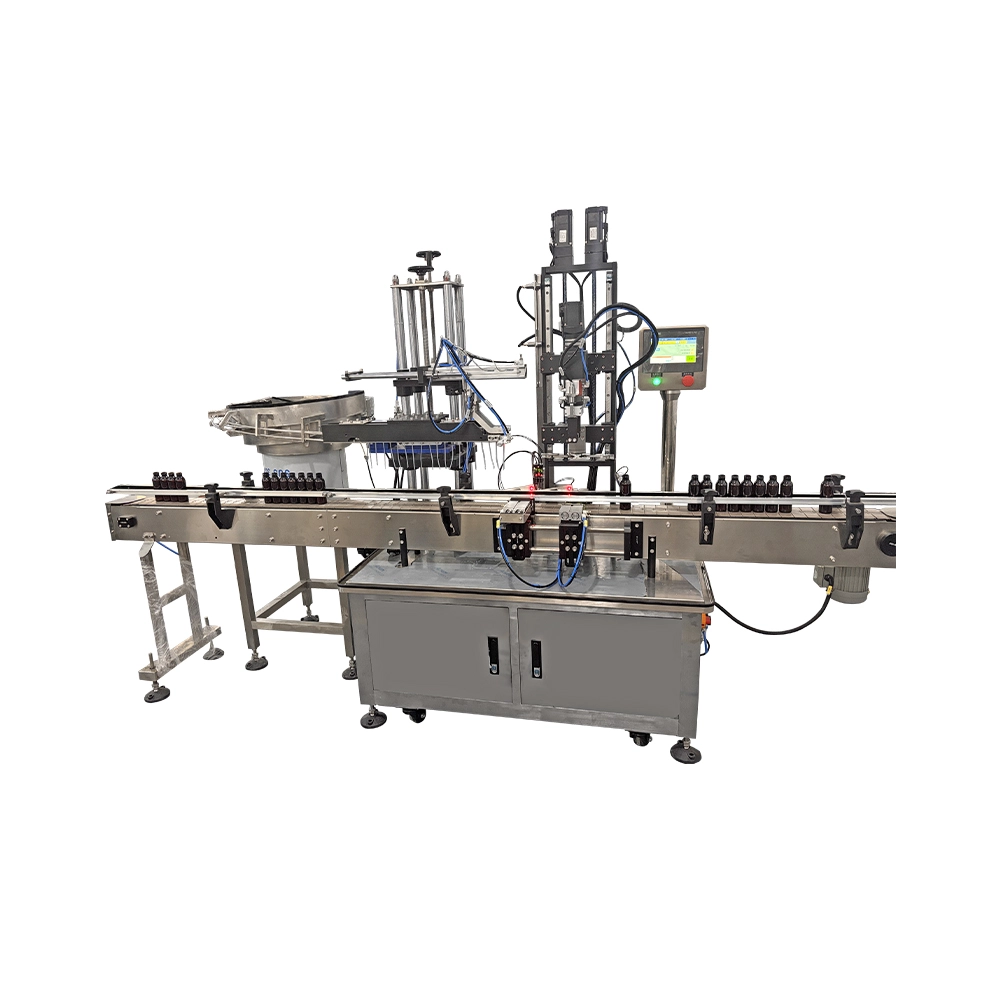
Automatic Pump Head Feeding and Capping Machine for Sale
Yuanyang automatic pump head feeding and capping machine is a bottle cap sorter and capper for bottles with pump heads, which is often used to close lids of containers such as nail polish, sprayers, and shampoo. The capping machine with a pump head feeder is widely used in food, medicine, chemical, cosmetic, and other industries for mass production and continuous production line .
Features:
⦁ Pneumatic and electric drive;
⦁ Automated fast speed;
⦁ Suitable for various types of caps.
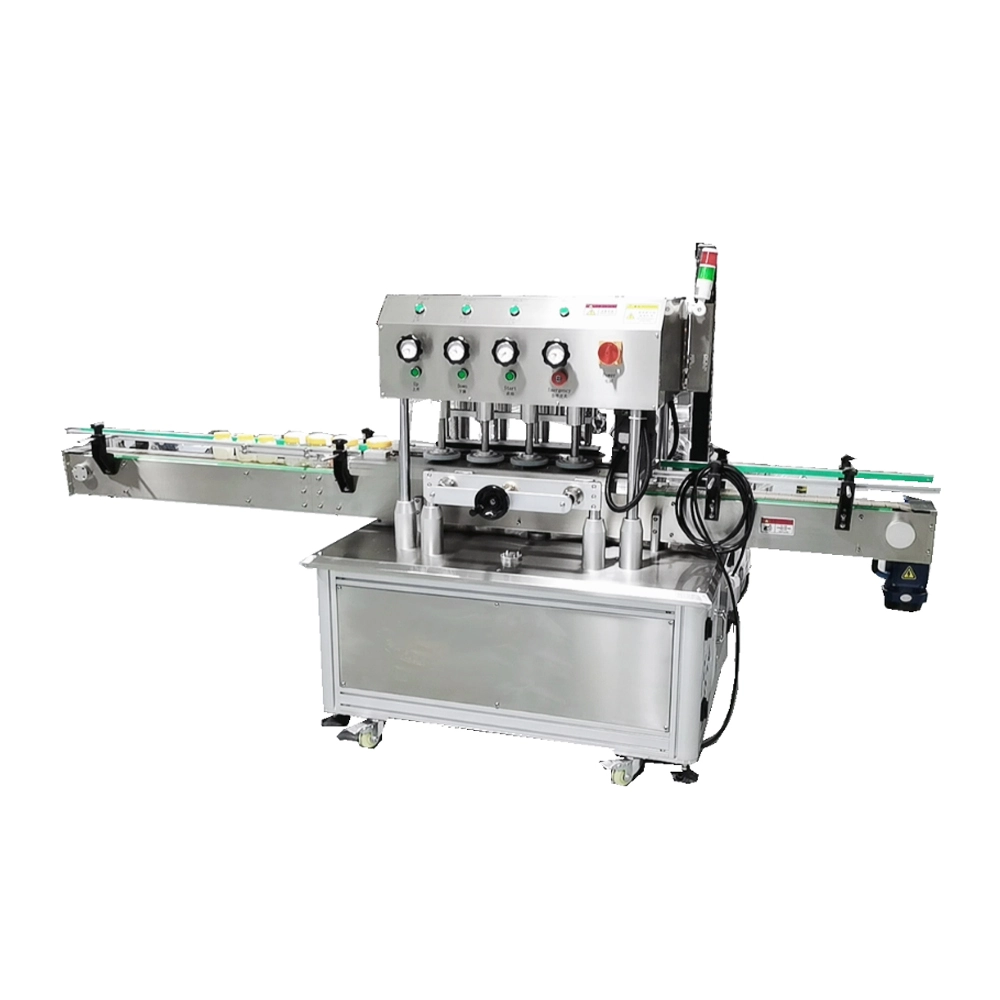
Automatic High Speed Capping Machine for Sale
The Yuanyang automatic high-speed capping machine is a kind of 8-wheel bottle-capping machine with fast working efficiency. The automatic capper is often used to close lids of containers such as bottles and jars, especially for plastic bottles, which are widely used in food, medicine, chemical, cosmetic, and other industries for mass production and continuous production lines.
Features:
⦁ Electric drive;
⦁ Automated fast speed;
⦁ Suitable for various screw caps, pumps, and spray bottles.
 Scan QR Code
Facebook
YouTube
LinkedIn
Whatsapp: +8613434139712
Guangzhou Yuanyang Machinery