





Choosing a Sachet Machine for Pharmaceutical Products
- Why Sachet Packaging Matters in Pharmaceutical Manufacturing
- Patient safety and dosing accuracy
- Material compatibility and barrier performance
- Why single-dose sachets are chosen over bottles or blister packs
- Key Technical Criteria When Selecting a Sachet Packaging Machine
- Filling technology: powders, granules, and liquids
- Sealing systems and film handling
- Throughput, OEE and production flexibility
- Compliance, Validation and Quality Control
- GMP, documentation and traceability
- Validation and process control
- Cleanroom compatibility and sanitary design
- Comparing Machine Types and Cost of Ownership
- VFFS (Vertical Form-Fill-Seal) vs. Pre-made Pouch Systems
- Capital expenditure vs. operating expense
- Comparison table: typical specs and use-cases
- Integration, Serviceability and After-Sales Support
- Line integration and automation
- Spare parts, training and local support
- Maintenance strategy and lifecycle planning
- Case Example: Yuanyang Sachet Packaging Machine for Sale
- Practical Checklist Before Purchase
- Regulatory and QA checklist
- Operational checklist
- Commercial checklist
- References and Further Reading
- Frequently Asked Questions (FAQ)
- 1. What kind of sachet machine is best for powdered pharmaceuticals?
- 2. Can a sachet packaging machine handle both powders and liquids?
- 3. How do I ensure compliance with pharma regulations?
- 4. What maintenance should I plan for?
- 5. How to evaluate ROI on a sachet packaging machine?
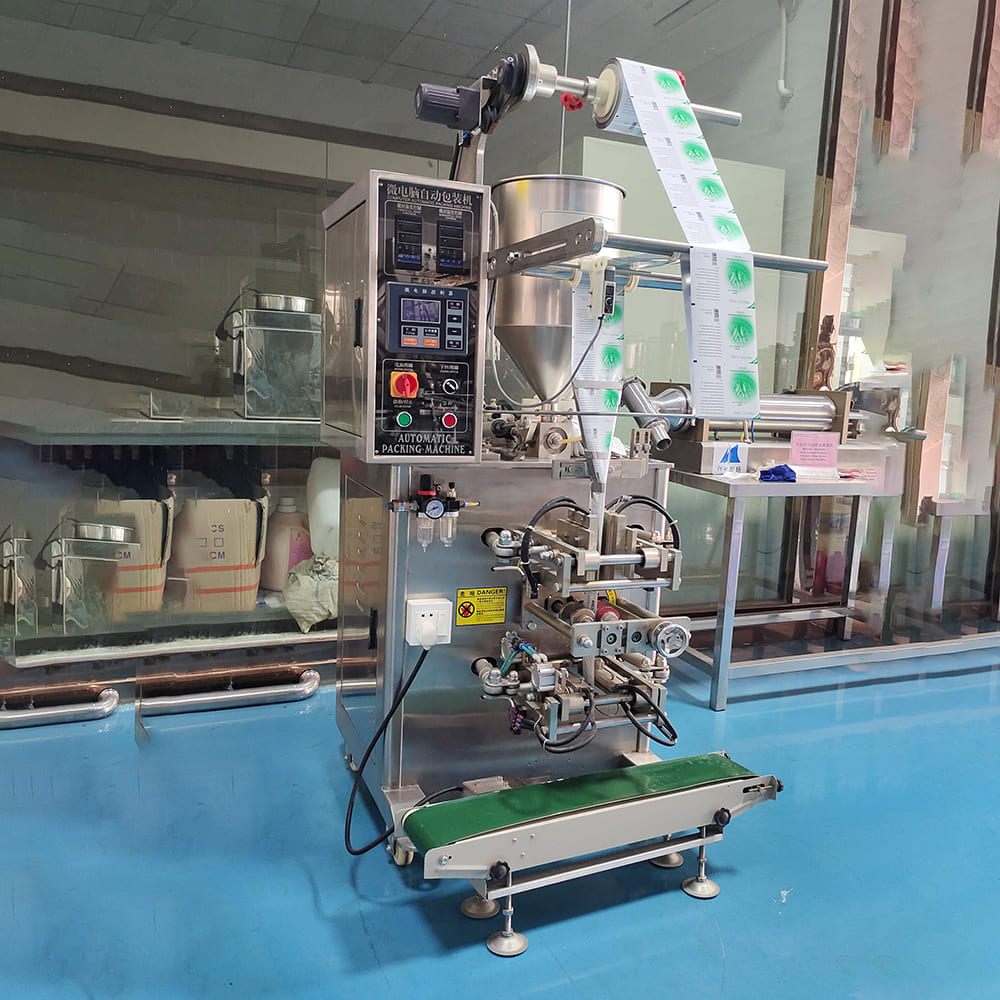
Choosing the right sachet packaging machine for pharmaceutical products requires balancing regulatory compliance, dosing accuracy, material compatibility, and production efficiency. This guide helps procurement managers, engineers, and QA teams evaluate options—covering vertical form-fill-seal (VFFS) vs. pre-made pouch systems, powder versus liquid dosing, sanitary design, validation needs, and lifecycle costs—so you can select a sachet packaging machine that meets GMP guidance and business goals.
Why Sachet Packaging Matters in Pharmaceutical Manufacturing
Patient safety and dosing accuracy
Single-dose sachets provide precise, controlled dosing for oral powders, powders-for-reconstitution, topical gels, and liquid formulations. Pharmaceutical sachet machines must deliver consistent fill weights and sealing integrity to avoid under- or overdosing. Look for machines with high-resolution dosing systems (e.g., auger fillers, peristaltic pumps, or piston fillers) and real-time weight monitoring to maintain ≤±2% accuracy for many products.
Material compatibility and barrier performance
Pharma sachets often require high-barrier films (e.g., laminate films with aluminum foil, EVOH layers, or metallized PET) to protect moisture- and oxygen-sensitive APIs. Your sachet packaging machine needs proper handling for film tension control, dust-free environments, and compatible sealing temperatures to ensure barrier integrity and shelf life.
Why single-dose sachets are chosen over bottles or blister packs
Single-dose sachets reduce cross-contamination risk, improve patient compliance, and cut secondary packaging costs for travel-size or trial-size products. They are especially useful for antibiotics, nutraceuticals, topical suspensions, and sample distribution.
Key Technical Criteria When Selecting a Sachet Packaging Machine
Filling technology: powders, granules, and liquids
Select the correct dosing method based on your formulation. For powders and granules, volumetric cup fillers or auger fillers offer good throughput and repeatability. Highly hygroscopic powders or very fine APIs may need controlled-environment dosing and specialized anti-static solutions. For liquids, choose between peristaltic pumps for accuracy and minimal shear, piston fillers for viscous products, or servo-driven pumps for high-speed precision.
Sealing systems and film handling
Sachet sealing must be leak-proof and tamper-evident. Heat-seal jaws, impulse sealers, or ultrasonic sealing (for specific laminates) are common. Film unwinding systems with dancer arms, tension control, and precise registration ensure consistent sachet formation—vital when using printed films or multi-laminate barrier films.
Throughput, OEE and production flexibility
Quantify required throughput (sachets/min) and consider OEE (Overall Equipment Effectiveness). Higher-speed VFFS machines may reach several hundred sachets per minute for small powder sachets, but the actual achievable rate depends on formulation, sachet size, and end-of-line operations like cartoning. Modular machines that allow quick-changeover between sachet formats reduce downtime and improve flexibility for multiple SKUs.
Compliance, Validation and Quality Control
GMP, documentation and traceability
Pharmaceutical sachet equipment must support cGMP practices: cleanable sanitary design, material certificates, and documentation for IQ/OQ/PQ. Machines should enable batch traceability—linking sachet production to film lot, filler calibration, and operator logs. Refer to WHO GMP guidance for pharmaceutical manufacturing expectations: WHO GMP.
Validation and process control
Validation protocols (IQ/OQ/PQ) are essential. Ensure the machine vendor provides support for installation qualification, operational qualification, and performance qualification. Critical process parameters—fill weight, seal temperature, dwell time, and film tension—should be monitored and recorded. For regulatory context on pharmaceutical quality systems and manufacturing controls, consult FDA resources: FDA Drug Manufacturing Guidance.
Cleanroom compatibility and sanitary design
Evaluate machine materials (stainless steel 316L, FDA-grade polymers) and surface finishes to enable routine cleaning and sanitization. Machines intended for aseptic or high-clean environments should minimize crevices and be designed for quick disassembly. Consider additional features like HEPA-filtered enclosures or integration into cleanrooms when handling sterile or highly potent APIs.
Comparing Machine Types and Cost of Ownership
VFFS (Vertical Form-Fill-Seal) vs. Pre-made Pouch Systems
VFFS machines form sachets from roll film and are space-efficient and flexible for many sachet sizes. Pre-made pouch machines use pre-cut pouches and are often chosen when complex pouch shapes, spouts, or zipper features are required. Pre-made pouch lines may reduce changeover time for frequent SKU changes at the cost of higher pouch prep expenses.
Capital expenditure vs. operating expense
Look beyond purchase price. Consider energy use, spare parts availability, preventive maintenance intervals, and warranty/support. A slightly more expensive machine with better after-sales support and higher reliability can yield lower total cost of ownership (TCO).
Comparison table: typical specs and use-cases
| Machine Type | Typical Throughput | Best For | Advantages |
|---|---|---|---|
| VFFS (integrated) | 50–300 sachets/min | Powders, granules, liquids; high-volume | High throughput, flexible film use, compact |
| Pre-made pouch sealer | 20–150 sachets/min | Complex pouches, zippers, spouts | Flexible pouch styles, easier skew management |
| Rotary multi-head sachet filler | 100–500 sachets/min | Very high-speed powder sachets | Extremely high throughput, precision dosing |
Integration, Serviceability and After-Sales Support
Line integration and automation
Consider how the sachet packaging machine will integrate with upstream and downstream equipment: bulk dosing systems, vibration feeders, metal detectors, checkweighers, and cartoners. Look for PLC/SCADA compatibility and Industry 4.0 readiness (data logging, OEE dashboards, remote diagnostics) to enable predictive maintenance and reduce downtime.
Spare parts, training and local support
Fast access to spare parts and vendor-trained technicians reduces downtime. Ask vendors for spare-parts lists, mean time to repair (MTTR) targets, and available training programs. A machine with a global service network will be easier to maintain over its lifecycle.
Maintenance strategy and lifecycle planning
Plan preventive maintenance schedules based on manufacturer recommendations. Key consumables include sealing jaws, cutters, belts, and bearings. A robust maintenance plan and documented SOPs will ensure consistent quality and long equipment life.
Case Example: Yuanyang Sachet Packaging Machine for Sale
Product name: Sachet Packaging Machine for Sale
Yuanyang sachet packaging machine is a kind of automatic equipment, mainly used for measuring, filling, and sealing small bag packing materials. The sachet packing machine has become an indispensable piece of equipment in modern production for food, medicine, chemicals, and other fields.
Features:
⦁ Microcomputer controlled;
⦁ Automated fast speed;
⦁ Multi-function integration.
The Yuanyang unit is typical of machines designed for both small-batch pharmaceutical production and larger-scale contract manufacturing. It supports multiple dosing heads (auger or piston), has PLC control with recipe memory, and can be supplied with CIP-compatible contact parts for easier cleaning. When evaluating this model, verify offered validation documentation, electrical drawings, and spare parts lists to ensure compliance with your QA requirements.
Practical Checklist Before Purchase
Regulatory and QA checklist
- Obtain material certificates and cleanability validation protocols.
- Confirm machine supports IQ/OQ/PQ and provides traceability logs.
- Verify alignment with WHO/FDA guidance where applicable (WHO, FDA).
Operational checklist
- Run factory acceptance tests (FAT) with your formulation.
- Request sample sachets produced with your film and formulation.
- Confirm spare parts lead times and local technician availability.
Commercial checklist
- Calculate TCO including installation, validation, energy, and spare parts.
- Negotiate training, warranty, and post-sale support terms.
References and Further Reading
Learn more about packaging equipment and industry standards at these authoritative sources:
- Packaging machine - Wikipedia
- Form-fill-seal - Wikipedia
- FDA - Drug Manufacturing
- WHO - Good Manufacturing Practice
- ISO 9001 - Quality Management
Frequently Asked Questions (FAQ)
1. What kind of sachet machine is best for powdered pharmaceuticals?
For powders, consider machines equipped with auger fillers or precision volumetric cup systems. Highly hygroscopic or ultra-fine powders may require enclosed dosing, anti-static measures, and humidity control. Request FAT with your exact powder to validate performance.
2. Can a sachet packaging machine handle both powders and liquids?
Some modular machines allow quick-change heads (auger to piston or pump) and can handle multiple product types, but expect longer changeover, cleaning, and validation requirements. For frequent switching, evaluate dedicated lines or robust cleaning procedures (CIP/SIP) to avoid cross-contamination.
3. How do I ensure compliance with pharma regulations?
Work with vendors who provide full documentation for IQ/OQ/PQ, material certifications, and traceability features. Design your SOPs around cGMP principles and consult the FDA and WHO guidance linked above for regulatory expectations.
4. What maintenance should I plan for?
Schedule preventive maintenance per the vendor manual: lubrication, sealing jaw inspection, belt tension checks, and replacing wear parts. Keep a critical spares inventory (sealing elements, belts, sensors) to minimize downtime.
5. How to evaluate ROI on a sachet packaging machine?
Calculate ROI using initial CAPEX, expected throughput, labor savings, material costs (film vs. pouch), OEE improvements, and reduced product loss from improved dosing accuracy. Include intangible benefits like increased market flexibility and reduced time-to-market for new SKUs.
If you want to evaluate the Yuanyang Sachet Packaging Machine for Sale or run a product-specific FAT, contact our sales and technical team for a consultation, sample run, and quote: View product and contact sales or email us at [email protected].
How to manufacturing industrial liquid mixer machine in Germany
How to start the semi automatic can sealing machine business in US ?
What are the application scenarios of electric emulsifier?
Vacuum Grease Emulsifying Mixer: Comprehensive FAQ Guide for Industrial Applications
Semi Automatic Capping Machine
The capping wheel is a little high for the small bottles, do you have solutions?
Yes, we have designed cylinder type for mini bottles.
Automatic powder feeder machine
Do you also supply powder or granules packing machine?
Yes,Yuany supplies different type of packing machines for powder, granules and liquids. Please contact customers services with details.
Vertical Filling Machine
How to adjust the filling weight?
There is weight regulator for client to refer. Just adjust several times until you get the accurate filling weight. Remember the reference number, next time directly use for the same materials and bottles.
Automatic auger filling machine
What’s the maximum weight that the automatic powder packing machine pack?
The maximum filling weight is 1000g. For packing weight over 1000g, the semi automatic powder filler is recommended.
Homogenizing Mixer
Does the chemical mixer tank has jacket?
Yes, the liquid mixing machine with homogenizer is with jacket. Normally there are double jackets, one is for heating or cooling, the other is for insulation and protection. There is also single layer type. Clients can tell us specific function or consult us for recommendation.
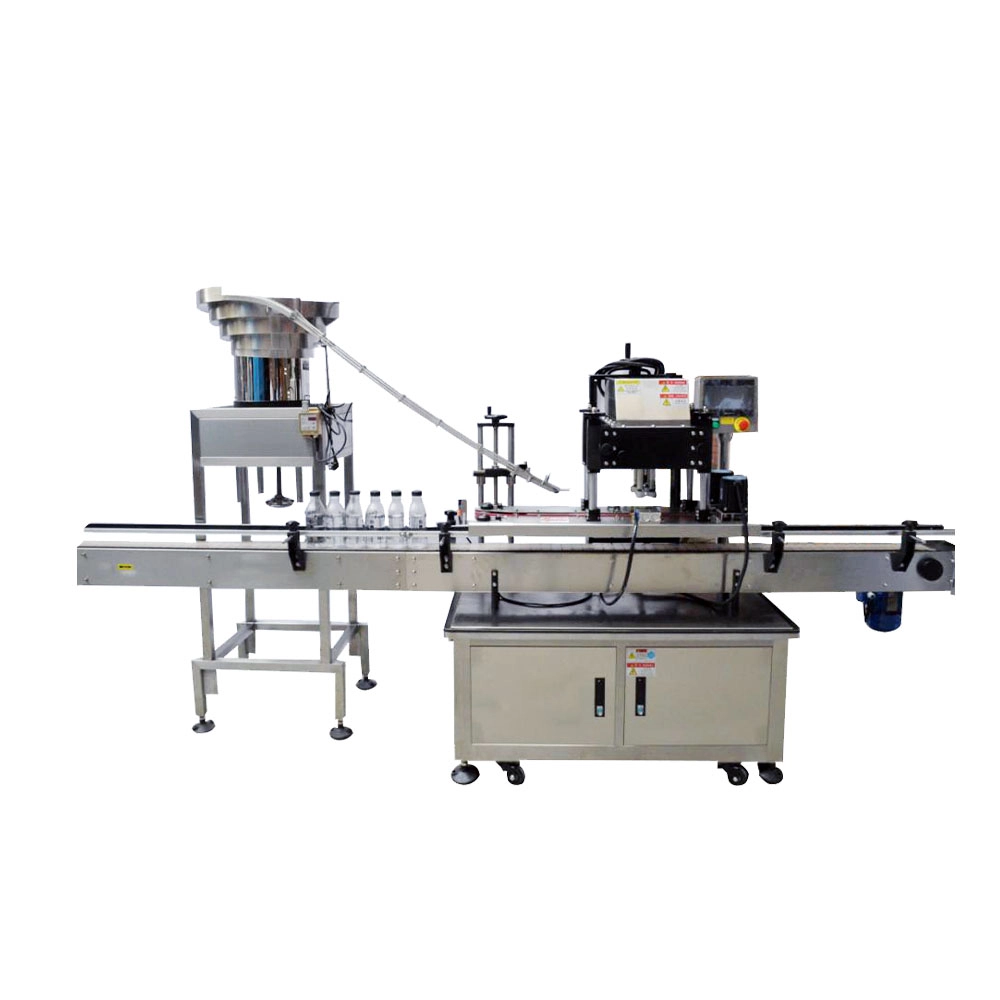
Automatic Plastic Caps Capping Machine with Vibrating Cap Feeder for Sale
Yuanyang automatic screw capping machine is a kind of four-wheel bottle capping machine. The automatic screw capper is often used to close lids of containers such as bottles and jars, especially for plastic bottles, which are widely used in food, medicine, chemical, cosmetic, and other industries for mass production and continuous production lines.
Features:
⦁ Full pneumatic drive;
⦁ Automated fast speed;
⦁ Suitable for various screw caps, pumps, and spray bottles.
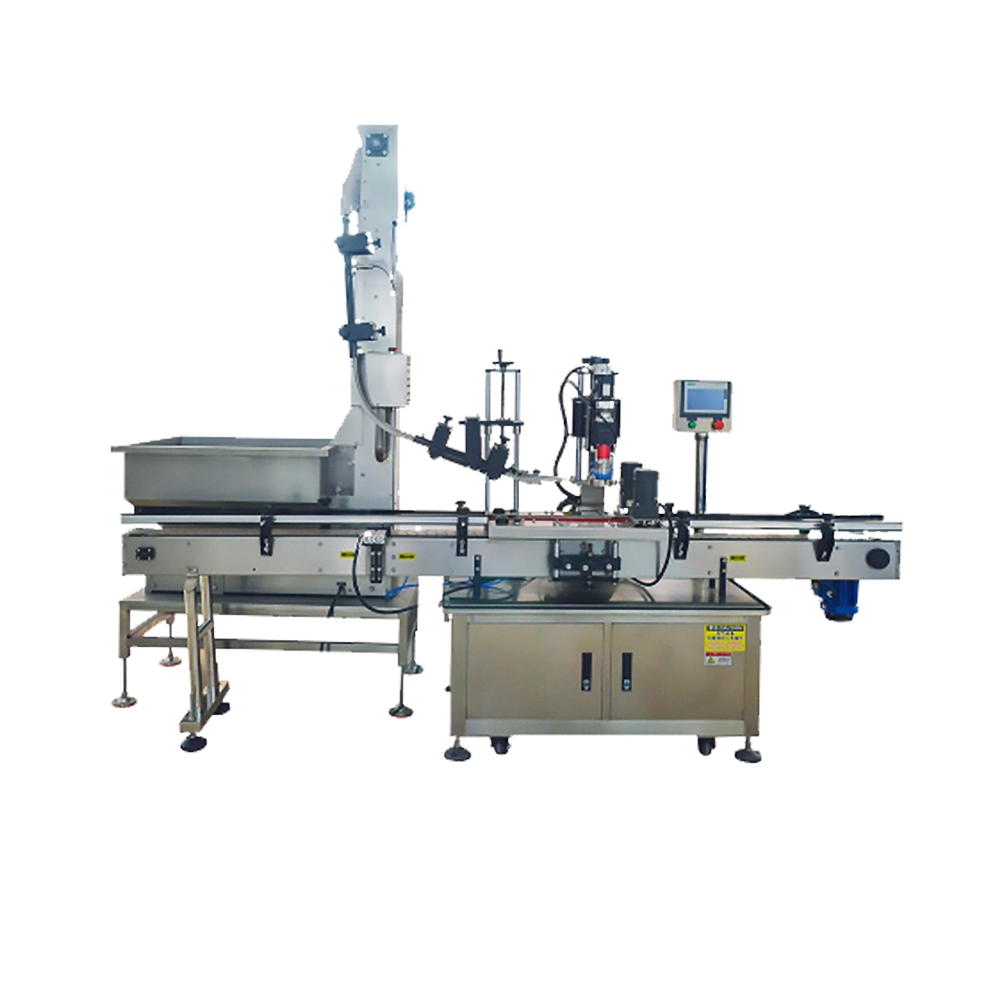
Automatic Metal Caps Capping Machine for Sale
Yuanyang automatic metal cap capping machine is a bottle capper for bottles with metal caps, which is often used to close lids of containers such as bottles and jars. The glass bottle metal capping machine is widely used in food, medicine, chemical, cosmetic, and other industries for mass production and continuous production line .
Features:
⦁ Pneumatic and electric drive;
⦁ Automated fast speed;
⦁ Suitable for glass bottles with metal caps.
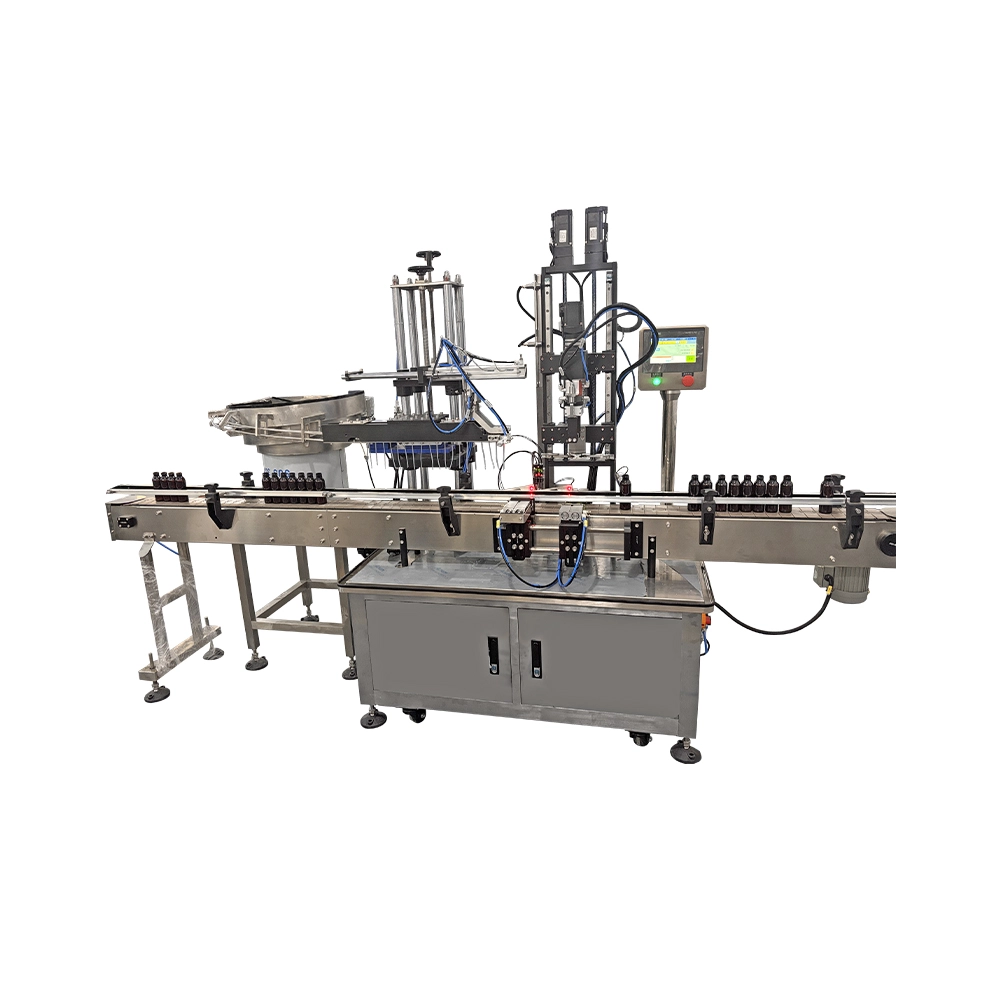
Automatic Pump Head Feeding and Capping Machine for Sale
Yuanyang automatic pump head feeding and capping machine is a bottle cap sorter and capper for bottles with pump heads, which is often used to close lids of containers such as nail polish, sprayers, and shampoo. The capping machine with a pump head feeder is widely used in food, medicine, chemical, cosmetic, and other industries for mass production and continuous production line .
Features:
⦁ Pneumatic and electric drive;
⦁ Automated fast speed;
⦁ Suitable for various types of caps.
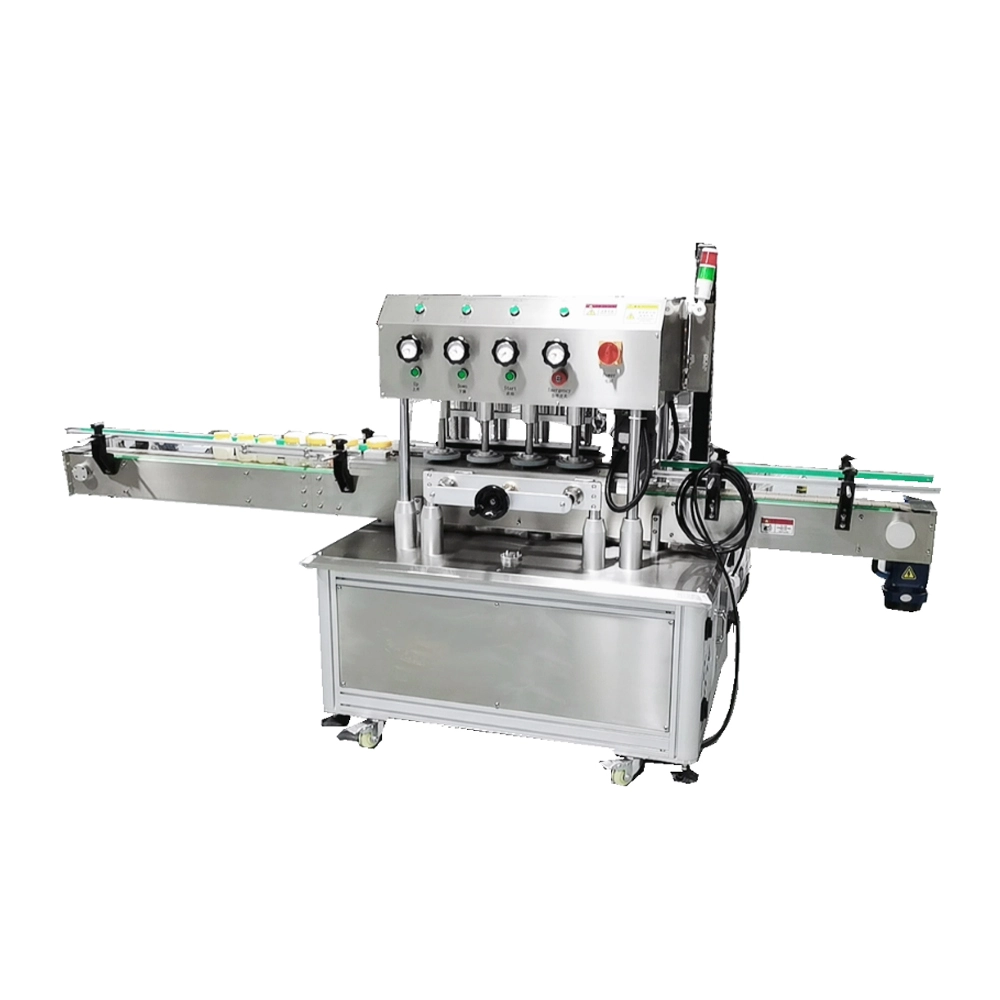
Automatic High Speed Capping Machine for Sale
The Yuanyang automatic high-speed capping machine is a kind of 8-wheel bottle-capping machine with fast working efficiency. The automatic capper is often used to close lids of containers such as bottles and jars, especially for plastic bottles, which are widely used in food, medicine, chemical, cosmetic, and other industries for mass production and continuous production lines.
Features:
⦁ Electric drive;
⦁ Automated fast speed;
⦁ Suitable for various screw caps, pumps, and spray bottles.
 Scan QR Code
Facebook
YouTube
LinkedIn
Whatsapp: +8613434139712
Guangzhou Yuanyang Machinery