





Scaling Processes from Lab to Plant with a 50L Vacuum Emulsifier
- Scaling Processes from Lab to Plant with a 50L Vacuum Emulsifier
- Why correct scale-up matters for emulsion mixer applications
- Common challenges when scaling emulsions (and how the right emulsion mixer helps)
- Introducing the 50L Hydraulic Lift Vacuum Emulsifier
- Key design elements of this emulsion mixer and why they matter
- Process parameters to monitor and control with the 50L emulsion mixer
- Step-by-step scale-up strategy using the 50L Hydraulic Lift Vacuum Emulsifier
- 1. Characterize the lab process
- 2. Map geometric and dynamic similarity where possible
- 3. Conduct pilot batches with incremental increases
- 4. Validate process windows
- 5. Create scale-up specification and SOPs
- Practical examples and parameter comparison
- Interpreting the table
- Cleaning, maintenance and regulatory considerations
- Hygiene and cleaning
- Material selection and compliance
- Safety and controls
- Economic and productivity benefits of using a 50L pilot emulsion mixer
- Simple ROI comparison (illustrative)
- Choosing the right emulsion mixer: when 50L is the sweet spot
- Comparison table: lab vs 50L vs plant emulsion mixers
- Yuanyang brand advantages when scaling emulsions
- Frequently Asked Questions (FAQ)
- Q1: Can the 50L Hydraulic Lift Vacuum Emulsifier reproduce lab droplet size distributions?
- Q2: What product viscosities can it handle?
- Q3: How does vacuum improve emulsions?
- Q4: Is the 50L suitable for pharmaceutical GMP production?
- Q5: What analytical controls are recommended during scale-up?
- Contact Sales / View Product
- Authoritative references and further reading
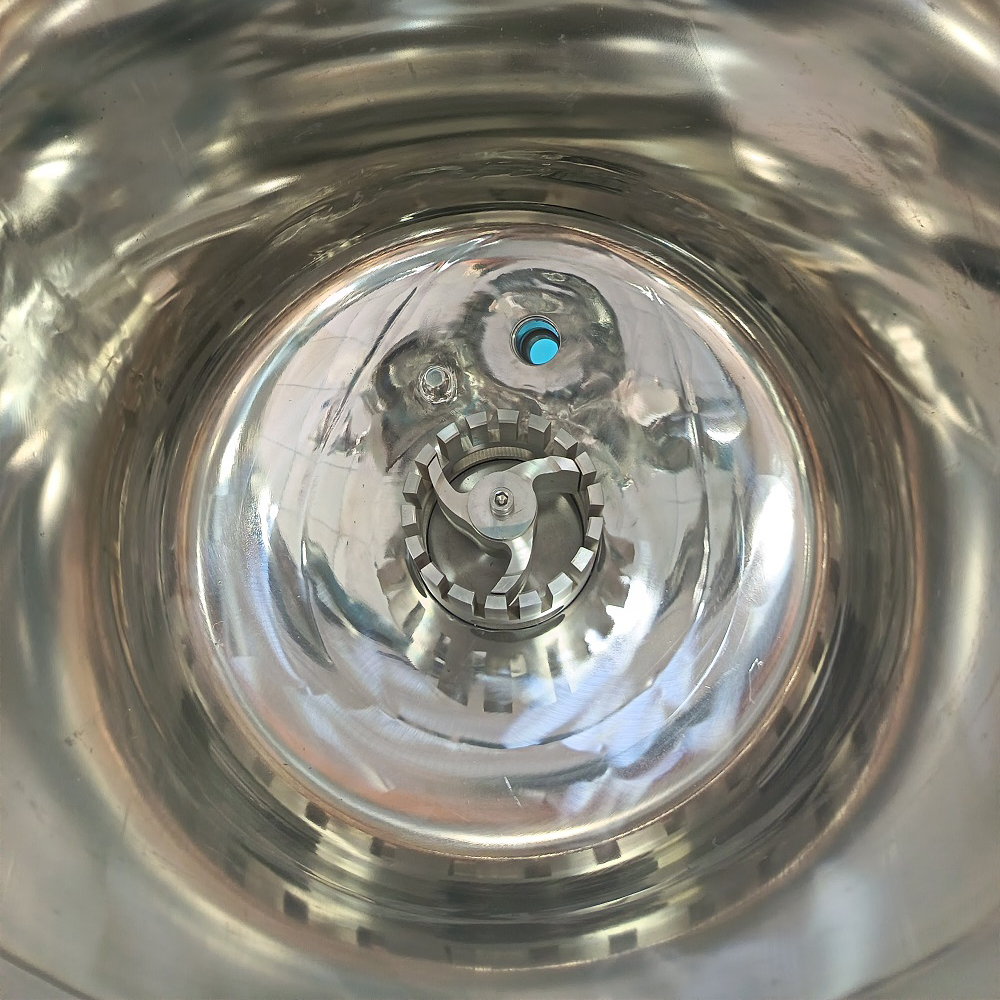
Scaling Processes from Lab to Plant with a 50L Vacuum Emulsifier
Why correct scale-up matters for emulsion mixer applications
Moving a formulation from a bench-top recipe to a commercial batch is more than increasing volumes. Emulsion quality (stability, droplet size distribution, viscosity), process repeatability, compliance and cost all depend on how you scale mixing, shear and heat transfer. An appropriate emulsion mixer at pilot scale bridges R&D and full production—reducing risk and shortening time-to-market. The 50L Hydraulic Lift Vacuum Emulsifier is a common pilot-scale solution designed to replicate plant conditions while remaining manageable for iterative development.
Common challenges when scaling emulsions (and how the right emulsion mixer helps)
Typical scale-up hurdles include: droplet size shift, phase inversion, inadequate heat transfer, foaming and entrapped air, and inconsistent powder incorporation. These issues arise because geometry, shear fields and residence time change nonlinearly with volume. A properly designed vacuum homogenizer/emulsion mixer helps by providing controlled shear via a homogenizing rotor-stator, precise vacuum degassing to eliminate entrained air, repeatable heating/cooling jackets for thermal control, and robust powder absorption systems to incorporate solids without clumps.
Introducing the 50L Hydraulic Lift Vacuum Emulsifier
50L Hydraulic Lift Vacuum Emulsifier — Product Overview
Yuanyang hydraulic lift vacuum emulsifier is a combined mixing equipment with a main vacuum homogenizer tank, a water tank, and an oil tank, which is an integrated equipment with a mixing, dispersing, homogenizing, emulsifying, vacuumizing and powder absorption system that is widely used in cosmetics, food, pharmaceutical, and chemical fields.
Features:
⦁ With a hydraulic lift lid & tilting pot, vacuum system, and electric control system.
⦁ Suitable for products of 10,000~50,000 cps viscosity.
⦁ Perfect particle size of 2 microns and evenly distributed.
Key design elements of this emulsion mixer and why they matter
The 50L Hydraulic Lift Vacuum Emulsifier integrates three key systems: (1) a vacuum homogenizer tank for degassing and high-shear homogenization, (2) separate water and oil tanks for controlled pre-heating and phased addition, and (3) a powder absorption and mixing system for easy incorporation of solids. Important benefits include hydraulic lift and tilting for safe loading/unloading, electric control for repeatable recipes, and the capability to handle viscosities commonly found in creams, ointments and high-viscosity sauces (10,000–50,000 cps). The emulsifier's homogenizer can achieve particle sizes down to 2 microns—critical for stable, aesthetic emulsions.
Process parameters to monitor and control with the 50L emulsion mixer
Successful scale-up requires active control of these variables:
- Shear rate / rotor speed — Dictates droplet breakup. Keep rotor/stator geometry and tip speed consistent with lab trials when possible.
- Temperature profile — Heating rate and hold time affect solubility and emulsifier activation.
- Vacuum level — Reduces entrained air and boiling point for volatile components; improves stability and aesthetic.
- Addition order & rate — Oil phase addition speed into water phase, and powder feed rates influence droplet formation and lumping.
- Residence time — Time inside homogenizer under target shear; too short yields coarse emulsions, too long may overwork sensitive actives.
The 50L emulsifier's controls allow operators to set and log these variables, enabling reproducible transfer of lab procedures to pilot batches.
Step-by-step scale-up strategy using the 50L Hydraulic Lift Vacuum Emulsifier
1. Characterize the lab process
Document lab conditions precisely: stirrer geometry, rpm, temperature ramps, vacuum used, order of addition, and measured properties such as droplet size distribution (D50), viscosity, pH, and stability data. These will be the baseline for scaling decisions.
2. Map geometric and dynamic similarity where possible
Complete geometric similarity is rarely possible, but maintain key dimensionless numbers when practical: Reynolds number (flow regime), tip speed for rotor-stator systems, and energy input per unit volume (kW/m3). The 50L unit's rotor-stator design allows matching tip speeds to preserve shear conditions encountered in lab homogenizers.
3. Conduct pilot batches with incremental increases
Start with small pilot runs on the 50L unit using the documented lab recipe. Monitor critical quality attributes (CQA) — droplet size, viscosity, pH, and stability. Adjust rotor speed, vacuum, addition rates and hold times as needed. Record adjustments and rationale for reproducibility.
4. Validate process windows
Use the 50L to map a robust operating range: upper/lower limits for rotor speed, temperature and vacuum that still produce acceptable CQAs. This creates the basis for transfer to larger plant emulsifiers and for regulatory documentation.
5. Create scale-up specification and SOPs
Document exact setpoints, equipment configuration, start-up/shut-down procedures, cleaning steps (CIP/SIP if applicable), and batch records. The hydraulic lift and tilting pot features on the 50L simplify cleaning and material handling, which should be reflected in SOPs.
Practical examples and parameter comparison
Below are simplified example parameters for three product families scaled using a 50L pilot emulsifier. These are illustrative; always run pilot trials.
| Product | Lab batch (1–2 L) | 50L Pilot batch | Target plant batch (500–1000 L) | Notes |
|---|---|---|---|---|
| Cosmetic face cream | Rotor 10,000 rpm; 70°C charge; vacuum 200 mbar; D50 = 0.8 µm | Rotor tip speed match; 70°C heating; vacuum 250 mbar; D50 = 1.0 µm | Scaled tip speed & energy per m3; 70°C; vacuum 300 mbar; D50 ≤ 1.2 µm | Minor D50 shift acceptable if stability OK |
| Pharma ointment | High-shear lab homogenizer; 50°C; minimal vacuum; viscosity 20,000 cps | 50L homogenizer at moderate speed; vacuum reduced foam; viscosity 22,000 cps | Large homogenizer with similar shear profile; viscosity target 22,000–25,000 cps | Maintain shear-sensitive active integrity |
| Food sauce (emulsified) | Lab mixer 3,000 rpm; 60°C; D50 3–5 µm | 50L rotor-stator; 60°C; vacuum 400 mbar; D50 2–4 µm | Plant homogenizer; 60°C; D50 target retained | Sanitary design on 50L important for food safety |
Interpreting the table
In each case, the 50L is used to match shear and thermal histories of lab batches while producing meaningful pilot quantities. The vacuum capability often needs tuning: some formulations benefit from stronger vacuum to remove air; others are sensitive to volatile loss and need milder vacuum profiles.
Cleaning, maintenance and regulatory considerations
Hygiene and cleaning
For cosmetics, food and pharma applications, cleanability and documentation are essential. The hydraulic lift lid and tilting pot on the 50L simplify manual cleaning and visual inspection. Where CIP/SIP is required, ensure your configuration supports appropriate piping and valve arrangements. Validate cleaning cycles and keep records.
Material selection and compliance
Choose wetted materials compatible with your product and regulatory requirements (e.g., 316L stainless steel for pharma/food). Seal materials should resist process solvents and temperature ranges. Maintain traceability for materials used in contact parts if required by regulators.
Safety and controls
Electric control systems should include interlocks, emergency stops, and vacuum safety reliefs. Train operators on hydraulic lift and tilt procedures to prevent injury during pot handling.
Economic and productivity benefits of using a 50L pilot emulsion mixer
Advantages include:
- Lower development costs and shorter iteration cycles versus full-scale trials.
- Reduced material waste during optimization.
- Ability to generate representative stability and performance data for regulatory submissions.
- Smoother technology transfer reduces surprises at plant scale and the costs of failed batches.
Simple ROI comparison (illustrative)
| Item | Without 50L pilot | With 50L pilot |
|---|---|---|
| Avg. failed plant batches/year | 3–5 | 0–1 |
| Material wasted (kg) | High | Low |
| Time to market | Longer | Shorter |
Choosing the right emulsion mixer: when 50L is the sweet spot
The 50L Hydraulic Lift Vacuum Emulsifier is ideal when you need:
- Representative pilot volumes large enough for stability trials, but small enough for frequent recipe iterations.
- Capability to reach fine particle sizes (~2 µm) required by high-end cosmetics and certain pharmaceutical semisolids.
- Integrated systems (water/oil tanks, powder feed) to mirror plant feeding strategies.
- Safe handling and easy cleaning features (hydraulic lift, tilting pot) to minimize downtime.
Comparison table: lab vs 50L vs plant emulsion mixers
| Aspect | Lab mixer (1–5 L) | 50L Hydraulic Lift Vacuum Emulsifier | Plant homogenizer (≥500 L) |
|---|---|---|---|
| Volume | 1–5 L | 50 L | 500–5000 L |
| Shear control | Good for formulation screening | High; rotor-stator homogenizer | High; industrial homogenizers |
| Vacuum/degassing | Optional | Integrated vacuum system | Usually integrated |
| Cleaning | Manual | Hydraulic lift + tilting pot (easier) | CIP/SIP capable |
Yuanyang brand advantages when scaling emulsions
When you select the 50L Hydraulic Lift Vacuum Emulsifier from Yuanyang you gain:
- Integrated pilot features designed to reflect plant operations—separate oil/water tanks, powder feed, vacuum homogenizing tank—so scale-up is more predictable.
- User-friendly ergonomics—hydraulic lift and tilting pot simplify material handling and cleaning.
- Proven performance—ability to reach 2 µm particle size and handle 10,000–50,000 cps viscosity increases the range of formulations you can validate.
- Comprehensive electrical and vacuum controls for recipe repeatability and easier tech transfer documentation.
Frequently Asked Questions (FAQ)
Q1: Can the 50L Hydraulic Lift Vacuum Emulsifier reproduce lab droplet size distributions?
A: In most cases yes, if rotor tip speed, energy per unit volume and thermal history are matched. Expect small shifts in D50; use the 50L for iterative adjustments until the target distribution and stability are met.
Q2: What product viscosities can it handle?
A: The unit is suitable for products between 10,000 and 50,000 cps. For products outside this range, consult engineers to verify pumpability and seal compatibility.
Q3: How does vacuum improve emulsions?
A: Vacuum reduces entrained air and prevents micro-foam, improving visual quality and stability. It also lowers boiling points for volatile components, which must be managed to avoid component loss.
Q4: Is the 50L suitable for pharmaceutical GMP production?
A: The 50L is often used for pilot and development work supporting GMP manufacturing. For GMP production, ensure the final configuration, materials, documentation, and cleaning validation meet regulatory requirements.
Q5: What analytical controls are recommended during scale-up?
A: Recommended controls include droplet size distribution (laser diffraction), viscosity profiling, pH, thermal profile logs, and stability (accelerated and real-time). Track these during pilot runs to define acceptable process windows.
Contact Sales / View Product
As production scales up, procurement teams must revisit sourcing criteria for industrial emulsion mixers through a structured purchase guide.Ready to scale your emulsions reliably? Contact our sales team to discuss pilot trials, custom configurations, or to schedule a demonstration of the 50L Hydraulic Lift Vacuum Emulsifier. For pricing, technical datasheets and lead times, please reach out to your local Yuanyang representative or email [email protected] (replace with your region-specific contact).
Authoritative references and further reading
These resources provide background on emulsions, homogenization and regulatory context:
- Emulsion — Wikipedia: https://en.wikipedia.org/wiki/Emulsion
- Homogenization (chemistry) — Wikipedia: https://en.wikipedia.org/wiki/Homogenization_(chemistry)
- U.S. Food & Drug Administration (Cosmetics): https://www.fda.gov/cosmetics
- ISO quality management overview (relevant for manufacturing systems): https://www.iso.org/iso-9001-quality-management.
- European Medicines Agency (EMA): https://www.ema.europa.eu/en
Note: data and example parameters in this article are illustrative. Always perform pilot trials and validation specific to your formulation and regulatory context.
Top reverse osmosis water treatment systems Manufacturers and Suppliers
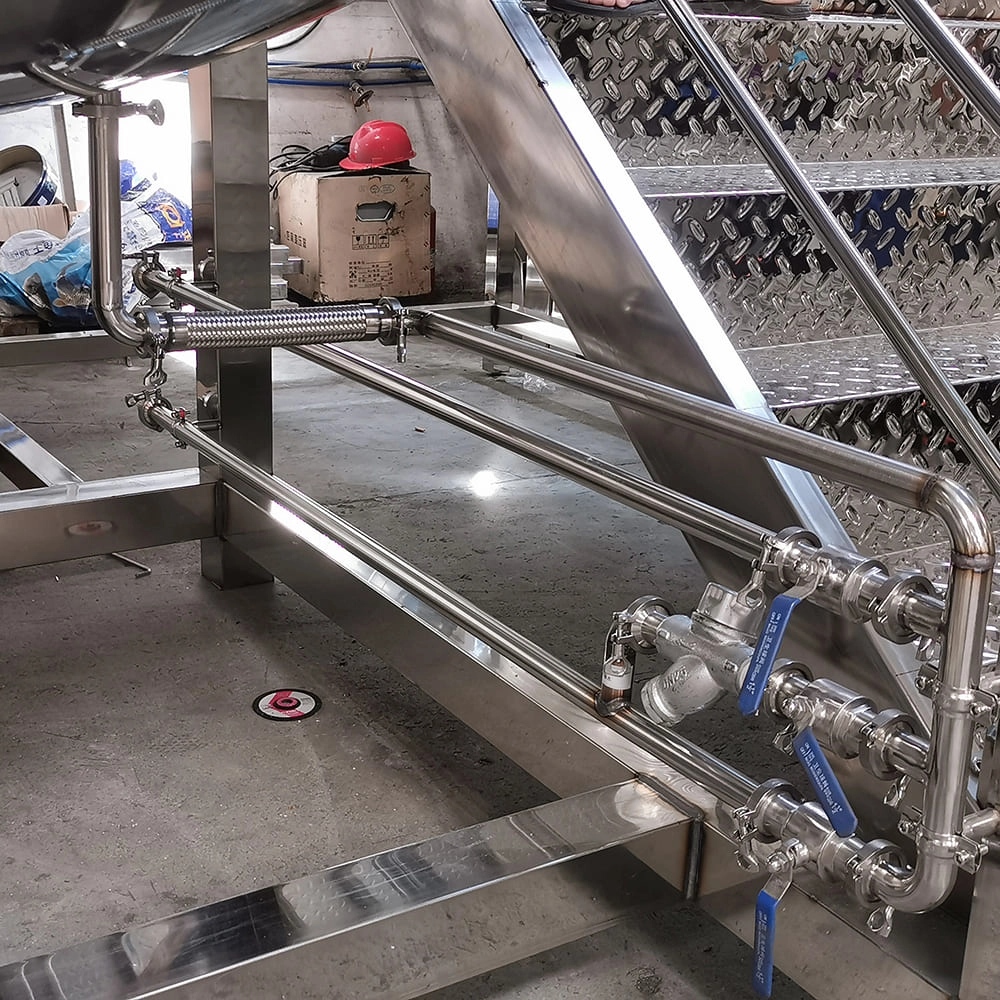
Key Specs Buyers Need When Purchasing a Liquid Soap Mixer Machine
The 10 Key Factors in stainless steel liquid mixing tank manufacturer That Affect Cost
What are the application scenarios of flat labeling machine?
One Stage Water Treatment
What capacity do you supply?
We produce from 500L to 20 Tons according to client’s needs.
Automatic auger filling machine
What’s the filling range of the screw powder packing machine?
The screw filling machine can fill from 5-1000g. But we need to customize according to specific weight that clients plan to pack. The screw model will be different.
Food
What is the production efficiency of the equipment?
Our equipment uses intelligent control systems and efficient processes to ensure high efficiency and stability, greatly enhancing production efficiency.
Sachet Packaging Machine for Granules
Can I set the sealing length on the control panel of automatic packing machine?
Yes, each machine has a sealing length range regarding bag size, it is flexible to change the length on the micro control system within available range.
Horizontal Filling Machine
What kind of liquids does this liquid bottling machine can fill?
It can fill various liquids products, such shampoo, cream, conditioner, detergent, lotion, sauce, and so on. The materials must be easy to flow down for this cream filler machine. For too viscous paste, pressurized filling machine or hot filling machine will be recommended based on materials. Please send your materials to check.
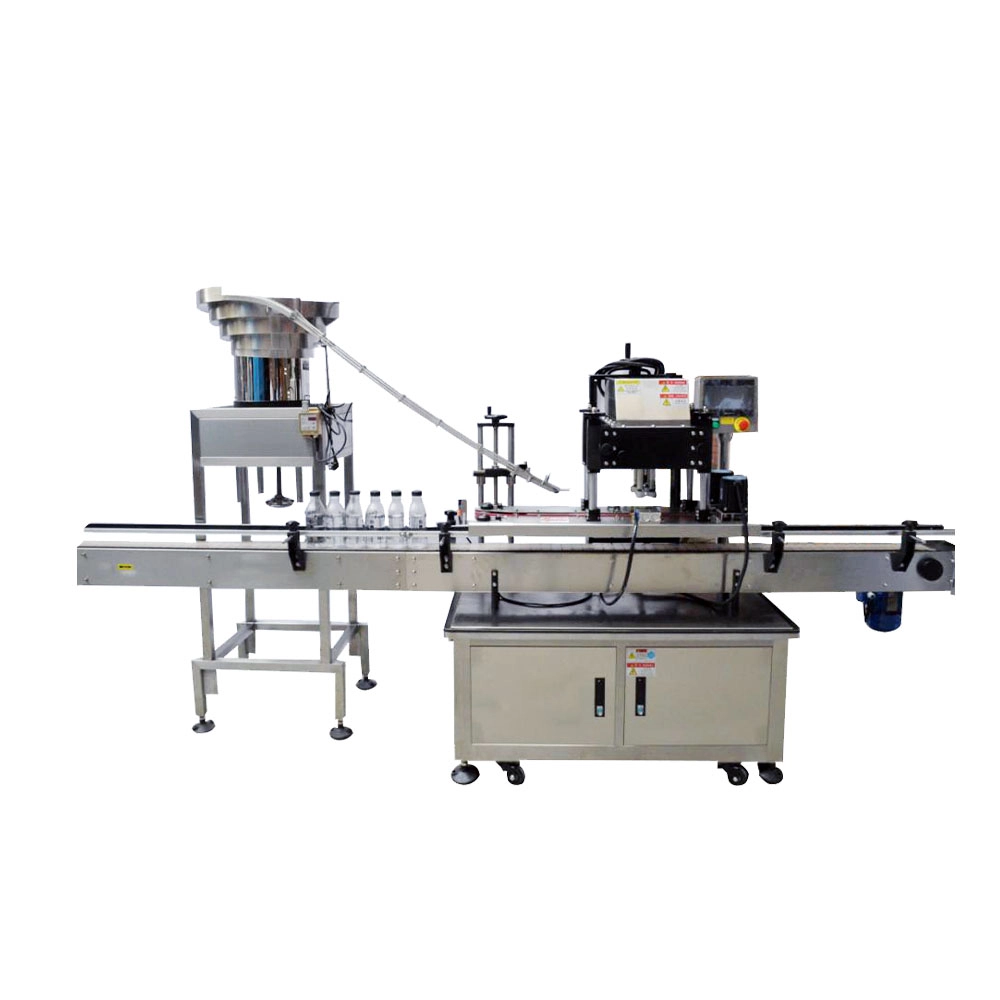
Automatic Plastic Caps Capping Machine with Vibrating Cap Feeder for Sale
Yuanyang automatic screw capping machine is a kind of four-wheel bottle capping machine. The automatic screw capper is often used to close lids of containers such as bottles and jars, especially for plastic bottles, which are widely used in food, medicine, chemical, cosmetic, and other industries for mass production and continuous production lines.
Features:
⦁ Full pneumatic drive;
⦁ Automated fast speed;
⦁ Suitable for various screw caps, pumps, and spray bottles.
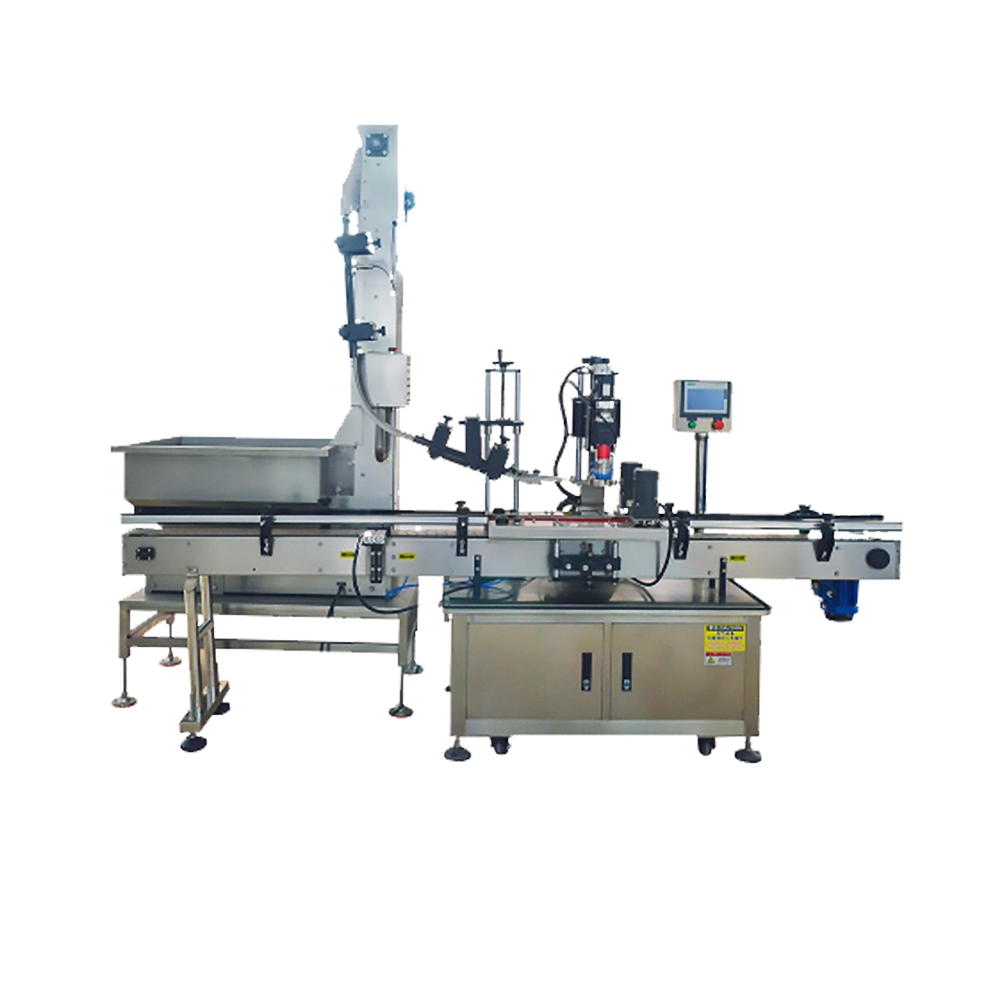
Automatic Metal Caps Capping Machine for Sale
Yuanyang automatic metal cap capping machine is a bottle capper for bottles with metal caps, which is often used to close lids of containers such as bottles and jars. The glass bottle metal capping machine is widely used in food, medicine, chemical, cosmetic, and other industries for mass production and continuous production line .
Features:
⦁ Pneumatic and electric drive;
⦁ Automated fast speed;
⦁ Suitable for glass bottles with metal caps.
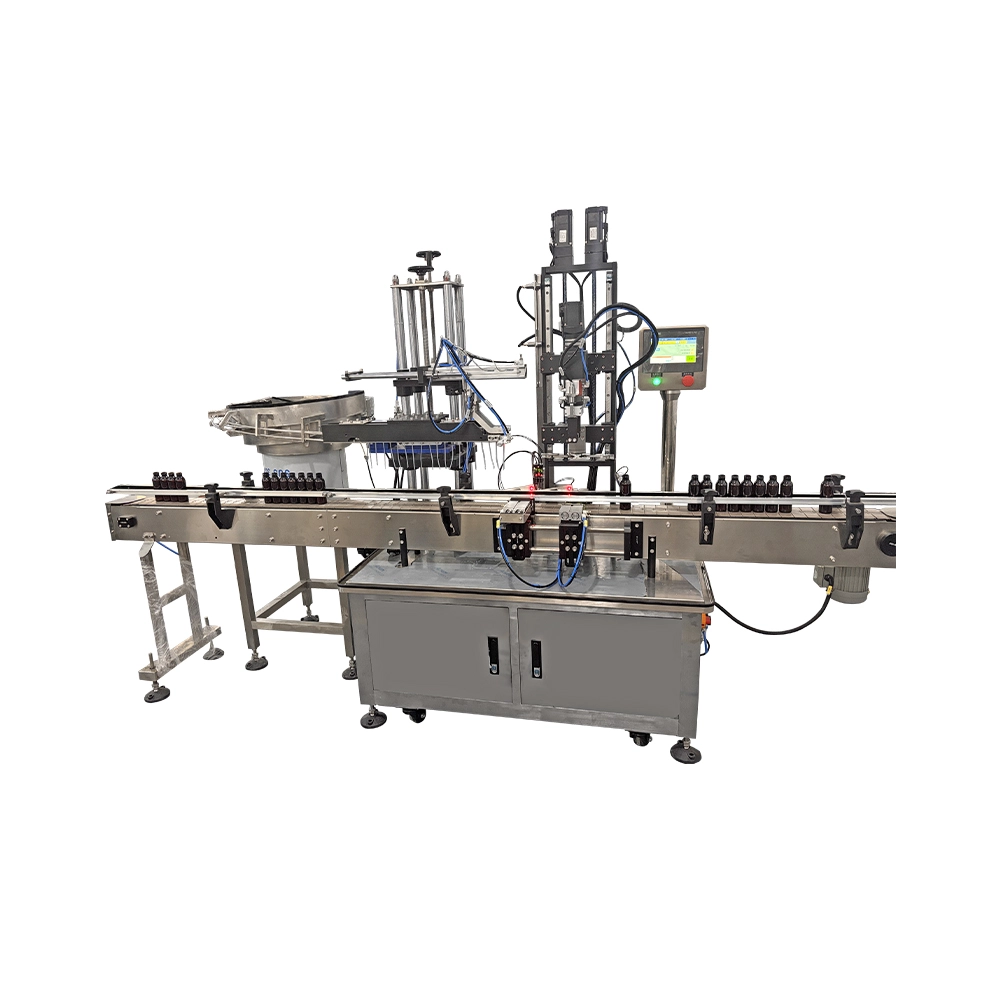
Automatic Pump Head Feeding and Capping Machine for Sale
Yuanyang automatic pump head feeding and capping machine is a bottle cap sorter and capper for bottles with pump heads, which is often used to close lids of containers such as nail polish, sprayers, and shampoo. The capping machine with a pump head feeder is widely used in food, medicine, chemical, cosmetic, and other industries for mass production and continuous production line .
Features:
⦁ Pneumatic and electric drive;
⦁ Automated fast speed;
⦁ Suitable for various types of caps.
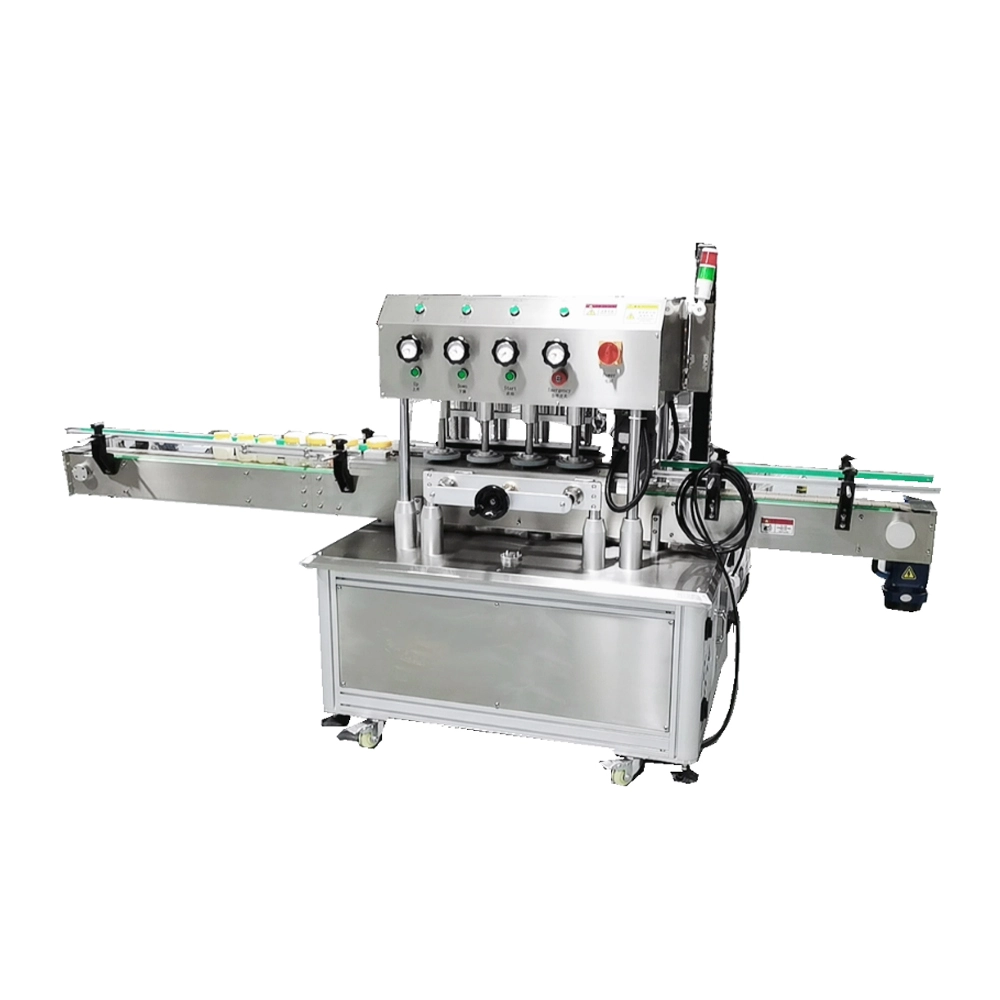
Automatic High Speed Capping Machine for Sale
The Yuanyang automatic high-speed capping machine is a kind of 8-wheel bottle-capping machine with fast working efficiency. The automatic capper is often used to close lids of containers such as bottles and jars, especially for plastic bottles, which are widely used in food, medicine, chemical, cosmetic, and other industries for mass production and continuous production lines.
Features:
⦁ Electric drive;
⦁ Automated fast speed;
⦁ Suitable for various screw caps, pumps, and spray bottles.
 Scan QR Code
Facebook
YouTube
LinkedIn
Whatsapp: +8613434139712
Guangzhou Yuanyang Machinery