





Vacuum Mixing: How It Enhances Air-Free Emulsions
- Vacuum Mixing: How It Enhances Air-Free Emulsions
- Why air-free emulsions matter for formulators using an emulsifying machine
- How vacuum mixing works in an emulsifying machine
- Key physical benefits of vacuum emulsification
- Typical mechanism and process sequence in a vacuum emulsifying machine
- 50L Hydraulic Lift Vacuum Emulsifier: Integrated design for air-free emulsions
- Design elements that matter for vacuum performance
- Practical production advantages of the 50L unit
- Quantitative comparison: Vacuum vs. atmospheric mixing
- Process parameters to monitor for consistent air-free emulsions
- Applications across industries: why vacuum emulsification is widely adopted
- Cleaning, validation and maintenance considerations for regulated industries
- Selecting the right emulsifying machine: practical buying guidance
- Brand advantage and why Yuanyang equipment supports production goals
- FAQ — Frequently Asked Questions
- Contact and view product
- Authoritative references and further reading
Vacuum Mixing: How It Enhances Air-Free Emulsions
Why air-free emulsions matter for formulators using an emulsifying machine
Air entrapment is one of the most common and costly problems in emulsion production. Bubbles and entrained air can cause visible defects (froth, pinholes), reduced viscosity, accelerated oxidation of sensitive actives, microbial risks in some formulations, poorer sensory feel and shorter shelf life. For cosmetic, pharmaceutical, food and specialty chemical manufacturers, achieving a stable, air-free emulsion is not a cosmetic nicety — it is a production requirement. Using a properly designed emulsifying machine under vacuum conditions removes entrained air and significantly improves product quality and consistency.
How vacuum mixing works in an emulsifying machine
Vacuum mixing combines mechanical shear (dispersion and homogenization) with a reduced-pressure environment inside the homogenizer tank. When pressure is lowered, gas bubbles expand and escape from the liquid more easily. Meanwhile, high-shear and rotor-stator or homogenizing systems break droplets to the target particle size while the vacuum prevents re-entrainment of air. The result is a more uniform emulsion with fewer voids and a denser, creamier texture.
Key physical benefits of vacuum emulsification
Using vacuum during emulsification delivers measurable improvements that affect product performance and manufacturing efficiency:
- Reduced oxidation: Removing air reduces oxygen exposure, protecting oxidation-sensitive ingredients (vitamins, fragrances, unsaturated oils).
- Improved appearance: No surface froth or pinholes; better gloss and color uniformity.
- Enhanced texture and mouthfeel: Denser cream structure, smoother spread, and improved consumer perception.
- Better stability: Less creaming, phase separation or sedimentation vs. atmospheric-mixed batches.
- Lower microbial risk during processing: Reduced air pockets can lower niches where microbes proliferate before preservation takes effect (not a substitute for proper preservation systems).
Typical mechanism and process sequence in a vacuum emulsifying machine
A standard vacuum emulsification cycle in an emulsifying machine usually follows these steps:
- Charge water phase and heat if needed in the water tank.
- Charge oil phase in the oil tank and heat to the target temperature.
- Transfer phases to the main vacuum homogenizer tank.
- Apply vacuum to degas and draw in powders as needed (vacuum powder absorption).
- Operate the dispersing and homogenizing system under vacuum until desired particle size and texture are achieved.
- Release vacuum carefully, cool if required, add sensitive actives and finish.
50L Hydraulic Lift Vacuum Emulsifier: Integrated design for air-free emulsions
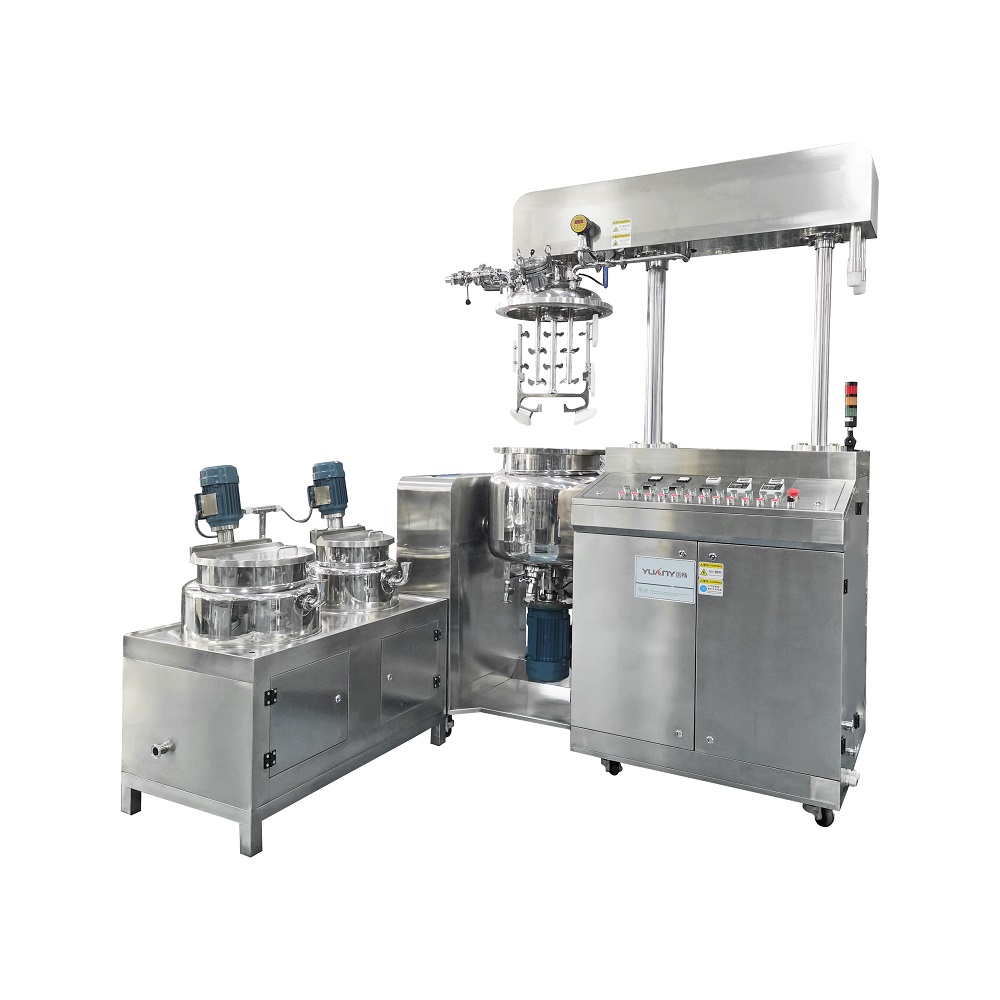
Yuanyang hydraulic lift vacuum emuslifier is a combined mixing equipment with a main vacuum homogenizer tank, a water tank, and an oil tank, which is an integrated equipment with a mixing, dispersing, homogenizing, emulsifying, vacuumizing and powder absorption system that is widely used in cosmetics, food, pharmaceutical, and chemical fields.
Features:
⦁ With a hydraulic lift lid & tilting pot, vacuum system, and electric control system.
⦁ Suitable for products of 10,000~50,000 cps viscosity.
⦁ Perfect particle size of 2 microns and evenly distributed.
Design elements that matter for vacuum performance
The 50L Hydraulic Lift Vacuum Emulsifier combines several functional modules essential for consistent air-free emulsions:
- Main vacuum homogenizer tank: Engineered for even shear distribution and efficient degassing under vacuum.
- Hydraulic lift lid & tilting pot: Facilitates safe loading/unloading and cleaning, important on small-batch and pilot scales.
- Powder absorption system: Allows direct vacuum-assisted incorporation of powders without trapping air pockets.
- Electric control system: Enables precise control of vacuum, shear speed, heating/cooling and batch timing for reproducible results.
- Homogenizer capable of ~2 micron droplet size: Delivers fine emulsions that improve stability and sensory properties.
Practical production advantages of the 50L unit
The 50L Hydraulic Lift Vacuum Emulsifier is well-suited for R&D, pilot production and small-scale manufacturing. Its hydraulic lid and tilting pot reduce manual handling risk and make cleaning faster — a critical factor when switching between formulas in cosmetics or pharmaceuticals. The unit's operating viscosity range (10,000–50,000 cps) covers many creams, lotions, ointments and specialty gels. With vacuum-assisted powder absorption and homogenization to ~2 microns, this model helps formulators achieve air-free, stable emulsions with consistent batch-to-batch performance.
Quantitative comparison: Vacuum vs. atmospheric mixing
Below is a concise comparison to help you quickly evaluate the impact of vacuum on key quality and process metrics.
| Parameter | Atmospheric Mixing | Vacuum Mixing (emulsifying machine) |
|---|---|---|
| Air entrapment | High — visible froth and microbubbles common | Low — vacuum removes most entrained gases |
| Oxidation risk | Higher (exposed to air) | Lower (reduced O2 contact) |
| Particle/droplet size | Depends on homogenizer; re-entrainment can increase apparent size | Finer and more uniform (e.g., ~2 μm achievable) |
| Product appearance | Possible dullness or surface defects | Smoother, glossier, no pinholes |
| Viscosity control | Can be variable due to trapped air | More consistent — better rheology control |
| Powder incorporation | Risk of lumps and air entrapment | Efficient vacuum powder absorption reduces lumps |
Process parameters to monitor for consistent air-free emulsions
Even with a vacuum-capable emulsifying machine, several variables determine success:
- Vacuum level: Typical ranges are between 50–200 mbar depending on formulation; too aggressive vacuum can cause excessive foaming during certain stages.
- Shear rate and homogenization time: Adjust rotor-stator speed and time to reach target droplet size without over-shearing sensitive actives.
- Temperature control: Proper heating/cooling ensures phase inversion and stabilization of emulsifiers; precise temperature ramps prevent viscosity spikes that hinder degassing.
- Powder feed rate under vacuum: Slow, controlled addition prevents agglomeration and ensures uniform dispersion.
- Fill ratio and headspace: Adequate headspace and controlled fill improve degassing efficiency while avoiding splashing during vacuum.
Applications across industries: why vacuum emulsification is widely adopted
Vacuum emulsification is used across several sectors for distinct benefits:
- Cosmetics: Face creams, sunscreens, serums and lotions require smooth texture, stable opacities and long shelf life.
- Pharmaceuticals: Topical formulations and sterile/non-sterile creams need predictable rheology and low particulate entrainment.
- Food: High-quality sauces, dressings and spreads benefit from uniform droplet size and reduced oxidation.
- Chemicals and specialty formulations: Adhesives, lubricants and polymer dispersions gain from controlled particle size and reduced air voids.
Cleaning, validation and maintenance considerations for regulated industries
For pharmaceutical and certain cosmetic manufacturers, cleanability and validation matter. The 50L Hydraulic Lift Vacuum Emulsifier supports cleaning procedures because the hydraulic lift and tilting pot simplify access to surfaces. When implementing CIP (clean-in-place) or SIP (sterilize-in-place) strategies, ensure seals, valves and vacuum lines are rated for the cleaning agents and temperatures used. Documented SOPs, regular vacuum pump maintenance and periodic testing for residuals and microbial load are best practices.
Selecting the right emulsifying machine: practical buying guidance
When comparing vacuum emulsifiers, evaluate these criteria:
- Batch size and scale: Choose a volume that fits current needs with room for scale-up; 50L is ideal for R&D and small production.
- Viscosity range: Match the unit to your formulation viscosity (the 50L unit handles ~10,000–50,000 cps).
- Droplet size capability: If you need sub-5 μm droplets, confirm the homogenizer specification (the 50L unit achieves ~2 μm).
- Material and finish: GMP and food-grade finishes (SS316L, mirror polish) are critical for some industries.
- Automation and controls: PID temperature control, vacuum setpoints and programmable recipes improve reproducibility.
- Safety and ergonomics: Hydraulic lids, tilting pots and interlocks reduce operator risk.
Brand advantage and why Yuanyang equipment supports production goals
Yuanyang's 50L Hydraulic Lift Vacuum Emulsifier integrates modular systems — homogenization, vacuum degassing, powder absorption and temperature control — in one compact footprint. This reduces the number of transfers between vessels (which can introduce air and contamination), improves batch consistency, and accelerates time-to-market for new formulas. The hydraulic lift and tilting pot reduce manual handling and cleaning time, while precise control systems enable reproducible recipes and easier scale-up. For manufacturers prioritizing air-free emulsions, these features translate into fewer reworks, better consumer experience and lower production risk.
FAQ — Frequently Asked Questions
Q: Can vacuum mixing completely eliminate all air in an emulsion?
A: Vacuum mixing removes the vast majority of entrained gas and surface bubbles, producing an air-free appearance and lower dissolved oxygen levels. However, dissolved gases can re-equilibrate over long storage if the packaging is permeable; vacuum during processing significantly reduces but may not absolutely eliminate trace dissolved oxygen.
Q: Is vacuum emulsification suitable for heat-sensitive ingredients?
A: Yes — the process can be performed at controlled temperatures. The vacuum itself helps reduce oxidation, and the unit's rapid homogenization shortens the time actives are exposed to process heat. Add heat-sensitive actives during the cooling phase where possible.
Q: What droplet size can the 50L Hydraulic Lift Vacuum Emulsifier achieve?
A: The unit can achieve a perfect particle size around 2 microns with even distribution when operated under proper conditions and formulations.
Q: How does vacuum powder absorption improve formulations?
A: Vacuum-assisted powder absorption draws powders into the liquid more evenly, reducing lumping and air pockets. This is especially helpful for thickeners, carbomers and powdered active ingredients.
Q: What maintenance does the vacuum system need?
A: Regular vacuum pump servicing, seal inspections, and periodic line cleaning are required. Follow the manufacturer's recommended schedule for oil changes (if oil-sealed pumps are used), filter replacements and leak checks.
Contact and view product
Air-free processing also supports faster cycles, which connects directly to reducing batch time with high-shear emulsifying machines.If you are evaluating emulsifying machine options or want to see the 50L Hydraulic Lift Vacuum Emulsifier specifications and pricing, contact our sales team for datasheets, performance videos and a consultation. Email: [email protected] (replace with local contact) or request a demo to view sample emulsions produced under vacuum.
Authoritative references and further reading
The following sources provide background and technical context on vacuum emulsification, homogenization and emulsion science:
- Emulsion - Wikipedia: https://en.wikipedia.org/wiki/Emulsion
- Homogenizer - Wikipedia: https://en.wikipedia.org/wiki/Homogenizer
- Principles of emulsification (academic review articles) — search through PubMed or university libraries for peer-reviewed overviews. Example: https://pubmed.ncbi.nlm.nih.gov/ (use keywords: emulsification vacuum homogenization)
- Industry guidance on cosmetic manufacturing and mixing equipment — ISO and industry technical sheets (search iso.org for standards on mixing equipment and GMP guidance)
For assistance choosing the right emulsifying machine and to discuss pilot trials using the 50L Hydraulic Lift Vacuum Emulsifier, contact our technical sales team.
Everything You Need to Know About homogenizer mixer for cosmetics
How to Evaluate Sealing Machine Specs for Tube Production Lines
Everything You Need to Know About stainless steel liquid mixing tank maker
Where to Buy horizontal mixing tank in Europe
Automatic Round Bottle Labeling Machine
What types labels are suitable for this jar labeling machine?
Self-adhesive label, non-adhesive film label, electronic supervision code label, bar code label, paper label, etc. However, the label paper will affect the quality of the labeling machine, so try to choose a better raw material.
Medicine
How do you ensure the long-term stability of Yuanyang equipment?
Yuanyang’s equipment uses high-quality components and advanced technology, rigorously tested to ensure stable operation. We also provide comprehensive after-sales service and technical support to ensure the long-term stability of our equipment.
Homogenizer Mixing Tank with Circulation System
I don’t need homogenizer, can you reduce it?
Yes, the homogenizer is an optional function, whether clients need it depends on your own products.
Semi Automatic Capping Machine
What minimum caps size can the desktop capping machine be suit for?
The minimum cap size is 20mm, it is recommend to send caps to test if it is around 20mm.
Cosmetic
Do you provide equipment operation training?
Absolutely. We offer comprehensive equipment operation training, including both on-site and remote training, to ensure your team is proficient in operating, maintaining, and troubleshooting the equipment.
Automatic Plastic Caps Capping Machine with Vibrating Cap Feeder for Sale
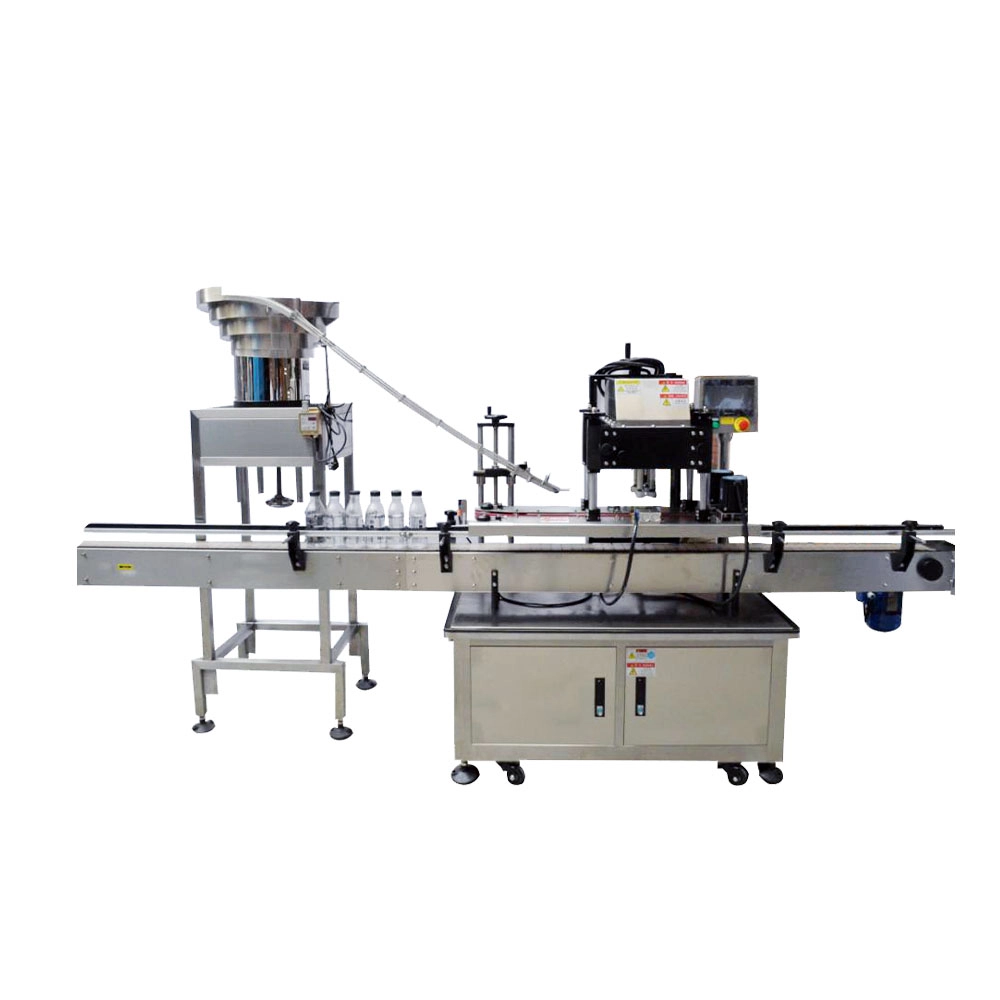
Yuanyang automatic screw capping machine is a kind of four-wheel bottle capping machine. The automatic screw capper is often used to close lids of containers such as bottles and jars, especially for plastic bottles, which are widely used in food, medicine, chemical, cosmetic, and other industries for mass production and continuous production lines.
Features:
⦁ Full pneumatic drive;
⦁ Automated fast speed;
⦁ Suitable for various screw caps, pumps, and spray bottles.
Automatic Metal Caps Capping Machine for Sale
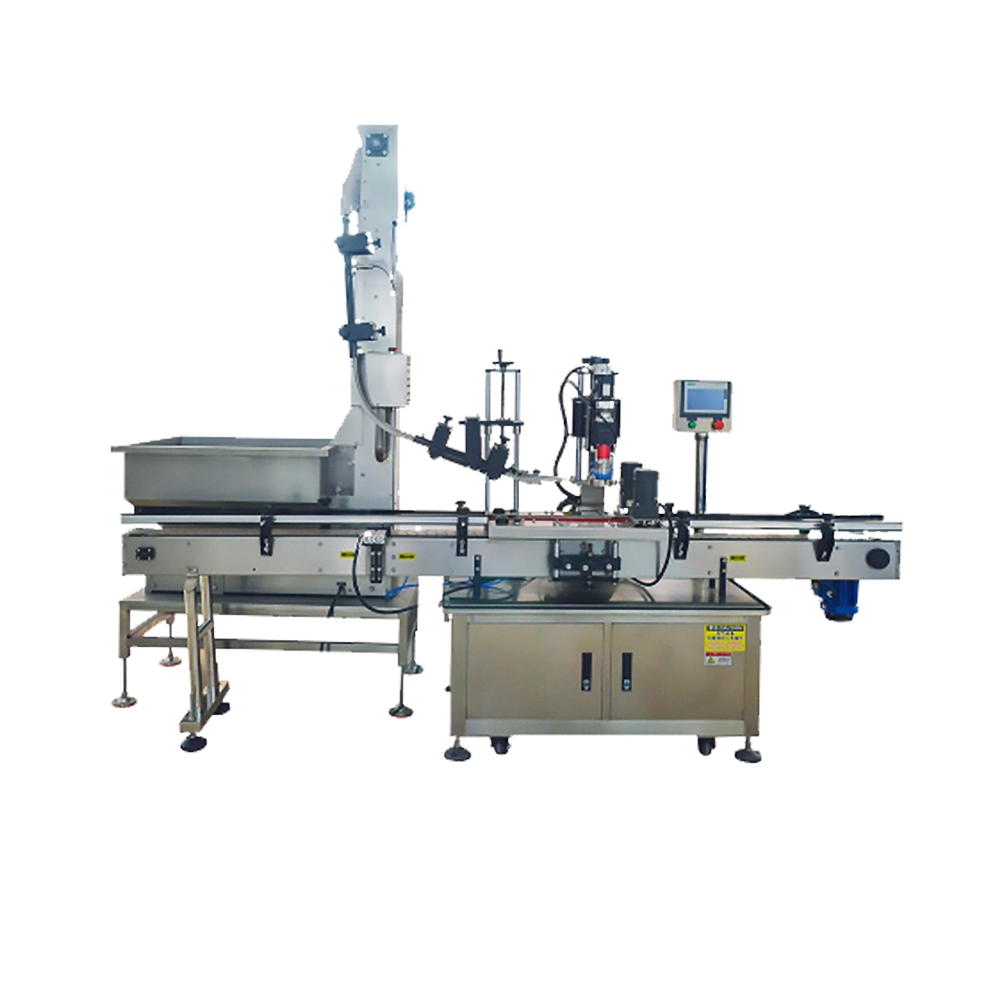
Yuanyang automatic metal cap capping machine is a bottle capper for bottles with metal caps, which is often used to close lids of containers such as bottles and jars. The glass bottle metal capping machine is widely used in food, medicine, chemical, cosmetic, and other industries for mass production and continuous production line .
Features:
⦁ Pneumatic and electric drive;
⦁ Automated fast speed;
⦁ Suitable for glass bottles with metal caps.
Automatic Pump Head Feeding and Capping Machine for Sale
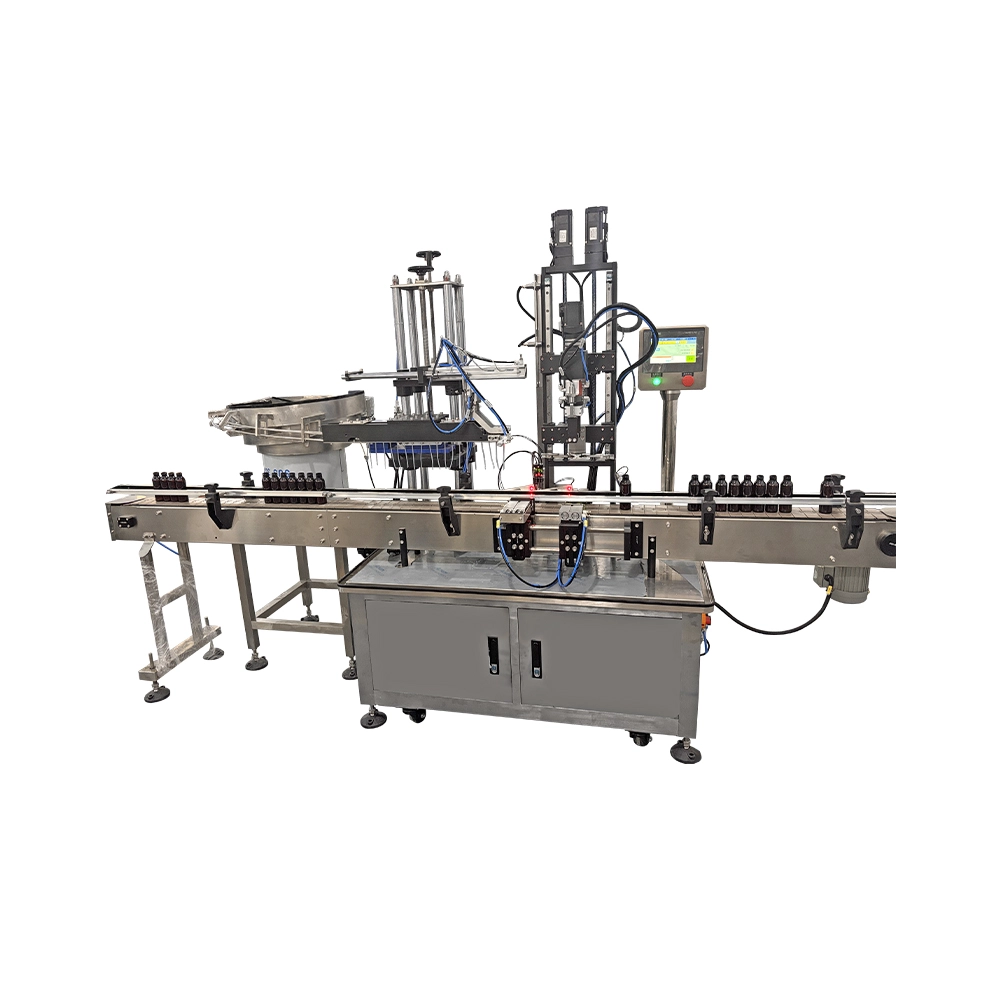
Yuanyang automatic pump head feeding and capping machine is a bottle cap sorter and capper for bottles with pump heads, which is often used to close lids of containers such as nail polish, sprayers, and shampoo. The capping machine with a pump head feeder is widely used in food, medicine, chemical, cosmetic, and other industries for mass production and continuous production line .
Features:
⦁ Pneumatic and electric drive;
⦁ Automated fast speed;
⦁ Suitable for various types of caps.
Automatic High Speed Capping Machine for Sale
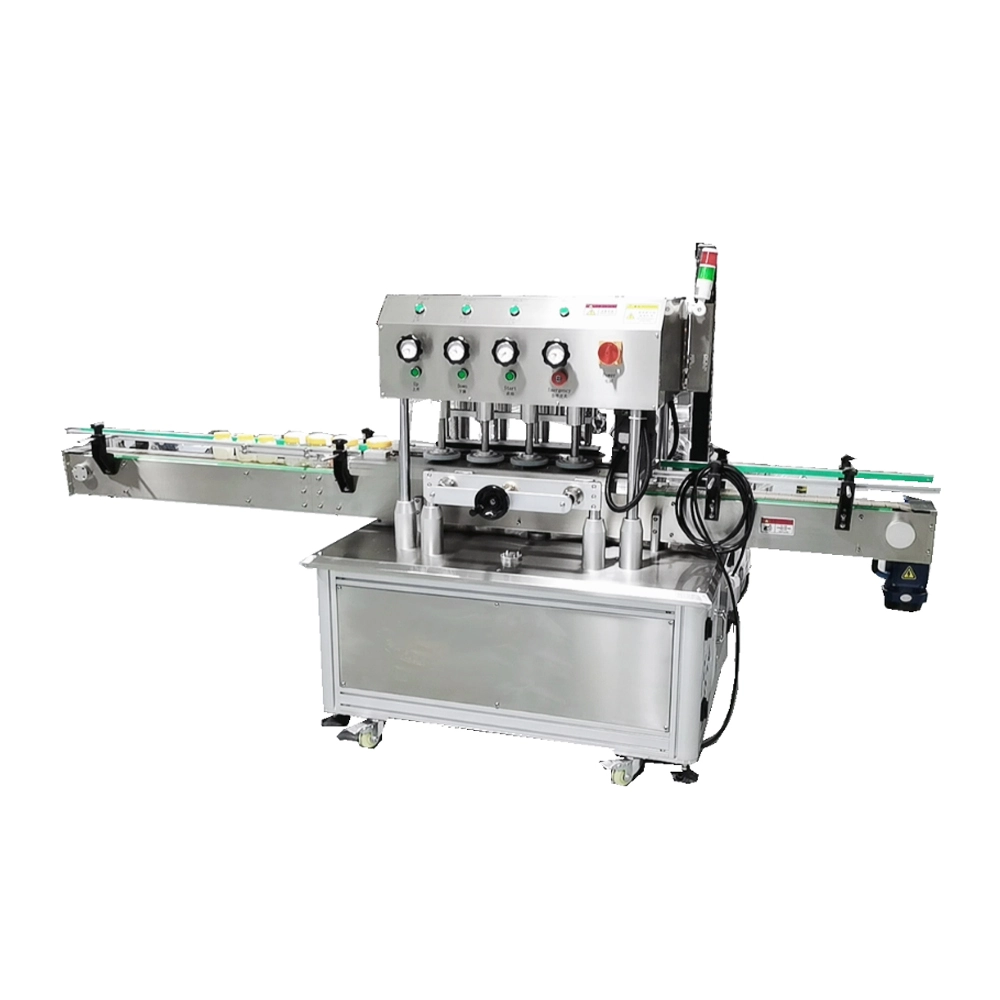
The Yuanyang automatic high-speed capping machine is a kind of 8-wheel bottle-capping machine with fast working efficiency. The automatic capper is often used to close lids of containers such as bottles and jars, especially for plastic bottles, which are widely used in food, medicine, chemical, cosmetic, and other industries for mass production and continuous production lines.
Features:
⦁ Electric drive;
⦁ Automated fast speed;
⦁ Suitable for various screw caps, pumps, and spray bottles.
 Scan QR Code
Facebook
YouTube
LinkedIn
Whatsapp: +8613434139712
Guangzhou Yuanyang Machinery