





How Two-Stage Reverse Osmosis Saves Energy in Industry
- How Two-Stage Reverse Osmosis Saves Energy in Industry
- What is two-stage reverse osmosis and why it matters for industrial water treatment
- Two-Stage Reverse Osmosis Water Treatment for Sale — product overview
- How two-stage RO reduces energy per unit of product water
- Typical industrial benefits of two-stage RO in practice
- Quantitative comparison: single-stage RO vs two-stage RO (industrial brackish feed)
- Design and operational strategies to maximize energy savings
- Operational example: energy impact of increased recovery
- Case study pointers and expected payback
- Why Yuanyang Two-Stage Reverse Osmosis Water Treatment for Sale is suited to energy-conscious industries
- Practical considerations when selecting a two-stage RO system for industrial use
- Environmental and regulatory advantages of higher recovery
- Frequently Asked Questions (FAQ)
- Q: What feedwater types are best for two-stage RO?
- Q: How much energy can I realistically save by switching to two-stage RO?
- Q: Does two-stage RO increase maintenance complexity?
- Q: Can Yuanyang systems be customized to my plant?
- Q: What certifications or standards should I request?
- Brand优势 — Why choose Yuanyang for industrial two-stage RO
- Next steps — how to evaluate and procure a two-stage RO system
- Contact & Call to Action
- References
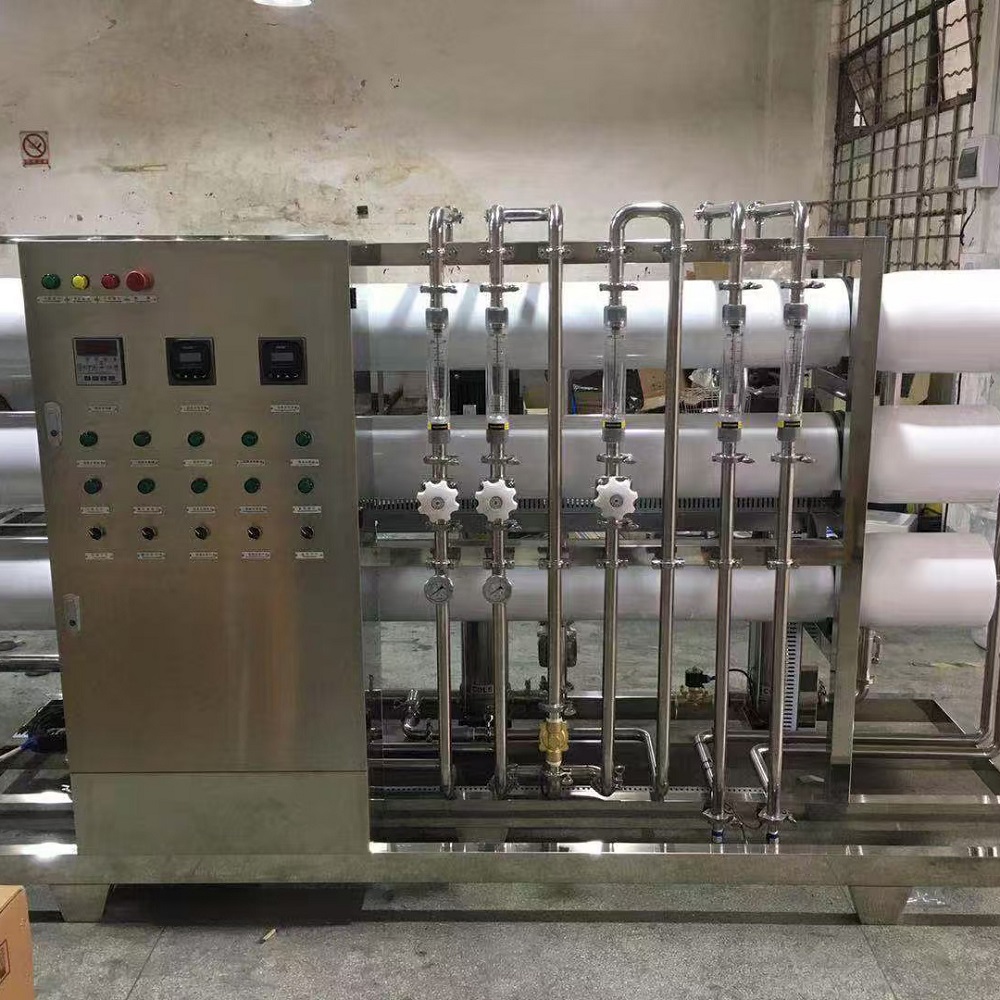
How Two-Stage Reverse Osmosis Saves Energy in Industry
What is two-stage reverse osmosis and why it matters for industrial water treatment
Industrial water treatment increasingly demands both high water quality and low operating cost. Two-stage reverse osmosis (RO) is a configuration that feeds product (permeate) and concentrate in sequential membrane stages to raise overall recovery while controlling fouling and scaling. For industries such as pharmaceuticals, food, chemicals and cosmetics, where water purity and cost control are crucial, two-stage RO can provide better water yields and reduced specific energy use compared with conventional single-stage RO designs.
Two-Stage Reverse Osmosis Water Treatment for Sale — product overview
Yuanyang two-stage reverse osmosis water treatment is a water filter device applied to produce pure water, which adopts advanced reverse osmosis technology. Reverse osmosis water treatment, in short, is called RO water treatment, widely used in industries of pharmaceuticals, food, chemicals, cosmetics, etc.
Features:
⦁ Microcomputer controlled;
⦁ Automated fast speed;
⦁ Produce high-quality pure water.
How two-stage RO reduces energy per unit of product water
Energy savings from two-stage RO result from a combination of higher recovery, reduced recirculation, lower feed pressure requirements for a given permeate volume, and better control over fouling. Key mechanisms:
- Higher overall recovery: By staging membranes, the system extracts more permeate from the same feed volume. That reduces the total feed flow required to produce a target permeate volume, lowering pumping and pretreatment energy per m3 of final product.
- Lower feed pressure for equal permeate: In many designs, two-stage RO can operate second-stage elements at lower differential pressures while keeping flux stable. This often reduces the high-pressure pumping energy needed from a single high-pressure stage operating at more extreme conditions.
- Energy recovery compatibility: Two-stage configurations often pair well with energy recovery devices (ERDs) because recovered energy is more effectively applied when concentrate flows are larger and staged progressively. This improves the net energy balance.
- Fouling and scaling management: By splitting the duty, membranes in each stage run at milder hydraulic stresses and localized recovery levels are optimized to avoid scale build-up—lowering cleaning frequency and energy-expensive chemical use.
Typical industrial benefits of two-stage RO in practice
Industry-level benefits include reduced water intake, lower wastewater disposal costs, smaller downstream treatment loads, and lower lifecycle energy consumption. For manufacturers where raw water is costly or wastewater discharge is regulated and expensive, increasing recovery by even a few percentage points yields meaningful savings.
Quantitative comparison: single-stage RO vs two-stage RO (industrial brackish feed)
The table below summarizes typical, evidence-based ranges for brackish water RO systems. Values vary by feed salinity, temperature, membrane type, and plant design. Sources are cited after the article.
| Metric | Single-stage RO (typical) | Two-stage RO (typical) |
|---|---|---|
| Permeate recovery (brackish) | 60%–80% | 80%–95% |
| Specific energy consumption (kWh/m3) | 0.5–2.0 kWh/m3 | 0.4–1.6 kWh/m3 (often lower at high recovery) |
| Chemical cleaning frequency | Higher (when pushed for recovery) | Lower (better staging reduces stress) |
| Waste concentrate volume | Higher | Lower |
Notes: Ranges depend heavily on feedwater quality and the presence of ERDs. Energy figures reference industry summaries on RO energy consumption (see sources).
Design and operational strategies to maximize energy savings
To translate two-stage RO potential into real savings, operators should pay attention to:
- Pretreatment optimization: Effective multimedia filtration, cartridge filtration, and antiscalant dosing reduce fouling and allow membranes to operate at lower pressures for longer periods.
- Use of energy recovery devices: ERDs can reclaim pressure energy from concentrate flows and supply it to the feed, significantly lowering net electricity. Devices such as pressure exchangers are widely used in desalination and brackish RO.
- Stage sizing and element selection: Properly sized first and second stages with appropriate membrane element lengths and permeabilities preserve flux and lower transmembrane pressure (TMP).
- Advanced controls and automation: Microprocessor-based control (as included with Yuanyang two-stage RO) enables feed-forward and feedback adjustments that keep each stage at optimal operating points for energy efficiency.
- Regular performance monitoring: Track specific energy consumption, normalized permeate flow, and differential pressure to detect fouling early and schedule targeted clean-in-place (CIP) operations.
Operational example: energy impact of increased recovery
Consider an industrial plant that needs 100 m3/day permeate. With a single-stage RO at 70% recovery, raw feed required = 100 / 0.70 ≈ 143 m3/day. At 90% recovery with two-stage RO, raw feed required = 100 / 0.90 ≈ 111 m3/day — a 22% reduction in feed flow. When combined with ERD and lower operating pressures, this can reduce specific energy and overall electricity consumption substantially, depending on system details and feedwater characteristics.
Case study pointers and expected payback
Real projects that upgrade from single-stage to two-stage or retrofit ERDs often report payback periods of 1–4 years driven by energy savings, lower chemical use and decreased waste disposal costs. Payback depends on local electricity prices, water cost, and the scale of operations. For high-volume industrial users or sites with expensive wastewater disposal, the business case is typically stronger.
Why Yuanyang Two-Stage Reverse Osmosis Water Treatment for Sale is suited to energy-conscious industries
Yuanyang's two-stage RO units are designed for industrial water treatment and built with energy efficiency in mind. Key product benefits aligned with energy saving:
- Microcomputer controlled: Precision control minimizes overpressure events and ensures each stage operates near its design point for best energy performance.
- Automated fast speed: Automated sequences reduce start-stop inefficiencies and optimize run times for membrane longevity and reduced cleaning labor and chemicals.
- High-quality permeate: Reliable water quality lowers downstream reprocessing and associated energy use.
Combined with proper pretreatment and optional ERD integration, Yuanyang two-stage RO systems help industrial users lower lifecycle energy costs while meeting strict purity standards.
Practical considerations when selecting a two-stage RO system for industrial use
When evaluating suppliers and systems, consider:
- Feedwater analysis: Accurate tests for TDS, hardness, silica, organics and fouling potential guide design choices.
- Modularity and scalability: Systems that can be scaled by adding skids allow staged capital deployment and match changing production needs.
- Service and spare parts: Fast access to membranes, pumps and controls reduces downtime and maintains energy performance.
- Compliance and documentation: Ensure materials, controls and validation procedures meet industry regulations (e.g., for pharmaceuticals or food production).
Environmental and regulatory advantages of higher recovery
Higher recovery reduces the volume of concentrate discharged. That lowers environmental impact and may simplify permitting or reduce discharge fees. For industries under strict wastewater constraints, moving to a two-stage RO can be a regulatory enabler as well as a cost saver.
Frequently Asked Questions (FAQ)
Q: What feedwater types are best for two-stage RO?
A: Two-stage RO is particularly effective for brackish groundwater, surface water with moderate salinity, and industrial process streams. Very high-salinity seawater typically requires desalination designs optimized for seawater RO and robust ERDs.
Q: How much energy can I realistically save by switching to two-stage RO?
A: Savings vary. In brackish RO cases, specific energy reductions of 10%–30% are common when higher recovery and ERD integration are achieved. The exact number depends on feedwater, existing system baseline, and whether ERDs are used.
Q: Does two-stage RO increase maintenance complexity?
A: Design and controls can add some complexity, but modern microcomputer controls and automated sequences simplify operation and can reduce overall maintenance by preventing fouling and optimizing cleaning intervals.
Q: Can Yuanyang systems be customized to my plant?
A: Yes. Yuanyang offers modular configurations and customization for feedwater conditions, required throughput, and integration with pretreatment or ERDs.
Q: What certifications or standards should I request?
A: For industrial use, request compliance documentation related to material compatibility, pressure vessel codes (where applicable), and controls validation. For food/pharma use, also verify hygiene standards and documentation for traceability.
Brand优势 — Why choose Yuanyang for industrial two-stage RO
Yuanyang combines product features and service to deliver a reliable energy-efficient solution:
- Proven technology: Systems use mainstream RO architectures with emphasis on staging and control to maximize recovery.
- Automation and monitoring: Microcomputer controls that support remote monitoring and data logging for energy and performance optimization.
- Application expertise: Experience across pharmaceuticals, food, chemicals and cosmetics means designs that meet both quality and regulatory needs.
- After-sales support: Spare parts availability, membrane supply and service contracts help preserve energy performance over the system life.
Next steps — how to evaluate and procure a two-stage RO system
1) Gather a comprehensive feedwater analysis and current water usage profile. 2) Define target permeate quality and recovery goals. 3) Ask suppliers for energy and recovery estimates based on your specific feedwater and production profile. 4) Evaluate total cost of ownership including energy, chemicals, membrane replacement, and concentrate disposal. 5) Pilot or skid testing is recommended for high-stakes installations.
Contact & Call to Action
Interested in reducing energy costs with a Two-Stage Reverse Osmosis Water Treatment for Sale? Contact Yuanyang for a site-specific consultation, pilot testing, and a detailed energy and cost-saving analysis. Visit our product page or contact our sales team to get a quote and technical datasheet tailored to your industrial water treatment needs.
References
- U.S. Department of Energy, Water and Energy Nexus resources — overview of desalination and RO energy ranges: https://www.energy.gov/
- Ghaffour, N., Missimer, T. M., & Amy, G. L. (2013). Technical review and evaluation of the economics of seawater desalination. Desalination (review on energy for desalination and RO).
- Peer-reviewed and industry summaries on brackish water RO performance and energy recovery device benefits (e.g., International Desalination Association and Water Research Foundation publications).
For more detailed, site-specific numbers and a formal proposal for Two-Stage Reverse Osmosis Water Treatment for Sale, please contact our technical sales team.
OEM/ODM semi-automatic labeling machine Manufacturers and Suppliers
How to start a semi auto labeling machine business in Europe
How to manufacturing double jacket mixer in Europe
What are the application scenarios of tube capping machine?
High shear homogneizer
What’s the working principle of high shear homogenizer?
The shear mixer mainly through the high-speed relative rotation of the rotor and the stator to produce a strong shear force to achieve the refinement and homogenization of the material.
Powder Sachet Packaging Machine
Can the packaging machine for powder pack different weight in one machine?
Yes, the filling weight is adjustable with certain range. Client should tell the estimated filling weight to confirm. Different filling range may require different auger size.
Aluminum Foil Sealing Machine
What’s the cooling method of the bottle lid sealing machine?
This bottle lid sealer adopts air cooling method.
Horizontal Filling Machine
How long is the suction hose?
This hose is about 1.3 meters long. Can be longer upon requirements.
Ribbon mixer
How long does it take to produce the ribbon blender powder machines?
The leading time is about 20-30 days. To ensure quality, the ribbon powder mixer is worth the wait.
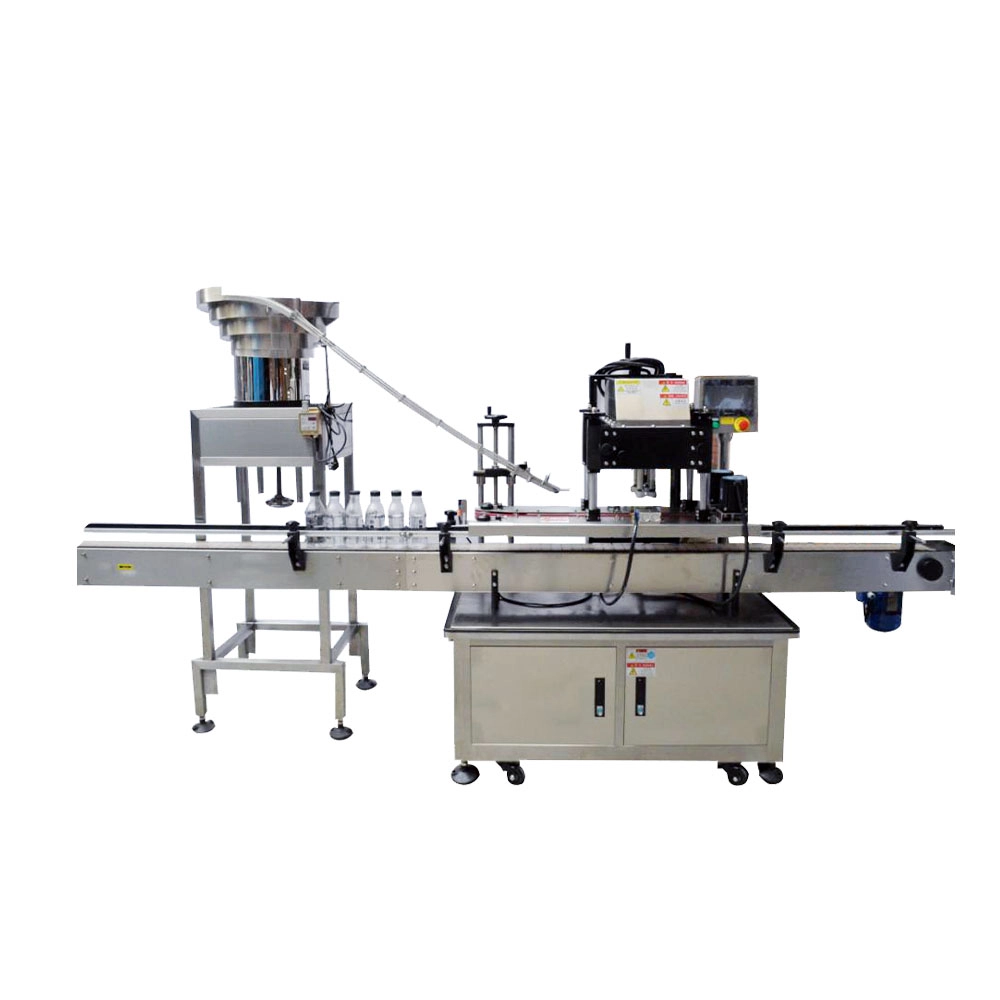
Automatic Plastic Caps Capping Machine with Vibrating Cap Feeder for Sale
Yuanyang automatic screw capping machine is a kind of four-wheel bottle capping machine. The automatic screw capper is often used to close lids of containers such as bottles and jars, especially for plastic bottles, which are widely used in food, medicine, chemical, cosmetic, and other industries for mass production and continuous production lines.
Features:
⦁ Full pneumatic drive;
⦁ Automated fast speed;
⦁ Suitable for various screw caps, pumps, and spray bottles.
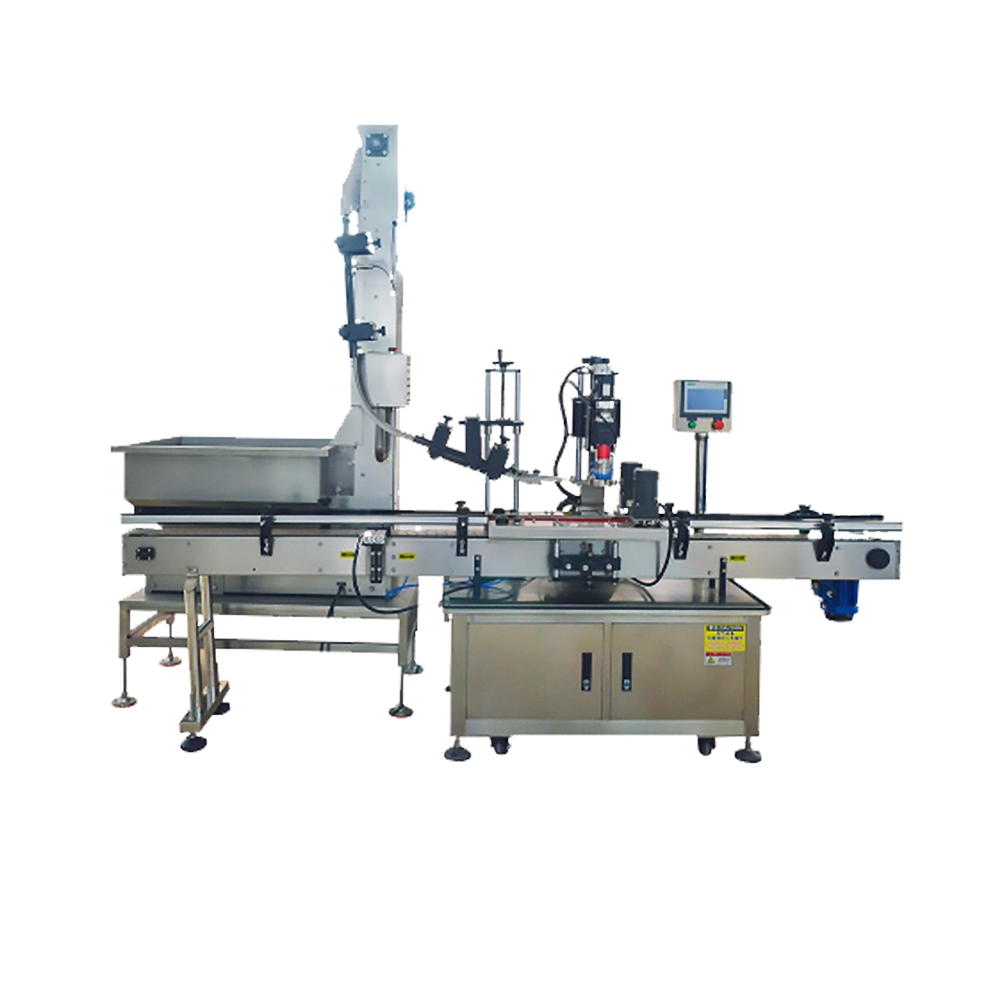
Automatic Metal Caps Capping Machine for Sale
Yuanyang automatic metal cap capping machine is a bottle capper for bottles with metal caps, which is often used to close lids of containers such as bottles and jars. The glass bottle metal capping machine is widely used in food, medicine, chemical, cosmetic, and other industries for mass production and continuous production line .
Features:
⦁ Pneumatic and electric drive;
⦁ Automated fast speed;
⦁ Suitable for glass bottles with metal caps.
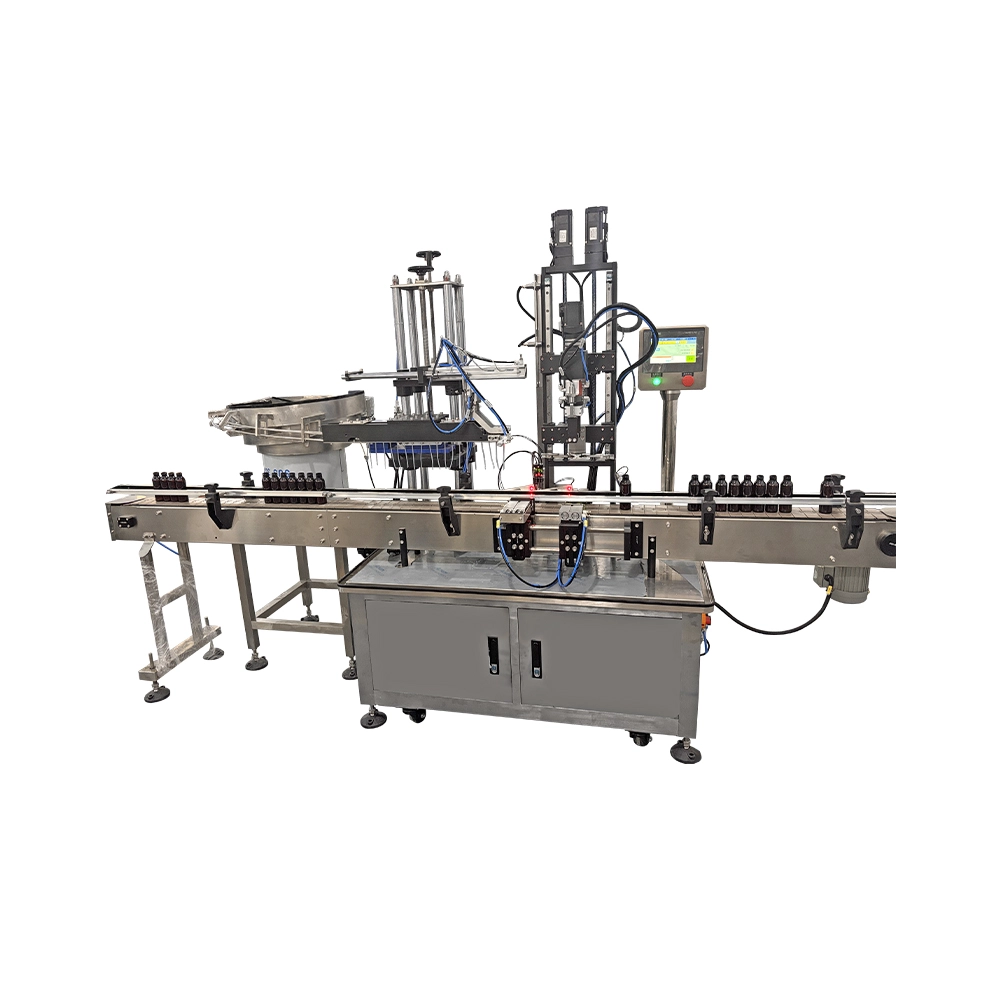
Automatic Pump Head Feeding and Capping Machine for Sale
Yuanyang automatic pump head feeding and capping machine is a bottle cap sorter and capper for bottles with pump heads, which is often used to close lids of containers such as nail polish, sprayers, and shampoo. The capping machine with a pump head feeder is widely used in food, medicine, chemical, cosmetic, and other industries for mass production and continuous production line .
Features:
⦁ Pneumatic and electric drive;
⦁ Automated fast speed;
⦁ Suitable for various types of caps.
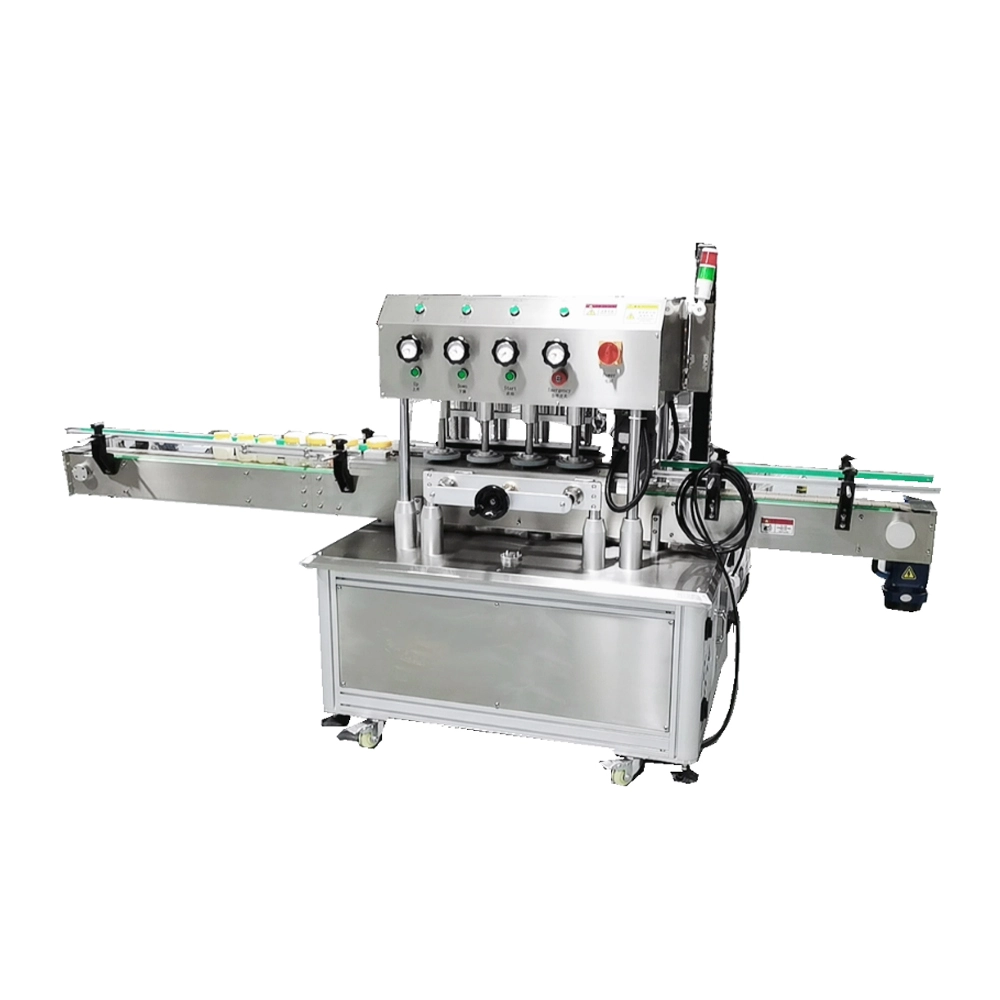
Automatic High Speed Capping Machine for Sale
The Yuanyang automatic high-speed capping machine is a kind of 8-wheel bottle-capping machine with fast working efficiency. The automatic capper is often used to close lids of containers such as bottles and jars, especially for plastic bottles, which are widely used in food, medicine, chemical, cosmetic, and other industries for mass production and continuous production lines.
Features:
⦁ Electric drive;
⦁ Automated fast speed;
⦁ Suitable for various screw caps, pumps, and spray bottles.
 Scan QR Code
Facebook
YouTube
LinkedIn
Whatsapp: +8613434139712
Guangzhou Yuanyang Machinery