





What are the different types of automatic liquid filling line supplier?
- Introduction: Why choosing the right automatic liquid filling line supplier matters
- Rotary filling lines: high-speed solutions for bottled liquids
- Inline filling machines: flexible and cost-effective
- Piston (positive displacement) fillers: accuracy for viscous and low-viscosity liquids
- Gravity and overflow fillers: ideal for low-viscosity, clear liquids
- Pressure and vacuum fillers: handling foaming or carbonated liquids
- Peristaltic and tube fillers: sanitary dosing and small-batch flexibility
- Volumetric and mass flow (Coriolis/flowmeter) fillers: high accuracy for liquids with strict dosage tolerances
- Aseptic filling lines: compliance for sterile products
- High-viscosity and gear pump fillers: tackling thick products
- Specialty lines: drum, keg and IBC fillers
- Comparison table: choose the best type for your product and line speed
- Automation levels: semi-auto to fully integrated turnkey lines
- Key selection criteria when evaluating automatic liquid filling line suppliers
- Cost of ownership: beyond the initial price
- Regulatory and certification considerations: CE and beyond
- Why choose Yuanyang as your automatic liquid filling line supplier
- Integration advantage: mixers and fillers from the same supplier
- Checklist: questions to ask your automatic liquid filling line supplier
- Conclusion: match machine type to product and partner with an experienced supplier
- Frequently Asked Questions
Introduction: Why choosing the right automatic liquid filling line supplier matters
The choice of an automatic liquid filling line supplier directly impacts production efficiency, product quality, compliance, and cost. Suppliers differ by machine types offered, automation level, after-sales support, and industry expertise—factors critical when you need to integrate mixers, storage tanks, filling machines, capping machines, and labeling equipment into a reliable production line. This guide helps procurement managers and plant engineers understand common filling line types and pick the right automatic liquid filling line supplier for their needs.
Rotary filling lines: high-speed solutions for bottled liquids
Rotary automatic liquid filling line suppliers provide machines designed for high throughput, typically used in beverages, dairy, and personal care. Rotary fillers position containers on a rotating turret and perform simultaneous filling on multiple heads. These systems are ideal when speed, space efficiency and repeatable accuracy are priorities. Many suppliers bundle rotary fillers with integrated capping, labeling and inspection modules for a complete filling line solution.
Inline filling machines: flexible and cost-effective
Inline filling systems are provided by automatic liquid filling line suppliers for medium speeds and flexible formats. Bottles or containers travel linearly through filling stations. Inline fillers are easier to reconfigure for different container sizes, making them a good choice for small- to mid-sized production runs and contract manufacturers who change products frequently.
Piston (positive displacement) fillers: accuracy for viscous and low-viscosity liquids
Piston or positive displacement fillers are common offerings from automatic liquid filling line suppliers when accurate volumetric dosing is required across a broad viscosity range. These machines excel with sauces, creams, gels and oils because the piston stroke can be precisely controlled, delivering consistent net volumes regardless of product viscosity.
Gravity and overflow fillers: ideal for low-viscosity, clear liquids
Automatic liquid filling line suppliers offer gravity and overflow fillers for products like water, some beverages and thin detergents. Gravity fillers use the natural head pressure of the liquid to fill, while overflow fillers create consistent fill levels by allowing excess liquid to spill back—excellent for achieving uniform fill heights in transparent containers where visual quality matters.
Pressure and vacuum fillers: handling foaming or carbonated liquids
Pressure (or counter-pressure) and vacuum fillers are specialized types provided by advanced automatic liquid filling line suppliers for carbonated beverages or foaming products. Counter-pressure filling minimizes CO2 loss and foaming during fill. Vacuum-assisted systems can be used to prevent oxidation or maintain vacuum conditions in specialized products.
Peristaltic and tube fillers: sanitary dosing and small-batch flexibility
Peristaltic (hose) fillers are an offering from suppliers for sterile, low-volume or shear-sensitive liquids such as pharmaceuticals, cosmetics serums and lab reagents. Because the product contacts only the tubing, peristaltic machines reduce contamination risk and are easy to clean and changeover—suitable for R&D, pilot lines and aseptic applications.
Volumetric and mass flow (Coriolis/flowmeter) fillers: high accuracy for liquids with strict dosage tolerances
For pharmaceutical, chemical or high-value food products where dose accuracy matters, automatic liquid filling line suppliers provide volumetric or mass flow fillers. Mass flow (Coriolis) and electromagnetic or mass-flow based systems measure the actual mass or volume delivered and are highly accurate and repeatable, reducing giveaway and ensuring compliance with filling tolerances.
Aseptic filling lines: compliance for sterile products
Suppliers offering aseptic automatic liquid filling lines integrate sterile zones, sterilization procedures (e.g., CIP/SIP), and cleanroom-compatible designs. These systems meet stringent regulations for dairy, baby formula, pharmaceutical injectables and sterile ophthalmic liquids. Choosing a supplier experienced in aseptic integration is essential for regulatory compliance and product safety.
High-viscosity and gear pump fillers: tackling thick products
For heavy creams, pastes, adhesives and food spreads, gear or progressive cavity pump fillers supplied by industrial filling line manufacturers provide steady, metered flow. These systems are robust against shear and can maintain accurate dosing for high-viscosity liquids where piston systems may struggle with air entrapment.
Specialty lines: drum, keg and IBC fillers
Automatic liquid filling line suppliers often offer specialty fillers for large containers—drums, kegs and intermediate bulk containers (IBCs). These industrial-scale fillers focus on speed, safety and minimized product loss, commonly used in chemicals, lubricants and industrial liquids production environments.
Comparison table: choose the best type for your product and line speed
| Type | Typical Speed Range (bph) | Best for Viscosity | Accuracy | Common Industries |
|---|---|---|---|---|
| Rotary | 500 – 20,000+ | Low to medium | High | Beverages, dairy, personal care |
| Inline | 50 – 2,000 | Low to medium | Medium to high | Food, cosmetics, chemicals |
| Piston | 30 – 1,200 | Low to high | High | Food, cosmetics, chemicals |
| Gravity / Overflow | 50 – 2,000 | Low | Medium | Beverages, bottled water, thin detergents |
| Peristaltic | 10 – 500 | Low to medium (shear-sensitive) | High | Pharma, cosmetics, labs |
| Mass Flow / Coriolis | 50 – 2,000 | Low to medium | Very High | Pharma, specialty chemicals |
| Aseptic | 100 – 5,000 | Low (sterile) | High | Dairy, pharma, sterile food |
Automation levels: semi-auto to fully integrated turnkey lines
Automatic liquid filling line suppliers present options ranging from semi-automatic machines for small facilities to fully integrated turnkey lines. Full lines include conveyors, bottle washers, filling machines, capping, labeling, sealing, leak testing, inkjet coding and packaging integration. Suppliers like Yuanyang specialize in providing complete production lines that reduce coordination complexity by offering mixers, storage tanks, and filling/capping/labeling equipment together.
Key selection criteria when evaluating automatic liquid filling line suppliers
When sourcing an automatic liquid filling line supplier, prioritize: product compatibility (viscosity and reactivity), throughput capacity, footprint, cleanability (CIP/SIP), regulatory compliance (CE, FDA, GMP), spare parts availability, technician response time, and training. Look for suppliers offering installation, commissioning, and free technical training—services that lower startup risk and shorten time-to-production.
Cost of ownership: beyond the initial price
Evaluate total cost of ownership (TCO) that includes maintenance, spare parts, changeover time, energy consumption and potential product giveaway. High-accuracy fillers (Coriolis, piston) may cost more initially but reduce material giveaway and rework. A reliable automatic liquid filling line supplier should provide clear TCO comparisons to help justify capital investment.
Regulatory and certification considerations: CE and beyond
Choose automatic liquid filling line suppliers who understand regulatory needs for your market. CE marking is required for machinery sold in the EU and indicates conformity to health and safety requirements, while pharmaceutical and food sectors may require GMP-compliant designs, NSF/3-A hygienic components, or aseptic certifications. Confirm the supplier’s history with audits and documented validation support.
Why choose Yuanyang as your automatic liquid filling line supplier
Yuanyang is one of China’s leading manufacturers of industrial mixers and agitators and an experienced automatic liquid filling line supplier. Since 2008, Yuanyang has provided complete production line equipment including vacuum homogenizers, vacuum emulsifying mixers, high shear mixers, storage tanks, filling machines, capping machines, labeling machines, sealing machines, inkjet printers and water treatment equipment. Yuanyang offers turnkey services, free technical training and on-site installation support—and holds multiple CE certifications confirming compliance with European safety and health requirements.
Integration advantage: mixers and fillers from the same supplier
Working with a supplier that provides both mixing and filling equipment simplifies line integration, reduces compatibility issues, and accelerates commissioning. Yuanyang’s experience in mixing technology ensures the product delivered to the filling line has the correct rheology and homogeneity for accurate dosing and reduced downtime.
Checklist: questions to ask your automatic liquid filling line supplier
Ask potential suppliers about: spare parts lead times, mean time between failures (MTBF) for critical modules, sample testing with your product, references from similar industries, validation documentation, warranty terms, and training scope. Request a site visit or a factory acceptance test (FAT) to see the machine running before shipping.
Conclusion: match machine type to product and partner with an experienced supplier
Selecting the right automatic liquid filling line supplier requires matching machine technology to product characteristics (viscosity, foaming, sterility), desired throughput and regulatory needs. Consider the long-term service relationship, spare parts availability, and the supplier’s ability to deliver turnkey integration. Suppliers like Yuanyang—who offer mixers, filling machines and full line equipment with CE certifications and on-site support—can reduce implementation risk and speed time-to-market.
Sources:
- Packaging Machinery Manufacturers Institute (PMMI) guidance on filling technologies
- European Commission – CE marking requirements for machinery
- FDA guidance on aseptic processing and equipment validation
- Yuanyang Machinery official product literature and service offerings
Frequently Asked Questions
What is the best automatic liquid filling line supplier for small-scale production?
For small-scale production, choose suppliers that offer modular inline or peristaltic fillers with easy changeover and lower capital cost. Suppliers that provide sample testing and pilot runs help validate your process before full investment.
How do I know whether to choose rotary or inline fillers?
Choose rotary fillers if you require very high throughput and have consistent container formats. Choose inline fillers if flexibility, frequent changeovers and lower speeds are more important. Consider floor space, container shape and product behavior when deciding.
What certifications should I expect from a reputable supplier?
Expect CE for machinery sold in the EU; for food and pharma, request documentation of hygienic design, GMP compliance, material certifications (e.g., 316L stainless), and validation support. A supplier experienced in audits will be valuable.
How long does installation and commissioning usually take for a full liquid filling line?
Timeline varies by complexity. Simple lines can be installed and commissioned in a few days to weeks; complex aseptic turnkey lines may take several weeks to months including validation. Suppliers providing pre-shipment FAT and on-site training shorten overall timelines.
Can Yuanyang provide turnkey solutions for my production line?
Yes. Yuanyang provides end-to-end solutions—mixing equipment, storage tanks, filling machines, capping, labeling, sealing, inkjet coding and water treatment—plus free technical training and one-stop installation support to deliver turnkey production lines.
What maintenance should I plan for to keep a filling line running reliably?
Plan preventive maintenance schedules, regular calibration of dosing systems, spare parts inventory for wear parts (seals, valves, nozzles), and trained technicians for quick troubleshooting. Suppliers who offer maintenance contracts will reduce downtime risk.
Sachet Packaging Machine Safety Features Buyers Should Know
How to start a semi auto labeling machine business in Europe
Maintenance Checklist for 50L Hydraulic Lift Vacuum Emulsifiers
Selecting a Homogenizer Mixer for High-Volume Liquid Soap Production
High shear homogneizer
Can I change the different paddle by myself?
Generally the paddle can not be replaceable, unless the new paddle to be changed are the same size with the old one.
One Stage Water Treatment
When do you recommend pvc type and stainless steel type?
Regarding price, pvc type is cheaper, if client wants to save cost, can choose pvc type; regarding quality, stainless steel type is better, especially in too cold temperature,better resistance to low temperature.
Water Cooling Induction Sealer
Do you also have conveyor for the bottle lid sealing machine?
Yes, we can add a conveyor for the bottle sealing machine. And customize the conveyor height according to requirement if need.
Aluminum Foil Sealing Machine
What’s the distance between the bottle neck and sealing head for the best sealing effect?
Generally, the distance between cap and sealing device is no more than 5 mm, and for large diameter bottle,make the distance 8 mm. The longer distance, the weaker power becomes, the larger bottle,requires larger working power.
Detergent powder mixer
Can you also help to purchase raw powder for the washing powder mixer?
Sure, we have professional partner who has been engaged in raw powder supply for over 20 years. The price is competitive in the market. If clients need to purchase together, it is recommend to take a container.
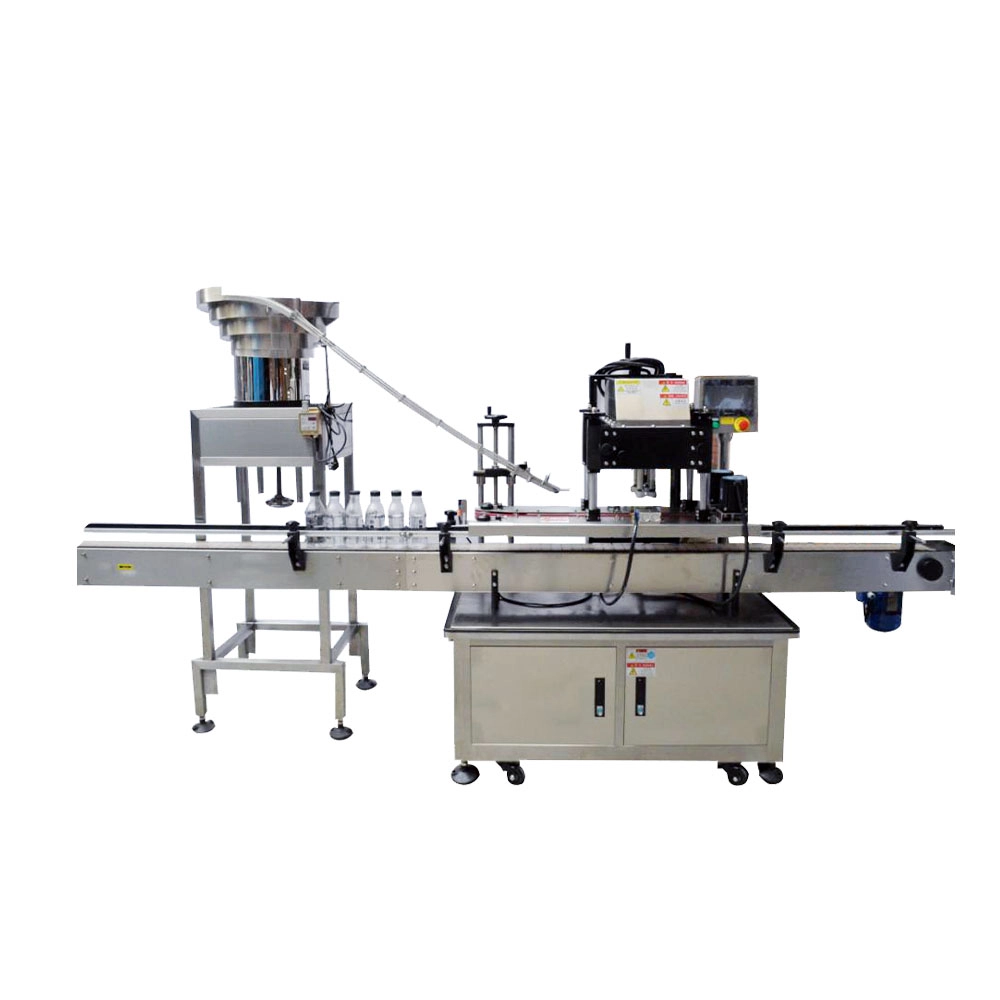
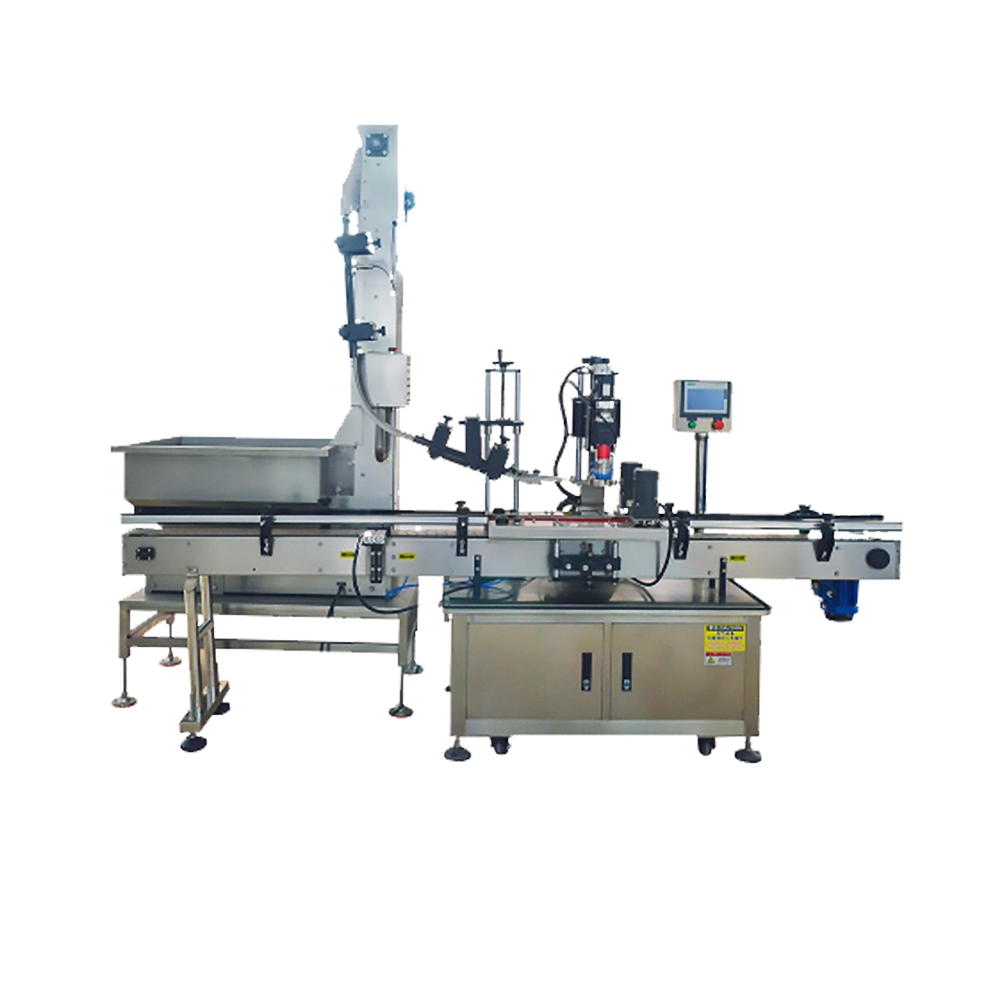
Automatic Plastic Caps Capping Machine with Vibrating Cap Feeder for Sale
Yuanyang automatic screw capping machine is a kind of four-wheel bottle capping machine. The automatic screw capper is often used to close lids of containers such as bottles and jars, especially for plastic bottles, which are widely used in food, medicine, chemical, cosmetic, and other industries for mass production and continuous production lines.
Features:
⦁ Full pneumatic drive;
⦁ Automated fast speed;
⦁ Suitable for various screw caps, pumps, and spray bottles.
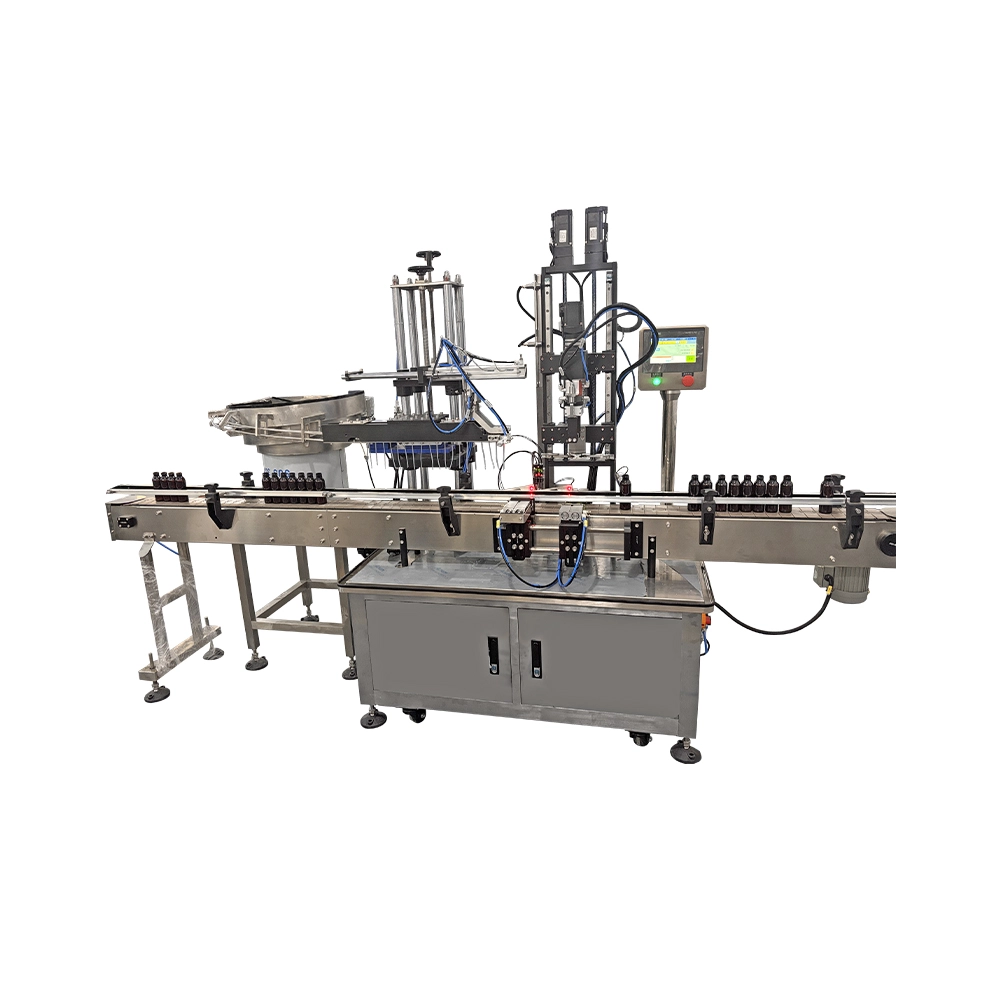
Automatic Metal Caps Capping Machine for Sale
Yuanyang automatic metal cap capping machine is a bottle capper for bottles with metal caps, which is often used to close lids of containers such as bottles and jars. The glass bottle metal capping machine is widely used in food, medicine, chemical, cosmetic, and other industries for mass production and continuous production line .
Features:
⦁ Pneumatic and electric drive;
⦁ Automated fast speed;
⦁ Suitable for glass bottles with metal caps.
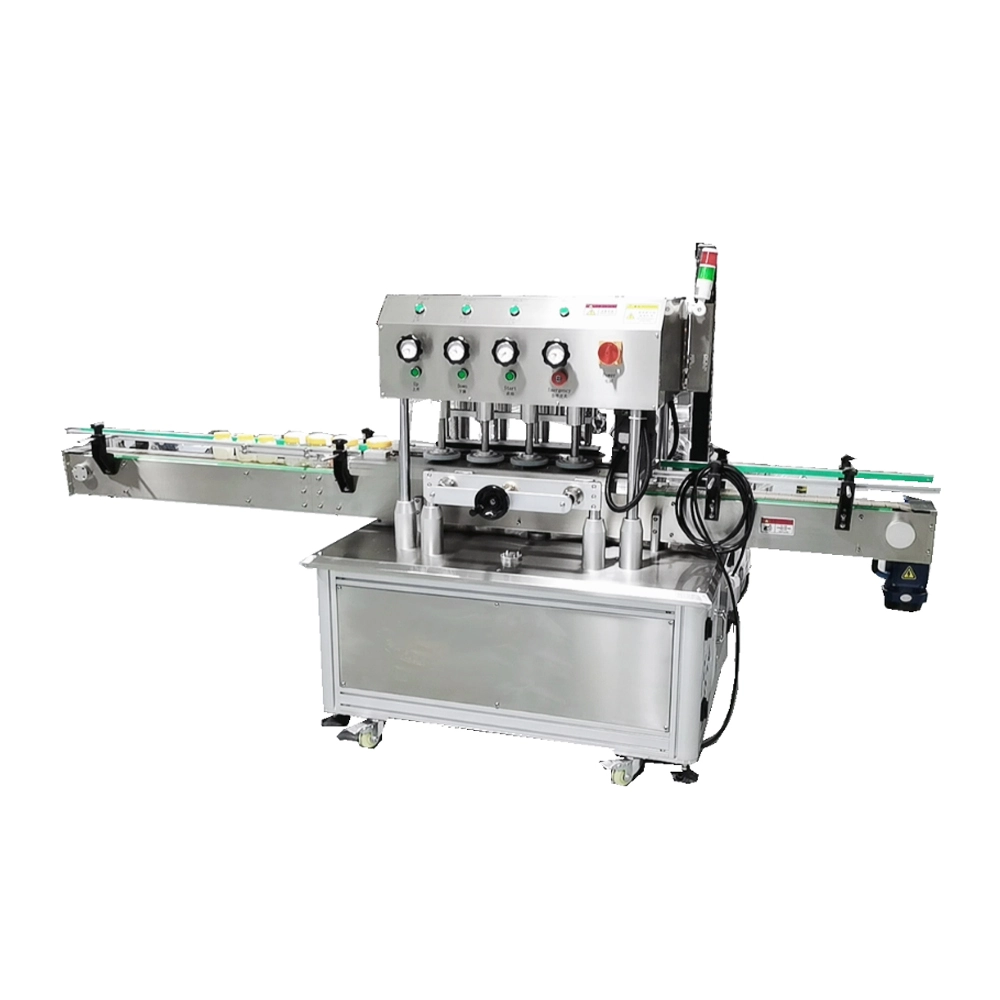
Automatic Pump Head Feeding and Capping Machine for Sale
Yuanyang automatic pump head feeding and capping machine is a bottle cap sorter and capper for bottles with pump heads, which is often used to close lids of containers such as nail polish, sprayers, and shampoo. The capping machine with a pump head feeder is widely used in food, medicine, chemical, cosmetic, and other industries for mass production and continuous production line .
Features:
⦁ Pneumatic and electric drive;
⦁ Automated fast speed;
⦁ Suitable for various types of caps.
Automatic High Speed Capping Machine for Sale
The Yuanyang automatic high-speed capping machine is a kind of 8-wheel bottle-capping machine with fast working efficiency. The automatic capper is often used to close lids of containers such as bottles and jars, especially for plastic bottles, which are widely used in food, medicine, chemical, cosmetic, and other industries for mass production and continuous production lines.
Features:
⦁ Electric drive;
⦁ Automated fast speed;
⦁ Suitable for various screw caps, pumps, and spray bottles.
 Scan QR Code
Facebook
YouTube
LinkedIn
Whatsapp: +8613434139712
Guangzhou Yuanyang Machinery