





The B2B Buyer’s Guide to customized liquid mixing tank | YUANYANG Ultimate Insights
- The B2B Buyer’s Guide to Customized Liquid Mixing Tank | YUANYANG Insights
- Introduction: Who should read this guide
- Why choose a customized liquid mixing tank?
- Fit production requirements and reduce waste
- Comply with industry regulations and certifications
- Core selection criteria for a customized liquid mixing tank
- 1. Product properties: viscosity, abrasiveness and temperature
- 2. Process functions: mixing, dispersion, emulsifying and homogenization
- 3. Materials of construction: stainless steel selection
- Technical considerations and recommended configurations
- Tank geometry and capacity
- Agitator selection and drive systems
- Heating, cooling and temperature control
- CIP/SIP and sanitary design
- Materials and component comparison
- Common materials and their applications
- Agitator types and when to use them
- Choosing the right agitator for your process
- Cost drivers and procurement tips
- What increases the price of a customized liquid mixing tank
- How to compare vendor quotes effectively
- Turnkey services and after-sales support
- Why turnkey delivery matters for B2B buyers
- Training, commissioning and documentation
- Lead times, testing and quality assurance
- Manufacturing and delivery expectations
- Quality checks and performance validation
- Common mistakes to avoid when buying a customized liquid mixing tank
- Under-specifying process requirements
- Neglecting maintainability and spare parts
- Conclusion: How to make the final decision
- Checklist to finalize your purchase
- Frequently Asked Questions
- Sources and references
The B2B Buyer’s Guide to Customized Liquid Mixing Tank | YUANYANG Insights
Introduction: Who should read this guide
This guide is written for procurement managers, process engineers, R&D leads and operations directors who search for a reliable customized liquid mixing tank solution. It explains how to pick the right tank material, mixing technology, capacity, and compliance level, while addressing cost drivers, lead times and turnkey services. The focus keyword 'customized liquid mixing tank' is integrated to help you quickly assess fit-for-purpose solutions for industrial production lines.
Why choose a customized liquid mixing tank?
Fit production requirements and reduce waste
Customized liquid mixing tanks are engineered to your product characteristics (viscosity, solids content, foaming tendency, temperature sensitivity) and production cadence. Off-the-shelf tanks often force compromises that lead to longer batch cycles, product loss or quality variation. A properly engineered customized liquid mixing tank reduces rework, minimizes scrap and can lower energy consumption.
Comply with industry regulations and certifications
For food, cosmetics, pharmaceutical and specialty chemical production, the right tank design helps meet hygiene and traceability requirements. Customization includes sanitary piping, surface finish levels (e.g., Ra 0.4 µm), CIP (clean-in-place) provisions and documentation for CE marking or GMP audits. Yuanyang supports CE compliance and provides documentation that aligns with EU requirements; CE is a safety and health conformity mark commonly required for goods sold in the EU.
Core selection criteria for a customized liquid mixing tank
1. Product properties: viscosity, abrasiveness and temperature
Match the tank and agitator to fluid behavior. Typical viscosity bands used in selection:- Low viscosity: < 500 cP (water-like)- Medium viscosity: 500–10,000 cP (syrups, creams)- High viscosity: >10,000 cP (pastes, gels)Viscosity governs impeller type, torque requirements and motor sizing. Temperature sensitivity defines heating/cooling jacketing and insulation needs.
2. Process functions: mixing, dispersion, emulsifying and homogenization
Different processes require different technologies: high-shear mixers or homogenizers for fine emulsions; anchor or planetary agitators for high-viscosity blending; Rushton turbines or pitched-blade turbines for gas-liquid mixing. Specifying exact process goals up front avoids costly redesign.
3. Materials of construction: stainless steel selection
Material choice affects corrosion resistance, cleanability and cost. For most food, cosmetics and pharma applications, 316L stainless steel is preferred for superior corrosion resistance and weldability. For many chemical applications, 304 stainless steel may suffice. Surface finish and trace metal requirements also influence material choice.
Technical considerations and recommended configurations
Tank geometry and capacity
Tank shape and size affect mixing time and scalability. Vertical cylindrical tanks with dished ends are common for liquids. Typical capacities for industrial mixing range from small pilot tanks (50–200 L) to production tanks (1,000–50,000 L). For continuous processes, consider inline mixers and buffer tanks to smooth flow.
Agitator selection and drive systems
Agitator type should be chosen based on process and viscosity. Common options:- High-shear rotor-stator units for rapid dispersion and emulsification- Pitched-blade turbines for general blending and solids suspension- Anchor or ribbon agitators for very viscous systems- Homogenizers for nano/micro emulsionsSelecting a variable-frequency drive (VFD) lets you control speed precisely and reduce energy use.
Heating, cooling and temperature control
Jacketed tanks, internal coils or plate heat exchangers are used to control product temperature. For heating/cooling capacity, specify required heat transfer coefficient and delta-T. Consider glycol or steam systems depending on temperature range and safety considerations.
CIP/SIP and sanitary design
Clean-in-place (CIP) systems are essential for minimizing downtime and ensuring product integrity. Look for tank designs with appropriate spray balls, drain angles (>3° recommended), and minimal dead legs. For pharmaceutical use, Steam-in-Place (SIP) compatibility and material traceability (MTRs) are often required.
Materials and component comparison
Common materials and their applications
| Material | Corrosion Resistance | Typical Use | Cost |
|---|---|---|---|
| SS304 | Good | Food, general chemicals | Moderate |
| SS316L | Excellent (chloride resistance) | Pharma, cosmetics, aggressive chemistries | Higher |
| Hastelloy / Duplex | Superior for aggressive chemistries | Specialty chemicals | High |
Agitator types and when to use them
Choosing the right agitator for your process
| Agitator Type | Best for | Notes |
|---|---|---|
| High-shear rotor-stator | Fine emulsions, dispersions | High rpm, fine droplets; energy intensive |
| Pitched-blade turbine | General mixing, solids suspension | Good axial flow; versatile |
| Anchor / Ribbon | High-viscosity pastes and creams | Low speed, high torque |
| Homogenizer | Pharma & cosmetics for stable emulsions | Often paired with vacuum emulsifying tanks |
Cost drivers and procurement tips
What increases the price of a customized liquid mixing tank
Major cost drivers include material grade (316L vs 304), tank capacity, special coatings or finishes, high-spec agitators (homogenizers, high-shear units), CIP/SIP systems, instrumentation (viscosity, temperature, level sensors), and documentation for regulatory compliance. Custom control panels and automation integration also add to cost.
How to compare vendor quotes effectively
Request itemized quotes that separate base tank, agitator, drives, jacket/heat exchange, instrumentation, and installation. Ask for lead times, warranty terms, spare parts list, and commissioning scope. Insist on drawings (P&ID and general arrangement), material certificates (MTR), and a FAT (factory acceptance test) plan. Yuanyang provides free technical training and one-stop installation support as part of a turnkey offering, which can reduce hidden costs related to ramp-up.
Turnkey services and after-sales support
Why turnkey delivery matters for B2B buyers
Turnkey providers reduce integration risk and shorten time-to-production. A single supplier handling mixing equipment, storage tanks, filling and capping machines, labeling, sealing, inkjet printing and water treatment simplifies project management. Yuanyang’s integrated line offerings and on-site installation support help avoid vendor coordination delays.
Training, commissioning and documentation
Verify that the vendor provides operator and maintenance training, commissioning checklists, and preventive maintenance schedules. CE documentation and traceability records should be delivered with the equipment if you plan to sell into EU markets.
Lead times, testing and quality assurance
Manufacturing and delivery expectations
Typical fabrication lead times for a customized liquid mixing tank range from 6 to 16 weeks depending on complexity, capacity, and material availability. Schedule FAT to test mixing performance, motor and seal behavior, and instrumentation calibration before shipment.
Quality checks and performance validation
Implement acceptance tests during FAT including rotational speed verification, torque/load testing, pressure/leak testing for jacketed tanks, and sample runs with representative materials when possible. Performance validation reduces risk of unexpected modifications at site.
Common mistakes to avoid when buying a customized liquid mixing tank
Under-specifying process requirements
Don't assume one-size-fits-all. Underestimating viscosity or omitting solids content leads to undersized drives or wrong impeller geometry. Provide sample product data to the manufacturer early in discussions.
Neglecting maintainability and spare parts
Specify spare mechanical seals, gaskets, and readily available bearings. Confirm the lead time for critical spares and ask if vendor offers local or regional stock.
Conclusion: How to make the final decision
Checklist to finalize your purchase
Before awarding a contract for a customized liquid mixing tank, confirm the following:- Product characteristics and trials have guided design- Material and surface finish meet regulatory needs- Agitator and motor are sized with safety margin- CIP/SIP and temperature control systems are specified- FAT and documentation (MTR, CE) are included- Turnkey scope, training and warranty are clearChoose a supplier with proven industrial experience, integrated production line capability and robust after-sales support. Yuanyang, as a leading Chinese manufacturer of industrial mixers, vacuum emulsifiers, high-shear mixers and full production line equipment, offers CE documentation, free technical training, and turnkey installation support to streamline deployment.
Frequently Asked Questions
What is the difference between a standard and a customized liquid mixing tank?A standard tank is a catalog item with limited options; a customized liquid mixing tank is engineered to accommodate specific product properties, process steps, and regulatory requirements—resulting in better performance and lower operational risk.
How long does it take to get a customized liquid mixing tank delivered?Typical lead times range from 6 to 16 weeks depending on complexity, material selection and production schedules. Allow additional time for FAT, shipping and on-site commissioning.
Which stainless steel grade should I choose for pharmaceutical or cosmetic products?SS316L is generally recommended for pharmaceutical and cosmetic applications due to its better resistance to chlorides and improved weldability. Surface finish requirements (e.g., Ra 0.4 µm) should also be specified for hygienic applications.
Can I scale from a pilot tank to production without changing mixing behavior?Scaling is possible but requires careful similarity analysis (geometric, dynamic). Maintain key dimensionless numbers (e.g., Reynolds, power number) or apply proven scale-up rules. Work with your equipment supplier to run pilot trials and CFD or empirical verification if needed.
Does Yuanyang provide turnkey lines and installation support?Yes. Yuanyang provides full production line equipment, free technical training, and one-stop installation support, offering a complete turnkey service including mixing, storage, filling, capping, labeling and water treatment equipment.
Sources and references
- Yuanyang Machinery official website – company product and service descriptions
- European Commission — CE marking guidance and regulations
- Materials data from industry-grade stainless steel manufacturers and technical datasheets (e.g., SS304 vs SS316L)
- Industry market reports on industrial mixers and processing equipment (MarketsandMarkets, Grand View Research summaries)
- Standard hygienic design guidance for food and pharmaceutical equipment (industry practice and supplier technical notes)
Top Energy-Efficient Vacuum Emulsifying Mixers 2026 Guide
Tips for Wholesale rotary powder mixer in France
Everything You Need to Know About packing and sealing machine
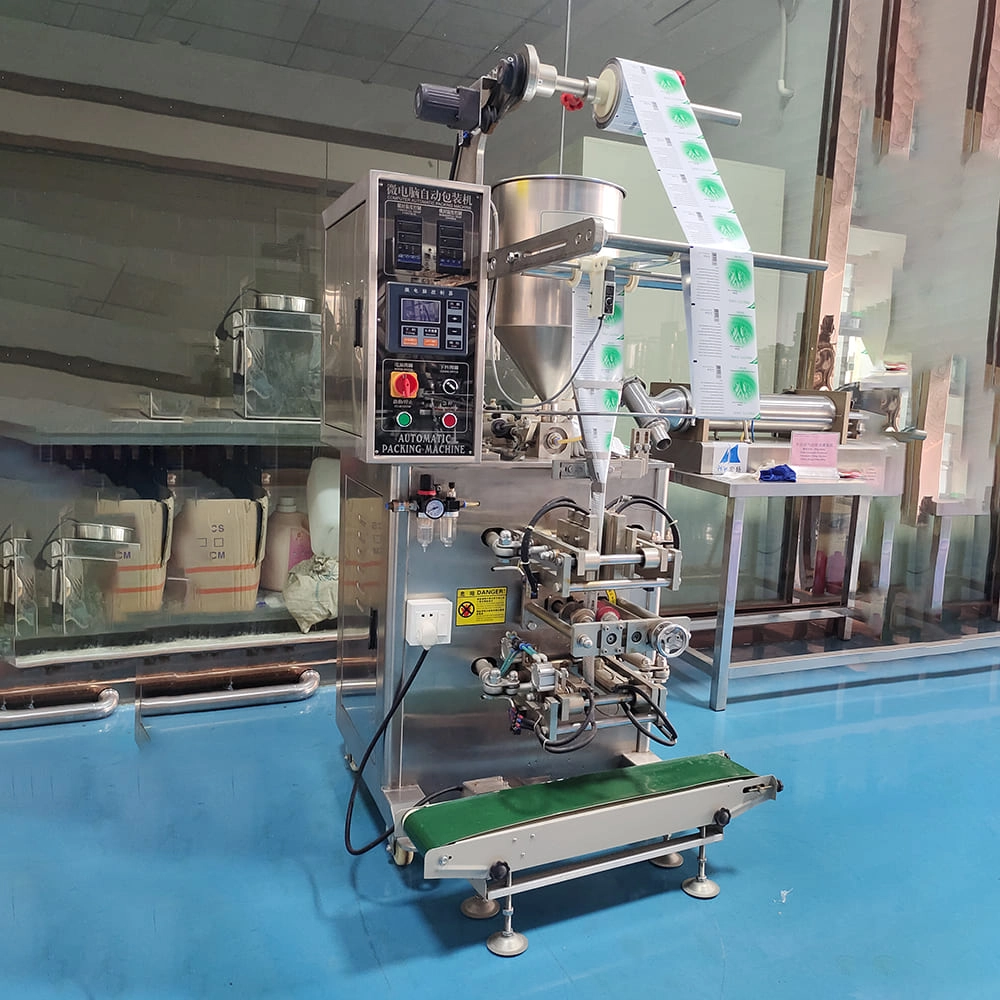
Sachet Packaging Machine for Sale: Cleanroom Design Tips
One Stage Water Treatment
What type of water can we use for this pure water filter ?
The raw quality (conductivity) should be ≤300μs/cm), such as city tap water, lake water, underground water, river water...
FAQs
What’s your payment term?
Generally, we take 30% of total amount as down payment, which should be wired by T/T. The 70% balance will be paid by T/T after you inspect your machines before shipment. We also accept letter of credit although it takes more expenses. But our bank should confirm your opening bank’s credit first.
Cosmetic
What is the production capacity of the equipment?
Our equipment supports both small-batch and large-batch production, depending on customer needs. The equipment is highly scalable and can be adjusted according to your production scale.
Liquid Soap Mixer
Can you provide liquid soap formula and train service?
Yes, we can provide different formulas, and teach client how to adjust the formula flexibly.
High Speed Dispersion Machine
Can the upper smaller blade move up or down?
Yes, the extra blades can be flexible fixed higher or lower based on materials depth.
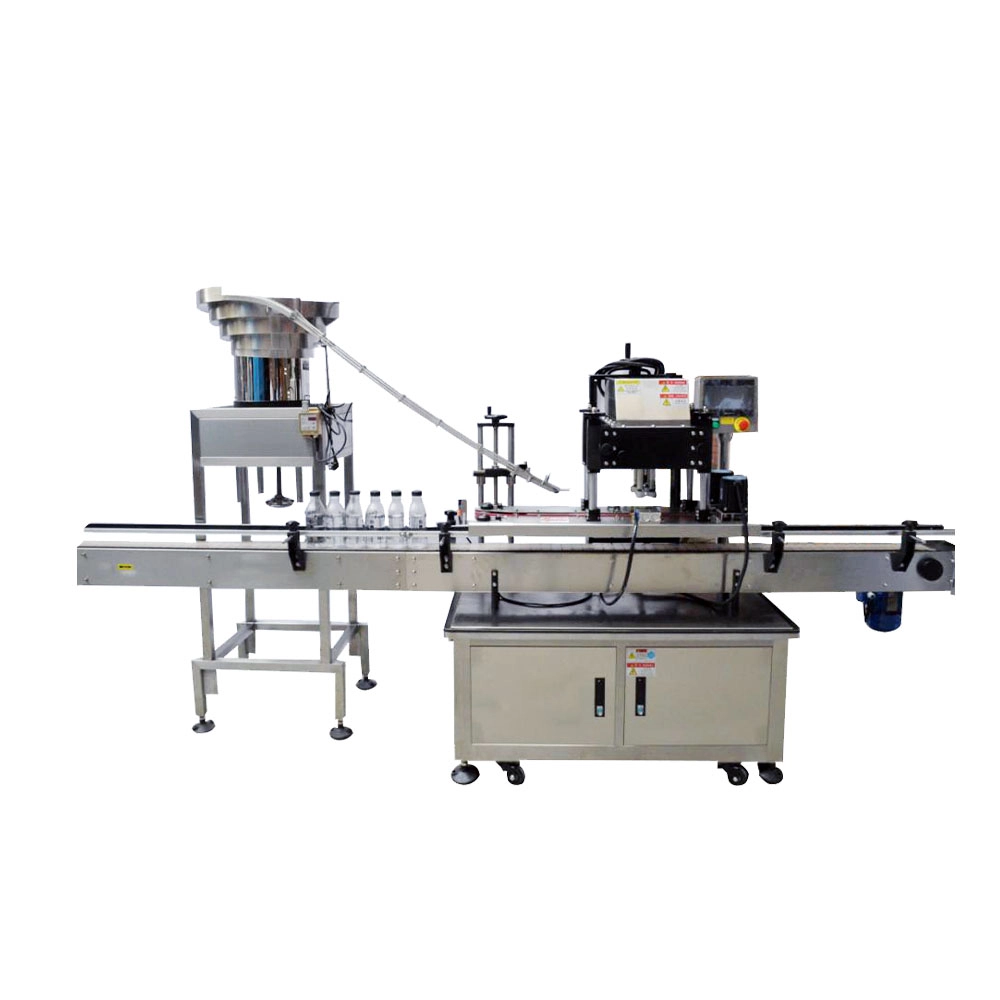
Automatic Plastic Caps Capping Machine with Vibrating Cap Feeder for Sale
Yuanyang automatic screw capping machine is a kind of four-wheel bottle capping machine. The automatic screw capper is often used to close lids of containers such as bottles and jars, especially for plastic bottles, which are widely used in food, medicine, chemical, cosmetic, and other industries for mass production and continuous production lines.
Features:
⦁ Full pneumatic drive;
⦁ Automated fast speed;
⦁ Suitable for various screw caps, pumps, and spray bottles.
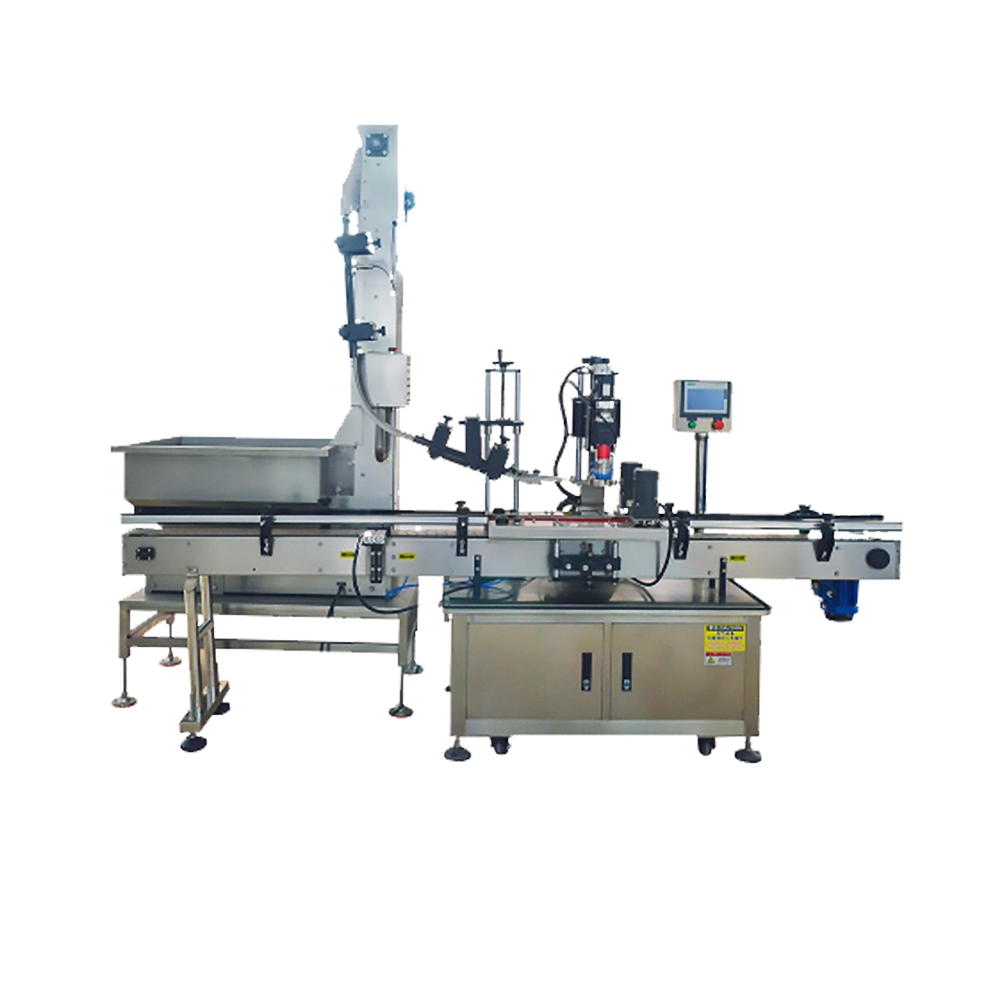
Automatic Metal Caps Capping Machine for Sale
Yuanyang automatic metal cap capping machine is a bottle capper for bottles with metal caps, which is often used to close lids of containers such as bottles and jars. The glass bottle metal capping machine is widely used in food, medicine, chemical, cosmetic, and other industries for mass production and continuous production line .
Features:
⦁ Pneumatic and electric drive;
⦁ Automated fast speed;
⦁ Suitable for glass bottles with metal caps.
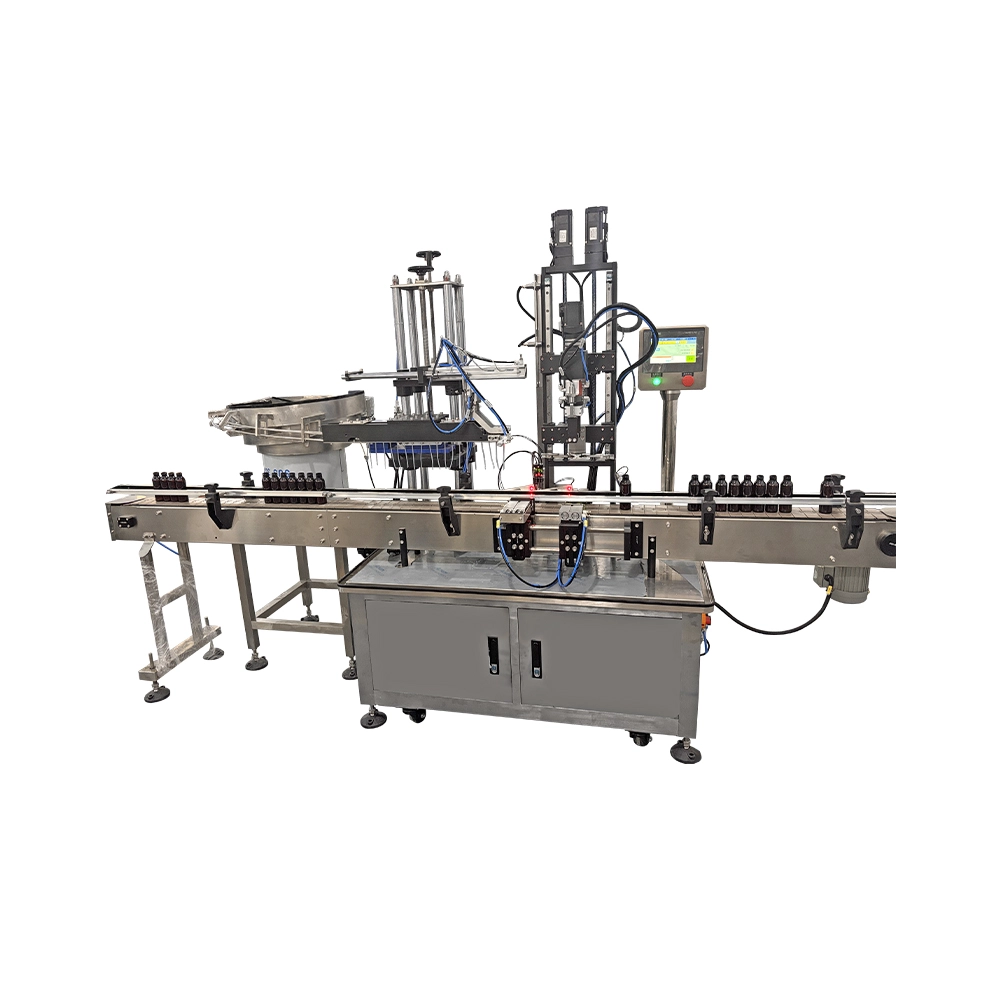
Automatic Pump Head Feeding and Capping Machine for Sale
Yuanyang automatic pump head feeding and capping machine is a bottle cap sorter and capper for bottles with pump heads, which is often used to close lids of containers such as nail polish, sprayers, and shampoo. The capping machine with a pump head feeder is widely used in food, medicine, chemical, cosmetic, and other industries for mass production and continuous production line .
Features:
⦁ Pneumatic and electric drive;
⦁ Automated fast speed;
⦁ Suitable for various types of caps.
Automatic High Speed Capping Machine for Sale
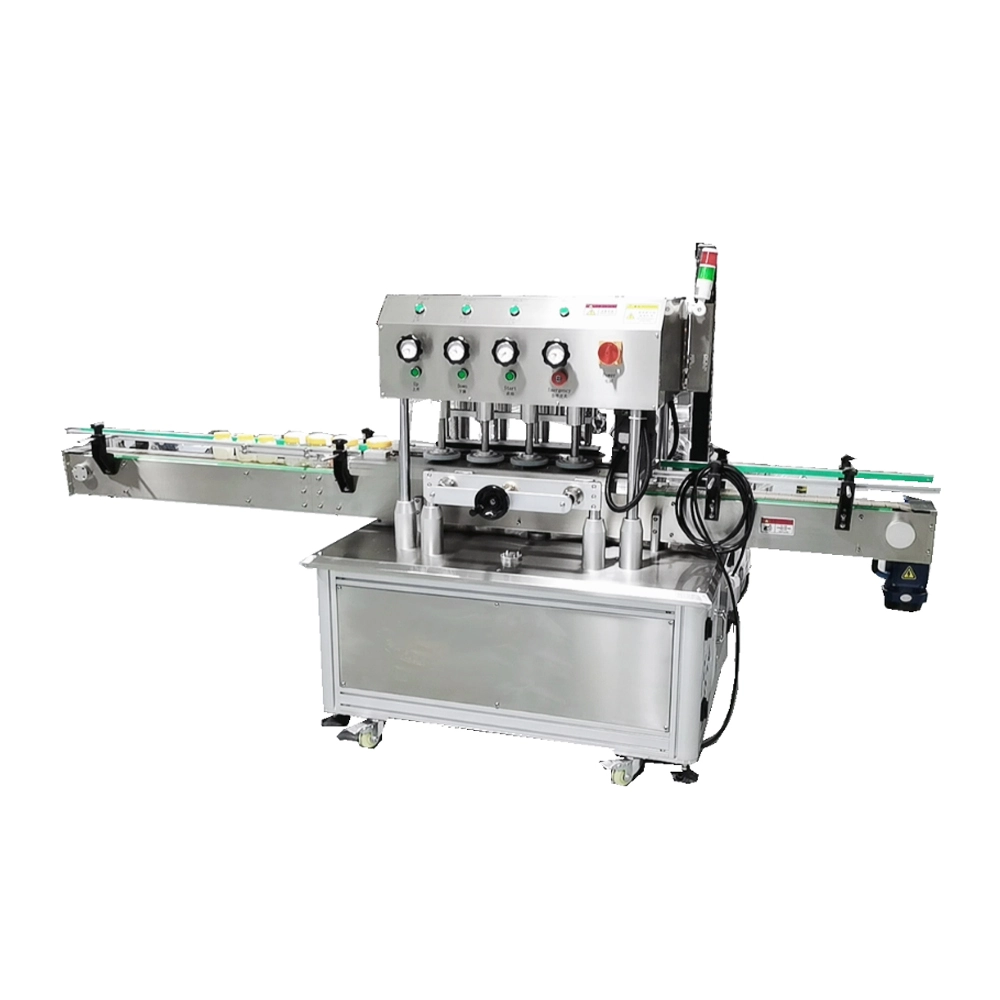
The Yuanyang automatic high-speed capping machine is a kind of 8-wheel bottle-capping machine with fast working efficiency. The automatic capper is often used to close lids of containers such as bottles and jars, especially for plastic bottles, which are widely used in food, medicine, chemical, cosmetic, and other industries for mass production and continuous production lines.
Features:
⦁ Electric drive;
⦁ Automated fast speed;
⦁ Suitable for various screw caps, pumps, and spray bottles.
 Scan QR Code
Facebook
YouTube
LinkedIn
Whatsapp: +8613434139712
Guangzhou Yuanyang Machinery