





Common Troubleshooting for 50L Vacuum Emulsifiers
- Common Troubleshooting for 50L Vacuum Emulsifiers
- Introduction: understanding your emulsifying machine and the 50L Hydraulic Lift Vacuum Emulsifier
- Why early troubleshooting matters for your emulsifying machine
- Safety first: pre-troubleshooting checklist for the 50L Hydraulic Lift Vacuum Emulsifier
- Issue: Emulsifier won’t start or intermittent electrical faults
- Issue: Vacuum level inadequate / vacuum pump not reaching set vacuum
- Issue: Homogenizer not producing expected fineness (particle size > 2 microns)
- Issue: Excessive noise or vibration in the emulsifying machine
- Issue: Hydraulic lift lid or tilting pot malfunction
- Issue: Overheating of motor or pump components
- Issue: Poor powder absorption or clumping during powder addition
- Quick-reference troubleshooting table for common symptoms
- Routine maintenance practices to prevent common faults
- Process controls and recipe validation to reduce troubleshooting frequency
- When to call technical support or schedule professional service
- Brand advantages: why choose Yuanyang 50L Hydraulic Lift Vacuum Emulsifier
- Practical checklist before resuming production
- FAQ: Common questions about troubleshooting the 50L Hydraulic Lift Vacuum Emulsifier
- Contact us / View product
- Authority references
- Final note
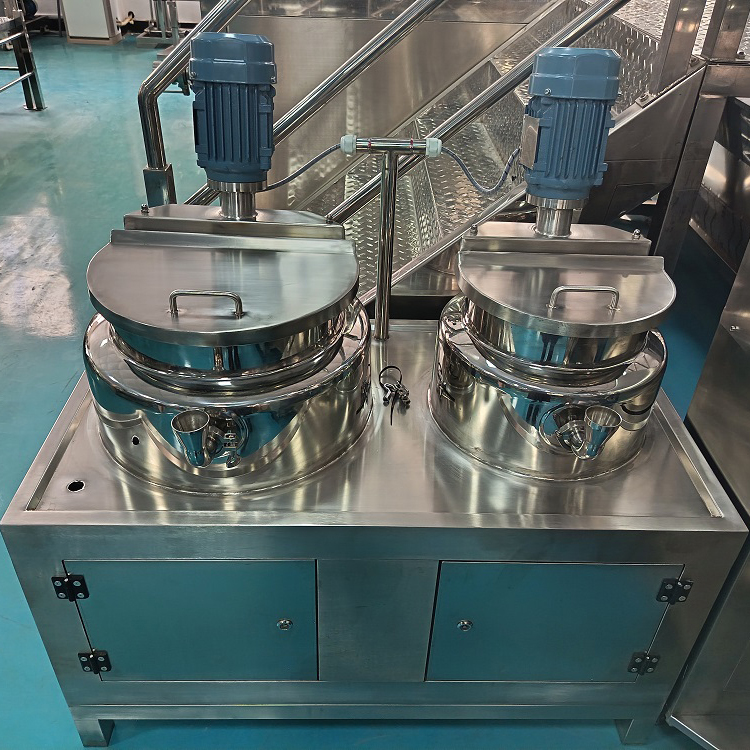
Common Troubleshooting for 50L Vacuum Emulsifiers
Introduction: understanding your emulsifying machine and the 50L Hydraulic Lift Vacuum Emulsifier
The 50L Hydraulic Lift Vacuum Emulsifier is a versatile emulsifying machine that integrates a main vacuum homogenizer tank, a water tank, and an oil tank. It combines mixing, dispersing, homogenizing, emulsifying, vacuumizing, and powder absorption systems, making it ideal for cosmetics, food, pharmaceutical, and chemical production. Typical features include a hydraulic lift lid and tilting pot, a vacuum system, electric control system, suitability for products between 10,000 and 50,000 cps viscosity, and the ability to produce particle sizes down to 2 microns with even distribution. Troubleshooting often highlights safety gaps, reinforcing the importance of following a safety checklist for operating hydraulic lift emulsifiers.
Why early troubleshooting matters for your emulsifying machine
Small faults in a 50L Hydraulic Lift Vacuum Emulsifier can escalate quickly, leading to longer downtime, product quality loss, safety risks, and increased costs. Early identification and structured troubleshooting reduce production interruptions and protect product integrity. This section gives an approach-oriented framework that combines safety checks, mechanical inspections, and process validation to solve common failure modes.
Safety first: pre-troubleshooting checklist for the 50L Hydraulic Lift Vacuum Emulsifier
Before any inspection, ensure operator safety and equipment protection. Checklist items for the emulsifying machine include: power isolation and lockout-tagout, depressurization and venting of the vacuum system, wearing appropriate PPE (gloves, goggles, face shield), confirming hydraulic system has no pressure, and documenting batch parameters before intervention. Skipping these steps risks injury and equipment damage.
Issue: Emulsifier won’t start or intermittent electrical faults
Symptoms: No power to control panel, pushbuttons unresponsive, or machine starts then stops. Potential causes: power supply issues, blown fuses, tripped circuit breakers, PLC/controls faults, loose wiring, emergency stop activated, or motor protection preventing startup. Troubleshooting steps: verify main power incoming voltage, check fuses and breakers, inspect emergency stop and interlocks, examine control wiring and terminals for loose connections, reset motor overload after investigating cause, and check PLC error codes. If PLC errors remain, consult the machine manual or your service technician.
Issue: Vacuum level inadequate / vacuum pump not reaching set vacuum
Symptoms: Emulsifying machine cannot achieve required vacuum, foam or air inclusion in batch, or prolonged degassing time. Potential causes: vacuum pump failure, worn seals, leaks in piping or tank lid, clogged vacuum filters, or incorrect vacuum pump oil. Troubleshooting: check vacuum gauge and compare to pump specifications, listen for abnormal sounds in the vacuum pump, inspect vacuum lines and gasket sealing on lids for leakage (soap solution can detect bubbles), change vacuum pump oil if dirty or contaminated, replace vacuum filters, and confirm vacuum valve positions. For rotary vane pumps, ensure proper oil level and oil type recommended by the pump manufacturer.
Issue: Homogenizer not producing expected fineness (particle size > 2 microns)
Symptoms: Product has coarse texture, phase separation, or poor stability. Potential causes: worn homogenizing head or rotor-stator, incorrect rotor speed, insufficient emulsifier temperature, wrong order of ingredient addition, or inadequate pre-dispersion. Troubleshooting steps: verify rotor-stator clearance and wear—replace worn parts; confirm homogenizer speed and operating time match process recipe; check product temperature against target (some emulsions require specific thermal conditions for droplet break-up); ensure oil phase is adequately dispersed before high-shear homogenization; and review recipe sequence and batch scale-up parameters. Regular inspection and planned replacement of rotor-stator parts maintain particle size performance in the emulsifying machine.
Issue: Excessive noise or vibration in the emulsifying machine
Symptoms: Loud motor noise, shaking during operation, or abnormal vibrations. Potential causes: misaligned motor or gearbox, loose mounting bolts, wear in bearings, unbalanced impellers, or foreign material in the tank. Troubleshooting: shut down machine and perform a visual inspection for loose bolts and connections; check motor and gearbox alignment; rotate shafts by hand to sense bearing roughness; remove foreign debris from tank and check blade balance; and schedule bearing replacement if noise persists. Vibration beyond acceptable limits can accelerate wear in hydraulic and mixing components, so address promptly.
Issue: Hydraulic lift lid or tilting pot malfunction
Symptoms: Lid does not lift, lifts slowly, tilting pot fails to tilt, or hydraulic oil leakage. Potential causes: low hydraulic fluid level, contaminated hydraulic oil, faulty hydraulic pump or valve, air trapped in hydraulic lines, worn seals or cylinders, or electrical control faults. Troubleshooting: check hydraulic fluid level and condition, top up or change if contaminated; inspect for visible leaks around cylinders and fittings; bleed air from hydraulic lines per manufacturer instructions; check hydraulic pump pressure and valve operation; and confirm electrical commands reach hydraulic solenoids. Regular hydraulic maintenance prevents unexpected failures and maintains safe lid operation.
Issue: Overheating of motor or pump components
Symptoms: Motor trips on thermal protection, elevated surface temperatures, or burning smell. Potential causes: overloaded motor due to excessive viscosity (product too thick), blocked cooling vents, failing bearings, or prolonged heavy duty without pauses. Troubleshooting: verify product viscosity is within the 10,000–50,000 cps range specified for the 50L Hydraulic Lift Vacuum Emulsifier; reduce batch load or adjust process; check ventilation and remove dust or obstructions; examine bearings for wear and replace as needed; and review duty cycle to avoid continuous overload. If overheating continues, consult the motor's rated load and seek manufacturer support.
Issue: Poor powder absorption or clumping during powder addition
Symptoms: Dry lumps, incomplete dispersion of powders, inconsistent texture. Potential causes: wrong powder addition point, insufficient vacuum during powder addition, inadequate low-speed mixing prior to homogenization, or powder properties (hygroscopic or very fine) causing agglomeration. Troubleshooting: ensure powder is added through the designed powder inlet under vacuum or near the high-shear zone; confirm vacuum is active during powder feed to draw powder in and minimize dust; pre-wet powders with a small portion of liquid if necessary; slow down the stirrer to allow proper incorporation before increasing speed; and adjust sequence to disperse powder in the water phase before adding the oil phase and homogenizing.
Quick-reference troubleshooting table for common symptoms
Use this table to quickly identify probable causes and corrective actions for typical issues encountered with a 50L Hydraulic Lift Vacuum Emulsifier (emulsifying machine):
| Symptom | Probable Cause | Immediate Action |
|---|---|---|
| Machine won’t start | Power/fuse/tripped E-stop | Check main power, fuses, E-stop, control panel errors |
| Poor vacuum | Leak or pump issue | Inspect gaskets, vacuum lines, pump oil, filters |
| Coarse emulsion | Worn rotor-stator or wrong operational parameters | Inspect/replace rotor-stator, adjust speed/temperature |
| Hydraulic lid slow/leaks | Low oil/air in system/valve fault | Check oil level, bleed air, inspect seals and valves |
| Excessive vibration | Misalignment or bearing wear | Check alignment, tighten mounts, replace bearings |
| Powder clumping | Incorrect feed point or sequence | Add under vacuum/adjust addition speed/pre-wet powders |
Routine maintenance practices to prevent common faults
Preventive maintenance extends equipment life and reduces troubleshooting time. Key practices for your emulsifying machine include: maintain a logbook for every batch and maintenance event, scheduled inspection and replacement of rotor-stator and seals, regular vacuum pump servicing and oil changes, hydraulic fluid analysis and filter changes, motor and gearbox lubrication per manufacturer recommendations, and periodic electrical panel inspection for loose connections and thermal imaging checks. Implement a preventive schedule tailored to production volume and batch complexity.
Process controls and recipe validation to reduce troubleshooting frequency
Many quality problems originate in process variation, not mechanical failure. Validate and standardize recipes with documented target viscosity, temperature profiles, rotor speed, and addition sequences. Use small pilot runs when changing raw materials, reformulating, or scaling up. Train operators to follow SOPs and to record deviations. For emulsifying machines, control of temperature, vacuum, and homogenizer speed is often critical—automate where possible to reduce human error.
When to call technical support or schedule professional service
If troubleshooting steps do not restore normal operation, or if you detect major oil leaks, electrical faults that you cannot isolate, severe bearing damage, or structural faults in the tank or frame, stop using the machine and contact qualified service. For warranty-preserving repairs, use authorized technicians and genuine spare parts for the 50L Hydraulic Lift Vacuum Emulsifier. Keep serial numbers, purchase records, and service history ready when contacting support to speed up the diagnostic process.
Brand advantages: why choose Yuanyang 50L Hydraulic Lift Vacuum Emulsifier
Yuanyang's 50L Hydraulic Lift Vacuum Emulsifier is engineered for reliability and product quality. Advantages include: integrated design with dedicated water and oil tanks to simplify production flow; hydraulic lift lid and tilting pot for safe and ergonomic operation; a vacuum system optimized for efficient powder absorption and degassing; electric control systems that support repeatable recipes; suitability for a broad viscosity range (10,000–50,000 cps); and proven capability to achieve particle sizes down to 2 microns. Together, these features reduce troubleshooting frequency, improve product consistency, and lower total cost of ownership.
Practical checklist before resuming production
After any repair or adjustment, perform this pre-start checklist: verify all safety interlocks and E-stops are released; confirm vacuum and hydraulic systems have correct pressure; run an empty-cycle test at low speed and observe noises or leaks; check control panel for error codes; confirm rotor-stator clearance and rotation direction; validate temperature readings; and perform a small trial batch to confirm product quality and particle size. Only resume full production after stable performance is confirmed.
FAQ: Common questions about troubleshooting the 50L Hydraulic Lift Vacuum Emulsifier
Q1: How often should rotor-stator parts be inspected or replaced?
A1: Inspect rotor-stator surfaces weekly in high-use environments and monthly in lower-use settings. Replace when wear reduces performance or when particle size or dispersion degrades. Typical replacement intervals vary with usage but plan for proactive replacement rather than waiting for failure.
Q2: My vacuum pump smells of burnt oil—what should I do?
A2: Stop the pump, check oil level and condition, and look for overheating sources. Change the oil and inspect for mechanical damage or motor overload. If smell persists, contact a service technician to avoid pump seizure.
Q3: Can I use the 50L Hydraulic Lift Vacuum Emulsifier for high-viscosity products?
A3: Yes, the machine is suitable for products from about 10,000 to 50,000 cps. For very high-viscosity materials, adjust batch size, extend mixing times, and ensure motor and gearbox ratings meet the load. Consult Yuanyang technical guidance for borderline formulations.
Q4: How do I minimize powder dust when adding fine powders?
A4: Add powders under vacuum through the designated powder inlet, reduce feed rate, and pre-mix powder with a small liquid portion if feasible. Use local extraction or filters to protect operators.
Q5: What documentation should I have on hand when calling technical support?
A5: Provide machine model, serial number, batch records, operating parameters (rpm, temperature, vacuum level), observed symptoms, and any error codes. Photos or short videos of the fault can speed diagnosis.
Contact us / View product
If you need technical support, spare parts, or a product demonstration for the 50L Hydraulic Lift Vacuum Emulsifier (emulsifying machine), please contact our sales and service team. We offer remote troubleshooting guidance, on-site service, and training to optimize your production. View full product details or request a quote through our website or contact your local distributor.
Authority references
For further reading and verification of best practices in vacuum equipment, homogenization, and safety standards, consult these authoritative sources:
- Vacuum pump maintenance basics - Wikipedia: https://en.wikipedia.org/wiki/Vacuum_pump
- Emulsions and homogenization principles - Wikipedia: https://en.wikipedia.org/wiki/Emulsion
- Good Manufacturing Practices for cosmetics and pharmaceuticals - U.S. FDA: https://www.fda.gov
- Cosmetic product safety and formulation guidance - Cosmetics Europe: https://www.cosmeticseurope.eu
- Hydraulic system maintenance fundamentals - Manufacturer and industry guides (example): https://www.hydraulicspneumatics.com
Final note
Effective troubleshooting of a 50L Hydraulic Lift Vacuum Emulsifier combines safety-first inspections, systematic mechanical and process checks, preventive maintenance, and proper operator training. Following the steps above will resolve most common issues with an emulsifying machine and reduce downtime while protecting product quality and personnel safety.
Why choose YUANYANG as your high speed dispersion machine supplier
What are the application scenarios of flat labeling machine?
Top 10 ketchup vacuum emulsifying mixer Manufacturers and Supplier Brands in America
Custom dairy bottle filling machines Manufacturers and Suppliers in Europe
Industries
What after-sales support services are available?
We offer 7×24-hour online support, regular maintenance, and rapid spare parts supply to ensure the equipment functions smoothly.
Melting Tank
I want to connect the melting tank with my filling machine, can you help to customize the height to 70cm and provide adapters?
Yes, we would like to help give solutions according to actual situation. Yuany is a professional solution provider. Purchasing machines from Yuany not only saves cost but also saves energy and time.
Aluminum Foil Sealing Machine
Can I put the lid sealer machine on the metal floor?
No, it is strictly prohibited to put the seal on the case or large area of metal, so as to avoid burning the power tube
One Stage Water Treatment
When do you recommend pvc type and stainless steel type?
Regarding price, pvc type is cheaper, if client wants to save cost, can choose pvc type; regarding quality, stainless steel type is better, especially in too cold temperature,better resistance to low temperature.
Chemicals
What quality control measures are in place?
The equipment features strict parameter control during the production process to ensure that the final product meets the desired quality.
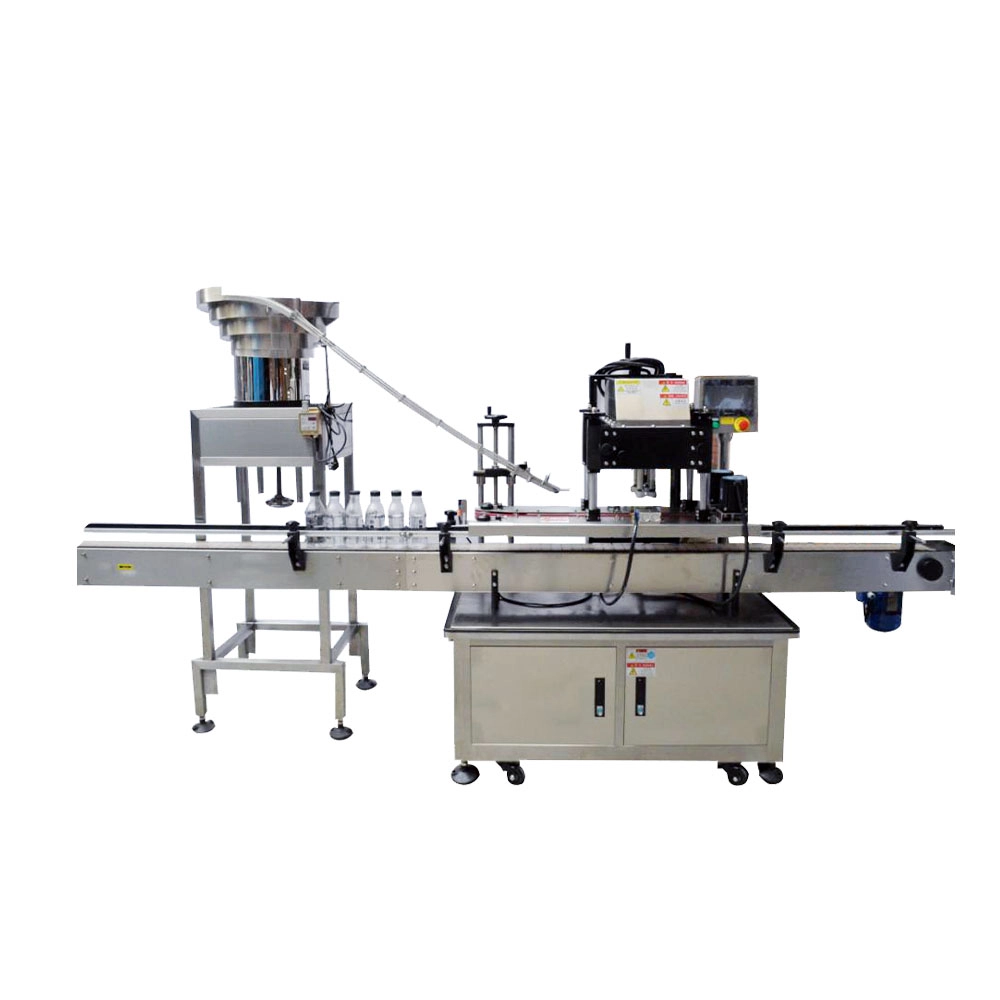
Automatic Plastic Caps Capping Machine with Vibrating Cap Feeder for Sale
Yuanyang automatic screw capping machine is a kind of four-wheel bottle capping machine. The automatic screw capper is often used to close lids of containers such as bottles and jars, especially for plastic bottles, which are widely used in food, medicine, chemical, cosmetic, and other industries for mass production and continuous production lines.
Features:
⦁ Full pneumatic drive;
⦁ Automated fast speed;
⦁ Suitable for various screw caps, pumps, and spray bottles.
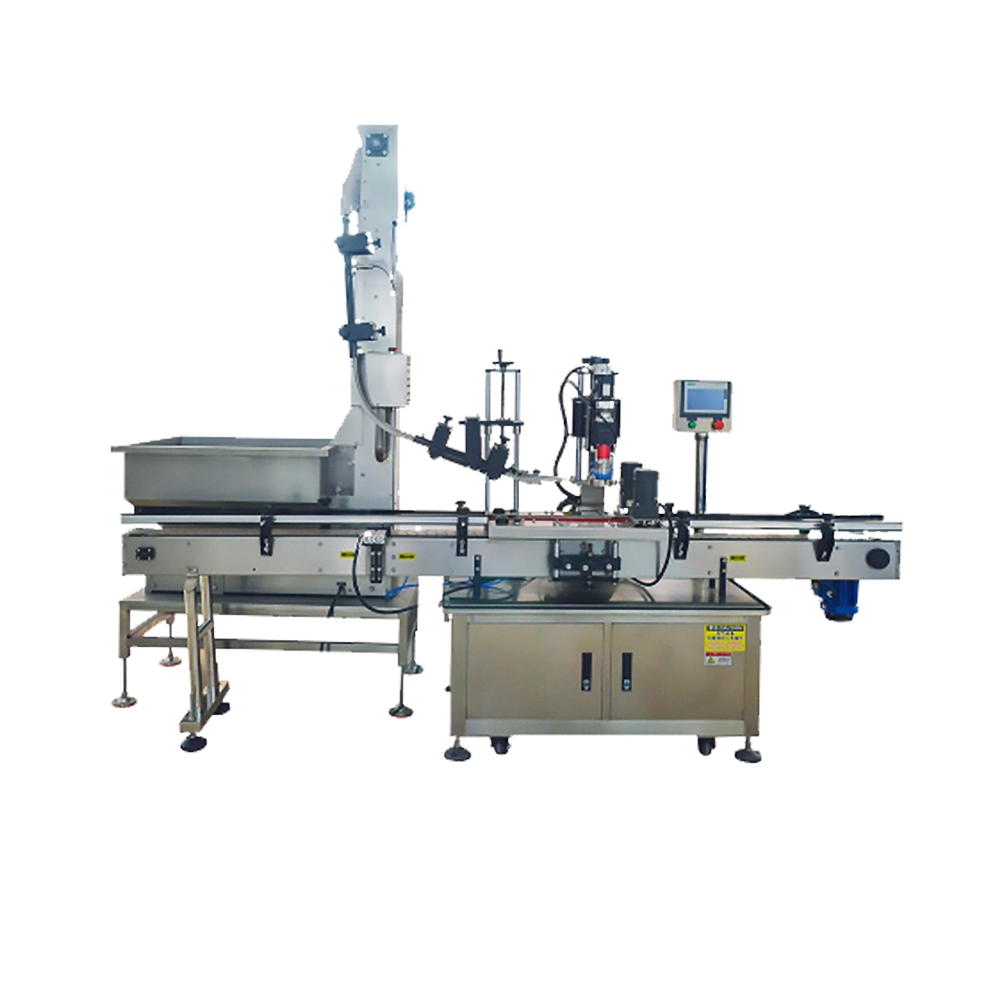
Automatic Metal Caps Capping Machine for Sale
Yuanyang automatic metal cap capping machine is a bottle capper for bottles with metal caps, which is often used to close lids of containers such as bottles and jars. The glass bottle metal capping machine is widely used in food, medicine, chemical, cosmetic, and other industries for mass production and continuous production line .
Features:
⦁ Pneumatic and electric drive;
⦁ Automated fast speed;
⦁ Suitable for glass bottles with metal caps.
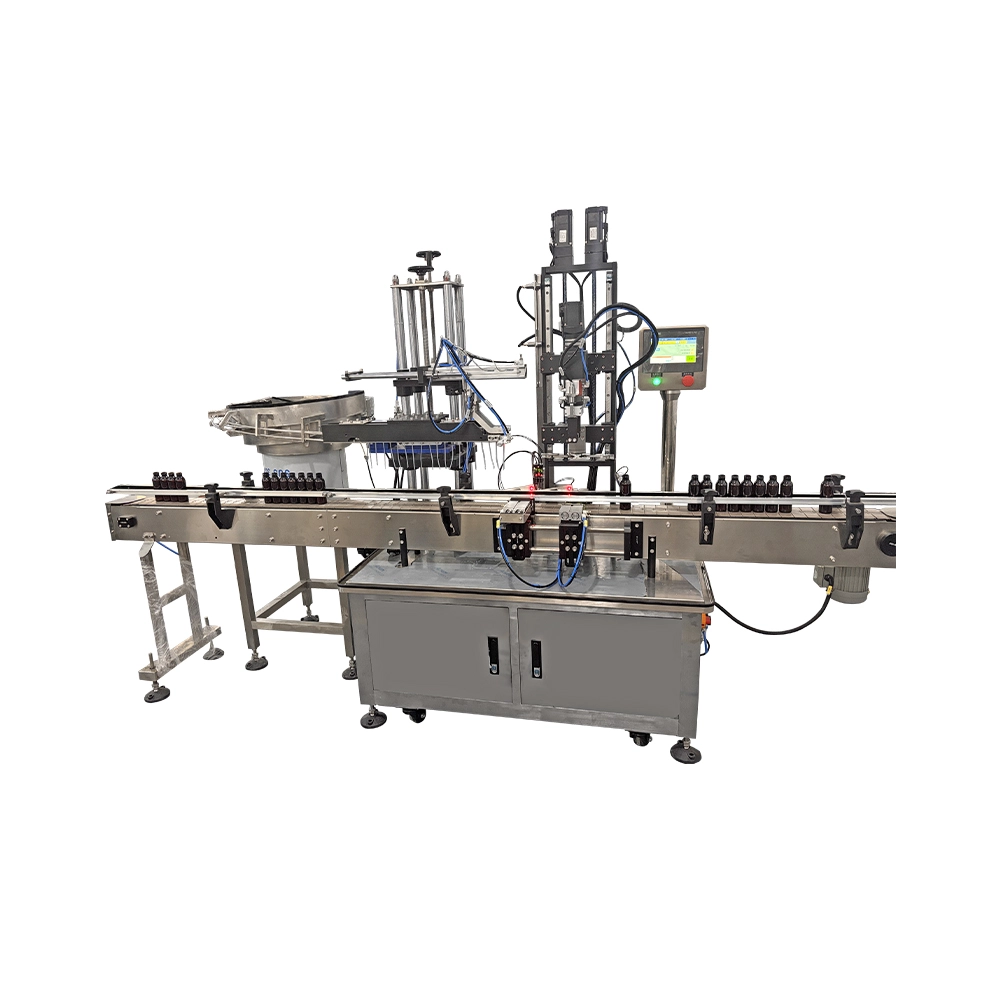
Automatic Pump Head Feeding and Capping Machine for Sale
Yuanyang automatic pump head feeding and capping machine is a bottle cap sorter and capper for bottles with pump heads, which is often used to close lids of containers such as nail polish, sprayers, and shampoo. The capping machine with a pump head feeder is widely used in food, medicine, chemical, cosmetic, and other industries for mass production and continuous production line .
Features:
⦁ Pneumatic and electric drive;
⦁ Automated fast speed;
⦁ Suitable for various types of caps.
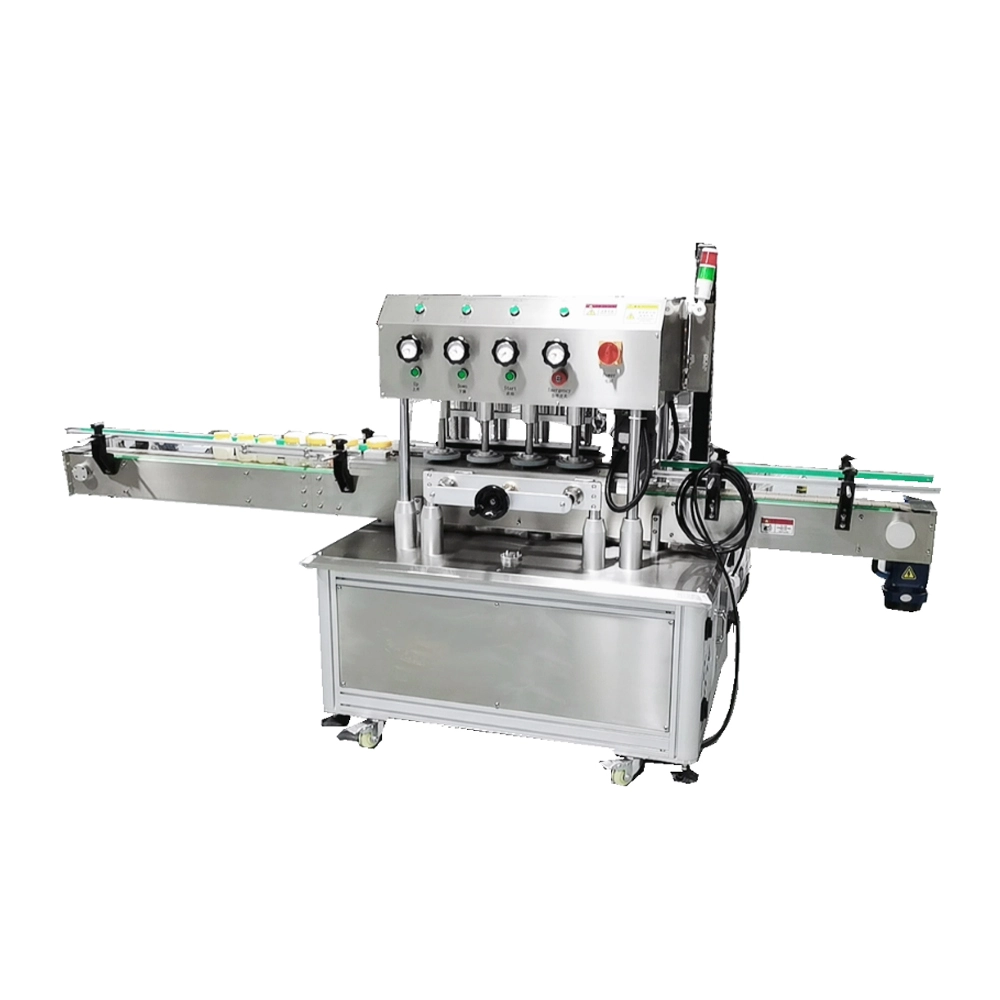
Automatic High Speed Capping Machine for Sale
The Yuanyang automatic high-speed capping machine is a kind of 8-wheel bottle-capping machine with fast working efficiency. The automatic capper is often used to close lids of containers such as bottles and jars, especially for plastic bottles, which are widely used in food, medicine, chemical, cosmetic, and other industries for mass production and continuous production lines.
Features:
⦁ Electric drive;
⦁ Automated fast speed;
⦁ Suitable for various screw caps, pumps, and spray bottles.
 Scan QR Code
Facebook
YouTube
LinkedIn
Whatsapp: +8613434139712
Guangzhou Yuanyang Machinery