





How Emulsion Mixer Design Impacts Product Consistency
- How Emulsion Mixer Design Impacts Product Consistency
- Why design matters for emulsion mixer performance
- Key design elements that control product consistency in an emulsion mixer
- Vessel geometry, scale-up and shear distribution
- Rotor-stator and homogenizer choices for target droplet size
- Vacuum systems: removing air to improve consistency
- Thermal control during emulsification
- Seals, materials and sanitary design
- How design trade-offs affect product consistency: a comparison
- Instrumentation and controls for reproducibility
- Practical process parameters that impact consistency
- 50L Hydraulic Lift Vacuum Emulsifier — product highlight
- How this design delivers better consistency
- Real-world benefits
- Maintenance, cleaning and lifecycle considerations that preserve consistency
- Scale-up and pilot-to-production alignment
- Brand advantages and why choose this solution for consistent emulsions
- FAQ — Frequently Asked Questions
- Q: Why is vacuum important in an emulsion mixer?
- Q: What particle size do I need for a smooth cosmetic cream?
- Q: How do I prevent batch-to-batch variability?
- Q: Can this unit handle powders or pigments?
- Q: Is the machine suitable for high-viscosity products?
- Contact us / View product
- References and authoritative resources
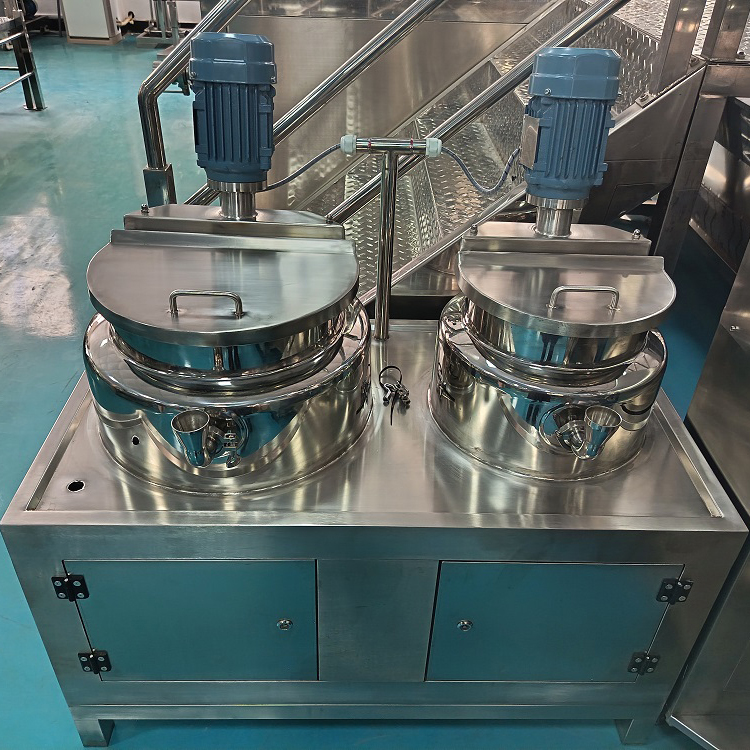
How Emulsion Mixer Design Impacts Product Consistency
Why design matters for emulsion mixer performance
Product consistency in emulsions is not accidental; it is the result of engineering decisions in mixer design and process control. An emulsion mixer’s geometry, agitation system, homogenization stage, vacuum and thermal control all determine droplet size distribution, stability, and rheology. For manufacturers of cosmetics, pharmaceuticals, food, and specialty chemicals, understanding these relationships is essential to deliver repeatable texture, appearance and functional performance at batch and scale. Once design factors are defined, ensuring long-term stability requires a structured maintenance checklist for 50L hydraulic lift vacuum emulsifiers.
Key design elements that control product consistency in an emulsion mixer
Emulsion mixers combine mechanical energy and process environment to disperse one liquid phase into another and stabilize the result. The most important elements are:
- Vessel geometry and baffle design — affects flow patterns and shear uniformity.
- Rotor-stator/homogenizer configuration — sets local shear rate and droplet breakup mechanism.
- Vacuum and degassing capability — removes entrained air that destabilizes emulsions and affects texture.
- Heating/cooling systems and jacket design — control continuous phase viscosity during mixing and influence droplet formation.
- Lift and tilting mechanisms — improve material transfer, loading/unloading and reduce batch-to-batch loss.
- Instrumentation and controls — enable repeatable process programs (speed, time, vacuum, temperature profiles).
Vessel geometry, scale-up and shear distribution
Vessel diameter-to-height ratio, presence and type of baffles, and impeller placement determine macro-mixing and circulation patterns. Poor design can create dead zones or excessive shear near walls, causing non-uniform droplet sizes. For consistent product quality, the mixer must produce a uniform shear field in the target region (typically the homogenizer area) while providing effective bulk circulation. When scaling up, maintaining similar Reynolds and tip-speed conditions is not always sufficient — similarity of energy dissipation per unit mass in the homogenizer region is most predictive of consistent droplet size.
Rotor-stator and homogenizer choices for target droplet size
Rotor-stator systems and high-pressure or high-shear homogenizers are the primary mechanisms for droplet breakup. Important parameters are rotor tip speed, gap size, and stator hole geometry. Narrower gaps and higher tip speeds increase instantaneous shear, producing smaller droplets, but also increase heat generation and energy consumption. Design choices should balance desired particle size distribution and thermal sensitivity of the formulation. A well-designed homogenizer integrated into the mixer can routinely produce a tight distribution down to 1–3 microns for many emulsions—key to smooth texture and optical clarity.
Vacuum systems: removing air to improve consistency
Entrained air causes visual defects (bubbles), accelerates oxidation for sensitive ingredients, and leads to variable density/viscosity. A vacuum emulsifier that combines homogenization with vacuum degassing enables emulsification in a reduced-pressure environment so that air is removed during and after droplet formation. Vacuum also lowers the boiling point of volatile ingredients, allowing lower-temperature processing and better stability for heat-sensitive actives.
Thermal control during emulsification
Temperature controls the continuous phase viscosity and interfacial tension—two factors that directly influence droplet breakup and coalescence. Jacket design with efficient heat transfer and the ability to program temperature ramps (for oil phase heating, controlled cooling to set structure) is critical. Inconsistent thermal control produces batch variation in viscosity and particle size distribution, especially for formulations near their gelation points.
Seals, materials and sanitary design
Material selection (stainless steel grades, surface finish) and seal design (mechanical seals, lip seals) affect contamination risk and build-up on wetted surfaces. Poor surface finish or inappropriate seals permit ingredient adherence, creating local composition differences and microbial risk. For consistent product quality—especially in cosmetics and pharmaceuticals—sanitary design and CIP (clean-in-place) capability are essential.
How design trade-offs affect product consistency: a comparison
| Design Element | Consequence of Poor Design | Good Design Outcome |
|---|---|---|
| Rotor-stator gap | Inconsistent droplet sizes; overheating | Tight droplet size distribution; efficient energy use |
| Vacuum capability | Air entrapment; oxidation; variable density | Degassed uniform emulsion; improved shelf life |
| Jacket/control | Temperature swings; batch-to-batch variance | Repeatable viscosity and droplet formation |
| Vessel geometry | Dead zones; uneven mixing | Uniform shear field and circulation |
| CIP access & seals | Contamination and variable product quality | Sanitary, repeatable cleaning and consistent batches |
Instrumentation and controls for reproducibility
Modern emulsion mixers rely on programmable controls to lock process parameters—speed profiles, vacuum setpoints, temperature ramps and homogenization cycles. Recipe-driven controls capture best practices and reduce operator variability. Data logging enables traceability and process optimization. For regulated products, these records are also valuable for quality assurance and regulatory audits.
Practical process parameters that impact consistency
Beyond hardware design, process choices tune final product quality. Typical levers include:
- Homogenization time and cycles — longer/higher energy cycles reduce droplet size but can over-shear sensitive ingredients.
- Tip speed and rotor speed profile — ramping speed helps disperse phases gently before high-shear final homogenization.
- Vacuum level and timing — applying vacuum after coarse dispersion removes trapped air without harming initial mixing.
- Temperature profiles — controlled heating of oil phase, then cooling during homogenization can lock-in structure.
Best practice: run small-scale trials to identify the minimum energy and time required to meet your target particle size and stability, then lock those parameters into a controlled recipe and validate at scale.
50L Hydraulic Lift Vacuum Emulsifier — product highlight
Yuanyang hydraulic lift vacuum emulsifier is a combined mixing equipment with a main vacuum homogenizer tank, a water tank, and an oil tank, which is an integrated equipment with a mixing, dispersing, homogenizing, emulsifying, vacuumizing and powder absorption system that is widely used in cosmetics, food, pharmaceutical, and chemical fields.
Features:
⦁ With a hydraulic lift lid & tilting pot, vacuum system, and electric control system.
⦁ Suitable for products of 10,000~50,000 cps viscosity.
⦁ Perfect particle size of 2 microns and evenly distributed.
How this design delivers better consistency
The 50L Hydraulic Lift Vacuum Emulsifier combines several critical design choices that directly address consistency challenges:
- Integrated vacuum homogenizer: enables droplet formation and degassing in one controlled environment, preventing re-introduction of air and reducing oxidation risk.
- Hydraulic lift lid and tilting pot: facilitate complete discharge and minimize hold-up, preventing cross-batch contamination and ensuring mass balance from batch to batch.
- Separate water and oil tanks: allow precise pre-heating and metering of phases to the main homogenizer, improving reproducibility of phase ratios and temperature control during emulsification.
- Control system: supports recipe-based processing—speed ramps, vacuum setpoints and timed homogenization—reducing operator variability.
- Specification fit for viscosity range: supporting 10,000–50,000 cPs formulations means the machine maintains effective shear and circulation even in high-viscosity products.
Real-world benefits
For cosmetic creams, pharmaceutical creams/gels and many food emulsions, achieving a consistent 2 μm particle size yields a smooth texture, stable appearance, predictable spreadability and improved stability. The combination of vacuum and homogenization in the 50L unit reduces rework, improves yield and shortens development cycles because the same conditions can often be used across test and production batches.
Maintenance, cleaning and lifecycle considerations that preserve consistency
Design for maintainability preserves mixer performance over time. Considerations include accessible seals and bearings, CIP-friendly internal geometry, and materials resistant to your formulation chemistry. Regular inspection and preventive replacement of rotor-stator elements, seals and vacuum components prevent gradual drift in shear performance and droplet size distribution.
Scale-up and pilot-to-production alignment
Consistency across scales is achieved when the mixing device used in production replicates the same shear and energy dissipation characteristics as the pilot unit in the homogenizing zone. A 50L vacuum emulsifier is often an appropriate pilot/production size for small-batch specialty manufacturing where sample-to-batch reproducibility is critical. Use geometric similarity in the homogenizer and maintain equivalent energy input per unit mass when scaling up or down.
Brand advantages and why choose this solution for consistent emulsions
Selecting the right equipment partner matters. Yuanyang’s 50L Hydraulic Lift Vacuum Emulsifier combines practical features designed for product consistency:
- Integrated systems reduce transfer steps and contamination risk.
- Hydraulic lift and tilting pot speed up cleaning and minimize product loss.
- Designed for a broad viscosity range makes the unit versatile for many formulations.
- Proven ability to achieve 2 μm particle size with even distribution improves product aesthetics and performance.
FAQ — Frequently Asked Questions
Q: Why is vacuum important in an emulsion mixer?
A: Vacuum removes entrained air that causes bubbles, oxidation, and inconsistent density. It also allows processing at lower temperatures for heat-sensitive ingredients, improving reproducibility and shelf life.
Q: What particle size do I need for a smooth cosmetic cream?
A: Many consumers and formulators expect particle sizes in the 1–5 μm range for a smooth, non-greasy feel. The 50L emulsifier’s 2 μm capability meets this common target across many formulations.
Q: How do I prevent batch-to-batch variability?
A: Use recipe-controlled parameters (speed, vacuum, time, temperature), maintain equipment (seals, rotor-stator clearance), and ensure thorough cleaning between batches. Instruments that log process data help detect drift early.
Q: Can this unit handle powders or pigments?
A: The integrated powder absorption system is designed to accept powders and pigments with minimal dust and agglomeration, improving dispersion consistency for colored or filled formulations.
Q: Is the machine suitable for high-viscosity products?
A: Yes — the unit supports products from 10,000 to 50,000 cPs. Proper pre-heating and staged homogenization help process higher viscosity materials efficiently.
Contact us / View product
If you want to improve product consistency with a purpose-built emulsion mixer, contact our sales team to discuss process trials, specifications or to book a demonstration. View product details here: https://www.yuanyang.com/products/50l-hydraulic-lift-vacuum-emulsifier or email [email protected] for a quote and technical consultation.
References and authoritative resources
For further reading on the science and best practices that informed this
- Emulsion — Wikipedia: https://en.wikipedia.org/wiki/Emulsion
- Homogenization (chemistry) — Wikipedia: https://en.wikipedia.org/wiki/Homogenization_(chemistry)
- Cosmetic products regulation (EU): https://ec.europa.eu/growth/sectors/cosmetics/
- U.S. Food and Drug Administration: https://www.fda.gov/
Top Vacuum Emulsifying Mixers for Cosmetics in 2026
Hygienic Design Standards for Sachet Packaging Machines
Sourcing Criteria for Industrial Emulsion Mixers: Purchase Guide
How to start a semi auto labeling machine business in Europe
Vacuum Homogneizer
What capacity do you recommend for a new factory?
Vacuum homogenizer is a little expensive, and the dimension is big,compared with non-vacuum type. As a start, small capacity from 50-500L is recommended if client has limit budget. Later bigger capacity 500-5000L is considered to expand business.
For easy shipment,50-1000L is often recommended for vacuum type.
Semi automatic powder filling machine
What’s the filling range of the powder dosing machine?
The filling range of the semi auto powder filling machines is: 10-5000g. But we need to customize according to specific weight that clients plan to pack. The screw model will be different.
Horizontal Filling Machine
Can the liquid filler be delivered by air?
If clients need it in a hurry, just choose to delivery by air. The desktop cream filling machine is not big, can arrange international express to pick-up the package. In order to save cost, client can choose by sea, which is much slower.
Liquid Soap Mixer
Can you provide liquid soap formula and train service?
Yes, we can provide different formulas, and teach client how to adjust the formula flexibly.
Cosmetic
What is the production capacity of the equipment?
Our equipment supports both small-batch and large-batch production, depending on customer needs. The equipment is highly scalable and can be adjusted according to your production scale.
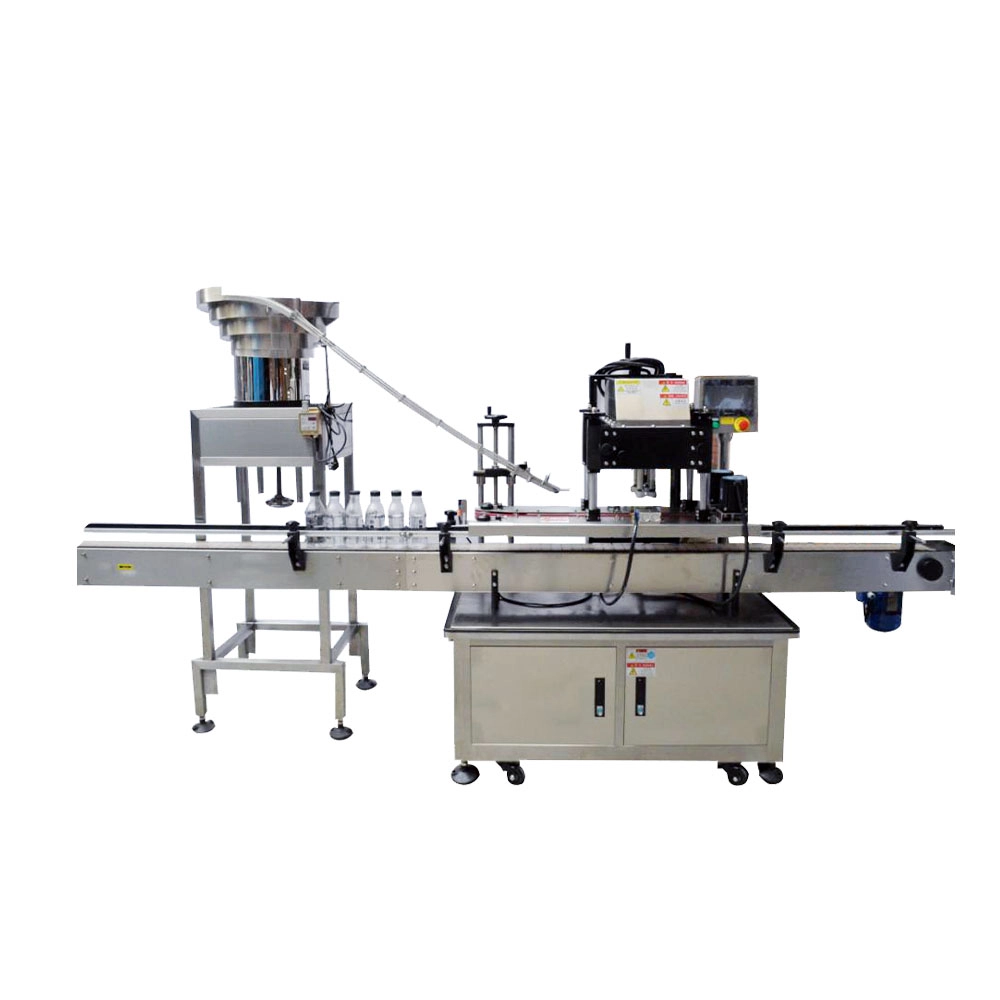
Automatic Plastic Caps Capping Machine with Vibrating Cap Feeder for Sale
Yuanyang automatic screw capping machine is a kind of four-wheel bottle capping machine. The automatic screw capper is often used to close lids of containers such as bottles and jars, especially for plastic bottles, which are widely used in food, medicine, chemical, cosmetic, and other industries for mass production and continuous production lines.
Features:
⦁ Full pneumatic drive;
⦁ Automated fast speed;
⦁ Suitable for various screw caps, pumps, and spray bottles.
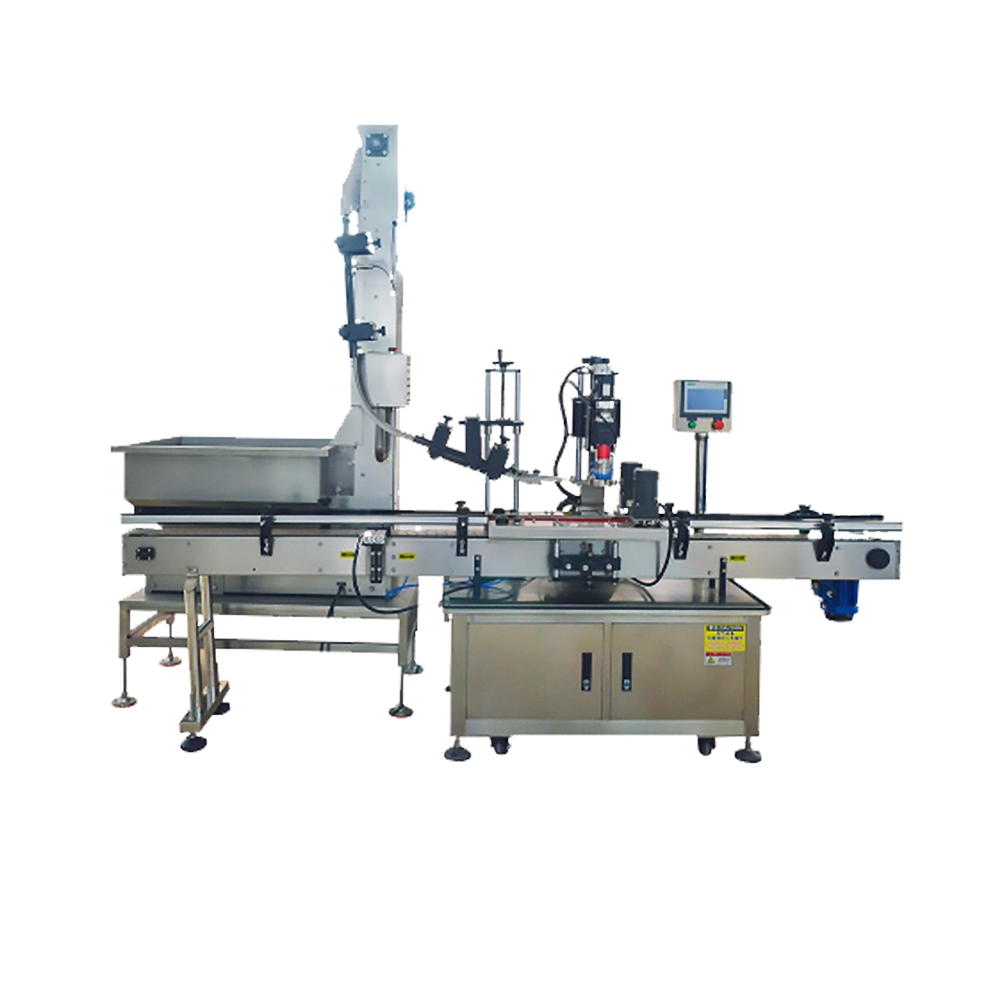
Automatic Metal Caps Capping Machine for Sale
Yuanyang automatic metal cap capping machine is a bottle capper for bottles with metal caps, which is often used to close lids of containers such as bottles and jars. The glass bottle metal capping machine is widely used in food, medicine, chemical, cosmetic, and other industries for mass production and continuous production line .
Features:
⦁ Pneumatic and electric drive;
⦁ Automated fast speed;
⦁ Suitable for glass bottles with metal caps.
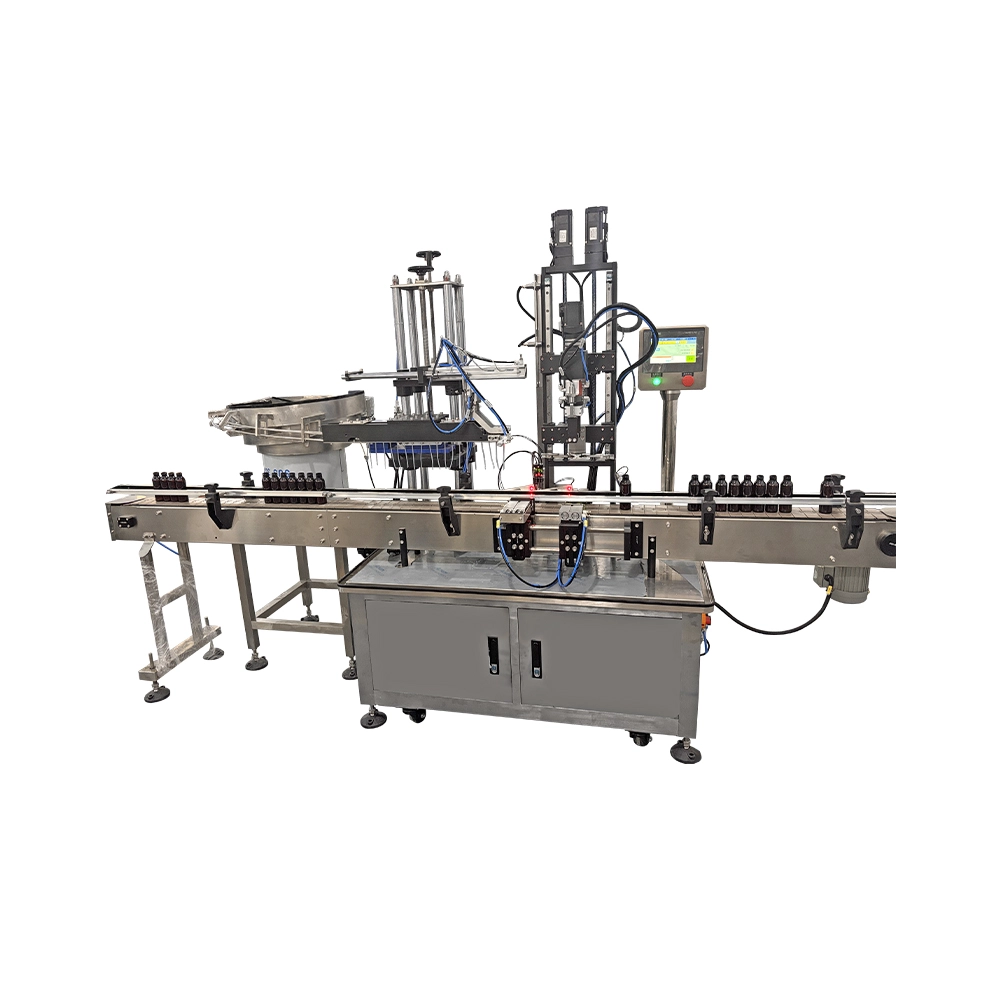
Automatic Pump Head Feeding and Capping Machine for Sale
Yuanyang automatic pump head feeding and capping machine is a bottle cap sorter and capper for bottles with pump heads, which is often used to close lids of containers such as nail polish, sprayers, and shampoo. The capping machine with a pump head feeder is widely used in food, medicine, chemical, cosmetic, and other industries for mass production and continuous production line .
Features:
⦁ Pneumatic and electric drive;
⦁ Automated fast speed;
⦁ Suitable for various types of caps.
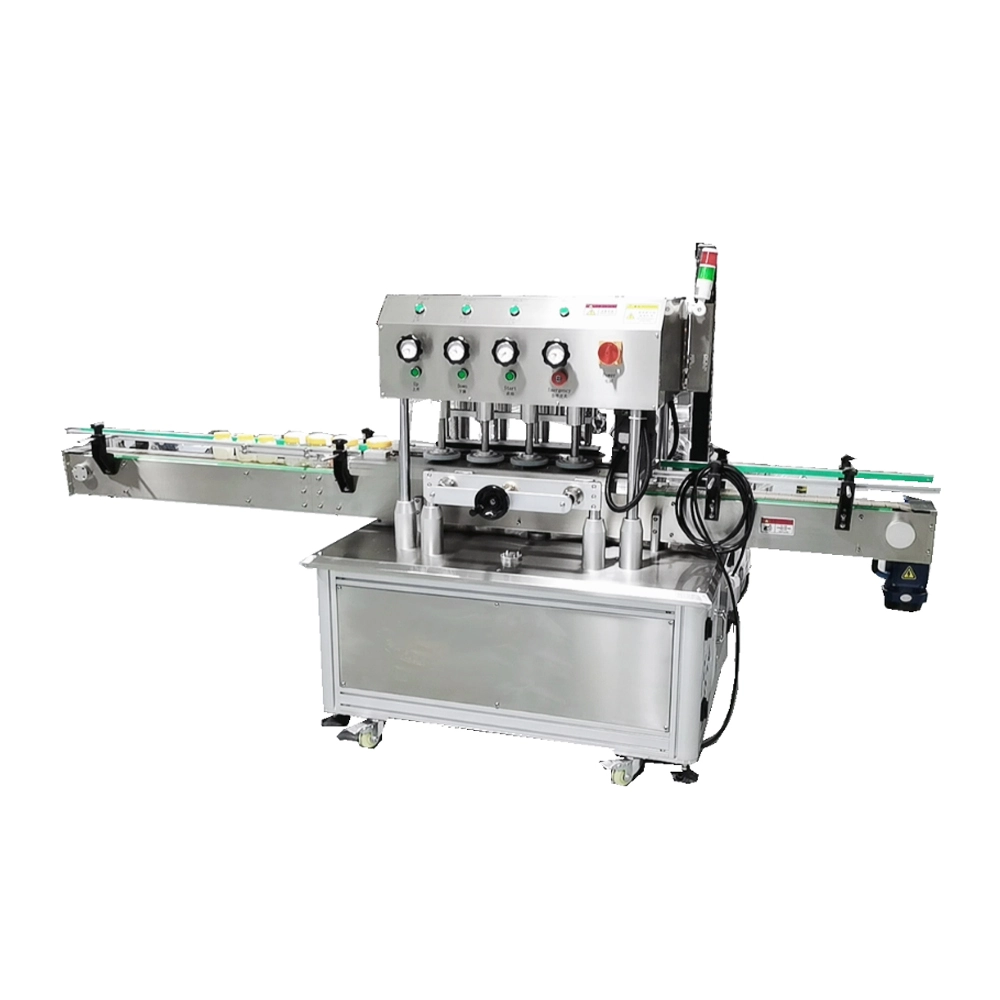
Automatic High Speed Capping Machine for Sale
The Yuanyang automatic high-speed capping machine is a kind of 8-wheel bottle-capping machine with fast working efficiency. The automatic capper is often used to close lids of containers such as bottles and jars, especially for plastic bottles, which are widely used in food, medicine, chemical, cosmetic, and other industries for mass production and continuous production lines.
Features:
⦁ Electric drive;
⦁ Automated fast speed;
⦁ Suitable for various screw caps, pumps, and spray bottles.
 Scan QR Code
Facebook
YouTube
LinkedIn
Whatsapp: +8613434139712
Guangzhou Yuanyang Machinery