





Energy Efficiency Tips for Emulsifying Machines
- Energy Efficiency Tips for Emulsifying Machines
- Why energy efficiency matters for your emulsifying machine
- Product spotlight: 50L Hydraulic Lift Vacuum Emulsifier
- Understand the main energy consumers in an emulsifying machine
- Tip 1 — Right-size motors and use variable frequency drives (VFDs)
- Tip 2 — Optimize batch size and scheduling
- Tip 3 — Improve heat management: insulation, heat recovery, and process temperature optimization
- Tip 4 — Reduce vacuum system energy use
- Tip 5 — Optimize homogenizer operation and rotor-stator selection
- Tip 6 — Use process control, monitoring and recipes
- Tip 7 — Preventive maintenance to preserve efficiency
- Tip 8 — Formulation and pre-processing to reduce energy needs
- Tip 9 — Consider equipment upgrades with energy-efficient designs
- Illustrative energy comparison: typical energy draws and potential savings
- How the 50L Hydraulic Lift Vacuum Emulsifier supports energy efficiency
- Brand strengths: Yuanyang advantages for energy-conscious buyers
- Practical steps to implement an energy program on-site
- FAQ — Energy Efficiency and the 50L Hydraulic Lift Vacuum Emulsifier
- Contact us / View product
- Authoritative references and further reading
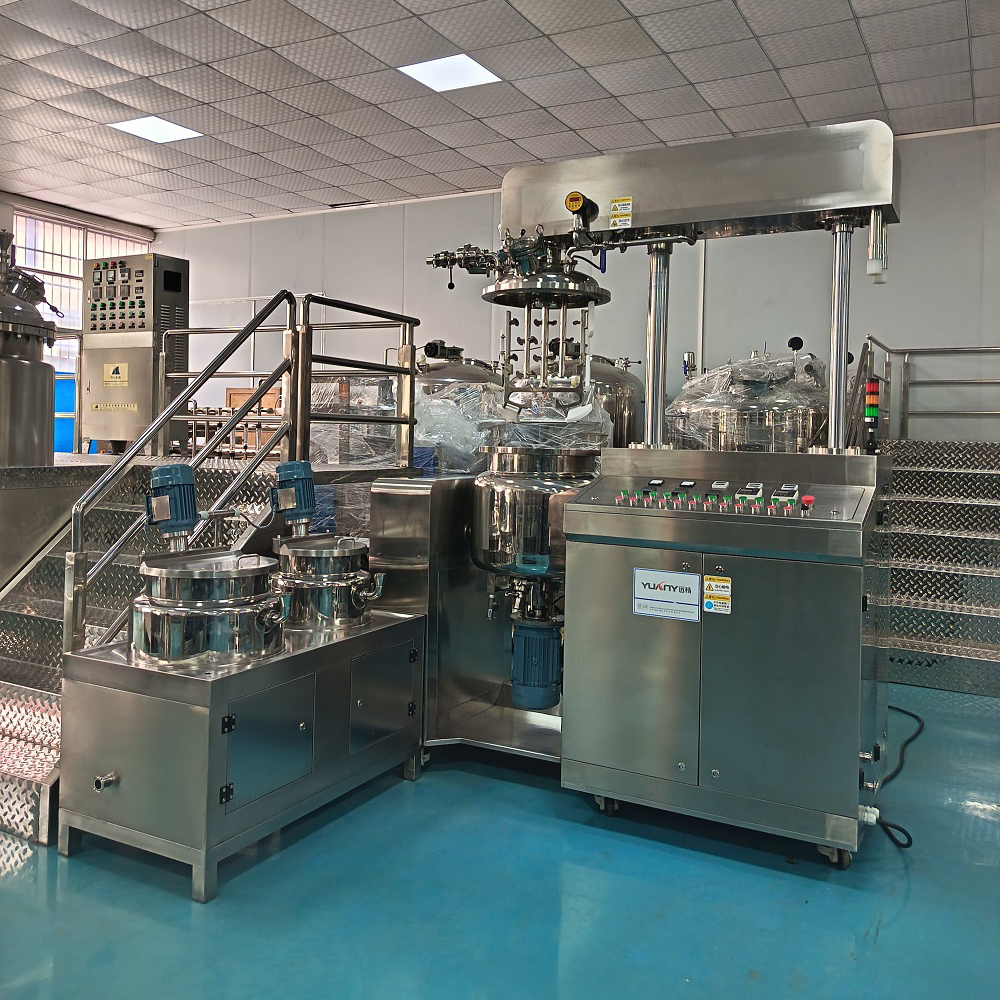
Energy Efficiency Tips for Emulsifying Machines
Why energy efficiency matters for your emulsifying machine
Emulsifying machines are essential in cosmetics, food, pharmaceutical, and chemical production, but they can also be significant energy consumers because of high-shear homogenizers, vacuum systems, heating/cooling jackets, and long batch cycles. Improving energy efficiency reduces operating cost, lowers environmental footprint, and often improves product quality by providing tighter process control. This guide focuses on practical steps you can implement on-site, plus how the 50L Hydraulic Lift Vacuum Emulsifier fits into an energy-efficient workflow.
Product spotlight: 50L Hydraulic Lift Vacuum Emulsifier
Yuanyang hydraulic lift vacuum emulsifier is a combined mixing equipment with a main vacuum homogenizer tank, a water tank, and an oil tank, which is an integrated equipment with a mixing, dispersing, homogenizing, emulsifying, vacuumizing and powder absorption system that is widely used in cosmetics, food, pharmaceutical, and chemical fields.
Features:
- With a hydraulic lift lid & tilting pot, vacuum system, and electric control system.
- Suitable for products of 10,000~50,000 cps viscosity.
- Perfect particle size of 2 microns and evenly distributed.
Understand the main energy consumers in an emulsifying machine
Before optimizing, identify the main energy sinks: the homogenizer motor (high-shear rotor-stator or piston homogenizer), base agitator, vacuum pump, jacket heating/cooling (hot water, steam, or chiller), and auxiliary systems (pumps, control panel, lighting). Knowing which subsystem consumes most energy lets you prioritize improvements.
Tip 1 — Right-size motors and use variable frequency drives (VFDs)
Many energy wastes come from oversized motors running at full speed regardless of load. Properly sizing the homogenizer and agitator motors for your batch volume, and installing variable frequency drives (VFDs) for speed control, lets you match power to process demand. Benefits include lower power draw during low-shear phases, softer starts (reduced mechanical stress), and better process control.
Tip 2 — Optimize batch size and scheduling
Running suboptimal batch sizes increases energy per kg of product. For a 50L emulsifying machine, maintain batch volumes near the machine’s efficient operating range — not too small (inefficient mixing) and not overfilling (reduced headspace, impaired vacuuming). Where possible, consolidate small batches into one run to reduce warm-up/cool-down cycles and vacuum pump cycles.
Tip 3 — Improve heat management: insulation, heat recovery, and process temperature optimization
Heating and cooling are energy-intensive. Insulate vessels, piping, and valves to minimize heat loss. Where feasible, recover heat from hot process streams (e.g., preheat incoming water with waste heat) or capture jacket heat for other plant uses. Also, review product formulations and process recipes to determine the minimum effective hold temperatures — lowering setpoints a few degrees can yield substantial savings without compromising quality.
Tip 4 — Reduce vacuum system energy use
Vacuum systems support de-aeration and affect emulsification quality but can be energy heavy. Best practices:
- Match vacuum pump capacity to process needs; avoid oversized pumps running continuously.
- Use vacuum storage or buffer tanks to smooth demand peaks and allow smaller pumps to operate efficiently.
- Repair leaks promptly and maintain trap/separator systems to prevent liquid carryover that reduces pump efficiency.
- Consider oil-free or energy-efficient rotary vane pumps if compatible with your product and hygiene requirements.
Tip 5 — Optimize homogenizer operation and rotor-stator selection
Homogenizers account for a large share of electrical usage. To reduce energy per unit output:
- Select rotor-stator geometries optimized for your viscosity and particle-size targets — the right design reduces the need for excessive shear and long run-times.
- Aim for the minimum effective homogenization time and speed that achieves your quality specs (e.g., particle size and stability).
- Use staged homogenization: coarse pre-mixing, followed by short high-shear passes, often uses less energy than prolonged high-shear runs.
Tip 6 — Use process control, monitoring and recipes
Automation improves repeatability and avoids energy waste from over-processing. Implement PLC/HMI recipes with setpoints for time, temperature, vacuum level, and rotor speed. Monitor key parameters (power draw, torque, temperature) and log data to identify inefficiencies. Alarm on deviations so operators correct runs early rather than prolonging cycles to chase specifications.
Tip 7 — Preventive maintenance to preserve efficiency
Worn seals, bearings, and misaligned shafts increase friction and electrical draw. Establish preventive maintenance schedules for bearings, seals, rotor-stator gaps, vacuum pump oil changes (if applicable), and cleaning. A well-maintained emulsifying machine runs cooler, consumes less power, and delivers more consistent product quality.
Tip 8 — Formulation and pre-processing to reduce energy needs
Product formulation affects viscosity and emulsification difficulty. Strategies that reduce machine energy include:
- Pre-dissolve powders and use dedicated powder dispersion systems to avoid long high-shear mixing to break agglomerates.
- Use temperature ramps strategically to reduce viscosity prior to high-shear steps (easier emulsification at controlled higher temperature, followed by cooling).
- Evaluate emulsifier type and concentration — the right emulsifier system can achieve desired droplet size with less mechanical energy.
Tip 9 — Consider equipment upgrades with energy-efficient designs
Upgrades can include more efficient homogenizers (improved geometry or newer technologies), high-efficiency motors (IE3/IE4), sealed insulated jackets, and integrated vacuum systems with recirculation. When calculating return on investment, compare energy savings, reduced maintenance, and improved product consistency.
Illustrative energy comparison: typical energy draws and potential savings
The following table provides illustrative ranges for a 50L-class vacuum emulsifier and shows how applied measures can reduce energy. These are example figures for planning only; measure your machine’s actual consumption for precise ROI calculations.
| Component | Typical draw (baseline) kW | Optimized draw kW | Typical savings |
|---|---|---|---|
| Homogenizer motor | 5–10 | 3–6 (with VFD & optimized geometry) | 20–40% |
| Main agitator | 1–3 | 0.5–2 (right sizing & VFD) | 20–50% |
| Vacuum pump | 0.75–3 | 0.5–1.5 (correct sizing & buffering) | 25–50% |
| Heating/Cooling (per batch equivalent) | Variable (depends on jacket system) | Lower with insulation & heat recovery | 10–40% |
Note: These values are illustrative. Actual savings depend on product, process, duty cycle, and local energy costs. Instrumented measurement is recommended.
How the 50L Hydraulic Lift Vacuum Emulsifier supports energy efficiency
The 50L Hydraulic Lift Vacuum Emulsifier is designed for integrated operations: main vacuum homogenizer tank, water and oil tanks, and a combined mixing-dispersing-homogenizing-emulsifying-vacuum system. This integrated design reduces auxiliary transfers and additional pumps, saving energy in material handling. The hydraulic lift lid and tilting pot reduce manual handling time and potential heat loss during transfers, while the electric control system allows recipe-driven automation that prevents over-processing and saves energy.
Brand strengths: Yuanyang advantages for energy-conscious buyers
Yuanyang’s design emphasizes compact integration, hygienic construction, and automation-ready controls. For buyers focused on energy efficiency, the brand's advantages include:
- Integrated tanks and multi-function systems that reduce auxiliary equipment and associated energy use.
- Hydraulic lift and tilting pot for faster cycle turnaround and reduced open-vessel heat loss.
- Control systems that support VFDs, recipe management, and data logging to implement many of the energy-saving tips described above.
- Capability to process viscosities from 10,000 to 50,000 cps with consistent particle size (down to ~2 microns), reducing the need for repeated passes.
Practical steps to implement an energy program on-site
Start with a baseline energy audit: measure power draw for each subsystem during typical runs. Prioritize low-cost/high-impact fixes (insulation, leak repair, basic control setpoints), then plan capital items (VFDs, high-efficiency motors, upgraded homogenizer heads). Track energy use and process KPIs to quantify improvements and adjust strategies.
FAQ — Energy Efficiency and the 50L Hydraulic Lift Vacuum Emulsifier
Q: Will VFDs affect product quality?
A: When implemented correctly, VFDs enhance control over shear and mixing profiles and usually improve quality by allowing tailored speed ramps. Validate recipes after VFD installation.
Q: Can I retrofit my existing emulsifying machine with a more efficient homogenizer head?
A: Often yes — many homogenizer manufacturers offer retrofit kits or alternative rotor-stator sets. Check compatibility with shaft and gearbox specifications.
Q: How much energy can I realistically save?
A: Savings vary. Typical projects show 10–40% reductions depending on measures applied (motor efficiency, VFDs, insulation, scheduling). Instrumentation and trial runs provide exact figures.
Q: Is vacuum essential for all emulsions?
A: No — vacuum is critical when de-aeration affects stability or when process hygiene demands it. If vacuum is unnecessary for a product, disabling it reduces energy use.
Contact us / View product
Even with efficient operation, occasional issues can arise, so having guidance on common troubleshooting for 50L vacuum emulsifiers helps minimize downtime.If you want to evaluate energy-saving upgrades or see how the 50L Hydraulic Lift Vacuum Emulsifier can reduce your process energy per batch, contact our sales and technical team for a demo, energy audit, or quotation. Request a process evaluation to receive a tailored energy-savings estimate for your formulation and duty cycle.
Authoritative references and further reading
- Emulsion (general background): https://en.wikipedia.org/wiki/Emulsion
- Homogenizer (technology overview): https://en.wikipedia.org/wiki/Homogenizer
- U.S. Department of Energy — Advanced Manufacturing Office (industrial energy efficiency guidance): https://www.energy.gov/eere/amo/advanced-manufacturing-office
- European Commission — Energy Efficiency (policy & guidance): https://ec.europa.eu/energy/topics/energy-efficiency/energy-efficiency-directive_en
- ISO — general standards resource (for equipment conformity and specification): https://www.iso.org
Disclaimer: Specific energy consumption and savings depend on equipment configuration, local utilities, and process details. The figures and suggestions in this article are practical starting points; always validate with on-site measurements and vendor consultation before major investments.
Production KPIs: Measuring Emulsifying Mixer Performance
Choosing Mixers for High-Viscosity Products and Emulsions
Packaging Materials: Film Choices for Sachet Machines
How to start a semi auto labeling machine business in Europe
Semi Automatic Capping Machine
The capping wheel is a little high for the small bottles, do you have solutions?
Yes, we have designed cylinder type for mini bottles.
Liquid Soap Mixer Machine
How can you guarantee the bottom homogenizer will not leak liquids?
The bottom homogenizer adopts German mechanical sealing, As long as clients operate correctly, follow the instructions, this leakage is hardly to happen for over tens years or longer. But once the leakage accrues, just contact us to get a mechanical sealing to replace it.
Machine seal, as an indispensable sealing element in mechanical equipment, its core function is reflected in many aspects. First of all, it effectively prevents the leakage of liquid, gas or solid particles inside the machine through a tight sealing effect, as well as the intrusion of external impurities, so as to ensure that the internal environment of the machine is dry and clean.
This function is essential for extending the service life of machine equipment. Secondly, when the machine is sealed at high speed, it can prevent the condensation of water vapor caused by the heat generated by friction and play an anti-fog role. At the same time, it can effectively isolate the dust, particles and impurities generated during the work process to protect the equipment from damage.
In addition, the seal can also play an excellent waterproof role in wet environments, ensuring that the inside of the equipment is not affected by water erosion. In summary, the seal not only protects the normal operation of the mechanical equipment, but also provides a strong guarantee for the production and family life of all walks of life through its excellent sealing performance.
Food
Which types of food can Yuanyang's equipment handle?
Yuanyang's equipment can handle various food types, including liquid, viscous, semi-liquid, and solid foods such as beverages, sauces, dairy products, pastries, candies, etc.
Vacuum Homogneizer
Is it necessary to clean for each batch production?
There is no need to clean quite often for the same products. But for different products, it is better to clean every time before the production of different products.
High Speed Dispersion Machine
Can I add two layers of plate for the dispersion machine?
Yes, we can two or more layers of plates or blades.
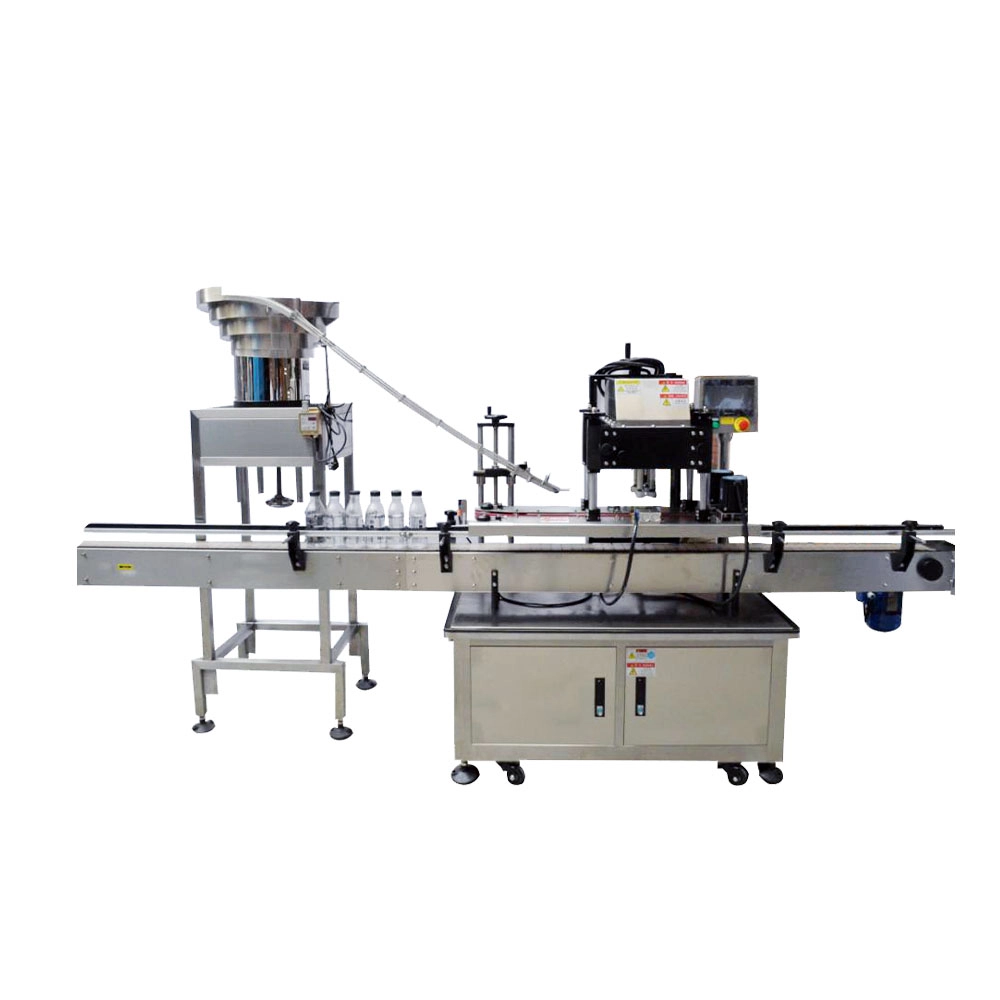
Automatic Plastic Caps Capping Machine with Vibrating Cap Feeder for Sale
Yuanyang automatic screw capping machine is a kind of four-wheel bottle capping machine. The automatic screw capper is often used to close lids of containers such as bottles and jars, especially for plastic bottles, which are widely used in food, medicine, chemical, cosmetic, and other industries for mass production and continuous production lines.
Features:
⦁ Full pneumatic drive;
⦁ Automated fast speed;
⦁ Suitable for various screw caps, pumps, and spray bottles.
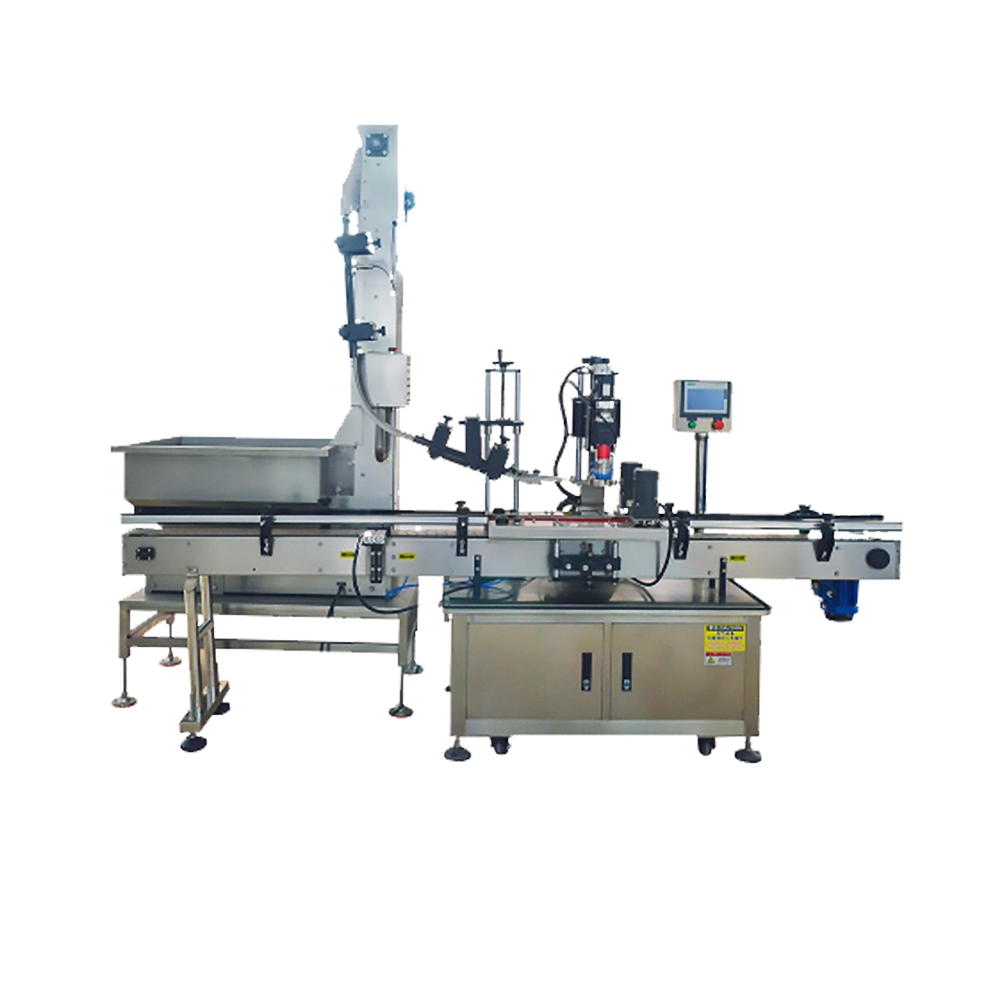
Automatic Metal Caps Capping Machine for Sale
Yuanyang automatic metal cap capping machine is a bottle capper for bottles with metal caps, which is often used to close lids of containers such as bottles and jars. The glass bottle metal capping machine is widely used in food, medicine, chemical, cosmetic, and other industries for mass production and continuous production line .
Features:
⦁ Pneumatic and electric drive;
⦁ Automated fast speed;
⦁ Suitable for glass bottles with metal caps.
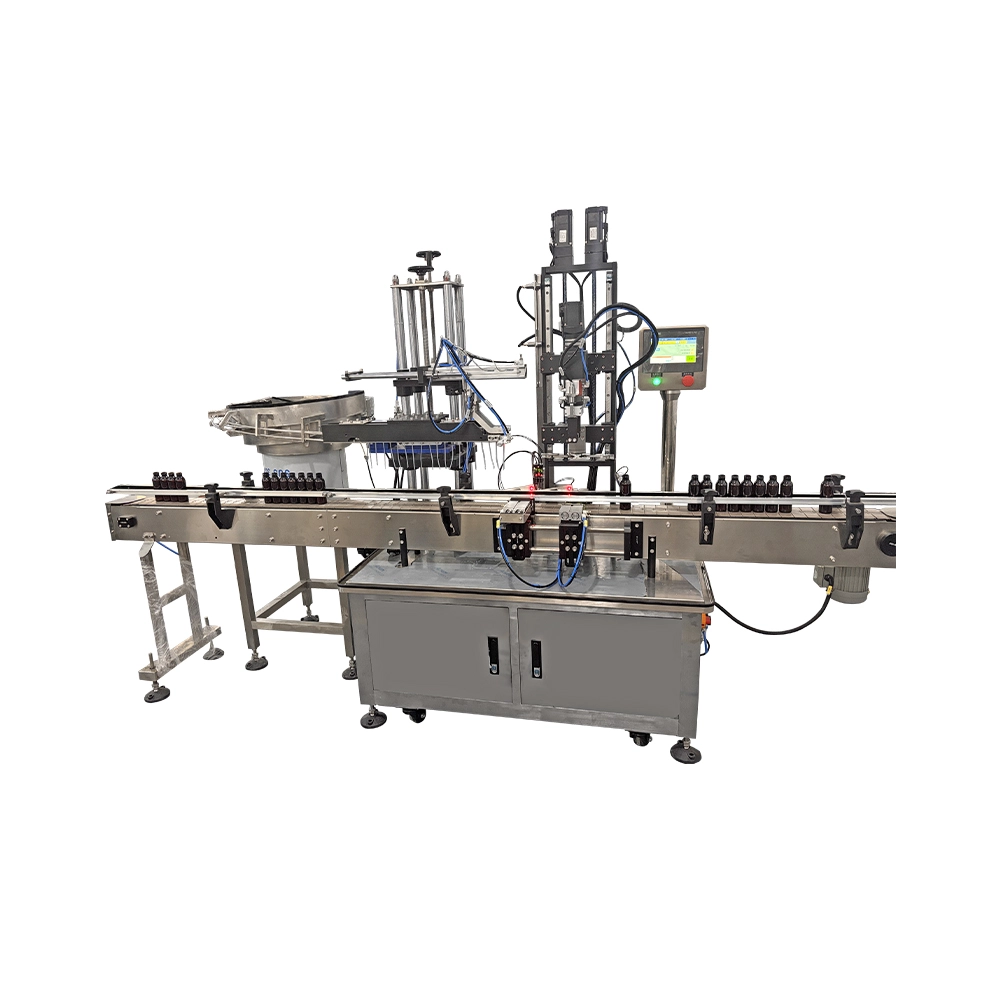
Automatic Pump Head Feeding and Capping Machine for Sale
Yuanyang automatic pump head feeding and capping machine is a bottle cap sorter and capper for bottles with pump heads, which is often used to close lids of containers such as nail polish, sprayers, and shampoo. The capping machine with a pump head feeder is widely used in food, medicine, chemical, cosmetic, and other industries for mass production and continuous production line .
Features:
⦁ Pneumatic and electric drive;
⦁ Automated fast speed;
⦁ Suitable for various types of caps.
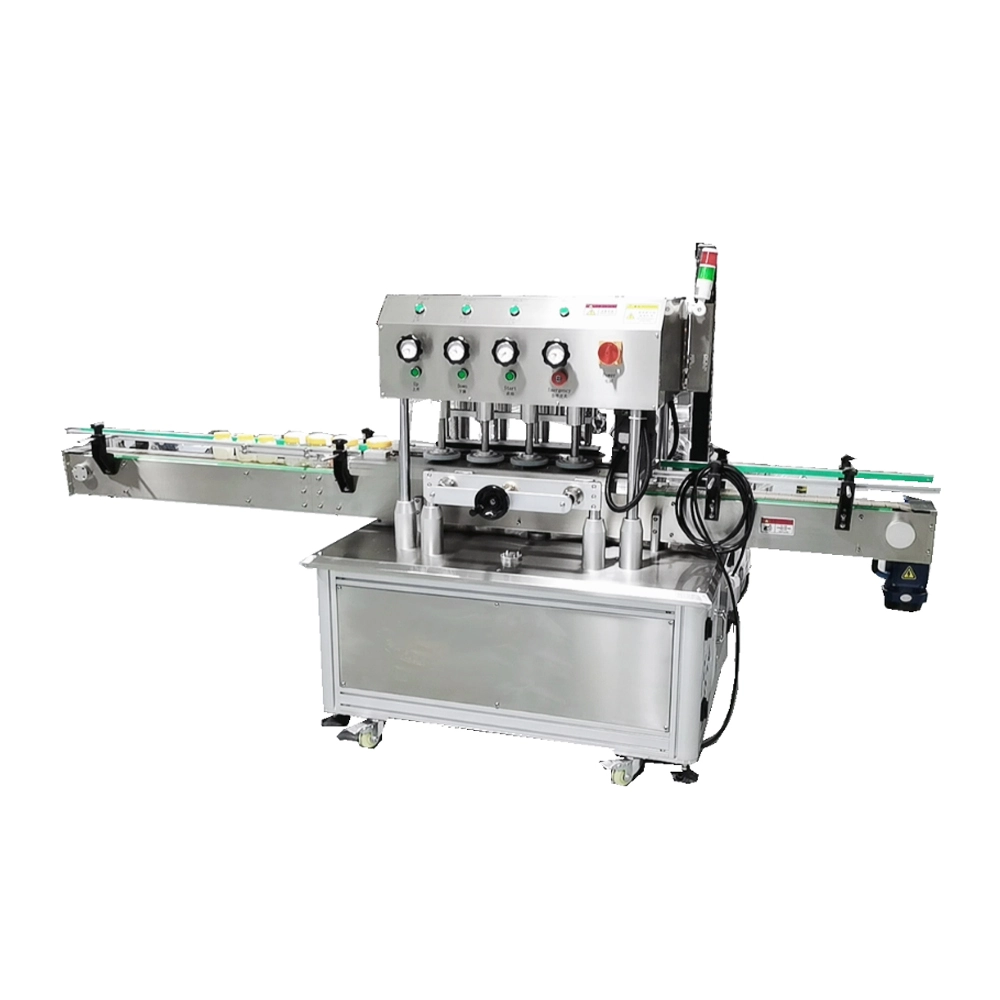
Automatic High Speed Capping Machine for Sale
The Yuanyang automatic high-speed capping machine is a kind of 8-wheel bottle-capping machine with fast working efficiency. The automatic capper is often used to close lids of containers such as bottles and jars, especially for plastic bottles, which are widely used in food, medicine, chemical, cosmetic, and other industries for mass production and continuous production lines.
Features:
⦁ Electric drive;
⦁ Automated fast speed;
⦁ Suitable for various screw caps, pumps, and spray bottles.
 Scan QR Code
Facebook
YouTube
LinkedIn
Whatsapp: +8613434139712
Guangzhou Yuanyang Machinery