





HMI and PLC Controls for Sachet Packaging Machines
- Overview: Why HMI and PLC Matter for Sachet Packaging Machines
- What HMI and PLC Do on a Sachet Packaging Machine
- Key Benefits: Accuracy, Speed, and Traceability
- Industry Context and Standards
- Choosing the Right HMI and PLC for Your Sachet Packing Machine
- Define Performance Requirements
- Communication and Integration
- Scaling, Redundancy and Remote Access
- System Design and Implementation for Sachet Packaging Machines
- Control Architecture and I/O Layout
- Recipe and Motion Control
- Validation, Testing and FAT/SAT
- Operation, Troubleshooting and Maintenance
- Operator Training and Usability
- Common Faults and Diagnostics
- Scheduled Maintenance and Data-driven Optimization
- Comparisons and Performance Metrics
- PLC Platforms: Selection Comparison
- HMI Usability: What to Look For
- Performance KPIs to Monitor
- Compliance, Safety and Cybersecurity
- Regulatory Compliance for Food and Pharmaceuticals
- Functional Safety and Machine Guards
- Cybersecurity Best Practices
- Practical Case: Upgrading a Sachet Packing Line
- Scenario and Goals
- Solution Overview
- Results and Metrics
- About the Product: Sachet Packaging Machine for Sale
- FAQ
- Q: What is the difference between HMI and PLC on a sachet packaging machine?
- Q: Can I retrofit HMI/PLC to older sachet packaging machines?
- Q: Which PLC features are essential for a high-speed sachet machine?
- Q: How do HMI/PLC systems support regulatory traceability?
- Q: What ongoing maintenance is required for HMI/PLC systems?
- Contact and Next Steps

For manufacturers and packagers worldwide looking to buy a sachet packaging machine with modern automation, the integration of HMI and PLC controls is fundamental to achieving consistent speed, precise dosing, and regulatory compliance across different production sites. This guide focuses on practical implementation, selection and maintenance of HMI/PLC systems for sachet packaging machines, addressing common production challenges and regional compliance needs to help you get the best return from a Sachet Packaging Machine for Sale.
Overview: Why HMI and PLC Matter for Sachet Packaging Machines
What HMI and PLC Do on a Sachet Packaging Machine
In a sachet packaging machine, the PLC acts as the central controller that executes logic for measurements (weighing or volumetric dosing), timing, sealing, and film transport. The HMI provides the operator interface for recipe selection, speed control, alarm display, and process visualization. Together they enable automation of filling, sealing and cutting operations that are essential for high-speed sachet filling lines (vertical form-fill-seal or premade pouch systems).
Key Benefits: Accuracy, Speed, and Traceability
Integrating HMI and PLC brings multiple operational advantages: faster changeovers through stored recipes, precise sachet filling for consistent net weight and reduced giveaway, and real-time data logging to support traceability and quality control. These features are especially important in food, pharmaceutical and chemical industries, where small deviations can lead to product loss or compliance issues.
Industry Context and Standards
Designing control systems for sachet packaging machines should align with industry best practices and standards. For PLC programming languages and structure, refer to the IEC 61131-3 standard (see IEC 61131). For food safety and packaging compliance, standards such as ISO 22000 and FDA guidance on food contact materials are commonly referenced; these inform requirements for traceability and documentation on automated packaging lines.
Choosing the Right HMI and PLC for Your Sachet Packing Machine
Define Performance Requirements
Start by mapping your production needs: target throughput (sachets/minute), product types (liquid, powder, paste), fill method (volumetric, auger, piston, gravimetric), and packaging film types (laminated rollstock or preformed sachets). These parameters determine the processing power, I/O count, and communication capabilities required from the PLC, and the HMI complexity for recipe and process management.
Communication and Integration
Ensure the PLC supports industrial communication protocols used in your plant (Ethernet/IP, Modbus TCP, PROFINET, OPC UA). OPC UA is increasingly adopted for secure data exchange and Industry 4.0 integration; see the OPC Unified Architecture resources for architecture reference. Choose an HMI that can visually present alarms, batch data, and OEE metrics and that can exchange data with MES/SCADA systems for centralized reporting.
Scaling, Redundancy and Remote Access
For high-availability lines, consider redundant PLC configurations or hot-swap I/O. Evaluate secure remote access capabilities (VPN and secure authentication) to allow vendor troubleshooting and software updates without compromising plant cybersecurity. When procuring a Sachet Packaging Machine for Sale, request documentation on remote service protocols and cybersecurity measures.
System Design and Implementation for Sachet Packaging Machines
Control Architecture and I/O Layout
Typical control architecture places the PLC at the machine level with local I/O for sensors (photoeyes, encoders, thermocouples for sealing jaws), actuators (servo drives, stepper motors, pneumatic valves), and safety inputs (E-stops, light curtains). The HMI is mounted on the machine for operator interaction and recipe selection. For multi-machine lines, a supervisory PLC or MES gateway consolidates data.
Recipe and Motion Control
Recipe management in the HMI allows quick changeovers when switching products or sachet sizes. Motion control is typically handled by servo drives commanded by the PLC to synchronize film pull, filling, and sealing. PID control loops regulate parameters such as temperature at the sealing jaws and flow rates in dosing systems to maintain pouch integrity and dose accuracy.
Validation, Testing and FAT/SAT
Factory Acceptance Testing (FAT) and Site Acceptance Testing (SAT) should verify recipe recall, speed ramps, fault handling, and compliance data logging. For pharmaceutical or food applications, create test protocols that refer to relevant standards such as ISO 22000 or region-specific regulatory requirements. Maintain version-controlled PLC/HMI programs and logs for audit trails.
Operation, Troubleshooting and Maintenance
Operator Training and Usability
Design HMIs with clear, intuitive screens: main run screen with current throughput and alarms, a recipe screen for bag dimensions and dosing parameters, and a maintenance screen with I/O status and historical alarms. Train operators on alarm prioritization and corrective actions to minimize downtime and avoid misadjustments that affect package quality.
Common Faults and Diagnostics
Typical issues on sachet packaging machines include film tracking errors, inconsistent fill weights, sealing defects and frequent encoder faults. Use HMI diagnostics to display encoder signals, servo alarm codes and I/O status to rapidly isolate the root cause. Implement conditional interlocks in the PLC to inhibit sealing when temperature or pressure is out of range, preventing scrap.
Scheduled Maintenance and Data-driven Optimization
Set maintenance schedules based on runtime hours and cycles for wear items (sealing jaws, cutting knives, belts, bearings). Use historical production data collected via PLC/HMI to identify trends—e.g., a gradual rise in sealing temperature variance may indicate jaw wear. Data-driven maintenance reduces unplanned downtime and extends equipment life.
Comparisons and Performance Metrics
PLC Platforms: Selection Comparison
Below is a concise comparison table for common PLC attributes that influence sachet machine performance. Choose the platform that matches your I/O, motion, and network requirements.
| Attribute | Entry-level PLC | Mid-range PLC | High-end / Motion PLC |
|---|---|---|---|
| Typical Use | Simple electro-mechanical sachet machines | Multi-function machines with moderate I/O | High-speed sachet lines with advanced motion |
| I/O Count | Low (≤ 64) | Medium (64–256) | High (≥ 256) |
| Motion Control | Limited | Basic servo support | Advanced multi-axis synchronized |
| Network | Modbus, basic Ethernet | Ethernet/IP, PROFINET | Ethernet/IP, PROFINET, OPC UA |
HMI Usability: What to Look For
Evaluate HMIs for touchscreen responsiveness, customization of screens, recipe management, multilingual support, and data logging/reporting. For multi-site operations, ensure the HMI can export logs or integrate with SCADA/MES for centralized monitoring.
Performance KPIs to Monitor
Track OEE (availability, performance, quality), average cycle time, reject rate, and mean time between failures (MTBF). These KPIs, available from PLC/HMI data, drive continuous improvement programs and support ROI calculations for automation upgrades.
Compliance, Safety and Cybersecurity
Regulatory Compliance for Food and Pharmaceuticals
Sachet packaging in regulated industries must support traceability and batch documentation. Use PLC/HMI data logging to capture production batches, ingredient lot numbers and operator signatures where required. Refer to ISO 22000 for food safety management systems and local FDA guidance on packaging materials where applicable (see FDA Food Guidance).
Functional Safety and Machine Guards
Implement safety PLC or integrated safety I/O for emergency stops, light curtains, and interlocks. Safety functions should be validated according to applicable machine safety standards and risk assessments. For general machine safety principles, consult resources from standards bodies such as the International Organization for Standardization (ISO).
Cybersecurity Best Practices
Control systems should adhere to basic cybersecurity practices: segmented networks, updated firmware, secure remote access, and role-based authentication. For industrial control security guidance, you can review publications by organizations such as IEEE and cybersecurity frameworks tailored for OT networks.
Practical Case: Upgrading a Sachet Packing Line
Scenario and Goals
A mid-size food manufacturer needed to upgrade legacy relay-based sachet machines to reduce giveaway and increase line speed. Goals included implementing recipe-based dosing, electronic batch records, and improved fault diagnostics to cut downtime by 30%.
Solution Overview
The upgrade replaced relay logic with a mid-range PLC supporting servo motion, added a user-friendly HMI with recipe management and batch export, and integrated weigh scales to a gravimetric dosing system controlled by the PLC. The system communicated via OPC UA to the plant MES for centralized batch records.
Results and Metrics
After commissioning, the line achieved a 15% increase in throughput, a 40% reduction in packaging weight variance and a measurable drop in unplanned stoppages. These improvements were validated through KPI dashboards generated from PLC/HMI logs.
About the Product: Sachet Packaging Machine for Sale
Yuanyang sachet packaging machine is a kind of automatic equipment, mainly used for measuring, filling, and sealing small bag packing materials. The sachet packing machine has become an indispensable piece of equipment in modern production for food, medicine, chemicals, and other fields.
Features:
⦁ Microcomputer controlled;
⦁ Automated fast speed;
⦁ Multi-function integration.
FAQ
Q: What is the difference between HMI and PLC on a sachet packaging machine?
A: The PLC executes control logic and handles I/O, while the HMI is the operator-facing interface for monitoring, recipe selection, and alarms. The PLC does the machine control; the HMI makes it accessible and configurable.
Q: Can I retrofit HMI/PLC to older sachet packaging machines?
A: Yes. Retrofitting is common: replace relay logic with a PLC, add an HMI, and integrate motion drivers and sensors. Ensure proper FAT/SAT, electrical compatibility, and updated safety interlocks before commissioning.
Q: Which PLC features are essential for a high-speed sachet machine?
A: Essential features include multi-axis motion control, fast deterministic scan times, sufficient I/O capacity, encoder and servo support, and robust communication (Ethernet/IP or PROFINET). Also consider diagnostics and secure remote connectivity.
Q: How do HMI/PLC systems support regulatory traceability?
A: They log batch IDs, timestamps, operator actions and recipe versions. Data can be exported to MES or archival systems to meet traceability and audit requirements in food and pharmaceutical industries.
Q: What ongoing maintenance is required for HMI/PLC systems?
A: Regular backups of PLC/HMI programs, firmware updates (after validation), checking connectors and power supplies, cleaning HMIs, and reviewing logged alarms and I/O diagnostics are recommended. Establish a version control and change management process.
Contact and Next Steps
If you are evaluating a Sachet Packaging Machine for Sale or need consultation on HMI and PLC integration for your line, contact our sales and technical team to discuss specifications, FAT/SAT plans and pricing. View the product catalog or request a quote to get customized recommendations and a control architecture proposal.
Contact us: For inquiries, request a demo, or view the full product specification, please contact sales or view product details now.
References:
Why choose YUANYANG as your milk homogenizer supplier
Top 10 powder ribbon mixer Manufacturers and Supplier Brands
Top 10 vibrating sand sieving machine Manufacturers and Supplier Brands in France
Cosmetic Mixing Tanks Guide | YUANYANG
Cosmetic Making Machine
Why water pot and oil pot are needed?
The combination of water pot and oil pot plays a crucial role for cosmetic production equipment, which ensure the stability of the emulsification process and product quality through pretreatment and precise control each phase materials.
⦁ Pretreatment
The water pot and oil are equipped with heating and dispersing function. Each phase can be dissolved,dispersed,heated before entering into the main emulsifying equipment. The pretreatment improves emulsification efficiency, reduces unnecessary mixing problems, and ensures that the material is in the best condition during emulsification
⦁ Precise control
Each phase is with a separated pot. Through the precise control system of water pot and oil pot, the materials can be added to the emulsion pot according to the preset ratio and speed, to ensure the uniformity and stability of the mixing process. This precise control helps to produce a high quality, consistent product.
Automatic Servo Motor Capping Machine
Is there a bottle gripper to keep thin bottles stable?
Yes, the auto servo capping machine is equipped with pneumatic clamping device for bottle stability.
Desktop Labeling Machine
Do you have other types of labeling machine?
Yes, there are several types of labeling machine, including semi-automatic labeling machine, automatic labeling machine, round bottle labeling machine, flat labeling machine, double sides labeling machine, square bottle labeling machine.
Portable Storage Tank
Can you add a lid for the storage tank?
Yes, the lid can be added and customized. For example, with a central hole for overhead mixer, with a material hopper for adding powder or liquids.
Automatic auger filling machine
What’s the maximum weight that the automatic powder packing machine pack?
The maximum filling weight is 1000g. For packing weight over 1000g, the semi automatic powder filler is recommended.
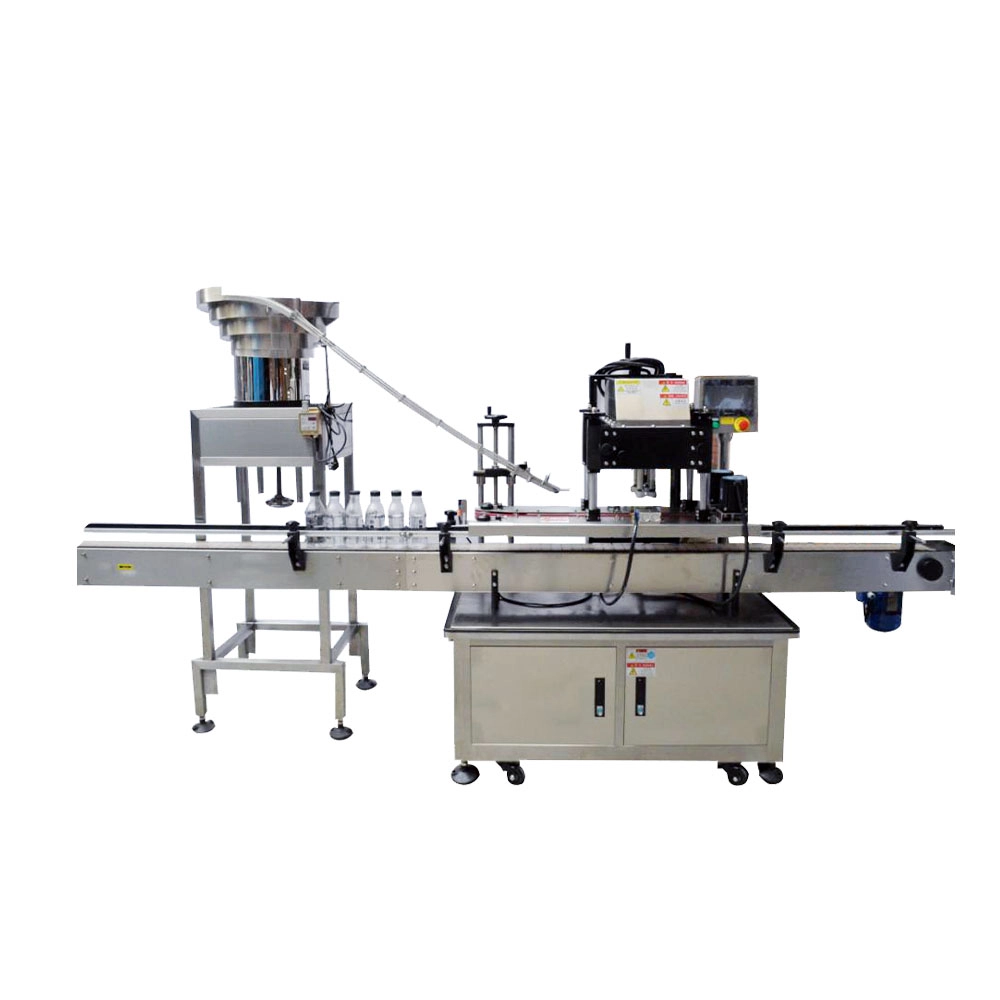
Automatic Plastic Caps Capping Machine with Vibrating Cap Feeder for Sale
Yuanyang automatic screw capping machine is a kind of four-wheel bottle capping machine. The automatic screw capper is often used to close lids of containers such as bottles and jars, especially for plastic bottles, which are widely used in food, medicine, chemical, cosmetic, and other industries for mass production and continuous production lines.
Features:
⦁ Full pneumatic drive;
⦁ Automated fast speed;
⦁ Suitable for various screw caps, pumps, and spray bottles.
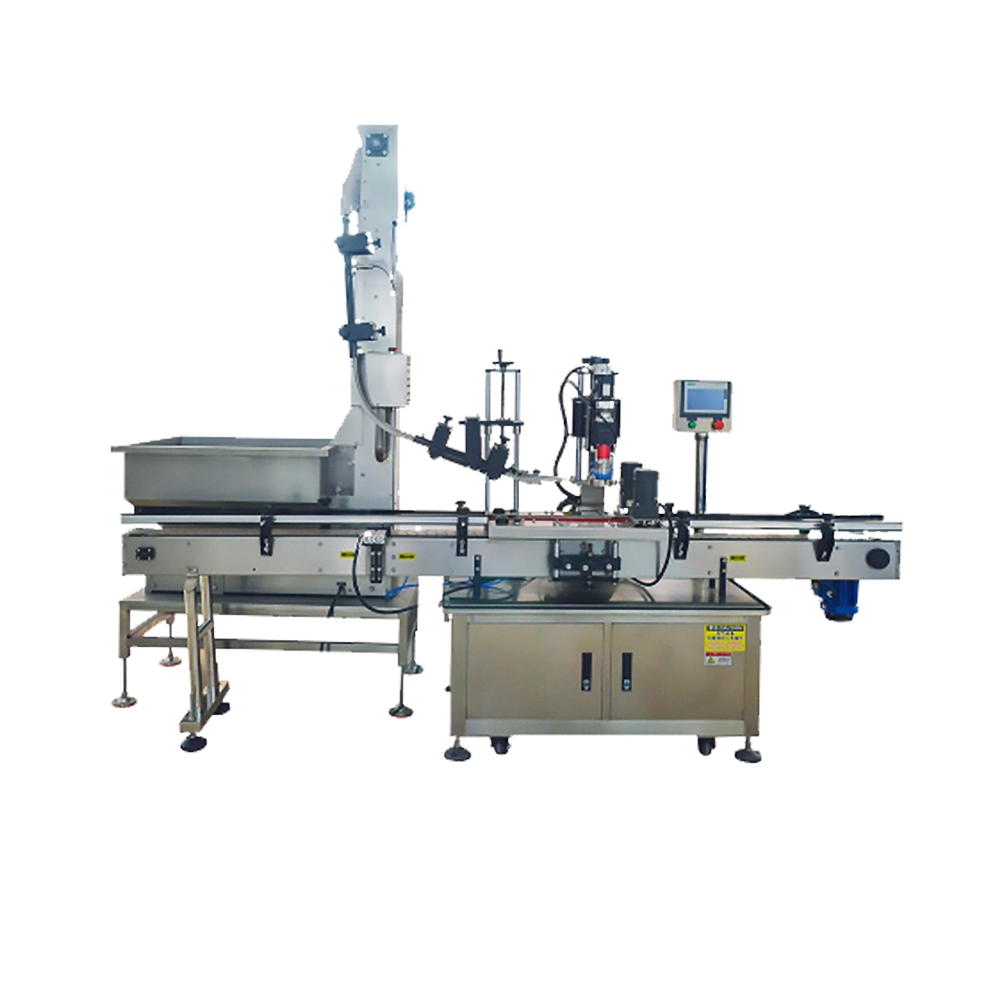
Automatic Metal Caps Capping Machine for Sale
Yuanyang automatic metal cap capping machine is a bottle capper for bottles with metal caps, which is often used to close lids of containers such as bottles and jars. The glass bottle metal capping machine is widely used in food, medicine, chemical, cosmetic, and other industries for mass production and continuous production line .
Features:
⦁ Pneumatic and electric drive;
⦁ Automated fast speed;
⦁ Suitable for glass bottles with metal caps.
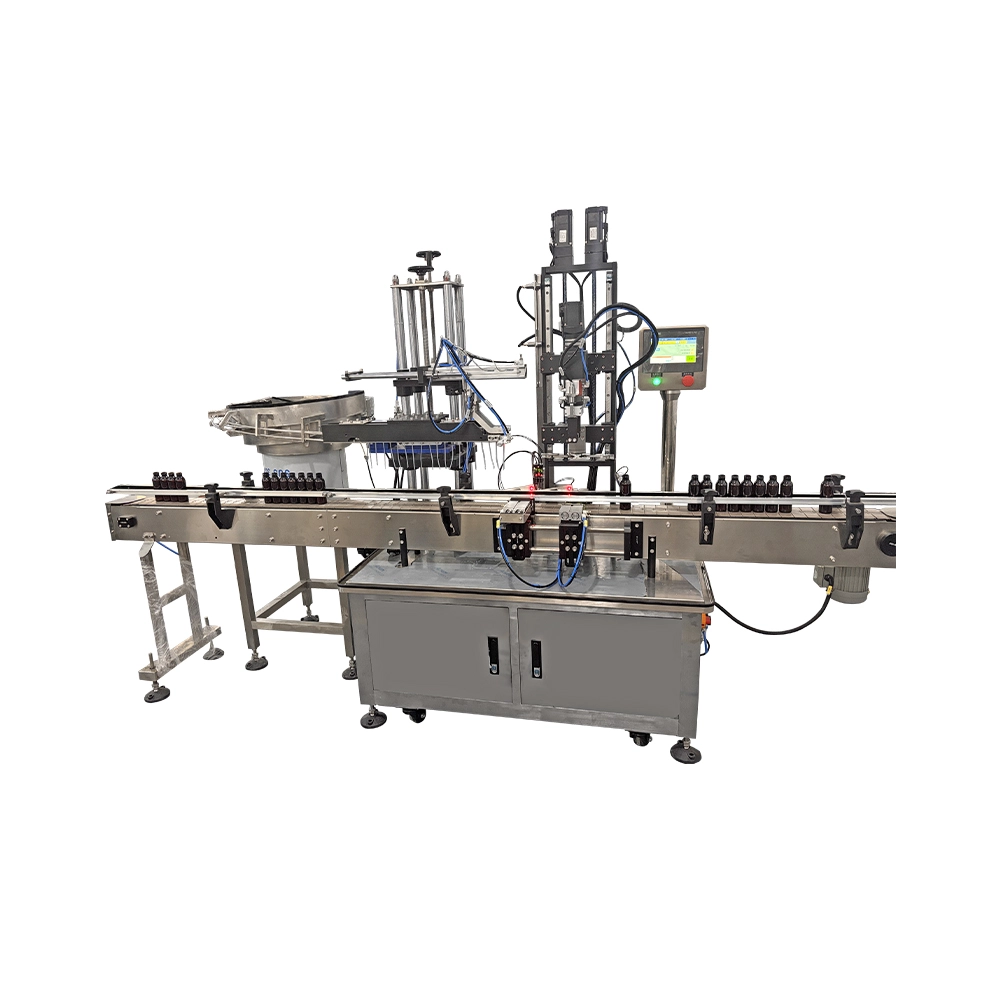
Automatic Pump Head Feeding and Capping Machine for Sale
Yuanyang automatic pump head feeding and capping machine is a bottle cap sorter and capper for bottles with pump heads, which is often used to close lids of containers such as nail polish, sprayers, and shampoo. The capping machine with a pump head feeder is widely used in food, medicine, chemical, cosmetic, and other industries for mass production and continuous production line .
Features:
⦁ Pneumatic and electric drive;
⦁ Automated fast speed;
⦁ Suitable for various types of caps.
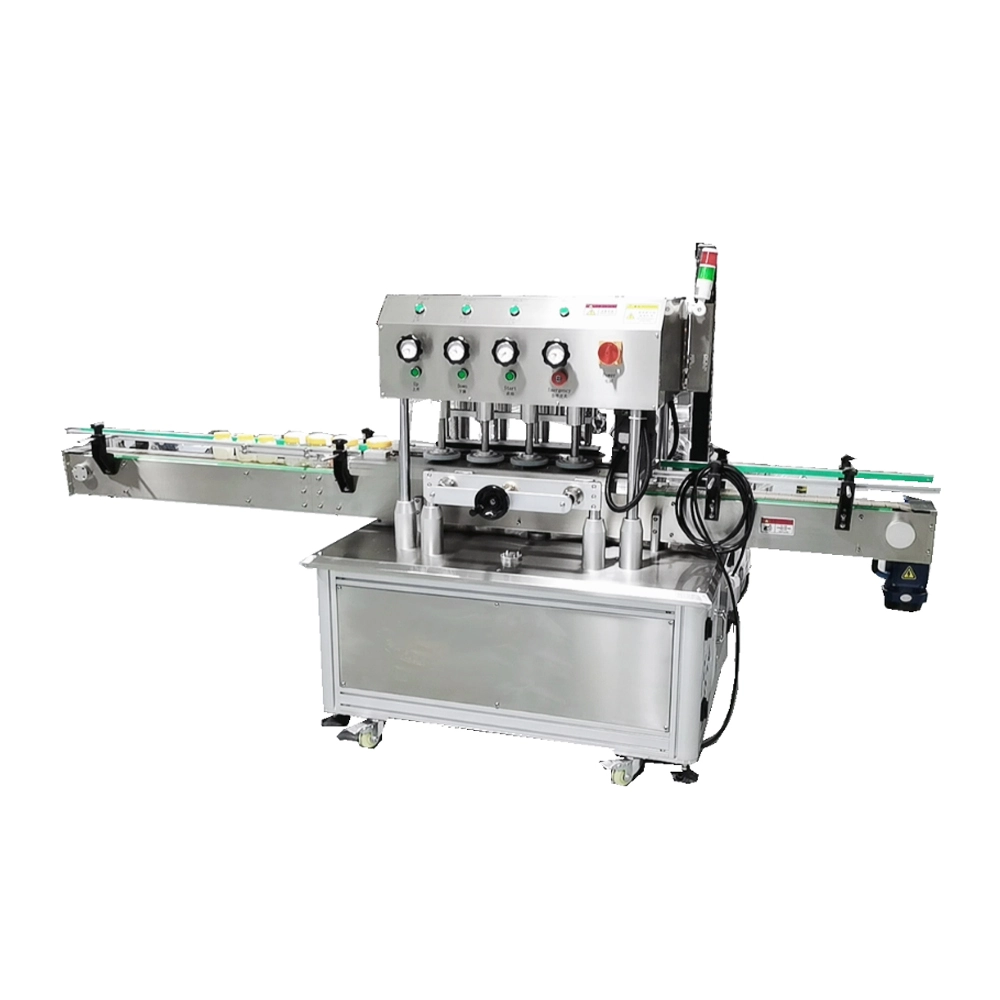
Automatic High Speed Capping Machine for Sale
The Yuanyang automatic high-speed capping machine is a kind of 8-wheel bottle-capping machine with fast working efficiency. The automatic capper is often used to close lids of containers such as bottles and jars, especially for plastic bottles, which are widely used in food, medicine, chemical, cosmetic, and other industries for mass production and continuous production lines.
Features:
⦁ Electric drive;
⦁ Automated fast speed;
⦁ Suitable for various screw caps, pumps, and spray bottles.
 Scan QR Code
Facebook
YouTube
LinkedIn
Whatsapp: +8613434139712
Guangzhou Yuanyang Machinery