





Wholesale liquid detergent mixing tank manufacturer and supplier
- Introduction: Why wholesale liquid detergent mixing tanks matter
- Yuanyang at a glance: a trusted manufacturer and supplier
- Key features of a high-performance liquid detergent mixing tank
- Materials and construction for detergent compatibility
- Mixing systems: match the agitator to the formulation
- Heating, cooling, and vacuum features
- How mixing tank specifications affect wholesale production
- Comparing mixer technologies for liquid detergent production
- Production line integration: beyond the mixing tank
- Customization and capacity planning for wholesalers
- Quality, safety, and compliance for global wholesale supply
- Cost drivers and ROI considerations for buying mixing tanks wholesale
- Installation, training, and after-sales service: minimizing deployment risk
- Selecting the right supplier: checklist for wholesalers
- Conclusion: How to proceed as a wholesale buyer
- Frequently Asked Questions
- References and sources
Introduction: Why wholesale liquid detergent mixing tanks matter
Choosing the right liquid detergent mixing tank is a commercial decision with direct impact on product quality, production capacity, and cost per liter. Wholesale buyers and contract manufacturers need reliable, hygienic, and scalable mixing systems—often integrated with vacuum homogenizers, high-shear mixers, storage tanks, and filling lines—to meet demand while maintaining stable formulations. This article explains how to select, specify, and evaluate liquid detergent mixing tanks and why partnering with an experienced manufacturer like Yuanyang can accelerate time-to-market.
Yuanyang at a glance: a trusted manufacturer and supplier
Yuanyang is one of the leading industrial mixer and agitator manufacturers in China, producing vacuum homogenizers, vacuum emulsifying mixers, high-shear mixers, and other vacuum mixers since 2008. Yuanyang provides complete production line equipment—including mixing tanks, storage tanks, filling machines, capping machines, labeling machines, sealing machines, inkjet printers, and water treatment equipment—along with free technical training and one-stop installation support. The company has obtained multiple CE certifications, demonstrating compliance with EU safety and health marking requirements. For wholesalers seeking turnkey production capabilities, Yuanyang offers end-to-end solutions that reduce supplier complexity and speed deployment.
Key features of a high-performance liquid detergent mixing tank
When sourcing a liquid detergent mixing tank, prioritize hygienic construction, flexibility in mixing technologies, and process control. A suitable tank should support various agitators (anchor, propeller, turbine), high-shear homogenizing, heating/cooling jackets, vacuum capability for deaeration, and reliable seals for long service life.
Materials and construction for detergent compatibility
Stainless steel 304 (SS304) is common for many detergent formulations; SS316L is recommended for products containing corrosive additives or for customers requiring higher corrosion resistance and pharmaceutical-grade cleanliness. Tank interiors should be mirror-polished to Ra values suitable for easy cleaning, and welds should be ground smooth to prevent product buildup.
Mixing systems: match the agitator to the formulation
Different detergents require different mixing methods: low-viscosity liquid detergents often need propeller or turbine agitators for efficient blending, while viscous formulations, gels, or suspensions benefit from anchor agitators or high-shear mixers and vacuum homogenizers to break down agglomerates and ensure stability.
Heating, cooling, and vacuum features
Integrated jackets or coil systems enable precise temperature control for surfactant dissolution and viscosity management. Vacuum deaeration minimizes foam and trapped air, improving fill weights and shelf stability—critical when producing wholesale batches destined for automated filling lines.
How mixing tank specifications affect wholesale production
Volume, material, mixing power, and additional functions (CIP/SIP, vacuum, heating) shape production throughput and flexibility. Wholesalers should plan tank capacities to match expected batch sizes while allowing headroom for formulation changes or demand growth.
| Typical Tank Size | Typical Batch Volume | Application | Estimated Throughput per 8-hour Shift |
|---|---|---|---|
| 500–1,000 L (Small) | 300–900 L | R&D, small-batch private labels | 2–6 batches |
| 1,000–3,000 L (Medium) | 800–2,500 L | Regional wholesale production | 2–5 batches |
| 3,000–10,000 L (Large) | 2,500–9,000 L | High-volume contract manufacturing | 1–4 batches |
Note: Throughput depends on mixing time, heating/cooling cycles, and downstream filling capacity. These ranges are representative; exact figures require process-specific testing.
Comparing mixer technologies for liquid detergent production
Selecting the correct mixer type is central to product quality. The table below summarizes common options and their best uses for liquid detergent formulations.
| Mixer Type | Best for | Benefits | Considerations |
|---|---|---|---|
| Propeller / Turbine | Low- to medium-viscosity liquids | Fast blending, low shear, energy-efficient | Less effective on high-viscosity or particle suspensions |
| Anchor / Scraper | High-viscosity gels or pastes | Good wall scraping, uniform heat transfer | Slower mixing, higher power needs |
| High-Shear Rotor-Stator | Emulsions, suspensions, dispersions | Quick particle reduction, stable emulsions | Higher maintenance, generates shear heat |
| Vacuum Homogenizer | Foam-sensitive blends, micro-emulsions | Deaerates, improves texture and stability | Requires vacuum system and routine maintenance |
Production line integration: beyond the mixing tank
Wholesale liquid detergent production requires integrated equipment: storage tanks for intermediates, homogenizers to achieve product stability, filtration systems for clarity, filling and capping machines for packaging, and labeling and sealing lines that match SKU requirements. Yuanyang supplies these elements to form a cohesive, automated line that reduces labor cost and improves consistency.
Customization and capacity planning for wholesalers
Customizing tank geometry, agitator type, and instrumentation (flow meters, level sensors, temperature probes) is essential when scaling formulations from pilot to commercial production. Build flexibility into specifications—modular agitators, interchangeable heads, and spare capacity—to allow new formulations without major capital expenditure.
Quality, safety, and compliance for global wholesale supply
CE marking is important when exporting to the EU: it indicates conformity with relevant health and safety directives. In addition to CE, follow hygienic design practices (smooth interiors, CIP systems, sanitary fittings) and documentation protocols (traceable materials, welding records) to meet buyer expectations and regulatory audits. Yuanyang’s CE-certified equipment streamlines market access for European customers.
Cost drivers and ROI considerations for buying mixing tanks wholesale
Major cost drivers include tank material grade (SS316L vs SS304), mixing power and complexity (vacuum systems, homogenizers), automation level, and required certifications. Evaluate total cost of ownership by considering energy consumption, maintenance intervals, expected uptime, and the speed at which new capacity will pay back the investment due to increased production or new contract wins.
Installation, training, and after-sales service: minimizing deployment risk
One of the most overlooked aspects of a capital purchase is installation and commissioning. Yuanyang provides one-stop installation support and free technical training, which reduces ramp-up time and helps operators achieve consistent product quality more quickly. Verify that suppliers provide spare parts packages, preventative maintenance schedules, and remote technical support to avoid costly downtime.
Selecting the right supplier: checklist for wholesalers
Use this checklist when evaluating suppliers of liquid detergent mixing tanks: manufacturing experience in detergent equipment, range of mixing technologies (vacuum homogenizers, high-shear mixers), CE and other relevant certifications, turnkey production line capabilities, references and case studies, warranty and spare parts availability, and ability to provide on-site training and installation.
Conclusion: How to proceed as a wholesale buyer
Wholesale buyers should prioritize a mixing tank supplier that combines proven mixing technologies, hygienic construction, and turnkey integration services. For many wholesalers, partnering with an experienced manufacturer like Yuanyang reduces procurement complexity and shortens time-to-market. Start by validating formulation needs, estimating batch sizes and throughput, and requesting a detailed proposal and process validation plan from the supplier. Pilot trials and site acceptance tests (SAT) are recommended before committing to full-scale production.
For wholesalers seeking CE-certified equipment and end-to-end production lines—mixing tanks, vacuum homogenizers, filling, capping, and labeling—Yuanyang offers tailored solutions, free technical training, and installation support to ensure your liquid detergent production runs efficiently and consistently.
Frequently Asked Questions
What is a liquid detergent mixing tank and why is vacuum useful?A liquid detergent mixing tank is a vessel equipped with agitators and process utilities designed to blend surfactants, solvents, thickeners, fragrances, and additives into a stable product. Vacuum is useful for deaeration—removing air and foam—which improves product density, appearance, and fill accuracy for automated filling lines.
How do I choose the right tank size for wholesale production?Choose tank size based on target batch volume, expected demand, mixing time, and downstream filling capacity. Typical wholesale setups use 1,000–10,000 L tanks. Consider building in 20–30% headroom for flexibility and scale.
What materials are best for detergent tanks?SS304 is suitable for many formulations; SS316L is recommended for corrosive additives or when superior corrosion resistance and stricter sanitary conditions are required.
Do I need a high-shear mixer or a vacuum homogenizer?If your formulation contains insoluble particles, pigments, or requires stable emulsions, a high-shear mixer or vacuum homogenizer is beneficial. For foam-prone products where deaeration is crucial, vacuum homogenizers offer distinct advantages.
What certifications should I request from a supplier?For EU markets, request CE marking. Also verify material certificates (e.g., 3.1 mill certificates for stainless steel), welding documentation, and compliance to hygienic design guidelines if required by your buyers.
How long does installation and commissioning typically take?Installation timelines vary by project complexity. Small-scale lines may be commissioned in 2–4 weeks; larger turnkey systems can take several months including FAT (Factory Acceptance Test), shipping, on-site installation, and SAT. Ask your supplier for a detailed project schedule.
References and sources
- Industry market reports from Grand View Research on detergents and cleaning products (market growth and CAGR ranges).
- MarketsandMarkets analyses of liquid and laundry detergent markets (trends and technology adoption).
- Statista industry data on household cleaning products and formulation trends.
- European Commission guidance on CE marking and applicable directives for machinery and safety.
- EHEDG (European Hygienic Engineering & Design Group) guidelines on hygienic design for process equipment.
- Yuanyang Machinery official product and company information: https://www.yuanymachinery.com/
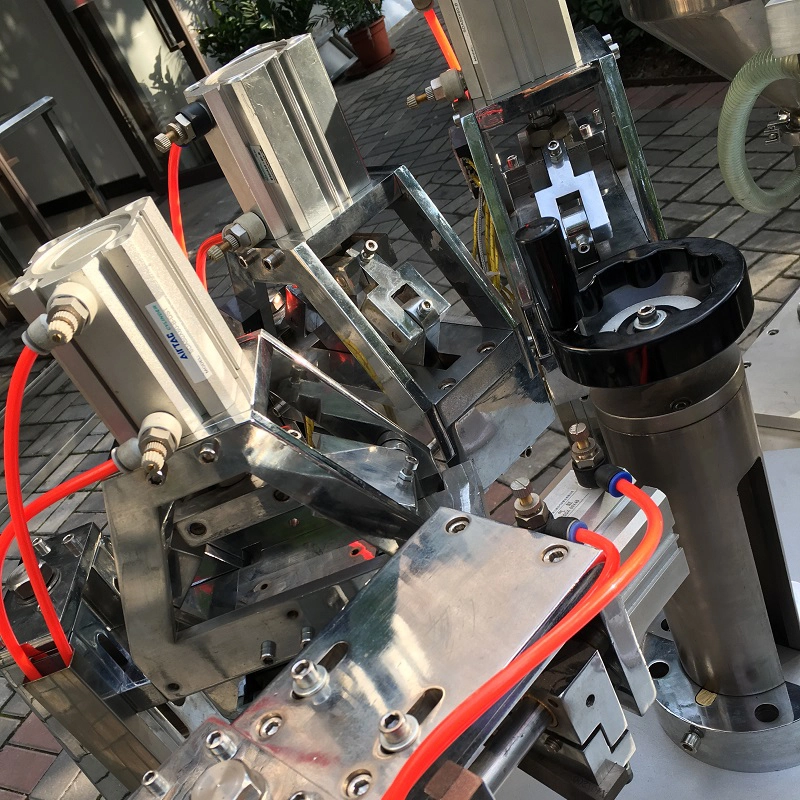
Reducing TCO: Energy and Maintenance Tips for Sealing Machines
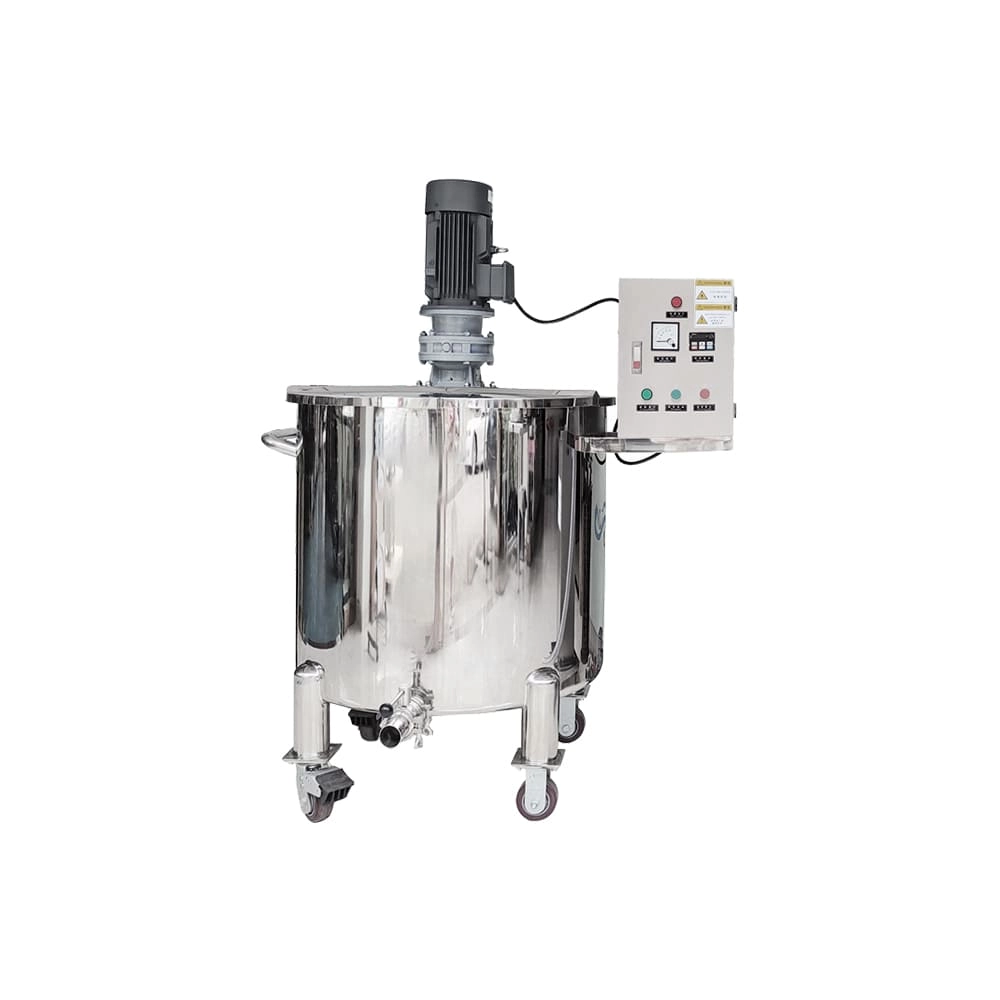
Buyer's Guide: Choosing the Right Stainless Steel Mixing Tank
Tips for Wholesale rotary powder mixer in France
Tips for Wholesale industrial mixer homogenizer in Europe
Automatic Round Bottle Labeling Machine
Can you add a date printer for the labeling machine?
Yes, a coding machine for date printing can be added with labeling machine. It can print date on labels with ink. But for more functions,such print code, pictures, bar code, it is suggested to buy a separated ink jet printer.
Cosmetic
Do your equipment meet GMP and other industry standards?
Yes. Our equipment fully complies with GMP, ISO, and other international industry standards and can be customized to meet specific regulatory requirements based on different markets and customers.
Vacuum Homogneizer
Is it necessary to clean for each batch production?
There is no need to clean quite often for the same products. But for different products, it is better to clean every time before the production of different products.
One Stage Water Treatment
When do you recommend pvc type and stainless steel type?
Regarding price, pvc type is cheaper, if client wants to save cost, can choose pvc type; regarding quality, stainless steel type is better, especially in too cold temperature,better resistance to low temperature.
Single Layer Agitator Tank
Does the mixing tanks have cooling function?
The single layer mix tank has no cooling function. If you client need cooling function, will customize at least two layers with one jacket for cooling purpose.
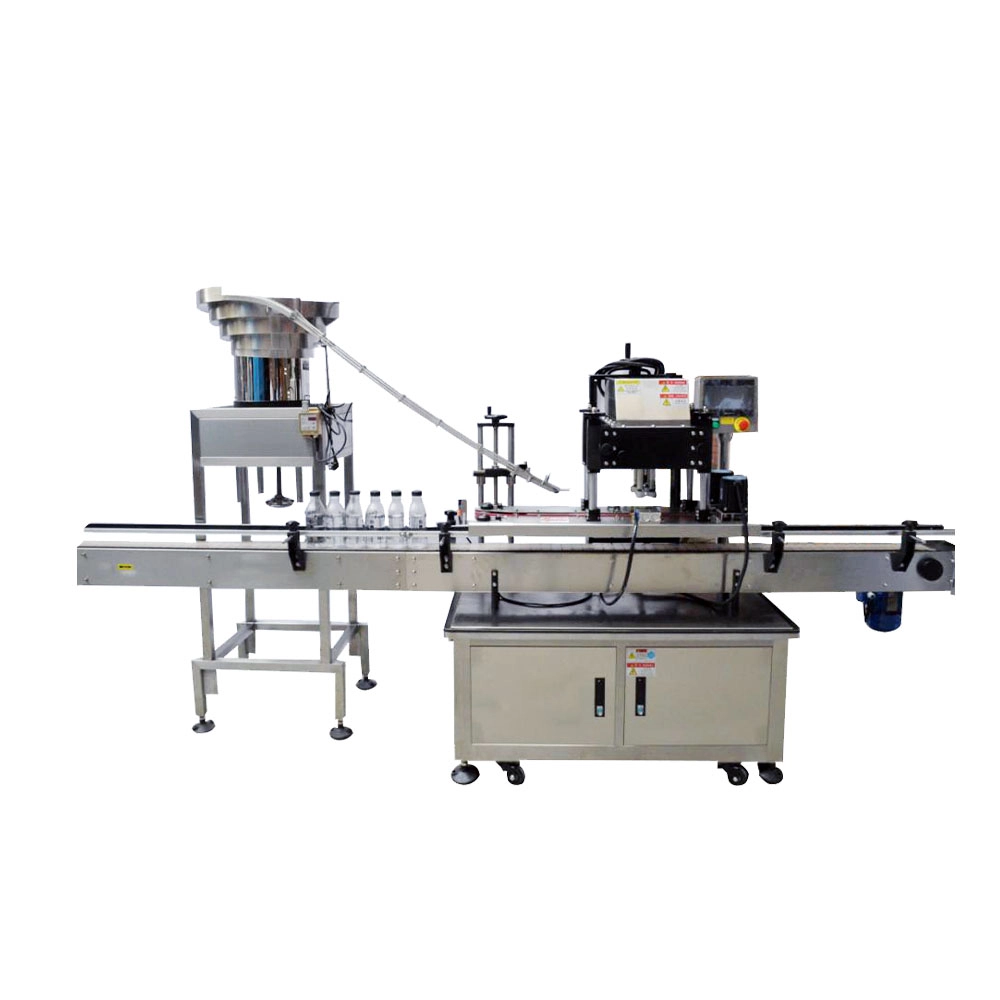
Automatic Plastic Caps Capping Machine with Vibrating Cap Feeder for Sale
Yuanyang automatic screw capping machine is a kind of four-wheel bottle capping machine. The automatic screw capper is often used to close lids of containers such as bottles and jars, especially for plastic bottles, which are widely used in food, medicine, chemical, cosmetic, and other industries for mass production and continuous production lines.
Features:
⦁ Full pneumatic drive;
⦁ Automated fast speed;
⦁ Suitable for various screw caps, pumps, and spray bottles.
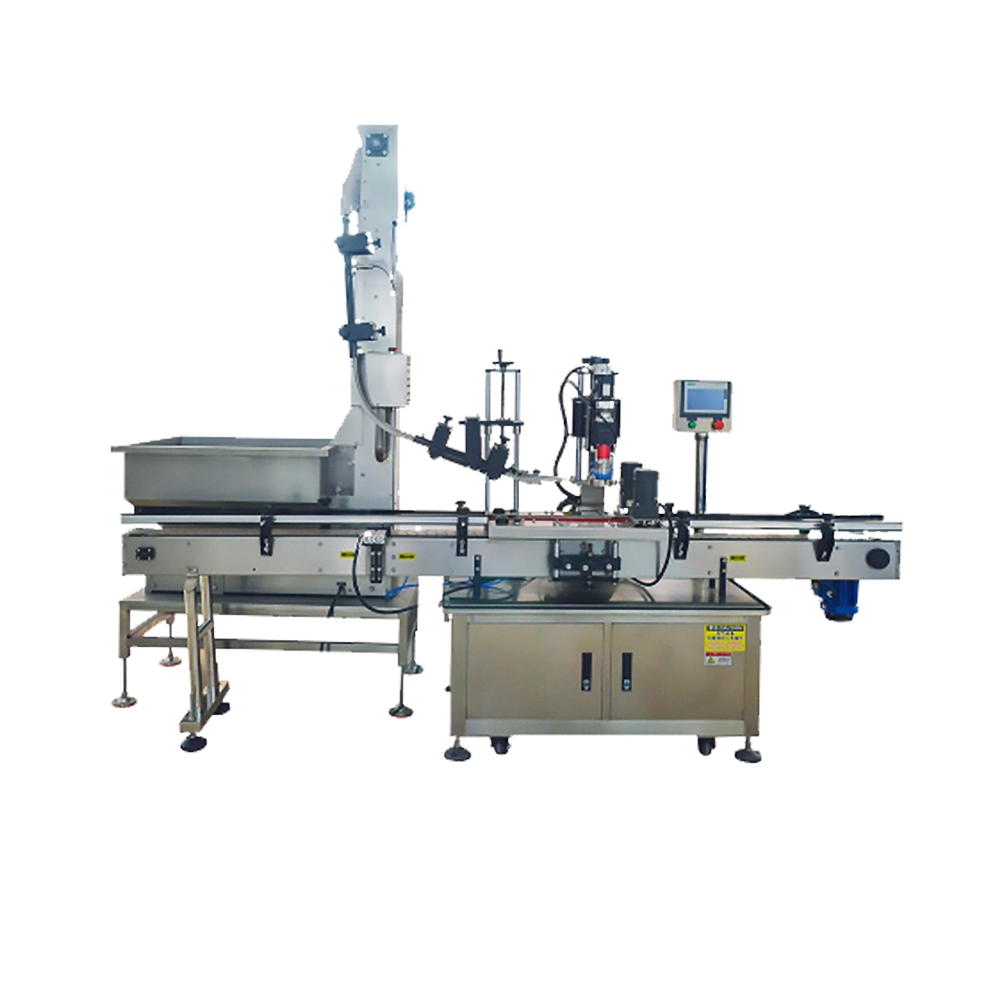
Automatic Metal Caps Capping Machine for Sale
Yuanyang automatic metal cap capping machine is a bottle capper for bottles with metal caps, which is often used to close lids of containers such as bottles and jars. The glass bottle metal capping machine is widely used in food, medicine, chemical, cosmetic, and other industries for mass production and continuous production line .
Features:
⦁ Pneumatic and electric drive;
⦁ Automated fast speed;
⦁ Suitable for glass bottles with metal caps.
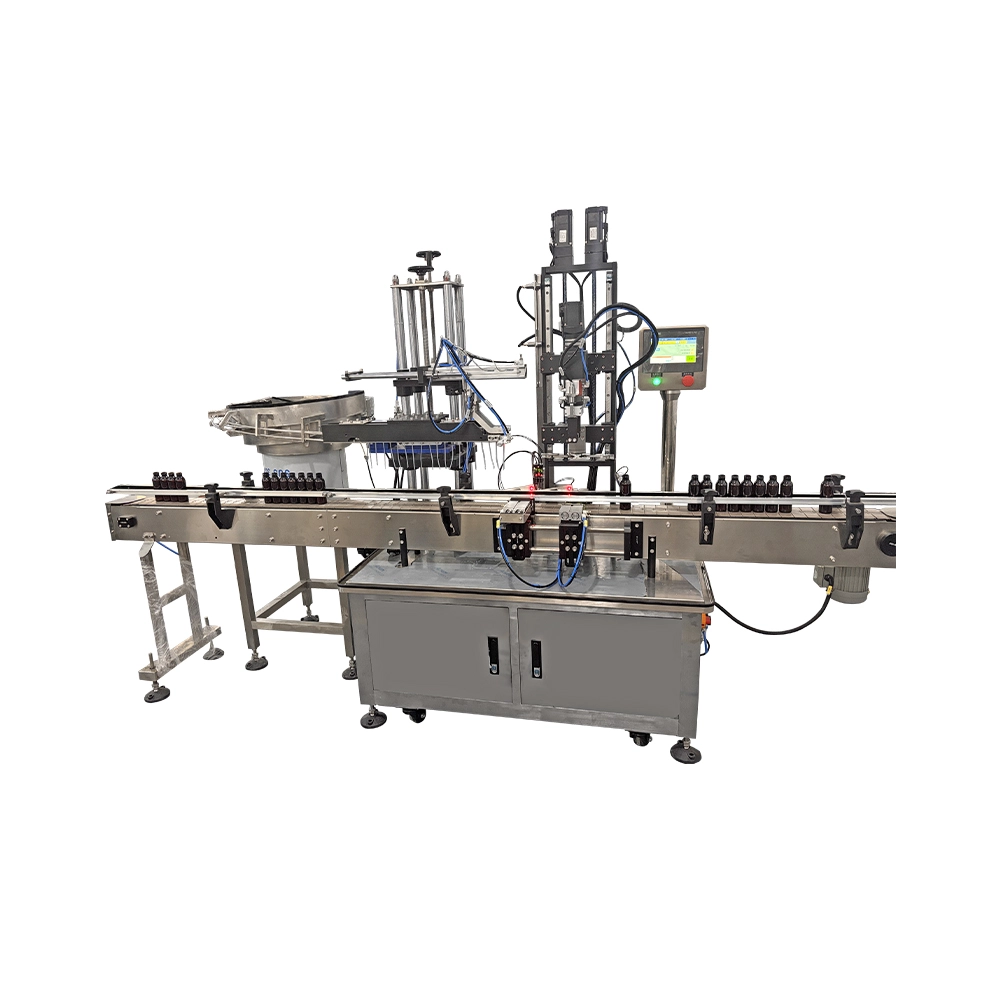
Automatic Pump Head Feeding and Capping Machine for Sale
Yuanyang automatic pump head feeding and capping machine is a bottle cap sorter and capper for bottles with pump heads, which is often used to close lids of containers such as nail polish, sprayers, and shampoo. The capping machine with a pump head feeder is widely used in food, medicine, chemical, cosmetic, and other industries for mass production and continuous production line .
Features:
⦁ Pneumatic and electric drive;
⦁ Automated fast speed;
⦁ Suitable for various types of caps.
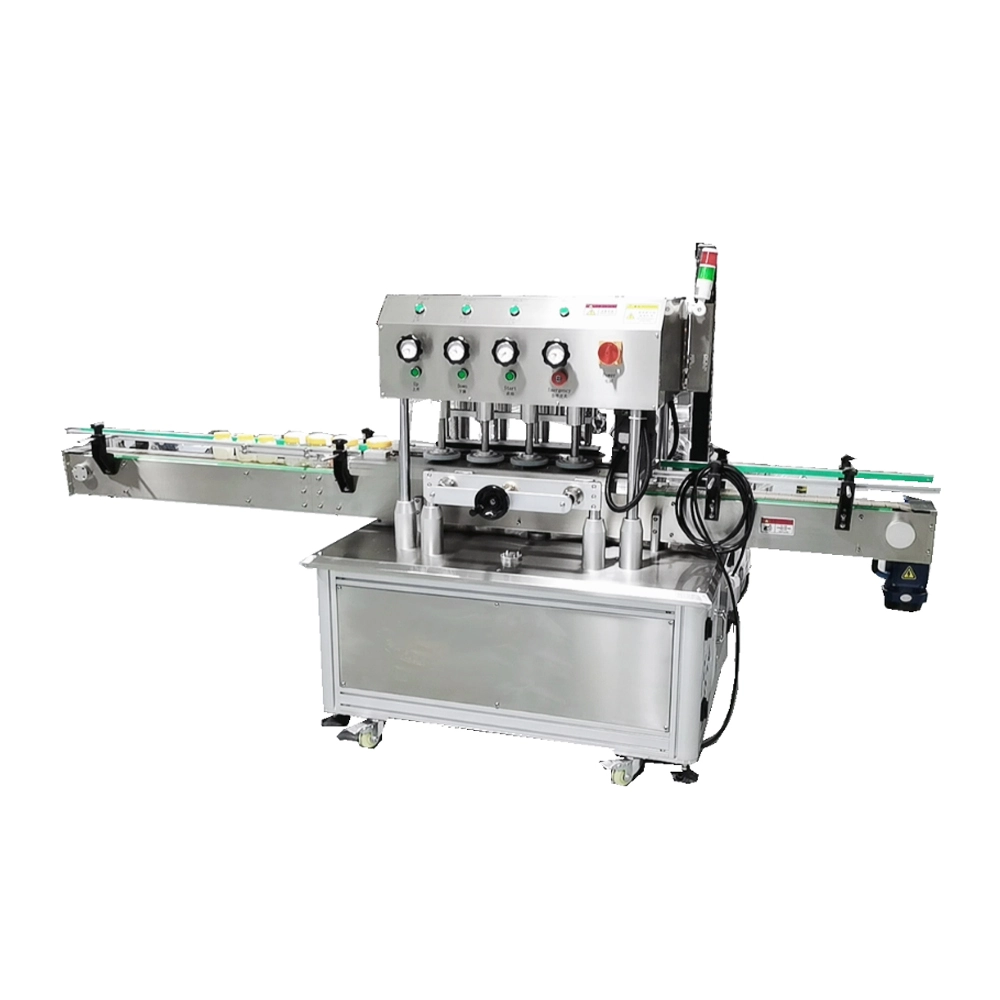
Automatic High Speed Capping Machine for Sale
The Yuanyang automatic high-speed capping machine is a kind of 8-wheel bottle-capping machine with fast working efficiency. The automatic capper is often used to close lids of containers such as bottles and jars, especially for plastic bottles, which are widely used in food, medicine, chemical, cosmetic, and other industries for mass production and continuous production lines.
Features:
⦁ Electric drive;
⦁ Automated fast speed;
⦁ Suitable for various screw caps, pumps, and spray bottles.
 Scan QR Code
Facebook
YouTube
LinkedIn
Whatsapp: +8613434139712
Guangzhou Yuanyang Machinery