





Integration Tips for Homogenizer Mixers into Factory Production Lines
- Integration Tips for Homogenizer Mixers into Factory Production Lines
- Why add a homogenizer mixer to your production line?
- Understanding homogenizer mixer roles and types (keyword: homogenizer mixer)
- Product spotlight: Liquid Soap Mixer Machine for Sale (embed product intro)
- Plan plant layout and footprint considerations
- Utilities and infrastructure requirements
- Mechanical integration: mounting, piping and material flow
- Control systems and automation integration (keyword: homogenizer mixer)
- Process considerations: shear, temperature and order of addition
- Material compatibility, hygiene and CIP design
- Throughput, sizing and scale-up guidance
- Safety, compliance and documentation
- Commissioning, validation and performance testing
- Maintenance strategy and spare parts planning
- Practical line integration example
- Brand advantages: Why choose the Yuanyang Liquid Soap Mixer Machine for Sale
- Procurement and supply chain tips
- FAQs (Frequently Asked Questions)
- Contact sales / View product (CTA)
- Authoritative references and further reading
- Final recommendations
Integration Tips for Homogenizer Mixers into Factory Production Lines
Why add a homogenizer mixer to your production line?
Integrating a homogenizer mixer into your production line can significantly improve product consistency, stability, and texture for liquid and viscous products. A homogenizer mixer is particularly crucial for formulations such as liquid soap, shampoo, hand sanitizer gels, and detergent blends where droplet size distribution, emulsification and suspension stability determine product performance and shelf life. When the goal is consistent batch-to-batch quality and scalable throughput, knowing how to integrate the homogenizer correctly into plant layout, utilities and automation is essential. Once the mixer is integrated, maintaining stable operation becomes critical. Following maintenance best practices for industrial homogenizer mixers ensures long service life and consistent performance.
Understanding homogenizer mixer roles and types (keyword: homogenizer mixer)
Not all homogenizer mixers operate the same way. High-pressure homogenizers, rotor-stator high-shear homogenizers, and in-line static homogenizers have different strengths. For thick liquid cleaning products, high-shear rotor-stator homogenizers (often combined with a scraping agitator) deliver both bulk mixing and fine dispersion. When selecting a homogenizer mixer for your line consider shear rate, required particle/droplet size, temperature effects and throughput. This choice directly affects downstream filling, stability and appearance of the final product.
Product spotlight: Liquid Soap Mixer Machine for Sale (embed product intro)
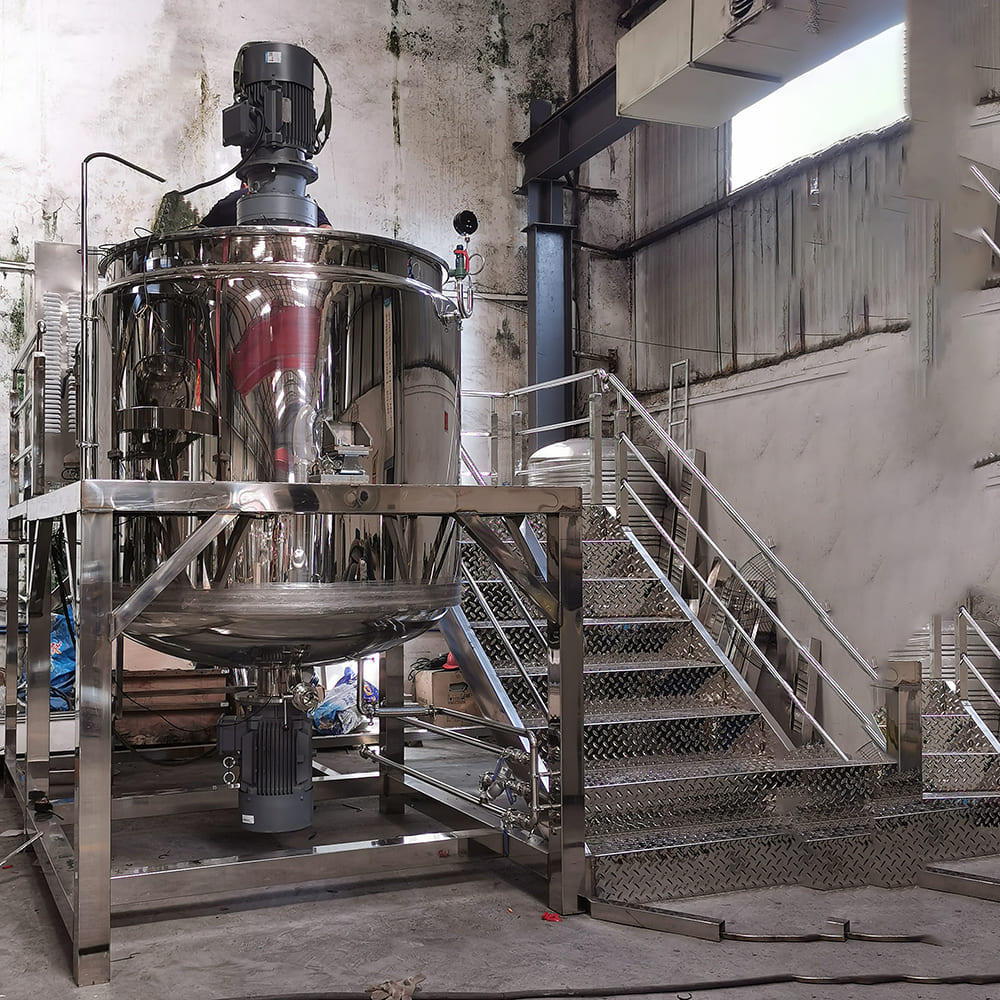
The Yuanyang liquid soap mixer machine is an industrial homogeneous mixer for liquid soap production. The mixer machine is mainly designed to produce such liquid products as shampoo, body wash, laundry detergent, dish soap, hand sanitizer and other thick liquids.
Features:
⦁ Flat top, half-open lid, electric control system.
⦁ Suitable for various liquid cleaning products and sauces.
⦁ PTFE wall scrapers stirring at top, high shear homogenizer at bottom.
Plan plant layout and footprint considerations
Before installation, map the physical footprint and workflow: raw material infeed, weighing, pre-mixing, homogenization, storage/holding tanks, filling and packaging. Place the homogenizer mixer to minimize product travel and provide easy access for CIP, maintenance and inspection. Ensure adequate headroom for the lid and rotor access and design a platform or catwalk for safe operation when needed. Consider vibration dampening and load distribution—homogenizer mixers with high-speed rotors may require reinforced foundations or anti-vibration mounts.
Utilities and infrastructure requirements
Confirm utility needs early: electrical supply (voltage, phase, short-circuit capacity), compressed air, steam and/or hot water for heating, cold water for cooling and rinsing, and vacuum lines if applicable. Homogenizer mixers often need robust motor starters (VFDs for speed control), and temperature control for heat-sensitive formulations. Plan piping routes for steam/exhaust and CIP return lines. Make sure power cabling and control wiring follow local electrical codes and that supply capacity supports installation without adverse voltage drops.
Mechanical integration: mounting, piping and material flow
Decide between batch-top-mounted homogenizers versus inline homogenizer loops. Batch-top units (like the Yuanyang design with a high shear homogenizer at the bottom and PTFE scrapers at top) excel for viscous products and permit direct agitation and wall-scraping. Inline homogenizers are more compact for continuous processing. For either arrangement, ensure proper suction and discharge piping, use sanitary tri-clamp fittings where possible, and minimize dead legs to avoid product degradation. Slope piping to drains and size pump heads to maintain required flow rates without cavitation.
Control systems and automation integration (keyword: homogenizer mixer)
Integrate the homogenizer control into the plant PLC/SCADA for recipe management, batch tracking and alarms. Use variable frequency drives (VFDs) for motor speed control and to implement soft-starts. Instrumentation such as flow meters, torque sensors, pressure transducers and temperature sensors help protect the homogenizer and optimize process parameters. Ensure the human-machine interface (HMI) displays key parameters and alarm states, and enable remote logging for traceability and continuous improvement.
Process considerations: shear, temperature and order of addition
Define process recipes that specify rotor speed, homogenization time, temperature set points and order-of-addition. High shear can be beneficial for emulsification but may damage shear-sensitive polymers or fragrances—validate each formulation. Some ingredients (thickeners, surfactants) require pre-hydration in a low-shear zone prior to high-shear homogenization to avoid lumping. Temperature rise during homogenization must be monitored; include cooling jackets or inline heat exchangers where thermal control is required.
Material compatibility, hygiene and CIP design
Choose construction materials (typically 304 or 316L stainless steel) and elastomers compatible with your formulations and cleaning chemicals. For personal care and cleaning products, hygienic design with smooth interior finishes (≤0.8 µm Ra) reduces biofilm risk. Design for Clean-In-Place (CIP): include spray balls or dedicated CIP ports, ensure circulation loops reach the homogenizer zone, and specify validation steps for cleaning effectiveness. For the Yuanyang Liquid Soap Mixer Machine, PTFE wall scrapers reduce product buildup; ensure PTFE and seals are rated for your cleaning agents.
Throughput, sizing and scale-up guidance
Accurately size homogenizer mixers by required batch size and target hourly throughput. Consider cycle time (mix + homogenize + discharge + CIP). Use a sizing table (example below) to compare configurations and expected output for typical liquid soap and shampoo viscosities.
| Configuration | Typical Viscosity Range (mPa·s) | Batch Size (L) | Estimated Throughput (L/hr) | Notes |
|---|---|---|---|---|
| Small batch top-mounted rotor-stator | 500–5,000 | 50–300 | 200–1,200 | Good for pilot and R&D; limited continuous use |
| Medium batch rotor-stator (industrial) | 1,000–10,000 | 300–2,000 | 1,000–6,000 | Common for liquid soap production |
| Inline high-shear homogenizer | 100–5,000 | n/a (continuous) | Up to 20,000 | Best for continuous, lower-viscosity formulations |
Safety, compliance and documentation
Follow local safety regulations for rotating equipment guards, lockout-tagout (LOTO) procedures, and machine guarding. For cosmetic and cleaning product manufacturing, maintain regulatory documentation: material safety data sheets (MSDS/SDS), batch records, and change control history. If producing regulated disinfectants or sanitizers, comply with regional regulatory requirements (e.g., FDA or EPA in the U.S.). Maintain traceability through lot numbers and ensure the homogenizer controls store batch recipes and operator actions.
Commissioning, validation and performance testing
Execute commissioning with a clear test plan: electrical checks, mechanical run-in, leak tests, and process trials with water and then product. Validate performance (IQ/OQ/PQ) where applicable: Installation Qualification, Operational Qualification and Performance Qualification. Document shear profile, droplet size distribution (if critical), and repeatability of recipes. Confirm CIP effectiveness through microbiological or conductivity checks when required.
Maintenance strategy and spare parts planning
Create a preventive maintenance schedule that includes rotor/stator inspection, seal replacement, motor bearing checks, and PTFE scraper condition. Keep critical spares on hand: seals, bearings, rotors/stators, clearance shims and control components like VFDs. Monitor vibration and motor load to predict failures. Proper spare planning reduces downtime and keeps production predictable.
Practical line integration example
Example workflow for a liquid soap line integrating the Yuanyang Liquid Soap Mixer Machine for Sale:
- Raw materials weighed in dosing stations and pre-dispersed in a pre-mixer tank.
- Pre-mix transferred by sanitary pump to the Yuanyang mixer for high-shear homogenization (bottom homogenizer) while top PTFE scrapers keep walls clean and ensure uniform temperature.
- Homogenized product transferred to holding/aging tank and then routed to filling/packaging line.
- CIP performed using integrated spray and circulation, validated by conductivity and rinse clarity.
Brand advantages: Why choose the Yuanyang Liquid Soap Mixer Machine for Sale
The Yuanyang unit is tailored for liquid cleaning products and sauces, combining a top-mounted PTFE scraper and a bottom high-shear homogenizer for efficient handling of viscous and shear-sensitive formulas. Key advantages:
- Hygienic design and PTFE scrapers minimize product buildup, reduce waste and simplify cleaning.
- Integrated electric control system enables straightforward automation and recipe management.
- Modular design suits batch production while allowing reasonable scale-up to medium industrial throughputs.
- Versatility across products (shampoo, body wash, detergents, hand sanitizers) reduces the need for multiple dedicated mixers.
Procurement and supply chain tips
When procuring a homogenizer mixer, request FAT (Factory Acceptance Test) documentation, electrical schematics, detailed spare parts lists and lead times. Confirm after-sales support, availability of technicians and remote diagnostics options. For faster ROI, choose suppliers who provide installation support, operator training and commissioning assistance.
FAQs (Frequently Asked Questions)
Q1: What types of products are best produced on a homogenizer mixer?
A1: Products that require fine dispersion, stable emulsions or uniform suspension such as liquid soaps, shampoos, lotions, and some gels. Homogenizer mixers are ideal when droplet size and texture are critical.
Q2: How do I decide between inline and batch homogenization?
A2: Choose inline homogenization for continuous operations and lower-to-moderate viscosities needing high throughput. Choose batch-top-mounted homogenizers for viscous products and when wall scrapers and direct vessel access are required.
Q3: How often should rotors/stators be inspected or replaced?
A3: Inspect rotor/stator clearances and wear every 500–2,000 operating hours depending on abrasive content, with replacement intervals based on observed wear, product quality drift and manufacturer recommendations.
Q4: Can the Yuanyang Liquid Soap Mixer Machine handle sanitizers with high alcohol content?
A4: The unit can handle many sanitizer formulations, but verify material compatibility (elastomers and seals) and potential flammability controls for high-alcohol content formulations with your supplier.
Q5: What documentation should I get from the supplier?
A5: Get FAT reports, IQ/OQ templates, wiring diagrams, maintenance manuals, spare parts lists and CIP validation guidance.
Contact sales / View product (CTA)
Ready to integrate a reliable homogenizer mixer into your line? Contact our sales team to request a quote, arrange an on-site assessment, or schedule a factory acceptance test for the Liquid Soap Mixer Machine for Sale. For demonstration, technical specs, and commissioning support, reach out via our sales channel or visit our product page.
Authoritative references and further reading
References used for technical context and best practices:
- Homogenizer — Wikipedia: https://en.wikipedia.org/wiki/Homogenizer
- Mixing (process engineering) — Wikipedia: https://en.wikipedia.org/wiki/Mixing_(process_engineering)
- Clean-in-place — Wikipedia: https://en.wikipedia.org/wiki/Clean-in-place
- U.S. FDA — Cosmetics Laws & Regulations: https://www.fda.gov/cosmetics/cosmetics-laws-regulations
- ISO 9001 — Quality management systems: https://www.iso.org/iso-9001-quality-management.
Final recommendations
Successful integration of a homogenizer mixer depends on planning mechanical layout, defining recipes, ensuring proper utilities, automating control, designing hygienic CIP and establishing preventive maintenance. The Yuanyang Liquid Soap Mixer Machine for Sale provides a practical combination of top PTFE scrapers and a bottom high-shear homogenizer, designed for efficient, hygienic production of liquid soaps and other viscous cleaning products. For predictable product quality and continuous improvement, combine sound equipment selection with strong commissioning, validation and maintenance practices.
How to start a semi auto labeling machine business in Europe
OEM/ODM lid sealing machine Manufacturers and Suppliers
What is double-sided labeling machine ? | Ultimate Insight
How to start a semi auto labeling machine business in Europe
High Speed Dispersion Machine
Can I customize stainless steel 316 materials for the dispersing machine?
Yes, we customize materials upon requirement.
Ribbon mixer
How to dry the mixed powder?
If the raw powder is not dry, and client wants to dry it during mixing, a jacket will be added with heater to achieve drying purpose.
How long does it take to produce the ribbon blender powder machines?
The leading time is about 20-30 days. To ensure quality, the ribbon powder mixer is worth the wait.
Liquid Soap Mixer Machine
Is the speed adjustable with VFD?
The chemical mixer tank is often with frequency converter. But some clients may just need a fixed speed. So we customize upon requirements.
Detergent powder mixer
Can you also help to purchase raw powder for the washing powder mixer?
Sure, we have professional partner who has been engaged in raw powder supply for over 20 years. The price is competitive in the market. If clients need to purchase together, it is recommend to take a container.
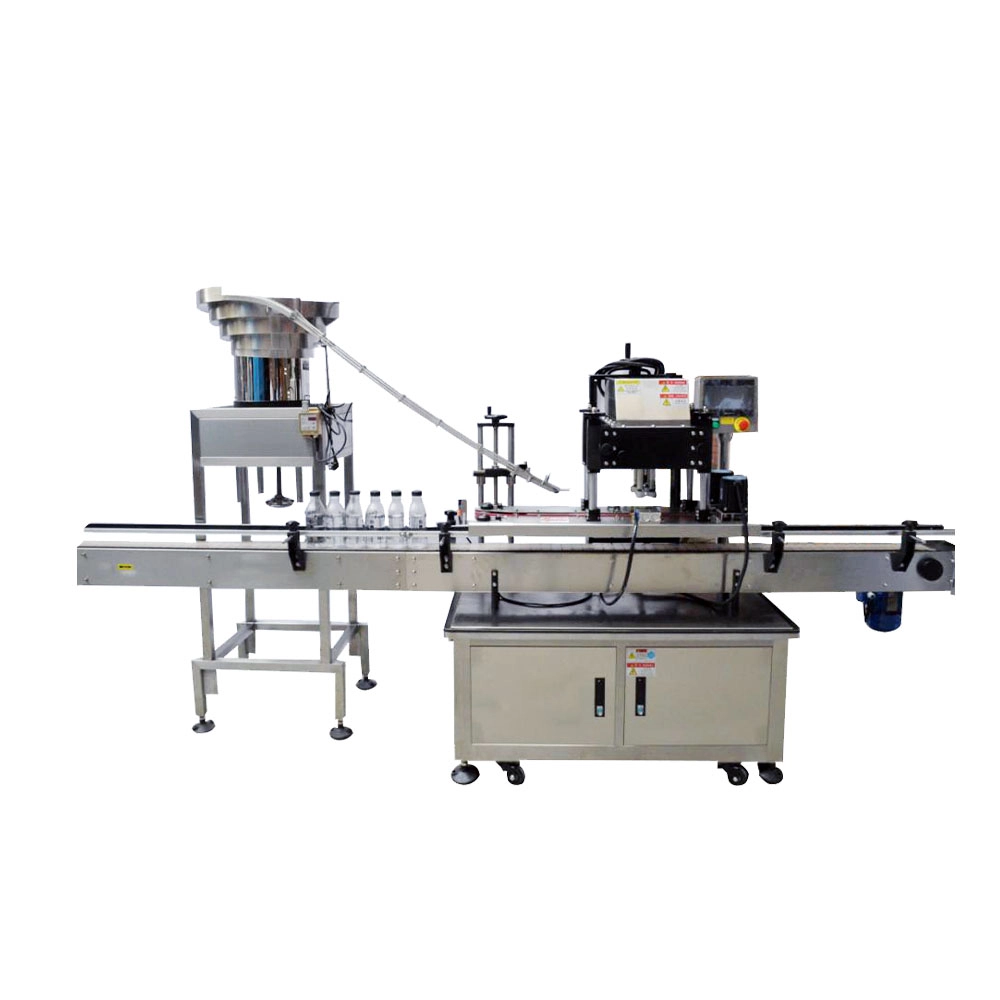
Automatic Plastic Caps Capping Machine with Vibrating Cap Feeder for Sale
Yuanyang automatic screw capping machine is a kind of four-wheel bottle capping machine. The automatic screw capper is often used to close lids of containers such as bottles and jars, especially for plastic bottles, which are widely used in food, medicine, chemical, cosmetic, and other industries for mass production and continuous production lines.
Features:
⦁ Full pneumatic drive;
⦁ Automated fast speed;
⦁ Suitable for various screw caps, pumps, and spray bottles.
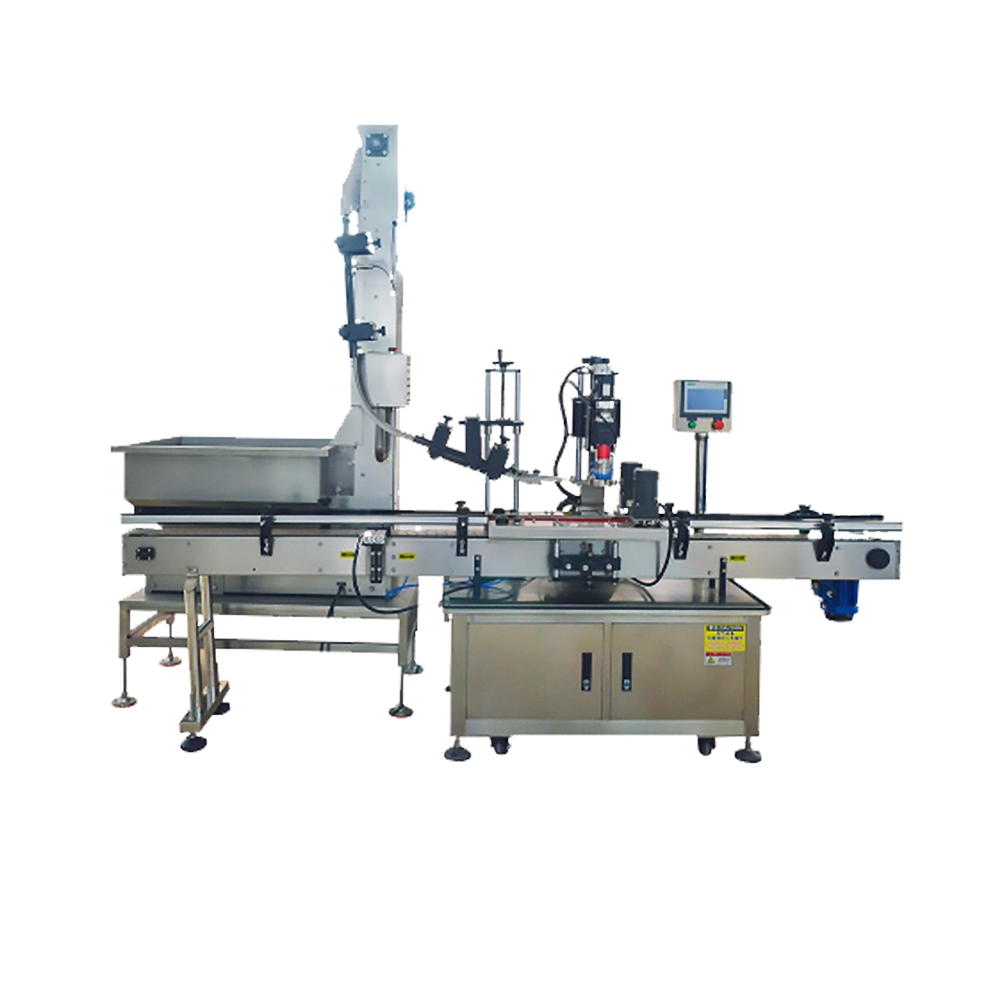
Automatic Metal Caps Capping Machine for Sale
Yuanyang automatic metal cap capping machine is a bottle capper for bottles with metal caps, which is often used to close lids of containers such as bottles and jars. The glass bottle metal capping machine is widely used in food, medicine, chemical, cosmetic, and other industries for mass production and continuous production line .
Features:
⦁ Pneumatic and electric drive;
⦁ Automated fast speed;
⦁ Suitable for glass bottles with metal caps.
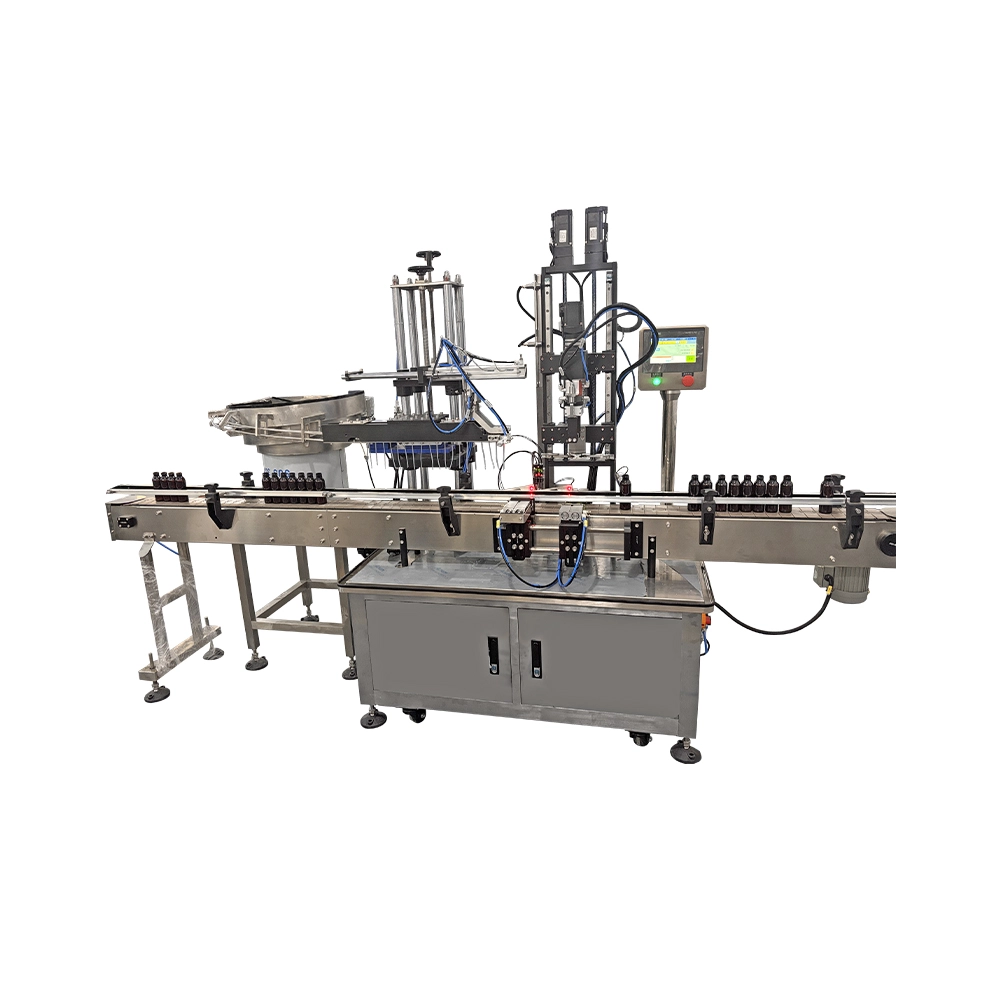
Automatic Pump Head Feeding and Capping Machine for Sale
Yuanyang automatic pump head feeding and capping machine is a bottle cap sorter and capper for bottles with pump heads, which is often used to close lids of containers such as nail polish, sprayers, and shampoo. The capping machine with a pump head feeder is widely used in food, medicine, chemical, cosmetic, and other industries for mass production and continuous production line .
Features:
⦁ Pneumatic and electric drive;
⦁ Automated fast speed;
⦁ Suitable for various types of caps.
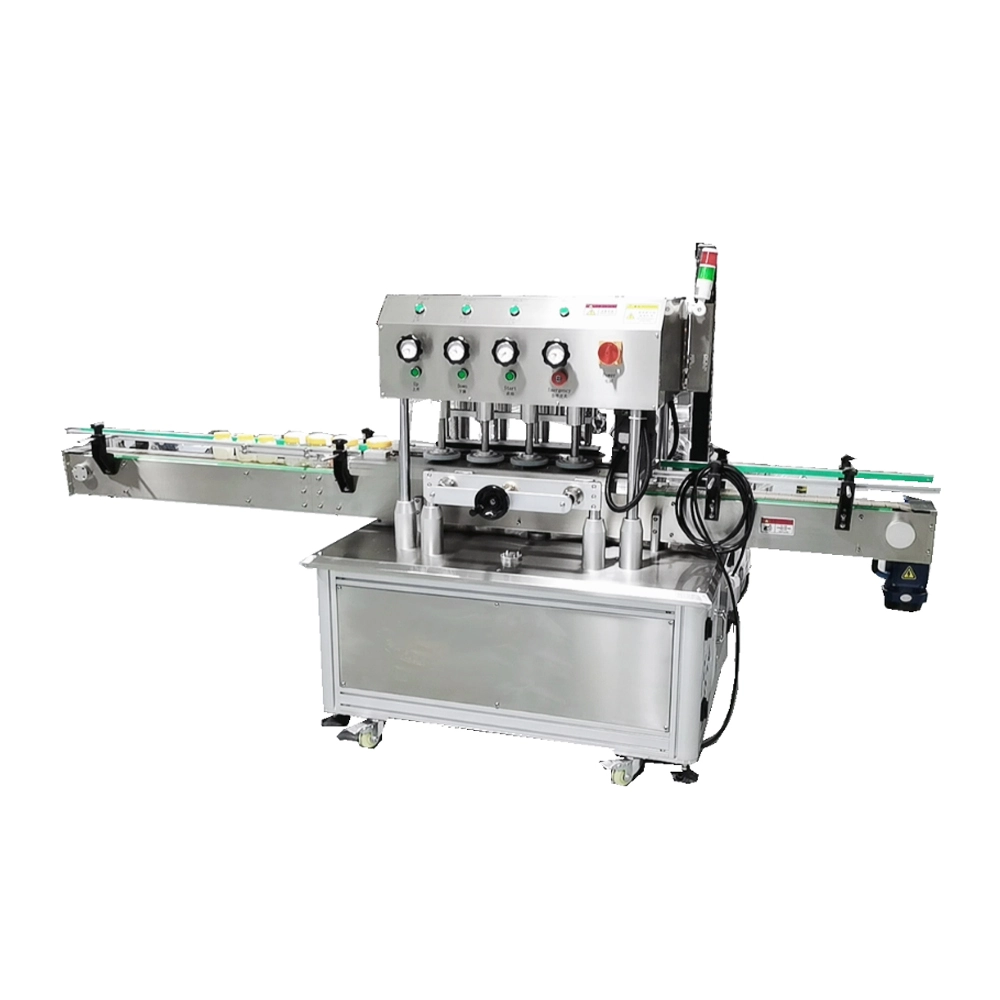
Automatic High Speed Capping Machine for Sale
The Yuanyang automatic high-speed capping machine is a kind of 8-wheel bottle-capping machine with fast working efficiency. The automatic capper is often used to close lids of containers such as bottles and jars, especially for plastic bottles, which are widely used in food, medicine, chemical, cosmetic, and other industries for mass production and continuous production lines.
Features:
⦁ Electric drive;
⦁ Automated fast speed;
⦁ Suitable for various screw caps, pumps, and spray bottles.
 Scan QR Code
Facebook
YouTube
LinkedIn
Whatsapp: +8613434139712
Guangzhou Yuanyang Machinery