





Hygienic Design Features of Stainless Steel Mixing Tanks
- Core Hygienic Surface and Construction Requirements
- Why stainless steel mixing tank material matters
- Surface finish and roughness targets
- Weld quality and sanitary weld practices
- Design for Drainability, Flow and Cleanability
- Tank geometry and slope considerations
- Internal agitation and scrapers that support hygiene
- Clean-in-place (CIP) and steam-in-place (SIP) integration
- Hygienic Components, Seals and Access Points
- Sanitary fittings and connections
- Seals, bearings and shaft penetrations
- Manways, covers and access design
- Validation, Inspection and Long-Term Maintenance
- Testing, documentation and standards
- Scheduled maintenance and traceability
- Operator training and procedure control
- Practical Specification Checklist and Comparisons
- Quick specification checklist
- Surface finish examples (comparison)
- How the Single Layer Agitator Tank for Sale fits hygienic needs
- Brand Advantages and Why Choose a Well-Designed Tank
- Why choose a proven manufacturer
- Yuanyang’s commitment to hygienic mixing
- Service, customization and lifecycle support
- FAQ — Common Questions about Hygienic Stainless Steel Mixing Tanks
- Q: What are the main differences between 304 and 316L stainless steel for mixing tanks?
- Q: How do I verify a tank is truly hygienic?
- Q: Can a single-layer agitator tank be used for products that require heating or chilled processing?
- Q: How important is electropolishing versus mechanical polishing?
- Q: What maintenance schedule ensures hygienic performance?
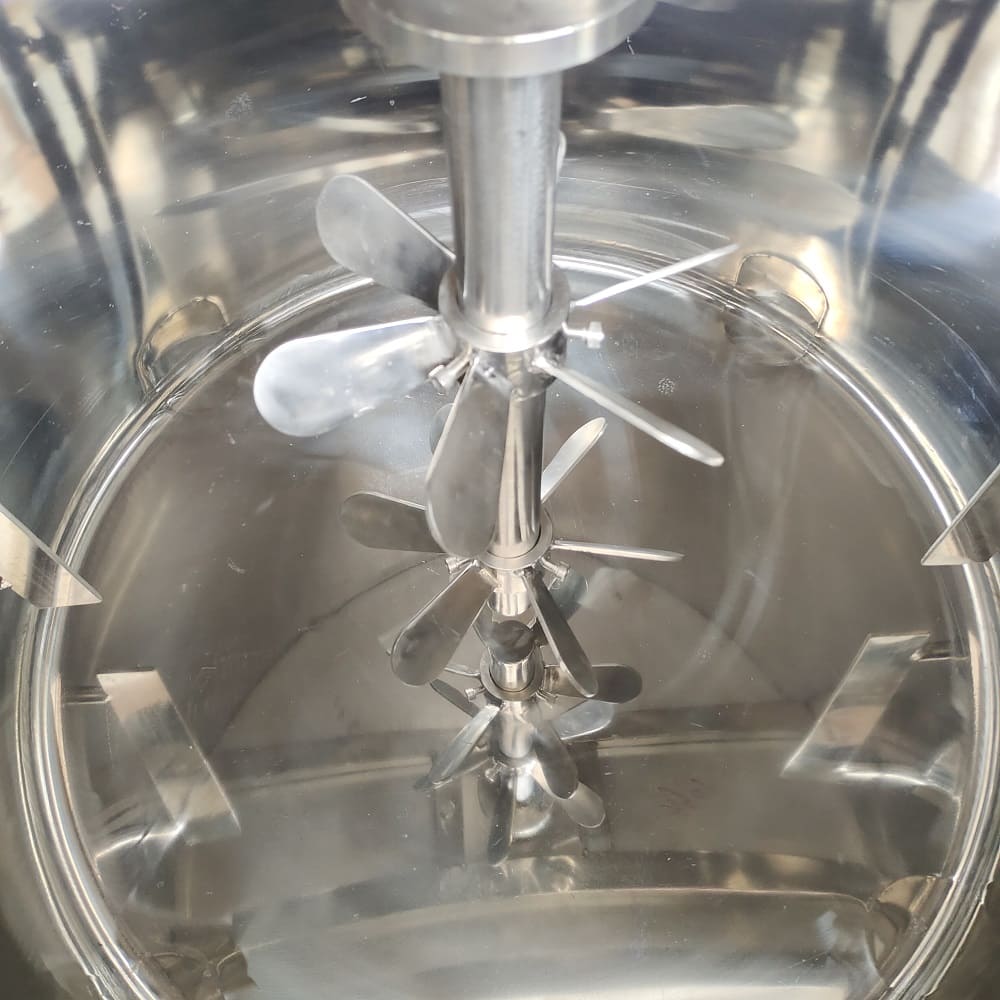
Hygienic design is the foundation of safe and efficient production where a stainless steel mixing tank is used. For industries such as food, pharmaceuticals, and cosmetics, hygienic features reduce microbial risks, simplify sanitation, and improve product quality and regulatory compliance. This article outlines practical, standards-backed design elements — from surface roughness and welding to CIP/SIP integration and maintenance — so engineers, quality managers, and procurement teams can specify or evaluate mixing tanks with confidence. Beyond hygienic structure, buyers must understand how construction choices impact output, which is why how mixing tank material affects product quality and safety deserves close analysis.
Core Hygienic Surface and Construction Requirements
Why stainless steel mixing tank material matters
Stainless steel is the material of choice for hygienic tanks because of its corrosion resistance, mechanical strength, and cleanability. Austenitic stainless steels (e.g., 304 and 316L) are commonly used: 316L offers better corrosion resistance in chloride-containing environments typical of many food and chemical formulations. See the stainless steel overview on Wikipedia for material basics.
Surface finish and roughness targets
Surface finish has a direct impact on cleanability and microbial adhesion. Hygienic design principles favor smooth, polished interior surfaces to minimize crevices where bacteria can accumulate. Typical industry targets are:
- General hygienic applications: Ra ≤ 0.8 µm (32 µin)
- High-hygiene/pharmaceutical: Ra ≤ 0.4 µm (16 µin)
These are practical benchmarks used by many manufacturers and hygienic design guidelines such as those from the EHEDG. When specifying a stainless steel mixing tank, request measured Ra values and polishing method (electropolish vs. mechanical) for verification.
Weld quality and sanitary weld practices
Welds are potential contamination sites if not executed and finished properly. Hygienic tanks use full-penetration welds with continuous, smooth ground and polished finishes. Butt welds finished flush and electropolished welds help restore corrosion resistance and reduce bacterial traps. Ask for weld procedure specifications and inspection records (e.g., dye-penetrant tests) when procuring a tank.
Design for Drainability, Flow and Cleanability
Tank geometry and slope considerations
Drainability is crucial. Sloped bottoms (commonly cone or dish bottoms with appropriate angles) and full-diameter drains prevent liquid pooling. For a typical stainless steel mixing tank, floor angles of 60° for conical bottoms or dished bottoms with a tangential drain improve self-draining during production and CIP cycles.
Internal agitation and scrapers that support hygiene
The Single Layer Agitator Tank for Sale from Yuanyang uses frame mixing with PTFE scrapers and half-open cover design suited for low-viscosity liquids. PTFE scrapers help maintain a contact-clean surface on the tank wall, minimizing product buildup. Ensure paddle and scraper attachments are hygienically mounted — flush fittings, sanitary seals, and hygienic shaft glands reduce crevice formation.
Clean-in-place (CIP) and steam-in-place (SIP) integration
CIP and SIP-compatible designs let you sanitize without disassembly. Key features include adequate spray ball placement or static spray devices for complete coverage, smooth internal surfaces, and accessible piping. For fundamental background on CIP processes, see Cleaning-in-place (CIP). Tanks should be validated for CIP/SIP cycles (temperature, chemical exposure, and contact time) to confirm complete bioburden removal.
Hygienic Components, Seals and Access Points
Sanitary fittings and connections
Use hygienic connectors such as tri-clamp fittings, sanitary couplings and flush-mounted ports to minimize dead legs. Instrumentation (temperature, level, pH) should be mounted with hygienic fittings and designed so sensors can be removed and cleaned easily without creating crevices.
Seals, bearings and shaft penetrations
Shaft seals are frequent failure points. Hygienic mixers typically use lip seals, mechanical seals designed for sanitary service, or magnetic drive couplings that eliminate shaft penetrations entirely. If using mechanical seals, choose food-grade materials that tolerate CIP chemicals and steam, and ensure glands are flush-mounted and free of crevices.
Manways, covers and access design
Manways and half-open covers must be designed to seal properly during processing and to permit easy cleaning. Hinged or removable covers with sanitary gaskets and minimal horizontal ledges reduce contamination risk. The Yuanyang Single Layer Agitator Tank features a half-open cover, balancing access and contamination control for low-viscosity products.
Validation, Inspection and Long-Term Maintenance
Testing, documentation and standards
Documented validation and inspection build trust. Common practices include surface roughness testing, weld inspection, pressure testing, and microbiological swabbing post-CIP. Reference standards from organizations such as 3-A Sanitary Standards or EHEDG are frequently used as benchmarks. These organizations provide guidance on sanitary design that aligns with regulatory expectations.
Scheduled maintenance and traceability
A proactive maintenance program prevents hygiene lapses. Maintain records of seal replacements, agitator shaft service, and CIP cycle logs. Traceability of material certifications (e.g., 316L mill certificates) and component provenance supports audits and regulatory reviews.
Operator training and procedure control
Even the best-designed stainless steel mixing tank requires correct operation. Train operators on proper CIP procedures, handling of access ports, and recognizing early signs of wear (scratches, pitting, seal leaks). Standard operating procedures (SOPs) and periodic retraining are essential to sustain hygienic performance.
Practical Specification Checklist and Comparisons
Quick specification checklist
- Material: 316L stainless steel for aggressive environments
- Interior finish: Ra target and documentation
- Welds: full penetration, ground and electropolished
- Drain: full-size sanitary drain with sloped bottom
- Agitator: hygienic mounting, PTFE scrapers for wall contact
- Seals: hygienic mechanical seals or magnetic drive
- CIP/SIP: spray devices and validated cycles
- Fittings: tri-clamp/sanitary couplings
Surface finish examples (comparison)
| Application | Typical Interior Ra | Finish Method |
|---|---|---|
| Food & beverages | ≤ 0.8 µm | Mechanical polish / electropolish |
| Pharmaceutical | ≤ 0.4 µm | Electropolish + strict weld finishing |
| Cosmetics / personal care | ≤ 0.8 µm | Polished and passivated |
How the Single Layer Agitator Tank for Sale fits hygienic needs
Yuanyang’s Single Layer Agitator Tank for Sale (product intro below) is tailored for mixing low-viscosity liquids common in cosmetics, pharmaceuticals, chemicals and food industries. With half-open covers, PTFE scrapers, and frame mixing, it provides a balance of accessibility and hygienic contact control. For many producers of low-viscosity products, this configuration offers effective mixing while maintaining sanitary practice — provided the correct surface finishes, seals, and CIP setups are specified.
Product overview:
Yuanyang single-layer agitator tank is a mixing tank with agitator paddles, mainly applied for liquid materials mixing and blending, which is widely used to manufacture low-viscosity liquids and prepare for cosmetics, pharmaceuticals, chemicals, and food industries.
Features:
⦁ Half-open cover;
⦁ Frame mixing with PTFE scrapers
⦁ Suitable for products of low viscosity liquid products;
Brand Advantages and Why Choose a Well-Designed Tank
Why choose a proven manufacturer
Reputation matters. A manufacturer with documented experience in hygienic equipment will provide specification sheets, validation data, and after-sales support. This reduces risk and accelerates regulatory acceptance. Look for suppliers that can supply material certificates, finish verification, and references in your industry.
Yuanyang’s commitment to hygienic mixing
Yuanyang focuses on practical hygienic features for single-layer agitator tanks: PTFE scrapers reduce wall buildup, half-open covers allow inspection and cleaning, and the agitator design is adapted for low-viscosity product homogeneity. Their tanks are engineered to be compatible with standard sanitary fittings and CIP systems, and documentation on surface finishes and materials is available on request.
Service, customization and lifecycle support
Hygienic performance is not static. Choose suppliers offering tailored options (electropolishing, CIP/SIP package, magnetic drive options, instrumentation), preventive maintenance plans, and spare parts availability. These services extend tank life and maintain hygiene standards through repeated validation cycles.
FAQ — Common Questions about Hygienic Stainless Steel Mixing Tanks
Q: What are the main differences between 304 and 316L stainless steel for mixing tanks?
A: 316L contains molybdenum which improves resistance to chloride-induced corrosion. For many food, pharmaceutical and chemical applications where cleaning agents or saline formulations are used, 316L is preferred. 304 is acceptable in less aggressive environments and can be cost-effective.
Q: How do I verify a tank is truly hygienic?
A: Request documentation: material certificates, measured Ra values, weld inspection reports, CIP/SIP validation results and photos of internal finishes. Conduct swab or rinse tests post-CIP to validate microbiological cleanliness.
Q: Can a single-layer agitator tank be used for products that require heating or chilled processing?
A: Yes, single-layer tanks can be equipped with external jackets for heating or cooling or be supplied as half-open systems with heating/cooling capability depending on process needs. For temperature-sensitive or sterile processes, additional controls and validation are necessary.
Q: How important is electropolishing versus mechanical polishing?
A: Mechanical polishing reduces surface roughness but may leave micro-crevices and embedded contaminants. Electropolishing smooths and passivates the surface electrochemically, improving corrosion resistance and cleanability. For pharmaceutical and high-hygiene needs, electropolishing is highly recommended.
Q: What maintenance schedule ensures hygienic performance?
A: Typical schedules include daily visual inspections, CIP logs for each batch, monthly checks of seals and bearings, and annual detailed inspections including surface roughness measurement and weld checks. Adjust frequency based on production intensity and regulatory requirements.
If you want to learn more about the Single Layer Agitator Tank for Sale, request technical specifications, or arrange a quotation and hygienic assessment, please contact our sales team or view the product.
References and further reading: EHEDG (ehedg.org), 3-A Sanitary Standards (3-a.org), Cleaning-in-place (Wikipedia), Stainless steel ( Wikipedia ).
Everything You Need to Know About heated mixing tank
How to Choose Right double side labeling machine manufacturer and supplier in Africa?
Wholesale automatic spindle capping machine manufacturer and supplier in Asia
How to start the cosmetic blender machine business ?
Automatic Piston Filling Machine
Can each nozzle be controlled separately?
Yes, each nozzle can be controlled separately.
Water Cooling Induction Sealer
What type of container is the heat induction sealer suitable for?
The material of the container can be polyethylene (PE), polypropylene (PP), polystyrene (PS), polyester (PET), ABS, glass, ceramics, etc., but can not be used for metal bottles or metal caps.
Food
What raw materials can the equipment process?
Our equipment can process liquids, powders, solids, pastes, viscous materials, and high-viscosity substances, meeting a wide range of food production needs.
Vertical Filling Machine
How many bottles can the cream filler fill per hour?
The filling speed is affected by many factors, such as the materials thickness, viscosity, operation speed by staffs, pneumatic speed adjustment, filling volume, pressure. The filling speed varies from 500-2400 bottles per hour.
Hydraulic Lift Vacuum Mixer
What’s the thickness of the vacuum mixer?
The thickness depends on the machine type, capacity of the tank, and the function. For example the standard 500L vacuum homogenizer tank electric heating with double jackets, there are three layers. The inner layer is 5mm, middle layer is 4mm, the outer layer is 2mm. If clients has special requirement, we can customize accordingly.
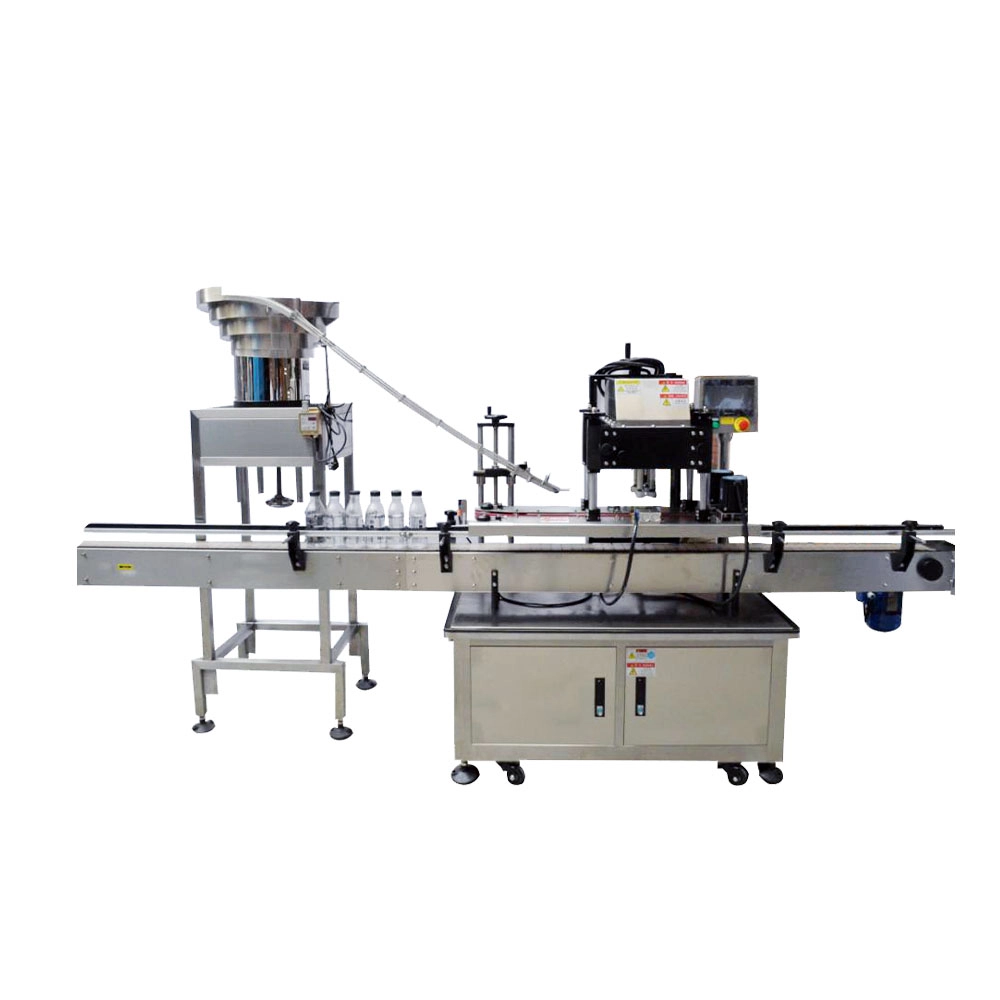
Automatic Plastic Caps Capping Machine with Vibrating Cap Feeder for Sale
Yuanyang automatic screw capping machine is a kind of four-wheel bottle capping machine. The automatic screw capper is often used to close lids of containers such as bottles and jars, especially for plastic bottles, which are widely used in food, medicine, chemical, cosmetic, and other industries for mass production and continuous production lines.
Features:
⦁ Full pneumatic drive;
⦁ Automated fast speed;
⦁ Suitable for various screw caps, pumps, and spray bottles.
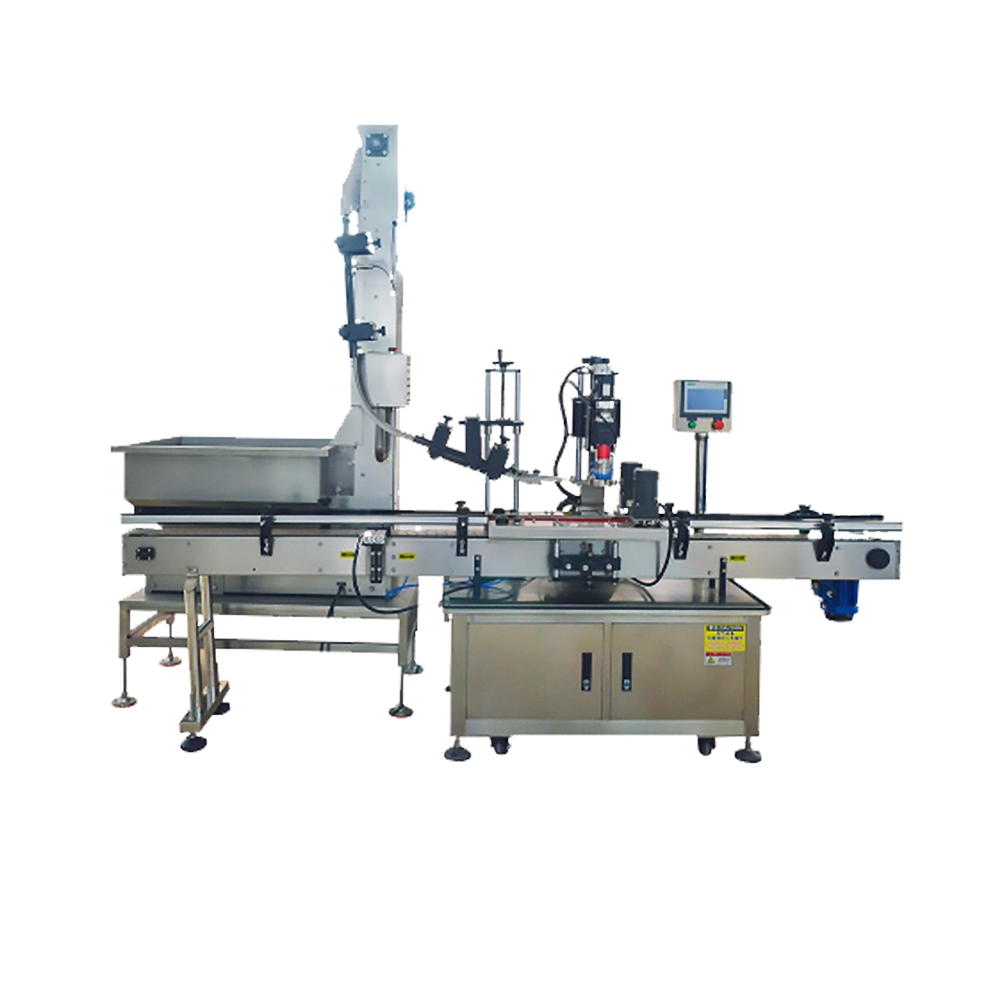
Automatic Metal Caps Capping Machine for Sale
Yuanyang automatic metal cap capping machine is a bottle capper for bottles with metal caps, which is often used to close lids of containers such as bottles and jars. The glass bottle metal capping machine is widely used in food, medicine, chemical, cosmetic, and other industries for mass production and continuous production line .
Features:
⦁ Pneumatic and electric drive;
⦁ Automated fast speed;
⦁ Suitable for glass bottles with metal caps.
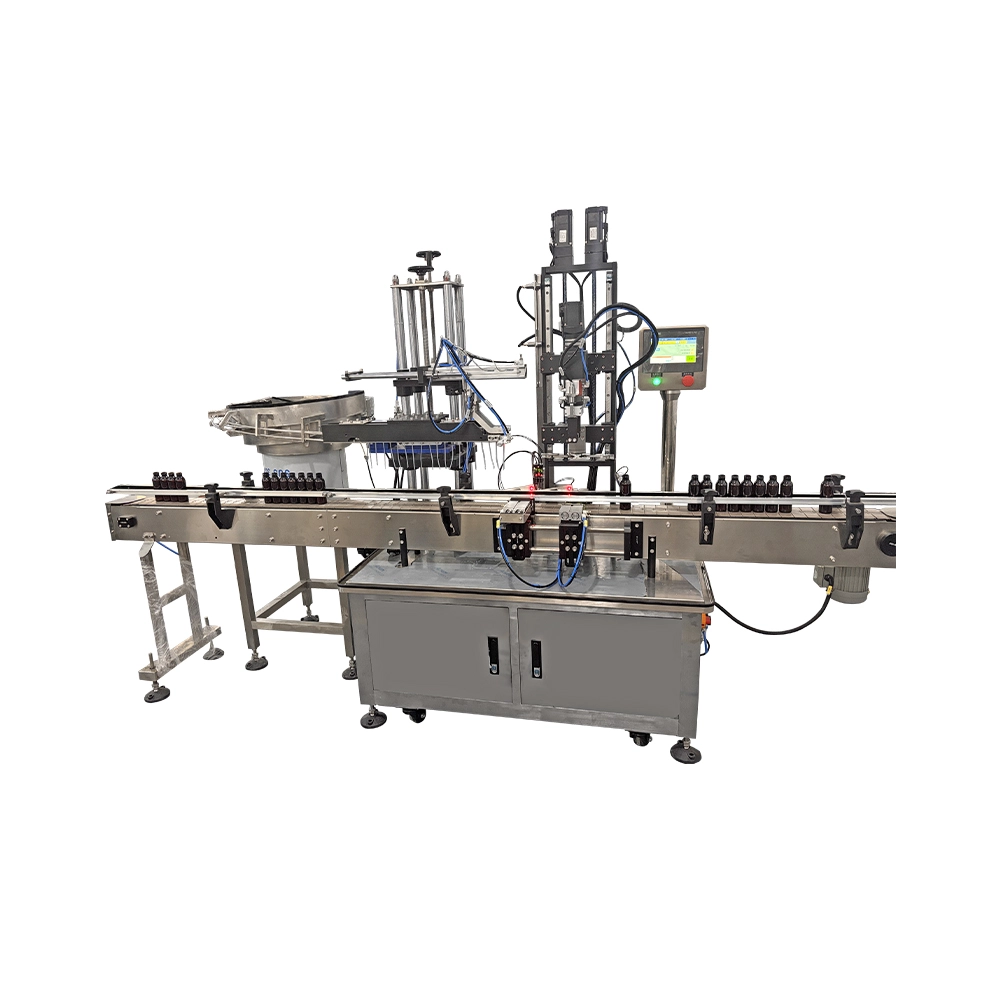
Automatic Pump Head Feeding and Capping Machine for Sale
Yuanyang automatic pump head feeding and capping machine is a bottle cap sorter and capper for bottles with pump heads, which is often used to close lids of containers such as nail polish, sprayers, and shampoo. The capping machine with a pump head feeder is widely used in food, medicine, chemical, cosmetic, and other industries for mass production and continuous production line .
Features:
⦁ Pneumatic and electric drive;
⦁ Automated fast speed;
⦁ Suitable for various types of caps.
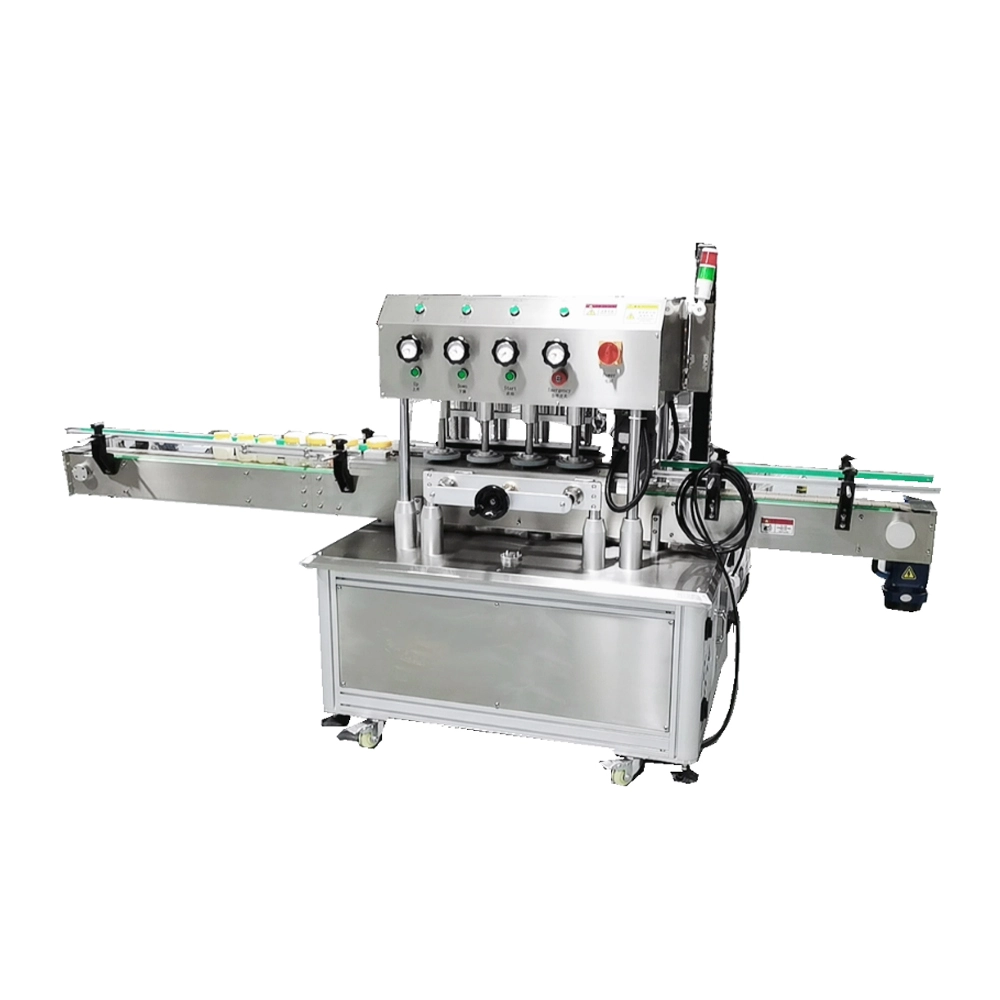
Automatic High Speed Capping Machine for Sale
The Yuanyang automatic high-speed capping machine is a kind of 8-wheel bottle-capping machine with fast working efficiency. The automatic capper is often used to close lids of containers such as bottles and jars, especially for plastic bottles, which are widely used in food, medicine, chemical, cosmetic, and other industries for mass production and continuous production lines.
Features:
⦁ Electric drive;
⦁ Automated fast speed;
⦁ Suitable for various screw caps, pumps, and spray bottles.
 Scan QR Code
Facebook
YouTube
LinkedIn
Whatsapp: +8613434139712
Guangzhou Yuanyang Machinery