





How Mixing Tank Material Affects Product Quality and Safety
- Material Fundamentals: Why Tank Composition Matters
- Corrosion resistance and chemical compatibility
- Surface finish and cleanability
- Mechanical strength and longevity
- Comparing Common Tank Materials
- Overview of options
- Material comparison table
- How to interpret the table
- Hygiene, Safety and Regulatory Considerations
- Regulatory expectations for food and pharmaceuticals
- Microbial control and material selection
- Allergen and cross-contamination risks
- Practical Considerations When Choosing a Tank for Low-Viscosity Liquids
- Why Single Layer Agitator Tank for Sale suits low-viscosity products
- Agitator design and product integrity
- Cleaning, maintenance and lifecycle costs
- Installation, Operation and Validation Best Practices
- Surface preparation and passivation
- Weld quality and hygienic design
- Validation and documentation
- Case Studies and Industry Examples
- Cosmetics: color stability and microbial control
- Pharmaceuticals: cleaning validation and cross-contamination prevention
- Food & beverage: allergen management and sanitation cycles
- Brand Advantages: Why Choose Our Stainless Steel Single Layer Agitator Tank
- Quality of materials and fabrication
- Design focused on low-viscosity performance
- Compliance, validation support and after-sales service
- Choosing the Right Tank: Checklist for Specifiers
- Match materials to product chemistry
- Define hygiene and validation needs
- Plan for production flexibility and maintenance
- Frequently Asked Questions (FAQ)
- Q1: Is stainless steel always the best choice for mixing tanks?
- Q2: What stainless steel grade should I choose?
- Q3: Can I use a Single Layer Agitator Tank for sterile product manufacture?
- Q4: How do PTFE scrapers help product quality?
- Q5: What documentation should come with a stainless steel mixing tank?

Selecting the correct tank material has direct consequences for product stability, contamination risk, cleaning cycles, and regulatory compliance. For many manufacturers, a stainless steel mixing tank provides the balance of chemical resistance, hygienic cleanability, durability and traceability required to protect product quality and ensure safety across cosmetics, pharmaceuticals, food and chemical lines. This practical guide explains how material choice drives outcomes and how Yuanyang's Single Layer Agitator Tank for Sale addresses common production challenges.
Material Fundamentals: Why Tank Composition Matters
Corrosion resistance and chemical compatibility
Materials react differently to process fluids. Corrosion or surface degradation can release ions or particulates into product streams, altering pH, color, odor or active ingredient concentration. Stainless steel alloys (commonly 304 or 316 grades) offer broad chemical resistance and are widely used because they withstand acids, alkalis and many solvents encountered in cosmetics, pharmaceuticals and food production. Reference material on stainless steel properties is available at Stainless steel - Wikipedia.
Surface finish and cleanability
Surface roughness controls how easily residues adhere and biofilms form. Smooth, passivated stainless steel surfaces (electropolished where appropriate) minimize microbial retention and simplify CIP (clean-in-place). Conversely, porous materials or rough welds trap residues, increasing contamination risk and cleaning time. Hygienic design principles from organizations like EHEDG explain how surface finish and geometry affect cleanability and safety.
Mechanical strength and longevity
Mechanical properties matter for agitation, thermal cycling and pressure. Stainless steel mixing tanks combine strength with thermal conductivity for jacketed heating/cooling, and resist deformation under mixing loads — important for agitator-mounted designs such as the Single Layer Agitator Tank for Sale. Durable tanks reduce downtime and lifecycle cost despite higher upfront investment.
Comparing Common Tank Materials
Overview of options
Common tank materials include stainless steel, carbon/black steel (with coatings), glass-lined steel, and fibre-reinforced plastic (FRP). Each has trade-offs in cost, chemical compatibility, cleanliness, and regulatory acceptance.
Material comparison table
The table below summarizes key attributes to help match material selection to product and process needs.
| Material | Corrosion Resistance | Hygiene / Cleanability | Cost | Typical Uses |
|---|---|---|---|---|
| Stainless steel (304 / 316) | High — broad chemical compatibility (316 better for chlorides) | Excellent when polished/electropolished; supports CIP/SIP | Moderate–High | Food, cosmetics, pharma, many chemicals |
| Carbon steel (coated) | Low unless coated; coatings can fail | Poor to moderate; coatings may hide corrosion | Low | Non-food storage, non-corrosive chemicals |
| Glass-lined steel | Very good for many chemicals; brittle impact risk | Good surface smoothness; damage may expose steel | High | Chemical reactors, corrosive chemistries |
| FRP / Plastic | Variable; good for some chemistries, poor for solvents | Moderate; can be rough or porous unless liners used | Low–Moderate | Corrosion-resistant storage, some chemicals |
How to interpret the table
Use expected process temperatures, solvents, pH, and regulatory requirements (food/pharma) to filter suitable materials. For low-viscosity, hygiene-sensitive production such as cosmetics or food emulsions, a stainless steel mixing tank is frequently the optimal choice due to cleanability and regulatory track record.
Hygiene, Safety and Regulatory Considerations
Regulatory expectations for food and pharmaceuticals
Agencies expect equipment to be designed and maintained to avoid contamination. For pharmaceuticals and food manufacturing, stainless steel is commonly specified because it supports validated cleaning and avoids leachable contaminants. See FDA guidance and regulations for equipment and CGMPs at FDA and specific Code of Federal Regulations sections at 21 CFR - eCFR.
Microbial control and material selection
Materials that allow effective CIP/SIP cycles reduce microbial burden and the risk of biofilm formation. Stainless steel's non-porous nature and ability to be passivated improve microbial control. For sensitive products (e.g., sterile pharmaceuticals), material choice is part of the contamination control strategy and must align with validation protocols.
Allergen and cross-contamination risks
Surface residues and absorbed compounds can lead to allergen transfer across production runs. Stainless steel allows reliable cleaning validation and traceability, essential when switching between allergenic and non-allergenic formulas or between active pharmaceutical ingredients.
Practical Considerations When Choosing a Tank for Low-Viscosity Liquids
Why Single Layer Agitator Tank for Sale suits low-viscosity products
Yuanyang's Single Layer Agitator Tank for Sale is specifically designed for low-viscosity liquid mixing and blending. This single-layer design with agitator paddles and PTFE scrapers ensures efficient mixing and minimal product retention — ideal for cosmetics, pharmaceutical solutions, and many food and chemical formulations where quick dispersion and gentle handling are required.
Product details:
Yuanyang single-layer agitator tank is a mixing tank with agitator paddles, mainly applied for liquid materials mixing and blending, which is widely used to manufacture low-viscosity liquids and prepare for cosmetics, pharmaceuticals, chemicals, and food industries.
Features:
⦁ Half-open cover;
⦁ Frame mixing with PTFE scrapers
⦁ Suitable for products of low viscosity liquid products;
Agitator design and product integrity
Agitator geometry, speed range, and scrapers affect shear, aeration and mixing time. For shear-sensitive cosmetics and biological formulations, a controlled shear profile and PTFE scrapers (non-reactive and low-friction) reduce product degradation and dead zones, improving batch-to-batch consistency.
Cleaning, maintenance and lifecycle costs
Although stainless steel mixing tanks have higher initial cost than some alternatives, reduced cleaning time, fewer replacement cycles, and lower contamination risk often deliver lower total cost of ownership. Properly designed stainless tanks enable faster CIP cycles and easier validation — saving production downtime.
Installation, Operation and Validation Best Practices
Surface preparation and passivation
After fabrication, stainless tanks should be cleaned and passivated to form a stable oxide layer that improves corrosion resistance and reduces metal ion release. Electropolishing may be recommended where maximum smoothness and minimal biofilm adhesion are required.
Weld quality and hygienic design
Welds must be ground smooth and radiused to avoid crevices. Internal features (baffles, supports, agitator shafts) should follow hygienic design to eliminate dead legs. Guidance from EHEDG and other bodies supports these design decisions for food and pharma equipment. See EHEDG for design guidance.
Validation and documentation
For regulated industries, material certificates (e.g., mill test reports for stainless steel), surface finish measurements, cleaning validation protocols, and routine inspection records are essential. These documents demonstrate compliance during audits and help trace any product quality issues back to their source.
Case Studies and Industry Examples
Cosmetics: color stability and microbial control
In cosmetic emulsions, metal ion contamination can catalyze oxidation causing color and fragrance changes. Stainless steel mixing tanks with PTFE scrapers minimize metal contact and reduce oxidation risk. Additionally, smooth stainless surfaces simplify microbial control, which is critical for preservative-reduced formulations.
Pharmaceuticals: cleaning validation and cross-contamination prevention
Pharmaceutical manufacturers rely on stainless steel vessels to meet cleaning validation endpoints. The ability to validate a CIP cycle that reliably removes active ingredients and residues is often a decisive factor when selecting a stainless steel mixing tank over alternative materials.
Food & beverage: allergen management and sanitation cycles
Food producers must manage allergens and microbial risks while minimizing downtime. Stainless steel mixing tanks support rapid sanitation cycles and validated cleaning procedures, helping maintain throughput without sacrificing safety.
Brand Advantages: Why Choose Our Stainless Steel Single Layer Agitator Tank
Quality of materials and fabrication
We use certified stainless steel alloys suitable for hygienic applications and provide mill test certificates with each tank. Our welding and surface finishing adhere to industry best practices to reduce crevices and ensure smooth internal finishes compatible with CIP and SIP.
Design focused on low-viscosity performance
The Yuanyang Single Layer Agitator Tank for Sale features frame mixing, PTFE scrapers and a half-open cover that facilitate efficient mixing, reduced product retention and easy loading/unloading—optimized for low-viscosity liquid products in cosmetics, pharmaceuticals, food, and chemicals.
Compliance, validation support and after-sales service
We assist customers with documentation for regulatory audits, cleaning validation protocols, and recommended maintenance schedules. Our service includes spare-part availability for agitator seals and scrapers and on-site support for commissioning and operator training.
Choosing the Right Tank: Checklist for Specifiers
Match materials to product chemistry
List all ingredients, solvents, pH range and temperatures. If chlorides or aggressive solvents are present, specify 316 stainless steel or consult materials specialists.
Define hygiene and validation needs
Decide whether CIP/SIP is required, what cleaning agents will be used, and the acceptable residue limits. These factors determine surface finish and porting design.
Plan for production flexibility and maintenance
Consider future product changes, cleaning turnaround times, and maintenance accessibility. A well-engineered stainless steel mixing tank with easy-to-replace scrapers and agitator seals reduces long-term operational risk.
Frequently Asked Questions (FAQ)
Q1: Is stainless steel always the best choice for mixing tanks?
A1: Stainless steel is the preferred choice for hygiene-sensitive applications (food, pharma, cosmetics) due to cleanability and regulatory acceptance. However, for some highly aggressive chemistries or where cost is the overriding factor, alternative materials (glass-lined, FRP) may be considered. Evaluate chemical compatibility, temperature, mechanical needs and validation requirements before choosing.
Q2: What stainless steel grade should I choose?
A2: For most food and cosmetic applications, 304 stainless steel is common. For processes involving chlorides, halides or certain solvents, 316 (or higher alloy) is recommended because of superior pitting and crevice corrosion resistance.
Q3: Can I use a Single Layer Agitator Tank for sterile product manufacture?
A3: Single-layer tanks can be used in non-aseptic or non-sterile production. For sterile or aseptic processes you’ll typically need additional features (aseptic ports, sterilizable seals, validated SIP). Discuss required modifications with the vendor to meet sterile production needs.
Q4: How do PTFE scrapers help product quality?
A4: PTFE scrapers reduce product build-up on the vessel wall and improve heat transfer uniformity where jacketed tanks are used. They’re chemically inert, reduce shear on sensitive products, and minimize cross-contamination and cleaning time.
Q5: What documentation should come with a stainless steel mixing tank?
A5: Provide mill test certificates for material traceability, weld inspection records, surface finish measurements, dimensional drawings, assembly and maintenance manuals, and recommended cleaning/validation procedures. These support audits and ongoing compliance.
With material performance clarified, procurement teams can refine decision-making by reviewing top considerations when purchasing a single layer agitator tank.Need guidance selecting a tank or want to see specifications for our Single Layer Agitator Tank for Sale? Contact our sales team at [email protected] or view the product page: Single Layer Agitator Tank for Sale. Our engineers can help size, specify materials (304 vs 316), and provide documentation to meet regulatory and process requirements.
References:
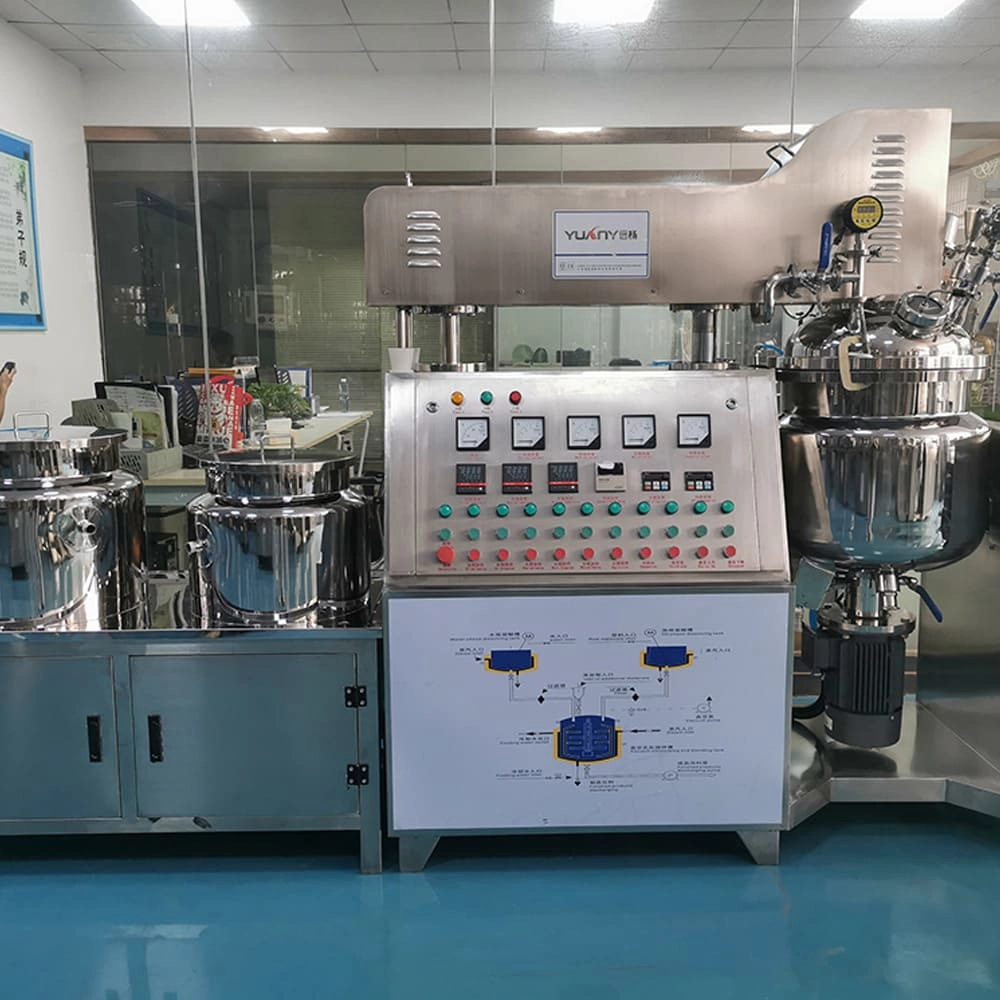
Improving Energy Efficiency of Vacuum Emulsifying Mixers
Wholesale heat induction sealer manufacturer and supplier in Asia
What are the application scenarios of electric emulsifier?
Everything You Need to Know About cosmetic mixing blending equipment
Desktop Bottle Sealing Machine
How does the automatic bottle sealing machine work?
Electromagnetic induction sealing machine uses high-frequency electromagnetic field to act on the packaging film, resulting in an induced current inside, which will generate heat, melt the packaging film, and then form a sealing after cooling.
Automatic Servo Motor Capping Machine
Is there a bottle gripper to keep thin bottles stable?
Yes, the auto servo capping machine is equipped with pneumatic clamping device for bottle stability.
Semi automatic powder filling machine
What’s the filling range of the powder dosing machine?
The filling range of the semi auto powder filling machines is: 10-5000g. But we need to customize according to specific weight that clients plan to pack. The screw model will be different.
Horizontal Filling Machine
Can the liquid filler be delivered by air?
If clients need it in a hurry, just choose to delivery by air. The desktop cream filling machine is not big, can arrange international express to pick-up the package. In order to save cost, client can choose by sea, which is much slower.
Chemicals
What is the delivery lead time?
The production and delivery lead time depends on specific customization requirements, generally ranging from 4 to 8 weeks.
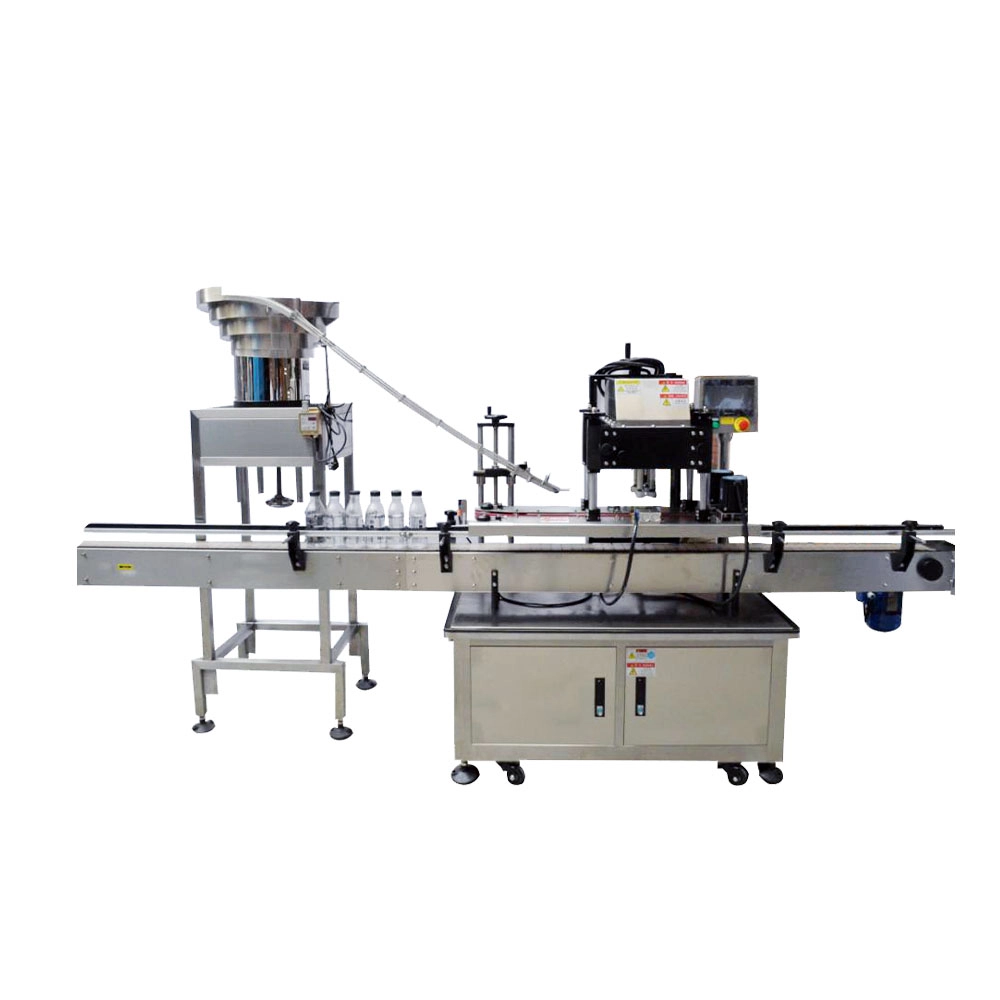
Automatic Plastic Caps Capping Machine with Vibrating Cap Feeder for Sale
Yuanyang automatic screw capping machine is a kind of four-wheel bottle capping machine. The automatic screw capper is often used to close lids of containers such as bottles and jars, especially for plastic bottles, which are widely used in food, medicine, chemical, cosmetic, and other industries for mass production and continuous production lines.
Features:
⦁ Full pneumatic drive;
⦁ Automated fast speed;
⦁ Suitable for various screw caps, pumps, and spray bottles.
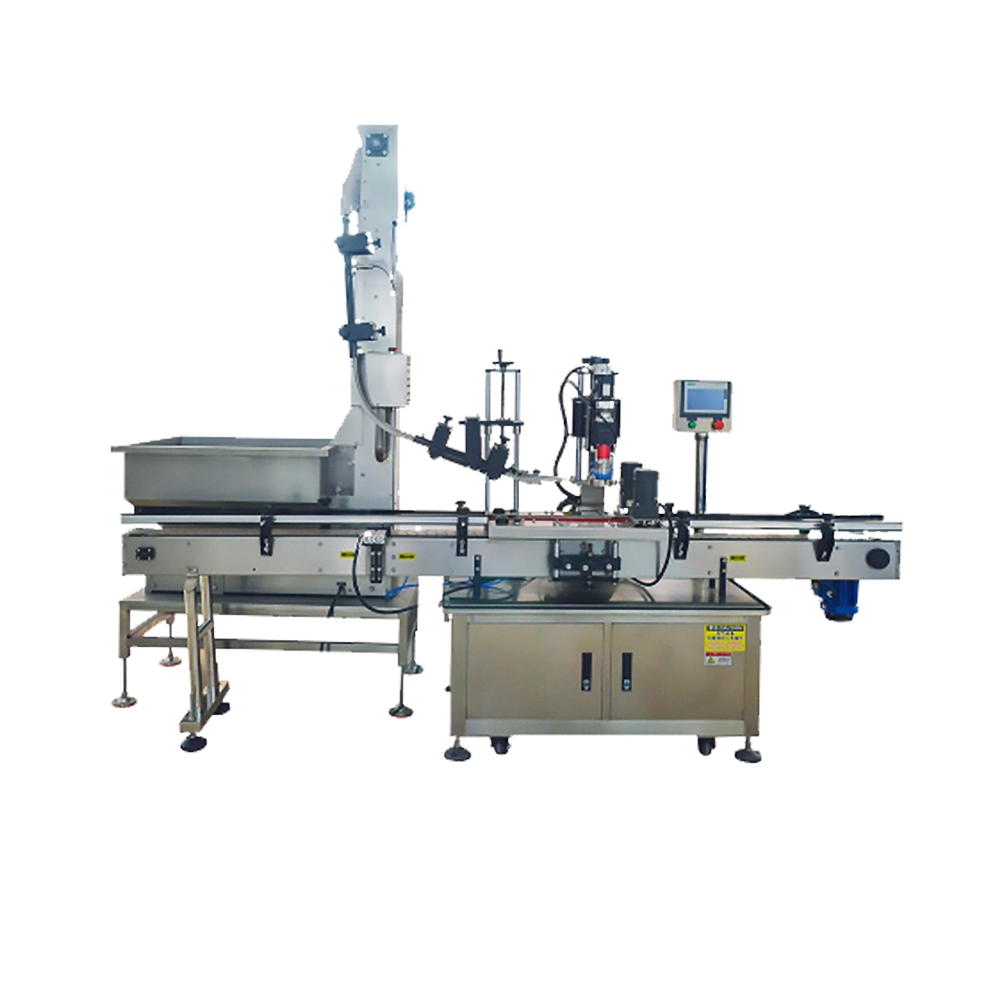
Automatic Metal Caps Capping Machine for Sale
Yuanyang automatic metal cap capping machine is a bottle capper for bottles with metal caps, which is often used to close lids of containers such as bottles and jars. The glass bottle metal capping machine is widely used in food, medicine, chemical, cosmetic, and other industries for mass production and continuous production line .
Features:
⦁ Pneumatic and electric drive;
⦁ Automated fast speed;
⦁ Suitable for glass bottles with metal caps.
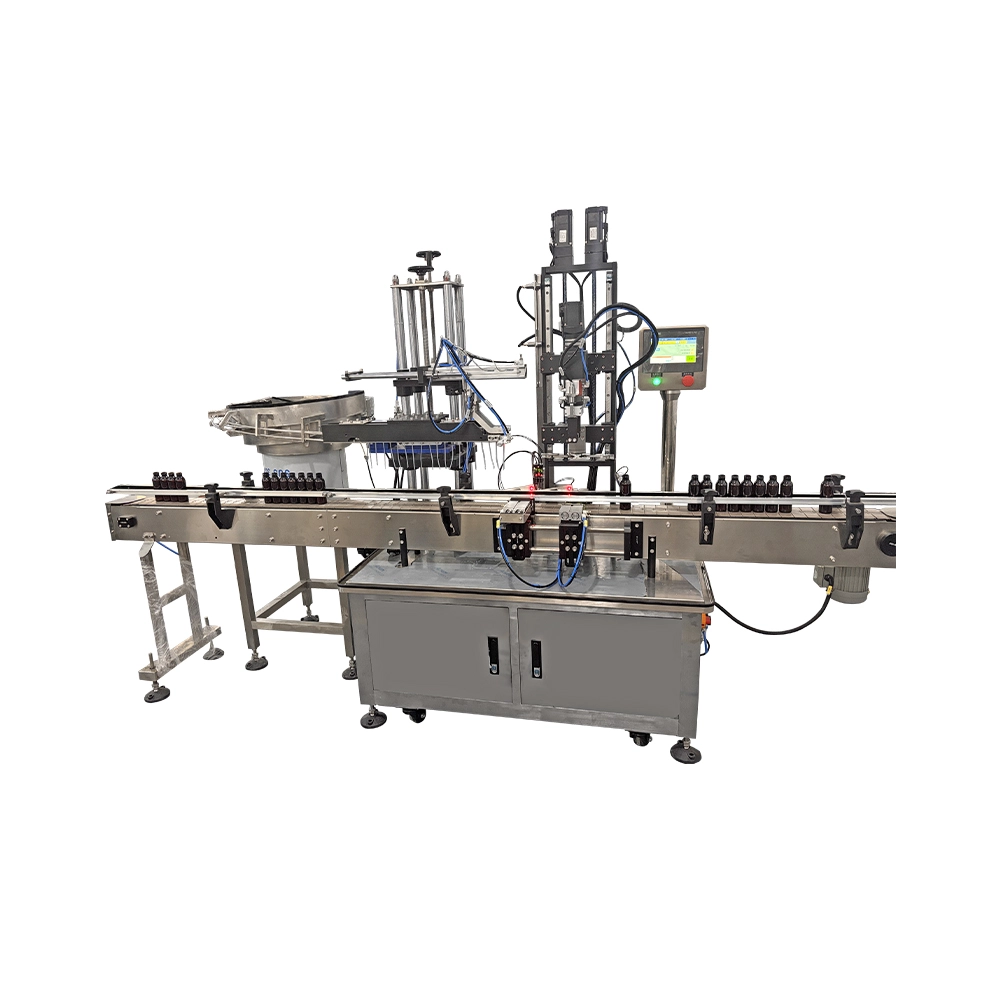
Automatic Pump Head Feeding and Capping Machine for Sale
Yuanyang automatic pump head feeding and capping machine is a bottle cap sorter and capper for bottles with pump heads, which is often used to close lids of containers such as nail polish, sprayers, and shampoo. The capping machine with a pump head feeder is widely used in food, medicine, chemical, cosmetic, and other industries for mass production and continuous production line .
Features:
⦁ Pneumatic and electric drive;
⦁ Automated fast speed;
⦁ Suitable for various types of caps.
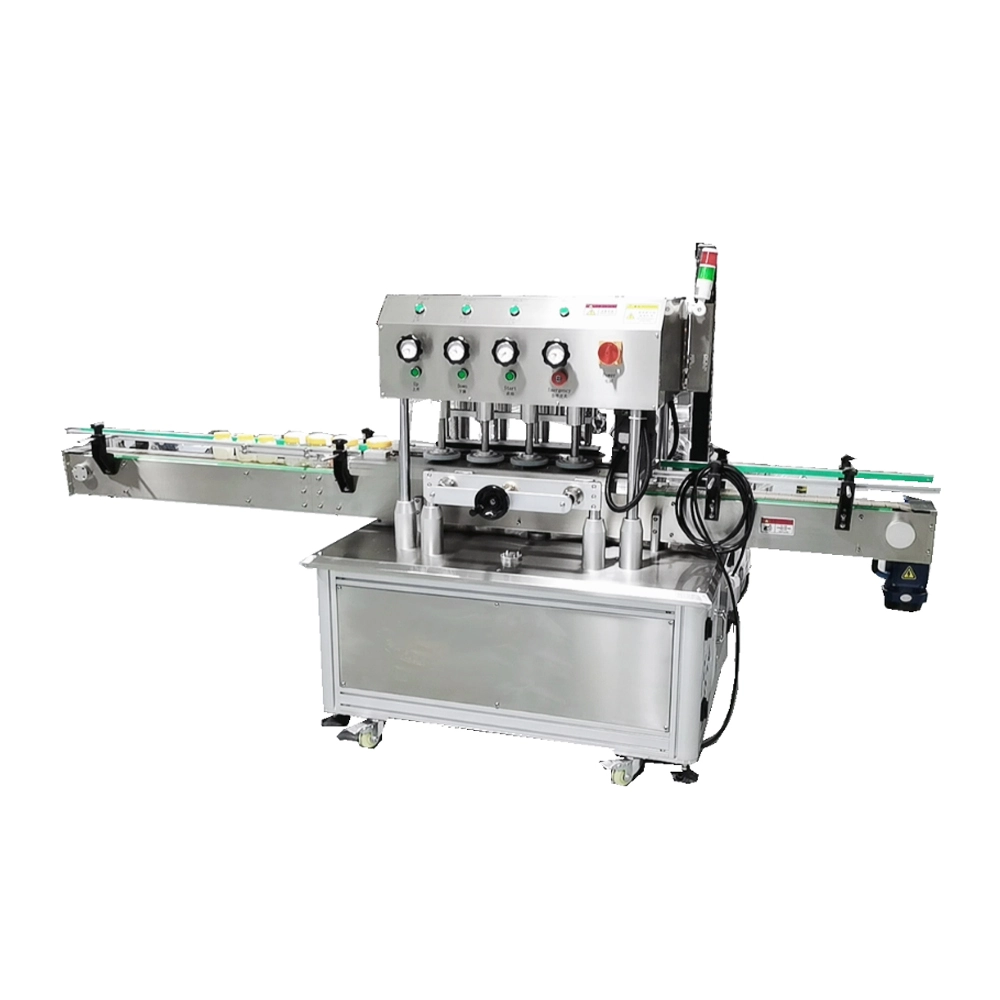
Automatic High Speed Capping Machine for Sale
The Yuanyang automatic high-speed capping machine is a kind of 8-wheel bottle-capping machine with fast working efficiency. The automatic capper is often used to close lids of containers such as bottles and jars, especially for plastic bottles, which are widely used in food, medicine, chemical, cosmetic, and other industries for mass production and continuous production lines.
Features:
⦁ Electric drive;
⦁ Automated fast speed;
⦁ Suitable for various screw caps, pumps, and spray bottles.
 Scan QR Code
Facebook
YouTube
LinkedIn
Whatsapp: +8613434139712
Guangzhou Yuanyang Machinery