





Hygienic Design Standards for Sachet Packaging Machines
- Design Principles for Hygienic Sachet Packaging Equipment
- Fundamental hygienic objectives
- Sanitary layout and machine footprint
- Risk-based design and hygienic zoning
- Materials, Surfaces and Cleanability
- Material selection: stainless steel and non-absorbent components
- Surface finish and weld quality
- Design for accessibility and dismantling
- Sealing, Contamination Control and Validation
- Effective sealing and film handling
- Cleaning and disinfection strategies
- Validation, monitoring and microbiological testing
- Maintenance, Documentation and Regulatory Compliance
- Planned maintenance and spare parts strategy
- Traceability and documentation
- Relevant standards and regulatory references
- Practical Checklist and Case Examples
- Operational checklist before commissioning
- Comparison table: common hygienic options
- Short case example
- Product Spotlight: Sachet Packaging Machine for Sale
- Frequently Asked Questions (FAQ)
- What makes a sachet packaging machine hygienic?
- Which standards should I require from the manufacturer?
- How often should the machine be validated and cleaned?
- Can I retrofit my existing sachet machine for hygienic compliance?
- Which tests demonstrate successful cleaning?

Hygienic design for sachet packaging machines is critical to protect product safety, ensure regulatory compliance and maintain production uptime. This page summarizes practical hygienic design principles and standards that engineers, quality managers and purchasers should use when evaluating or specifying a sachet packaging machine. Emphasis is on preventing contamination, facilitating cleaning and inspection, and documenting validation to meet ISO, FDA and EHEDG expectations.
Design Principles for Hygienic Sachet Packaging Equipment
Fundamental hygienic objectives
The primary hygienic objectives of any sachet packaging line are to eliminate opportunities for microbial or particulate contamination, to ensure product contact surfaces are compatible with cleaning and disinfecting agents, and to enable reliable inspection and maintenance. A modern sachet packaging machine should be designed so that food, pharmaceutical or chemical products never contact crevices, raw castings or absorbent materials that harbor residues.
Sanitary layout and machine footprint
Machine layout affects airflow, personnel movement and cleaning operations. A compact but accessible sachet packer layout reduces exposed product transfer points and simplifies clean-in-place (CIP) or manual cleaning. Floors, drains and surrounding equipment must be considered early in the line design. EHEDG guidance recommends minimizing overhead obstructions and allowing unobstructed access for inspection and washdown (EHEDG).
Risk-based design and hygienic zoning
Apply a risk-based approach: classify machine zones by product contact risk (e.g., direct-contact zones, near-contact zones, non-contact zones). Critical zones require smooth welded surfaces, sanitary seals and validated cleaning regimes. Implementing hygienic zoning simplifies cleaning procedures and reduces cross-contamination risk for multi-product facilities.
Materials, Surfaces and Cleanability
Material selection: stainless steel and non-absorbent components
Material choice has the biggest single impact on cleanability and durability. Use stainless steel 316L or equivalent for all wetted and product-contact parts because of its corrosion resistance and low ion release. Non-metallic parts (seals, gaskets, belts) should be FDA/EU-compliant and resistant to CIP chemicals. Refer to regulatory resources such as the FDA food-contact guidance and EU regulations for compliant materials (FDA).
Surface finish and weld quality
Surface roughness (Ra) should be minimized — typical targets for product-contact surfaces are Ra ≤ 0.8 μm (some applications require Ra ≤ 0.4 μm). All welds should be ground smooth and continuous; crevices and undercuts create niches for microbes. EHEDG and ISO recommendations on surface finish and weld finishing should be used as design targets (ISO 14159).
Design for accessibility and dismantling
Components that require regular inspection or cleaning should be easily removable without tools where possible, or with quick-release mechanisms. Hoses, nozzles, and filling heads should be accessible for swabbing and visual inspection. Avoid fixed covers that force operators to reach into confined spaces for maintenance.
Sealing, Contamination Control and Validation
Effective sealing and film handling
A sachet packaging machine must control particulate ingress at infeed and film unwind points. Use sanitary labyrinths, purge air or positive-pressure enclosures where dust or powders are present. For liquid sachets, ensure fill nozzles have drip-off features and return systems to avoid product buildup. Servo-driven film handling with accurate tension control reduces film folding and crevice formation.
Cleaning and disinfection strategies
Define cleaning procedures based on the product type (powder, paste, liquid) and the machine’s zonal classification. CIP is appropriate for enclosed liquid paths; spray-and-wipe or hot-water washdowns are common for external surfaces. Include chemical compatibility testing for sanitizers. WHO and FDA food safety guidance highlight the need for validated cleaning procedures to prevent cross-contamination (WHO).
Validation, monitoring and microbiological testing
Validation should include installation qualification (IQ), operational qualification (OQ) and performance qualification (PQ) for cleaning and sealing operations. Use ATP swabs, microbial plating or rapid methods to verify cleaning effectiveness. Document acceptance criteria and test frequency in a validation master plan. Common validation checks include leak testing of seals, fill-weight consistency, and sterility or bioburden monitoring for high-risk products.
Maintenance, Documentation and Regulatory Compliance
Planned maintenance and spare parts strategy
Hygienic uptime requires a documented preventive maintenance schedule for bearings, seals, belts and pumps. Use sanitary spare parts kits and track part lifetimes. Quick-change parts designed for hygienic replacement reduce downtime and exposure to contamination during maintenance operations.
Traceability and documentation
Maintain drawings of product-contact parts, material certificates (EN/ASTM), weld procedures and surface finish certificates. For pharmaceutical or medical sachets, maintain batch records and equipment cleaning logs. Traceability enables root-cause analysis for contamination events and supports regulatory audits.
Relevant standards and regulatory references
Key standards and authorities to reference when specifying or auditing a sachet packing line include:
- ISO 14159 — Safety and hygiene requirements for machinery design.
- EHEDG — Practical hygienic engineering and design guidance for food equipment.
- FDA Food Code and food-contact policies — U.S. guidance on food safety and equipment.
- Packaging machine (Wikipedia) — General overview of packaging equipment types and functions.
Practical Checklist and Case Examples
Operational checklist before commissioning
Use this short checklist to evaluate a new or retrofit sachet packaging machine before commissioning:
- Material certificates provided for all product-contact parts.
- Surface finish Ra values and weld records documented.
- Cleaning and sanitizing procedures validated and documented.
- Seals, gaskets and belts are food-contact grade and easily replaceable.
- Enclosures and guards designed to prevent ingress of contaminants.
Comparison table: common hygienic options
| Feature | Standard Option | Hygienic Upgrade |
|---|---|---|
| Frame material | SS304 | SS316L, electropolished |
| Surface finish | Polished, Ra ~1.6 μm | Electropolished, Ra ≤0.8 μm |
| Seals | NBR or generic EPDM | FDA-grade EPDM/EPDM FKM with sanitary profiles |
| Access | Bolted covers | Quick-release hinged doors, tool-free removal |
| Cleaning | Manual washdown | CIP for enclosed systems + validated procedures |
Short case example
A mid-size snack manufacturer retrofitted a vertical sachet machine to SS316L product-contact surfaces, added quick-release film rollers and implemented validated CIP nozzles for the filling head. Result: swab tests showed a 90% reduction in residual ATP counts and changeover time dropped by 40% — improving both safety and throughput.
Product Spotlight: Sachet Packaging Machine for Sale
Yuanyang sachet packaging machine is a kind of automatic equipment, mainly used for measuring, filling, and sealing small bag packing materials. The sachet packing machine has become an indispensable piece of equipment in modern production for food, medicine, chemicals, and other fields.
Features:
⦁ Microcomputer controlled;
⦁ Automated fast speed;
⦁ Multi-function integration.
If you are searching for a reliable Sachet Packaging Machine for Sale, ensure the model meets the hygienic standards discussed above. Look for documentation on materials, surface finish, cleaning strategy and validation support from the supplier. A supplier who can provide IQ/OQ/PQ protocols and spare-parts kits will reduce risk and accelerate qualification.
Frequently Asked Questions (FAQ)
What makes a sachet packaging machine hygienic?
Hygienic design includes use of appropriate materials (typically SS316L), smooth welds and surfaces, easy access for cleaning, properly selected seals, and validated cleaning/disinfection procedures. The machine should prevent product pockets and have a documented validation plan.
Which standards should I require from the manufacturer?
Require conformity with ISO 14159 and EHEDG guidelines where applicable. For food-contact materials, ask for compliance with FDA and EU food contact regulations and material certificates. Links to key references: ISO 14159, EHEDG, FDA.
How often should the machine be validated and cleaned?
Cleaning frequency depends on product risk: high-risk products (wet, high-protein) require more frequent cleaning — often at each shift or batch. Validation should be performed at commissioning and after major maintenance, and revalidated whenever processes change. Daily logbooks and periodic microbiological sampling are recommended.
Can I retrofit my existing sachet machine for hygienic compliance?
Many machines can be retrofitted with hygienic upgrades: replace belts and seals with food-grade parts, polish or replace product-contact surfaces, add quick-release guards, and install CIP nozzles. Evaluate cost vs. replacement; sometimes a new machine designed for hygiene is more cost-effective.
Which tests demonstrate successful cleaning?
ATP bioluminescence is a rapid screening method for residual organic material. For microbiological assurance, use swab cultures and plate counts, or rapid microbial detection systems. Validate leak tests for seals and conduct routine weight/visual checks for seal integrity.
If you need help selecting or qualifying a sachet packaging machine, or want a quote for a Sachet Packaging Machine for Sale, contact us today. View product details or request a quotation: Sachet Packaging Machine for Sale — or email our sales team at [email protected].
Best vacuum emulsifying mixer machine suppliers manufacturers and supplier brands
What is seam sealing machine
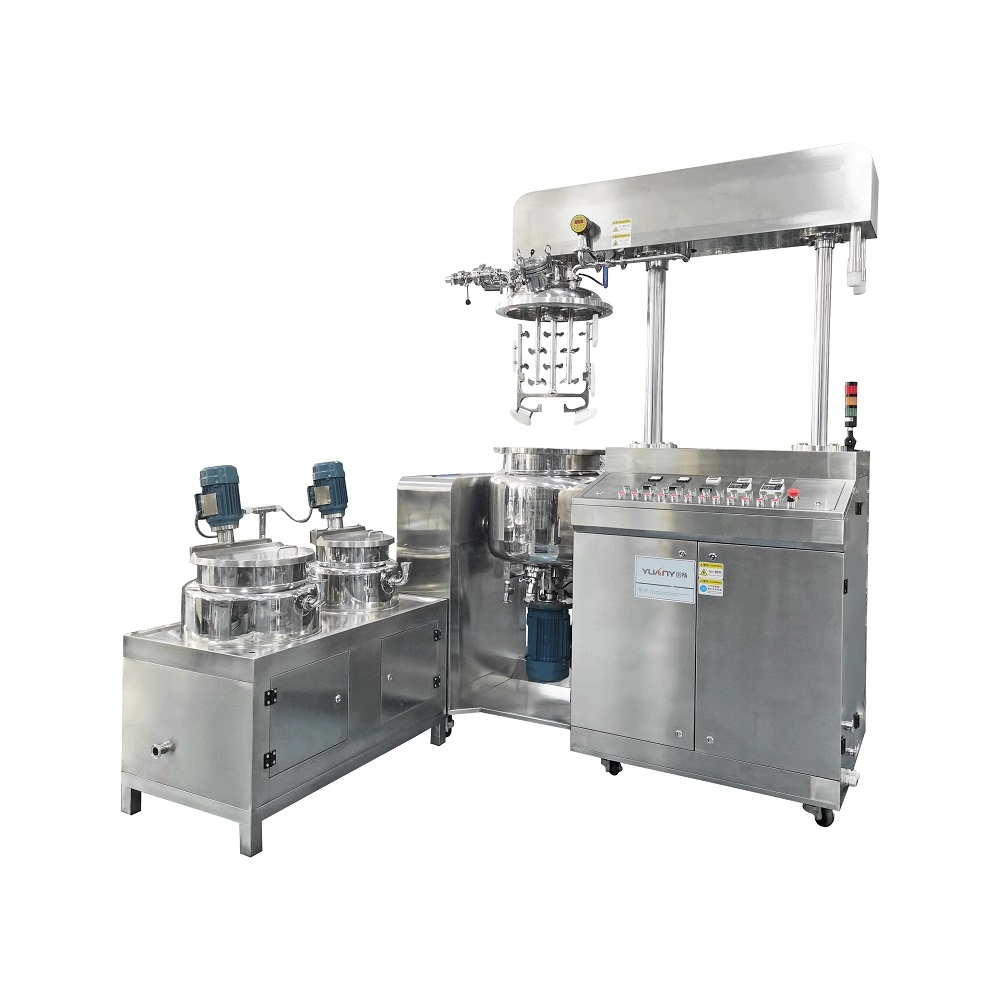
Formulation Tips for Using a Vacuum Emulsifying Machine
Wholesale plastic food tray sealing machine manufacturer and supplier in Dubai
Ribbon mixer
How long does it take to produce the ribbon blender powder machines?
The leading time is about 20-30 days. To ensure quality, the ribbon powder mixer is worth the wait.
Automatic Round Bottle Labeling Machine
What types labels are suitable for this jar labeling machine?
Self-adhesive label, non-adhesive film label, electronic supervision code label, bar code label, paper label, etc. However, the label paper will affect the quality of the labeling machine, so try to choose a better raw material.
Horizontal Filling Machine
How long is the suction hose?
This hose is about 1.3 meters long. Can be longer upon requirements.
Homogenizing Mixer
Do you have temperature control system for the shampoo making machine?
Yes, there is temperature probe into tank at bottom. It detects temperature and display on the control panel. What’s more, the target temperature can be set.
Vertical Filling Machine
Can it fill 10 liters bottle?
No, the biggest filling volume is 5L. But you can fill twice to achieve you target. Over 5L, another drum filling machine will be recommended.
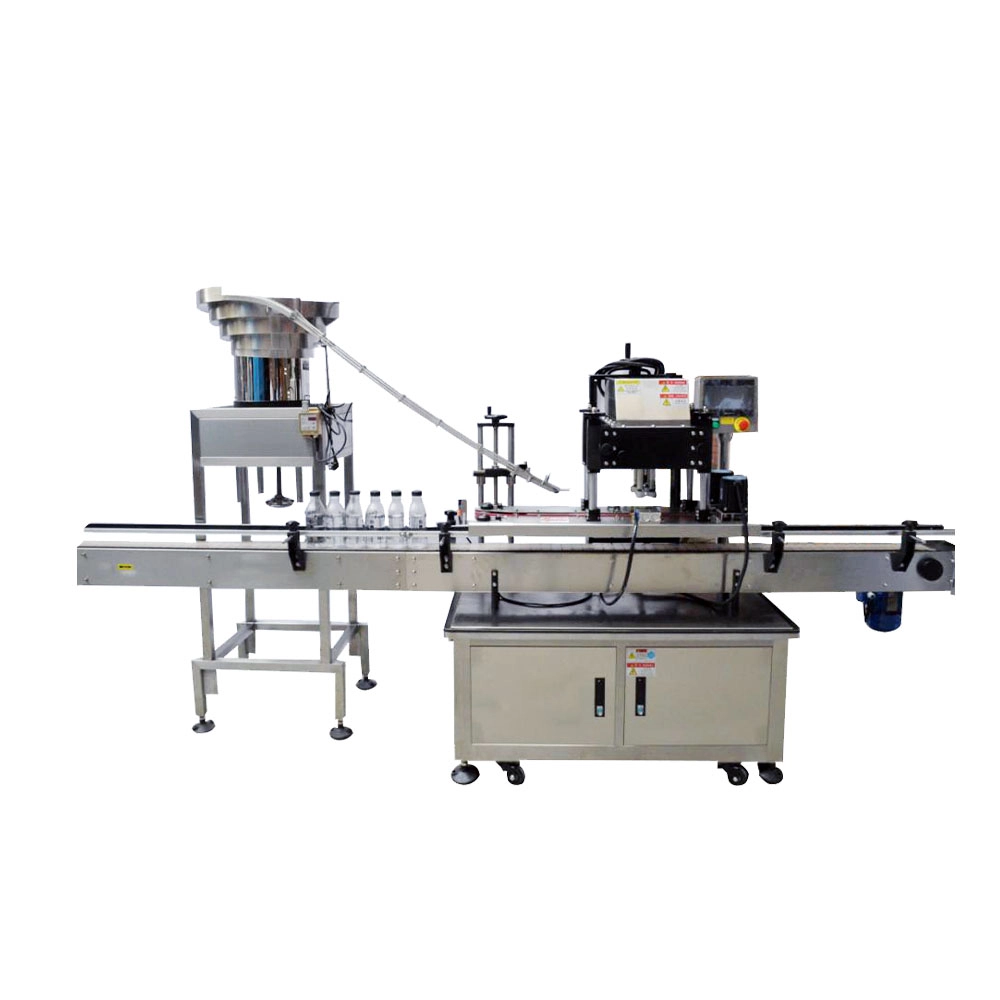
Automatic Plastic Caps Capping Machine with Vibrating Cap Feeder for Sale
Yuanyang automatic screw capping machine is a kind of four-wheel bottle capping machine. The automatic screw capper is often used to close lids of containers such as bottles and jars, especially for plastic bottles, which are widely used in food, medicine, chemical, cosmetic, and other industries for mass production and continuous production lines.
Features:
⦁ Full pneumatic drive;
⦁ Automated fast speed;
⦁ Suitable for various screw caps, pumps, and spray bottles.
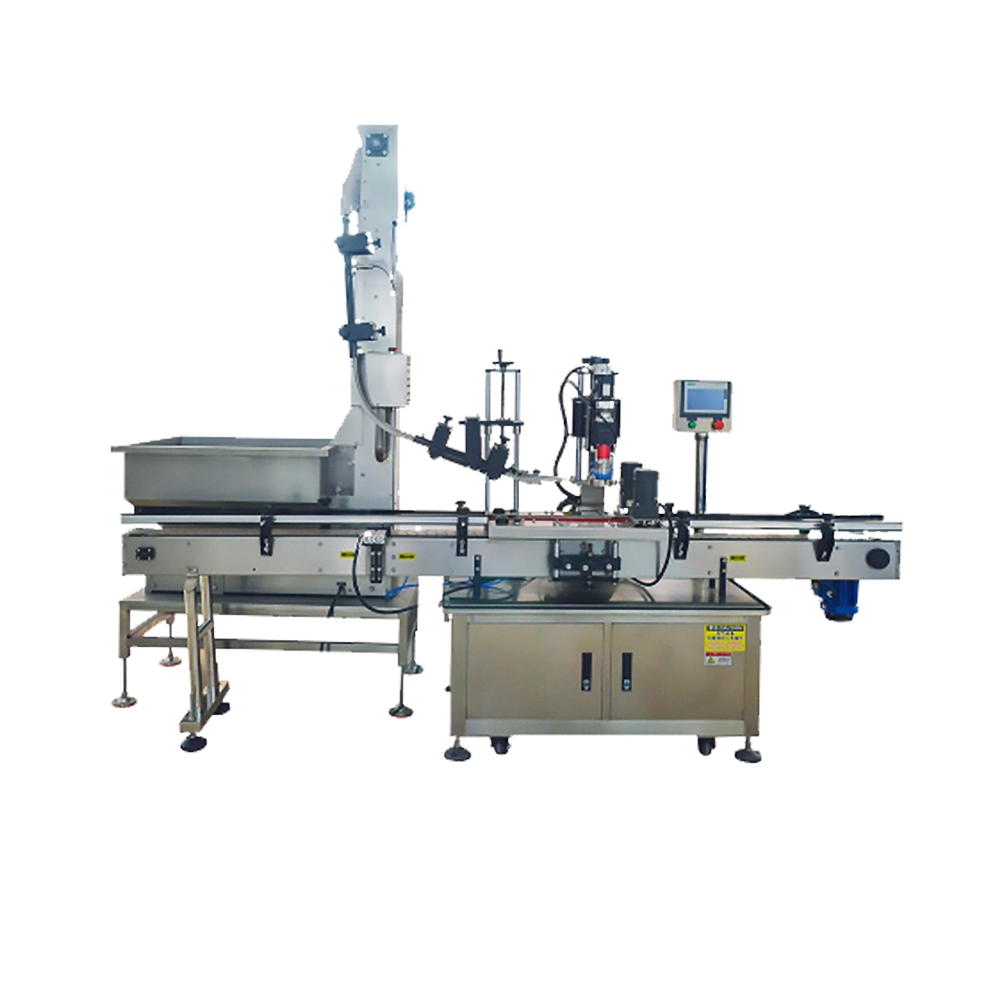
Automatic Metal Caps Capping Machine for Sale
Yuanyang automatic metal cap capping machine is a bottle capper for bottles with metal caps, which is often used to close lids of containers such as bottles and jars. The glass bottle metal capping machine is widely used in food, medicine, chemical, cosmetic, and other industries for mass production and continuous production line .
Features:
⦁ Pneumatic and electric drive;
⦁ Automated fast speed;
⦁ Suitable for glass bottles with metal caps.
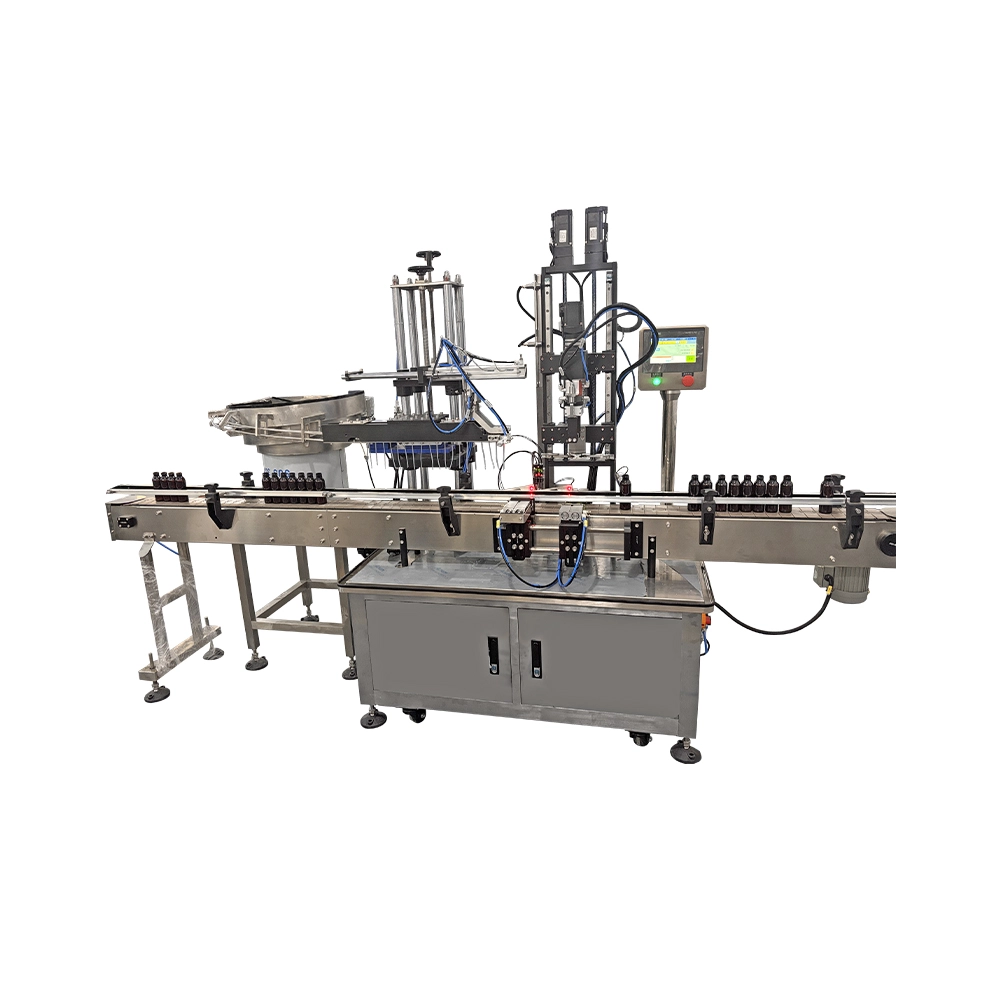
Automatic Pump Head Feeding and Capping Machine for Sale
Yuanyang automatic pump head feeding and capping machine is a bottle cap sorter and capper for bottles with pump heads, which is often used to close lids of containers such as nail polish, sprayers, and shampoo. The capping machine with a pump head feeder is widely used in food, medicine, chemical, cosmetic, and other industries for mass production and continuous production line .
Features:
⦁ Pneumatic and electric drive;
⦁ Automated fast speed;
⦁ Suitable for various types of caps.
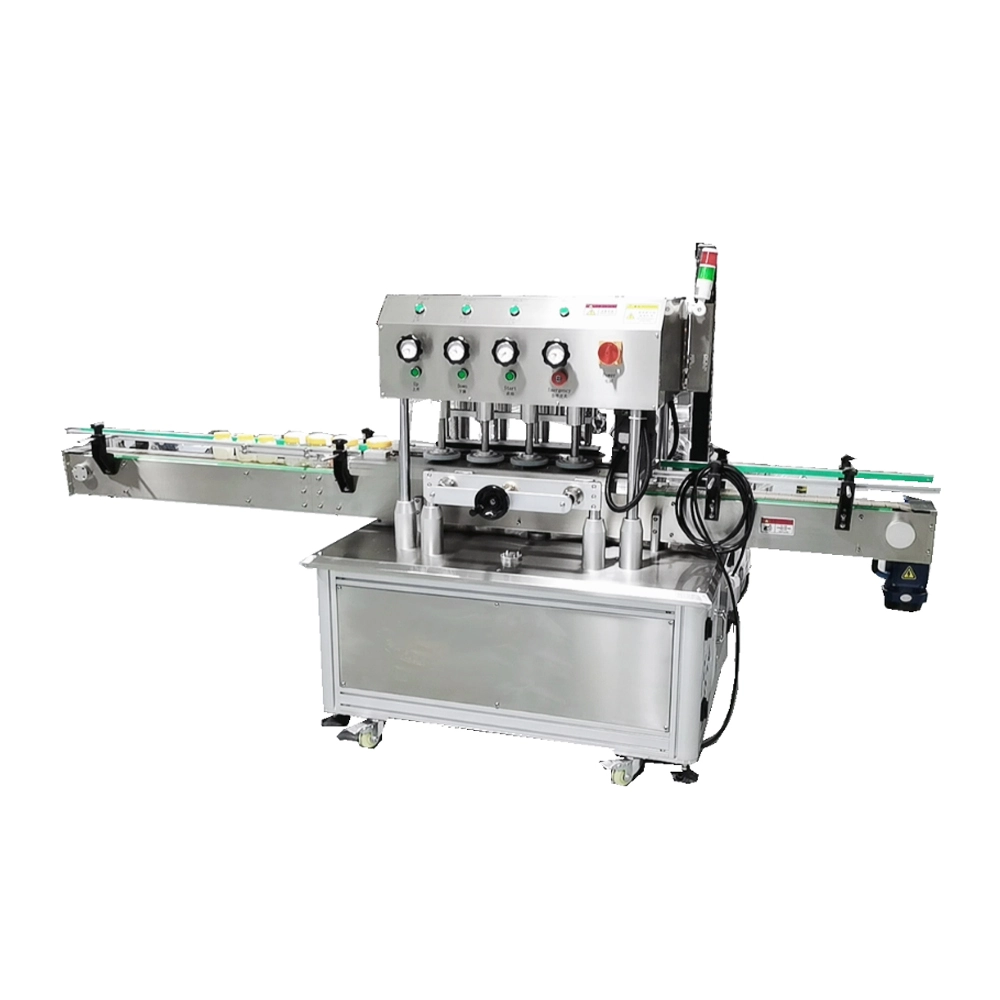
Automatic High Speed Capping Machine for Sale
The Yuanyang automatic high-speed capping machine is a kind of 8-wheel bottle-capping machine with fast working efficiency. The automatic capper is often used to close lids of containers such as bottles and jars, especially for plastic bottles, which are widely used in food, medicine, chemical, cosmetic, and other industries for mass production and continuous production lines.
Features:
⦁ Electric drive;
⦁ Automated fast speed;
⦁ Suitable for various screw caps, pumps, and spray bottles.
 Scan QR Code
Facebook
YouTube
LinkedIn
Whatsapp: +8613434139712
Guangzhou Yuanyang Machinery