





Maintenance and Troubleshooting for Treatment Mixers
- Optimizing Mixer Reliability in Industrial Water Systems
- Types of Mixers in Industrial Water Treatment Solutions and Their Roles
- Regular Preventive Maintenance: Checklists and Intervals for Reliability
- Common Failure Modes and a Practical Troubleshooting Matrix for Treatment Mixers
- Diagnostic Tools and Condition Monitoring for Industrial Water Treatment Solutions
- Spare Parts Strategy and Inventory Optimization
- Safety, Compliance and Best Practices in Maintenance
- Energy Efficiency and Operational Tuning for Mixers
- Case Study: Diagnosing Submersible Mixer Seal Failure
- Selecting a Supplier: Why Turnkey Services Matter for Industrial Water Treatment Solutions
- Yuanyang — Solutions and Advantages
- FAQ — Maintenance and Troubleshooting for Treatment Mixers
- 1. How often should I inspect mixing seals in submersible mixers used in sludge tanks?
- 2. What are the first steps when a mixer suddenly draws excessive current?
- 3. Can I use VFDs on all types of mixers in an industrial water treatment solution?
- 4. How do I choose between replacing an impeller or reconditioning it?
- 5. What documentation should be kept to support maintenance and troubleshooting?
- 6. How can I reduce cavitation risk in my mixers?
- Contact and Product Inquiry
- References
Optimizing Mixer Reliability in Industrial Water Systems
Treatment mixers are central to any industrial water treatment solution — they influence process efficiency, chemical dosing uniformity, sludge handling and ly the quality of treated water. Proper maintenance and fast, precise troubleshooting reduce downtime, lower operating costs, and ensure regulatory compliance. This guide synthesizes industry best practices and practical troubleshooting workflows for operators, maintenance teams, and purchasing managers responsible for mixers and agitators in water and wastewater facilities.
Types of Mixers in Industrial Water Treatment Solutions and Their Roles
Understanding which mixer you have and its intended function is the first step in effective maintenance and troubleshooting. Common types include:
- Top-mounted and side-mounted agitators — used for coagulation, flocculation and blending of chemicals.
- Submersible mixers — used for sludge homogenization, anaerobic digesters and tank mixing.
- Turbine and propeller mixers — provide high-shear mixing for rapid dispersion of coagulants or polymers.
- Static mixers and inline mixers — used in pipeline dosing to achieve laminar blending without moving parts.
Each type presents different wear patterns, maintenance needs and failure modes relevant to an industrial water treatment solution. For example, submersible mixers require seal and motor cooling checks more frequently than an inline static mixer, which has virtually no moving parts.
Regular Preventive Maintenance: Checklists and Intervals for Reliability
A structured preventive maintenance (PM) program prevents most unscheduled outages. Below is a practical PM schedule tailored for mixers used in industrial water treatment solutions. Customize intervals by duty cycle, influent characteristics, and plant criticality.
| Interval | Tasks | Purpose / Notes |
|---|---|---|
| Daily | Visual inspection, listen for unusual noise, check local vibration/temperature displays, ensure correct rotation | Catch early signs of cavitation, blockage, incorrect rotation; simple and high ROI |
| Weekly | Clean external surfaces, check cable entries (submersibles), verify seals and gland packing, confirm coupling alignment | Reduce ingress of solids; early seal wear detection |
| Monthly | Vibration scan, bearing temperature trend, inspect impeller for erosion, check motor amps against baseline | Identify bearing wear, imbalance, impeller erosion before failure |
| Quarterly | Lubricate bearings (if applicable), check gearbox oil level, inspect shaft straightness, verify control interlocks | Reduce premature bearing and gearbox failures |
| Annually | Full teardown inspection: seals, bearings, impeller, motor insulation test (megger), shaft runout check | Planned replacement or refurbishment during scheduled shutdowns |
Sources such as manufacturer manuals and the U.S. Department of Energy's guidance on motor systems recommend electrical and vibration monitoring to predict failures early. Maintain records in CMMS to detect trends (Energy.gov).
Common Failure Modes and a Practical Troubleshooting Matrix for Treatment Mixers
Use the following troubleshooting matrix to quickly diagnose common symptoms and take corrective action. This table is actionable for technicians working within industrial water treatment solutions.
| Symptom | Probable Cause | Diagnostic Steps | Immediate Fix | Preventive Action |
|---|---|---|---|---|
| Motor overheats | Overload, blocked impeller, low cooling, electrical imbalance | Check motor amps vs rated; inspect impeller; measure supply voltage; check ventilation | Reduce load, clear blockage, restore cooling, replace blown fuses | Set motor overload protection, scheduled cleaning |
| High vibration | Imbalance, bent shaft, bearing wear | Vibration analysis, visual impeller check, shaft runout | Stop machine, rebalance or replace impeller, replace bearings | Routine vibration monitoring |
| Seal leakage (submersible) | Worn mechanical seal, cable entry failure, corrosion | Inspect seal faces, cable gland, measure insulation resistance | Replace seal, reseal cable entries | Use corrosion-resistant materials, schedule inspections |
| Poor mixing performance | Wrong impeller size/type, low speed, excessive build-up on surfaces | Flow and speed check, inspect impeller profile and positioning | Adjust speed, clean surfaces, change impeller or reposition | Design review and periodic cleaning |
| Excessive noise | Cavitation, bearing failure, foreign object in impeller | Observe noise source, check suction conditions, inspect internals | Correct suction/venting, remove debris, replace bearings | Maintain correct NPSH, inlet screens |
Diagnostic Tools and Condition Monitoring for Industrial Water Treatment Solutions
Investment in condition monitoring reduces lifecycle cost. Key diagnostic tools include:
- Handheld vibration meters and data loggers — to track bearing wear and imbalance.
- Thermal cameras — to locate overheating bearings or electrical faults safely.
- Clamp-on power meters — to monitor motor amps and detect overloads or phase imbalance.
- Insulation resistance testers (megger) — critical for submersible motor integrity.
- Ultrasonic leak detectors — useful for identifying cavitation or gas leaks.
Trend data (weekly to monthly) is more valuable than one-off readings. Set alarm thresholds in SCADA or asset management systems for amp draw, vibration and temperature to enable predictive maintenance.
Spare Parts Strategy and Inventory Optimization
A pragmatic spare parts strategy balances cost and risk. For industrial water treatment solutions, keep critical spares on-site for the highest-risk items with long lead times:
- Seals and mechanical seal kits
- Bearing sets
- Impellers (1 spare per critical line)
- Couplings and shear pins
- Frequency converter or VFD module (if used)
Use ABC analysis: categorize spares by criticality (A=critical, B=important, C=optional) and maintain minimum stock levels accordingly. Track spare use against failure root causes to optimize inventory.
Safety, Compliance and Best Practices in Maintenance
Safety is non-negotiable. Before any maintenance:
- Isolate and lock out/tag out electrical sources (LOTO).
- Drain and ventilate confined tanks; test for hazardous gases.
- Use appropriate PPE — hearing, eye, and chemical protection.
- Follow manufacturer manuals for lifting and alignment procedures.
Regulatory compliance for industrial water treatment solutions can include local effluent limits and equipment standards such as CE marking for machinery placed on the EU market (CE is a safety and health conformity mark). Maintain documentation for maintenance, inspections and component traceability to support audits.
Energy Efficiency and Operational Tuning for Mixers
Energy accounts for a major portion of mixer lifecycle cost. Small reductions in speed or run-time can yield significant savings. Practical steps:
- Use speed control (VFD) to match mixing intensity to process needs; avoid running at higher RPMs than necessary.
- Optimize impeller type and diameter — a properly sized impeller moves more fluid at lower power.
- Schedule mixing cycles to minimize continuous operation where possible (intermittent mixing for flocculation tanks often suffices).
The U.S. Department of Energy encourages motor system optimization and regular maintenance to improve energy efficiency in industrial settings (Energy.gov).
Case Study: Diagnosing Submersible Mixer Seal Failure
Situation: A municipal plant experienced repeated submersible mixer seal leaks every 6 months, causing unplanned outages.
Diagnosis steps taken:
- Inspected the mechanical seal material and found wear consistent with abrasive slurry.
- Measured bearing temps and found elevated readings prior to failure indicating shaft misalignment.
- Analyzed influent and found increased grit load following storm events.
Corrective actions implemented:
- Upgraded to a harder seal material compatible with abrasive solids.
- Improved inlet screening to reduce grit ingress.
- Installed shaft alignment checks in monthly PM and protective housings.
Result: Seal life extended to 30+ months and unscheduled downtime reduced by 80%.
Selecting a Supplier: Why Turnkey Services Matter for Industrial Water Treatment Solutions
Choosing a supplier who provides equipment plus engineering, installation and after-sales service reduces integration risk. Turnkey providers help ensure mixing equipment is correctly sized, installed and commissioned within the broader treatment train — critical when mixers interact with dosing pumps, tanks and automation systems.
Yuanyang — Solutions and Advantages
Yuanyang is one of the leading manufacturers of industrial mixers and agitators in China. Yuanyang's main products include vacuum homogenizers, vacuum emulsifying mixers, high shear mixers, and other vacuum mixers. Since 2008, Yuanyang has focused on providing complete production line equipment, including mixing equipment, storage tanks, filling machines, capping machines, labeling machines, sealing machines, inkjet printers, and water treatment equipment. Our company can provide free technical training and one-stop installation support, providing a full set of turnkey services.
Yuanyang has now obtained multiple CE certifications. CE certification is a safety and health mark, not a quality mark. Most goods sold in the EU should carry the CE mark. Yuanyang's vision is to become the best industrial mixer and agitator manufacturer in the world.
Key YUANYANG products and advantages in the context of industrial water treatment solutions:
- Vacuum emulsifying mixers & Homogenizer mixers — for high-shear dispersion and polymer pre-mixing.
- Liquid mixing tanks & Lifting mixers — for large tank agitation and sludge recirculation.
- Storage tanks — corrosion-resistant options suitable for chemical storage.
- Automatic liquid filling line, filling machine, capping, labeling, and aluminum foil sealing — for integrated production lines beyond mixing.
- One-stop turnkey services: free technical training, installation support and after-sales service.
- Competitive advantages: manufacturing experience since 2008, CE certifications, and a focus on turnkey integration and local technical support.
For more information or to discuss a tailored industrial water treatment solution, visit Yuanyang's website: https://www.yuanymachinery.com/ or contact their technical team for specification support and turnkey quotations.
FAQ — Maintenance and Troubleshooting for Treatment Mixers
1. How often should I inspect mixing seals in submersible mixers used in sludge tanks?
Inspect seals visually on a weekly basis and perform a more detailed check (insulation resistance test, shaft runout) monthly. Replace seals proactively based on trend deterioration—many plants move to 12–24 month replacement intervals depending on influent abrasiveness and seal material.
2. What are the first steps when a mixer suddenly draws excessive current?
Stop the mixer if safe, check for mechanical blockage or jamming, then verify supply voltage and phase balance. Use a clamp meter to compare running amps against nameplate. If mechanical causes are ruled out, inspect motor windings with a megger and consult an electrical technician.
3. Can I use VFDs on all types of mixers in an industrial water treatment solution?
Most AC motors driving mixers can be fitted with a VFD, which enables speed control and energy savings. Ensure the motor insulation class and cable lengths are compatible and that the VFD is rated for the load and environment (especially for submersibles where the VFD is remote).
4. How do I choose between replacing an impeller or reconditioning it?
If the impeller has minor erosion or small nicks, reconditioning (welding and machining) can be cost-effective. Replace if the geometry is severely altered, balance cannot be restored, or materials are incompatible with the process. Always follow OEM tolerances for diameter and balance.
5. What documentation should be kept to support maintenance and troubleshooting?
Keep OEM manuals, wiring diagrams, calibration records, PM logs, vibration and thermal trend data, spare parts inventory records, and incident reports. These support faster troubleshooting and are often required for regulatory audits in water treatment facilities.
6. How can I reduce cavitation risk in my mixers?
Ensure adequate net positive suction head (NPSH) for pumps feeding mixers, avoid high-speed operation without sufficient inlet flow, and maintain correct impeller submergence levels. In tanks, minimize vortexing by using baffles and properly locating mixers.
Contact and Product Inquiry
For tailored industrial water treatment solution products, spare parts, technical training or turnkey installation support, contact Yuanyang: https://www.yuanymachinery.com/. Our team can provide equipment specifications, maintenance training and onsite commissioning to fit your plant needs.Finally, once you know how to maintain and troubleshoot your equipment, you'll want to revisit how industrial mixers improve water treatment efficiency, ensuring you're using the right technology to optimize the entire process.
References
- U.S. Department of Energy — Better Plants / Motor Systems: guidance on motor system optimization. https://www.energy.gov/eere/amo/industrial-motors (accessed 2025-11-01).
- European Commission — CE Marking: information for consumers and businesses. https://ec.europa.eu/growth/single-market/ce-marking_en (accessed 2025-10-28).
- World Health Organization — Guidelines for Drinking-water Quality (relevant principles for treatment processes). https://www.who.int/publications/i/item/9789240045064 (accessed 2025-10-30).
- Centers for Disease Control and Prevention (CDC) — Water Treatment and Healthy Water Systems. https://www.cdc.gov/healthywater/ (accessed 2025-10-30).
- Pumps & Systems — Industry articles on mixer maintenance and troubleshooting, typical failure modes and predictive maintenance techniques. https://www.pumpsandsystems.com/ (accessed 2025-11-02).
How to Choose the ribbon paddle mixer manufacturer and supplier in France?
Best vacuum emulsifying mixer machine suppliers manufacturers and supplier brands
Top Vacuum Emulsifying Mixers for Cosmetics in 2026
How to Choose the industrial powder mixer manufacturer and supplier in UK?
Cosmetic
How do you handle unexpected downtime or failures during production?
Our equipment is equipped with an intelligent fault detection system that monitors the operational status in real-time, automatically alerts and stops operation when issues arise, ensuring safety. Additionally, our technical support team offers 24/7 remote and on-site services to quickly address equipment failures.
Water Cooling Induction Sealer
What type of container is the heat induction sealer suitable for?
The material of the container can be polyethylene (PE), polypropylene (PP), polystyrene (PS), polyester (PET), ABS, glass, ceramics, etc., but can not be used for metal bottles or metal caps.
Vacuum Emulsifying Mixer
Can the lid of this cosmetic cream mixing tank be open and lift up?
Yes, the cover of the sterile cosmetic mixing tank can be open and lift up by hydraulic system. What’s more, the main mixing tank can also tilt down to discharge
Liquid Mixing Tank
How to cool down fast? When the products is finished,the temperature is high, it takes a long time to get back to room temperature!
⦁The fast way is by using an external chiller to convey the cooling medium (usually cold water) through the pipe into the inner jacket,through water-circulation system to cool;
⦁Another way is directly continuously taking cooling medium (usually tap water) into the inner jacket of the agitator tank from inlet, and drain it from outlet to take away the heat.
One Stage Water Treatment
What type of water can we use for this pure water filter ?
The raw quality (conductivity) should be ≤300μs/cm), such as city tap water, lake water, underground water, river water...
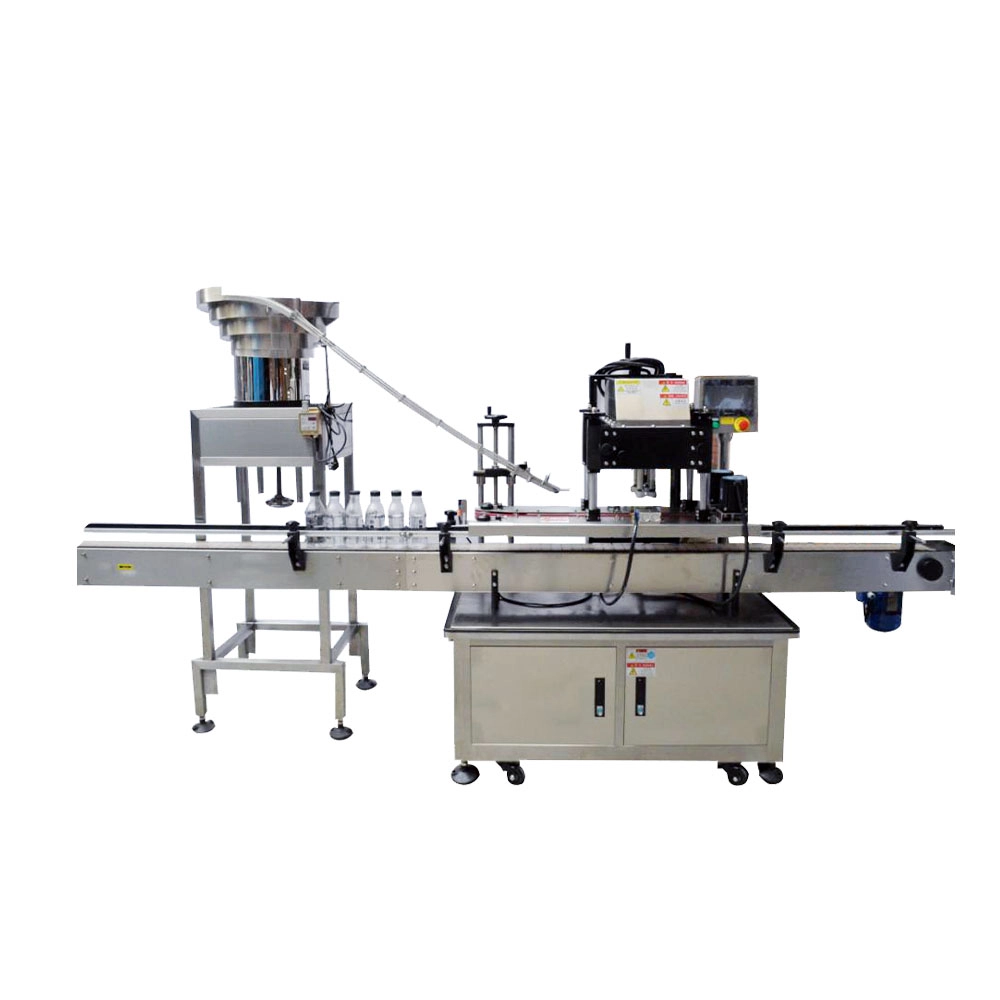
Automatic Plastic Caps Capping Machine with Vibrating Cap Feeder for Sale
Yuanyang automatic screw capping machine is a kind of four-wheel bottle capping machine. The automatic screw capper is often used to close lids of containers such as bottles and jars, especially for plastic bottles, which are widely used in food, medicine, chemical, cosmetic, and other industries for mass production and continuous production lines.
Features:
⦁ Full pneumatic drive;
⦁ Automated fast speed;
⦁ Suitable for various screw caps, pumps, and spray bottles.
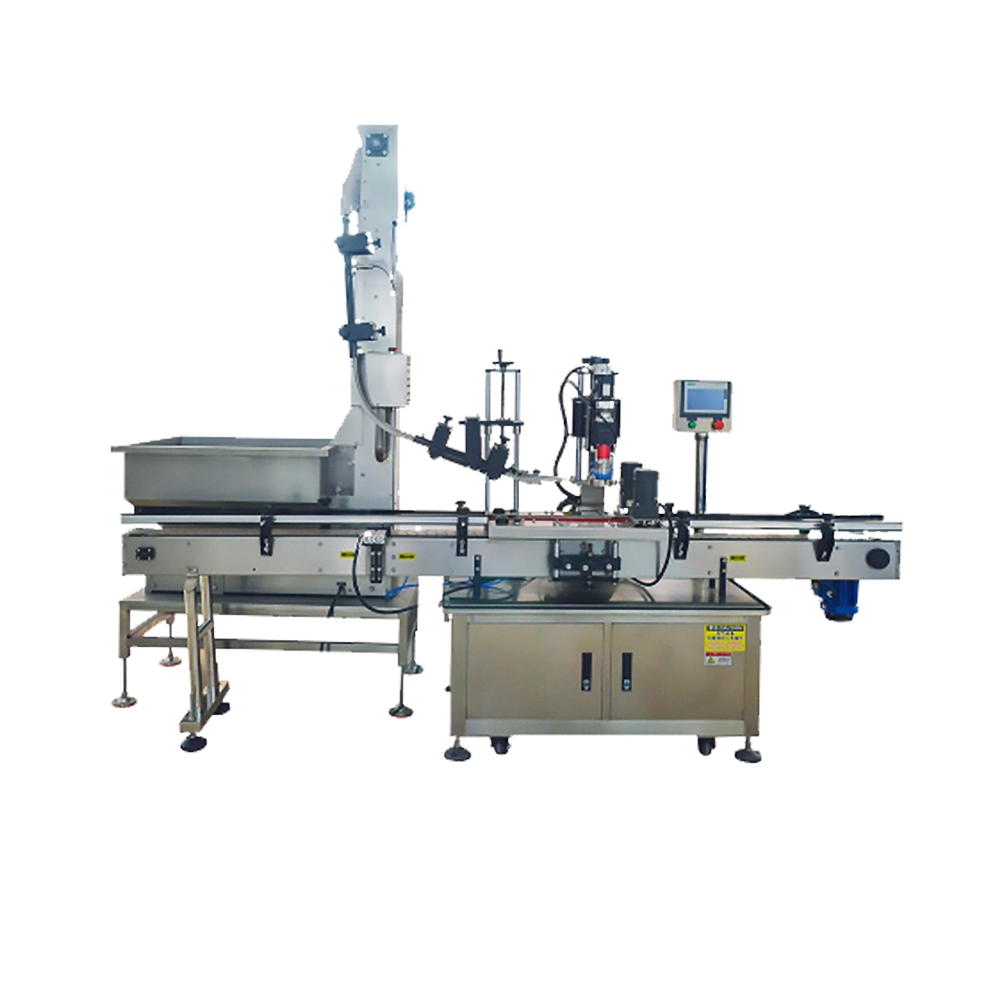
Automatic Metal Caps Capping Machine for Sale
Yuanyang automatic metal cap capping machine is a bottle capper for bottles with metal caps, which is often used to close lids of containers such as bottles and jars. The glass bottle metal capping machine is widely used in food, medicine, chemical, cosmetic, and other industries for mass production and continuous production line .
Features:
⦁ Pneumatic and electric drive;
⦁ Automated fast speed;
⦁ Suitable for glass bottles with metal caps.
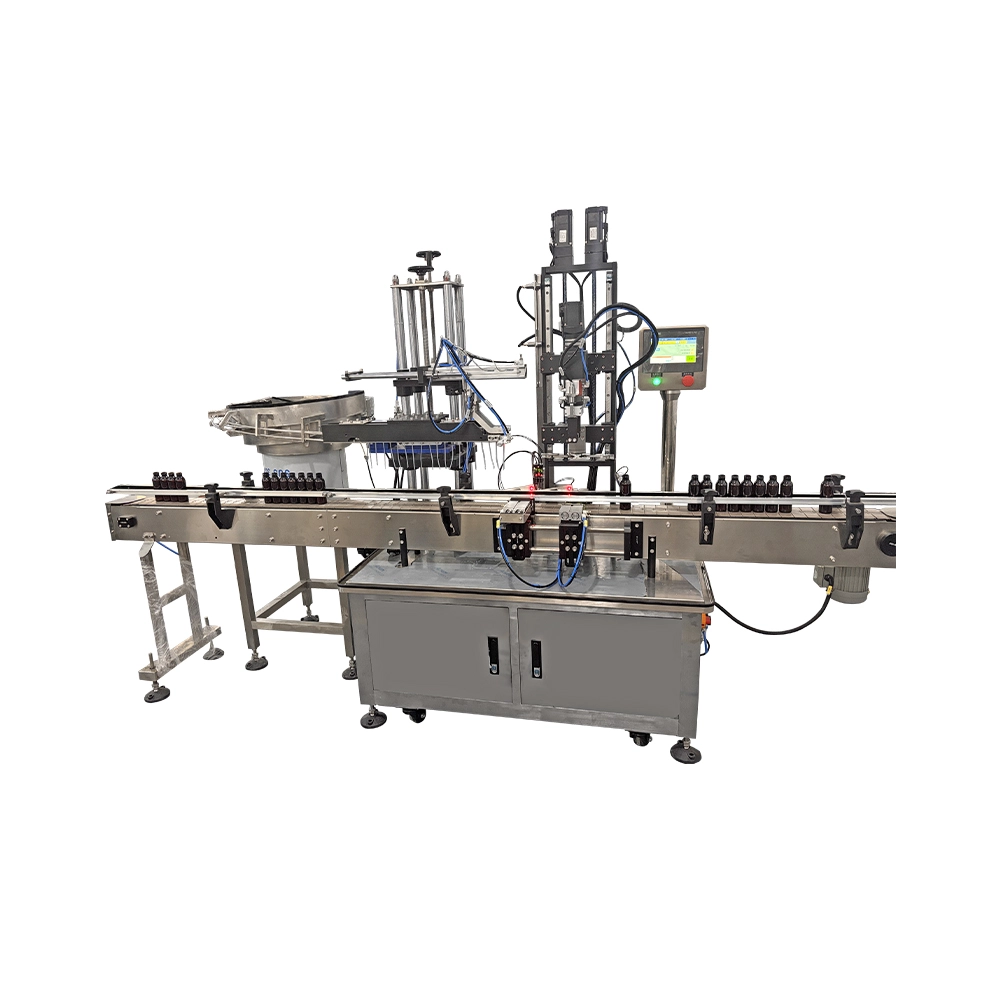
Automatic Pump Head Feeding and Capping Machine for Sale
Yuanyang automatic pump head feeding and capping machine is a bottle cap sorter and capper for bottles with pump heads, which is often used to close lids of containers such as nail polish, sprayers, and shampoo. The capping machine with a pump head feeder is widely used in food, medicine, chemical, cosmetic, and other industries for mass production and continuous production line .
Features:
⦁ Pneumatic and electric drive;
⦁ Automated fast speed;
⦁ Suitable for various types of caps.
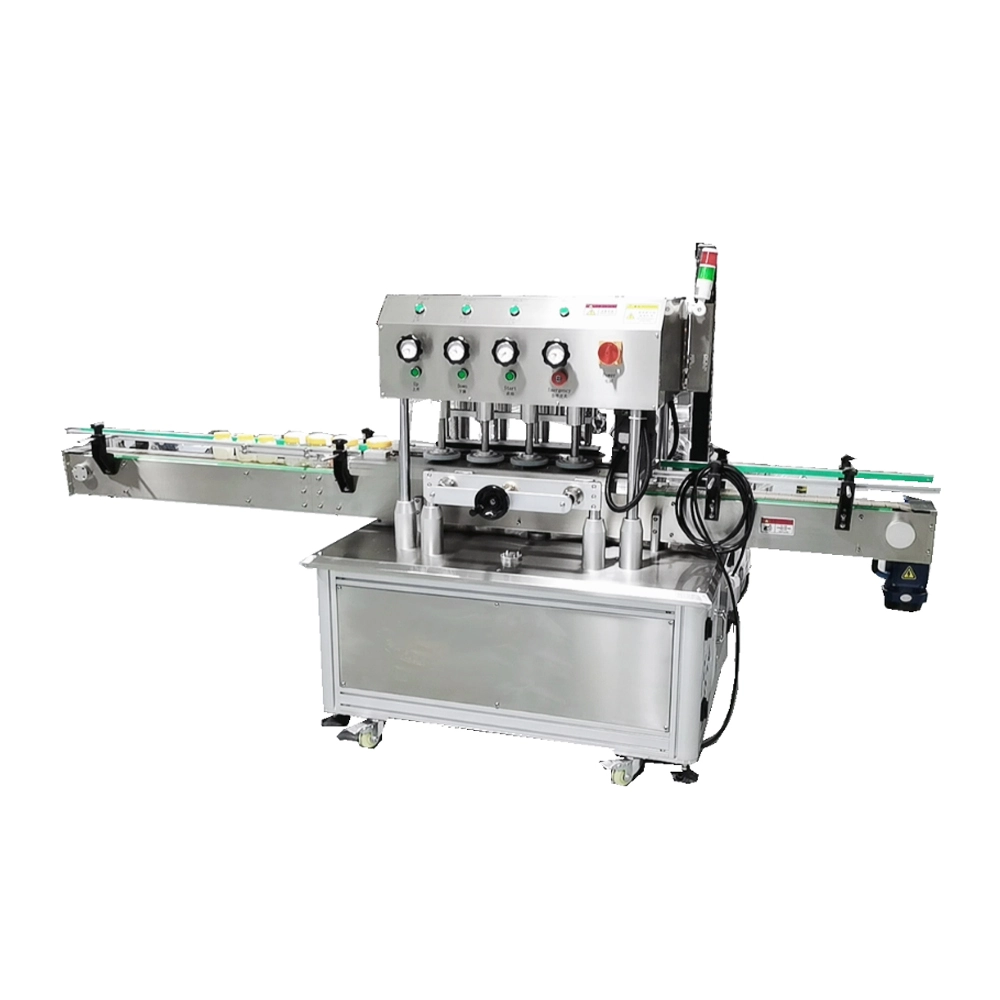
Automatic High Speed Capping Machine for Sale
The Yuanyang automatic high-speed capping machine is a kind of 8-wheel bottle-capping machine with fast working efficiency. The automatic capper is often used to close lids of containers such as bottles and jars, especially for plastic bottles, which are widely used in food, medicine, chemical, cosmetic, and other industries for mass production and continuous production lines.
Features:
⦁ Electric drive;
⦁ Automated fast speed;
⦁ Suitable for various screw caps, pumps, and spray bottles.
 Scan QR Code
Facebook
YouTube
LinkedIn
Whatsapp: +8613434139712
Guangzhou Yuanyang Machinery