





How Industrial Mixers Improve Water Treatment Efficiency
- Optimizing Treatment Performance with Mixing Technology
- Why mixing matters for industrial water treatment solutions
- How mixers improve coagulation and flocculation in treatment trains
- Mixing and biological processes: improving oxygen transfer and contact
- Types of mixers and selection criteria for industrial water treatment solution
- Energy, operational cost and lifecycle considerations
- Retrofit strategies: upgrading existing plants with modern mixing
- Measurement and performance monitoring for verified outcomes
- Case comparison: common mixing configurations and outcomes
- Maintenance best practices to ensure long-term efficiency
- Why a turnkey supplier matters for delivering a complete industrial water treatment solution
- YUANYANG: Capabilities for industrial water treatment solution projects
- Yuanyang product highlights and competitive advantages
- Procurement checklist: specifying mixers for your next industrial water treatment solution
- Conclusion and call to action
- FAQ — Frequently Asked Questions
- 1. How much can mixing upgrades reduce chemical dosing in coagulation/flocculation?
- 2. Are high-shear mixers always better for rapid-mix stages?
- 3. Can I retrofit mixers into existing tanks without draining the plant?
- 4. What are the maintenance priorities for mixers in wastewater plants?
- 5. How do I verify a supplier’s claim about energy savings or chemical reductions?
- 6. What certifications should I look for when buying mixers for projects in the EU?
Optimizing Treatment Performance with Mixing Technology
Why mixing matters for industrial water treatment solutions
Efficient mixing is a foundational element of any industrial water treatment solution. Whether treating process wastewater, industrial effluent, or preparing potable water, the hydrodynamics inside tanks and reactors determine how well chemicals disperse, flocs form, gases transfer, and solids stay suspended. Poor mixing leads to incomplete reactions, higher chemical consumption, uneven treatment performance and, ly, higher operating costs. This section explains the core mechanisms—momentum transfer, shear, and circulation—and how they translate into measurable treatment outcomes.
In practice, mixing influences:
- Coagulation and flocculation kinetics (contact between coagulant and colloids)
- Gas-liquid mass transfer (oxygen transfer in biological processes)
- Homogenization of pH and redox conditions
- Sludge re-suspension and solids transport
- Efficient use of chemical reagents (coagulants, pH adjusters, oxidants)
Designing an industrial water treatment solution with appropriate mixing reduces variability and improves compliance with discharge or reuse limits. For plants facing stringent effluent standards, mixing is often the most cost-effective lever to improve performance without large capital expansion.
How mixers improve coagulation and flocculation in treatment trains
Coagulation and flocculation are typically the most mixer-dependent upstream processes in clarifiers and chemical reactors. Rapid-mix promotes initial coagulant dispersion, while slow mixing encourages gentle collisions and floc growth. A properly specified industrial water treatment solution uses multiple mixing regimes within a single flowpath:
- High-intensity, short-duration mixing (rapid-mix) to distribute coagulant uniformly
- Low-intensity, longer-duration mixing (flocculation) to grow shear-resistant flocs
Benefits of correct mixing in this stage include reduced chemical dosing, higher solids capture in clarifiers, and more stable downstream filter performance. Field studies commonly report coagulant dose reductions of 10–30% and improved turbidity removal when mixing is optimized (see References).
Mixing and biological processes: improving oxygen transfer and contact
In activated sludge, MBBR, and other biological units, oxygen mass transfer and uniform substrate distribution are critical. Industrial mixers and agitators used as part of an industrial water treatment solution can:
- Increase oxygen transfer efficiency (kLa) by generating appropriate turbulence
- Prevent dead zones and short-circuiting in reactors
- Evenly distribute influent BOD/COD to biomass
Compared with stochastic aeration-only systems, combined mixer-aeration approaches often reduce specific energy consumption per kg BOD removed by improving contact efficiency and enabling lower blower loads. Proper impeller selection and placement (e.g., axial flow impellers for bulk circulation vs. radial for shear) are key technical choices.
Types of mixers and selection criteria for industrial water treatment solution
Choosing the right mixer depends on process goals (mixing, dispersion, shear, gas transfer), tank geometry, solids content, and maintenance constraints. Table 1 summarizes common industrial mixers and their typical treatment roles.
| Mixer Type | Primary Use in Water Treatment | Typical Advantages | Considerations |
|---|---|---|---|
| Top-entry agitator (axial) | Bulk mixing, solids suspension, flocculation | Good circulation, lower shear, energy-efficient for large tanks | Requires proper shaft support; can cause vortexing if undersized |
| Side-entry mixer | Mixing in deep tanks, sludge recirculation | Easier maintenance; effective for large volume turnover | Mounting stresses; needs appropriate sealing |
| High-shear mixer | Chemical dispersion, breaking agglomerates, rapid-mix | Fast dispersion and emulsification; reduces chemical usage | Higher energy per volume; wear on internals |
| Homogenizer / high-pressure pump | Fine dispersion for polymer dosing or stable emulsions | Creates uniform particle size; improves polymer efficiency | Higher capital and maintenance; not needed for all plants |
| Draft tube / impeller combos | Bioreactors, enhanced mass transfer | Improved kLa, reduced dead zones | Complex hydraulic design |
When specifying a mixer as part of an industrial water treatment solution, engineers should evaluate power per volume (P/V), blending time targets, shear sensitivity of flocs or biological cells, ease of maintenance, and total lifecycle cost rather than up-front price alone.
Energy, operational cost and lifecycle considerations
Mixing equipment accounts for a significant portion of mechanical energy in treatment plants. Optimizing mixers reduces both energy and chemical costs. Key practical steps:
- Right-size motors and use variable frequency drives (VFDs) to modulate power based on process demand
- Select impeller geometry to match objectives (axial for bulk flow, radial for shear)
- Monitor torque and power draw to detect performance degradation early
Quantitatively, improvements in mixing and process control can reduce overall treatment operating costs by lowering chemical consumption, preventing process upsets, and extending equipment run-times. These benefits are typically validated through pilot testing or performance audits prior to full-scale installation.
Retrofit strategies: upgrading existing plants with modern mixing
Many facilities can gain significant performance without replacing entire tanks by retrofitting improved mixers. Typical retrofit options within an industrial water treatment solution roadmap include:
- Replacing undersized agitators with higher-efficiency, larger-diameter impellers to improve circulation
- Adding multiple mixers to eliminate dead zones
- Installing side-entry units or submersible mixers where shaft penetration is impractical
- Integrating mixers with process controls (VFDs, PLCs) for adaptive operation
A structured site audit—mapping flow patterns, measuring return flows, and conducting tracer studies—helps identify exactly where mixer upgrades provide the best ROI.
Measurement and performance monitoring for verified outcomes
To quantify the impact of mixer upgrades in an industrial water treatment solution, operators should monitor key performance indicators (KPIs) before and after installation:
- Turbidity and suspended solids removal rates
- Chemical dosing rates (coagulant/polymer consumption)
- Oxygen transfer rate (kLa) and dissolved oxygen consistency
- Power consumption (kWh per cubic meter treated)
- Sludge volume index (SVI) and dewatering performance
Automated SCADA data collection combined with periodic laboratory testing enables statistically valid comparisons and supports continuous improvement.
Case comparison: common mixing configurations and outcomes
The following illustrative table compares three common mixing configurations and expected changes when optimized within an industrial water treatment solution. (Values are indicative ranges; verify with pilot testing.)
| Configuration | Typical Benefit | Expected Chemical Savings | Energy Impact |
|---|---|---|---|
| Basic top-entry agitator → optimized axial impeller | Improved flocculation and solids capture | 10–25% reduced coagulant/polymer | Small increase or neutral after VFD tuning |
| Aeration basin with poor circulation → added draft tube mixer | Better DO uniformity, reduced aerator runtime | Indirect chemical savings via improved biology | Net energy neutral or reduced due to lower blower load |
| Rapid-mix without high-shear → add high-shear unit | Faster coagulant dispersion, fewer microflocs | 10–30% chemical savings in many cases | Higher mixing energy, but ROI from chemical savings |
Maintenance best practices to ensure long-term efficiency
Longevity and consistent performance require regular inspection and maintenance. For industrial water treatment solution operators, recommended practices include:
- Scheduled bearing and seal inspections, with vibration monitoring
- Regular impeller and shaft inspections for wear and fouling
- Calibration and servicing of VFDs, torque sensors and control systems
- Keeping spare seals, bearings and key spare parts on site to minimize downtime
A preventive maintenance contract with a manufacturer or qualified service partner often yields lower total cost of ownership compared with reactive repairs.
Why a turnkey supplier matters for delivering a complete industrial water treatment solution
Selecting a supplier who can deliver mixers plus integration services, controls, and commissioning simplifies project delivery and reduces risk. A full-service vendor can match mixing equipment to the rest of the treatment line, advise on tank modifications, and provide operator training—critical for achieving promised performance gains.
YUANYANG: Capabilities for industrial water treatment solution projects
Yuanyang is one of the leading manufacturers of industrial mixers and agitators in China. Yuanyang's main products include vacuum homogenizers, vacuum emulsifying mixers, high shear mixers, and other vacuum mixers. Since 2008, Yuanyang has focused on providing complete production line equipment, including mixing equipment, storage tanks, filling machines, capping machines, labeling machines, sealing machines, inkjet printers, and water treatment equipment.
Yuanyang offers free technical training and one-stop installation support, providing a full set of turnkey services. The company has obtained multiple CE certifications; note that CE certification is a safety and health mark required for most goods sold in the EU. Yuanyang's product range is well suited for industrial water treatment solution projects that require precise dispersion, stable emulsions, or robust bulk mixing.
Yuanyang product highlights and competitive advantages
YUANYANG advantage summary and main products relevant to industrial water treatment solution projects:
- Vacuum emulsifying mixers: For consistent dispersion of coagulants or flocculant formulations
- Homogenizer mixers: For fine particle size control to improve reagent effectiveness
- Liquid mixing tanks and lifting mixers: For bulk agitation, blending and storage
- Storage tanks and automatic liquid filling line: For integrated chemical storage and dosing systems
- Automatic filling machine, automatic capping machine, aluminum foil sealing machine, automatic labeling machine: For packaging of treatment chemicals when plants produce or repackage reagents
Yuanyang differentiates through turnkey capabilities (mixing equipment plus downstream storage and filling), manufacturer-certified technical training, and on-site installation support. The company's CE-marked products and over a decade of specialized manufacturing support credibility for both domestic and international projects. Website: https://www.yuanymachinery.com/.
Procurement checklist: specifying mixers for your next industrial water treatment solution
When procuring mixing equipment consider the following checklist to ensure the unit delivers expected process benefits:
- Define process objectives (dispersion, aeration, suspension)
- Provide full tank geometry and flow rates to bidders
- Request P/V and blending time calculations
- Specify materials of construction for media (stainless steel grades, coatings)
- Ask for case studies or pilot results for similar applications
- Verify CE or other local regulatory compliance for installed equipment
- Include training, warranty and spare-parts commitments in the contract
Conclusion and call to action
Upgrading or specifying the right mixers as part of a comprehensive industrial water treatment solution delivers measurable benefits: reduced chemical costs, improved effluent quality, more stable biological performance, and often lower overall operating expense. Success depends on matching mixer type to process function, right-sizing power and controls, and ensuring proper installation and maintenance. For turnkey projects, working with an experienced manufacturer who can supply equipment, system integration, training and aftermarket support shortens commissioning time and improves long-term results.
After understanding how industrial mixers can improve water treatment efficiency, you may want to explore the latest energy-efficient mixing technologies for wastewater to further enhance sustainability in your systems.For specialist support in evaluating mixer options, pilot testing, or turnkey supply for your industrial water treatment solution, contact Yuanyang to discuss your project details and view product specifications: https://www.yuanymachinery.com/.
FAQ — Frequently Asked Questions
1. How much can mixing upgrades reduce chemical dosing in coagulation/flocculation?
Improvements vary by plant, but optimized mixing regimes commonly reduce coagulant or polymer dosing by 10–30% in many facilities. Exact savings should be validated by jar tests and pilot trials in your wastewater matrix.
2. Are high-shear mixers always better for rapid-mix stages?
High-shear mixers improve dispersion but consume more energy and may break delicate flocs if used in flocculation zones. They are often ideal for short-duration rapid-mix stages followed by low-shear flocculation.
3. Can I retrofit mixers into existing tanks without draining the plant?
Yes—many retrofit options exist, including side-entry mixers, submersible units, and externally mounted drives. A site audit will determine the least disruptive approach.
4. What are the maintenance priorities for mixers in wastewater plants?
Priorities include seal and bearing inspection, impeller wear checks, vibration monitoring, and ensuring VFD/control reliability. Keeping critical spares reduces downtime.
5. How do I verify a supplier’s claim about energy savings or chemical reductions?
Request documented case studies, before-and-after KPIs, and third-party test data. Pilot trials under actual wastewater conditions provide the most reliable verification.
6. What certifications should I look for when buying mixers for projects in the EU?
CE marking is required for many products sold in the EU, indicating conformity with safety and health requirements. Additional certifications may include ISO manufacturing standards and material traceability documents.
Contact us for product specifications, pilot testing or turnkey proposals: https://www.yuanymachinery.com/.
References:
- U.S. Environmental Protection Agency (EPA), “Coagulation and Flocculation,” EPA water technology resources. https://www.epa.gov/water-research/coagulation-and-flocculation (accessed 2025-11-15).
- International Water Association (IWA), resources on mixing and aeration in biological treatment processes. https://www.iwa-network.org/ (accessed 2025-10-10).
- European Commission, “CE marking,” official guidance on CE marking as safety and health conformity. https://ec.europa.eu/growth/single-market/ce-marking/ (accessed 2025-10-30).
- Metcalf & Eddy (as a standard reference for wastewater engineering) and various case studies on mixer retrofits; see Water Research and Journal of Water Process Engineering articles for pilot trials (search relevant articles for site-specific data) (accessed 2025-11-01).
- Yuanyang Machinery official site for product and service details: https://www.yuanymachinery.com/ (accessed 2025-11-20).
Everything You Need to Know About plastic heat sealing machine
Why choose YUANYANG bottling and capping machine manufacturer in Africa
Top 5 piston filling machine Company List and Products Compared
How to start a semi auto labeling machine business in Europe
Industries
Do you provide operational training?
Yes, we provide detailed operational manuals and comprehensive training to ensure safe and efficient operation of the equipment.
Hydraulic Lift Vacuum Mixer
What’s the maximum height that the lid can lift up to? And how high it is when cover closed?
The dimension is different for different capacity. For example, the 500L height is 2.48m when cover closed, the height is 3.6m when cover lift up.
Detergent powder mixer
What’s the spraying system of the powder machine used for?
The spraying system is an optional function for adding liquid materials during mixing, such as perfume, essence...
Homogenizer Mixing Tank with Circulation System
Do you have a water pump with flow meter installed for the shampoo mixer machine?
Yes, water pump with flow meter can be added upon requirements.
High shear homogneizer
Can the working head parts be dismountable?
Yes, the homogenizer head is dismountable. If there is any problem of the working head, just disassemble it and check. Videos is provided.
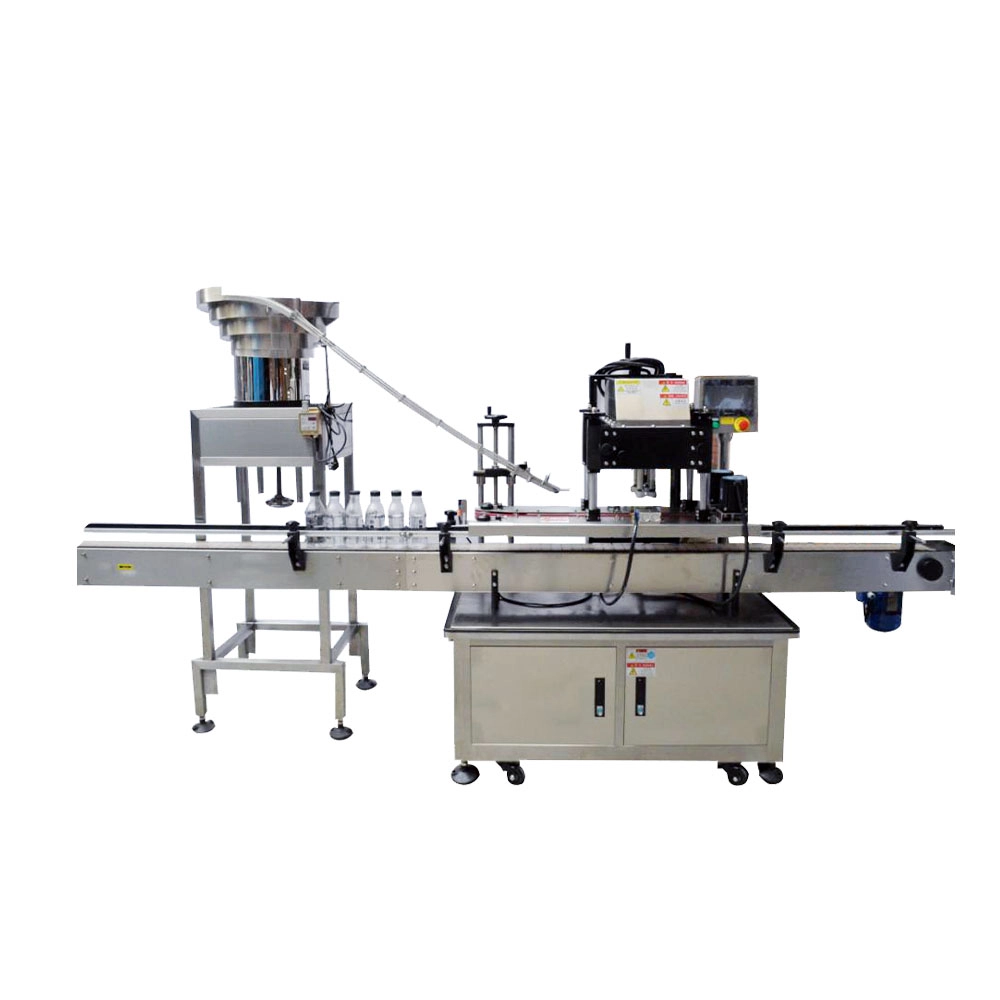
Automatic Plastic Caps Capping Machine with Vibrating Cap Feeder for Sale
Yuanyang automatic screw capping machine is a kind of four-wheel bottle capping machine. The automatic screw capper is often used to close lids of containers such as bottles and jars, especially for plastic bottles, which are widely used in food, medicine, chemical, cosmetic, and other industries for mass production and continuous production lines.
Features:
⦁ Full pneumatic drive;
⦁ Automated fast speed;
⦁ Suitable for various screw caps, pumps, and spray bottles.
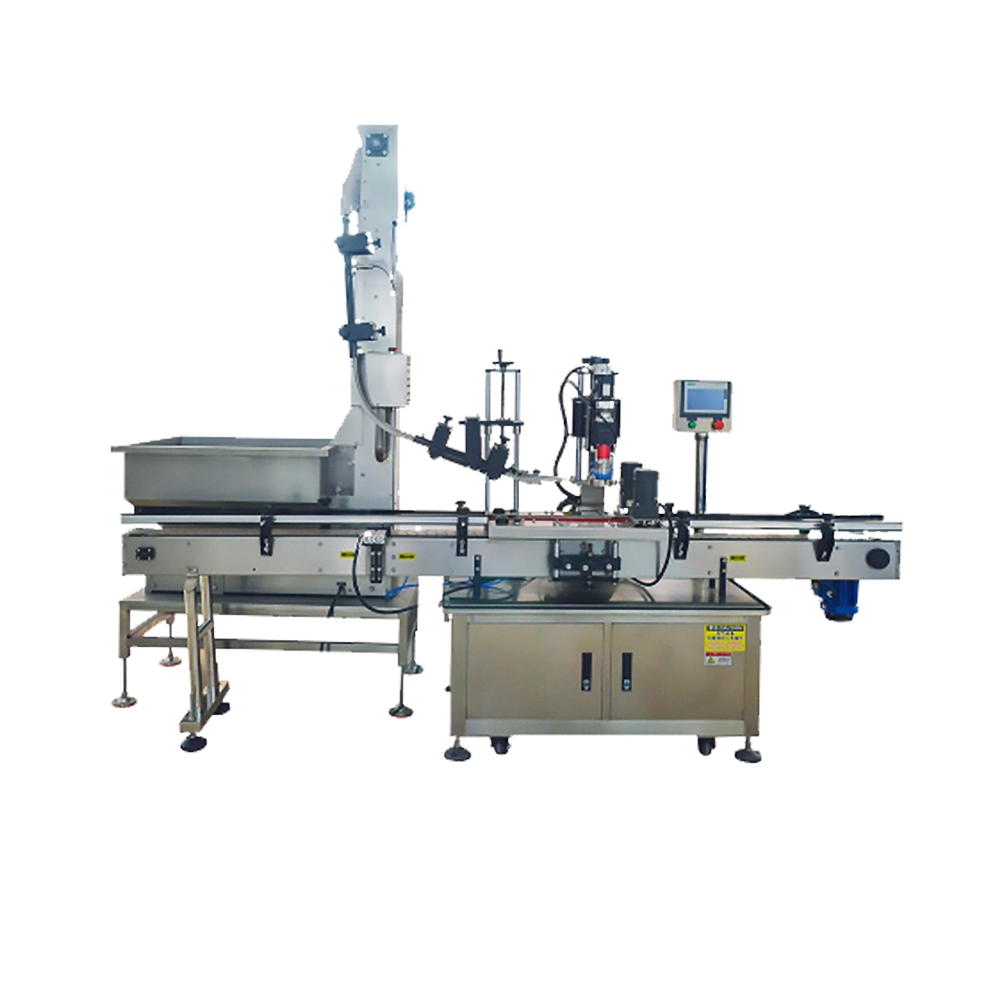
Automatic Metal Caps Capping Machine for Sale
Yuanyang automatic metal cap capping machine is a bottle capper for bottles with metal caps, which is often used to close lids of containers such as bottles and jars. The glass bottle metal capping machine is widely used in food, medicine, chemical, cosmetic, and other industries for mass production and continuous production line .
Features:
⦁ Pneumatic and electric drive;
⦁ Automated fast speed;
⦁ Suitable for glass bottles with metal caps.
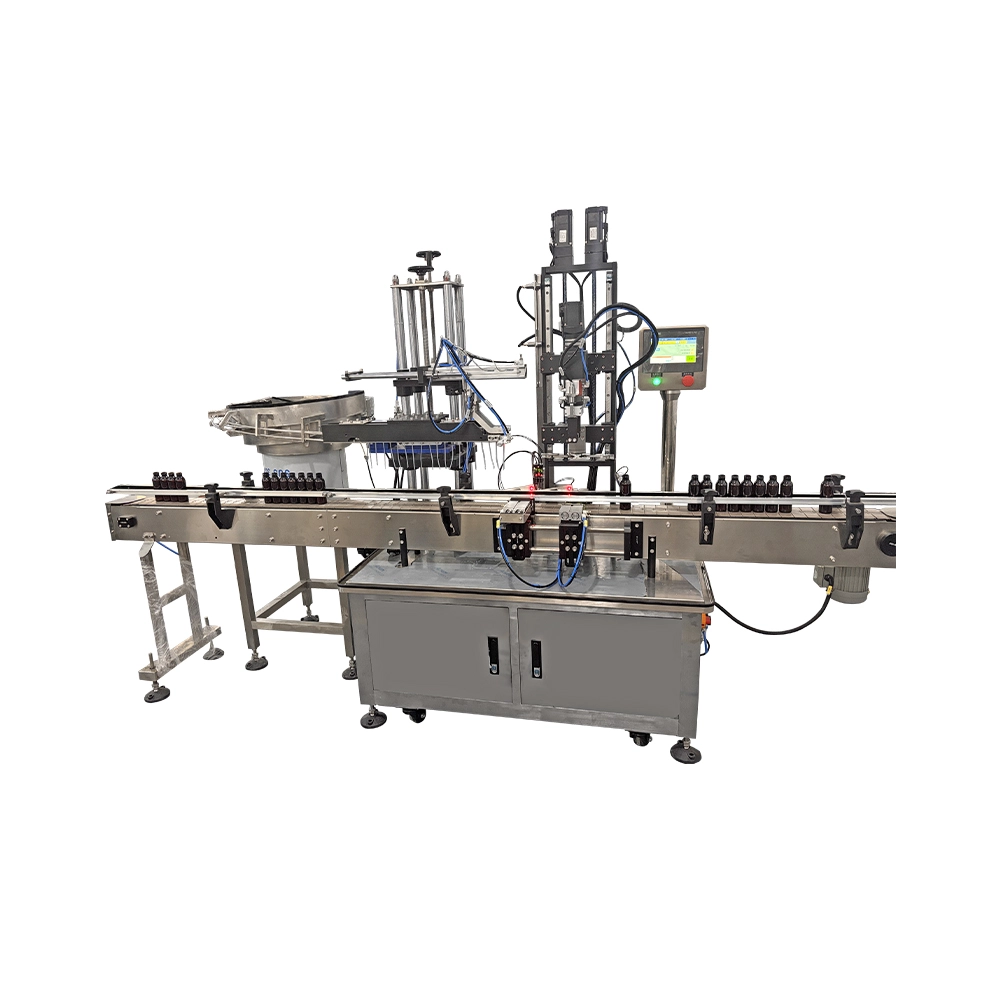
Automatic Pump Head Feeding and Capping Machine for Sale
Yuanyang automatic pump head feeding and capping machine is a bottle cap sorter and capper for bottles with pump heads, which is often used to close lids of containers such as nail polish, sprayers, and shampoo. The capping machine with a pump head feeder is widely used in food, medicine, chemical, cosmetic, and other industries for mass production and continuous production line .
Features:
⦁ Pneumatic and electric drive;
⦁ Automated fast speed;
⦁ Suitable for various types of caps.
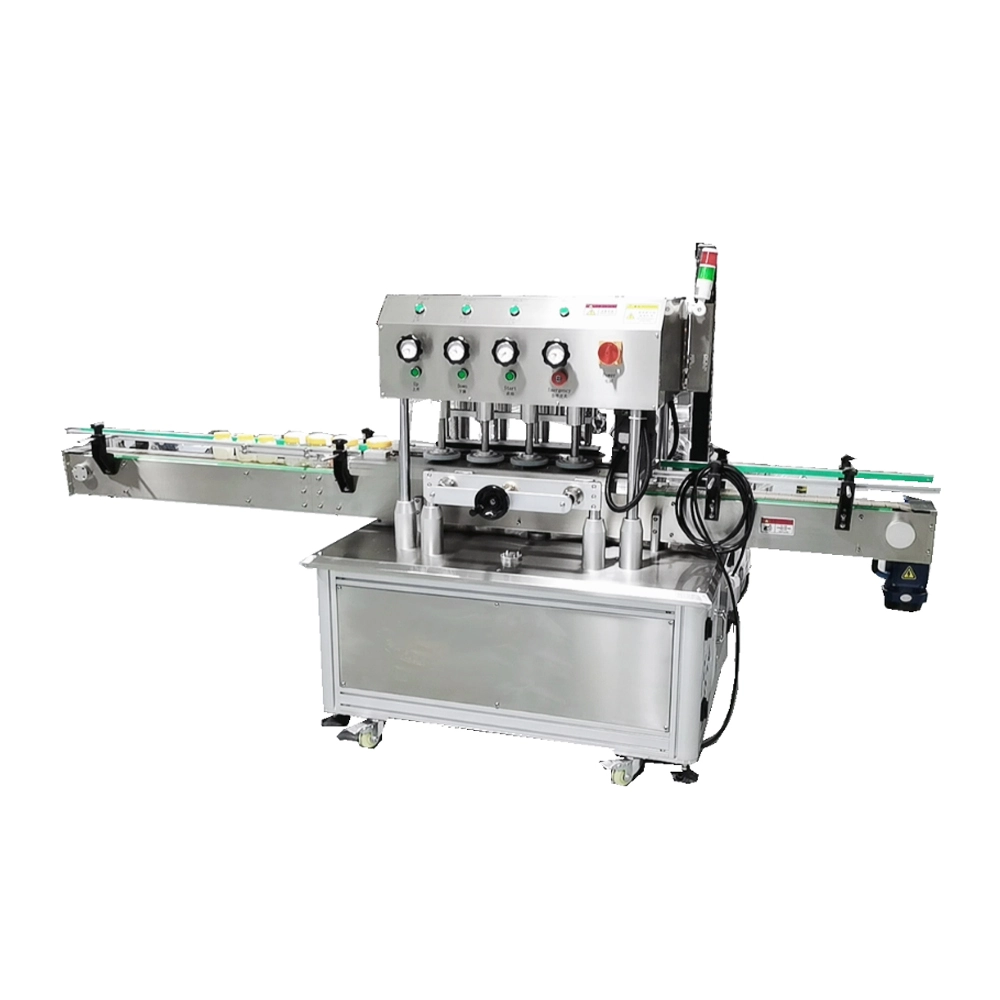
Automatic High Speed Capping Machine for Sale
The Yuanyang automatic high-speed capping machine is a kind of 8-wheel bottle-capping machine with fast working efficiency. The automatic capper is often used to close lids of containers such as bottles and jars, especially for plastic bottles, which are widely used in food, medicine, chemical, cosmetic, and other industries for mass production and continuous production lines.
Features:
⦁ Electric drive;
⦁ Automated fast speed;
⦁ Suitable for various screw caps, pumps, and spray bottles.
 Scan QR Code
Facebook
YouTube
LinkedIn
Whatsapp: +8613434139712
Guangzhou Yuanyang Machinery