





Sachet Packaging Machine for Sale: Buyer Checklist
- Understand Machine Types and Core Components
- Vertical form-fill-seal (VFFS) vs premade pouch machines
- Key mechanical and control components
- Filling systems: match to your product
- Performance, Capacity and Packaging Quality
- Production speed and uptime metrics
- Accuracy, weight control and wastage
- Seal integrity and package aesthetics
- Materials, Compatibility and Regulatory Requirements
- Film types and barrier requirements
- Hygiene, cleanability and materials of construction
- Regulatory compliance (FDA, local authorities)
- Integration, Flexibility and Total Cost of Ownership
- Line integration and automation
- Flexibility and changeover time
- Cost analysis and ROI
- Service, Spare Parts and Supplier Evaluation
- After-sales support and training
- Spare parts, consumables and reliability testing
- Factory acceptance tests (FAT) and site acceptance tests (SAT)
- Feature Comparison: Common Sachet Machine Options
- Practical Buying Checklist (Quick Reference)
- References and Authoritative Sources
- FAQ
- What is the difference between a sachet packaging machine and a pouch filler?
- How do I choose the right filler for powders vs liquids?
- What maintenance and spare parts should I budget for?
- Can a sachet machine handle heat-sensitive films or compostable materials?
- Is validation required for pharmaceutical sachet packaging?
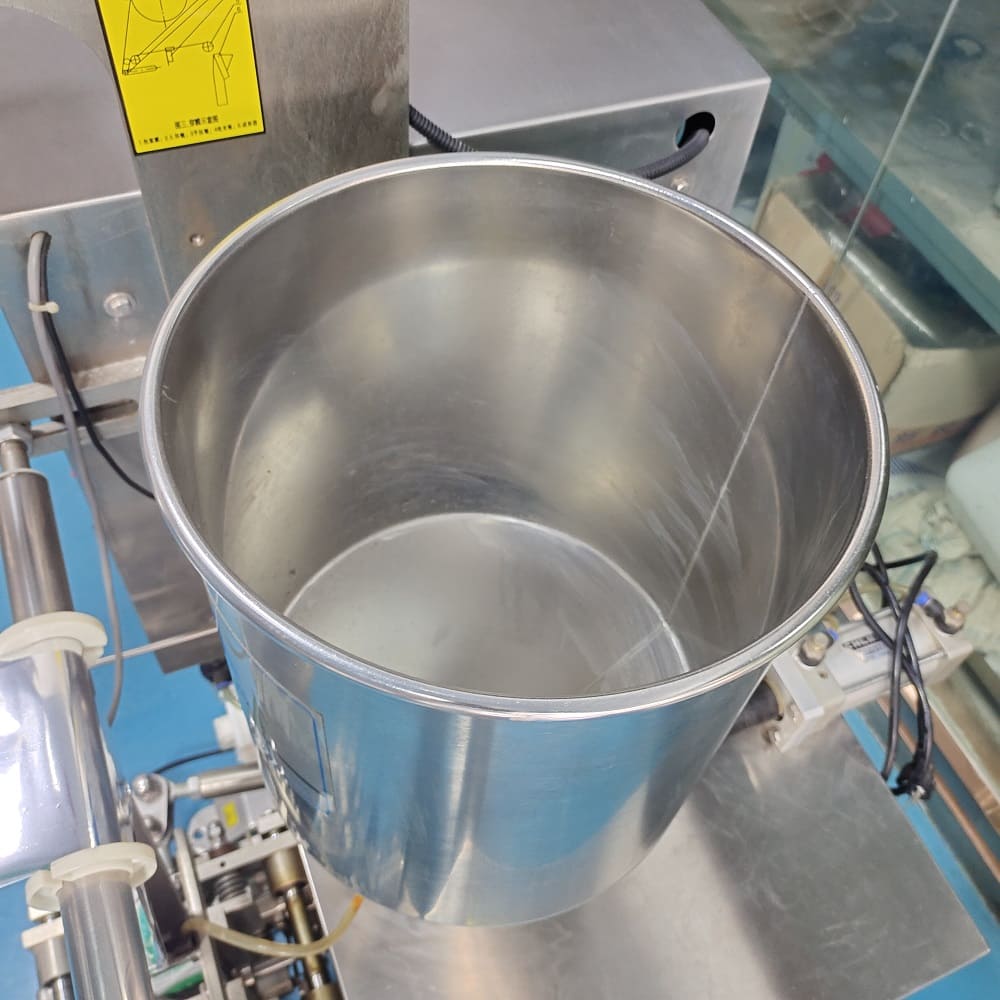
Sachet packaging machine buyers need fast access to clear, actionable information to select equipment that matches their product, production volume and regulatory requirements. This guide provides a concise yet comprehensive checklist for choosing a Sachet Packaging Machine for Sale, emphasizing machine performance, meter/filling options, material compatibility, control systems, hygiene and compliance. It integrates practical tips for integrating sachet machines into packaging lines and evaluates trade-offs between cost, speed and flexibility for food, pharmaceutical and chemical sachet applications.
Product introduction:
Yuanyang sachet packaging machine is a kind of automatic equipment, mainly used for measuring, filling, and sealing small bag packing materials. The sachet packing machine has become an indispensable piece of equipment in modern production for food, medicine, chemicals, and other fields.
Features:
⦁ Microcomputer controlled;
⦁ Automated fast speed;
⦁ Multi-function integration.
Understand Machine Types and Core Components
Vertical form-fill-seal (VFFS) vs premade pouch machines
Most sachet packaging machines fall into two categories: VFFS (forming sachets from roll stock film) and machines that use premade sachets. VFFS machines are flexible and cost-effective for high-volume, continuous runs, particularly small-dose sachets for powders, granules and liquids. Premade pouch machines are ideal for special-shaped sachets, zipper pouches, or when visual printing/complex laminated structures are required.
Key mechanical and control components
Look for robust construction (stainless steel, food-grade finishes), a reliable film feed and tension system, accurate weighing or metering devices, and a dependable heat-seal system. Modern sachet lines include PLC/HMI control, servo motors for precise motion, and recipe storage for quick changeovers. These components combined influence uptime, sealing quality and waste.
Filling systems: match to your product
Choose the filling technology that matches product characteristics: auger fillers for powders, volumetric cups or multi-head weighers for granules, peristaltic or piston pumps for viscous liquids, and nozzles with anti-drip for thin liquids. For sterile or pharmaceutical applications, consider sanitary CIP-compatible pumps and aseptic filling modules.
Performance, Capacity and Packaging Quality
Production speed and uptime metrics
Define required throughput (sachets per minute) under real-world conditions — include changeovers, maintenance and film splices. Many VFFS sachet machines run from 40–200+ sachets/minute depending on sachet size and product. Ask vendors for OEE data and references to confirm sustained performance.
Accuracy, weight control and wastage
Filling accuracy affects product cost and regulatory compliance. Check typical weight variance (e.g., ±0.5–2% depending on filler), and whether the machine supports in-line checkweighers or weight feedback loops to reduce giveaway and rejects.
Seal integrity and package aesthetics
Sealing system (heat, ultrasonic) and jaw design determine seal strength and appearance. For wet/greasy or heat-sensitive products, ultrasonic sealing or specially designed cooling systems may be required. Verify seal testing options (burst/peel) and suitability of packaging films (laminates, foil, biodegradable films).
Materials, Compatibility and Regulatory Requirements
Film types and barrier requirements
Different products need different barrier levels. Food products often need oxygen and moisture barriers; pharmaceuticals may require tamper-evident or child-resistant structures. Confirm the machine's compatibility with roll stock film widths, thicknesses and multi-layer laminates. If using compostable or bio-based films, ensure the heating/sealing profile can be adjusted to avoid weak seals.
Hygiene, cleanability and materials of construction
For food and pharma, stainless steel (316/304), sanitary finishes and easy-to-clean designs (cGMP) are essential. Check for minimal crevices, quick-release parts, CIP compatibility, and whether the vendor provides cleanroom or dust-controlled options. Refer to ISO 22000 for food safety management expectations: ISO 22000.
Regulatory compliance (FDA, local authorities)
Ensure materials in contact with product comply with relevant regulations (e.g., FDA food-contact materials guidance). For pharmaceutical or biologic fills, validate equipment under GMP and follow WHO/FDA guidance for aseptic processing where relevant. See FDA packaging guidance: FDA — Packaging & Food Contact Materials and WHO resources for sterile production: WHO.
Integration, Flexibility and Total Cost of Ownership
Line integration and automation
Assess how the sachet machine will link to upstream/downstream equipment: feeders, multi-head weighers, conveyors, labelers, carton packers, and palletizers. Modern sachet lines use Industry 4.0-friendly PLCs, Ethernet/IP or Profinet communication for synchronized control and data collection for traceability and OEE analysis.
Flexibility and changeover time
Will the machine handle multiple sachet sizes, multi-lane formats or both solids and liquids with minimal tool changes? Quick-change jaws, adjustable dosing modules and programmable recipes reduce downtime for SKU switches, especially valuable for contract packers or companies with many SKUs.
Cost analysis and ROI
Look beyond purchase price. Evaluate installation, utility (air, power), spare parts, tooling, training, validation, warranty and service contracts. Estimate ROI based on reduced labor, increased throughput, lower giveaway and reduced packaging waste. For capital budgeting, request a TCO estimate from suppliers and compare scenarios side-by-side.
Service, Spare Parts and Supplier Evaluation
After-sales support and training
Reliable local service and spare parts availability minimize downtime. Ask vendors about on-site commissioning, operator and maintenance training, remote diagnostics, and guaranteed response times. Consider suppliers with global service networks or local certified partners.
Spare parts, consumables and reliability testing
Request a spare parts list and lead times for wearing parts (sealing jaws, belts, cutters). Ask for MTBF/MTTR data and proof of accelerated life testing. A supplier that offers modular spare kits or condition-based maintenance tools will help manage unplanned outages.
Factory acceptance tests (FAT) and site acceptance tests (SAT)
Insist on FAT using your representative product and film to verify performance before shipment. Document SAT criteria (speed, weight accuracy, seal strength, reject rates) to be validated on installation. This reduces commissioning risk and ensures contractual acceptance metrics are met.
Feature Comparison: Common Sachet Machine Options
| Feature | VFFS Sachet Machine | Premade Pouch Machine | Multi-Lane VFFS |
|---|---|---|---|
| Best for | High-speed, simple sachets (powders, liquids) | Special shapes, zip/stand-up pouches | Very high throughput (parallel lanes) |
| Flexibility | High (film print changes possible) | Medium (depends on pouch supply) | Medium–High (parallelization) |
| Capital cost | Moderate | Higher (depends on pouch feeder) | High |
| Typical speed | 40–200+ sachets/min | 20–120 sachets/min | 100–600+ sachets/min (total) |
Practical Buying Checklist (Quick Reference)
- Define product characteristics (powder/granule/liquid, viscosity, particle size).
- Establish required throughput (sachets/min) with realistic OEE assumptions.
- Decide on VFFS vs premade pouch based on design and film needs.
- Verify filler compatibility (auger, multi-head, piston, peristaltic).
- Confirm film width/thickness and sealing system compatibility.
- Request FAT/SAT with your materials and acceptance criteria.
- Check hygiene/construction (SS material, CIP, GMP options) and regulatory compliance.
- Evaluate total cost of ownership: spares, service, energy, and training.
- Ask for references and production videos from customers with similar products.
References and Authoritative Sources
For standards and regulatory guidance, consult ISO and regulatory agencies: ISO 22000 for food safety management (ISO), FDA packaging and food-contact guidance (FDA), and general packaging references such as Wikipedia's Packaging and Sachet entries for background information (Packaging — Wikipedia, Sachet — Wikipedia).
FAQ
What is the difference between a sachet packaging machine and a pouch filler?
Sachet packaging machines (often VFFS) form small single-dose pouches from roll film and are optimized for high-speed, continuous run sachets. Pouch fillers typically handle premade pouches and are used when shapes, zips or printed pouch integrity are required.
How do I choose the right filler for powders vs liquids?
Use auger or multi-head weighers for powders/particles; piston or peristaltic pumps for viscous liquids; volumetric cups for free-flowing granules. Validate filler performance during FAT to confirm accuracy and minimize giveaway.
What maintenance and spare parts should I budget for?
Budget for sealing jaws, belts, knives, drive belts, bearings and consumables such as filters and seals. Plan preventive maintenance (monthly/quarterly) and a spare parts kit to reduce MTTR. Ask the supplier for recommended spares and expected part life.
Can a sachet machine handle heat-sensitive films or compostable materials?
Some machines have adjustable sealing temperature profiles, cooling systems, or ultrasonic sealing options tailored for heat-sensitive or bio-based films. Always test your actual film and product combination during FAT to confirm seal strength.
Is validation required for pharmaceutical sachet packaging?
Yes. Pharmaceutical and sterile products require equipment qualification (IQ/OQ/PQ) and process validation under GMP. Work with suppliers experienced in pharma validations and ask for documented validation support and protocols.
Ready to evaluate a sachet packaging machine for sale? Contact our sales team to request technical specifications, pricing, FAT scheduling and demonstration videos. View the Yuanyang Sachet Packaging Machine product page or reach out for a customized quote: Contact Us | View Product Details.
What are the different types of food sealing machine?
YUANYANG Best professional reverse osmosis water treatment manufacturers and supplier brands in America
Top Vacuum Emulsifying Mixers for Cosmetics in 2026
Top high shear mixer homogenizer Manufacturers and Suppliers
Semi automatic powder filling machine
Can I replace the screws of the powder bottle filling machine to pack different weight in one machine?
Yes, we can customize different screw models for the semi automatic powder packing machine, and the screw models are replaceable.
Homogenizing Mixer
What’s the rotation speed of the bottom homogenizer head of the liquid detergent mixer?
The standard homogenizer is with high speed 3000 rpm, we can customize other bigger speed according to actual needs.
Vibrating sieving machine
Do you have different diameter for the vibrating sieve machine?
Yes, we will recommend the suitable type according to capacity.
Semi Automatic Capping Machine
What minimum caps size can the desktop capping machine be suit for?
The minimum cap size is 20mm, it is recommend to send caps to test if it is around 20mm.
Washing Powder
Is the equipment compliant with environmental standards?
Yes, all our machines meet international environmental standards, reducing emissions and supporting sustainable production.
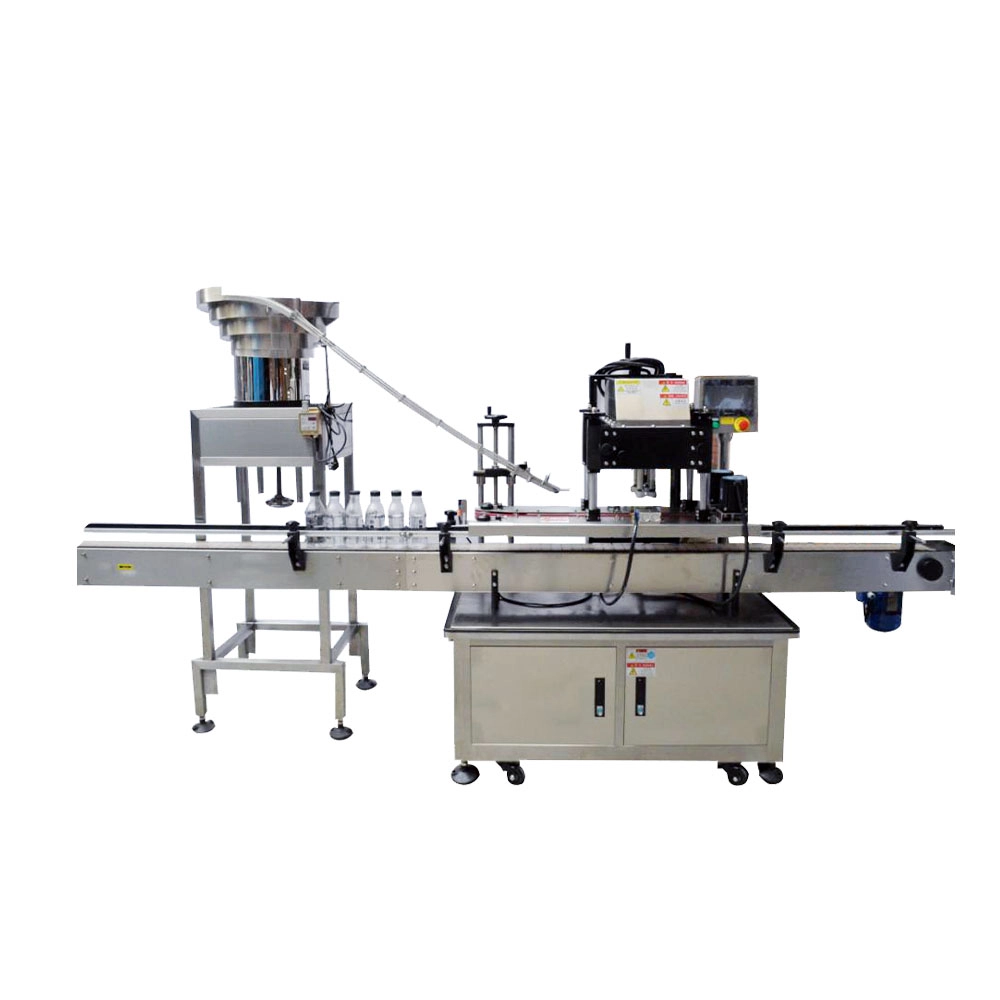
Automatic Plastic Caps Capping Machine with Vibrating Cap Feeder for Sale
Yuanyang automatic screw capping machine is a kind of four-wheel bottle capping machine. The automatic screw capper is often used to close lids of containers such as bottles and jars, especially for plastic bottles, which are widely used in food, medicine, chemical, cosmetic, and other industries for mass production and continuous production lines.
Features:
⦁ Full pneumatic drive;
⦁ Automated fast speed;
⦁ Suitable for various screw caps, pumps, and spray bottles.
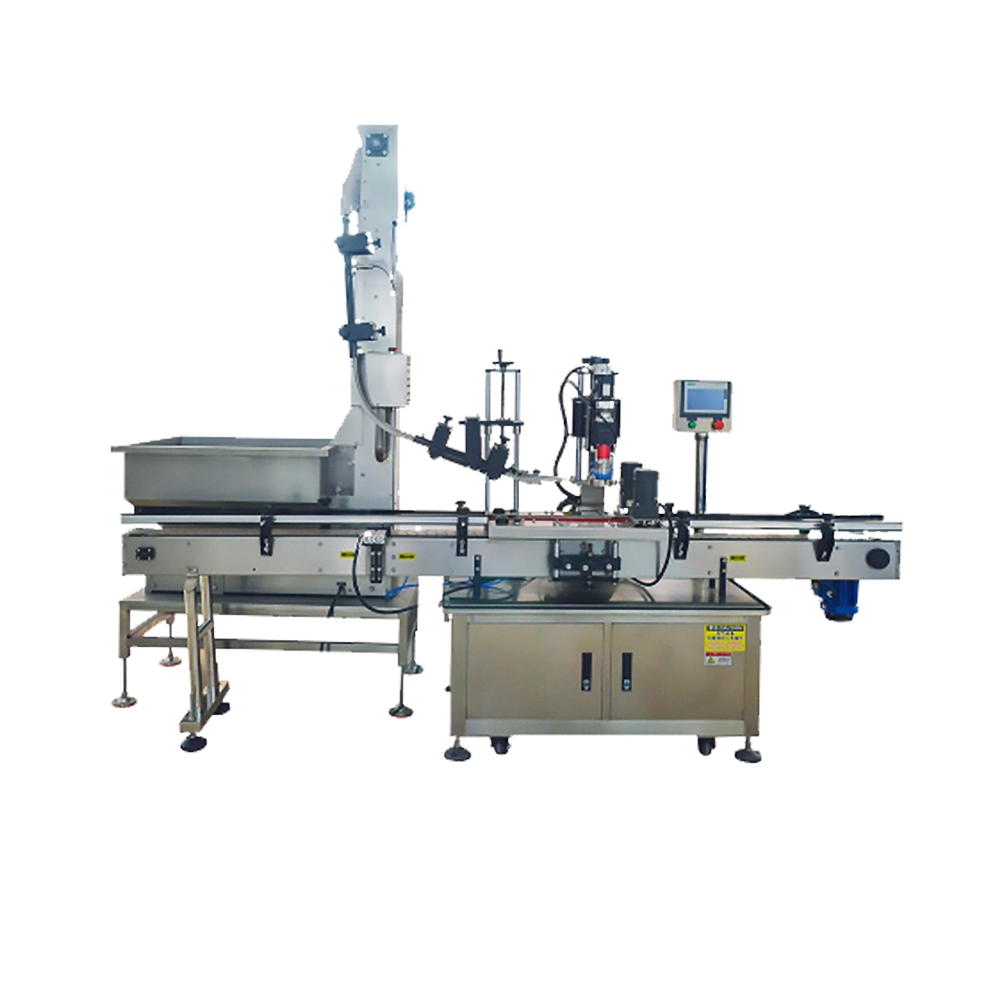
Automatic Metal Caps Capping Machine for Sale
Yuanyang automatic metal cap capping machine is a bottle capper for bottles with metal caps, which is often used to close lids of containers such as bottles and jars. The glass bottle metal capping machine is widely used in food, medicine, chemical, cosmetic, and other industries for mass production and continuous production line .
Features:
⦁ Pneumatic and electric drive;
⦁ Automated fast speed;
⦁ Suitable for glass bottles with metal caps.
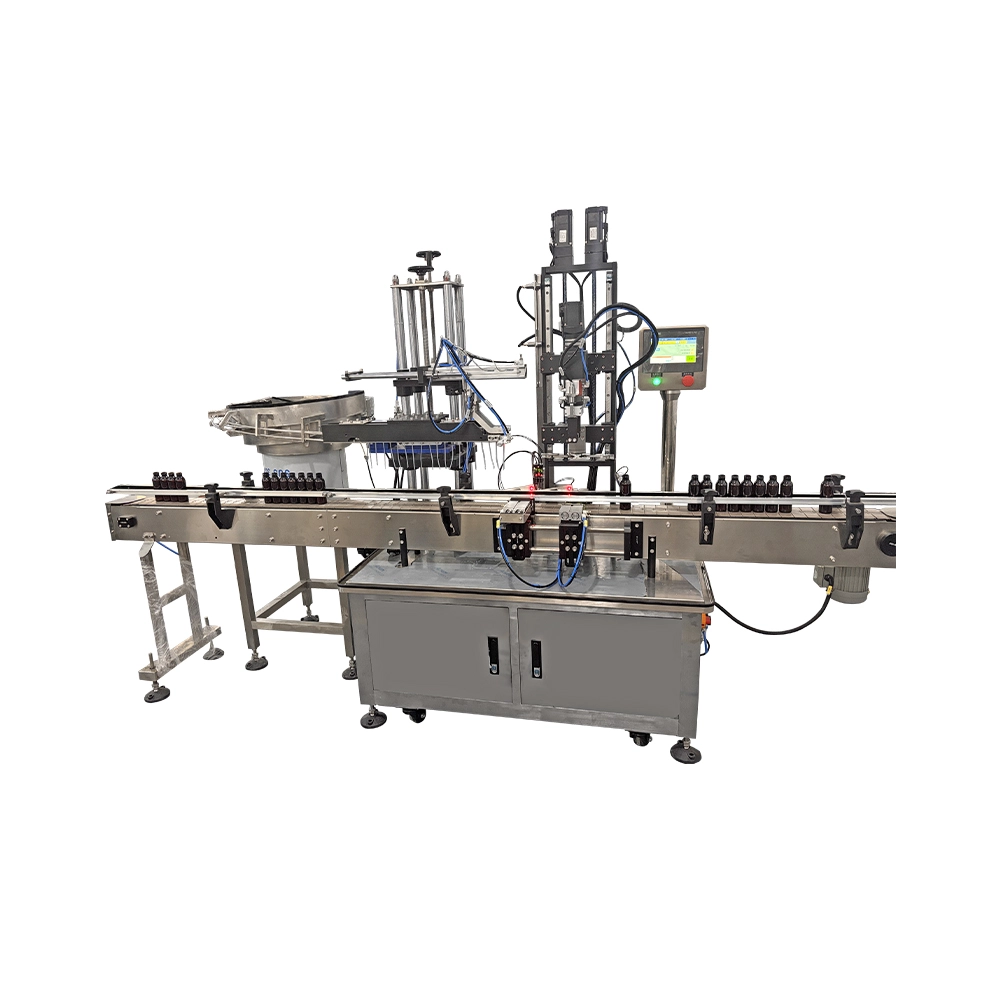
Automatic Pump Head Feeding and Capping Machine for Sale
Yuanyang automatic pump head feeding and capping machine is a bottle cap sorter and capper for bottles with pump heads, which is often used to close lids of containers such as nail polish, sprayers, and shampoo. The capping machine with a pump head feeder is widely used in food, medicine, chemical, cosmetic, and other industries for mass production and continuous production line .
Features:
⦁ Pneumatic and electric drive;
⦁ Automated fast speed;
⦁ Suitable for various types of caps.
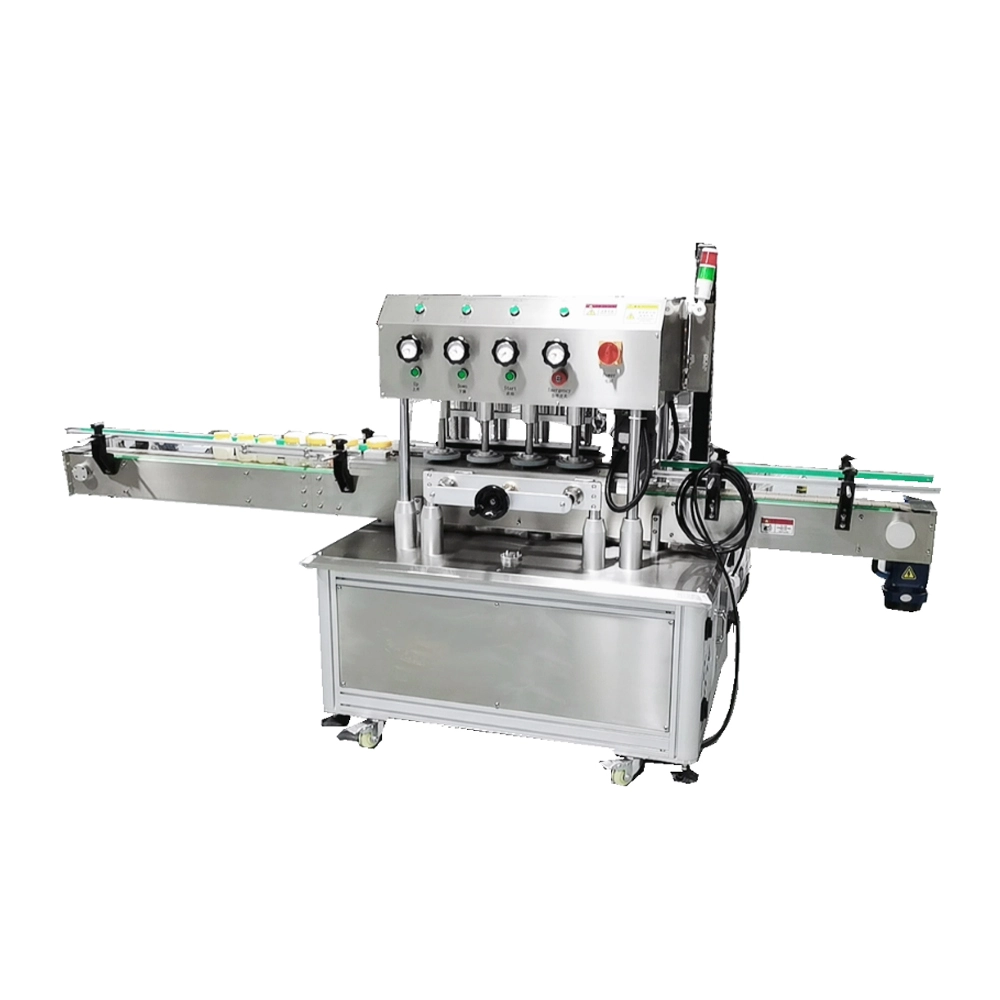
Automatic High Speed Capping Machine for Sale
The Yuanyang automatic high-speed capping machine is a kind of 8-wheel bottle-capping machine with fast working efficiency. The automatic capper is often used to close lids of containers such as bottles and jars, especially for plastic bottles, which are widely used in food, medicine, chemical, cosmetic, and other industries for mass production and continuous production lines.
Features:
⦁ Electric drive;
⦁ Automated fast speed;
⦁ Suitable for various screw caps, pumps, and spray bottles.
 Scan QR Code
Facebook
YouTube
LinkedIn
Whatsapp: +8613434139712
Guangzhou Yuanyang Machinery