





Safety and Compliance for Vacuum Emulsifiers in Production
- Safety and Compliance for Vacuum Emulsifiers in Production
- Understanding the emulsion mixer and its role in regulated production
- Key hazards associated with emulsion mixer operations
- Regulatory frameworks and standards for emulsion mixer production
- Design and engineering controls for safe emulsion mixer installations
- Procedural controls: SOPs, operator training, and permits
- Validation and qualification for regulated production
- Cleaning, sanitation and contamination control
- Maintenance, inspection and lifecycle management
- Practical risk mitigation checklist for emulsion mixer operations
- Comparison table: Safety features and compliance focus areas
- Operational examples: Using the 50L Hydraulic Lift Vacuum Emulsifier safely
- Brand summary and why the 50L Hydraulic Lift Vacuum Emulsifier supports safe, compliant production
- Practical tips when purchasing or validating a 50L emulsion mixer
- FAQ — Safety and Compliance for Vacuum Emulsifiers
- Q: What are the most important safety checks before starting an emulsion mixer?
- Q: How often should vacuum integrity and pressure relief devices be tested?
- Q: Can the 50L Hydraulic Lift Vacuum Emulsifier be used for APIs or potent compounds?
- Q: What cleaning validation steps are necessary for multi-product plants?
- Q: Does the equipment require special electrical or hazardous-area classification?
- Contact / View Product
- References and authoritative resources
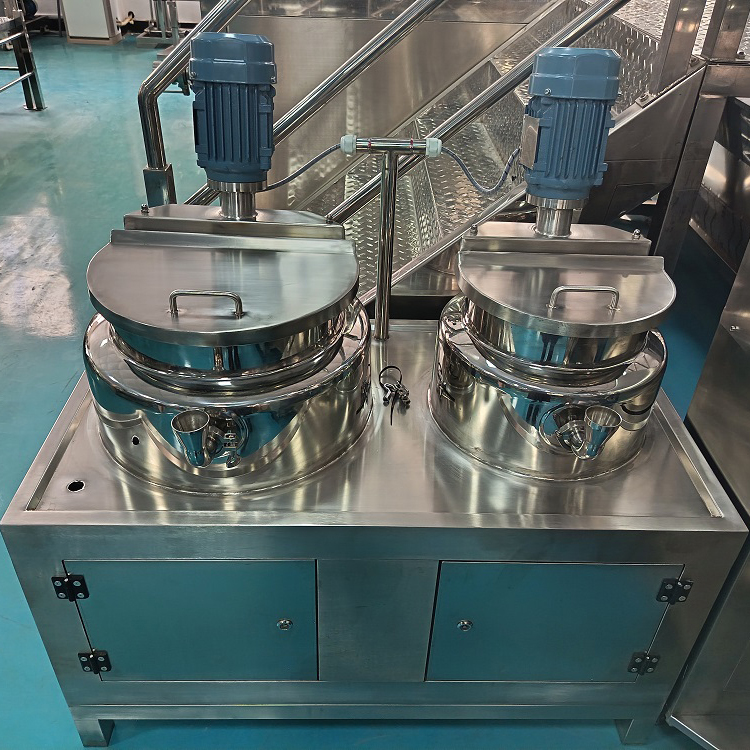
Safety and Compliance for Vacuum Emulsifiers in Production
Understanding the emulsion mixer and its role in regulated production
Vacuum emulsifiers (also called emulsion mixers) are central pieces of equipment in cosmetics, food, pharmaceutical, and chemical manufacturing. A typical vacuum emulsifier combines mixing, dispersing, homogenizing, emulsifying, vacuuming and powder absorption functions in a single integrated unit. When configured and operated correctly, they enable stable product formulations, fine particle sizes, and scalable production. However, because these systems process ingredients under vacuum and often work with heated phases, flammable solvents, active pharmaceutical ingredients (APIs), or biological materials, understanding and applying appropriate safety and compliance controls is essential.
Key hazards associated with emulsion mixer operations
An emulsion mixer presents several potential hazards that must be managed to meet safety and regulatory obligations. Typical risks include:
- Mechanical hazards: rotating shafts, high-speed homogenizers, tilting pots, and hydraulic lids that can cause entrapment or crushing.
- Process hazards: overpressure, vacuum failures, thermal burn risks from heating/cooling jackets, and accidental mixing of incompatible chemicals.
- Health hazards: exposure to aerosols, powders, solvents, sensitizers, or APIs during charging or cleaning.
- Environmental and fire hazards: flammable vapors and static ignition when handling organic solvents or fine powders.
- Contamination risks: microbial or cross-product contamination that can compromise product safety and regulatory compliance.
Regulatory frameworks and standards for emulsion mixer production
Complying with applicable regulations reduces risk and supports market access. The major regulatory frameworks relevant to emulsion mixer use include:
- Good Manufacturing Practice (GMP) for pharmaceuticals (FDA 21 CFR Part 210/211 in the U.S., EMA guidelines in Europe).
- ISO 22716: Cosmetics — Good Manufacturing Practices provides guidance on hygiene, documentation, and quality systems specific to cosmetics.
- Food safety standards such as FSMA (Food Safety Modernization Act) and HACCP principles for food-grade operations.
- Occupational safety regulations (e.g., OSHA standards in the U.S., EU machinery directives) for machine guarding, lockout/tagout, and operator safety.
Following these frameworks means designing processes and equipment use cases (including emulsion mixers) to meet sanitation, validation, traceability, and safety requirements.
Design and engineering controls for safe emulsion mixer installations
Engineering controls are the first line of defense. When specifying or installing an emulsion mixer such as the 50L Hydraulic Lift Vacuum Emulsifier, consider the following design features to reduce risk and ensure compliance:
- Enclosed homogenizer head and shaft guards to prevent contact with rotating parts.
- Hydraulic lift lid and tilting pot with interlocks so the agitator cannot run while the lid is open or during tilting operations.
- Vacuum-rated vessels with certified pressure/vacuum relief devices to avoid implosion or overpressure events.
- Sanitary fittings and hygienic finishes (e.g., electropolished 316L stainless steel) to meet cleaning and contamination control requirements.
- Explosion-proof electrical components or inerting capability where flammable solvents or dust ignition hazards are present.
- Automated controls with clear HMI, alarm logging, and password-protected recipe management to support traceability.
Example: The 50L Hydraulic Lift Vacuum Emulsifier includes a hydraulic lift lid & tilting pot, a vacuum system, and electric control system—features that, if properly interlocked and certified, support safer operation and compliance with machine safety directives.
Procedural controls: SOPs, operator training, and permits
Even well-engineered equipment requires disciplined procedures. Standard operating procedures (SOPs) should cover charging, heating/cooling, vacuum application, homogenization, tilt/transfer, cleaning-in-place (CIP) and emergency responses. Critical elements of SOPs include:
- Step-by-step start-up and shutdown procedures with safety checks and interlock verifications.
- Permit-to-work and lockout/tagout (LOTO) procedures for maintenance and cleaning tasks.
- Personal protective equipment (PPE) matrix based on chemical safety data sheets (SDS) and task risk assessment.
- Training and competency records for operators, maintenance staff, and QA personnel.
- Batch record templates and electronic logs for recipe, deviations, alarms, and cleaning cycles to meet GMP documentation demands.
Validation and qualification for regulated production
For regulated products (pharmaceuticals, some cosmetics, and food), equipment qualification and process validation are essential. Typical stages include:
- Design Qualification (DQ): Documentation that the emulsion mixer design meets user and regulatory requirements.
- Installation Qualification (IQ): Verification of correct installation, utilities, and safety systems.
- Operational Qualification (OQ): Testing controls, interlocks, vacuum system performance, and safety features across operating ranges.
- Performance Qualification (PQ): Demonstrating consistent process performance (mix uniformity, particle size distribution, vacuum hold) under real production conditions.
Key validation deliverables often include acceptance criteria for particle size (e.g., the 50L model features a perfect particle size of 2 microns and even distribution), vacuum integrity test results, and documented cleaning validation demonstrating removal of residues between batches.
Cleaning, sanitation and contamination control
Sanitation is a cornerstone of compliance. Effective cleaning and contamination control practices include:
- Design for cleanability: smooth welds, drainable geometry, and minimal dead legs in tanks and piping.
- Validated CIP or manual cleaning procedures with defined detergent concentration, temperature, exposure time and verification sampling.
- Microbiological monitoring for products with microbial growth risk and residue testing for cross-contamination in multi-product facilities.
- Clear separation or scheduling controls for allergen-containing, potent, or colored products.
Maintenance, inspection and lifecycle management
Regular maintenance and inspections reduce the probability of failure and support regulatory scrutiny. A preventive maintenance (PM) program for an emulsion mixer should include:
- Scheduled inspection of seals, gaskets, mixers, bearings, and hydraulic components.
- Lubrication and recommended spare parts list for critical items (mechanical seal kits, pressure sensors, vacuum pump filters).
- Periodic calibration of control instruments (temperature probes, pressure/vacuum gauges, torque sensors).
- Documented repair logs and change control for modifications to equipment, controls, or process recipes.
Practical risk mitigation checklist for emulsion mixer operations
The following checklist summarizes key actions to help manufacturers meet both safety and compliance goals when using an emulsion mixer:
- Verify physical guards and safety interlocks before each production run.
- Confirm vacuum integrity and vacuum pump service status.
- Check hydraulic lid operation and tilt interlocks with pressure off and power on tests during shift handover.
- Ensure SDSs are available and PPE is used for charging and cleaning tasks.
- Run pre-start QA checks for CIP status, tank cleanliness, and documented batch recipe readiness.
- Log and investigate any alarms or abnormal readings; do not bypass safety interlocks.
Comparison table: Safety features and compliance focus areas
Below is a compact comparison of common design/safety features and how they support compliance objectives.
| Feature | Safety Benefit | Compliance Impact |
|---|---|---|
| Hydraulic lift lid & tilting pot | Reduces manual lifting risks; enables safe transfer of product | Supports OSHA machinery safety and GMP ergonomics |
| Vacuum system with relief devices | Prevents implosion/overpressure, protects operators | Meets pressure vessel and equipment safety requirements |
| Electric control system with interlocks | Prevents machine operation during unsafe states | Essential for qualification (OQ) and audit trails |
| Sanitary tank design (316L, polished) | Reduces contamination and simplifies cleaning | Supports GMP, HACCP and ISO 22716 compliance |
| Explosion-proof options/inerting | Reduces ignition risk for flammable materials | Required in hazardous-area classified environments |
Operational examples: Using the 50L Hydraulic Lift Vacuum Emulsifier safely
Scenario 1 — Cosmetics cream production: Use the oil tank and water tank for phase preparation. Charge powders under the emulsifier’s vacuum powder absorption system to minimize dust. Run homogenizer until the product reaches the target 2 micron particle size. Follow CIP and record cleaning verification to meet cosmetic GMP (ISO 22716).
Scenario 2 — Food-grade sauce: Ensure food-contact surfaces are certified and perform allergen separation or scheduling. Validate pasteurization steps and ensure vacuum session does not introduce contamination. Document batch records for FSMA compliance.
Scenario 3 — Small-scale API formulation (pharma pilot): Apply stricter containment, validated cleaning procedures, and full DQ/IQ/OQ/PQ packages. Use access controls and maintained logs to support regulatory inspections.
Brand summary and why the 50L Hydraulic Lift Vacuum Emulsifier supports safe, compliant production
Yuanyang's 50L Hydraulic Lift Vacuum Emulsifier is engineered as a combined mixing solution with a main vacuum homogenizer tank, a water tank, and an oil tank—providing integrated mixing, dispersing, homogenizing, emulsifying, vacuumizing and powder absorption capabilities. Its hydraulic lift lid and tilting pot, vacuum system, and electric control system are designed to minimize manual handling, enable safe operation, and provide control features required for regulated environments. Key selling points for safety and compliance include:
- Hydraulic lift and tilting design reduces operator risk during loading/unloading.
- Vacuum and powder absorption functionality reduce dust exposure and airborne contamination.
- Suitable for viscosities from 10,000 to 50,000 cps, making it versatile for creams, gels and pastes.
- Capable of producing a perfect particle size of 2 microns with even distribution—important for product efficacy and process validation.
- Electric control systems that can be integrated into batch records and recipe management for traceability.
Practical tips when purchasing or validating a 50L emulsion mixer
When selecting and qualifying a vacuum emulsifier, consider requesting the vendor provide:
- Detailed DQ/IQ/OQ templates and FAT/SAT support.
- Material certificates (e.g., 316L stainless steel), weld inspection reports and surface finish specifications.
- Safety and interlock wiring diagrams and certification for electrical components.
- Documentation on vacuum pump sizing and vacuum system performance.
- Spare parts recommendations and preventive maintenance schedules.
FAQ — Safety and Compliance for Vacuum Emulsifiers
Q: What are the most important safety checks before starting an emulsion mixer?
A: Verify that guards and interlocks are in place, vacuum and hydraulic systems are leak-free, emergency stop functions operate, and that the vessel is clean and free of residues. Confirm batch recipe and SOP are loaded and operators are wearing required PPE.
Q: How often should vacuum integrity and pressure relief devices be tested?
A: Vacuum integrity and relief devices should be inspected at installation and during preventive maintenance intervals (commonly every 6–12 months), or more frequently if the process uses aggressive chemicals or wide temperature cycles. Document test results for audits.
Q: Can the 50L Hydraulic Lift Vacuum Emulsifier be used for APIs or potent compounds?
A: It can be used for pilot or small-scale API work if additional containment (local exhaust, HEPA filtration, closed charging systems) and validation measures are implemented. Always perform a risk assessment and follow containment and validation protocols for potent compounds.
Q: What cleaning validation steps are necessary for multi-product plants?
A: Define worst-case residues, develop analytical methods to detect residues (e.g., HPLC), set acceptance limits, perform swab and rinse studies, and document cleaning cycle parameters. Revalidate on product/process changes.
Q: Does the equipment require special electrical or hazardous-area classification?
A: If processes use flammable solvents or generate combustible dust, hazardous-area classification and explosion-proof electrical components or inerting systems will be necessary. Conduct a combustible dust and flammability assessment to determine requirements.
Contact / View Product
With compliance confirmed, decision-makers can confidently return to choosing the right emulsion mixer for high-volume production to finalize equipment selection.To discuss safety features, compliance documentation, or to request a quote and DQ/IQ/OQ package for the 50L Hydraulic Lift Vacuum Emulsifier, contact our sales and engineering team. We provide FAT/SAT support and validation documentation to help you install and qualify equipment in regulated environments.
References and authoritative resources
Authoritative sources used for regulatory and safety guidance include:
- FDA Good Manufacturing Practice (GMP) for Finished Pharmaceuticals — https://www.fda.gov
- ISO 22716: Cosmetics — Good Manufacturing Practices — https://www.iso.org/standard/36437.
- Occupational Safety and Health Administration (OSHA) machinery and lockout/tagout guidance — https://www.osha.gov
- European Medicines Agency (EMA) GMP guidelines — https://www.ema.europa.eu
- Food Safety Modernization Act (FSMA) — https://www.fda.gov/food/food-safety-modernization-act-fsma
For assistance with specification sheets, validation templates, or a compliance review of your processes with the 50L Hydraulic Lift Vacuum Emulsifier, reach out to our technical team via the contact details on our product page.
Top 5 emulsifying machine Company List and Products Compared
How to Choose the disperser mixer manufacturer and supplier in Saudi Arabia?
Best vacuum emulsifying mixer machine suppliers manufacturers and supplier brands
Why choose YUANYANG as your vacuum emulsifier mixer supplier
Chemicals
Is the equipment easy to clean and maintain?
Yes, the equipment is designed with easy disassembly and cleaning in mind, making daily maintenance more convenient.
Semi Automatic Capping Machine
What minimum caps size can the desktop capping machine be suit for?
The minimum cap size is 20mm, it is recommend to send caps to test if it is around 20mm.
High shear homogneizer
Can I only purchase the parts and install at local, because the big package cost a lot?
As long as client can assemble by himself, can purchase a compete part. This is indeed saves cost. But it is better to buy a set if client are not professional for installation.
Cosmetic Making Machine
Why vacuum system is necessary?
In the mixing process of cosmetic emulsifier, it is necessary to eliminate bubbles and prevent oxidation to ensure the quality of the mixture.
In a vacuum environment, there are following advantages:
⦁ Improve mixing efficiency
In a vacuum environment, the surface area of the mixture increases, and the interaction force between the substances will also increase, thus speeding up the mixing speed.
⦁ Prevent oxidation
In a vacuum environment, oxygen cannot enter the mixture, so it can effectively prevent the oxidation of the mixture.
⦁ Reduce bubbles
In a vacuum environment, the bubbles in the mixture will be drawn out, so that you can get a bubble-free mixture.
Washing Powder
Do you offer warranties and after-sales service?
Yes, we provide warranties and comprehensive after-sales support to ensure uninterrupted production and equipment reliability.
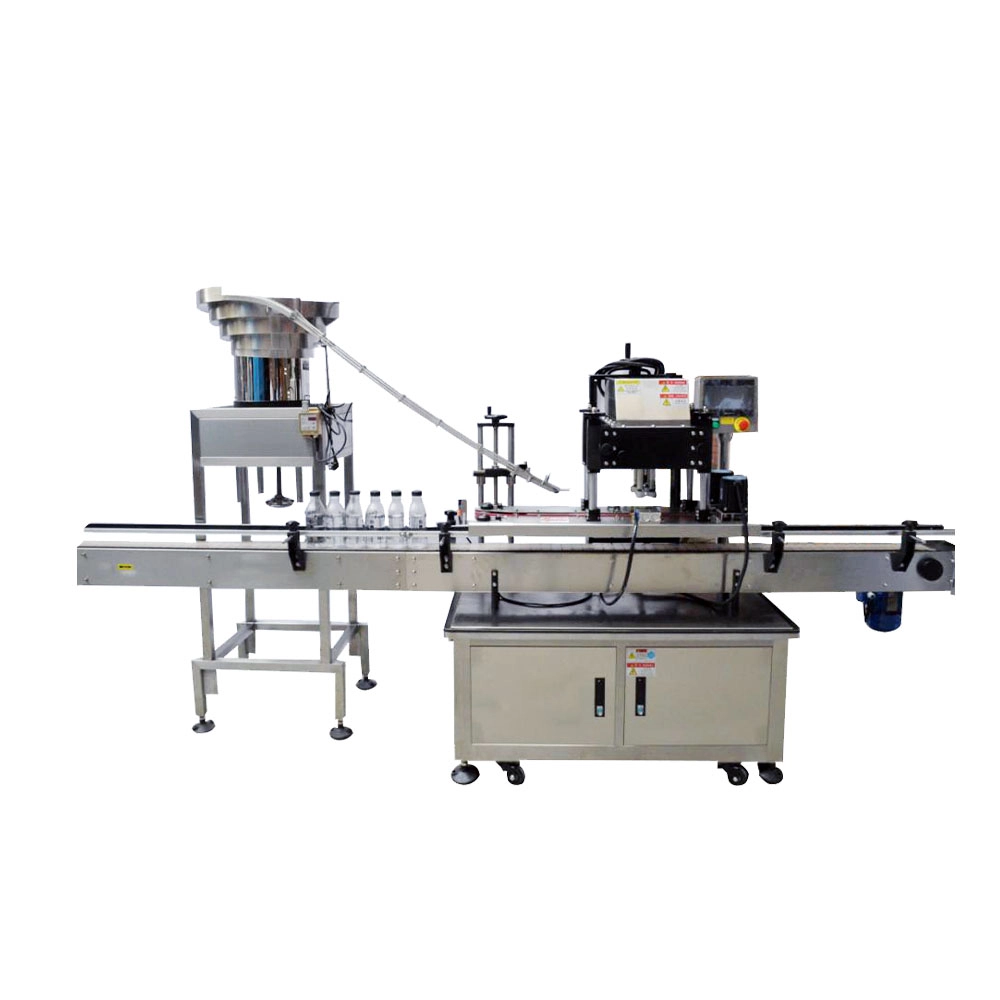
Automatic Plastic Caps Capping Machine with Vibrating Cap Feeder for Sale
Yuanyang automatic screw capping machine is a kind of four-wheel bottle capping machine. The automatic screw capper is often used to close lids of containers such as bottles and jars, especially for plastic bottles, which are widely used in food, medicine, chemical, cosmetic, and other industries for mass production and continuous production lines.
Features:
⦁ Full pneumatic drive;
⦁ Automated fast speed;
⦁ Suitable for various screw caps, pumps, and spray bottles.
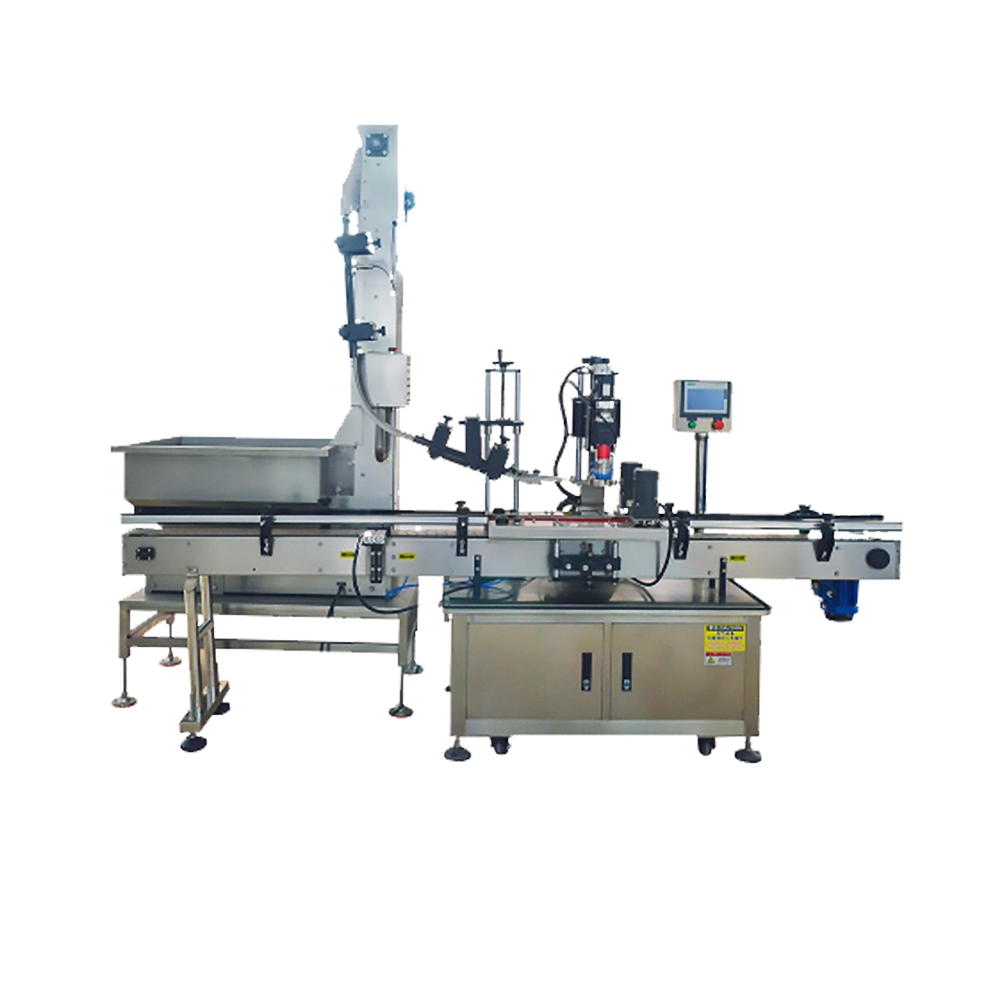
Automatic Metal Caps Capping Machine for Sale
Yuanyang automatic metal cap capping machine is a bottle capper for bottles with metal caps, which is often used to close lids of containers such as bottles and jars. The glass bottle metal capping machine is widely used in food, medicine, chemical, cosmetic, and other industries for mass production and continuous production line .
Features:
⦁ Pneumatic and electric drive;
⦁ Automated fast speed;
⦁ Suitable for glass bottles with metal caps.
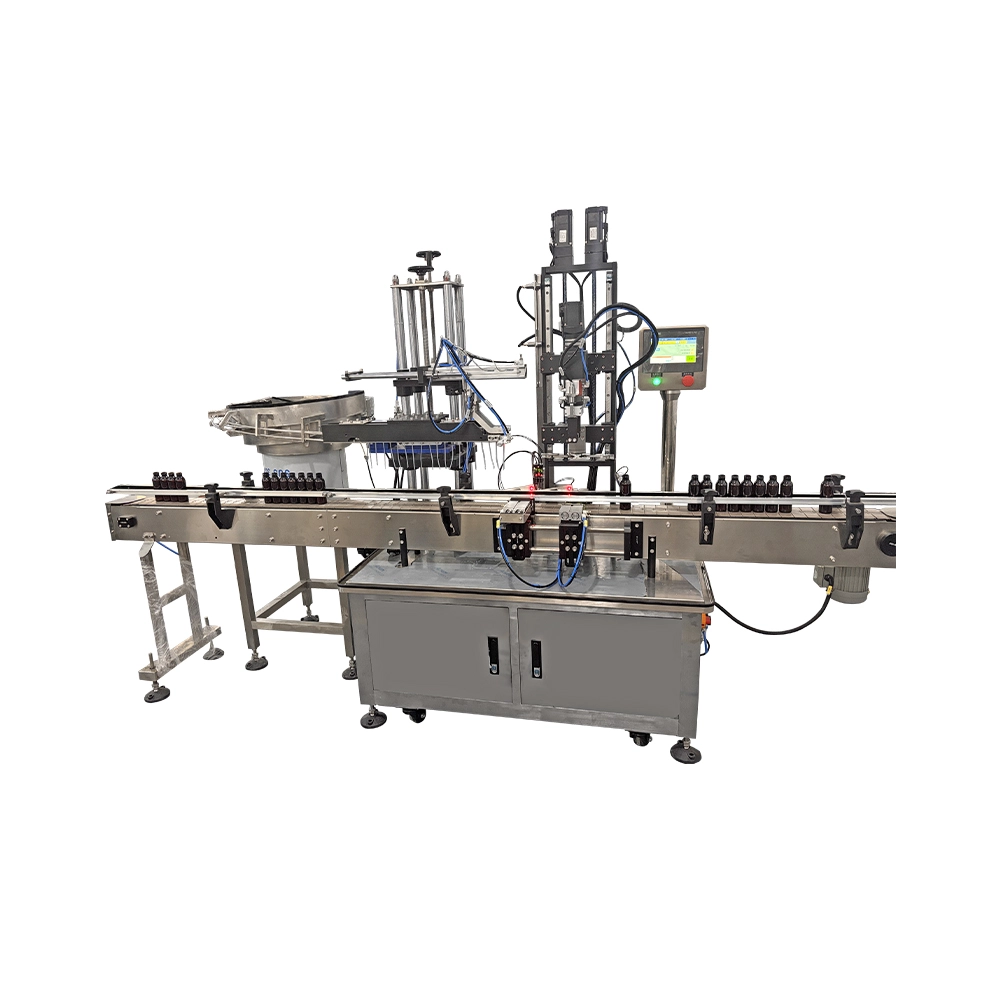
Automatic Pump Head Feeding and Capping Machine for Sale
Yuanyang automatic pump head feeding and capping machine is a bottle cap sorter and capper for bottles with pump heads, which is often used to close lids of containers such as nail polish, sprayers, and shampoo. The capping machine with a pump head feeder is widely used in food, medicine, chemical, cosmetic, and other industries for mass production and continuous production line .
Features:
⦁ Pneumatic and electric drive;
⦁ Automated fast speed;
⦁ Suitable for various types of caps.
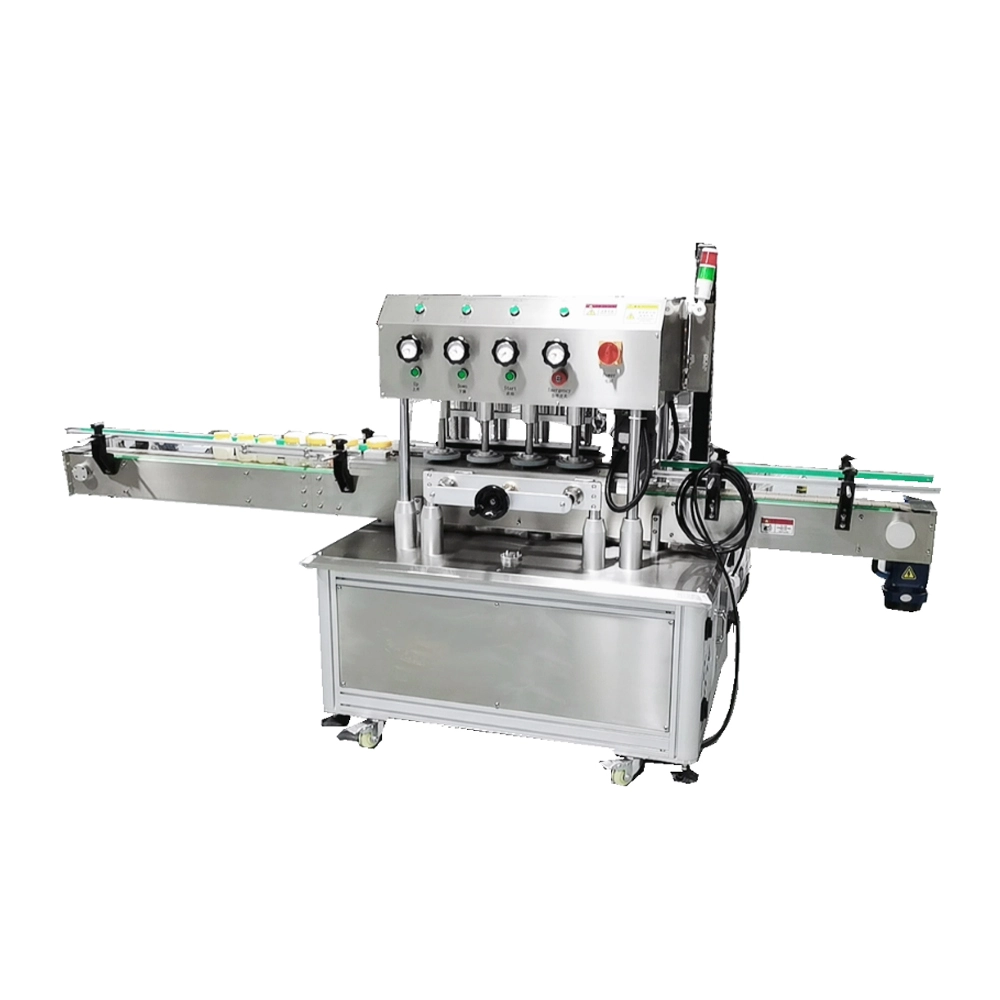
Automatic High Speed Capping Machine for Sale
The Yuanyang automatic high-speed capping machine is a kind of 8-wheel bottle-capping machine with fast working efficiency. The automatic capper is often used to close lids of containers such as bottles and jars, especially for plastic bottles, which are widely used in food, medicine, chemical, cosmetic, and other industries for mass production and continuous production lines.
Features:
⦁ Electric drive;
⦁ Automated fast speed;
⦁ Suitable for various screw caps, pumps, and spray bottles.
 Scan QR Code
Facebook
YouTube
LinkedIn
Whatsapp: +8613434139712
Guangzhou Yuanyang Machinery