





Why Choose Two-Stage Reverse Osmosis for Industrial Water
- Why Two-Stage Reverse Osmosis Is the Right Choice for Industrial Water Treatment
- How Two-Stage Reverse Osmosis Works and Why It Matters for Industrial Water Treatment
- Key components and control strategy
- Primary Benefits of Two-Stage Reverse Osmosis for Industrial Water Treatment
- Comparing Single-Stage vs. Two-Stage RO for Industrial Water
- Design and Operation Considerations for Industrial Water Treatment
- Energy and footprint considerations
- Typical Industrial Applications for Two-Stage Reverse Osmosis Water Treatment
- Cost, ROI and Environmental Benefits in Industrial Water Treatment
- Maintenance, Reliability, and Serviceability for Industrial RO Systems
- Product Spotlight: Two-Stage Reverse Osmosis Water Treatment for Sale
- How this product answers industrial buyer needs
- Why Choose Our Brand — Yuanyang Advantages in Industrial Water Treatment
- Common Implementation Steps for Industrial Buyers
- FAQ — Two-Stage Reverse Osmosis for Industrial Water Treatment
- Q: What is the main advantage of two-stage RO for industrial water treatment?
- Q: Is two-stage RO more expensive to buy and operate?
- Q: Can two-stage RO meet pharmaceutical-grade water requirements?
- Q: How often will membranes need cleaning or replacement?
- Q: Is the 'Two-Stage Reverse Osmosis Water Treatment for Sale' suitable for my factory?
- Contact Us / View Product
- References and Sources
Why Two-Stage Reverse Osmosis Is the Right Choice for Industrial Water Treatment
Industrial operations—from pharmaceutical and food manufacturing to cosmetics and chemical processing—require stable, high-quality water. Choosing the right industrial water treatment solution affects product quality, process reliability, regulatory compliance, and operating costs. Two-stage reverse osmosis (RO) systems are an increasingly preferred option when operators need high purity, increased recovery, and more consistent performance than typical single-stage RO systems provide.
How Two-Stage Reverse Osmosis Works and Why It Matters for Industrial Water Treatment
Two-stage reverse osmosis splits the RO process into two consecutive membrane trains. The first stage removes the bulk of dissolved solids and contaminants. The concentrate (brine) from stage one is then re-fed and balanced into a second RO stage to extract additional permeate (product water). This staged approach allows operators to push higher overall water recovery while keeping membrane flux and fouling risk manageable.
In practical terms for industrial water treatment, two-stage RO helps achieve: higher purity levels, improved process stability, and better handling of variable feedwater. It is particularly valuable when input water contains higher dissolved solids, organics, or scaling ions that would otherwise limit recovery or shorten membrane life in a single-stage system.
Key components and control strategy
Typical two-stage systems include pre-filtration (sand, multimedia, activated carbon, cartridge filters), anti-scalants, high-pressure pumps, pressure vessels with RO membranes, instrumentation for conductivity/TOC, and a PLC or microcomputer control system. Many industrial units—such as the Yuanyang Two-Stage Reverse Osmosis Water Treatment for Sale—use microcomputer control for automated, fast operation and consistent pure water production.
Primary Benefits of Two-Stage Reverse Osmosis for Industrial Water Treatment
Adopting two-stage RO yields several practical benefits that align with industrial priorities:
- Higher recovery: Two stages can extract more product water from the same feed, reducing waste brine and raw water demand.
- Consistent high purity: Staging reduces the load per membrane element and helps maintain stable permeate quality even with variable feedwater.
- Lower fouling and scaling risk: By distributing osmotic and hydraulic stresses, membranes operate in more favorable conditions, extending service intervals.
- Operational flexibility: Systems can be tuned for target recovery vs. permeate quality depending on process needs.
- Cost-effectiveness over lifecycle: Higher recovery and less frequent membrane replacement commonly reduce total cost of ownership compared to poorly performing single-stage systems.
Comparing Single-Stage vs. Two-Stage RO for Industrial Water
For industrial buyers evaluating the product market, it's helpful to see practical comparisons. The table below summarizes typical performance characteristics. Values are industry-typical ranges; exact results depend on feedwater composition, temperature, anti-scalant use, membrane type, and system design.
| Characteristic | Single-Stage RO (typical) | Two-Stage RO (typical) |
|---|---|---|
| Product (permeate) purity | High (salt rejection ~95–98%) | Very high (salt rejection ~98–99.5%) |
| Overall recovery | ~50–75% | ~70–90% (depends on design) |
| Brine volume (waste) | Higher | Lower |
| Membrane fouling stress | Higher per element | Lower per element |
| Typical applications | Simple feedwater, low recovery needs | High-recovery needs, challenging feedwater |
Sources: Manufacturer technical literature (DOW FilmTec), industry guidelines (International Desalination Association) and public guidance on membrane systems (US EPA). See references at article end.
Design and Operation Considerations for Industrial Water Treatment
To maximize the benefits of two-stage RO in industrial settings, consider these practical design and operational factors:
- Feedwater characterization: Before design, analyze hardness, silica, TDS, organics, iron, manganese, and silt density index (SDI). Two-stage systems perform best when pre-treatment matches feedwater risks.
- Pre-treatment strategy: Effective multimedia filtration, cartridge polishing, activated carbon (if organics/chlorine present), and dosing (anti-scalant, pH adjustment) are critical.
- Membrane selection: Choose membranes rated for the expected flux and rejection. Low-fouling membranes or those designed for high recovery are common choices for stage two.
- Controls and monitoring: Automated control (microcomputer-controlled systems) helps maintain setpoints for recovery, pressure, and conductivity, and enables alarms for alarms and routine cleaning scheduling.
- Cleaning-in-place (CIP) planning: Two-stage systems can often extend cleaning intervals but require planned CIP capability and clear monitoring of differential pressure and permeate quality.
Energy and footprint considerations
Two-stage systems may increase capital cost and require more sophisticated pumps and controls, but the higher water recovery and lower waste disposal costs can offset those investments. Energy per cubic meter of permeate depends on feed salinity and recovery targets; energy recovery devices are common on large systems to reduce energy costs.
Typical Industrial Applications for Two-Stage Reverse Osmosis Water Treatment
Two-stage RO is widely used across industries where water quality, consistency, and resource efficiency matter:
- Pharmaceuticals: Producing purified water and feedwater for further polishing (WFI or PW production workflows).
- Food & beverage: Consistent water for product formulation, cleaning, and ingredient quality control.
- Chemicals and electronics: Process make-up water and high-purity rinsing water.
- Cosmetics and personal care: Stable water quality to ensure batch consistency and shelf stability.
- Boiler feed and cooling towers: Lower dissolved solids help reduce scaling and corrosion when integrated with additional treatment steps.
Cost, ROI and Environmental Benefits in Industrial Water Treatment
Assessing lifecycle cost is crucial. Two-stage RO often delivers a favorable return on investment when:
- Raw water is scarce or expensive, so higher recovery reduces intake costs;
- Brine disposal is costly or regulated, making waste minimization financially valuable;
- Product water quality directly affects product yield or compliance, reducing rejects and rework;
- Energy- and water-saving measures (e.g., energy recovery devices) are applied to large systems.
Environmental benefits include reduced raw water withdrawal and lower wastewater volumes. Both reduce the facility's environmental footprint, which can be important for regulatory compliance and corporate sustainability goals.
Maintenance, Reliability, and Serviceability for Industrial RO Systems
Operators should design maintenance programs around monitoring key indicators: differential pressure, flux, permeate conductivity/TDS, and recovery. Two-stage RO reduces per-membrane load and frequently extends membrane life, but regular preventive maintenance, scheduled CIP, and verified spare parts availability are essential for continuous industrial operation. Systems with microcomputer control simplify diagnostics and permit remote monitoring and automated alerts.
Product Spotlight: Two-Stage Reverse Osmosis Water Treatment for Sale
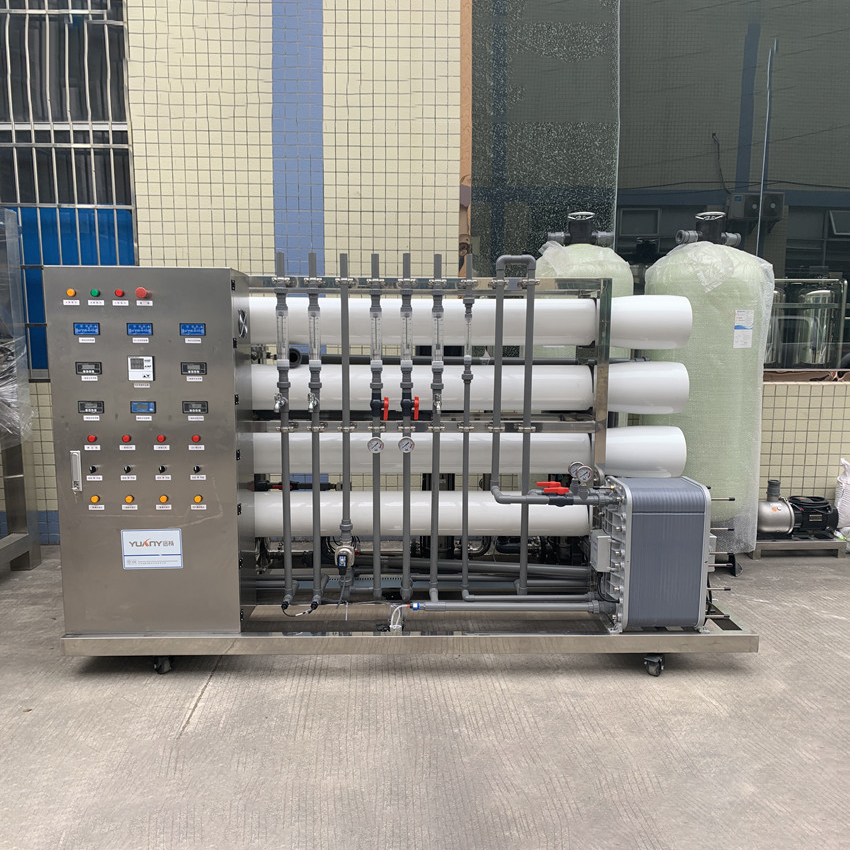
The Two-Stage Reverse Osmosis Water Treatment for Sale from Yuanyang is designed for industrial customers who need reliable, large-volume pure water production. Yuanyang two-stage reverse osmosis water treatment is a water filter device applied to produce pure water, which adopts advanced reverse osmosis technology. Reverse osmosis water treatment in short, is called RO water treatment, widely used in industries of pharmaceuticals, food, chemicals, cosmetics, etc.
Features:
- Microcomputer controlled;
- Automated fast speed;
- Produce high-quality pure water.
This product is offered in modular configurations suitable for bench-to-plant scale deployments and can be customized for feedwater conditions and required permeate capacity. The microcomputer control provides automated operation and fast response to process changes, which is essential for industrial-scale, continuous-use environments.
How this product answers industrial buyer needs
For procurement managers and plant engineers, the product offers:
- Predictable performance: Designed for consistent permeate quality to meet product specification and compliance demands.
- Lower operating risk: Two-stage design reduces fouling frequency and controls stress on membranes.
- Scalability: Modular approach to expand capacity as production grows.
- Automation: Microcomputer control lowers labor overhead for operation and ensures repeatable startup/shutdown sequences.
Why Choose Our Brand — Yuanyang Advantages in Industrial Water Treatment
When evaluating suppliers for industrial water treatment systems, consider brand capabilities beyond the equipment itself. Yuanyang offers several advantages that reduce project risk and support long-term operation:
- Engineering expertise: Experience designing and commissioning two-stage RO for pharmaceuticals, food, and chemical plants.
- Customized solutions: Ability to tailor pre-treatment and control strategies to specific feedwater and regulatory needs.
- After-sales support: Spare parts, membrane sourcing assistance, and service contracts for scheduled maintenance and CIP.
- Automation and controls: Microcomputer-controlled units designed for industrial automation environments and integration with plant DCS/SCADA when required.
- Quality and compliance: Documentation support for regulatory audits and process validation in regulated industries.
Common Implementation Steps for Industrial Buyers
To implement a two-stage RO system successfully, follow a clear process:
- Characterize feedwater and define permeate quality targets.
- Select the two-stage RO configuration and pre-treatment train.
- Plan for brine handling and disposal or brine reduction strategies.
- Define CIP procedures, monitoring points, and alarm thresholds.
- Arrange for installation, commissioning, and operator training.
- Set up a maintenance and spare parts plan tied to operating hours and monitored performance metrics.
FAQ — Two-Stage Reverse Osmosis for Industrial Water Treatment
Q: What is the main advantage of two-stage RO for industrial water treatment?
A: The main advantage is higher overall recovery and more consistent permeate quality, which reduces raw water consumption and waste brine volumes while protecting membrane life.
Q: Is two-stage RO more expensive to buy and operate?
A: Capital costs are typically higher due to extra membranes, vessels, and controls, but lifecycle costs often improve due to reduced water intake, lower brine disposal costs, and extended membrane life. A site-specific lifecycle cost analysis is recommended.
Q: Can two-stage RO meet pharmaceutical-grade water requirements?
A: Two-stage RO is commonly used as part of pharmaceutical water systems. Additional polishing (electrodeionization, UV, or ultrafiltration) and validated procedures may be required depending on the specific regulatory standard (PW, WFI).
Q: How often will membranes need cleaning or replacement?
A: Cleaning frequency depends on feedwater quality and operating flux. Two-stage systems typically extend intervals between CIP events because per-element load is reduced. Membrane lifetime often ranges from 3–7 years depending on operation and maintenance.
Q: Is the 'Two-Stage Reverse Osmosis Water Treatment for Sale' suitable for my factory?
A: Contact an application engineer with feedwater analysis and production targets to confirm suitability and receive a customized system specification.
Contact Us / View Product
If you are evaluating industrial water treatment options or ready to view the Two-Stage Reverse Osmosis Water Treatment for Sale, contact our technical sales team for a free consultation and site assessment. We provide detailed proposals, expected performance projections, and lifecycle cost estimates to help you make an informed decision. Click to request a quote or contact sales at: [email protected] (replace with your contact email) or call +86-XXX-XXXXXXX.
References and Sources
- U.S. Environmental Protection Agency (EPA), Information on membrane filtration and reverse osmosis technologies. Available at: https://www.epa.gov
- World Health Organization (WHO) guidance on water treatment technologies and safe drinking-water. Available at: https://www.who.int
- DOW FilmTec Reverse Osmosis Product Literature and Technical Guides (membrane performance and typical rejection). Available at: https://www.dupont.com or https://www.dow.com
- International Desalination Association (IDA) publications and best practices for membrane desalination. Available at: https://idadesal.org
- Industry journal: Membrane Technology — articles on two-stage RO design and recovery optimization.
For project-specific guidance and validated performance data for the Two-Stage Reverse Osmosis Water Treatment for Sale, request a feedwater assessment and system proposal from our engineering team.
Tips for buy pharmaceutical powder mixer
OEM/ODM bottle filling and capping machine Manufacturers and Suppliers
Tips for buy powder feeder in Europe
Homogenizer Mixer vs High-Shear Mixer: Which Is Better?
Liquid Mixing Tank
Can the agitator speed be adjustable with VFD?
Yes,the agitator mixer is equipped with frequency converter. Speed can be variable by adjusting the speed regulation panel. If you want to save cost, or not variable speed is needed, there is no need to add VFD device.
Water Filling Machine
Does it have counting function?
On the desktop filling machine, there is counter displaying how many bottles have been filled.
FAQs
How is the quality?
We provide high-standard equipment. Quality is priority. People from Yuany always attach great importance to quality control from the beginning to the end. We support production inspection before shipment. And all machines will be tested and send you videos. You can also send your own packages/materials for rest-run after the machines are finished. Our factory has gained GMP,ISO,and CE Certificates.
Aluminum Foil Sealing Machine
Is the plastic bottle sealing machine also suitable for metal cap?
No, It is not suitable for metal cap, because the heat can’t go through the metal, the sealing won’t be achieved.
Sachet Packaging Machine
What type of film is the automatic packing machine suitable for?
The film materials include polypropylene film, polyethylene film, polyester film, nylon film and aluminum foil film and so on.
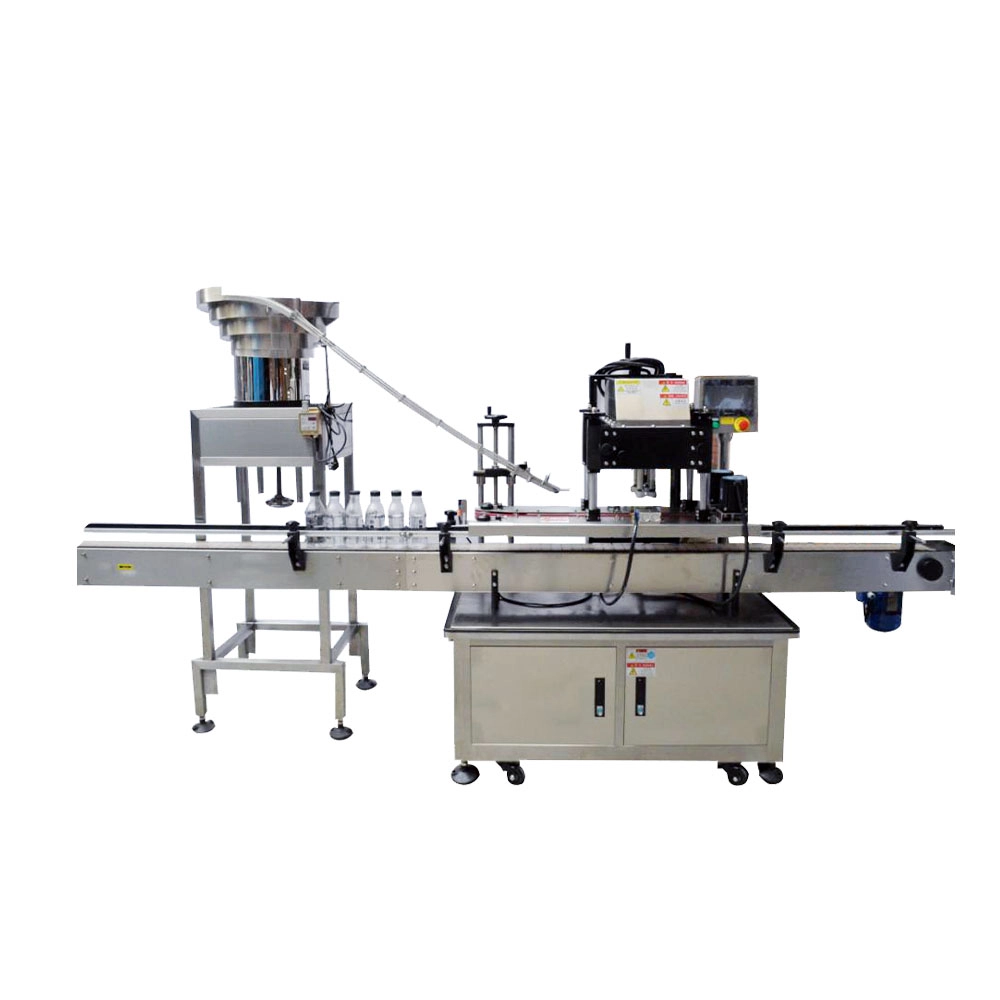
Automatic Plastic Caps Capping Machine with Vibrating Cap Feeder for Sale
Yuanyang automatic screw capping machine is a kind of four-wheel bottle capping machine. The automatic screw capper is often used to close lids of containers such as bottles and jars, especially for plastic bottles, which are widely used in food, medicine, chemical, cosmetic, and other industries for mass production and continuous production lines.
Features:
⦁ Full pneumatic drive;
⦁ Automated fast speed;
⦁ Suitable for various screw caps, pumps, and spray bottles.
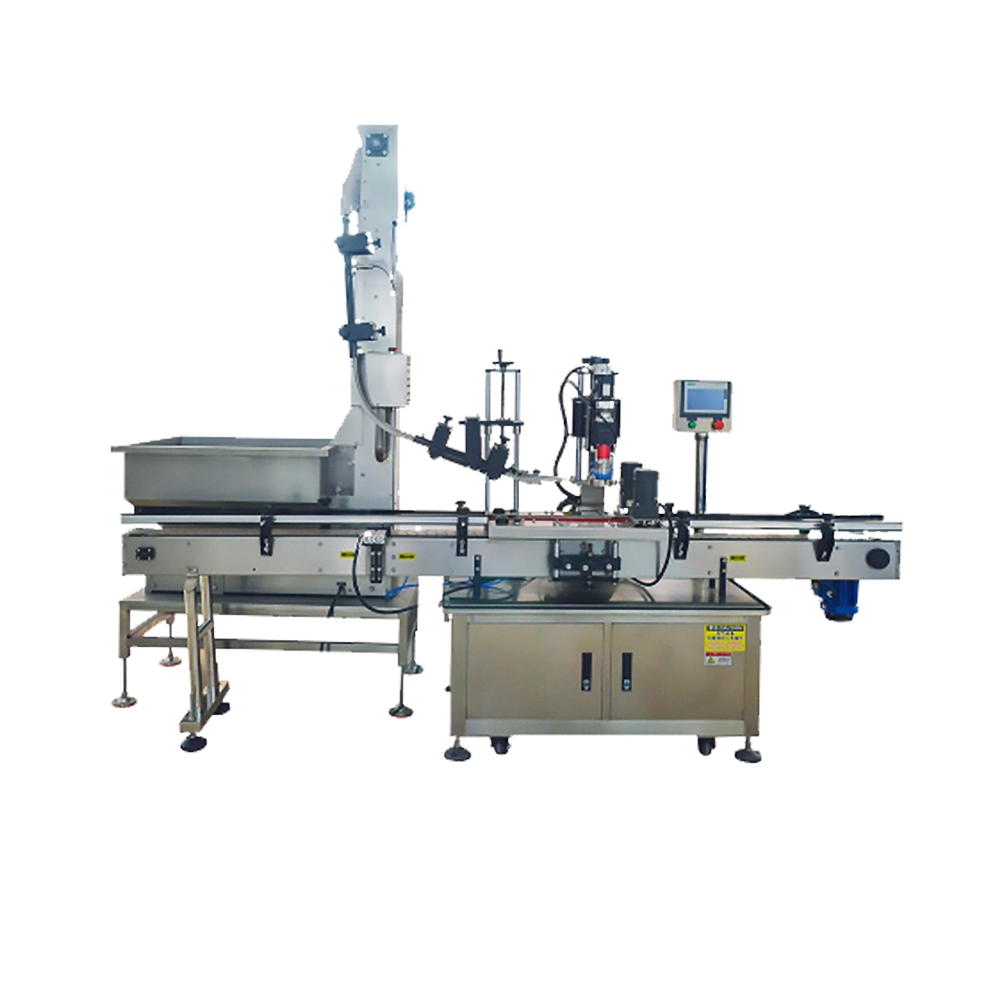
Automatic Metal Caps Capping Machine for Sale
Yuanyang automatic metal cap capping machine is a bottle capper for bottles with metal caps, which is often used to close lids of containers such as bottles and jars. The glass bottle metal capping machine is widely used in food, medicine, chemical, cosmetic, and other industries for mass production and continuous production line .
Features:
⦁ Pneumatic and electric drive;
⦁ Automated fast speed;
⦁ Suitable for glass bottles with metal caps.
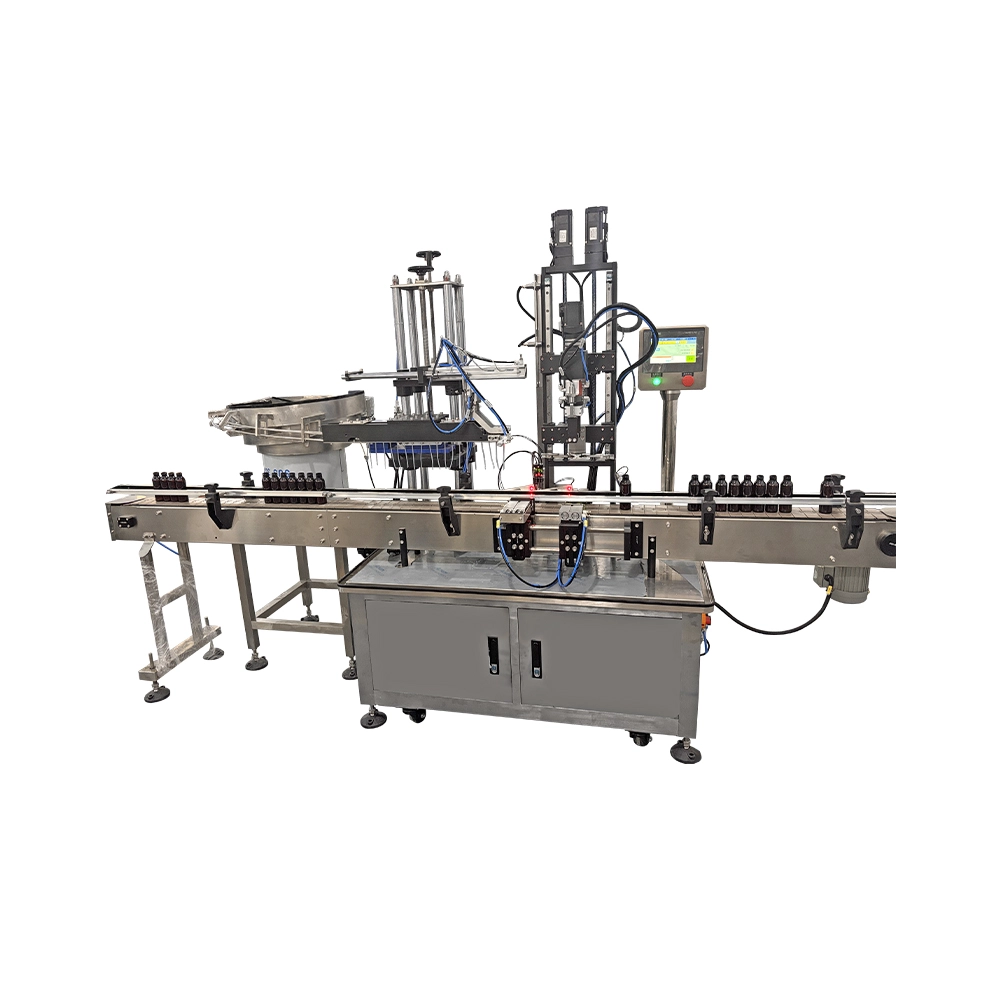
Automatic Pump Head Feeding and Capping Machine for Sale
Yuanyang automatic pump head feeding and capping machine is a bottle cap sorter and capper for bottles with pump heads, which is often used to close lids of containers such as nail polish, sprayers, and shampoo. The capping machine with a pump head feeder is widely used in food, medicine, chemical, cosmetic, and other industries for mass production and continuous production line .
Features:
⦁ Pneumatic and electric drive;
⦁ Automated fast speed;
⦁ Suitable for various types of caps.
Automatic High Speed Capping Machine for Sale
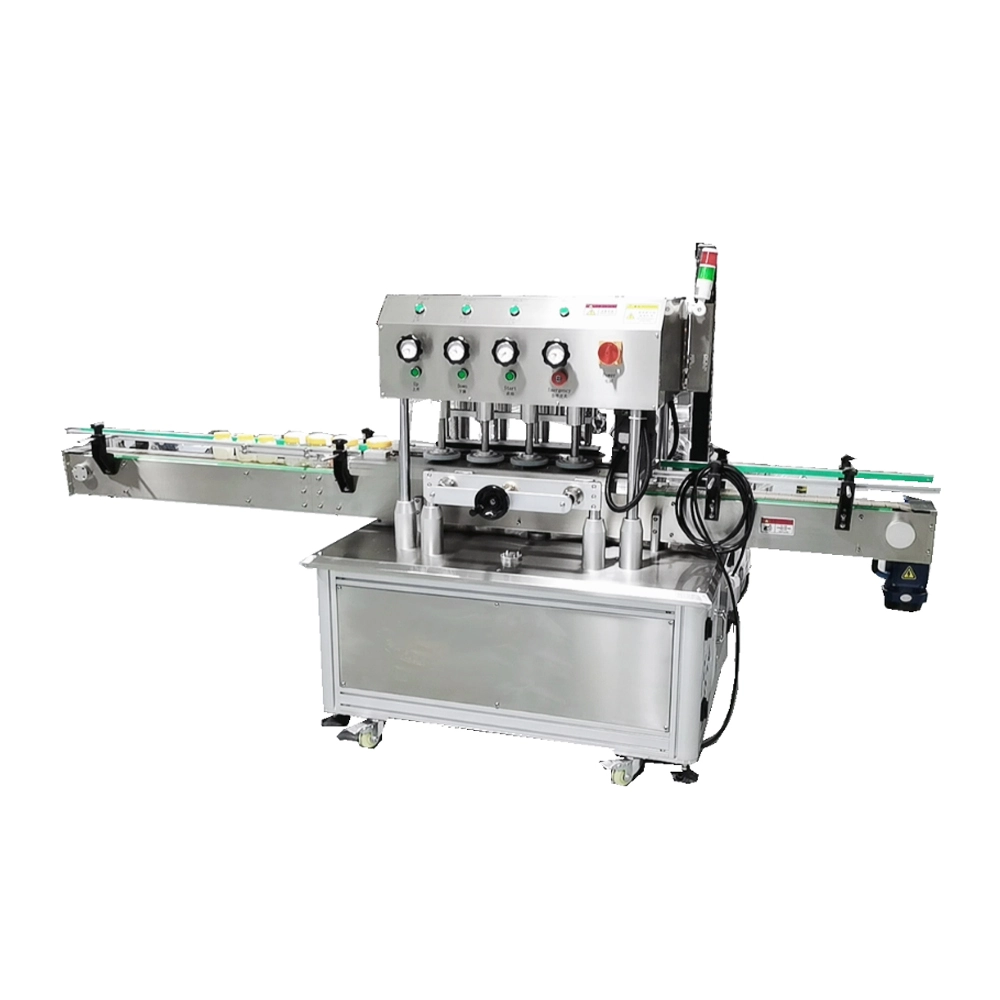
The Yuanyang automatic high-speed capping machine is a kind of 8-wheel bottle-capping machine with fast working efficiency. The automatic capper is often used to close lids of containers such as bottles and jars, especially for plastic bottles, which are widely used in food, medicine, chemical, cosmetic, and other industries for mass production and continuous production lines.
Features:
⦁ Electric drive;
⦁ Automated fast speed;
⦁ Suitable for various screw caps, pumps, and spray bottles.
 Scan QR Code
Facebook
YouTube
LinkedIn
Whatsapp: +8613434139712
Guangzhou Yuanyang Machinery