





Choosing the Right Emulsion Mixer for High-Volume Production
- Choosing the Right Emulsion Mixer for High-Volume Production
- Why the right emulsion mixer matters for high-volume production
- Key technical criteria when selecting an emulsion mixer
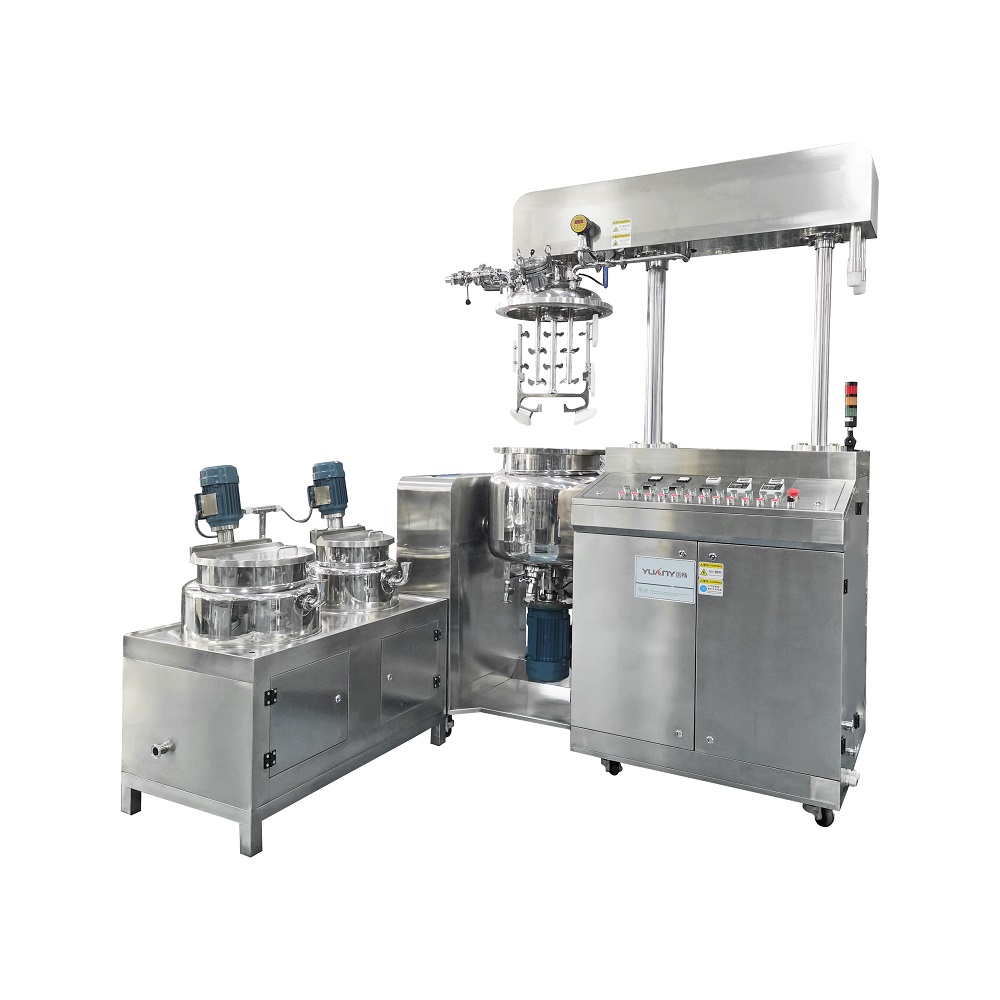
- Meet the product: 50L Hydraulic Lift Vacuum Emulsifier
- How the 50L Hydraulic Lift Vacuum Emulsifier addresses high-volume production needs
- Scale-up strategies: from 50L to production volumes
- Geometric and dynamic similarity
- Modular parallelization
- Comparing common emulsion mixer types (quick reference)
- Operational considerations: ROI, utilities, maintenance
- Quality outcomes: particle size, stability, and regulatory readiness
- Case examples: typical applications suited to the 50L unit
- Practical checklist before buying an emulsion mixer
- Brand advantages and why choose Yuanyang’s 50L Hydraulic Lift Vacuum Emulsifier
- FAQ — Frequently Asked Questions about emulsion mixers and the 50L Hydraulic Lift Vacuum Emulsifier
- Q: Is a 50L emulsifier suitable for large-scale production?
- Q: What particle size can I realistically expect?
- Q: Can it handle thick creams of 50,000 cP?
- Q: Does it support CIP and regulatory documentation?
- Q: How do I scale from a 50L test batch to production?
- Contact to request samples, specs, or pricing
- Authoritative references and further reading
Choosing the Right Emulsion Mixer for High-Volume Production
Why the right emulsion mixer matters for high-volume production
Choosing the appropriate emulsion mixer is one of the most important operational decisions for manufacturers in cosmetics, food, pharmaceuticals, and specialty chemicals. The right machine maximizes product quality, repeatability, yield, and regulatory compliance while minimizing downtime and operating cost. When buyers search for an emulsion mixer for high-volume production, they are usually solving for consistent particle size (stability), throughput (cycle time), cleanability (CIP), and compliance (materials and documentation). This article walks through the critical selection criteria and explains how the 50L Hydraulic Lift Vacuum Emulsifier can meet high-volume needs at pilot and small commercial scales. After understanding the fundamentals of choosing the right emulsion mixer for high-volume production, buyers often evaluate specific configurations such as a 50L hydraulic lift vacuum emulsifier and its key specs for purchasers.
Key technical criteria when selecting an emulsion mixer
When evaluating an emulsion mixer for high-volume production, consider these core technical factors — each directly affects product quality and manufacturing efficiency:
- Shear mechanism and homogenizing power: High-pressure homogenizers, rotor-stator systems, and rotor-stator-in-tank (vacuum homogenizers) deliver different shear profiles. The right shear level ensures droplet breakup to achieve stable emulsions and target particle size (often sub-5 micron for cosmetics and pharmaceuticals).
- Vacuum capability: Vacuum deaeration prevents air entrainment and improves product stability and appearance. For many creams, lotions, sauces, and emulsion-based APIs, vacuum is essential to remove trapped gases and enable controlled filling.
- Viscosity handling: Machines must handle the expected viscosity range of both process stages and final product. Some vacuum homogenizers are rated up to tens of thousands of centipoise (cP); others lose efficiency above lower viscosities.
- Batch volume and scale-up model: Confirm the mixer’s effective working volume, not just nominal tank volume. Scale-up factors (geometric similarity, tip speed, residence time) affect how product performance translates from pilot to production.
- Heat transfer and temperature control: Precise heating/cooling is necessary for temperature-sensitive ingredients and consistent emulsification (e.g., maintaining phases for proper droplet formation).
- Construction and materials: Pharmaceutical and cosmetic production typically require 316L stainless steel, sanitary welds, and surface finishes for regulatory compliance and product safety.
- Cleaning and maintenance: Easy-to-clean designs, CIP capabilities, and reduced dead zones cut downtime and contamination risk.
- Automation, controls, and safety: PLC controls, recipe management, and safety features (hydraulic lift, interlocks) support repeatability and operator safety.
Meet the product: 50L Hydraulic Lift Vacuum Emulsifier
The following is the product description:
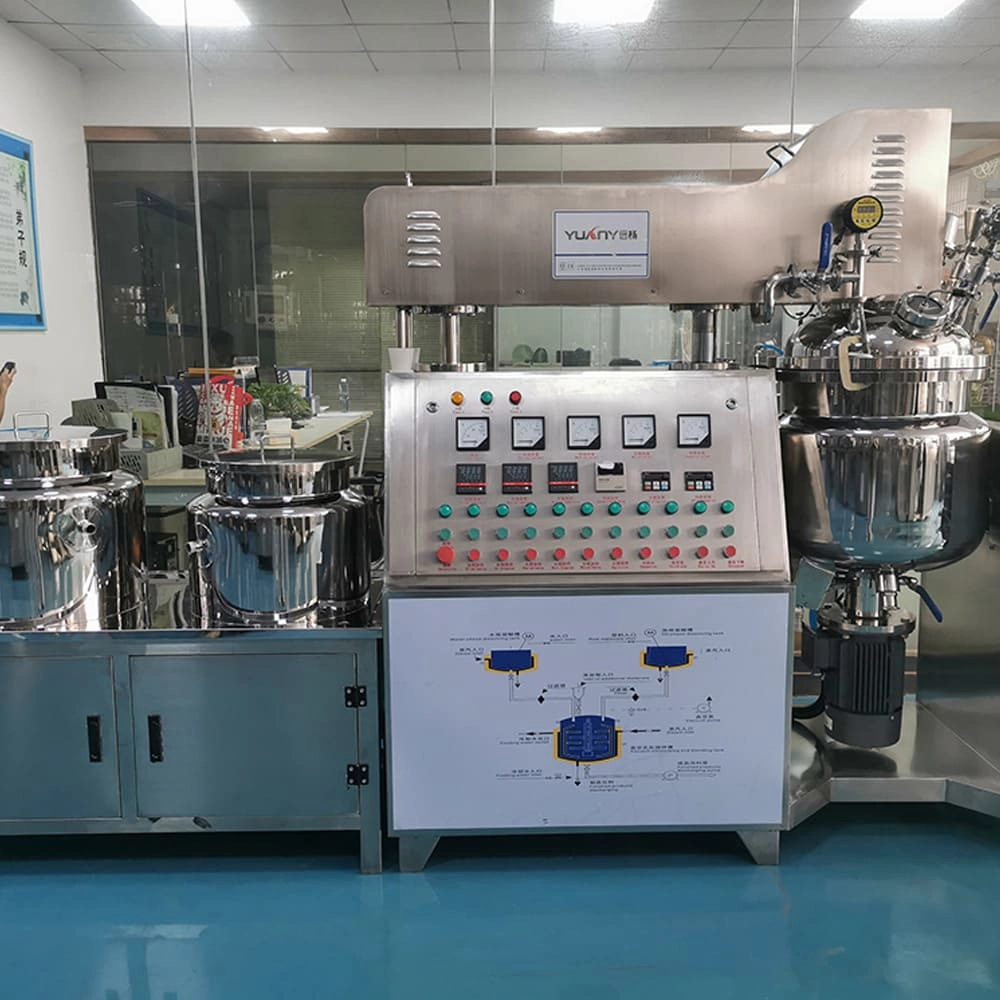
Yuanyang hydraulic lift vacuum emuslifier is a combined mixing equipment with a main vacuum homogenizer tank, a water tank, and an oil tank, which is an integrated equipment with a mixing, dispersing, homogenizing, emulsifying, vacuumizing and powder absorption system that is widely used in cosmetics, food, pharmaceutical, and chemical fields.
Features:
⦁ With a hydraulic lift lid & tilting pot, vacuum system, and electric control system.
⦁ Suitable for products of 10,000~50,000 cps viscosity.
⦁ Perfect particle size of 2 microns and evenly distributed.
This 50L Hydraulic Lift Vacuum Emulsifier is targeted at manufacturers needing robust, repeatable batches in pilot and low-to-mid commercial runs. Below we explain how its capabilities align with high-volume production goals.
How the 50L Hydraulic Lift Vacuum Emulsifier addresses high-volume production needs
Although 50 liters is a modest nominal tank size compared to large-scale production tanks, this model is often used for continuous batch schedules, scale-up trials, and pilot-to-market runs. Key advantages relevant to high-volume operations include:
- Hydraulic lift lid and tilting pot: Simplifies charging, discharge, and maintenance. Faster turnarounds reduce non-productive time between batches.
- Integrated vacuum homogenizer: Enables consistent deaeration and homogenization in a single pass, delivering uniform particle size (reported down to ~2 microns) and improved stability — crucial for high-value emulsions.
- High-viscosity handling: Rated for 10,000–50,000 cP means the unit can process thick creams, gels, and pastes without straining mixers or needing intermediate dilution steps.
- Powder absorption and multi-tank layout: Dedicated water and oil tanks improve process flow for emulsification workflows (heat oil/water phases separately, then combine under vacuum), increasing process reliability.
- Electric control system: Recipe repeatability with controlled heating, vacuum, and homogenizer speed supports consistent output across many batches.
Scale-up strategies: from 50L to production volumes
High-volume production using a 50L emulsifier generally means one of two strategies: use the 50L unit as a pilot/test reference and scale geometrically to larger production emulsifiers, or operate multiple 50L units in parallel for flexible, modular production. Considerations for both approaches:
Geometric and dynamic similarity
When scaling from a 50L lab or pilot emulsifier to production-scale equipment, preserve key dimensionless numbers (Reynolds, tip speed, energy per unit volume) where possible. Work with equipment vendors to map rotor-stator geometries, homogenizer pressure (if applicable), and residence time so that droplet size distribution and product texture remain consistent at scale.
Modular parallelization
For flexible volume growth and redundancy, adopting multiple identical 50L units can be advantageous. Parallel units simplify qualification, spare-part management, and reduce the risk of a single-point production failure. However, consider increased footprint, labor, and utilities costs.
Comparing common emulsion mixer types (quick reference)
Below is a compact comparison to help buyers choose by application and volume demands:
| Mixer Type | Typical Use | Viscosity Range | Particle Size | Best For |
|---|---|---|---|---|
| Vacuum Homogenizer (in-tank, e.g., 50L) | Cosmetics, creams, pharma formulations | Up to 50,000 cP | ~1–5 µm (depending on model) | Deaeration + homogenization in batches |
| High-pressure Homogenizer | Food emulsions, APIs | Low–medium (pre-diluted) | <1 µm achievable | Ultra-fine emulsions; continuous processing |
| Rotor-stator in-tank | Paints, adhesives, cosmetics | Low–high (depends on design) | 1–10 µm | Versatile; good for medium shear needs |
| Propeller/Sweep | Low-viscosity mixing, bulk blending | Low | Not for fine emulsions | Bulk blending, dissolution |
Operational considerations: ROI, utilities, maintenance
High-volume production is not only about the mixer itself; utilities and lifecycle costs matter. Key cost drivers include:
- Cycle time: Faster homogenization reduces labor and increases throughput. Measure full process cycle time including heating/cooling and vacuum steps.
- Energy use: Homogenizers and vacuum systems are energy-intensive. Compare power usage per kg of finished product.
- Maintenance and spare parts: Rotor-stator wear parts, seals, and vacuum pump maintenance frequency affect uptime. Machines with easy access (tilting pot) shorten downtime.
- Cleaning and validation: CIP-compatible designs cut cleaning time and simplify validation for regulated industries.
Quality outcomes: particle size, stability, and regulatory readiness
For many formulators, particle size distribution and stability are non-negotiable. The 50L Hydraulic Lift Vacuum Emulsifier claims a perfect particle size of 2 microns and even distribution — a useful benchmark. To ensure those results in production, implement:
- Process controls and in-process testing (particle size analysis, viscosity checks).
- Validated cleaning procedures and material traceability (316L stainless steel, surface finish specs).
- Batch records and recipe management to ensure repeatability.
Case examples: typical applications suited to the 50L unit
Representative products that match this machine’s capabilities include:
- Cosmetic creams and lotions requiring smooth texture and low air entrainment.
- Pharmaceutical topical formulations with controlled particle size for bioavailability or appearance.
- Specialty food spreads and sauces where consistency and shelf stability matter.
- Chemical emulsions such as polymer dispersions where high viscosity handling is necessary.
Practical checklist before buying an emulsion mixer
Use this checklist when evaluating vendors and models:
- Confirm effective working volume and cycle throughput for your target daily output.
- Validate required viscosity range and maximum achievable particle size for your formulation.
- Check materials, surface finish, and documentation for regulatory needs (e.g., FDA/ GMP).
- Assess cleaning strategy (CIP vs. manual cleaning) and downtime impacts.
- Verify vendor support, spare part availability, and training programs.
- Request sample runs with your actual formulation or arrange on-site trials.
Brand advantages and why choose Yuanyang’s 50L Hydraulic Lift Vacuum Emulsifier
Yuanyang’s model consolidates vacuum homogenization, powder absorption, and multi-tank process flow into a compact system engineered for repeatable outcomes. Specific advantages include:
- Integrated process flow (water, oil, homogenizer tanks) reduces transfer steps and contamination risk.
- Hydraulic lift and tilting pot accelerate maintenance, CIP, and discharge—lowering labor costs.
- Designed to handle high-viscosity products up to 50,000 cP while delivering fine particle size (~2 µm), supporting High Quality product claims.
- Electric control system supports recipe control and operator safety for regulated environments.
FAQ — Frequently Asked Questions about emulsion mixers and the 50L Hydraulic Lift Vacuum Emulsifier
Q: Is a 50L emulsifier suitable for large-scale production?
A: The 50L unit is ideal for pilot runs, R&D, and modular production (parallel units). For continuous high-throughput manufacturing, scale-up to larger single tanks or continuous high-pressure homogenizers may be more efficient. However, multiple 50L units can meet increased volumes with redundancy.
Q: What particle size can I realistically expect?
A: The 50L Hydraulic Lift Vacuum Emulsifier is specified to achieve approximately 2 microns with evenly distributed droplets for typical formulations. Actual results depend on formulation, temperature profile, and process parameters.
Q: Can it handle thick creams of 50,000 cP?
A: Yes — the unit is rated for products in the 10,000–50,000 cP range, making it suitable for many thick creams and pastes. Confirm with vendor tests for your specific formulation.
Q: Does it support CIP and regulatory documentation?
A: Many models are designed with sanitary welds, appropriate stainless materials, and CIP-capable designs. Validate documentation and qualification support (IQ/OQ) with the supplier.
Q: How do I scale from a 50L test batch to production?
A: Use geometrical and dynamic scaling principles: preserve tip speed and energy per unit volume, and work with vendors to create a scale-up plan that maintains droplet size distribution and processing time. Pilot runs and sample analyses are essential.
Contact to request samples, specs, or pricing
To discuss how the 50L Hydraulic Lift Vacuum Emulsifier can fit your production strategy, request a sample run, or obtain specifications and pricing, contact our sales team. We can provide process evaluation, cycle time estimates, and on-site demonstration planning to ensure the machine meets your high-volume production requirements.
Authoritative references and further reading
- Emulsion — Wikipedia
- Homogenizer — Wikipedia
- U.S. Food and Drug Administration (Cosmetics)
- United States Pharmacopeia (USP)
- Institution of Chemical Engineers (IChemE)
For a personalized evaluation and to request lab trials or quotation for the 50L Hydraulic Lift Vacuum Emulsifier, please contact our team and we will guide you through testing, validation, and scale-up planning.
What is homogenizer mixer machine ?
Improving Energy Efficiency of Vacuum Emulsifying Mixers
Sachet Packaging Machine for Sale: Cleanroom Design Tips
What is plastic sealing machine ?
Automatic Screw Capping Machine
What minimum and maximum caps size can the bottle capper machine be suit for?
The cap diameter of standard 4 wheels capping machine is 20-75mm, but can be slightly customized according real cases.
Vertical Filling Machine
How many bottles can the cream filler fill per hour?
The filling speed is affected by many factors, such as the materials thickness, viscosity, operation speed by staffs, pneumatic speed adjustment, filling volume, pressure. The filling speed varies from 500-2400 bottles per hour.
Can it fill 10 liters bottle?
No, the biggest filling volume is 5L. But you can fill twice to achieve you target. Over 5L, another drum filling machine will be recommended.
Cosmetic
Can the equipment handle organic or sensitive formulations?
Yes. Our equipment is designed to handle various special formulations, including organic, additive-free, and sensitive formulations, ensuring no contamination or degradation during processing.
Powder Sachet Packaging Machine
Is the powder packing machine suitable for different film size?
The standard sachet packing machine for powders is only suitable for one film size, and module must be customized according to the film width. But client can require more set of module to replace for different film width.
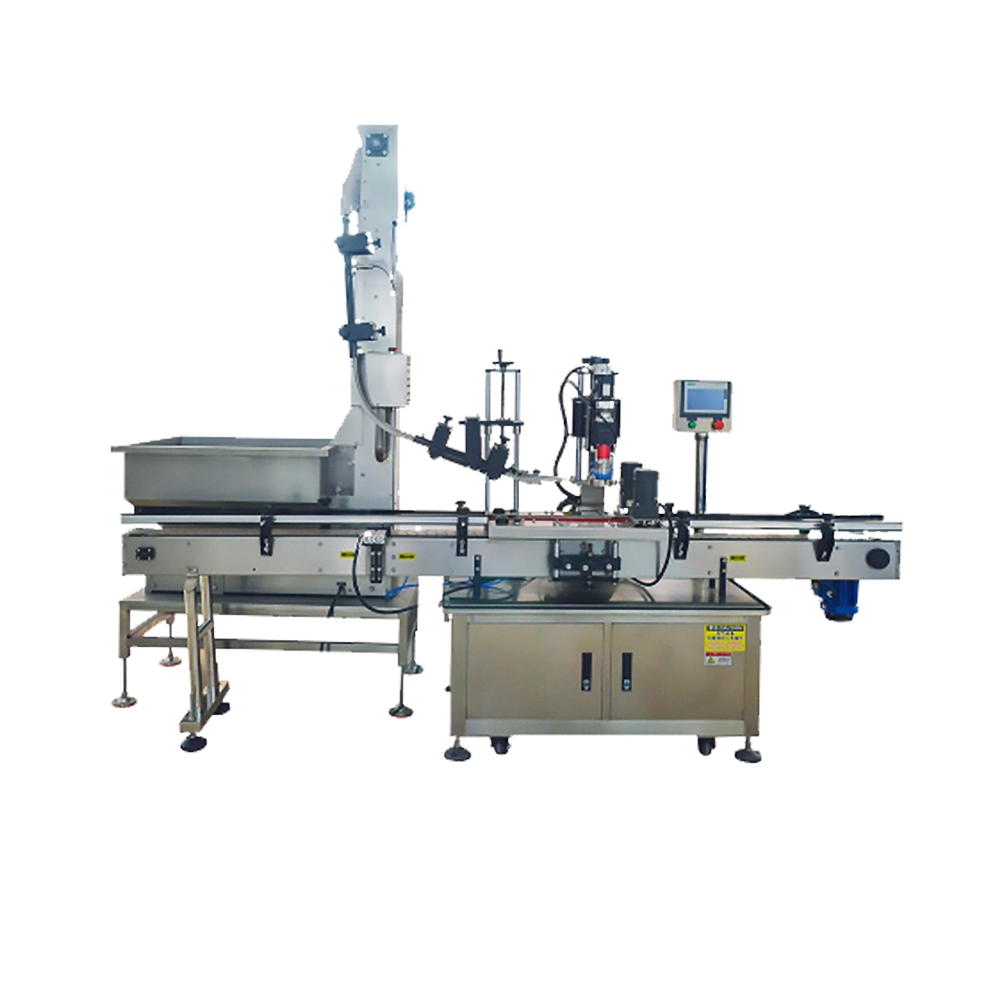
Automatic Plastic Caps Capping Machine with Vibrating Cap Feeder for Sale
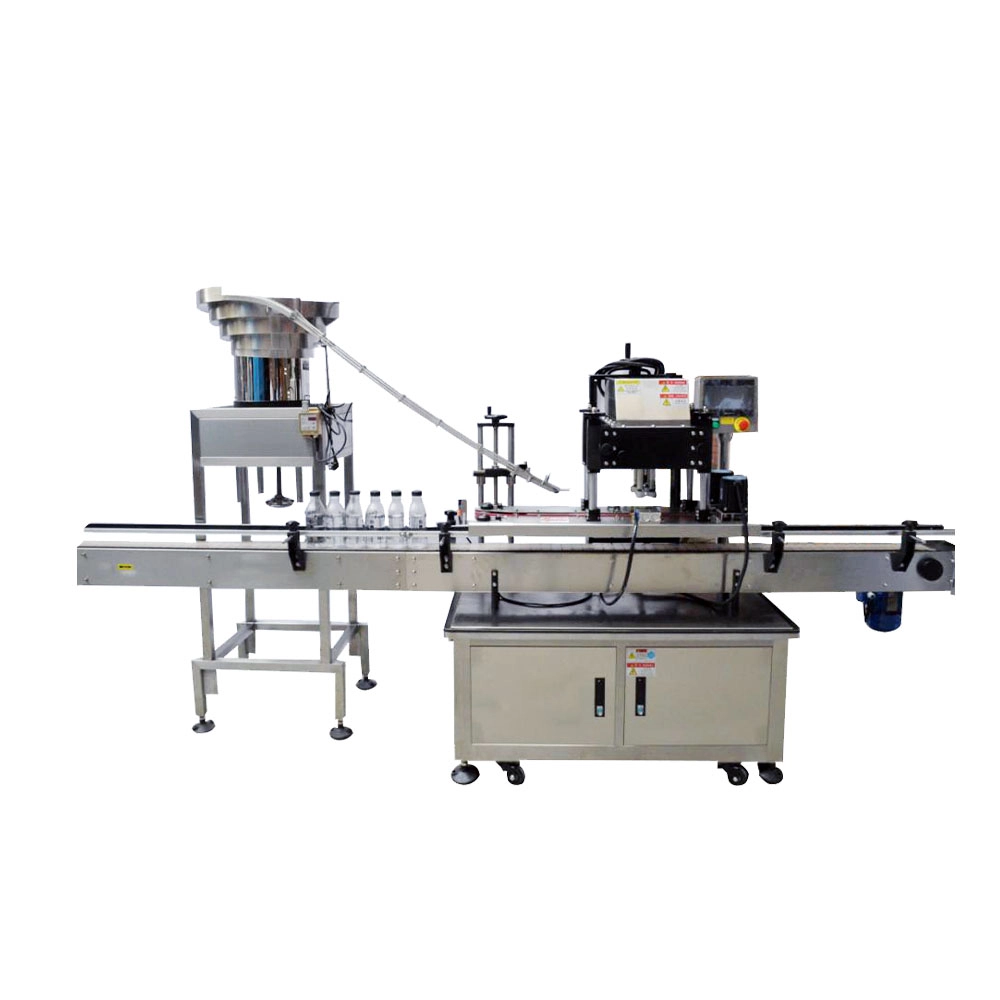
Yuanyang automatic screw capping machine is a kind of four-wheel bottle capping machine. The automatic screw capper is often used to close lids of containers such as bottles and jars, especially for plastic bottles, which are widely used in food, medicine, chemical, cosmetic, and other industries for mass production and continuous production lines.
Features:
⦁ Full pneumatic drive;
⦁ Automated fast speed;
⦁ Suitable for various screw caps, pumps, and spray bottles.
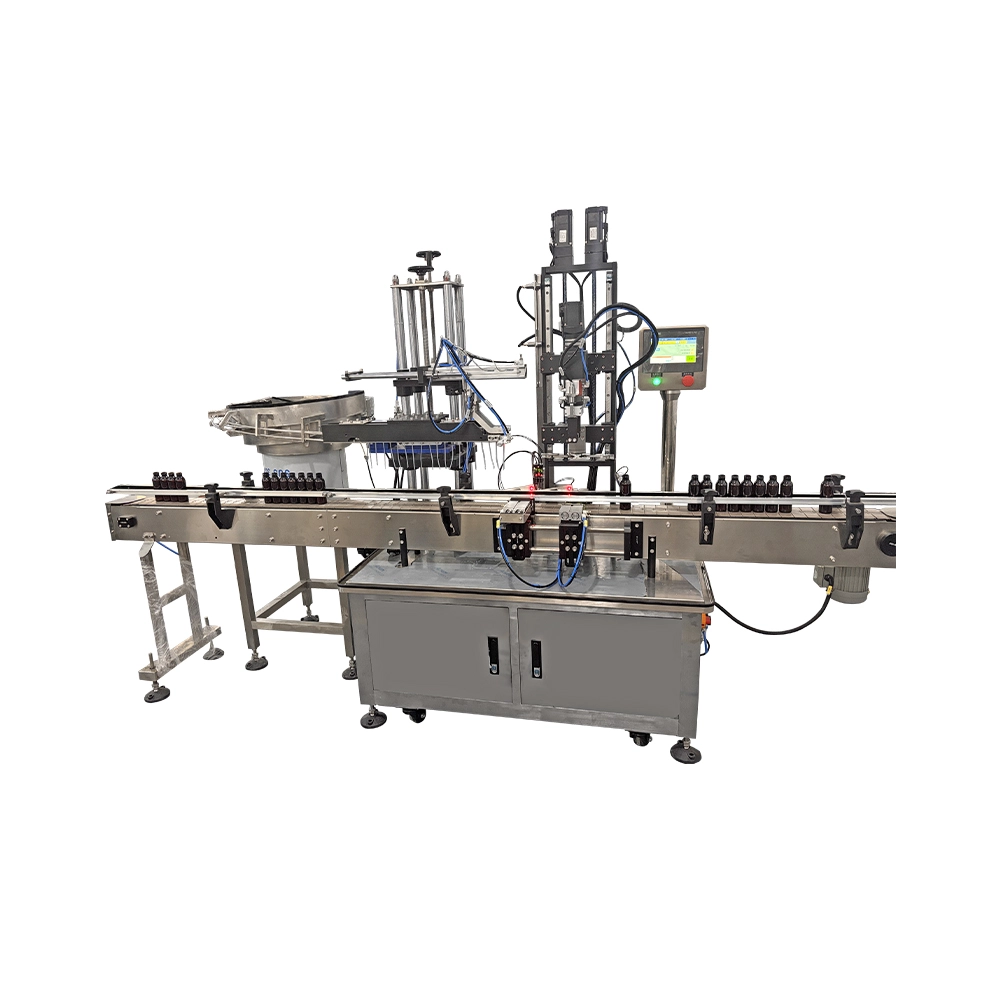
Automatic Metal Caps Capping Machine for Sale
Yuanyang automatic metal cap capping machine is a bottle capper for bottles with metal caps, which is often used to close lids of containers such as bottles and jars. The glass bottle metal capping machine is widely used in food, medicine, chemical, cosmetic, and other industries for mass production and continuous production line .
Features:
⦁ Pneumatic and electric drive;
⦁ Automated fast speed;
⦁ Suitable for glass bottles with metal caps.
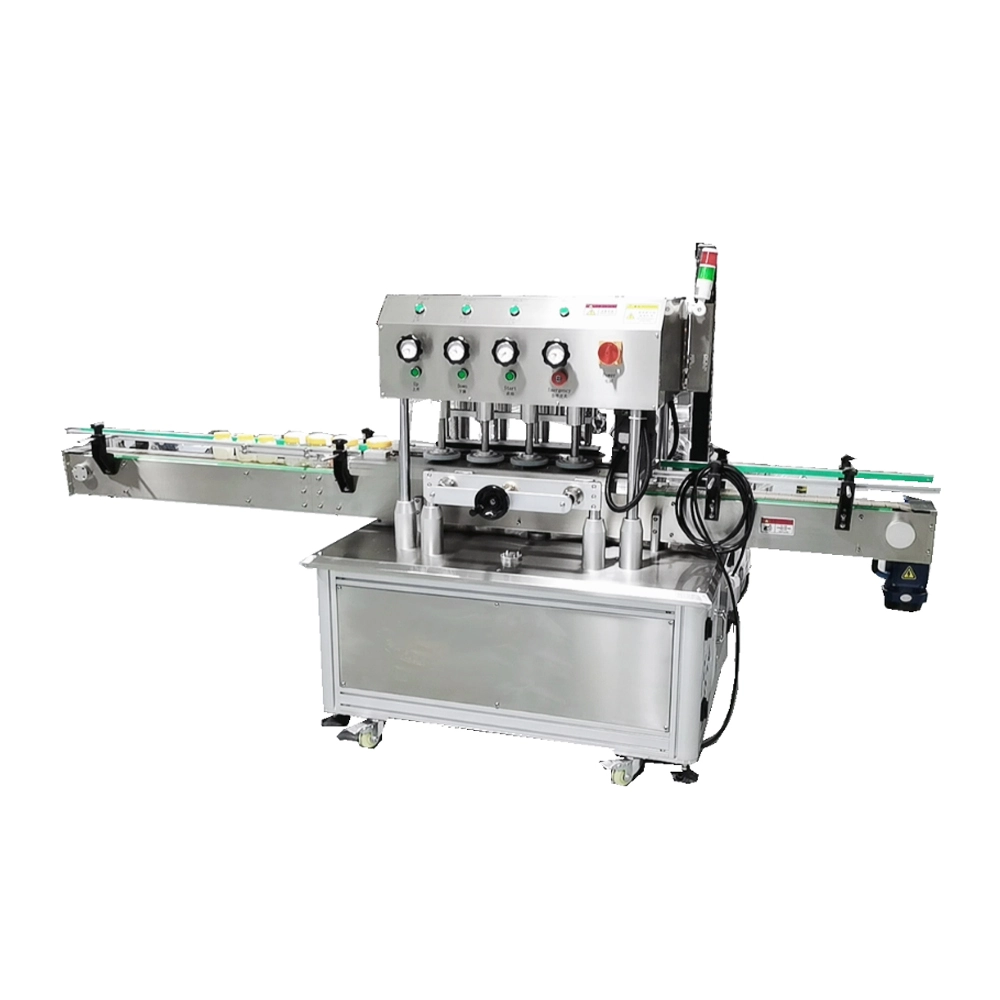
Automatic Pump Head Feeding and Capping Machine for Sale
Yuanyang automatic pump head feeding and capping machine is a bottle cap sorter and capper for bottles with pump heads, which is often used to close lids of containers such as nail polish, sprayers, and shampoo. The capping machine with a pump head feeder is widely used in food, medicine, chemical, cosmetic, and other industries for mass production and continuous production line .
Features:
⦁ Pneumatic and electric drive;
⦁ Automated fast speed;
⦁ Suitable for various types of caps.
Automatic High Speed Capping Machine for Sale
The Yuanyang automatic high-speed capping machine is a kind of 8-wheel bottle-capping machine with fast working efficiency. The automatic capper is often used to close lids of containers such as bottles and jars, especially for plastic bottles, which are widely used in food, medicine, chemical, cosmetic, and other industries for mass production and continuous production lines.
Features:
⦁ Electric drive;
⦁ Automated fast speed;
⦁ Suitable for various screw caps, pumps, and spray bottles.
 Scan QR Code
Facebook
YouTube
LinkedIn
Whatsapp: +8613434139712
Guangzhou Yuanyang Machinery