





Safety and Compliance Considerations for Soap Mixer Equipment
- Safety and Compliance Considerations for Soap Mixer Equipment
- Understanding risks in liquid soap production with a homogenizer mixer
- Regulatory frameworks and standards that affect soap mixer equipment
- Equipment design and materials: specifying the right homogenizer mixer
- Seals, containment and leak prevention for product safety
- Explosion and fire safety when processing alcohol-based or volatile products
- Electrical safety, control systems and lockout/tagout
- Hygienic design, cleaning-in-place (CIP) and cleaning validation
- Operator safety: training, PPE and standard operating procedures
- Maintenance, inspection and calibration to maintain compliance
- Risk assessment and documenting hazard control
- Choosing a compliant machine: Liquid Soap Mixer Machine for Sale
- Cleaning strategies and validation—practical checklist
- Comparing common design options for soap homogenizer mixers
- Brand summary: why choose Yuanyang for homogenizer mixer needs
- Frequently Asked Questions (FAQ)
- Q1: Is a homogenizer mixer necessary for liquid soap production?
- Q2: What material and surface finish should I require for a sanitary soap mixer?
- Q3: How do I handle alcohol-based formulas safely in a mixer?
- Q4: Can the Yuanyang Liquid Soap Mixer Machine be configured for CIP?
- Q5: What maintenance is critical for homogenizer mixers?
- Contact Sales / View Product
- Authoritative references
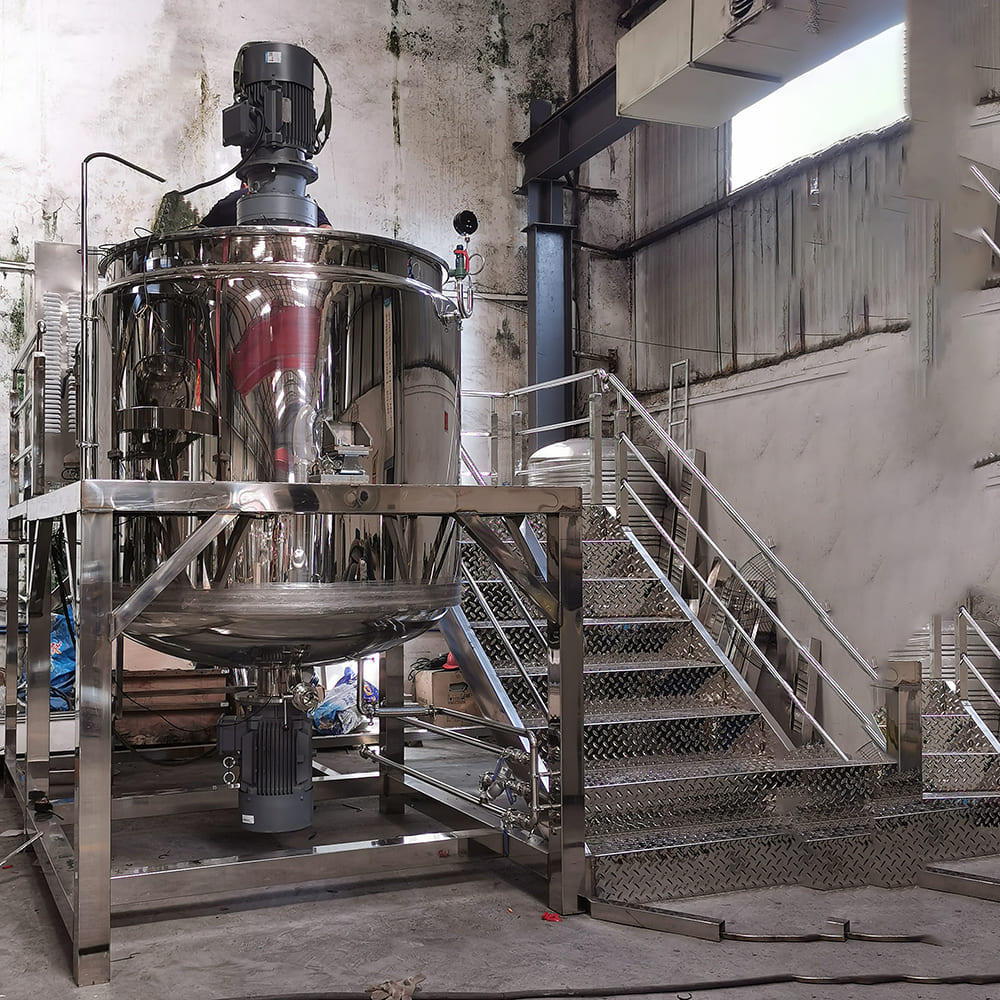
Safety and Compliance Considerations for Soap Mixer Equipment
Understanding risks in liquid soap production with a homogenizer mixer
Producing liquid soap, shampoo, body wash, dish soap and hand sanitizer involves mechanical processing, heat, chemical handling and hygiene-critical steps. A homogenizer mixer concentrates mechanical energy into fluids to create stable emulsions and uniform textures — which is essential for high-quality liquid soap. But the same high-shear action, moving parts and contact with chemicals create safety, contamination and regulatory risks. Understanding those risks is the first step to specifying a safe, compliant machine and operating it correctly. With safety and compliance in place, many manufacturers begin planning future growth. Scaling up by choosing a mixer for large-scale liquid soap plants ensures current investments remain viable as demand increases.
Regulatory frameworks and standards that affect soap mixer equipment
Manufacturers and processors must comply with a layered set of requirements: workplace safety (OSHA/NIOSH/Local authorities), hygienic and cosmetic GMP (ISO 22716, EU Cosmetics Regulation), electrical and pressure equipment codes (IEC, CE, ASME where applicable), and hazardous-area standards for flammable products (ATEX/NEC). For sanitizers or antiseptics, additional guidance from the FDA and WHO may apply. Staying aligned with these frameworks reduces legal risk and improves product quality.
Equipment design and materials: specifying the right homogenizer mixer
A compliant homogenizer mixer starts with materials and mechanical design: use 316L stainless steel for all product-contact surfaces, specify a hygienic surface finish (e.g., Ra ≤ 0.8 µm typical; lower for sensitive products), and choose sanitary weld practices (traceable weld certificates). The Yuanyang Liquid Soap Mixer Machine for Sale typically features PTFE wall scrapers at the top and a high-shear homogenizer at the bottom — a configuration well-suited to viscous, surfactant-rich products. Ensure the homogenizer rotor-stator is accessible for inspection and cleaning and that mechanical supports minimize vibration.
Seals, containment and leak prevention for product safety
Seals are a frequent source of contamination and workplace hazards. For soap production you should consider mechanical seals with hygienic designs or double-seal arrangements with a barrier fluid system for critical formulations. Lip seals or gland packing are generally less desirable for long-term hygiene-critical use. Where possible, specify drainable housings, sloped tops, and sanitary ports for sampling and drainage to avoid product traps and bacterial growth.
Explosion and fire safety when processing alcohol-based or volatile products
Hand sanitizers and some specialty cleaners contain high concentrations of alcohol (ethanol/isopropanol) and are flammable. When a process uses flammable liquids or generates flammable vapors, classify the area per ATEX (EU) or NEC (US), specify explosion-proof (Ex) or intrinsically safe motors and instrumentation, and ensure grounding/bonding to prevent static discharge. Consider ventilation, solvent storage rules, and explosion relief where tanks are sealed. Risk assessments must precede processing flammable formulations.
Electrical safety, control systems and lockout/tagout
Control panels should meet local electrical codes and include emergency stop circuits, interlocks for lids and access doors, and clear labeling. Variable-frequency drives (VFDs) should be configured with safe stopping profiles for high-shear homogenizers. Implement Lockout/Tagout (LOTO) procedures and provide clear electrical isolation instructions in the machine manual. Grounding, surge protection and explosion-proof enclosures (when required) protect both operators and equipment.
Hygienic design, cleaning-in-place (CIP) and cleaning validation
Hygienic design reduces contamination risk and simplifies cleaning: sloped surfaces, smooth welds, drainable geometry, and minimal crevices are essential. For many liquid soaps, CIP systems are preferred — ensure the mixer is compatible with CIP temperatures, flows and cleaning chemistries (caustics, acids, sanitizers). Where CIP is not feasible, provide clear disassembly instructions for manual cleaning. Validate cleaning by residue and microbiological testing and maintain cleaning records for audits.
Operator safety: training, PPE and standard operating procedures
Even the best-designed homogenizer mixer requires skilled operators. Maintain documented SOPs covering start-up, shut-down, emergency response, chemical handling, and cleaning. Provide task-specific PPE (chemical-resistant gloves, goggles, aprons, face shields) and training on the risks of high-shear equipment (entanglement, noise, hot surfaces). Routine competency checks and refreshers reduce human error.
Maintenance, inspection and calibration to maintain compliance
Scheduled preventive maintenance (bearings, seals, gearboxes), inspection of agitator clearance and homogenizer wear parts, and calibration of process instrumentation are all part of compliance. Keep maintenance logs, spare-parts lists and traceable records for all pressure- or safety-related devices. Replace wear parts on schedule — a worn rotor-stator can increase energy consumption, contaminate product and present safety issues.
Risk assessment and documenting hazard control
Perform a formal risk assessment (e.g., HAZOP, FMEA) for each process line using a homogenizer mixer. Identify hazards (mechanical, thermal, chemical, microbiological, electrical), assess probability and severity, and implement controls (engineering, administrative, PPE). Keep the risk register updated and include it in management-of-change (MOC) procedures when formulations or equipment change.
Choosing a compliant machine: Liquid Soap Mixer Machine for Sale
The Yuanyang Liquid Soap Mixer Machine for Sale is an industrial homogeneous mixer designed for liquid soap production and similar viscous liquids like shampoo, laundry detergent and hand sanitizer. Product summary:
The Yuanyang liquid soap mixer machine is an industrial homogeneous mixer for liquid soap production. The mixer machine is mainly designed to produce such liquid products as shampoo, body wash, laundry detergent, dish soap, hand sanitizer and other thick liquids.
Features:
⦁ Flat top, half-open lid, electric control system.
⦁ Suitable for various liquid cleaning products and sauces.
⦁ PTFE wall scrapers stirring at top, high shear homogenizer at bottom.
When evaluating machines like the Yuanyang unit, verify that the model includes hygienic seals, 316L product-contact surfaces, appropriate surface finish, and documented testing (pressure test, material certificates) for compliance. Confirm whether the control cabinet includes required protections for your jurisdiction and whether an Ex-rated option is available if you will process alcohol-based formulations.
Cleaning strategies and validation—practical checklist
To ensure product safety and regulatory compliance, adopt a housekeeping approach combining CIP where possible and validated manual cleaning elsewhere. The checklist below helps prioritize key validation steps:
- Define cleaning agents and concentrations for each product family.
- Establish CIP flow rates and temperatures compatible with the homogenizer and scrapers.
- Collect swab and rinse samples after cleaning for residue and microbial testing.
- Set acceptance criteria and re-clean triggers (e.g., >10 CFU/ml or visible residue).
- Document procedures and train cleaning staff; maintain logs for audits.
Comparing common design options for soap homogenizer mixers
| Feature | Basic Mixer | Homogenizer Mixer (High Shear) | Hygienic Homogenizer (Recommended) |
|---|---|---|---|
| Typical use | Simple blending | Emulsification, particle size reduction | Emulsification with sanitization & CIP compatibility |
| Materials | Mild steel / painted | Stainless steel (304) | 316L stainless steel, hygienic welds |
| Seal type | Gland packing | Single mechanical seal | Double mechanical seal / barrier option |
| CIP ready | No | Partial | Yes, validated |
| Explosion-proof option | Usually no | Optional | Available upon request |
| Typical applications | Non-hygienic liquids | Industrial emulsions, paints, some soaps | Cosmetics, shampoos, hand sanitizers, liquid soaps |
Brand summary: why choose Yuanyang for homogenizer mixer needs
Yuanyang positions its Liquid Soap Mixer Machine for Sale as an industrial homogeneous mixer tailored to liquid cleaning products. Key advantages to highlight when selecting a supplier:
- Process-focused design: PTFE scrapers and bottom-mounted high-shear homogenizers optimize mixing for viscous, surfactant-rich formulas.
- Hygienic features: flat top and half-open lid designs facilitate cleaning and access for maintenance.
- Customization & controls: electric control systems and optional features (CIP, explosion-proofing) available to meet local regulations and product requirements.
- Technical support: documented specifications and spare-parts availability reduce downtime and support compliance audits.
Frequently Asked Questions (FAQ)
Q1: Is a homogenizer mixer necessary for liquid soap production?
A1: For products requiring stable emulsions, uniform viscosity and fine particle dispersion (shampoos, conditioners, certain hand soaps), a homogenizer mixer is highly recommended. High shear improves consistency, stability and sensory properties compared with basic agitators.
Q2: What material and surface finish should I require for a sanitary soap mixer?
A2: Specify 316L stainless steel for product-contact parts and a hygienic surface finish (commonly Ra ≤ 0.8 µm; for sensitive formulations lower is better). Ensure sanitary welding standards and certificate traceability.
Q3: How do I handle alcohol-based formulas safely in a mixer?
A3: Classify the area for flammable vapors (ATEX/NEC), use explosion-proof motors and electrical components, ensure grounding/bonding and provide proper ventilation. Limit batch sizes and use approved storage for alcohols.
Q4: Can the Yuanyang Liquid Soap Mixer Machine be configured for CIP?
A4: Many Yuanyang models support CIP options; confirm with your supplier which model includes CIP-compatible internals, spray devices and validation protocols. CIP readiness should be specified at purchase.
Q5: What maintenance is critical for homogenizer mixers?
A5: Regular inspection and replacement of seals, monitoring rotor-stator wear, lubrication of bearings, vibration checks and calibration of sensors. Keep maintenance records and follow OEM intervals.
Contact Sales / View Product
If you are evaluating a Liquid Soap Mixer Machine for Sale or need assistance with compliance and specification, contact our sales and technical team for detailed datasheets, compliance documentation and customization options. Click to contact sales or request a quote — our product specialists can advise on homologation, ATEX options, CIP configuration and validation support.
Authoritative references
Key sources and standards referenced for compliance and hygienic design (visit each link for full guidance):
- OSHA — Occupational Safety and Health Administration: https://www.osha.gov
- FDA — Guidance for Hand Sanitizers and OTC products: https://www.fda.gov
- ISO 22716 — Cosmetics — Good Manufacturing Practices (GMP): https://www.iso.org/standard/36437.
- EU Cosmetics Regulation: https://ec.europa.eu/growth/sectors/cosmetics_en
- ATEX (EU hazardous area directive): https://ec.europa.eu/growth/sectors/mechanical-engineering/atex_en
- ASME — Boiler and Pressure Vessel Code (when pressure equipment applies): https://www.asme.org
- EHEDG — Hygienic Engineering & Design Group: https://www.ehedg.org
- 3-A Sanitary Standards: https://3-a.org
- WHO — Guide to local production of handrub formulations: https://www.who.int/publications/i/item/9789241506480
How to start the vibrating sieve shaker machine business in Dubai ?
Why choose YUANYANG as your china small ribbon mixer supplier in Africa
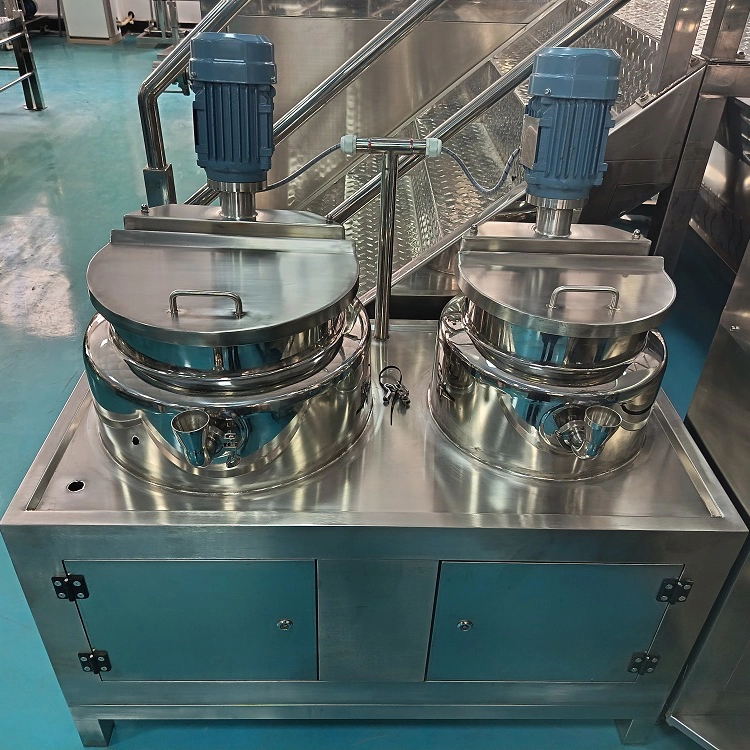
Vacuum Emulsifier vs Homogenizer: Which Suits Your Product?
Custom powder liquid mixer Manufacturers and Suppliers
Vertical Filling Machine
The power supply is 220v 60hz, can I use this paste filling machine?
Sure, the machine is only pneumatic drive, you just use local air compress to connect to it. There is no need to worry about power supply.
Semi Automatic Capping Machine
What type of bottles can it be suitable for ?
The screw capping machine is mainly used for plastic bottles. The cap can be pump head, sprayer, triggers, and various other screw caps.
Automatic auger feeder machine
How does the powder transfer auger feeding machine convey materials?
It transports materials continuously through screw rotation by electric motor drive.
Liquid Soap Mixer Machine
Is the speed adjustable with VFD?
The chemical mixer tank is often with frequency converter. But some clients may just need a fixed speed. So we customize upon requirements.
Washing Powder
How accurate is the filling process?
Our high-precision filling system ensures consistent and accurate filling every time.
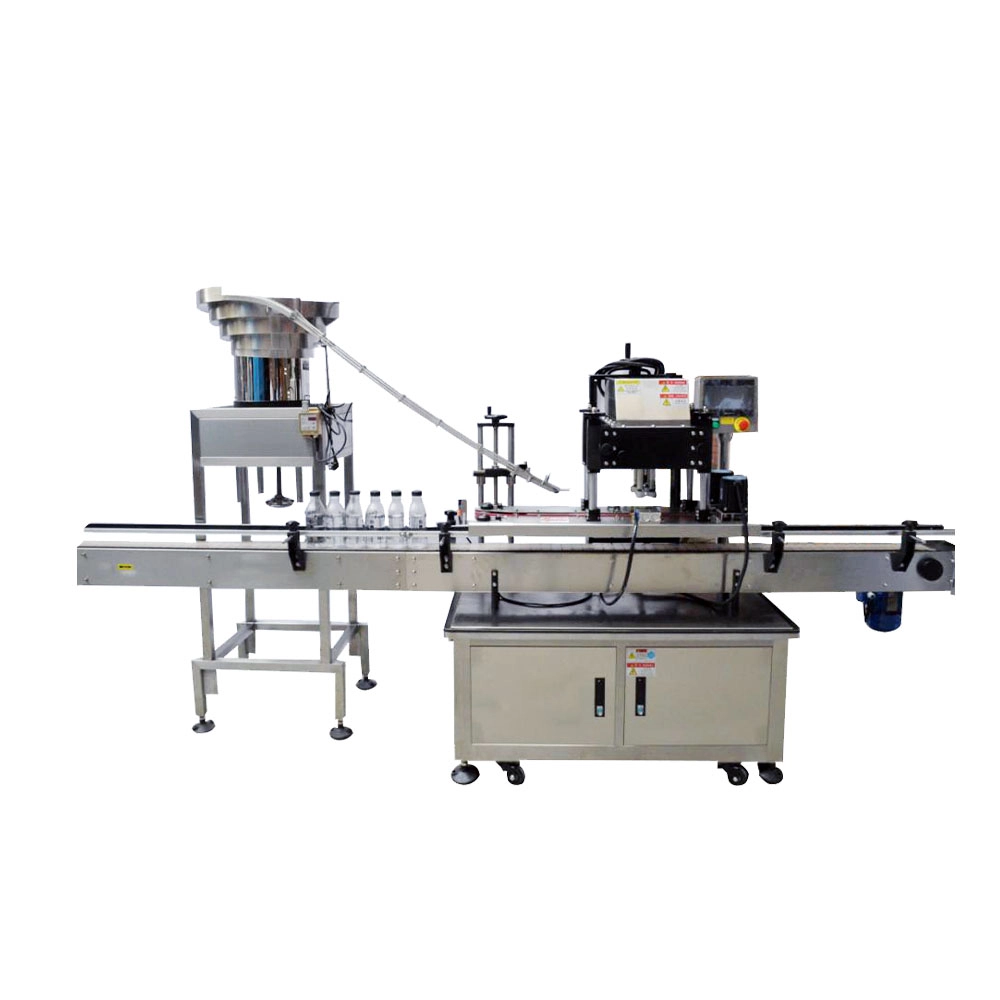
Automatic Plastic Caps Capping Machine with Vibrating Cap Feeder for Sale
Yuanyang automatic screw capping machine is a kind of four-wheel bottle capping machine. The automatic screw capper is often used to close lids of containers such as bottles and jars, especially for plastic bottles, which are widely used in food, medicine, chemical, cosmetic, and other industries for mass production and continuous production lines.
Features:
⦁ Full pneumatic drive;
⦁ Automated fast speed;
⦁ Suitable for various screw caps, pumps, and spray bottles.
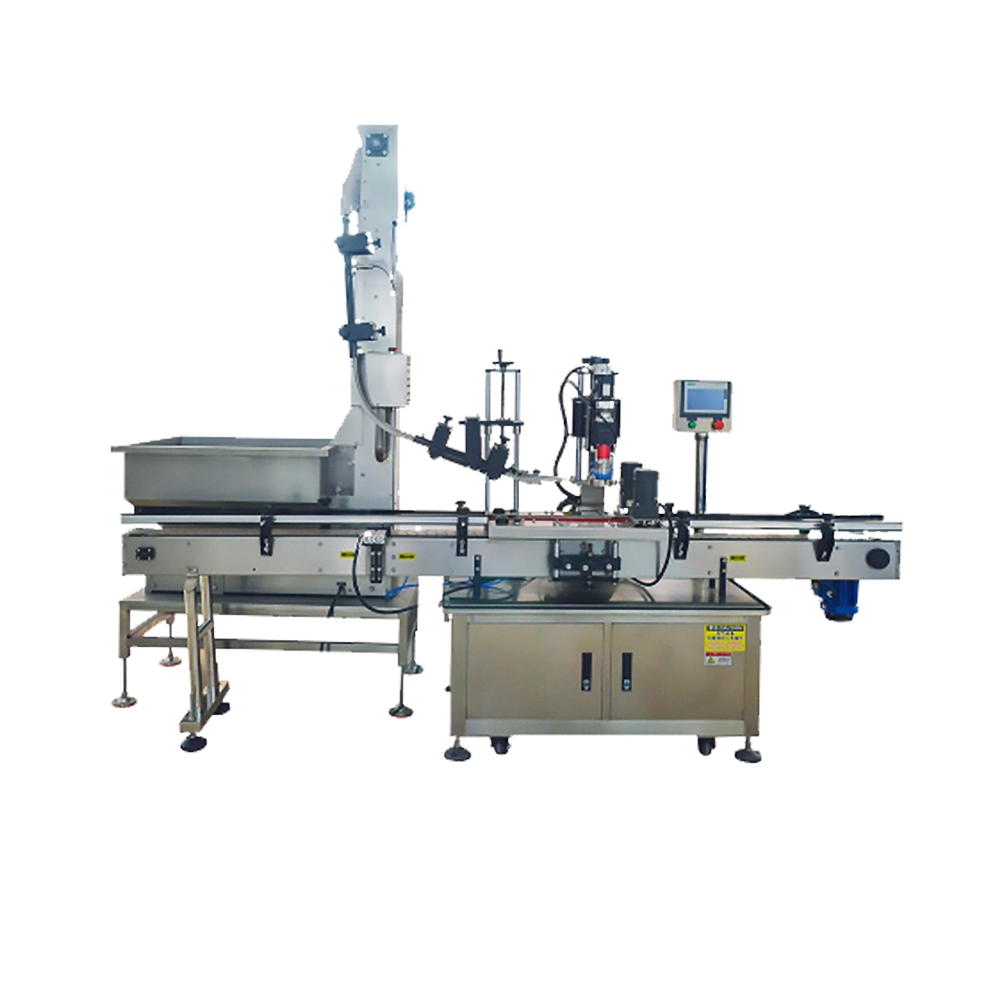
Automatic Metal Caps Capping Machine for Sale
Yuanyang automatic metal cap capping machine is a bottle capper for bottles with metal caps, which is often used to close lids of containers such as bottles and jars. The glass bottle metal capping machine is widely used in food, medicine, chemical, cosmetic, and other industries for mass production and continuous production line .
Features:
⦁ Pneumatic and electric drive;
⦁ Automated fast speed;
⦁ Suitable for glass bottles with metal caps.
Automatic Pump Head Feeding and Capping Machine for Sale
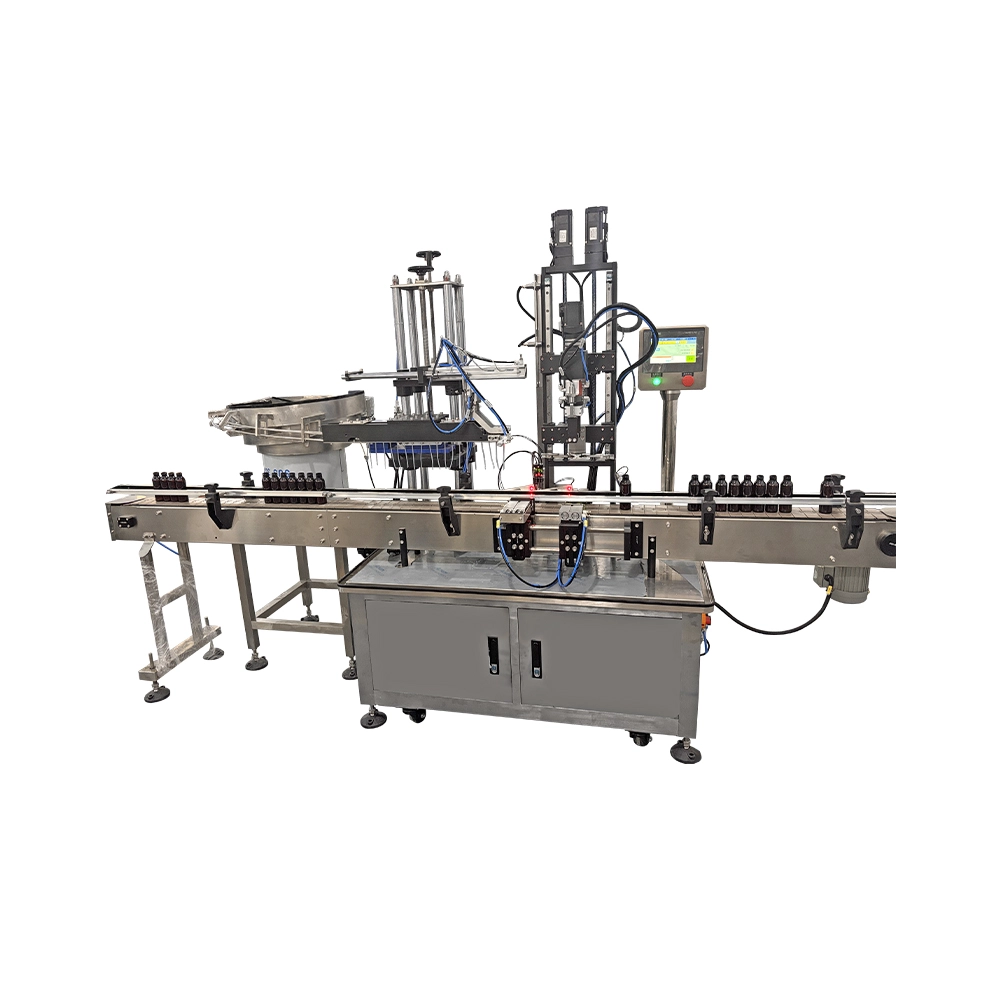
Yuanyang automatic pump head feeding and capping machine is a bottle cap sorter and capper for bottles with pump heads, which is often used to close lids of containers such as nail polish, sprayers, and shampoo. The capping machine with a pump head feeder is widely used in food, medicine, chemical, cosmetic, and other industries for mass production and continuous production line .
Features:
⦁ Pneumatic and electric drive;
⦁ Automated fast speed;
⦁ Suitable for various types of caps.
Automatic High Speed Capping Machine for Sale
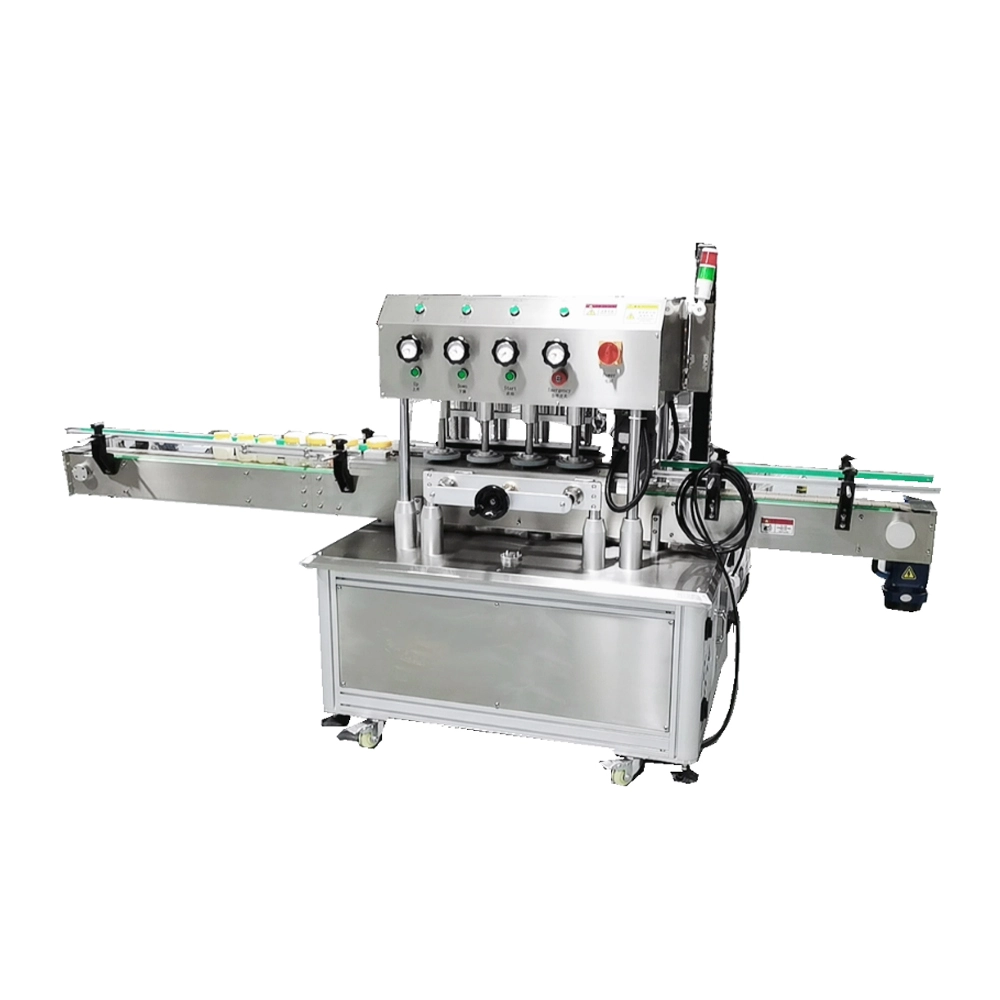
The Yuanyang automatic high-speed capping machine is a kind of 8-wheel bottle-capping machine with fast working efficiency. The automatic capper is often used to close lids of containers such as bottles and jars, especially for plastic bottles, which are widely used in food, medicine, chemical, cosmetic, and other industries for mass production and continuous production lines.
Features:
⦁ Electric drive;
⦁ Automated fast speed;
⦁ Suitable for various screw caps, pumps, and spray bottles.
 Scan QR Code
Facebook
YouTube
LinkedIn
Whatsapp: +8613434139712
Guangzhou Yuanyang Machinery