





The 10 Key Factors in stainless steel liquid mixing tank manufacturer That Affect Cost
- The 10 Key Factors in stainless steel liquid mixing tank manufacturer That Affect Cost
- Introduction: Why buyers search for a stainless steel liquid mixing tank manufacturer
- 1. Material grade and stainless steel type influence manufacturer pricing
- 2. Tank volume and dimensions directly affect manufacturing cost
- 3. Design complexity and engineering requirements add to cost
- 4. Agitator type and mixing system determine equipment pricing
- 5. Surface finish and polishing requirements influence finishing costs
- 6. Compliance, certification and inspection increase manufacturer overhead
- 7. Customization, accessories and process integrations raise invoices
- 8. Fabrication techniques, welding quality and labor costs
- 9. Production capacity, lead time and batch scheduling affect pricing
- 10. After-sales service, installation, testing and warranty shape total cost of ownership
- Comparative table: How the 10 factors typically influence cost and buyer considerations
- How to optimize cost without compromising quality when choosing a stainless steel liquid mixing tank manufacturer
- Why CE and other certifications matter to cost and compliance
- Estimating lifetime cost: purchase price vs. total cost of ownership
- Selecting a partner: questions to ask a stainless steel liquid mixing tank manufacturer
- Conclusion: Choose the right tradeoffs when sourcing from a stainless steel liquid mixing tank manufacturer
- Sources and further reading
- About Yuanyang: your partner in mixing equipment
The 10 Key Factors in stainless steel liquid mixing tank manufacturer That Affect Cost
Introduction: Why buyers search for a stainless steel liquid mixing tank manufacturer
When sourcing equipment for production lines, procurement managers and plant engineers commonly search for stainless steel liquid mixing tank manufacturer to compare price, quality, and lead time. Understanding the primary cost drivers helps you get accurate quotes, avoid hidden charges, and choose the right tradeoffs between upfront cost and lifetime value.
1. Material grade and stainless steel type influence manufacturer pricing
The choice of stainless steel (304, 316L, duplex, or specialty alloys) is among the largest cost drivers. 304 is commonly used for non-corrosive products and is the most economical option. 316L offers higher corrosion resistance and is typically 20%–40% more expensive than 304 depending on market prices. Duplex and specialty alloys can be several times more costly. The manufacturer’s sourcing and inventory strategy also affect final price—those buying long-term contracts for raw material can offer more stable pricing.
2. Tank volume and dimensions directly affect manufacturing cost
Tank size matters. Larger tanks require more raw material, heavier structural supports, and larger-handling equipment during fabrication. Costs scale non-linearly: doubling capacity often increases cost by less than double because some fabrication and labor overheads are fixed, but transportation and lifting requirements can add disproportionately at larger sizes.
3. Design complexity and engineering requirements add to cost
Simple cylindrical tanks are cheaper than tanks with complex internal baffles, conical bottoms, multiple inlets/outlets, sight glasses, or multi-zone heating/cooling. Custom engineering drawings, finite-element analysis (for pressure or vacuum), and specialized welding procedures increase engineering time and therefore cost.
4. Agitator type and mixing system determine equipment pricing
An agitator is often the single most expensive component installed in a liquid mixing tank. Low-shear propellers and anchor agitators are relatively inexpensive. High-shear rotor-stator systems, multi-stage high-viscosity agitators, or vacuum homogenizers and emulsifiers command High Quality prices due to precision machining, high-torque motors, and specialized seals. Variable frequency drives (VFDs) and controls also raise costs but provide energy and process benefits long-term.
5. Surface finish and polishing requirements influence finishing costs
Surface finish specifications—such as Ra (roughness average) targets and electropolishing—affect polishing labor and inspection time. Pharmaceutical and cosmetics grade tanks often require Ra ≤ 0.4 μm and electropolishing for hygienic cleaning, which is costlier than a standard mill finish or 180-grit polish used in general chemical applications.
6. Compliance, certification and inspection increase manufacturer overhead
Certifications like CE marking, ASME U-stamp (for pressure vessels), 3.1/3.2 material certificates, and hygienic standards (EHEDG, FDA compliance for contact materials) add cost through documentation, third-party inspection, testing, and factory audits. Yuanyang has obtained multiple CE certifications; CE confirms conformity with EU safety and health requirements and typically requires manufacturers to maintain technical files and perform conformity assessments.
7. Customization, accessories and process integrations raise invoices
Options such as insulated jackets, heating/cooling coils, vacuum capability, integrated CIP (clean-in-place) systems, automated valves, load cells, sight glasses, manways, spray balls, and level transmitters are common add-ons. Each accessory increases parts and assembly time; integration with upstream or downstream machinery (pumps, fillers, capping machines) requires additional engineering and testing.
8. Fabrication techniques, welding quality and labor costs
Fabrication standards—TIG welding, orbital welding for sanitary joints, full-penetration welds, and tested weld procedures—impact labor intensity and inspection needs. Skilled welders and qualified weld procedures reduce rework risk but add cost. Manufacturers with higher automation in fabrication can reduce labor cost per unit but may have higher capital recovery charges.
9. Production capacity, lead time and batch scheduling affect pricing
Longer lead times can sometimes lower prices (manufacturer schedules production around larger batches). Conversely, rush orders carry surcharges for overtime, expedited shipping, and prioritized materials. Manufacturers that offer standard modular designs can deliver faster and cheaper versus bespoke tanks requiring dedicated engineering time.
10. After-sales service, installation, testing and warranty shape total cost of ownership
Costs extend beyond the purchase price. Factory acceptance tests (FAT), site installation, commissioning, training, spare parts packages, and warranty terms are part of the total cost of ownership. Suppliers like Yuanyang offer free technical training and one-stop installation support, which can reduce startup risk and hidden costs. A manufacturer offering strong after-sales support can justify slightly higher upfront prices through reduced downtime risk.
Comparative table: How the 10 factors typically influence cost and buyer considerations
| Factor | Typical Cost Impact | Buyer Tips |
|---|---|---|
| Material grade (304, 316L, duplex) | High | Specify only required grade; consider corrosion risk vs. cost |
| Tank volume & dimensions | High | Optimize batch size and footprint to reduce oversized tanks |
| Design complexity | Medium–High | Simplify internals where possible; use standard designs |
| Agitator & motor | High | Match agitator to process; avoid over-specifying power |
| Surface finish | Medium | Choose finish to meet cleaning and regulatory needs only |
| Certifications & inspections | Medium | Clarify required certificates early (CE, ASME, 3.1, etc.) |
| Accessories & customization | Medium–High | Bundle accessories with tank purchase for better pricing |
| Fabrication & welding | Medium | Ask for welder qualifications and defect warranties |
| Lead time & production scheduling | Variable | Negotiate production slots; consider standard models |
| After-sales & warranty | Variable long-term | Prefer suppliers with on-site support and training services |
How to optimize cost without compromising quality when choosing a stainless steel liquid mixing tank manufacturer
To get the best value from a stainless steel liquid mixing tank manufacturer request, follow these steps: 1) Define performance requirements (viscosity, shear, CIP needs) to avoid over-specifying; 2) Standardize on common sizes and modular options to leverage manufacturer efficiencies; 3) Ask vendors for a line-item quote that separates material, labor, accessories, and testing; 4) Require key certificates only if legally or process-required; 5) Negotiate spare parts and training into the package to lower startup risk.
Why CE and other certifications matter to cost and compliance
CE marking is required for many products sold in the EU and indicates conformity with safety and health requirements. While CE is not a quality mark, manufacturers that maintain certification processes usually have stronger documentation, QA, and traceability—which can increase manufacturing cost but reduce procurement risk. For pressure vessels, ASME U-stamp or PED conformity may be required, each involving testing and third-party inspection fees.
Estimating lifetime cost: purchase price vs. total cost of ownership
While initial purchase price is critical for capital budgeting, total cost of ownership (TCO) includes energy consumption, maintenance, downtime, spare parts, cleaning, and disposal. Higher-efficiency mixers or better seals may cost more upfront but can lower TCO via reduced maintenance and energy savings. Ask manufacturers for expected energy usage, MTBF (mean time between failures), and typical maintenance intervals.
Selecting a partner: questions to ask a stainless steel liquid mixing tank manufacturer
When contacting suppliers, use targeted questions: Can you provide material mill certificates (e.g., EN 10204 3.1)? Do you offer FAT and SAT (site acceptance test)? What welding procedures and welder qualifications are used? Are spare parts stocked locally? What training and installation support is included? Yuanyang, for example, provides free technical training and turnkey installation support, which can reduce commissioning costs.
Conclusion: Choose the right tradeoffs when sourcing from a stainless steel liquid mixing tank manufacturer
Understanding the ten cost factors—material grade, tank size, design complexity, mixing system, surface finish, certifications, customization, fabrication quality, lead time, and after-sales—lets you make informed procurement decisions. Balance upfront cost with lifetime value: specify what is necessary for your process, negotiate clear line-item quotes, and choose a manufacturer with proven documentation and support. Yuanyang, a leading industrial mixer and agitator manufacturer in China since 2008, supplies vacuum homogenizers, vacuum emulsifying mixers, high-shear mixers, and complete production line equipment, backed by CE certifications and turnkey services to help lower total project risk.
Sources and further reading
- General stainless steel material properties and cost differentials: industry materials handbooks and supplier price trends.
- CE marking and EU compliance basics: official EU documentation on CE marking requirements.
- ASME and PED pressure vessel certification overviews: standards organizations' public guidance.
- Industry best practices for hygienic design and surface finish: guidelines from EHEDG and pharmaceutical equipment standards.
- Mixing equipment selection and agitator impacts: mixing technology textbooks and equipment manufacturer whitepapers.
About Yuanyang: your partner in mixing equipment
Yuanyang is one of the leading manufacturers of industrial mixers and agitators in China. Since 2008, Yuanyang has focused on complete production line equipment: vacuum homogenizers, vacuum emulsifying mixers, high-shear mixers, vacuum mixers, storage tanks, filling machines, capping machines, labeling machines, sealing machines, inkjet printers, and water treatment equipment. The company provides free technical training, one-stop installation support, and turnkey services. Yuanyang has obtained multiple CE certifications and aims to be the best industrial mixer and agitator manufacturer in the world. Visit https://www.yuanymachinery.com/ for product details.
Best professional emulsifier machine for food manufacturers and supplier brands
Top 5 polytron homogenizer Company List and Products Compared in Dubai
How to manufacturing bottle filling capping machine in Europe
Custom ribbon mixer Manufacturers and Suppliers in US
Chemicals
Is the equipment easy to clean and maintain?
Yes, the equipment is designed with easy disassembly and cleaning in mind, making daily maintenance more convenient.
Liquid Mixing Tank
My products need specified paddle type to mixer,can you customize?
Yes,we can customized different mixing paddle type upon requirement. Just send your design to us to check.
Sachet Packaging Machine for Granules
Is the sachet packing machine equipped with conveyor ?
Yes, the standard sachet packaging machine is with a conveyor for transferring the finished bags.
Medicine
How do you ensure the long-term stability of Yuanyang equipment?
Yuanyang’s equipment uses high-quality components and advanced technology, rigorously tested to ensure stable operation. We also provide comprehensive after-sales service and technical support to ensure the long-term stability of our equipment.
Cosmetic
How do I choose the right machine for my production needs?
Our experts will analyze your production goals, product types, batch sizes, and packaging requirements to recommend the most suitable equipment, ensuring an efficient and cost-effective production process.
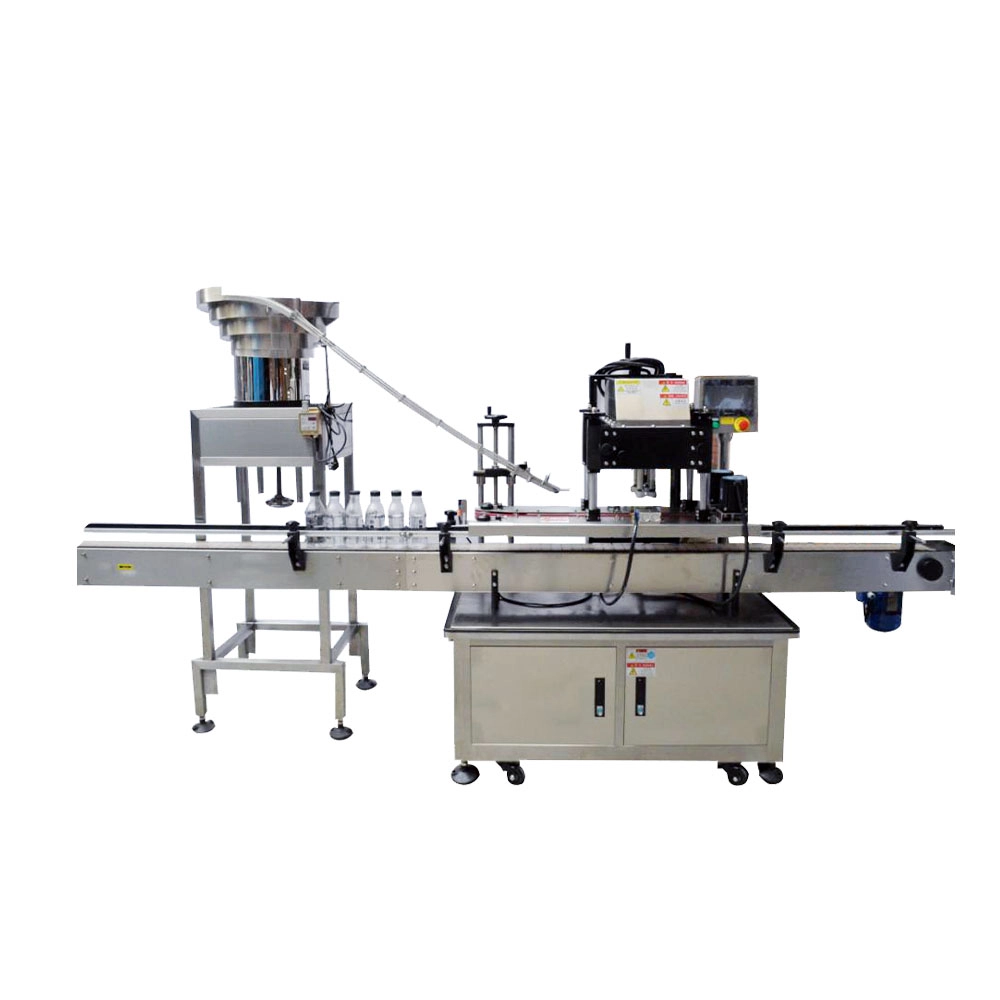
Automatic Plastic Caps Capping Machine with Vibrating Cap Feeder for Sale
Yuanyang automatic screw capping machine is a kind of four-wheel bottle capping machine. The automatic screw capper is often used to close lids of containers such as bottles and jars, especially for plastic bottles, which are widely used in food, medicine, chemical, cosmetic, and other industries for mass production and continuous production lines.
Features:
⦁ Full pneumatic drive;
⦁ Automated fast speed;
⦁ Suitable for various screw caps, pumps, and spray bottles.
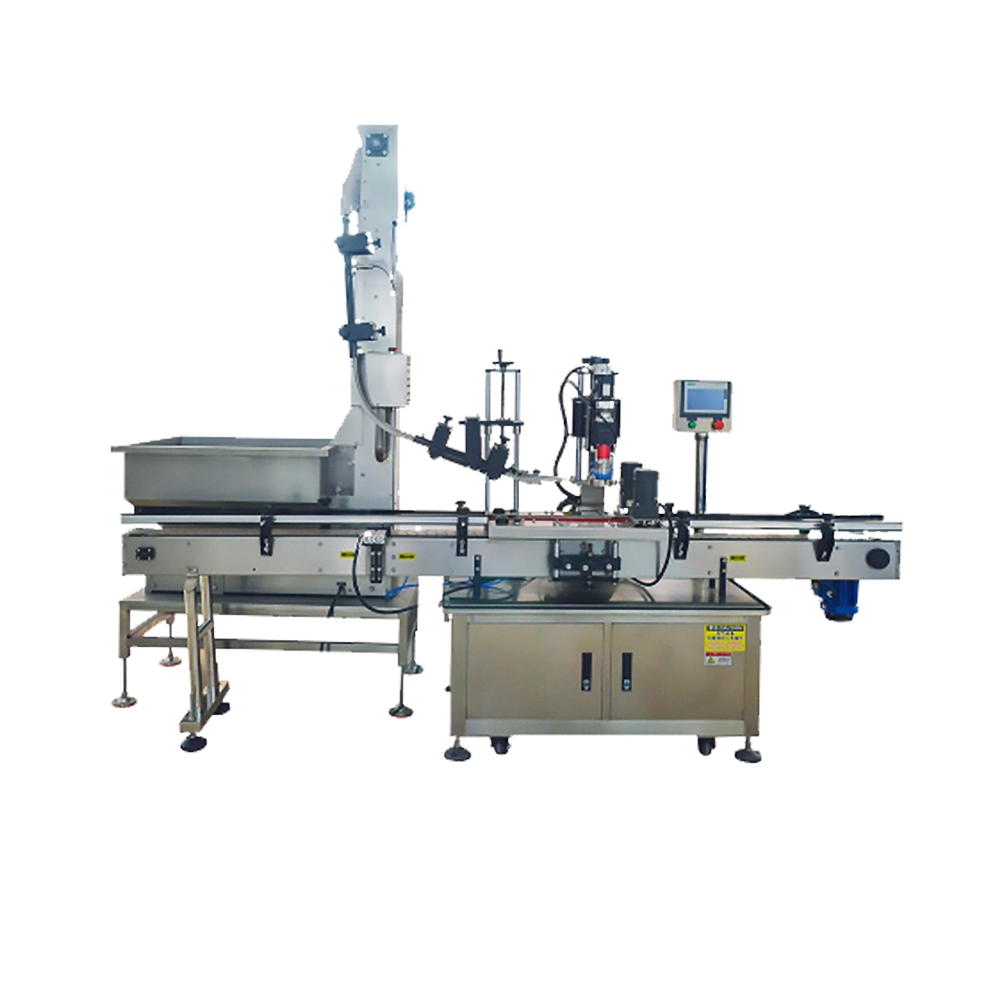
Automatic Metal Caps Capping Machine for Sale
Yuanyang automatic metal cap capping machine is a bottle capper for bottles with metal caps, which is often used to close lids of containers such as bottles and jars. The glass bottle metal capping machine is widely used in food, medicine, chemical, cosmetic, and other industries for mass production and continuous production line .
Features:
⦁ Pneumatic and electric drive;
⦁ Automated fast speed;
⦁ Suitable for glass bottles with metal caps.
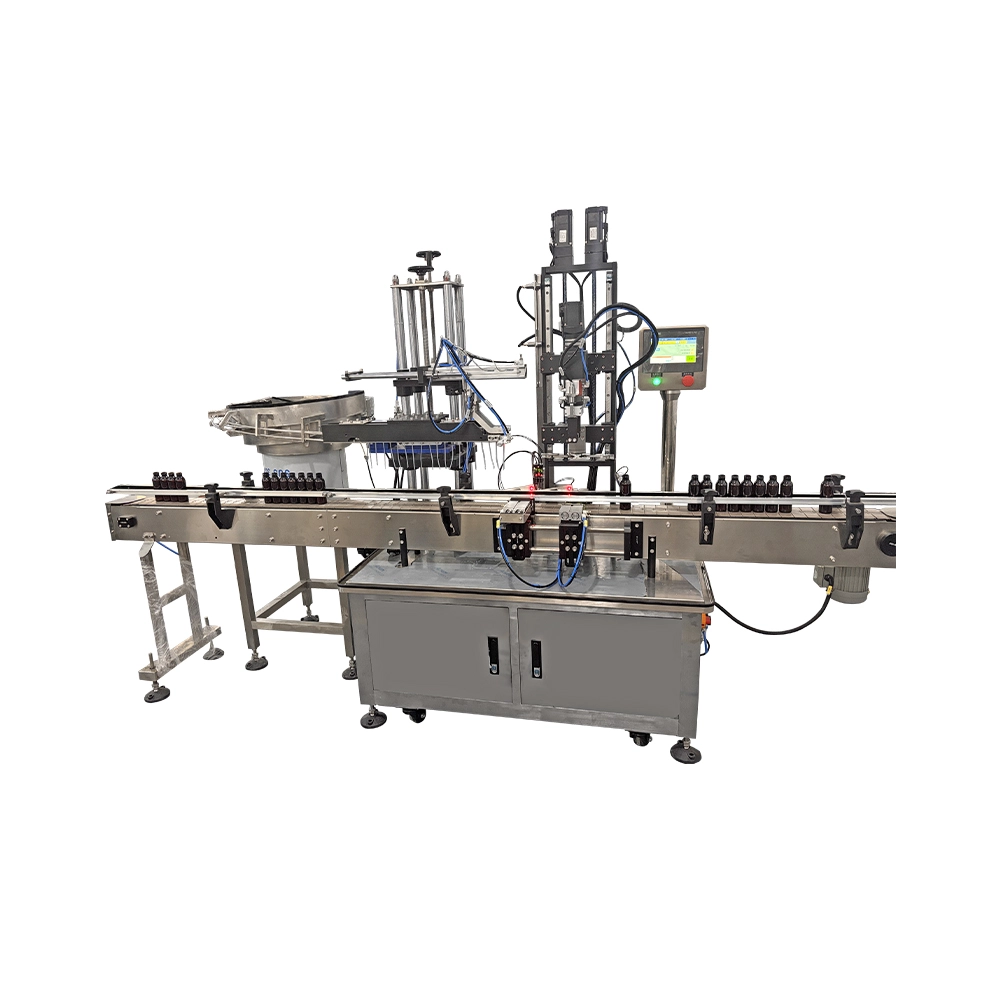
Automatic Pump Head Feeding and Capping Machine for Sale
Yuanyang automatic pump head feeding and capping machine is a bottle cap sorter and capper for bottles with pump heads, which is often used to close lids of containers such as nail polish, sprayers, and shampoo. The capping machine with a pump head feeder is widely used in food, medicine, chemical, cosmetic, and other industries for mass production and continuous production line .
Features:
⦁ Pneumatic and electric drive;
⦁ Automated fast speed;
⦁ Suitable for various types of caps.
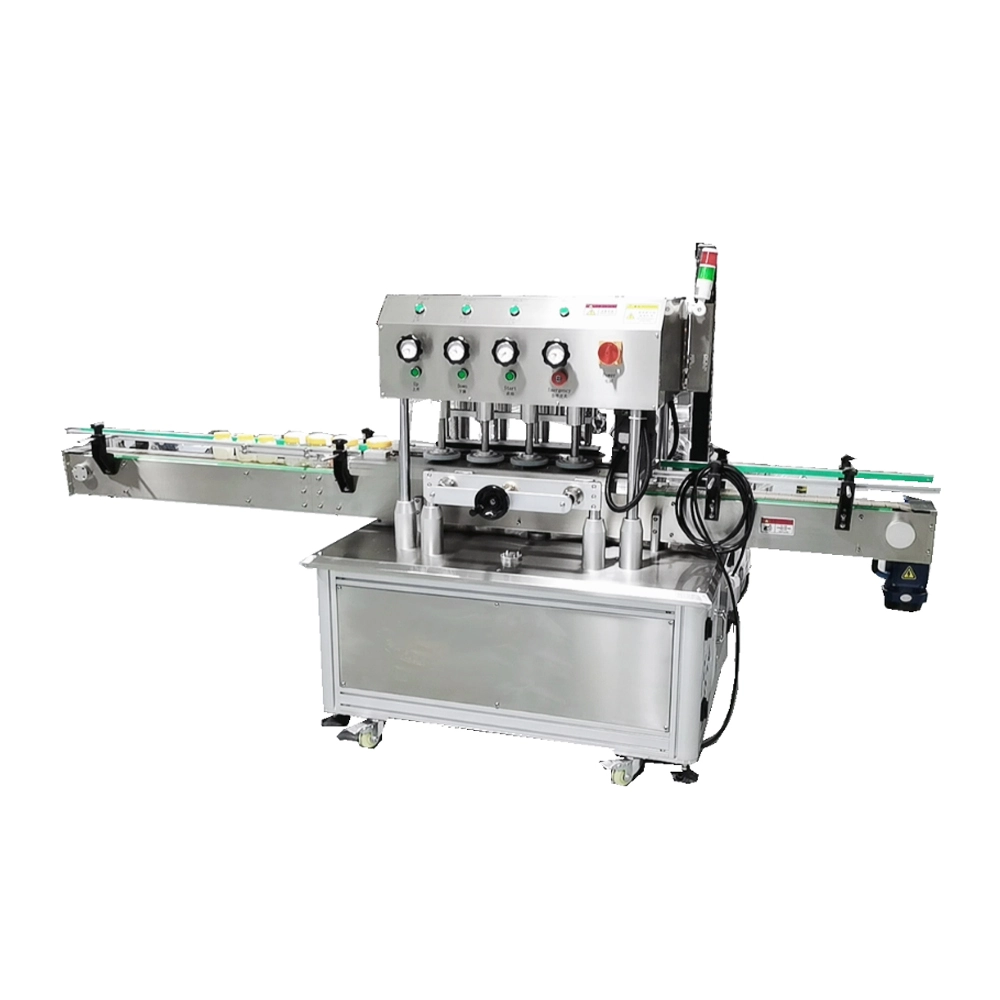
Automatic High Speed Capping Machine for Sale
The Yuanyang automatic high-speed capping machine is a kind of 8-wheel bottle-capping machine with fast working efficiency. The automatic capper is often used to close lids of containers such as bottles and jars, especially for plastic bottles, which are widely used in food, medicine, chemical, cosmetic, and other industries for mass production and continuous production lines.
Features:
⦁ Electric drive;
⦁ Automated fast speed;
⦁ Suitable for various screw caps, pumps, and spray bottles.
 Scan QR Code
Facebook
YouTube
LinkedIn
Whatsapp: +8613434139712
Guangzhou Yuanyang Machinery