





50L Hydraulic Lift Vacuum Emulsifier: Key Specs for Purchasers
- 50L Hydraulic Lift Vacuum Emulsifier: Key Specs for Purchasers
- Product overview — emulsion mixer designed for small-batch production
- Why purchasers should care about the vacuum emulsifier (: buy emulsion mixer)
- Key technical specifications buyers must check (keyword: emulsion mixer specs)
- Materials and sanitary design (keyword: emulsion mixer hygiene)
- Performance metrics: viscosity handling, particle size, and throughput (keyword: vacuum homogenizer performance)
- Controls, automation and process repeatability (keyword: industrial mixer control system)
- Maintenance, cleaning, and lifecycle costs (keyword: buy emulsion mixer)
- Safety, compliance, and documentation (keyword: industrial mixer safety)
- Applications and industry use-cases (keyword: emulsion mixer applications)
- Buyer’s checklist — how to evaluate vendors and quotes (keyword: purchase emulsion mixer)
- Comparative table: 50L vacuum emulsifier vs. alternatives (keyword: emulsion mixer comparison)
- Brand advantages — why choose Yuanyang (keyword: buy Yuanyang emulsion mixer)
- Common purchasing mistakes and how to avoid them (keyword: emulsion mixer purchase tips)
- FAQ — Frequently Asked Questions about the 50L Hydraulic Lift Vacuum Emulsifier
- Contact and product CTA (keyword: contact for emulsion mixer)
- Authoritative references and further reading
- Final notes
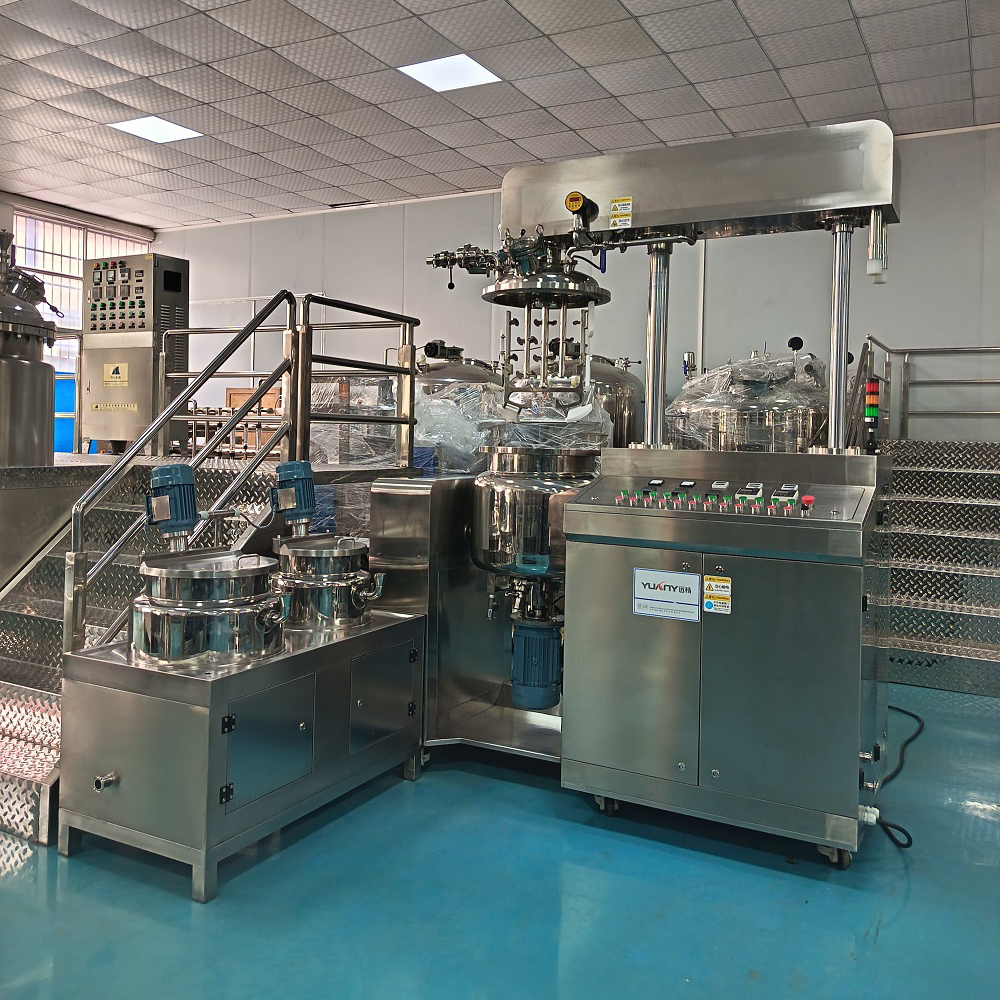
50L Hydraulic Lift Vacuum Emulsifier: Key Specs for Purchasers
Product overview — emulsion mixer designed for small-batch production
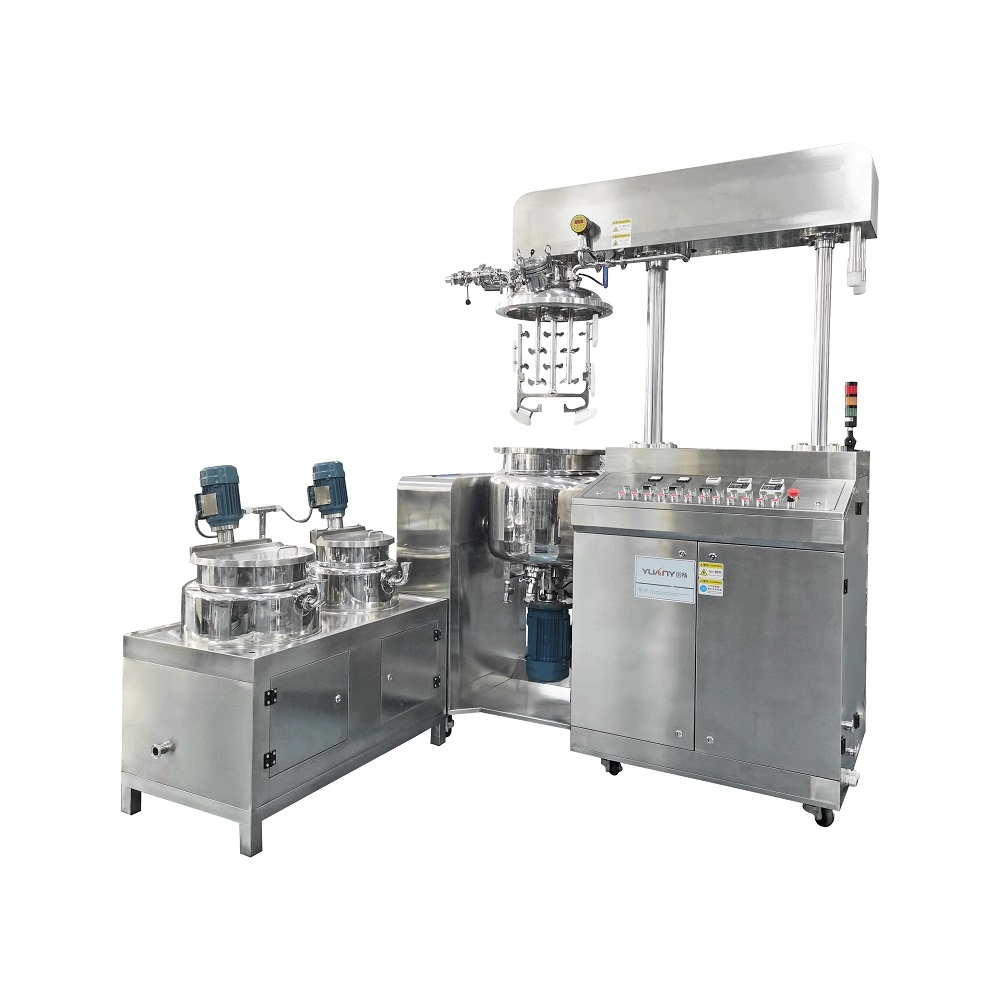
Yuanyang hydraulic lift vacuum emulsifier is a combined mixing equipment with a main vacuum homogenizer tank, a water tank, and an oil tank, which is an integrated equipment with a mixing, dispersing, homogenizing, emulsifying, vacuumizing and powder absorption system that is widely used in cosmetics, food, pharmaceutical, and chemical fields.
Why purchasers should care about the vacuum emulsifier (: buy emulsion mixer)
For buyers looking to purchase an emulsion mixer, understanding the 50L Hydraulic Lift Vacuum Emulsifier’s core specifications and operational capabilities is essential. This machine is commonly used in R&D and small-scale production where accurate particle size control, low-oxygen processing, and repeatable batch quality are required. Commercially, the right vacuum homogenizer reduces waste, improves product stability, and shortens processing time — all factors that impact cost-per-batch and time-to-market.
Key technical specifications buyers must check (keyword: emulsion mixer specs)
Below is a concise table of the most important specifications to evaluate when assessing a 50L Hydraulic Lift Vacuum Emulsifier for purchase. These items directly affect product quality, throughput, and regulatory compliance.
| Specification | Typical value / Range (50L model) | Why it matters to purchasers |
|---|---|---|
| Nominal Capacity | 50 liters (main homogenizer tank) | Defines batch size and scaling; ensures compatibility with production targets |
| Auxiliary Tanks | Oil tank + Water tank (integrated) | Enables controlled phase additions and temperature management |
| Viscosity Range | 10,000–50,000 cps | Indicates ability to process creams, gels, and viscous emulsions |
| Homogenizer Performance | High-shear homogenizing head; up to 2 microns particle size | Critical for stability, texture, and bioavailability |
| Vacuum Level | Typical vacuum >90% vacuum (e.g., -0.08 to -0.095 MPa) | Removes air/oxidation, improves clarity and shelf life |
| Heating/Cooling | Jacketed tanks with external chiller/steam options | Precise temperature control for heat-sensitive ingredients |
| Hydraulic Lift & Tilting | Hydraulic lift lid and tilting pot for safe loading and discharge | Improves ergonomics and reduces manual handling risks |
| Control System | PLC + touch screen with recipe storage and manual override | Enables repeatability and process documentation for QA |
| Material of Construction | Stainless steel 304/316L wetted parts | Corrosion resistance, cleaning, and suitability for food/pharma |
| Powder Addition | Vacuum-assisted powder suction / side ports | Reduces lumps and dust; improves dispersion |
Materials and sanitary design (keyword: emulsion mixer hygiene)
Material selection and sanitary design are non-negotiable when the emulsion mixer is used for cosmetics, food, or pharmaceutical products. Wetted parts should be 316L stainless steel with a surface finish that supports cleaning — typically Ra ≤ 0.8 µm for cosmetic-grade and Ra ≤ 0.4 µm for pharmaceutical-grade. Tri-clamp fittings, sanitary valves, and sloped tank bottoms facilitate drainability and reduce product retention. Buyers should ask for material certificates (e.g., 3.1 or 2.2 certificates) and documentation of surface finishes to meet hygiene and cleaning validation requirements.
Performance metrics: viscosity handling, particle size, and throughput (keyword: vacuum homogenizer performance)
Performance metrics define whether a 50L vacuum homogenizer will meet your formulation needs. The Yuanyang model suits 10,000–50,000 cps — meaning it can handle lotions, thick creams, and some gels. The homogenizing head producing a perfect particle size of 2 microns (evenly distributed) is significant: particle size affects aesthetics, stability, rheology, and active ingredient delivery. Throughput depends on mixing power, batch cycle times (emulsification, vacuum degassing, cooling), and operator workflow. Expect R&D-style batch cycle times of 30–90 minutes depending on thermal steps and vacuum time.
Controls, automation and process repeatability (keyword: industrial mixer control system)
Modern buyers should prioritize PLC-based control systems with recipe management, digital logging, and safety interlocks. Key control features to request when buying an emulsion mixer include:
- Pre-set recipes for speed, vacuum, and temperature profiles
- Real-time display of vacuum level and homogenizer speed
- Data export (USB or Ethernet) for batch records and traceability
- Auto shutdown interlocks for over-temperature, pressure anomalies, and hydraulic faults
Maintenance, cleaning, and lifecycle costs (keyword: buy emulsion mixer)
Purchasing an emulsion mixer is not just a capital expense — consider lifecycle costs: maintenance, spare parts, cleaning validation, and energy consumption. Ask vendors for spare-part lists (rotor/stator sets, seals, vacuum pump consumables) and recommended service intervals. Hydraulic systems and vacuum pumps require periodic checks; homogenizer heads may need replacement depending on abrasive ingredients. CIP (clean-in-place) capability reduces manual cleaning time but requires compatible sanitary plumbing and validation. Include these factors in the purchasing decision to calculate total cost of ownership (TCO).
Safety, compliance, and documentation (keyword: industrial mixer safety)
Safety features and compliance documentation are essential for buyers. Verify CE marking (for EU markets), machine safety interlocks, emergency stops, and electrical safety certificates. For food, cosmetics, and pharmaceutical use, request documentation like material certificates for wetted parts, GMP compliance statements, and validation assistance. If operating under strict regulations, ensure the vendor can provide IQ/OQ/PQ protocols and support for site qualification.
Applications and industry use-cases (keyword: emulsion mixer applications)
The 50L Hydraulic Lift Vacuum Emulsifier is widely applicable across industries:
- Cosmetics: creams, lotions, serums, sunscreen emulsions where particle size and low-oxygen processing preserve actives.
- Pharmaceutical topical formulations: ointments, gels, and creams where reproducibility and cleanliness are required.
- Food: dressings, sauces, and spreads where emulsification and hygienic design are critical (validate materials for food contact).
- Chemicals: specialty coating emulsions and adhesives where dispersing solids into viscous liquids is required.
Buyer’s checklist — how to evaluate vendors and quotes (keyword: purchase emulsion mixer)
Use this checklist when comparing offers from suppliers:
- Confirm true tank capacity vs. working (effective) batch volume.
- Ask for vacuum pump type and achievable vacuum level with load.
- Request homogenizer head type, speed range, and expected particle size distribution data.
- Verify construction materials and request certificates for wetted parts.
- Check whether the unit includes hydraulic lift & tilting pot and power specs (voltage, phase).
- Confirm control system features: recipe memory, data logging, remote access.
- Review warranty, after-sales service coverage, and spare-part availability.
- Get references or case studies from customers in your industry.
Comparative table: 50L vacuum emulsifier vs. alternatives (keyword: emulsion mixer comparison)
Below is a simple comparison table showing how a hydraulic lift vacuum emulsifier compares against two common alternatives: standard high-shear mixers and rotor-stator inline homogenizers.
| Feature | 50L Hydraulic Lift Vacuum Emulsifier | High-Shear Mixer (non-vacuum) | Inline Rotor-Stator Homogenizer |
|---|---|---|---|
| Vacuum capability | Yes (degassing and powder suction) | No | Optional (depends on system design) |
| Particle size control | Excellent (~2 µm achievable) | Moderate (larger particles) | Good to excellent (depends on pressure and design) |
| Suitable for viscous products | Yes (10k–50k cps) | Limited | Depends (may need booster tank) |
| Powder handling | Vacuum-assisted powder addition | Usually manual | Requires external feeder |
| Cleaning & validation | Good (designed for CIP/COP) | Variable | Good but inline systems may require complex piping |
Brand advantages — why choose Yuanyang (keyword: buy Yuanyang emulsion mixer)
Yuanyang’s hydraulic lift vacuum emulsifier offers several buyer-facing advantages:
- Integrated system design — combines homogenizer, oil/water tanks, vacuum and powder absorption in one compact footprint, reducing piping and installation complexity.
- Hydraulic lift lid & tilting pot — improves safety and ergonomics for loading and discharge, especially in small production environments.
- Targeted viscosity range and particle size performance — designed to handle common cosmetic and pharmaceutical viscosities with fine particle distribution (~2 µm).
- Customization and after-sales support — options for 316L upgrades, CIP systems, PLC recipes, and validation documentation.
Common purchasing mistakes and how to avoid them (keyword: emulsion mixer purchase tips)
New buyers often make avoidable mistakes:
- Underestimating working volume — ensure the 50L nominal capacity meets your effective batch requirements once headspace and process losses are considered.
- Overlooking material certificates — always verify 316L vs. 304 where required for regulatory compliance.
- Forgetting validation support — ask about IQ/OQ documentation before purchase if you operate in regulated industries.
- Ignoring spare-part lead times — check local inventory for rotor/stator sets and seals to minimize downtime.
FAQ — Frequently Asked Questions about the 50L Hydraulic Lift Vacuum Emulsifier
Q1: What batch sizes are practical with a 50L emulsifier?
A1: Typical working batch sizes range from 30–45 liters depending on recipe headspace and processing needs. Confirm with the supplier for specific formulations.
Q2: Can this emulsion mixer handle heat-sensitive actives?
A2: Yes — jacketed tanks and precise temperature control allow gentle heating and controlled cooling to protect heat-sensitive ingredients.
Q3: How low can the vacuum go and why is it important?
A3: Typical achievable vacuum is -0.08 to -0.095 MPa, which helps remove entrained air and reduces oxidation. Exact vacuum under load varies with vacuum pump size and system leaks.
Q4: Is the homogenizer head serviceable?
A4: Yes — homogenizer rotors/stators are designed for replacement and vendors should provide spare parts and service guidance.
Q5: Does Yuanyang provide validation/qualification support?
A5: Many manufacturers, including Yuanyang, offer IQ/OQ documentation and support packages — confirm scope during quotation.
Contact and product CTA (keyword: contact for emulsion mixer)
Beyond capacity and lifting systems, consistency outcomes depend heavily on how emulsion mixer design impacts product consistency.If you are ready to evaluate or purchase a 50L Hydraulic Lift Vacuum Emulsifier, contact our sales team to request a technical datasheet, quotation, or to arrange a demonstration. For hands-on verification, ask for particle size distribution reports and a sample batch run with your formula. Click to contact sales or view the product page to get started.
Authoritative references and further reading
For technical background on homogenization, emulsions, and regulatory guidance, consult these authoritative sources:
- Emulsion — Wikipedia: https://en.wikipedia.org/wiki/Emulsion
- Homogenizer — Wikipedia: https://en.wikipedia.org/wiki/Homogenizer
- Mixer (machine) — Wikipedia: https://en.wikipedia.org/wiki/Mixer_(machine)
- U.S. Food & Drug Administration (Cosmetics): https://www.fda.gov/cosmetics
- WHO Good Manufacturing Practices (GMP) guidance: https://www.who.int/publications/i/item/WHO-TRS-961
Final notes
Purchasing a 50L Hydraulic Lift Vacuum Emulsifier requires evaluating specifications, sanitary design, control features, and vendor support. Prioritize particle-size capability, vacuum performance, and ease of cleaning to ensure consistent product quality. If you need help interpreting technical quotes or designing the layout for your production floor, our technical sales engineers can provide application sizing and ROI calculations tailored to your formulas.
Everything You Need to Know About labeling machine for vials
Vacuum Mixing: How It Enhances Air-Free Emulsions
Why choose YUANYANG bottling and capping machine manufacturer in Africa
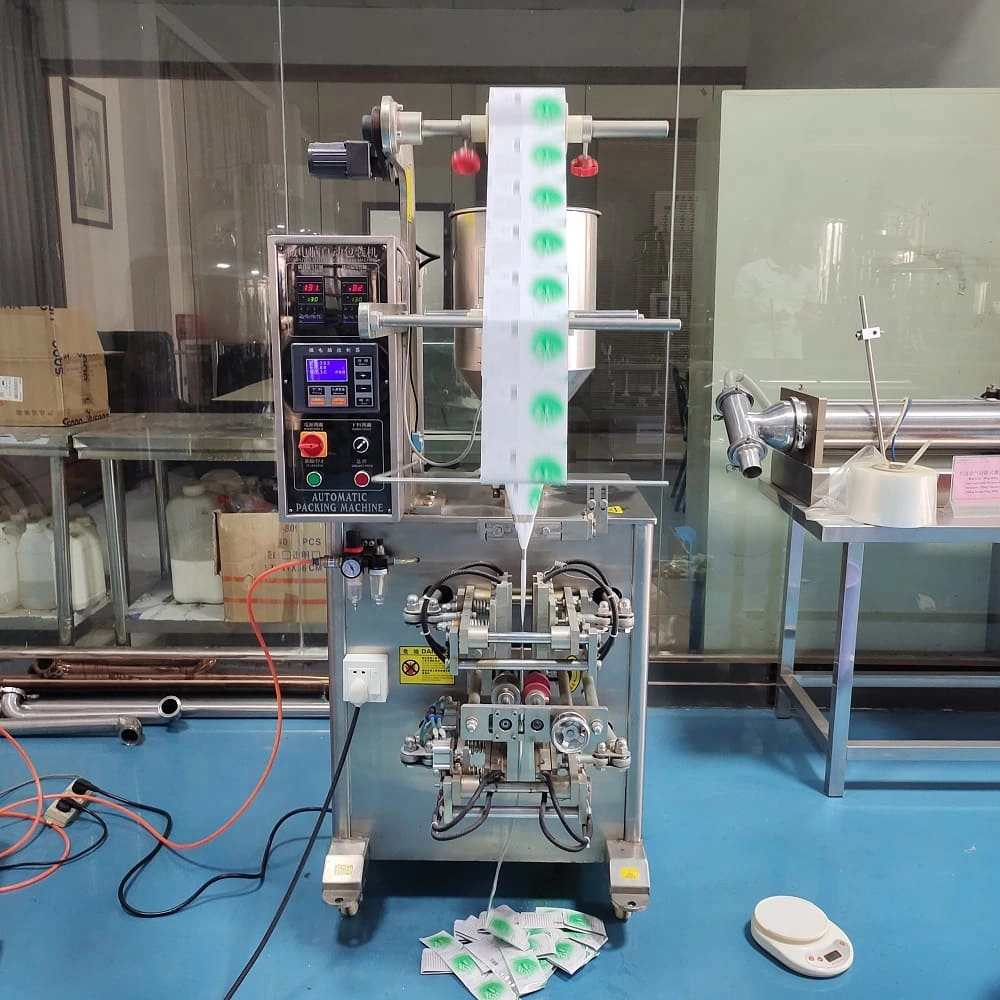
How to Scale Production with Sachet Packaging Machines
Water Cooling Induction Sealer
What type of container is the heat induction sealer suitable for?
The material of the container can be polyethylene (PE), polypropylene (PP), polystyrene (PS), polyester (PET), ABS, glass, ceramics, etc., but can not be used for metal bottles or metal caps.
Hydraulic Lift Vacuum Mixer
What’s the maximum height that the lid can lift up to? And how high it is when cover closed?
The dimension is different for different capacity. For example, the 500L height is 2.48m when cover closed, the height is 3.6m when cover lift up.
Automatic powder feeder machine
Do you have installation videos for the auger feeding machine?
Yes, we have installation videos for client to refer, which is quite easy to install.
Melting Tank
What’s the maximum temperature the melting pot can get?
The tank is with electric heater, add water to conduct heat through jacket layer. Therefore the maximum temperature is 100°C.
One Stage Water Treatment
Can you introduce the working process of the water filter?
One stage: raw water - raw water pump - sand filter - carbon filter - softener(optional) - salt tank - high pressure pump - reverse osmosis membrane system - one stage ro system storage tank
Two stage: one stage ro system storage tank - EDI system - EDI storage tank - two stage ro system storage tank - two stage ro water process - pure water pump - UV sterilizer - Finished pure water storage tank
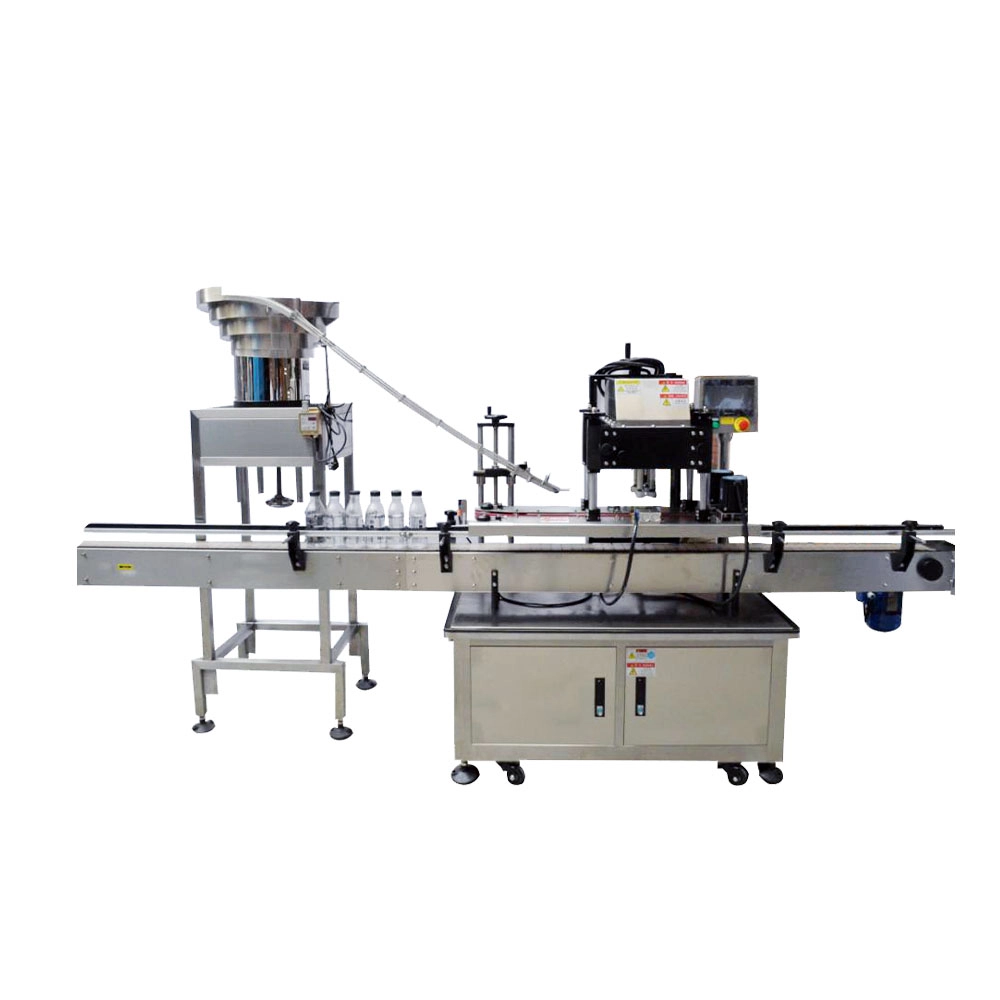
Automatic Plastic Caps Capping Machine with Vibrating Cap Feeder for Sale
Yuanyang automatic screw capping machine is a kind of four-wheel bottle capping machine. The automatic screw capper is often used to close lids of containers such as bottles and jars, especially for plastic bottles, which are widely used in food, medicine, chemical, cosmetic, and other industries for mass production and continuous production lines.
Features:
⦁ Full pneumatic drive;
⦁ Automated fast speed;
⦁ Suitable for various screw caps, pumps, and spray bottles.
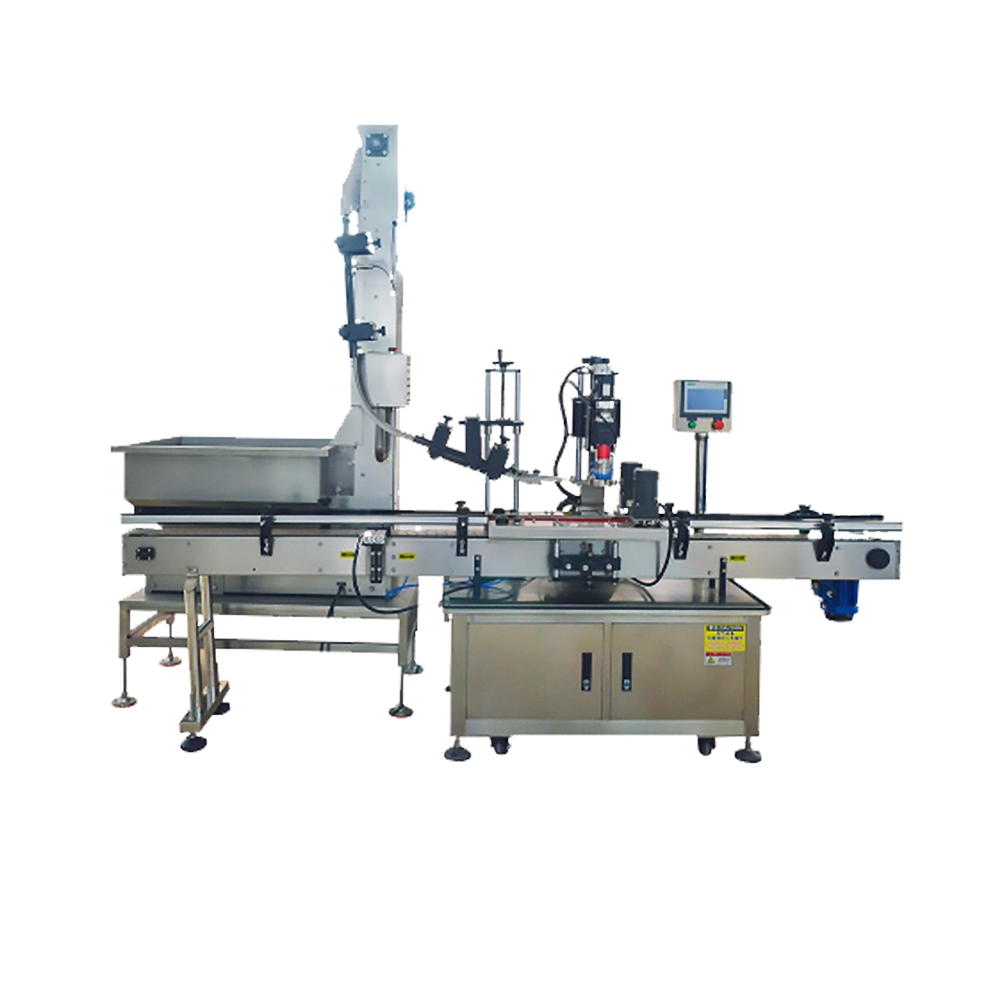
Automatic Metal Caps Capping Machine for Sale
Yuanyang automatic metal cap capping machine is a bottle capper for bottles with metal caps, which is often used to close lids of containers such as bottles and jars. The glass bottle metal capping machine is widely used in food, medicine, chemical, cosmetic, and other industries for mass production and continuous production line .
Features:
⦁ Pneumatic and electric drive;
⦁ Automated fast speed;
⦁ Suitable for glass bottles with metal caps.
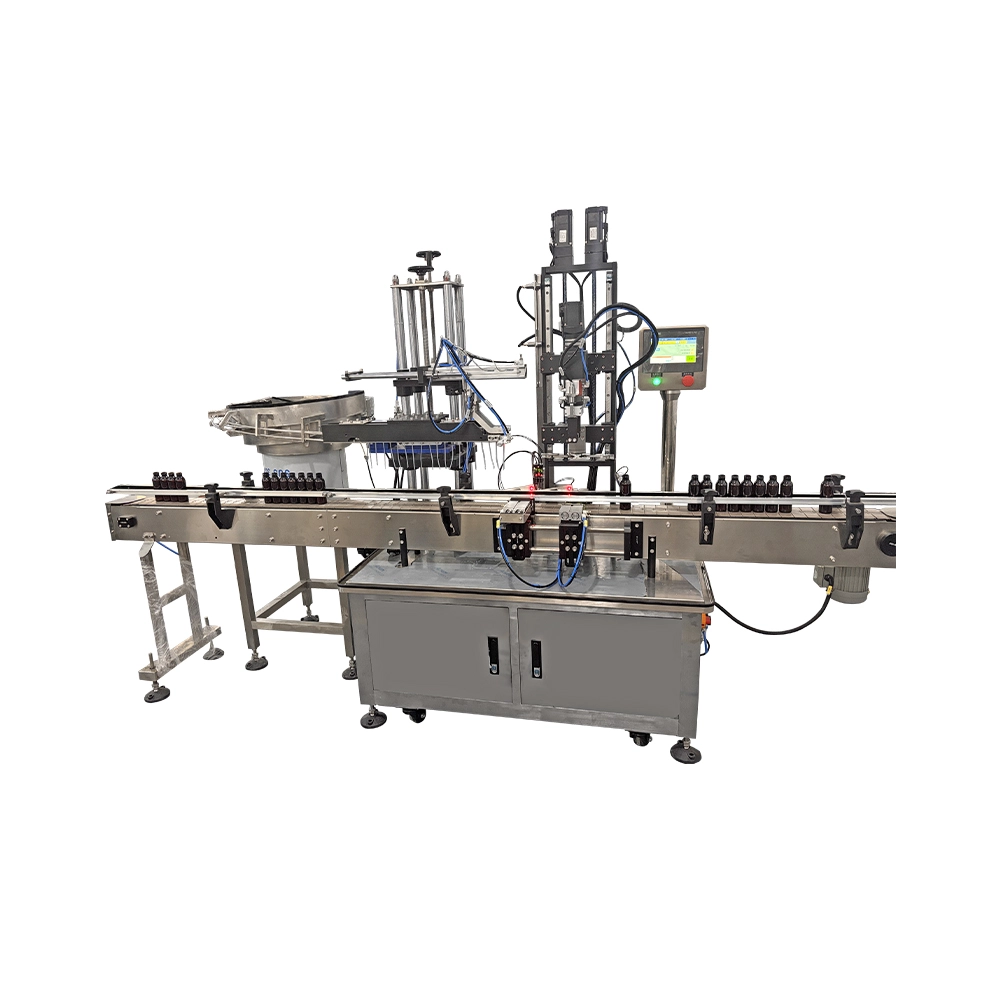
Automatic Pump Head Feeding and Capping Machine for Sale
Yuanyang automatic pump head feeding and capping machine is a bottle cap sorter and capper for bottles with pump heads, which is often used to close lids of containers such as nail polish, sprayers, and shampoo. The capping machine with a pump head feeder is widely used in food, medicine, chemical, cosmetic, and other industries for mass production and continuous production line .
Features:
⦁ Pneumatic and electric drive;
⦁ Automated fast speed;
⦁ Suitable for various types of caps.
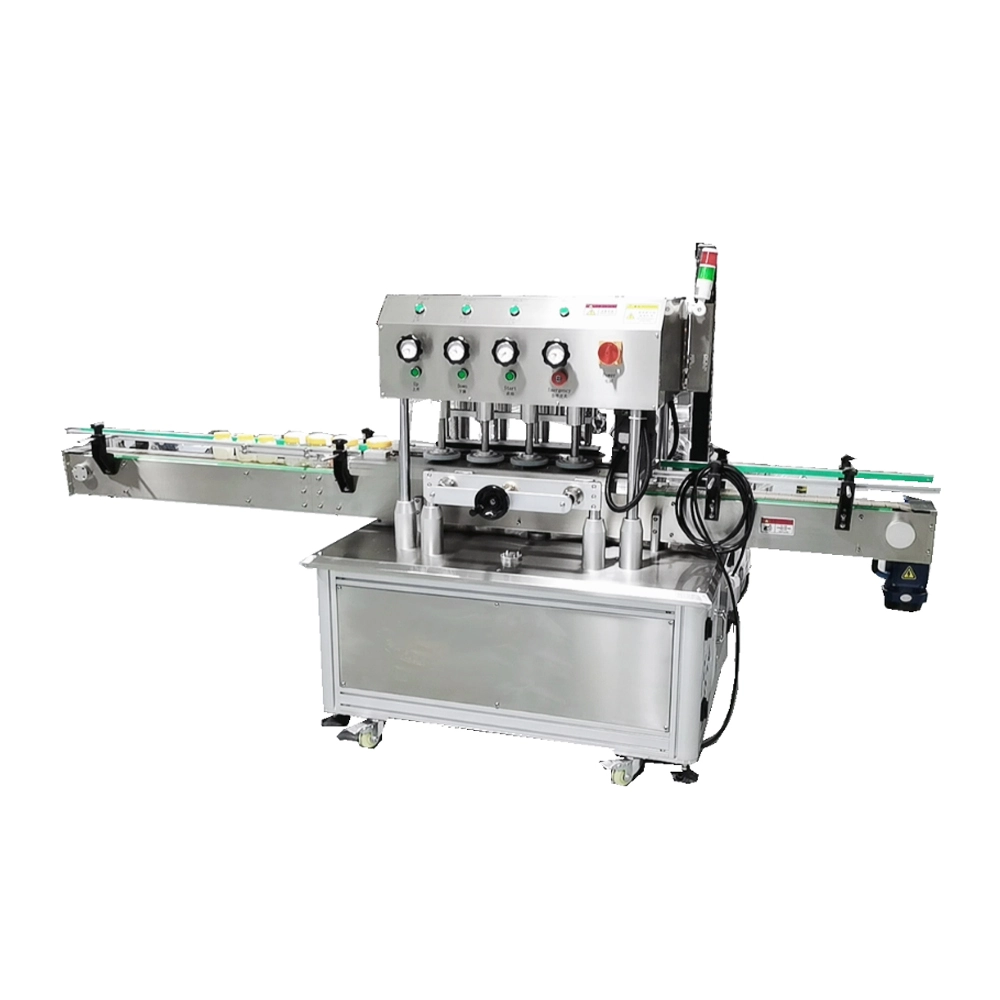
Automatic High Speed Capping Machine for Sale
The Yuanyang automatic high-speed capping machine is a kind of 8-wheel bottle-capping machine with fast working efficiency. The automatic capper is often used to close lids of containers such as bottles and jars, especially for plastic bottles, which are widely used in food, medicine, chemical, cosmetic, and other industries for mass production and continuous production lines.
Features:
⦁ Electric drive;
⦁ Automated fast speed;
⦁ Suitable for various screw caps, pumps, and spray bottles.
 Scan QR Code
Facebook
YouTube
LinkedIn
Whatsapp: +8613434139712
Guangzhou Yuanyang Machinery