





Cleaning and CIP Tips for 50L Vacuum Emulsifiers
- Cleaning and CIP Tips for 50L Vacuum Emulsifiers
- Understanding your 50L Hydraulic Lift Vacuum Emulsifier — an emulsifying machine overview
- Why proper cleaning and CIP matter for an emulsifying machine
- Pre-cleaning actions and safety checks for your 50L vacuum emulsifying machine
- Manual cleaning procedures for hard-to-reach areas
- Designing an effective CIP cycle for a 50L emulsifying machine
- Sample CIP recipe and parameter table
- Chemicals, material compatibility, and environmental considerations
- Cleaning challenges with high-viscosity products (10,000–50,000 cps) and practical solutions
- Validation, monitoring, and cleaning verification
- Maintenance tips to extend life of your emulsifying machine and keep CIP effective
- Troubleshooting common cleaning problems with emulsifying machines
- Brand advantages — Why choose the Yuanyang 50L Hydraulic Lift Vacuum Emulsifier for your production and CIP needs
- FAQ — Frequently Asked Questions about cleaning and CIP for 50L vacuum emulsifiers
- Contact us / View product
- References and authoritative resources
Cleaning and CIP Tips for 50L Vacuum Emulsifiers
Understanding your 50L Hydraulic Lift Vacuum Emulsifier — an emulsifying machine overview
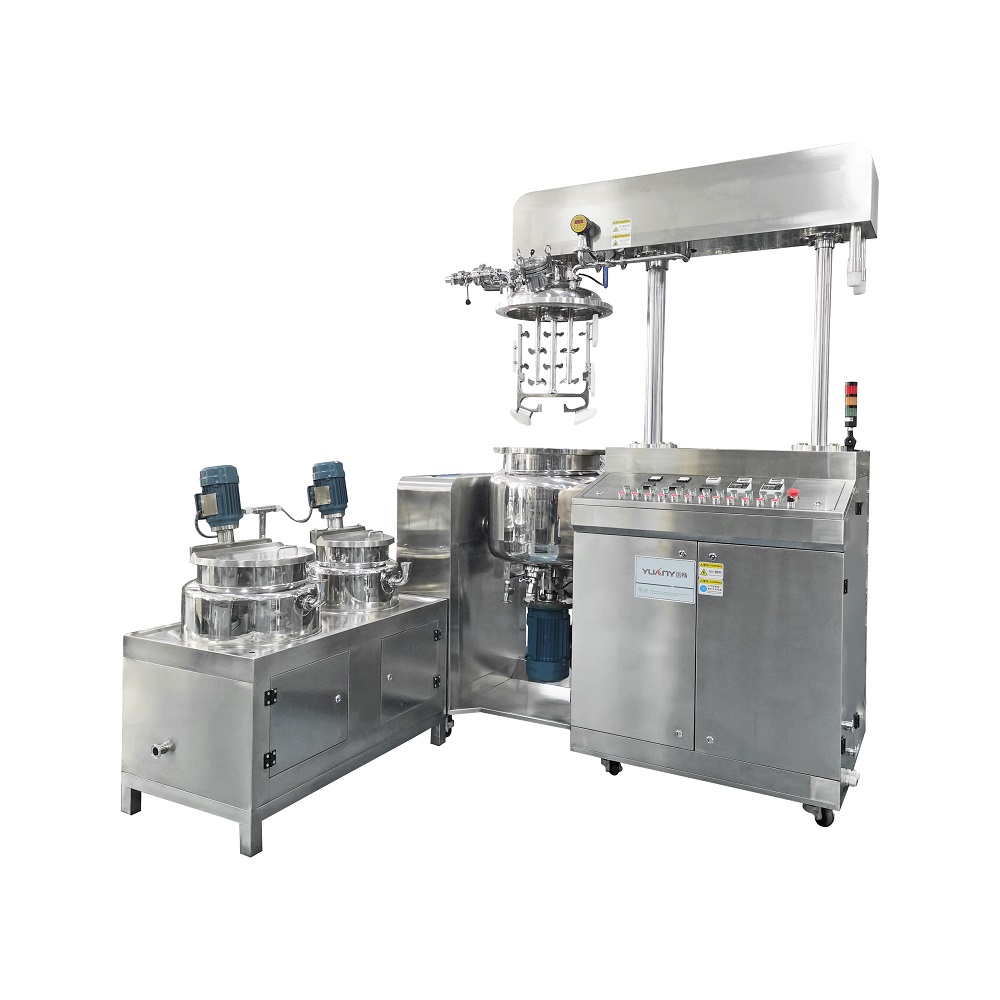
Before detailing cleaning and CIP best practices, it helps to know what makes your equipment special. The 50L Hydraulic Lift Vacuum Emulsifier is a combined mixing system designed for reliable, high-quality emulsions. Product description:
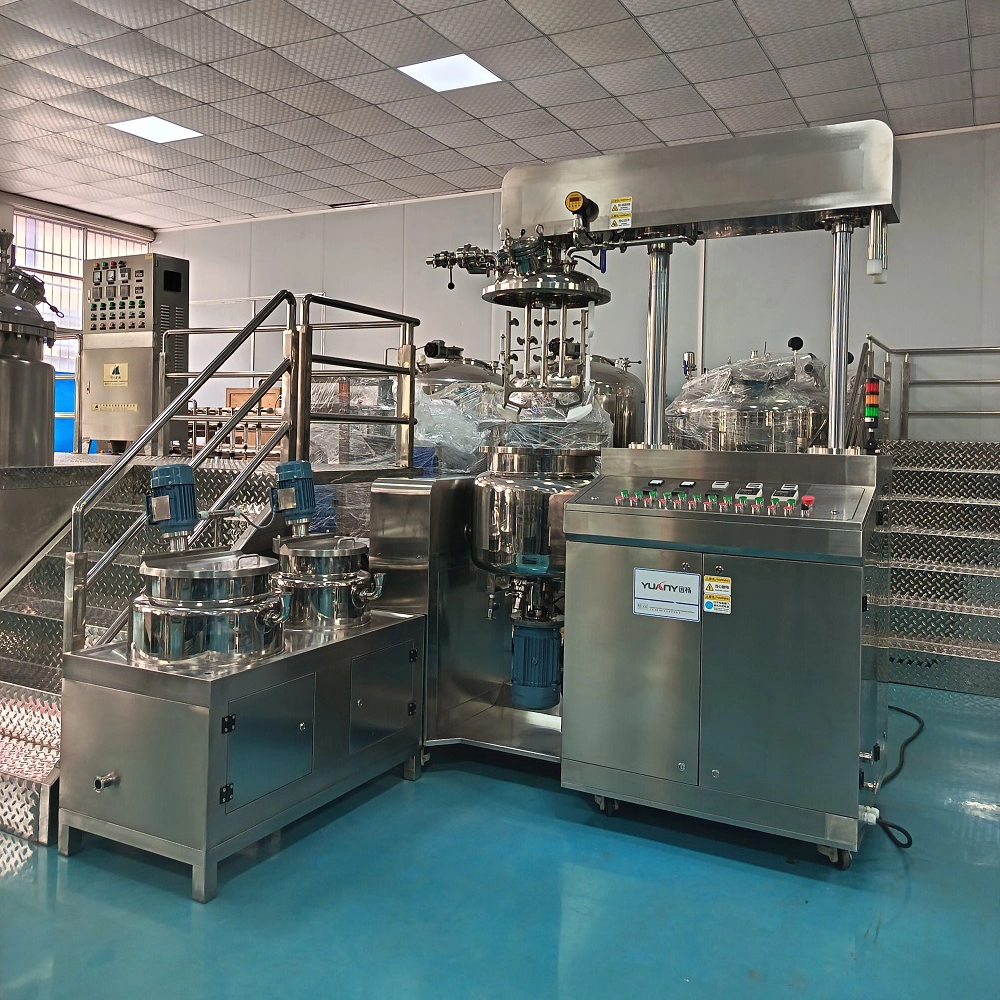
Yuanyang hydraulic lift vacuum emuslifier is a combined mixing equipment with a main vacuum homogenizer tank, a water tank, and an oil tank, which is an integrated equipment with a mixing, dispersing, homogenizing, emulsifying, vacuumizing and powder absorption system that is widely used in cosmetics, food, pharmaceutical, and chemical fields. Efficient cleaning routines also impact operating costs, which ties closely into energy efficiency tips for emulsifying machines.
Features:
⦁ With a hydraulic lift lid & tilting pot, vacuum system, and electric control system.
⦁ Suitable for products of 10,000~50,000 cps viscosity.
⦁ Perfect particle size of 2 microns and evenly distributed.
As an emulsifying machine, it combines vacuum homogenization with oil and water phase tanks and powder addition—all factors that influence cleaning strategy and CIP design.
Why proper cleaning and CIP matter for an emulsifying machine
Whether you operate in cosmetics, food, pharmaceutical, or chemical production, cleaning and CIP (Clean-In-Place) are critical for product quality, safety, and uptime. Effective cleaning prevents cross-contamination, microbial growth, API or active residue carryover, off-odors, and product defects. For a 50L vacuum emulsifier that handles viscous formulations (10,000–50,000 cps) and produces sub-micron particles (~2 microns), inadequate cleaning can obscure equipment surfaces and foul seals, increasing downtime and maintenance costs.
Pre-cleaning actions and safety checks for your 50L vacuum emulsifying machine
Embedding safety and repeatability before cleaning reduces risk and ensures CIP success. Recommended pre-clean steps:
- Record the previous batch (product, batch size, process time, temps) to align CIP parameters.
- Drain bulk product and recover salvageable material (use proper containment for hazardous ingredients).
- Release vacuum and ensure the lid is supported by the hydraulic lift before accessing the tank.
- Visually inspect gaskets, homogenizer rotor/stator, and connections for wear, product buildup, or damage.
- Disconnect or isolate instruments as required by SOPs; follow lockout-tagout for electrical or hydraulic systems.
These steps minimize operator risk and improve cleaning effectiveness—especially important for an emulsifying machine with integrated vacuum and powder absorption systems.
Manual cleaning procedures for hard-to-reach areas
Even with an optimized CIP, manual cleaning may be necessary for gaskets, sampling ports, drives, and the homogenizing assembly. Practical tips:
- Use soft brushes and approved non-abrasive cloths to avoid scratching polished stainless surfaces.
- Remove the homogenizer rotor and stator for full inspection and soak in an appropriate detergent if protocols allow.
- Inspect and clean powder addition nozzles and filters—powder systems often trap residues that CIP liquids can miss.
- Rinse thoroughly with potable water before and after detergent use to avoid chemical residues that could destabilize subsequent emulsions.
- Replace any damaged gaskets or O-rings and lubricate moving parts as per manufacturer guidance.
Designing an effective CIP cycle for a 50L emulsifying machine
A good CIP protocol combines mechanical action (flow), thermal energy, and chemical cleaning. For a 50L Hydraulic Lift Vacuum Emulsifier the cycle must account for viscous residues and vacuum-tight seals. Typical CIP stages:
- Pre-rinse: Warm water to remove gross solids and lower viscosity.
- Alkaline wash: Removes organic residues, oils, and emulsified products.
- Intermediate rinse: Cold or warm water to remove alkali.
- Acid wash (optional): Removes mineral scale or certain binders; caution: check material compatibility.
- Final rinse: Purified water (e.g., filtered or RO) to remove ionic residues.
- Sanitization (if required): Hot water or chemical sanitizer (per product risk assessment).
Key CIP parameters to control:
- Flow rate: Maintain turbulent flow where possible to maximize shear—use pump and spray devices suitable for viscous fluids.
- Temperature: Higher temperatures improve removal of oils; 40–70°C is common for alkaline washes (check chemical instructions and material limits).
- Concentration: Follow manufacturer recommendations for detergents; common alkaline cleaners are 0.5–2% w/w.
- Contact time: Typically 5–20 minutes per stage depending on soiling severity and chemical strength.
Sample CIP recipe and parameter table
Below is a sample CIP recipe tailored to a 50L emulsifying machine handling medium to high viscosity cosmetic or food emulsions. Adapt for product specifics and validate.
| Stage | Solution | Temp (°C) | Concentration | Flow/Action | Time |
|---|---|---|---|---|---|
| Pre-rinse | Warm potable water | 30–40 | — | Recirculation through spray balls and pump | 5–10 min |
| Alkaline wash | Sodium hydroxide or non-foaming alkaline detergent | 50–60 | 0.5–1.5% w/w | Recirculate at highest achievable flow, invert tank tilt for draining | 10–20 min |
| Intermediate rinse | Warm water | 30–40 | — | Flush lines and spray devices | 5–10 min |
| Acid wash (if needed) | Phosphoric or citric acid (low concentration) | 30–50 | 0.1–0.5% w/w | Recirculate; avoid contact with aluminum or dissimilar metals | 5–15 min |
| Final rinse & sanitize | RO/DI water or hot water (80–90°C) / approved sanitizer | Ambient or 80–90 for hot water sanitizing | — / Sanitizer per label | Flush until TOC/TDS acceptable | 5–15 min |
Chemicals, material compatibility, and environmental considerations
Choose cleaning agents that remove your product classes while protecting stainless steel surfaces (typically 316L in emulsifying machines) and seals. Key considerations:
- Alkaline cleaners remove oils and proteins; low-foaming formulations are preferred for recirculation systems.
- Acid cleaners remove mineral scale and some polymeric residues but may corrode if misused; avoid long contact times on stainless if pH is too low.
- Non-oxidizing sanitizers (peracetic acid, quaternary ammonium compounds) are often used for cosmetics and food; for pharmaceuticals, use validated agents compatible with product risk classification.
- Handle and neutralize spent CIP solutions per local environmental regulations to avoid discharge violations.
Cleaning challenges with high-viscosity products (10,000–50,000 cps) and practical solutions
Viscous emulsions and creams challenge flow-based CIP systems. Recommended solutions:
- Preheat and dilute residue with warm water to reduce viscosity before recirculation.
- Use directed spray nozzles or rotating spray balls to deliver mechanical action inside the tank.
- Increase recirculation time and consider higher detergent concentrations within safety margins.
- Install or use dedicated pump designs (positive displacement or progressive cavity pumps) that handle high viscosity during CIP without losing prime.
- Include a manual disassembly step for homogenizer stator/rotor if product remains trapped—validate to minimize frequency.
Validation, monitoring, and cleaning verification
Regulated industries require cleaning validation and objective verification. Common verification methods:
- TOC (Total Organic Carbon) testing on rinse samples to quantify organic residue.
- Conductivity or pH endpoints to verify removal of ionic detergents.
- Visual inspection with a defined acceptance SOP; use borescopes for internal piping checks.
- Microbiological testing where products are at risk of contamination.
Document CIP parameters (temperatures, concentrations, flow rates, times) and link them to acceptable analytical endpoints in your validation protocol. A well-defined validation reduces batch holds and nonconformances.
Maintenance tips to extend life of your emulsifying machine and keep CIP effective
Routine maintenance keeps cleaning predictable and preserves equipment value:
- Inspect seals and gaskets monthly and replace before failures occur.
- Lubricate hydraulic and mechanical points per manufacturer recommendations.
- Schedule periodic polishing of tank interiors if surface passivation is compromised.
- Keep spare parts for homogenizer rotors, stators, and common seals to reduce downtime for manual cleaning.
- Train operators on correct tilt/lift procedures for safe manual access and cleaning.
Troubleshooting common cleaning problems with emulsifying machines
Symptoms and quick fixes:
- Persistent odor: Increase hot-water sanitization or replace sanitizing agent; investigate hidden pockets in powder feed systems.
- Foaming during CIP: Switch to low-foaming detergents and check recirculation pump speed.
- Residue in homogenizer: Increase alkaline wash time and consider more frequent rotor/stator disassembly in production schedule.
- Poor spray coverage: Inspect/clean spray balls and ensure correct pump flow; replace worn nozzles.
Brand advantages — Why choose the Yuanyang 50L Hydraulic Lift Vacuum Emulsifier for your production and CIP needs
The Yuanyang 50L Hydraulic Lift Vacuum Emulsifier is designed with maintenance and cleaning in mind:
- Hydraulic lift lid and tilting pot simplify manual access for inspection and targeted cleaning steps.
- Integrated vacuum and powder absorption systems reduce open handling and possible contamination.
- Electric control system enables programmable CIP sequences and parameter logging when integrated with a plant SCADA or batch records.
- Suitable for high-viscosity ranges (10,000–50,000 cps) and delivers fine particle size (~2 microns), helping reduce formulation variability that can complicate cleaning.
These features reduce downtime and simplify both manual and automated cleaning workflows—key commercial benefits for medium-scale manufacturers.
FAQ — Frequently Asked Questions about cleaning and CIP for 50L vacuum emulsifiers
Q1: How often should I perform a full manual disassembly for cleaning?
A1: Frequency depends on product type and regulatory requirements. For high-viscosity, sticky formulations, a weekly rotor/stator inspection and monthly disassembly is common in production environments. Validate based on residue measurements.
Q2: Can I use hot water alone for sanitizing the emulsifying machine?
A2: Hot water (80–90°C) can be effective for sanitization, but chemical sanitizers are often required for full microbial control depending on product risk. Always follow validated protocols.
Q3: Is the 50L Hydraulic Lift Vacuum Emulsifier compatible with common alkaline and acid cleaners?
A3: Most stainless steel (316L) construction is compatible with properly formulated alkaline and weak acid cleaners. Avoid prolonged exposure to strong acids and verify with supplier material compatibility charts.
Q4: How do I verify CIP effectiveness?
A4: Use analytical endpoints such as TOC, conductivity, pH, and microbiological swabs. Establish acceptance criteria during validation.
Q5: My product is 40,000 cps—can I still CIP effectively?
A5: Yes. Preheating, dilution, and longer alkaline recirculation with appropriate pumps and spray devices will improve cleaning efficacy for high-viscosity products.
Contact us / View product
If you would like tailored CIP protocols, validation support, or a quote for the 50L Hydraulic Lift Vacuum Emulsifier, contact our sales and technical team. We can provide SOP templates, CIP recipes tuned to your formulations, and on-site commissioning to ensure predictable cleaning and production uptime.
Request a quote or technical datasheet today — contact: [email protected] (replace with your contact) or visit the product page to view full specifications and options.
References and authoritative resources
For deeper reading and standards:
- Clean-in-place — Wikipedia: https://en.wikipedia.org/wiki/Clean-in-place
- EHEDG — European Hygienic Engineering & Design Group: https://ehedg.org/
- 3-A Sanitary Standards: https://3-a.org/
- FDA Guidance — Process Validation: General Principles and Practices (2011): https://www.fda.gov/media/71021/download
- WHO — Good Manufacturing Practices: https://www.who.int/teams/regulation-prequalification/regulation-and-safety/quality-assurance/good-manufacturing-practice
Throughput Optimization: Selecting High-Speed Tube Sealers
Everything You Need to Know About paste filling machine
50L Hydraulic Vacuum Emulsifier: Key Features Overview

How Mixing Tank Material Affects Product Quality and Safety
Sealed Storage Tank
Is this storage tank food grade?
Yes, the liquid tank is made of stainless steel 304 or 316L, can store food sauce, mayonnaise, cosmetic cream, lotion, pharmaceutical ointment, other liquids and paste...
Medicine
What types of pharmaceutical raw materials can Yuanyang’s equipment handle?
Our equipment can handle a wide range of pharmaceutical raw materials, including liquids, creams, powders, capsule ingredients, and viscous or high-viscosity materials, suitable for various formulations and production processes.
Cosmetic Making Machine
How to achieve vacuum environment?
The vacuum pump is a device used to generate vacuum, which can draw out the gas in the container to form a vacuum environment. Close wall pipe valves,only open the vacuum pipe pass-by valve,also open the water inlet of vacuum pump,then operate vacuum button. After the the tank get the standard pressure such -0.05Mpa (check the pressure gauge), stop the vacuum operation,close the pass-by valve.
Automatic Servo Motor Capping Machine
What’s power supply for this automatic four wheels capping machine?
The power supply is single phase 220v 50hz/60hz.
Sachet Packaging Machine for Granules
Is the sachet packing machine equipped with conveyor ?
Yes, the standard sachet packaging machine is with a conveyor for transferring the finished bags.
Automatic Plastic Caps Capping Machine with Vibrating Cap Feeder for Sale
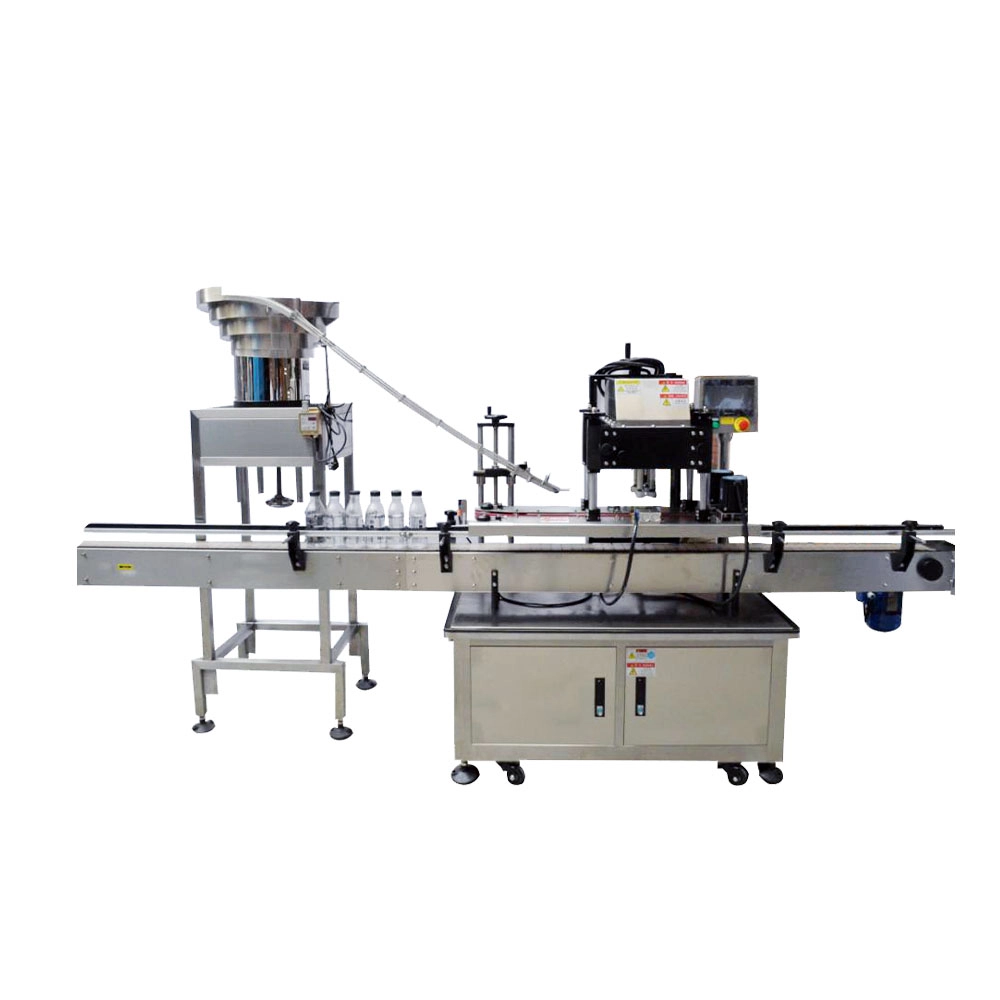
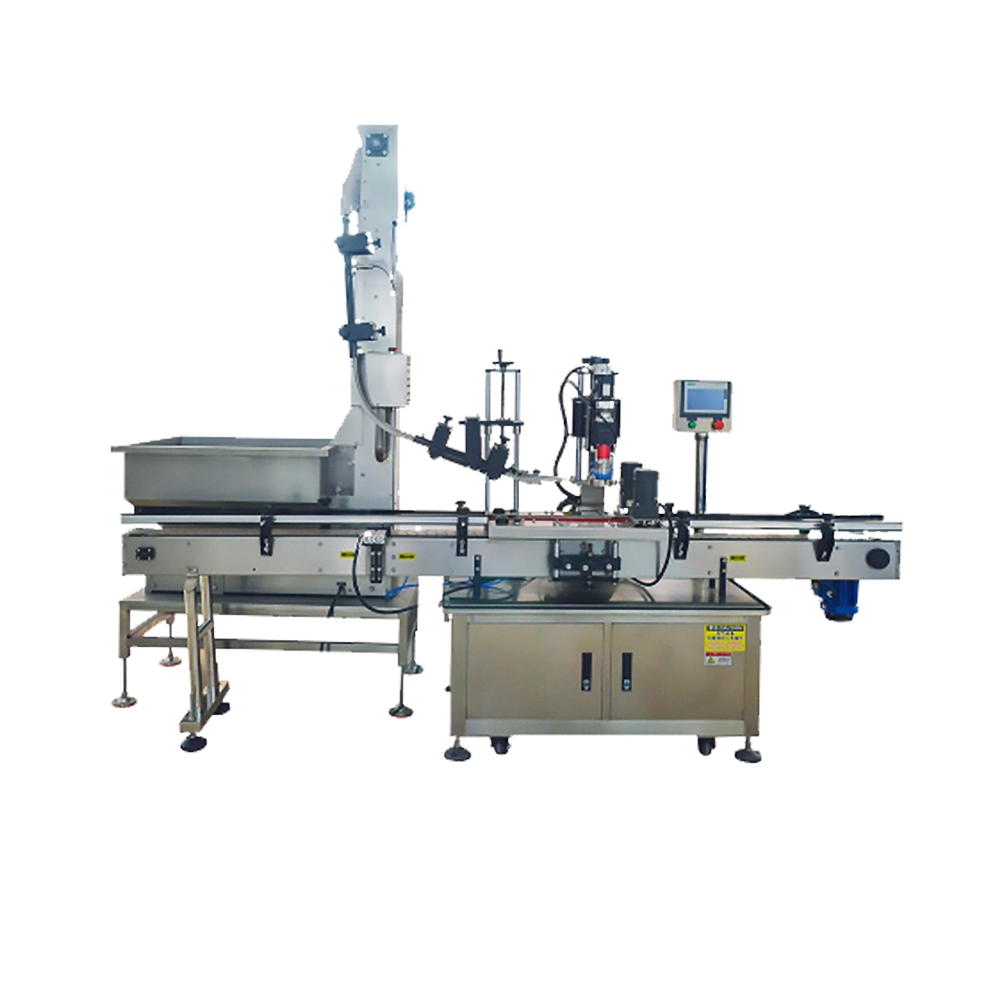
Yuanyang automatic screw capping machine is a kind of four-wheel bottle capping machine. The automatic screw capper is often used to close lids of containers such as bottles and jars, especially for plastic bottles, which are widely used in food, medicine, chemical, cosmetic, and other industries for mass production and continuous production lines.
Features:
⦁ Full pneumatic drive;
⦁ Automated fast speed;
⦁ Suitable for various screw caps, pumps, and spray bottles.
Automatic Metal Caps Capping Machine for Sale
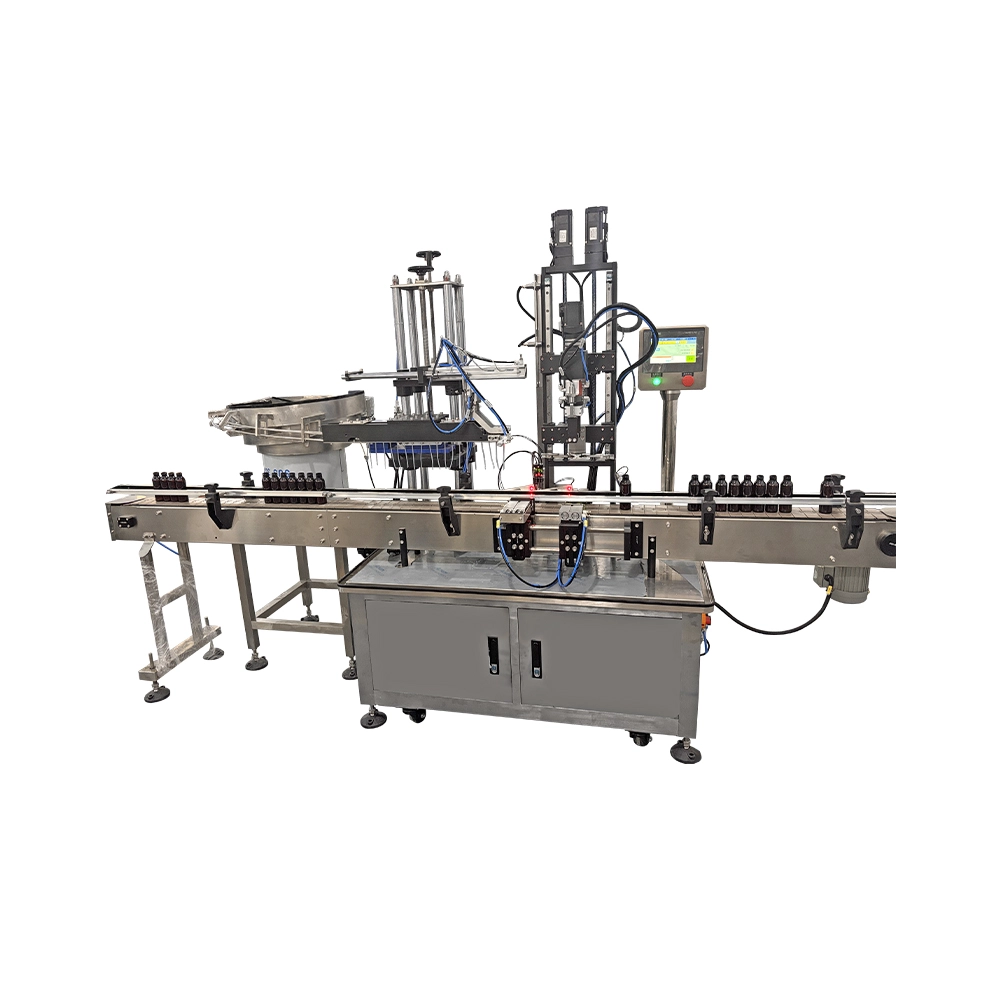
Yuanyang automatic metal cap capping machine is a bottle capper for bottles with metal caps, which is often used to close lids of containers such as bottles and jars. The glass bottle metal capping machine is widely used in food, medicine, chemical, cosmetic, and other industries for mass production and continuous production line .
Features:
⦁ Pneumatic and electric drive;
⦁ Automated fast speed;
⦁ Suitable for glass bottles with metal caps.
Automatic Pump Head Feeding and Capping Machine for Sale
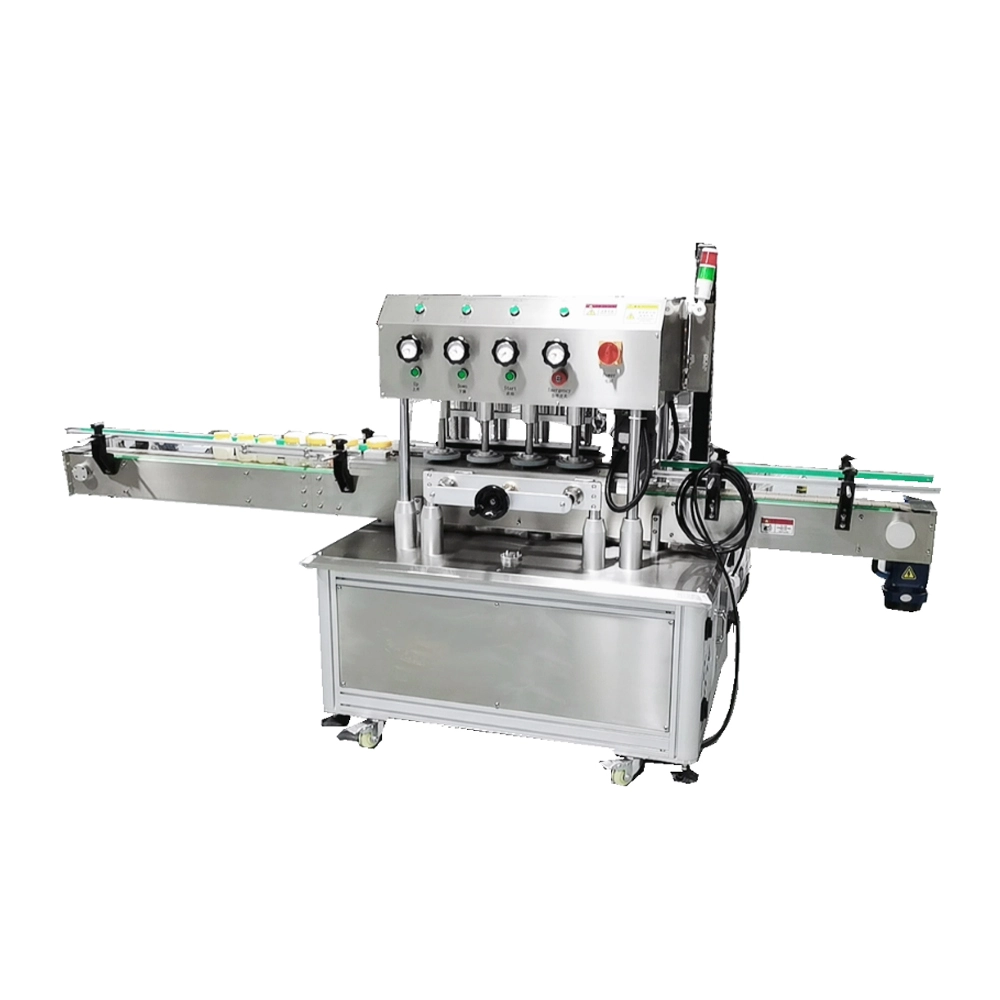
Yuanyang automatic pump head feeding and capping machine is a bottle cap sorter and capper for bottles with pump heads, which is often used to close lids of containers such as nail polish, sprayers, and shampoo. The capping machine with a pump head feeder is widely used in food, medicine, chemical, cosmetic, and other industries for mass production and continuous production line .
Features:
⦁ Pneumatic and electric drive;
⦁ Automated fast speed;
⦁ Suitable for various types of caps.
Automatic High Speed Capping Machine for Sale
The Yuanyang automatic high-speed capping machine is a kind of 8-wheel bottle-capping machine with fast working efficiency. The automatic capper is often used to close lids of containers such as bottles and jars, especially for plastic bottles, which are widely used in food, medicine, chemical, cosmetic, and other industries for mass production and continuous production lines.
Features:
⦁ Electric drive;
⦁ Automated fast speed;
⦁ Suitable for various screw caps, pumps, and spray bottles.
 Scan QR Code
Facebook
YouTube
LinkedIn
Whatsapp: +8613434139712
Guangzhou Yuanyang Machinery