





Energy-Efficient Mixing Technologies for Wastewater
- Practical Ways to Cut Energy Use in Industrial Water Treatment
- Why energy matters in industrial water treatment solutions
- Understanding where mixing fits in an industrial water treatment solution
- Selecting the right mixers for energy-efficient industrial water treatment solution
- Technology comparison: energy, application, and typical gains for industrial water treatment solutions
- Operational controls and process integration for energy savings in industrial water treatment solution
- Measuring and verifying energy improvements for industrial water treatment solution
- Case study examples and expected outcomes for industrial water treatment solution
- Economic considerations and lifecycle analysis for industrial water treatment solution
- Design tips to maximize mixing efficiency in your industrial water treatment solution
- Integration of mixing and full industrial water treatment solution with process equipment
- Yuanyang: Supporting energy-efficient mixing and turnkey industrial water treatment solutions
- How Yuanyang’s product range supports energy efficiency
- Practical implementation roadmap for operators seeking an energy-efficient industrial water treatment solution
- FAQ — Energy-Efficient Mixing for Wastewater
- Contact and next steps
- References
Practical Ways to Cut Energy Use in Industrial Water Treatment
Why energy matters in industrial water treatment solutions
Energy is one of the largest recurring costs in wastewater treatment. For many plants, aeration and mixing account for the majority of electrical consumption. Selecting and operating energy-efficient mixing equipment is therefore central to reducing operating costs, lowering carbon footprints, and meeting regulatory and sustainability targets. This article lays out proven technologies, selection criteria, and operational practices that water utilities and industrial operators can use to drive measurable energy savings while maintaining treatment performance.Once you're familiar with energy-saving solutions, it’s crucial to keep your mixing equipment in top condition. Learn more about maintenance and troubleshooting for treatment mixers to avoid downtime and ensure long-term efficiency.
Understanding where mixing fits in an industrial water treatment solution
Mixing serves many roles in wastewater processes: keeping solids in suspension in tanks, ensuring contact between reactants in chemical dosing, homogenizing sludge, and supporting biological processes such as activated sludge and anaerobic digestion. Because mixing must maintain process hydraulics and biological function, energy-focused changes must preserve or improve treatment outcomes. A good energy-efficiency strategy starts with an audit of where and how mixing energy is used, and then targets the highest-impact opportunities (e.g., large aeration tanks, sludge digesters, equalization basins).
Selecting the right mixers for energy-efficient industrial water treatment solution
Not all mixing tasks require the same technology. Matching the mixer type and impeller design to the process can yield significant savings. Key options include:
- Submersible mixers – effective for bulk tank turnover and degassing with moderate energy use and compact installation.
- Top-entry mechanical agitators – flexible for processes needing shaft-mounted impellers and high-torque mixing.
- Static mixers – no moving parts, ideal for continuous inline blending with very low energy demand when flow is available.
- High-shear mixers and homogenizers – targeted for emulsification and rapid dispersion; higher power but used intermittently so net energy can be controlled.
When specifying equipment for an industrial water treatment solution, evaluate required power, torque curves, mixing time, fouling risk, and maintenance access. Energy-efficient selection is about fit-for-purpose rather than simply choosing the most power-dense device.
Technology comparison: energy, application, and typical gains for industrial water treatment solutions
The table below summarizes commonly used mixing and aeration strategies and their relative energy profiles. The energy impact varies by site, process scale, and operational strategy; figures below are qualitative or range-based and should be validated with a site-specific energy audit.
| Technology | Primary Applications | Relative Energy Intensity | Typical Energy Savings vs. Baseline | Notes |
|---|---|---|---|---|
| Fine-bubble diffused aeration | Aeration basins | High (aeration major load) | 20–50% when combined with good controls | Improves O2 transfer efficiency; requires blower & diffuser maintenance (Source: US EPA) |
| Submersible mixers (high-efficiency motors) | Sludge tanks, clarifiers, digesters | Medium | 10–40% with VFDs and optimized placement | Lower line losses; localized mixing; reduced structural needs |
| Top-entry agitators with advanced impellers | Chemical mixing, thick sludges | Medium–High | 10–30% via VFDs and improved impeller design | Good for high-viscosity fluids; mechanical seals require maintenance |
| Static inline mixers | Chemical dosing, blending, pH correction | Low (no motor) | Variable; often reduces recirculation energy | Extremely low maintenance; best where flow provides mixing energy |
| High-shear mixers (intermittent use) | Emulsification, chemical preparation | High (short duration) | Net energy positive if used intermittently to shorten batch times | Good process control reduces overall runtime |
Data sources and guidance for these ranges include published EPA and industry guidance documents (see References).
Operational controls and process integration for energy savings in industrial water treatment solution
Hardware selection is only part of the equation. Controls and operations multiply savings:
- Variable Frequency Drives (VFDs): Adjust motor speed to match demand. For many mixing applications, power demand scales with the cube of speed, so reducing speed offers large savings. The U.S. Department of Energy and industry studies report significant savings potential when VFDs replace constant-speed drives.
- Automated process control: Use dissolved oxygen (DO), turbidity, level, and ammonia sensors to modulate aeration and mixing based on real-time needs rather than fixed schedules.
- Duty cycling and sequencing: Stagger mixers and pumps so only the minimum number of units operate to meet process targets at any time.
- Maintenance and fouling control: Dirty diffusers, worn impellers, and imbalanced rotors reduce efficiency. A preventive maintenance program preserves performance and avoids energy penalties.
Measuring and verifying energy improvements for industrial water treatment solution
Verification is essential to claim savings and to optimize further. Practical steps include:
- Baseline energy audit: Meter energy use for aeration, mixing, pumps, and other loads over representative operating periods.
- Key performance indicators (KPIs): kWh per cubic meter treated, kWh per kg BOD removed, and specific energy for mixers (kW per tank volume).
- Control data logging: Record DO, motor speeds, flow rates, and energy use continuously to correlate actions with savings.
- Post retrofit monitoring: Compare pre/post metrics over similar load and temperature conditions to account for seasonal variability.
Case study examples and expected outcomes for industrial water treatment solution
Several utilities report that improving aeration control and upgrading diffuser technology reduces aeration energy by 20–50% (US EPA guidance). Replacing constant-speed mixers with VFD-driven high-efficiency motors, combined with improved impeller geometry, often yields 10–40% energy reductions for mixing tasks (site-dependent). The combination of equipment upgrades, controls, and operational changes typically delivers the largest, most persistent savings.
Economic considerations and lifecycle analysis for industrial water treatment solution
When evaluating upgrades, consider both capital and lifecycle costs. Key inputs for a business case are:
- Capital cost of equipment (mixers, VFDs, controls, diffusers).
- Installation costs and downtime risks.
- Operating cost reductions (kWh saved × energy price).
- Maintenance savings (if new equipment reduces servicing frequency).
- Useful lifetime and salvage value.
Often, energy-efficient retrofits pay back within 2–5 years depending on electricity prices and incentives. Include intangible benefits such as reduced greenhouse gas emissions and improved regulatory resilience in the assessment.
Design tips to maximize mixing efficiency in your industrial water treatment solution
Practical design tips from plant experience:
- Minimize hydraulic short-circuiting by optimizing inlet/outlet locations and using baffles or flow directors.
- Place mixers to create complete tank turnover with the fewest units—modeling (CFD) can de-risk placement decisions.
- Choose impeller geometry matched to fluid viscosity and solids concentration; flat-blade propellers excel in low-viscosity mixing while pitched-blade turbines suit solids suspension.
- Prefer modular, serviceable units to reduce downtime and keep efficiency high over time.
Integration of mixing and full industrial water treatment solution with process equipment
For industrial clients with integrated process lines, consider end-to-end optimizations: combining mixing strategies with dosing systems, homogenizers, and filling lines can reduce recirculation, improve chemical efficiency, and shorten processing times. Inline static mixers ahead of chemical dosing, for example, can improve dispersion and reduce the need for prolonged mechanical agitation downstream.
Yuanyang: Supporting energy-efficient mixing and turnkey industrial water treatment solutions
Yuanyang is one of the leading manufacturers of industrial mixers and agitators in China. Yuanyang's main products include vacuum homogenizers, vacuum emulsifying mixers, high shear mixers, and other vacuum mixers. Since 2008, Yuanyang has focused on providing complete production line equipment, including mixing equipment, storage tanks, filling machines, capping machines, labeling machines, sealing machines, inkjet printers, and water treatment equipment. Our company can provide free technical training and one-stop installation support, providing a full set of turnkey services. Yuanyang has now obtained multiple CE certifications. CE certification is a safety and health mark, not a quality mark. Most goods sold in the EU should carry the CE mark. Yuanyang's vision is to become the best industrial mixer and agitator manufacturer in the world. Our website is https://www.yuanymachinery.com/.
How Yuanyang’s product range supports energy efficiency
Yuanyang offers several product lines that align with energy-efficient wastewater practices:
- Vacuum emulsifying mixers & homogenizer mixers — enable efficient batch preparation and reduce long mixing cycles.
- Liquid mixing tanks & storage tanks — designed for optimized flow and minimal dead zones.
- Lifting mixers & submersible units — compact, high-efficiency options for tank turnover.
- Automatic liquid filling line, filling and capping machines, labeling machines — integrated production lines that reduce recirculation and handling, lowering indirect energy use.
Key competitive advantages: strong in-house manufacturing, turnkey integration (mixing through packaging), free technical training and installation support, and multiple CE certifications supporting export compliance. These capabilities make Yuanyang a practical partner for projects seeking both equipment and process-level energy optimizations.
Practical implementation roadmap for operators seeking an energy-efficient industrial water treatment solution
Follow these steps to turn opportunity into results:
- Conduct an energy audit focusing on mixing and aeration loads.
- Identify low-cost measures (VFD installation, control tuning, diffuser cleaning) with short payback.
- Pilot hardware changes on one basin or process lane (e.g., replace a diffuser grid or install a submersible mixer with VFD) and measure results.
- Scale successful pilots and integrate with SCADA/EMS for automated control and reporting.
- Establish ongoing preventative maintenance and KPI tracking to sustain savings.
FAQ — Energy-Efficient Mixing for Wastewater
Q1: Which mixing component consumes the most energy in a wastewater plant?
A1: Aeration (air blowers and associated diffusers) is typically the largest single energy consumer. Mixing motors and pumps also contribute substantially; combined, pumping, aeration and mixing often make up the bulk of a plant’s electricity use (see EPA reference).
Q2: Will installing VFDs always save energy for mixers?
A2: VFDs generally save energy because they match motor speed to demand; however, savings depend on the process duty cycle and whether mixers frequently operate at partial loads. Proper control strategy and tuning are critical to realize savings.
Q3: Are static mixers suitable for all chemical dosing applications?
A3: Static mixers are excellent where pipeline flow provides sufficient energy for mixing and where continuous inline blending is acceptable. They are less suitable for batch applications or where residence time and turbulence from mechanical agitation are required.
Q4: How should I choose between submersible mixers and top-entry agitators?
A4: Choose submersible mixers for compact installations and when submerged operation offers better flow circulation with lower structural needs. Top-entry agitators are preferable when dealing with viscous fluids, frequent maintenance access, or very high torque requirements.
Q5: What quick operational changes can reduce mixing energy immediately?
A5: Clean diffusers, remove obstructions, optimize impeller positioning, implement duty cycling, and tune control loops (e.g., DO setpoints) — many of these have low capital cost and quick payback.
Q6: How can Yuanyang help my plant reduce mixing energy?
A6: Yuanyang supplies a broad range of mixers (vacuum emulsifying mixers, homogenizers, submersible and lifting mixers), offers turnkey integration with storage and filling lines, provides free technical training, on-site installation support, and can advise on equipment selection and control strategies tailored to your industrial water treatment solution.
Contact and next steps
If your objective is to reduce operating costs and improve sustainability, begin with an energy audit targeted at mixing and aeration. For equipment procurement, pilot installations, or turnkey solutions, contact Yuanyang via https://www.yuanymachinery.com/ to request product specs, case studies, or a free technical consultation. Our team can help size mixers, recommend control strategies, and provide full installation and training support.
References
- U.S. Environmental Protection Agency (EPA) — Energy Efficiency for Wastewater Treatment: https://www.epa.gov/sustainable-water-infrastructure/energy-efficiency-wastewater-treatment (accessed 2025-11-20)
- U.S. Department of Energy — Variable Frequency Drives (VFD) Overview: https://www.energy.gov/eere/amo/variable-speed-drives (accessed 2025-11-20)
- International Water Association (IWA) — Energy in Water and Wastewater: https://iwa-network.org/ (accessed 2025-11-20)
- Yuanyang Machinery — Company and product information: https://www.yuanymachinery.com/ (accessed 2025-11-20)
- Case study summaries and industry guidance on diffuser upgrades and aeration control: US EPA and regional water authorities (collected sources summarized in EPA guidance document) (accessed 2025-11-20)
How to Choose Right continuous powder mixer manufacturer and supplier in America?
Tips for Wholesale filling and sealing machines in America
Where to Buy ultrasonic sieve machine
How to start the wholesale vacuum emulsifier mixer business ?
Liquid Soap Mixer
Can you provide liquid soap formula and train service?
Yes, we can provide different formulas, and teach client how to adjust the formula flexibly.
Semi Automatic Capping Machine
Are the capping height and wheel distance adjustable?
Yes, the capping wheels can be adjusted higher or lower for different bottle height. The distance between wheels can be wider or narrower for different cap sizes.
Water Filling Machine
What liquid is it suitable for ?
No, this is water filling machine, only suitable for liquids like water, drinks, milk, perfume, eye drops...
Sachet Packaging Machine
Should I provide film design to customize the bag packaging machine?
Yes, the small bag packing machine module will be customized according to client’s film width. We also provide film design service for clients.
Liquid Soap Mixer Machine
Is the speed adjustable with VFD?
The chemical mixer tank is often with frequency converter. But some clients may just need a fixed speed. So we customize upon requirements.
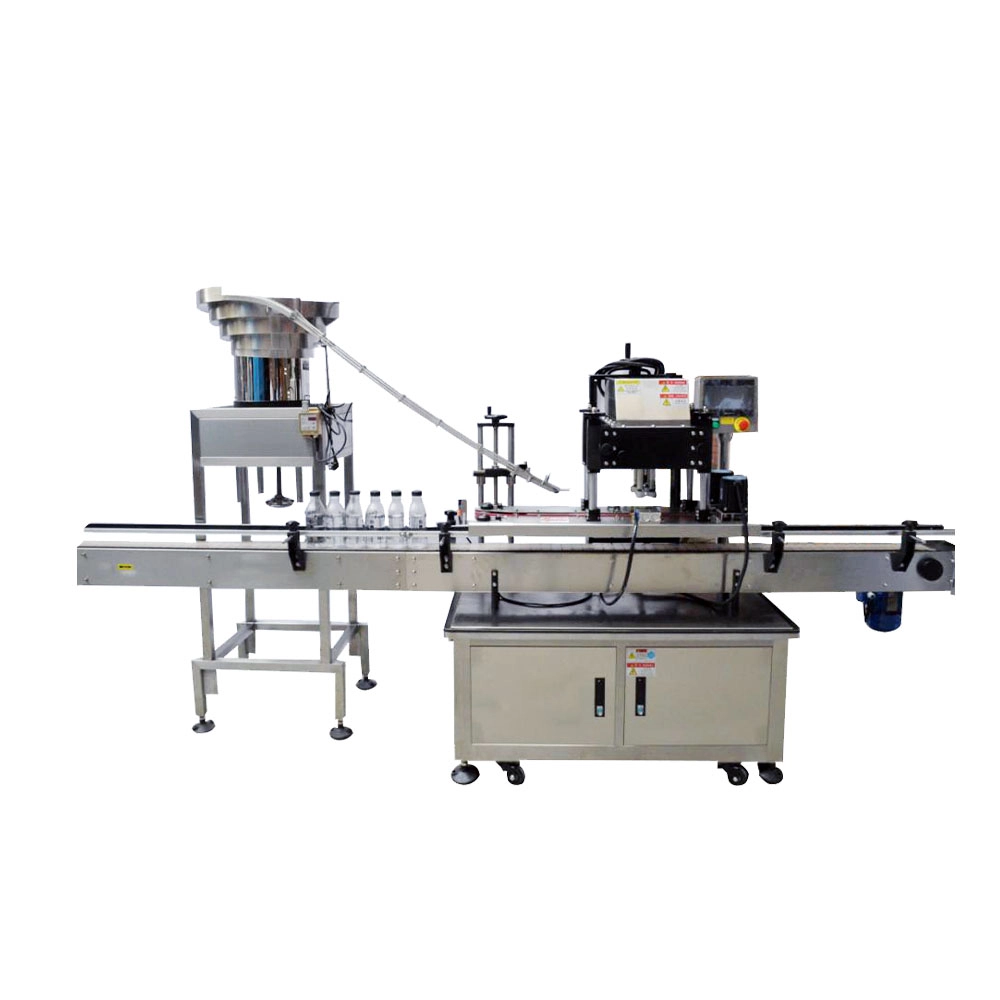
Automatic Plastic Caps Capping Machine with Vibrating Cap Feeder for Sale
Yuanyang automatic screw capping machine is a kind of four-wheel bottle capping machine. The automatic screw capper is often used to close lids of containers such as bottles and jars, especially for plastic bottles, which are widely used in food, medicine, chemical, cosmetic, and other industries for mass production and continuous production lines.
Features:
⦁ Full pneumatic drive;
⦁ Automated fast speed;
⦁ Suitable for various screw caps, pumps, and spray bottles.
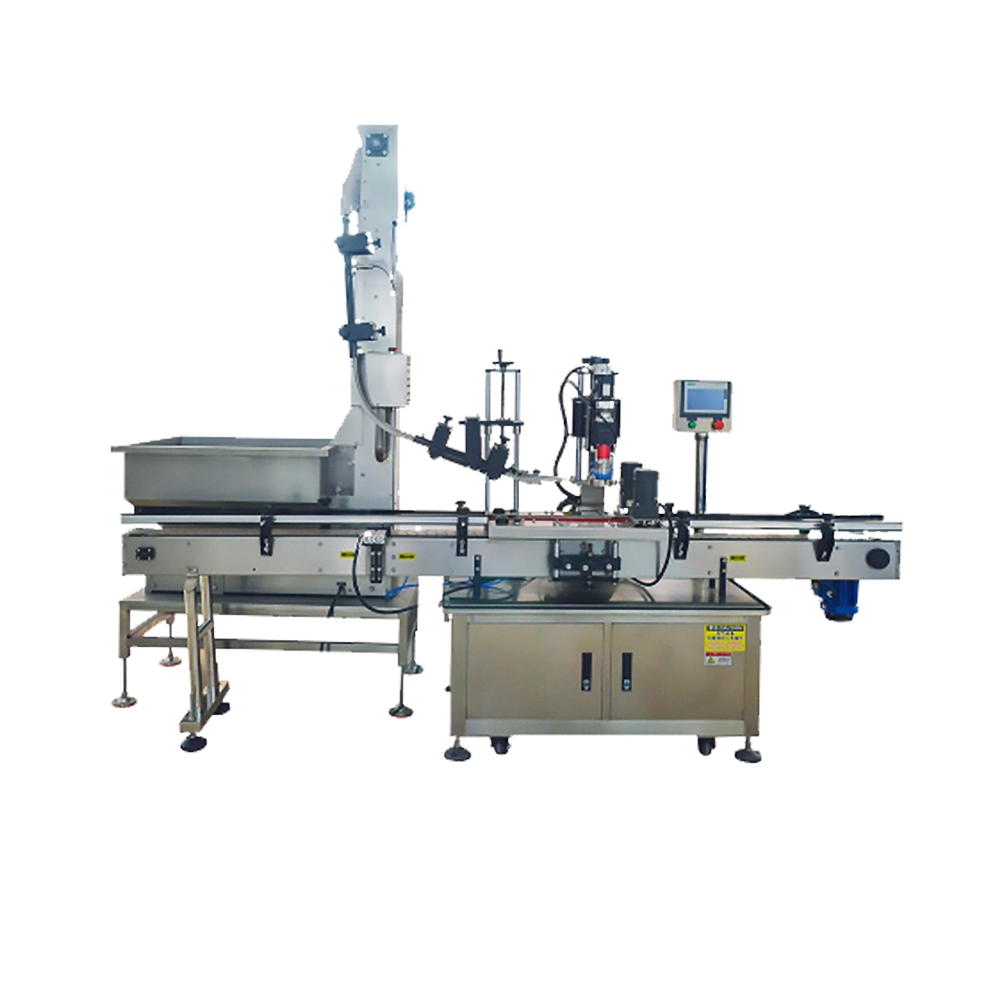
Automatic Metal Caps Capping Machine for Sale
Yuanyang automatic metal cap capping machine is a bottle capper for bottles with metal caps, which is often used to close lids of containers such as bottles and jars. The glass bottle metal capping machine is widely used in food, medicine, chemical, cosmetic, and other industries for mass production and continuous production line .
Features:
⦁ Pneumatic and electric drive;
⦁ Automated fast speed;
⦁ Suitable for glass bottles with metal caps.
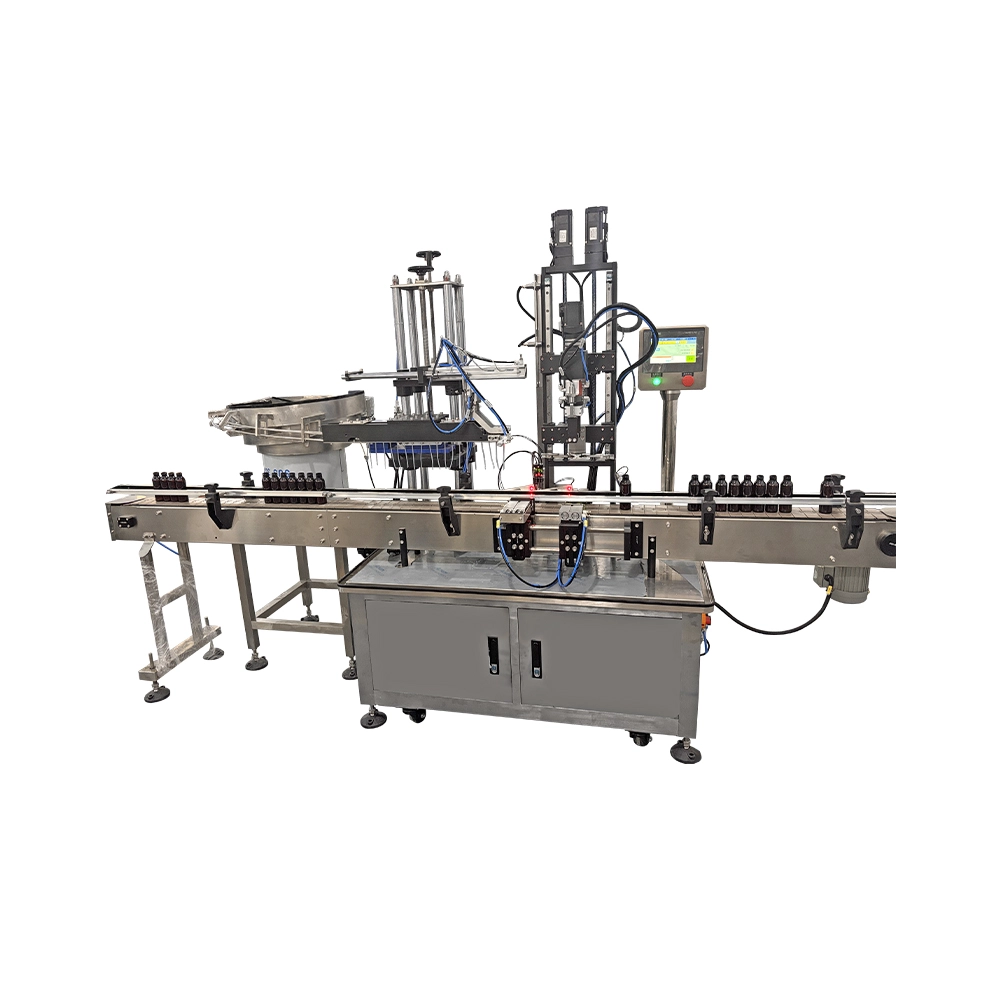
Automatic Pump Head Feeding and Capping Machine for Sale
Yuanyang automatic pump head feeding and capping machine is a bottle cap sorter and capper for bottles with pump heads, which is often used to close lids of containers such as nail polish, sprayers, and shampoo. The capping machine with a pump head feeder is widely used in food, medicine, chemical, cosmetic, and other industries for mass production and continuous production line .
Features:
⦁ Pneumatic and electric drive;
⦁ Automated fast speed;
⦁ Suitable for various types of caps.
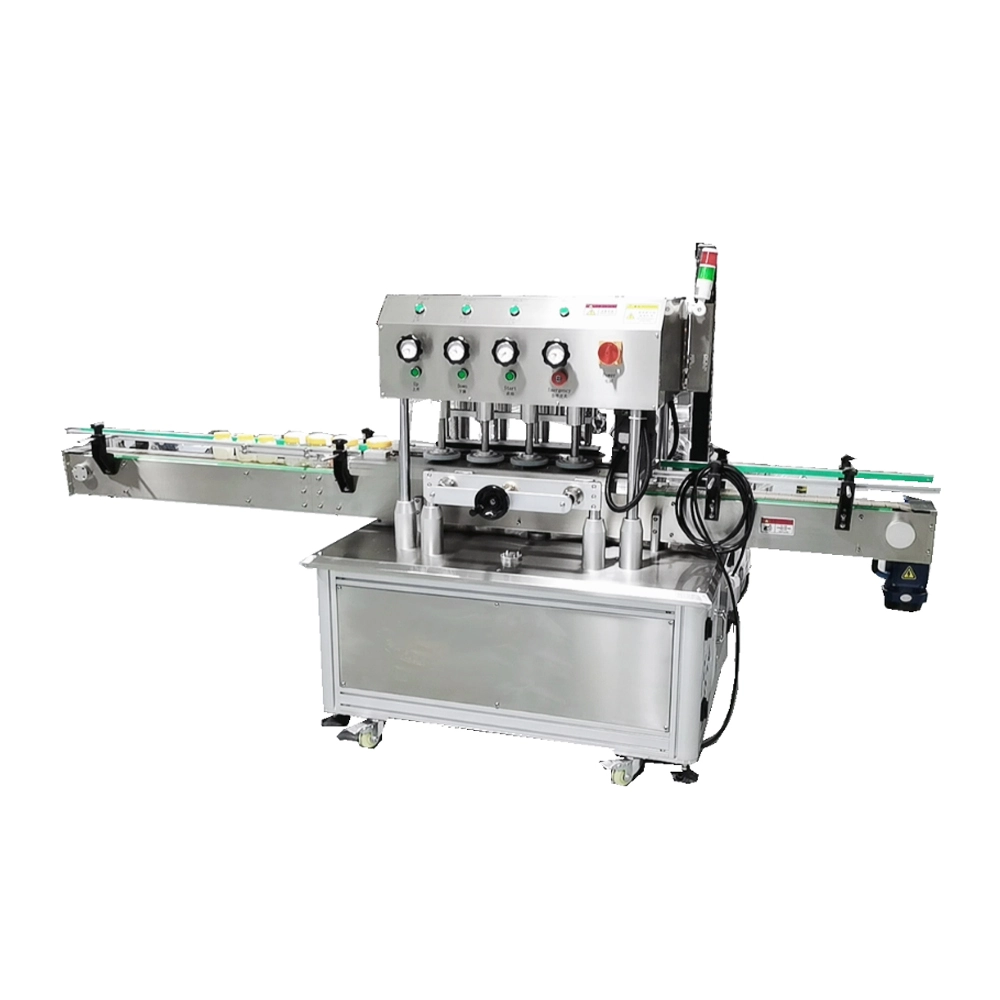
Automatic High Speed Capping Machine for Sale
The Yuanyang automatic high-speed capping machine is a kind of 8-wheel bottle-capping machine with fast working efficiency. The automatic capper is often used to close lids of containers such as bottles and jars, especially for plastic bottles, which are widely used in food, medicine, chemical, cosmetic, and other industries for mass production and continuous production lines.
Features:
⦁ Electric drive;
⦁ Automated fast speed;
⦁ Suitable for various screw caps, pumps, and spray bottles.
 Scan QR Code
Facebook
YouTube
LinkedIn
Whatsapp: +8613434139712
Guangzhou Yuanyang Machinery