





Scaling Up: Choosing a Mixer for Large-Scale Liquid Soap Plants
- Scaling Up: Choosing a Homogenizer Mixer for Large-Scale Liquid Soap Plants
- Why the right homogenizer mixer matters for large-scale liquid soap production
- Understanding the homogenizer mixer and its role in liquid soap plants
- Key selection criteria when choosing a homogenizer mixer
- Product spotlight — Liquid Soap Mixer Machine for Sale (Yuanyang)
- How to size a homogenizer mixer for production targets
- Design features to evaluate: scrapers, seals and homogenizer placement
- Sanitation, regulatory compliance and material selection
- Installation, utilities and footprint planning
- Operational considerations: cycle optimization and reducing downtime
- Cost, ROI and lifecycle considerations
- Why the Yuanyang Liquid Soap Mixer Machine is a strong option for scale-up
- Maintenance and troubleshooting common homogenizer issues
- Comparison checklist: What to ask a mixer supplier
- FAQ — Frequently asked questions
- Q: What is the difference between a homogenizer mixer and a standard agitator?
- Q: Can the Yuanyang Liquid Soap Mixer Machine handle high-viscosity formulations?
- Q: How do I estimate the right motor power for my batches?
- Q: Is CIP recommended for liquid soap plants?
- Call to action — contact sales or view the product
- Authoritative references and further reading
- Contact / View product

Scaling Up: Choosing a Homogenizer Mixer for Large-Scale Liquid Soap Plants
Why the right homogenizer mixer matters for large-scale liquid soap production
Scaling a liquid soap plant is more than increasing tank size and labor — it requires choosing mixing equipment that preserves product quality, controls viscosity and stability, and meets hygiene and throughput targets. A homogenizer mixer is often the core piece of equipment for producing consistent liquid soaps, shampoos, detergents and similar viscous liquids. Selecting an appropriate homogenizer mixer affects batch-to-batch consistency, raw material usage, downstream filling speed and regulatory compliance. Scaling production naturally raises financial questions. Conducting an ROI and lifecycle cost analysis for liquid soap mixer machines helps decision-makers justify capital investment.
Understanding the homogenizer mixer and its role in liquid soap plants
The term homogenizer mixer refers to an assembly that combines high-shear mixing (to disperse and emulsify ingredients) with bulk agitation (to maintain uniformity in the tank). In liquid soap production, a homogenizer mixer performs tasks such as dispersing surfactants, integrating thickeners and polymers, breaking down air pockets, and producing stable emulsions. Proper shear rates and residence times are essential to avoid over-shearing sensitive polymers while ensuring microscopic dispersion of additives.
Key selection criteria when choosing a homogenizer mixer
When evaluating mixers for a large-scale plant, focus on a few measurable criteria that align with production goals:
- Throughput and capacity: Match mixer size and power to your desired LPH (liters per hour) or batch volume. Consider peak and average production schedules.
- Shear profile: High-shear elements are needed for emulsification; low-shear bulk agitation prevents damage to shear-sensitive components like some polymers or fragrances.
- Material of construction: Stainless steel (typically 304 or 316L) with sanitary finishes to prevent contamination and enable clean-in-place (CIP).
- Hygienic design and CIP suitability: Smooth surfaces, drainability and appropriate seals minimize contamination risk and cleaning time.
- Heating/cooling capability: Jackets or coil options to control temperature during high-shear operations improve product stability and processing speed.
- Maintainability: Ease of replacing wear parts (mechanical seals, rotor-stator elements) reduces downtime and operating costs.
- Control and automation: Repeatable recipes, variable speed drives and PLC integration improve consistency and reduce operator error.
Product spotlight — Liquid Soap Mixer Machine for Sale (Yuanyang)
The Yuanyang liquid soap mixer machine is an industrial homogeneous mixer for liquid soap production. The mixer machine is mainly designed to produce such liquid products as shampoo, body wash, laundry detergent, dish soap, hand sanitizer and other thick liquids.
Features:
⦁ Flat top, half-open lid, electric control system.
⦁ Suitable for various liquid cleaning products and sauces.
⦁ PTFE wall scrapers stirring at top, high shear homogenizer at bottom.
This configuration — top-mounted scrapers with a bottom high-shear homogenizer — combines effective bulk circulation with intensive local shear, a balance that is especially useful for viscous liquid soaps containing thickeners and particulate additives.
How to size a homogenizer mixer for production targets
Sizing is both art and calculation. Begin with target daily output, typical batch size and batch cycle time. Use these steps:
- Define target daily production and shift patterns (e.g., 10,000 L/day over two shifts).
- Choose a practical batch size that balances mixing efficiency and inventory (e.g., 1,000 L batches).
- Calculate required cycle time including charging, mixing, discharge and CIP.
- Select a mixer with power and shear adequate to complete mixing within that cycle time.
Below is an illustrative comparison table for common mid-to-large plant mixer configurations (example values — use vendor datasheets for final selection):
| Model | Batch Volume (L) | Motor Power (kW) | Max Viscosity (mPa·s) | Estimated Cycle Time (min) | Suitable For |
|---|---|---|---|---|---|
| Compact HS-500 | 200–1,000 | 7.5–15 | 50,000 | 30–60 | Small batches, product development |
| Industrial YM-2000 | 1,000–5,000 | 22–55 | 100,000 | 30–90 | Large-scale soap, detergents |
| PlantMaster PM-10000 | 5,000–20,000 | 75–220 | 200,000+ | 45–150 | Continuous or high-volume batches |
Design features to evaluate: scrapers, seals and homogenizer placement
For liquid soaps and detergents, three design elements deserve extra attention:
- Wall scrapers: PTFE or sanitary scrapers remove product from vessel walls to prevent burning and ensure uniform temperature. Yuanyang's inclusion of PTFE wall scrapers is beneficial for viscous formulations.
- Mechanical seals and shaft design: Robust seals reduce leakage and allow for high-temperature CIP cycles. Double-seal arrangements with a clean barrier are recommended for high-hygiene plants.
- Bottom high-shear homogenizer: Placing the homogenizer at the tank bottom promotes thorough recirculation and reduces air entrainment. High-shear rotors and stators should be selectable to match viscosity ranges.
Sanitation, regulatory compliance and material selection
Cosmetic and detergent plants must comply with good manufacturing practices and local regulations. Key sanitary recommendations:
- Use 316L stainless steel wetted parts for better corrosion resistance and cleanability.
- Design tanks and mixers for CIP and SIP where necessary to reduce manual cleaning.
- Ensure surface finishes (Ra) meet cleaning requirements — typical Ra ≤ 0.8 µm for hygienic vessels.
- Document material certificates and maintain traceability for allergens and restricted substances.
Installation, utilities and footprint planning
Plan utility requirements (electrical, steam, chilled water, compressed air) during equipment selection. Large homogenizer mixers require inrush current management for motors and proper cable sizing. Consider building floor loading limits for heavy tanks and foundations; provide access for lifting and maintenance of heavy homogenizer heads. Space for CIP skid, control cabinet and spare parts storage should also be included in the plant layout.
Operational considerations: cycle optimization and reducing downtime
To maximize plant throughput while preserving product quality:
- Optimize recipe steps to minimize time in high-shear mode where not required.
- Use variable frequency drives to tune shear and reduce energy use.
- Standardize cleaning and changeover procedures; pre-program common recipes in the control system.
- Keep critical spare parts (rotor/stator, seals) on hand to reduce Mean Time To Repair (MTTR).
Cost, ROI and lifecycle considerations
When assessing cost, include purchase price, installation, utility usage, maintenance and expected lifespan. High-quality homogenizer mixers with sanitary features often have higher initial cost but lower lifecycle cost due to reduced product losses, lower downtime and easier cleaning. A quick ROI estimate should account for increased throughput, reduced scrap and labor savings from automation and CIP.
Why the Yuanyang Liquid Soap Mixer Machine is a strong option for scale-up
Combining features such as a flat-top half-open lid (easing material charging and inspection), PTFE wall scrapers and a bottom high-shear homogenizer makes the Yuanyang Liquid Soap Mixer Machine for Sale a practical fit for many large-scale operations. Specifically:
- Top scrapers maintain wall cleanliness during heating/cooling and reduce product residue.
- Bottom high-shear homogenizer ensures rapid dispersion and uniform viscosity — essential for consistent filling and consumer perception.
- Electric control system allows recipe repeatability and integration with plant automation for scale-up stability.
For engineers evaluating vendor solutions, Yuanyang’s configuration can reduce cycle times and improve consistency across batches — benefits that translate into measurable gains in throughput and product quality.
Maintenance and troubleshooting common homogenizer issues
Common operational issues include seal leaks, rotor/stator wear, inconsistent viscosity and foaming. Best practices to manage these:
- Schedule preventive maintenance for seals and rotor/stator inspection based on operating hours.
- Implement in-process monitoring (torque, temperature, particle size where applicable).
- Tune air handling and vacuum systems to control foam; consider defoamers only after process optimization.
Comparison checklist: What to ask a mixer supplier
When you contact potential suppliers, prepare this checklist:
- Can you provide throughput data for my target batch size and product viscosity?
- What material certificates and surface finish specifications can you supply?
- Is the mixer CIP-capable and what is recommended CIP cycle?
- What are typical spare parts, lead times and recommended inventory?
- Do you provide integration support for PLC/DCS and recipe control?
FAQ — Frequently asked questions
Q: What is the difference between a homogenizer mixer and a standard agitator?
A: A standard agitator provides bulk mixing and circulation, while a homogenizer mixer combines bulk agitation with high-shear rotor-stator elements for fine dispersion and emulsification. The homogenizer is necessary when you need microscopic dispersion or stable emulsions.
Q: Can the Yuanyang Liquid Soap Mixer Machine handle high-viscosity formulations?
A: Yes — the combination of PTFE wall scrapers and a bottom high-shear homogenizer is designed to handle thick liquids. For extreme viscosities, consult the supplier for specific rotor/stator options and motor sizing.
Q: How do I estimate the right motor power for my batches?
A: Motor power depends on batch volume, viscosity and required mixing time. Use empirical data from pilot runs or vendor performance curves. As a rule of thumb, power needs increase non-linearly with viscosity and tank scale.
Q: Is CIP recommended for liquid soap plants?
A: Yes. CIP reduces downtime and contamination risk. Ensure wetted surfaces and seals are compatible with cleaning chemicals and temperatures used in your CIP protocol.
Call to action — contact sales or view the product
If you are planning to scale your plant and want to evaluate the Yuanyang Liquid Soap Mixer Machine for Sale, contact our technical sales team for a process review, pilot testing options and a customized quote. Request a datasheet and ROI example specific to your formulations to speed up procurement decisions.
Authoritative references and further reading
For deeper technical standards and regulatory guidance, consult the following authoritative sources:
- Homogenizer — Wikipedia
- Mixing (process engineering) — Wikipedia
- U.S. Food & Drug Administration — Cosmetics Guidance
- EHEDG — Hygienic engineering & design
- ISO 9001 — Quality management systems
Contact / View product
For product specifications, pilot trials or quotation for the Liquid Soap Mixer Machine for Sale, please contact our sales department or request a live demo. Investing in the right homogenizer mixer is a strategic step when scaling up — it protects product quality, improves throughput and reduces long-term costs.
Sachet Packaging Machine Safety Features Buyers Should Know
Custom ribbon mixer Manufacturers and Suppliers in US
Custom homogenizer mixer Manufacturers and Suppliers in Germany
Why choose YUANYANG as your milk homogenizer supplier
FAQs
What's the leading time and shipping way?
We usually deliver by sea or train, which is cost-effective,and other ways as you require. The leading time depends on order quantity and machine items! For small order quantity of standard machine, we will have stock. For large quantity of standard machine and other customized machines, it needs 15-45 days. We will confirm details with customers before you place orders!
Washing Powder
Does Yuanyang equipment support custom formulas?
Yes, our machines are highly flexible to accommodate various client-specific formulas.
Sealed Storage Tank
Can you add a card slot to put the name card of each kind of products.
Yes, there is indeed a card slot for the standard storage tanks.
High Speed Dispersion Machine
Can I customize stainless steel 316 materials for the dispersing machine?
Yes, we customize materials upon requirement.
Melting Tank
Can I buy spare parts of heater tubes in case the heater burns?
Yes, we supply spare heating tubes. Client just remember the heater can not be operated without liquids in the jacket, otherwise, the heating tube will burn.
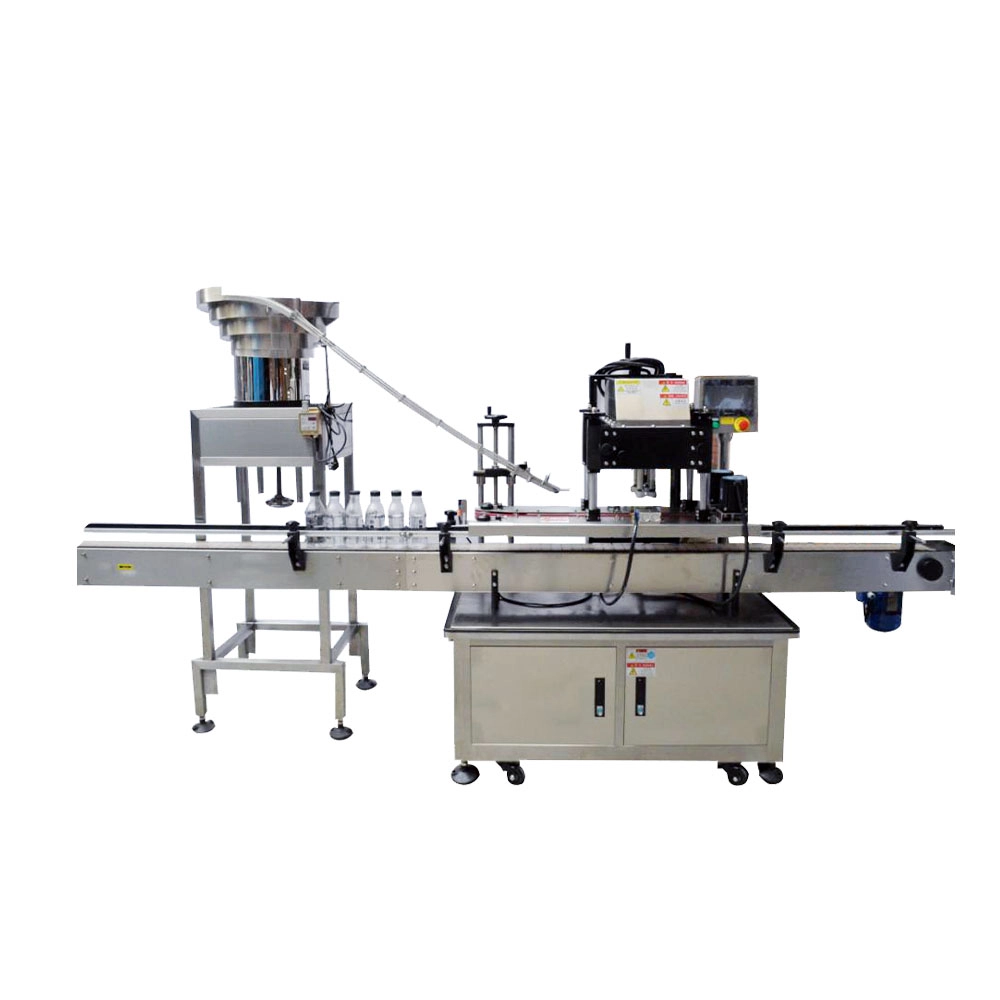
Automatic Plastic Caps Capping Machine with Vibrating Cap Feeder for Sale
Yuanyang automatic screw capping machine is a kind of four-wheel bottle capping machine. The automatic screw capper is often used to close lids of containers such as bottles and jars, especially for plastic bottles, which are widely used in food, medicine, chemical, cosmetic, and other industries for mass production and continuous production lines.
Features:
⦁ Full pneumatic drive;
⦁ Automated fast speed;
⦁ Suitable for various screw caps, pumps, and spray bottles.
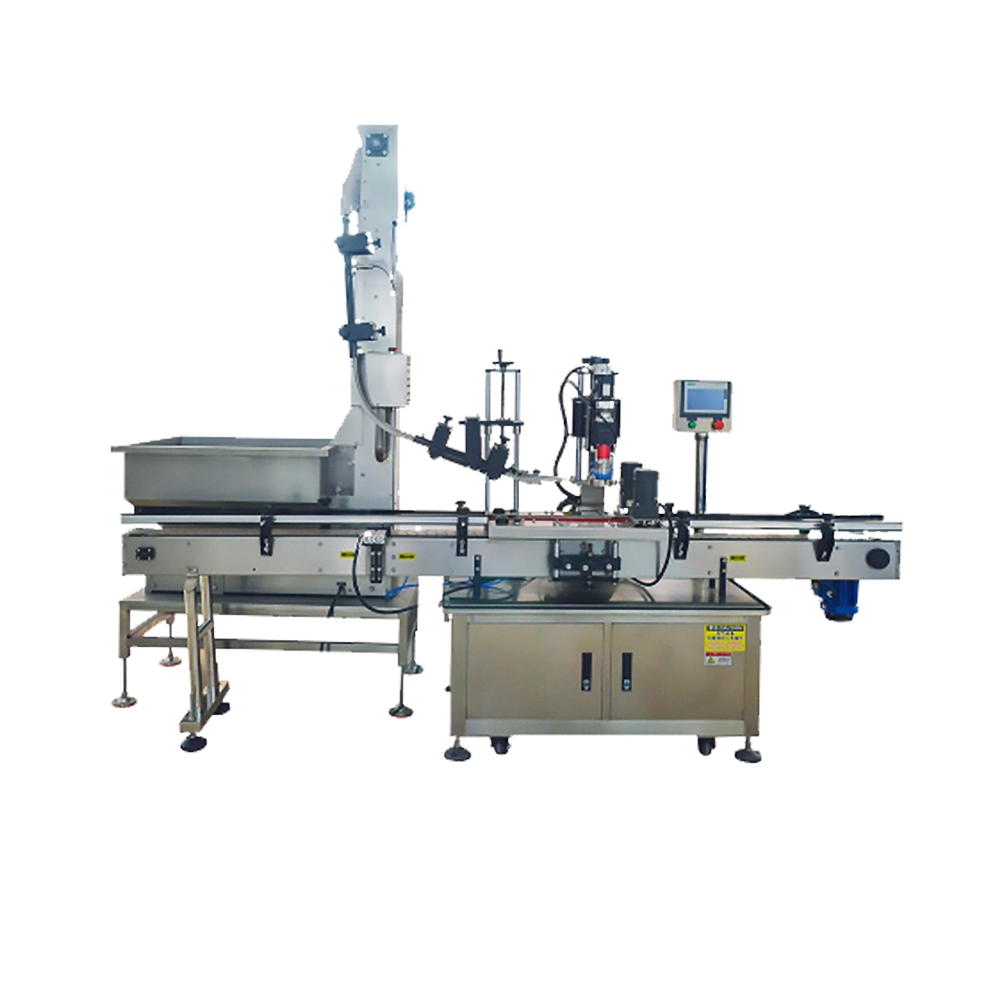
Automatic Metal Caps Capping Machine for Sale
Yuanyang automatic metal cap capping machine is a bottle capper for bottles with metal caps, which is often used to close lids of containers such as bottles and jars. The glass bottle metal capping machine is widely used in food, medicine, chemical, cosmetic, and other industries for mass production and continuous production line .
Features:
⦁ Pneumatic and electric drive;
⦁ Automated fast speed;
⦁ Suitable for glass bottles with metal caps.
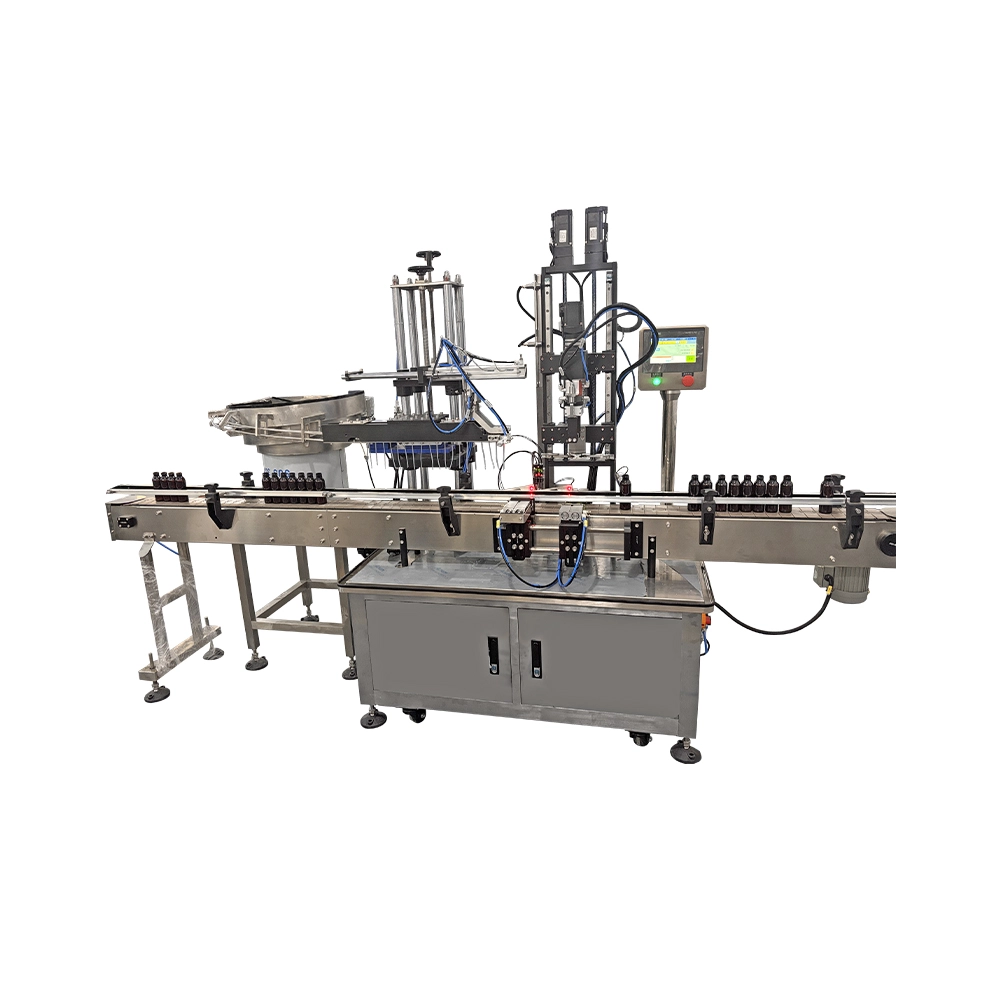
Automatic Pump Head Feeding and Capping Machine for Sale
Yuanyang automatic pump head feeding and capping machine is a bottle cap sorter and capper for bottles with pump heads, which is often used to close lids of containers such as nail polish, sprayers, and shampoo. The capping machine with a pump head feeder is widely used in food, medicine, chemical, cosmetic, and other industries for mass production and continuous production line .
Features:
⦁ Pneumatic and electric drive;
⦁ Automated fast speed;
⦁ Suitable for various types of caps.
Automatic High Speed Capping Machine for Sale
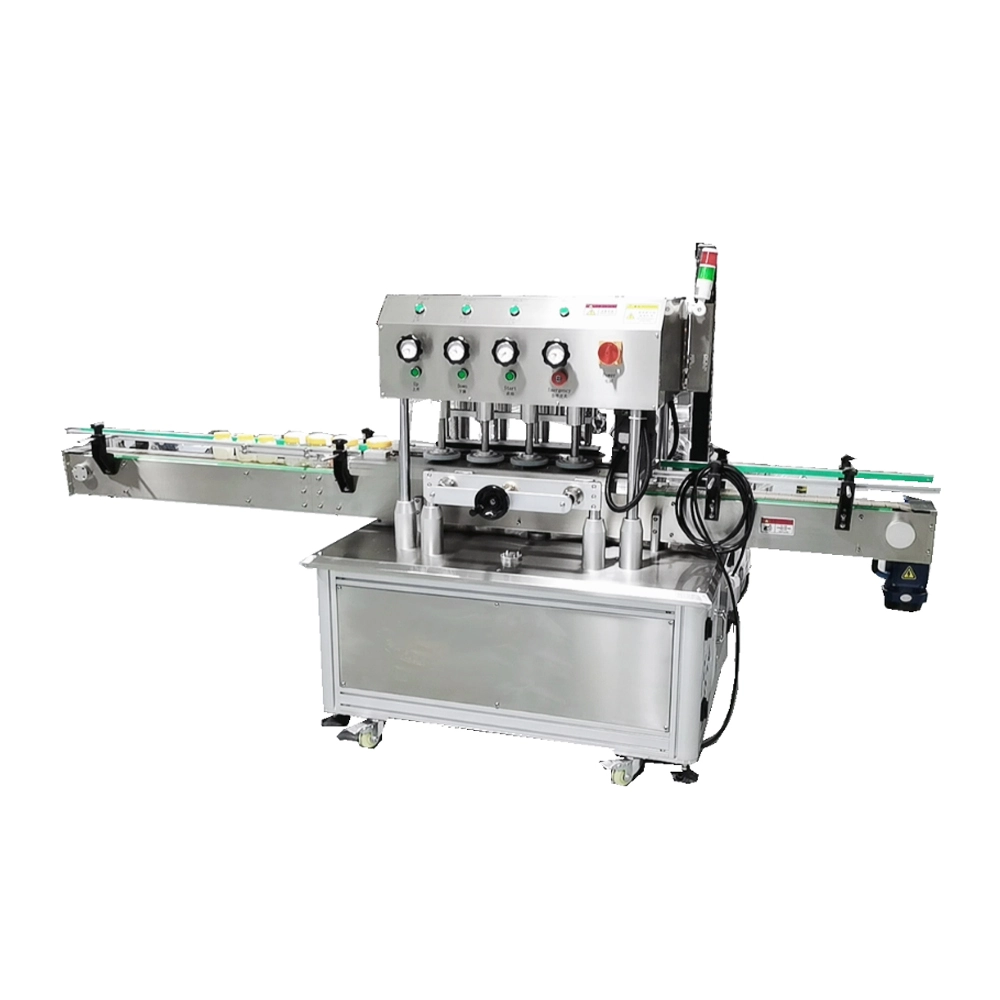
The Yuanyang automatic high-speed capping machine is a kind of 8-wheel bottle-capping machine with fast working efficiency. The automatic capper is often used to close lids of containers such as bottles and jars, especially for plastic bottles, which are widely used in food, medicine, chemical, cosmetic, and other industries for mass production and continuous production lines.
Features:
⦁ Electric drive;
⦁ Automated fast speed;
⦁ Suitable for various screw caps, pumps, and spray bottles.
 Scan QR Code
Facebook
YouTube
LinkedIn
Whatsapp: +8613434139712
Guangzhou Yuanyang Machinery