





Top Considerations When Purchasing a Single Layer Agitator Tank
- Material & Construction: Why It Matters for Longevity and Product Integrity
- Stainless steel grades and corrosion resistance
- Weld quality, surface finish, and sanitary design
- Mixing Performance: Agitator, Impellers and Scrapers
- Agitator paddle selection and placement
- Frame mixing with PTFE scrapers and anti-stick features
- Power, RPM range and motor control
- Sanitation, Compliance and Maintenance
- Cleanability and CIP (clean-in-place) readiness
- Regulatory standards and documentation
- Maintenance, spare parts and lifecycle planning
- Choosing the Right Tank for Your Application: Sizing, Comparisons and Supplier Evaluation
- Comparing single-layer, jacketed, and double-wall tanks
- Sizing, footprint, and plant integration
- Supplier evaluation: warranties, testing, and after-sales service
- Practical Checklist and Buying Tips Before You Purchase
- Pre-purchase checklist
- Cost of ownership vs. upfront cost
- Integration with QA/QC and process validation
- Why Yuanyang Single-Layer Agitator Tank Might Be the Right Choice
- Product overview and key features
- Brand advantages and support
- How to validate performance before buying
- Frequently Asked Questions (FAQ)
- Q: Is a single-layer stainless steel mixing tank suitable for all products?
- Q: What stainless steel grade should I choose?
- Q: How important are PTFE scrapers?
- Q: Can a single-layer tank be retrofitted with heating or cooling?
- Q: What documentation should I request from the vendor?
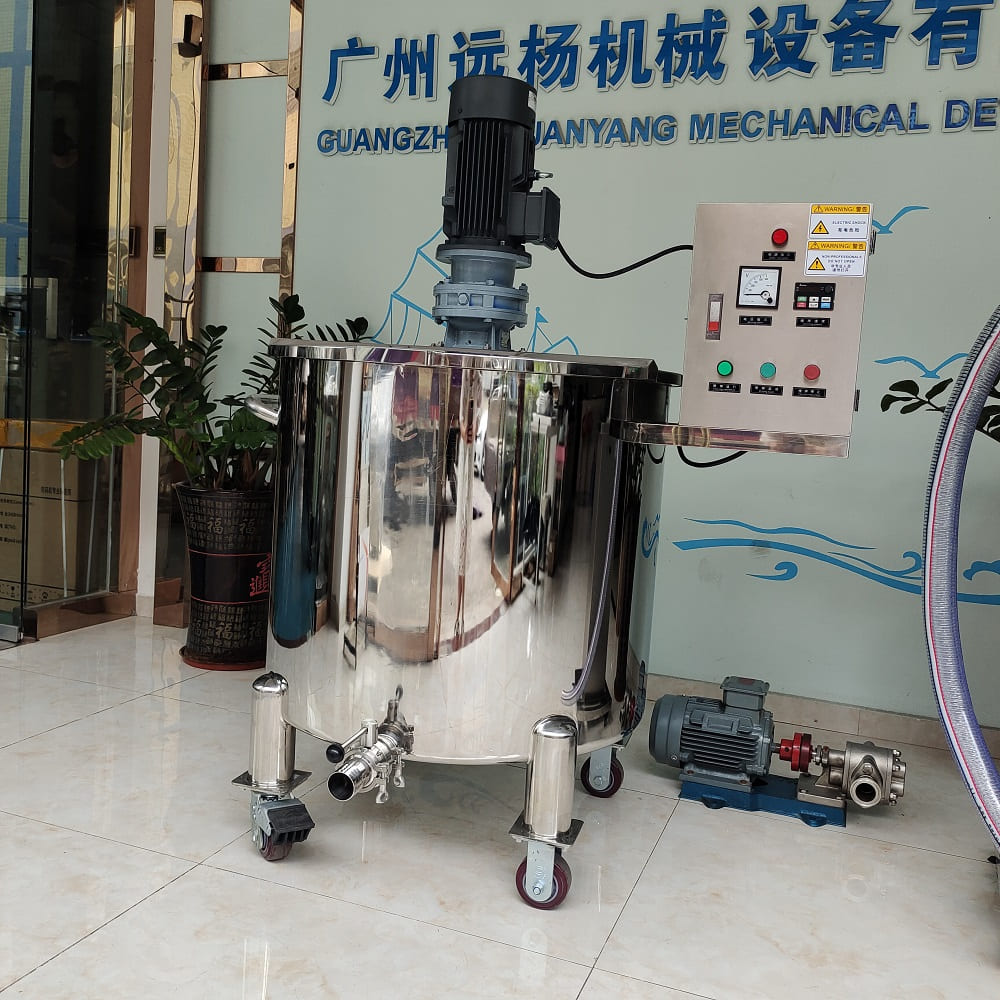
Choosing the right stainless steel mixing tank is essential for consistent product quality, regulatory compliance, and efficient production. This guide focuses on top considerations when purchasing a Single Layer Agitator Tank for Sale, covering material selection, agitator design, cleaning, regulatory issues, maintenance, and supplier evaluation so you can select a tank that minimizes downtime and maximizes product uniformity. After confirming purchase requirements, long-term operating economics come into focus, especially energy efficiency and cost savings with agitator tank selection.
Material & Construction: Why It Matters for Longevity and Product Integrity
Stainless steel grades and corrosion resistance
For most liquid processing—cosmetics, pharmaceuticals, chemicals, and food—a stainless steel mixing tank is the industry standard due to its corrosion resistance, mechanical strength, and cleanability. Common grades are 304 and 316 stainless steel. 316L provides better resistance to chlorides and acidic formulations than 304; this can matter when producing corrosive chemistries or products with long hold times. For context on stainless steel properties, see the Wikipedia overview on stainless steel: https://en.wikipedia.org/wiki/Stainless_steel.
Weld quality, surface finish, and sanitary design
Weld integrity and interior surface finish are crucial in preventing contamination and enabling efficient cleaning. Look for tanks with TIG or orbital-welded seams and a polished interior finish (Ra 0.4–0.8 μm, depending on application). A high-quality polish reduces product build-up and microbial traps. The design should avoid dead legs and feature proper slopes to drain fully. Documentation of welding procedures and surface roughness testing is a sign of manufacturer quality.
Mixing Performance: Agitator, Impellers and Scrapers
Agitator paddle selection and placement
Mixing performance depends primarily on the agitator type, size, and speed. Single-layer agitator tanks commonly use paddles or propellers optimized for low-viscosity liquids. Proper selection balances shear, circulation, and gentle mixing to avoid entraining air or degrading shear-sensitive ingredients. For many low-viscosity cosmetic and pharmaceutical liquids, axial flow paddles or pitched-blade impellers create desirable bulk circulation.
Frame mixing with PTFE scrapers and anti-stick features
Yuanyang’s Single Layer Agitator Tank for Sale features frame mixing with PTFE scrapers, which help continuously remove product film from the tank wall and improve heat/cold transfer (if later retrofitted) and mixing homogeneity. PTFE scrapers are chemically resistant and reduce product loss on vessel walls for sticky or shear-sensitive formulations.
Power, RPM range and motor control
Ensure the motor and gearbox provide adequate torque and a suitable speed range for your formulations. Variable frequency drives (VFDs) are highly recommended because they allow precise control over shear and circulation. Oversizing a motor wastes energy; undersizing risks stalled impellers in viscous conditions. Manufacturers should provide mixing power curves or computational fluid dynamics (CFD) summaries to demonstrate expected performance for typical formulations.
Sanitation, Compliance and Maintenance
Cleanability and CIP (clean-in-place) readiness
Single-layer tanks are typically used for low-viscosity liquids where external heating/cooling jackets are not required. For sanitary industries, verify whether the tank is designed for CIP procedures—this includes spray balls, smooth internal surfaces, and accessible inspection ports. Validatable CIP cycles and documented validation support compliance in regulated industries such as pharma and food. For general mixing and sanitation guidance, refer to OSHA’s process safety and hygiene resources: https://www.osha.gov.
Regulatory standards and documentation
Depending on your industry, tanks may need material certificates (mill certificates for stainless steel), weld procedure specifications (WPS), and testing reports (dye-penetrant weld inspection, radiography where required). For pressure-rated or ASME-code tanks, ask for ASME documentation. General standards and best practices are available from ASME: https://www.asme.org. A reputable vendor will supply traceable material certification and inspection reports.
Maintenance, spare parts and lifecycle planning
Plan for routine maintenance: seal and bearing replacement, scraper wear, and occasional re-polishing. Request a spare parts list and expected wear-item lifetimes. PTFE scrapers and shaft seals are typical consumables—knowing their lead times avoids production interruptions. A Preventive Maintenance schedule from the manufacturer reduces unexpected downtime.
Choosing the Right Tank for Your Application: Sizing, Comparisons and Supplier Evaluation
Comparing single-layer, jacketed, and double-wall tanks
Single-layer agitator tanks are cost-effective for low-viscosity, ambient-temperature liquid processing. If heating, cooling, or long-term sterile holding is required, jacketed or double-wall tanks may be necessary. The table below summarizes key trade-offs.
| Feature | Single-Layer Agitator Tank | Jacketed Tank | Double-Wall (Insulated) Tank |
|---|---|---|---|
| Best for | Low-viscosity liquids, mixing/blending at ambient temp | Processes requiring heating/cooling (temperature control) | Temperature stability for storage or controlled processes |
| Cost | Lowest | Higher | Highest |
| Sanitation | Good if designed for CIP | Good with CIP and thermal cleaning | Good, additional insulation may complicate cleaning access |
| Thermal control | No | Yes | Yes |
| Typical industries | Cosmetics, basic chemicals, simple food, some pharma | Pharma, specialty chemicals, food processing requiring pasteurization | Storage-sensitive products, temperature-critical formulations |
Sizing, footprint, and plant integration
Correct tank sizing requires estimating batch volume, headspace for foaming or expansion, and floor/ceiling clearances. Consider inlets/outlets, manways, sight glasses, and piping connections. Think about maintenance access and crane/hoist requirements for large tanks. If integrating into an existing line, confirm electrical, foundation, and utility requirements with the supplier before purchase.
Supplier evaluation: warranties, testing, and after-sales service
Beyond price, evaluate the supplier’s technical documentation (drawings, material certificates), factory acceptance testing (FAT) procedures, installation support, and warranty terms. A credible vendor will offer FAT with performance validation for agitation and cleanability, on-site installation supervision, and commissioning. Look for user references and case studies in your industry niche.
Practical Checklist and Buying Tips Before You Purchase
Pre-purchase checklist
Use this checklist to avoid common pitfalls:
- Confirm stainless steel grade (304 vs 316L) and request mill certificates.
- Request interior surface finish (Ra specification) and weld inspection reports.
- Verify agitator type, material, shaft seal details, and VFD availability.
- Check for CIP readiness: spray balls, drain angle, and access ports.
- Ask for FAT data or sample mixing demonstrations similar to your product.
- Get a spare parts list, consumables lead times, and maintenance schedule.
Cost of ownership vs. upfront cost
Initial cost is only part of the decision. Calculate cost of ownership including energy consumption for mixing, spare parts, downtime risk, cleaning labor, and potential product loss. A slightly higher upfront investment in a better-engineered stainless steel mixing tank can pay back quickly through lower contamination risk and less maintenance.
Integration with QA/QC and process validation
For regulated industries, ensure documentation supports process validation: IQ/OQ/PQ (Installation/Operational/Performance Qualification) packages, material traceability, and calibration records. Suppliers experienced with pharma or food customers will often supply these documents as part of the contract.
Why Yuanyang Single-Layer Agitator Tank Might Be the Right Choice
Product overview and key features
Single Layer Agitator Tank for Sale
Yuanyang single-layer agitator tank is a mixing tank with agitator paddles, mainly applied for liquid materials mixing and blending, which is widely used to manufacture low-viscosity liquids and prepare for cosmetics, pharmaceuticals, chemicals, and food industries.
Features:
⦁ Half-open cover;
⦁ Frame mixing with PTFE scrapers
⦁ Suitable for products of low viscosity liquid products;
Brand advantages and support
When evaluating Yuanyang, note these strengths that are important for E-E-A-T and supplier reliability:
- Industry-focused design for low-viscosity mixing with features like PTFE scrapers to reduce product loss and improve homogenization.
- Documentation and traceability for stainless steel materials and weld quality on request.
- After-sales support and recommended spare parts for scrapers and seals to ensure predictable maintenance cycles.
How to validate performance before buying
Ask Yuanyang or your supplier for FAT records, mixing performance curves, or a short demonstration with a product surrogate. If possible, request references from customers in a similar application (e.g., cosmetic emulsions or pharmaceutical suspensions). This on-record validation aligns with industry best practices and reduces implementation risk.
Frequently Asked Questions (FAQ)
Q: Is a single-layer stainless steel mixing tank suitable for all products?
A: No. Single-layer tanks are ideal for low-viscosity liquids that do not require active thermal control. For processes requiring heating, cooling, or vacuum, consider a jacketed or double-wall tank. Refer to the comparison table above to choose what fits your process needs.
Q: What stainless steel grade should I choose?
A: For most cosmetic and food applications, 304 is common. For corrosive chemistries, saline environments, or pharmaceutical processes where chloride resistance is needed, 316L is preferred. Request mill test certificates to confirm exact composition.
Q: How important are PTFE scrapers?
A: PTFE scrapers help remove product film, reduce product loss, and improve homogeneity—especially useful for sticky or shear-sensitive formulations. They also simplify cleanability in non-jacketed tanks.
Q: Can a single-layer tank be retrofitted with heating or cooling?
A: Retrofitting is possible but often expensive and less efficient than starting with a jacketed design. If you foresee needing thermal control, specify a jacketed tank from the outset.
Q: What documentation should I request from the vendor?
A: Ask for material certificates (EN/ASTM mill certificates), weld inspection reports, surface roughness values, FAT procedures, and any IQ/OQ/PQ packages if relevant to your industry.
If you want to discuss your specific product, batch size, and regulatory needs, contact our sales team or view the Single Layer Agitator Tank for Sale and detailed specifications. For technical inquiries or to schedule a factory acceptance test, contact us now.
Contact: For pricing, lead times, or custom options, please reach out to our sales engineers or click to view the product: Single Layer Agitator Tank for Sale.
How to manufacturing bottle filling capping machine in Europe
What are the application scenarios of capping machine for bottles?
Energy-Efficient Mixing Technologies for Wastewater
How to Choose the food labeling machine manufacturer and supplier ?
One Stage Water Treatment
What type of water can we use for this pure water filter ?
The raw quality (conductivity) should be ≤300μs/cm), such as city tap water, lake water, underground water, river water...
Homogenizing Mixer
Do you have temperature control system for the shampoo making machine?
Yes, there is temperature probe into tank at bottom. It detects temperature and display on the control panel. What’s more, the target temperature can be set.
FAQs
What are the core values of your company?
We holding the principle of surviving by quality and developing by reputation,providing solution-oriented service.
Can your equipment produce multiple types of products?
Our equipment is flexible and suitable for producing a wide range of products. You can use the same equipment to produce various products such as creams, lotions, liquid soaps, shampoos, etc., while maintaining high efficiency during product switching.
Open Lid Storage Tank
Is the material of the cosmetic tank anti-corrosive?
Yes, the tank is made of stainless steel 304 or 316L, it can store corrosive chemicals. But it is recommend to use PP storage tank if the liquid is strong acid, alkali and corrosive chemical liquid
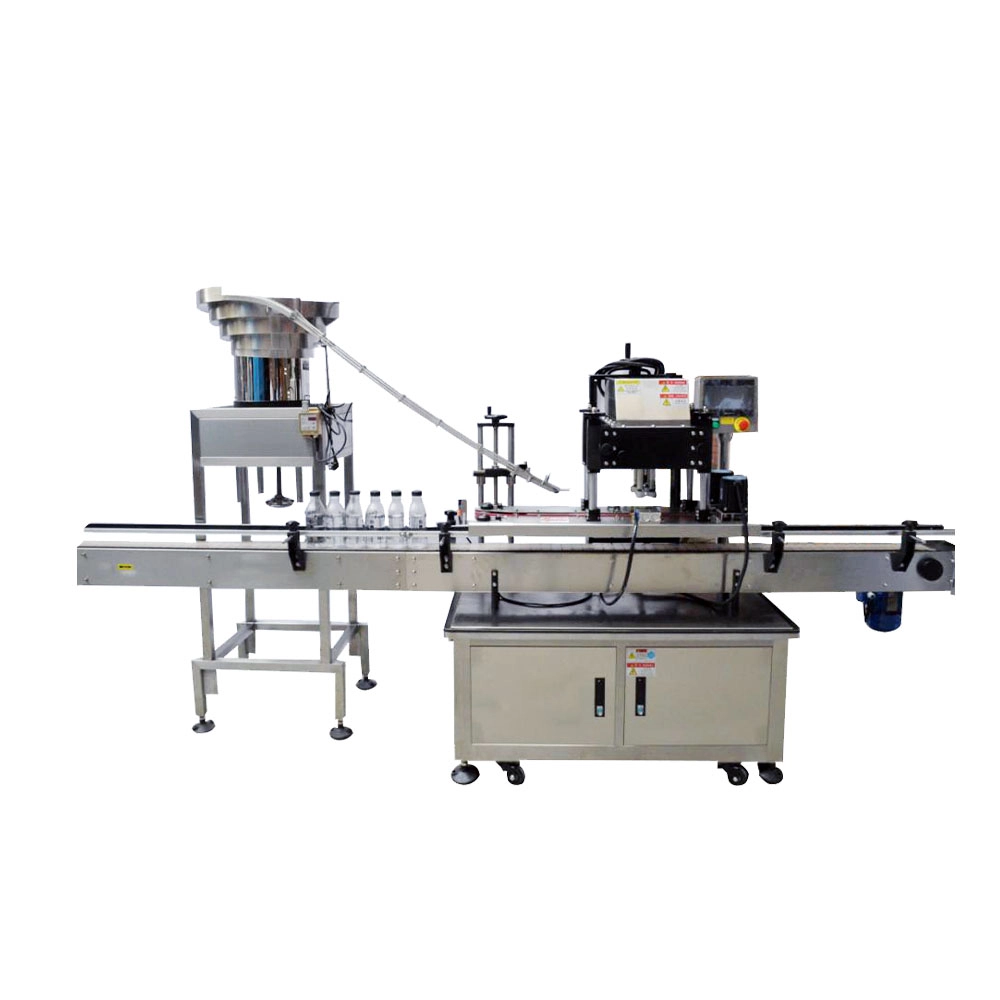
Automatic Plastic Caps Capping Machine with Vibrating Cap Feeder for Sale
Yuanyang automatic screw capping machine is a kind of four-wheel bottle capping machine. The automatic screw capper is often used to close lids of containers such as bottles and jars, especially for plastic bottles, which are widely used in food, medicine, chemical, cosmetic, and other industries for mass production and continuous production lines.
Features:
⦁ Full pneumatic drive;
⦁ Automated fast speed;
⦁ Suitable for various screw caps, pumps, and spray bottles.
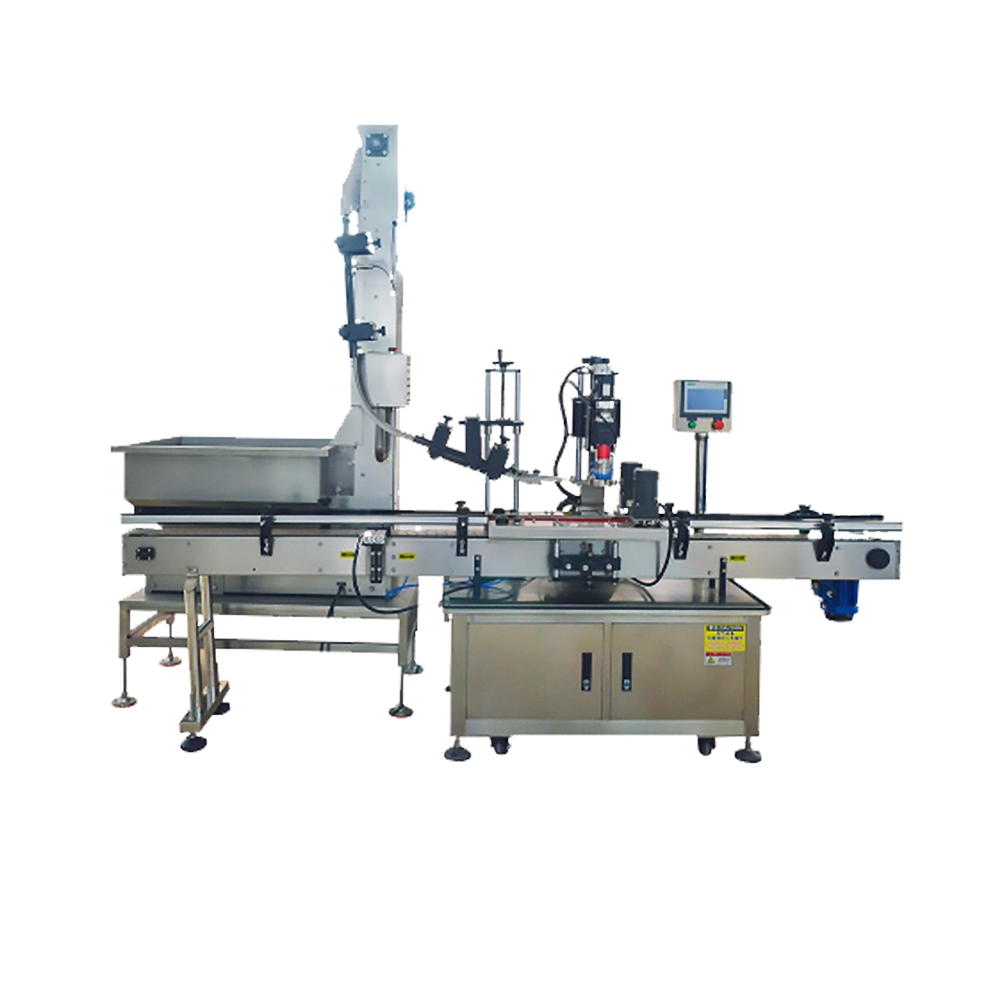
Automatic Metal Caps Capping Machine for Sale
Yuanyang automatic metal cap capping machine is a bottle capper for bottles with metal caps, which is often used to close lids of containers such as bottles and jars. The glass bottle metal capping machine is widely used in food, medicine, chemical, cosmetic, and other industries for mass production and continuous production line .
Features:
⦁ Pneumatic and electric drive;
⦁ Automated fast speed;
⦁ Suitable for glass bottles with metal caps.
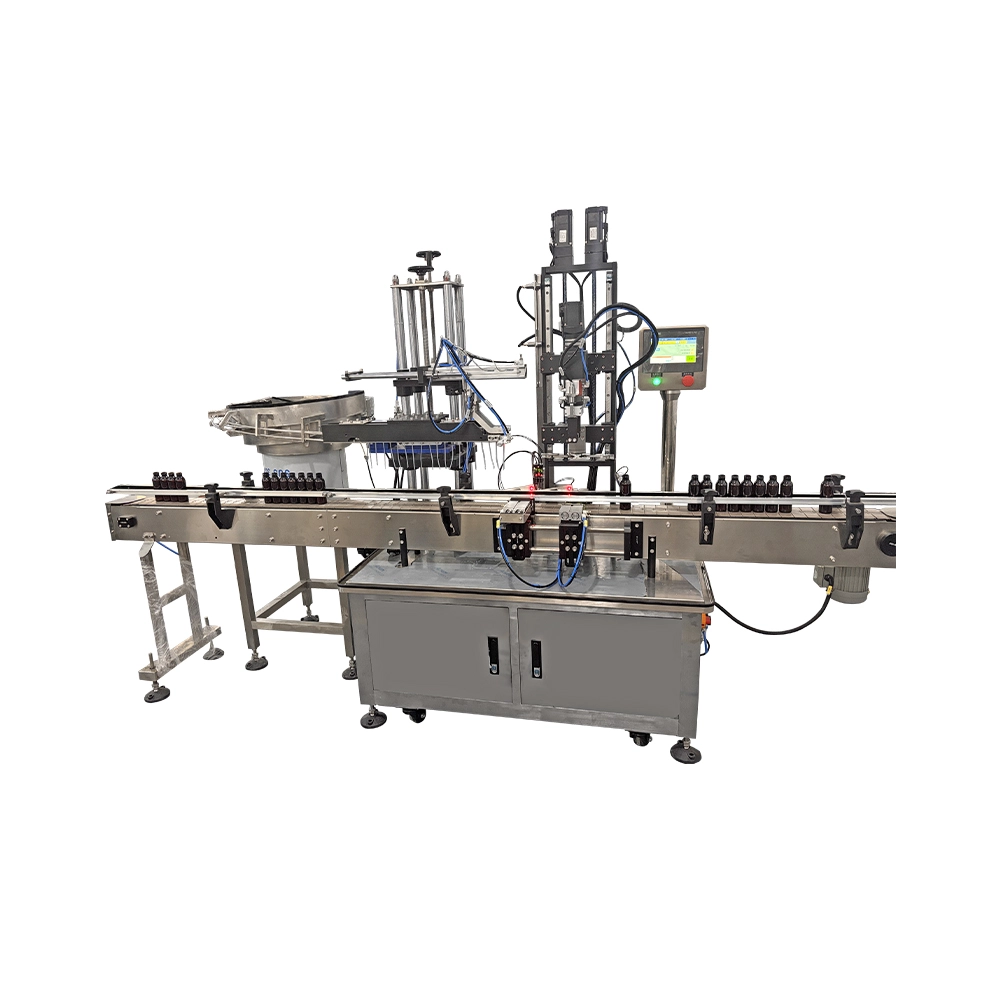
Automatic Pump Head Feeding and Capping Machine for Sale
Yuanyang automatic pump head feeding and capping machine is a bottle cap sorter and capper for bottles with pump heads, which is often used to close lids of containers such as nail polish, sprayers, and shampoo. The capping machine with a pump head feeder is widely used in food, medicine, chemical, cosmetic, and other industries for mass production and continuous production line .
Features:
⦁ Pneumatic and electric drive;
⦁ Automated fast speed;
⦁ Suitable for various types of caps.
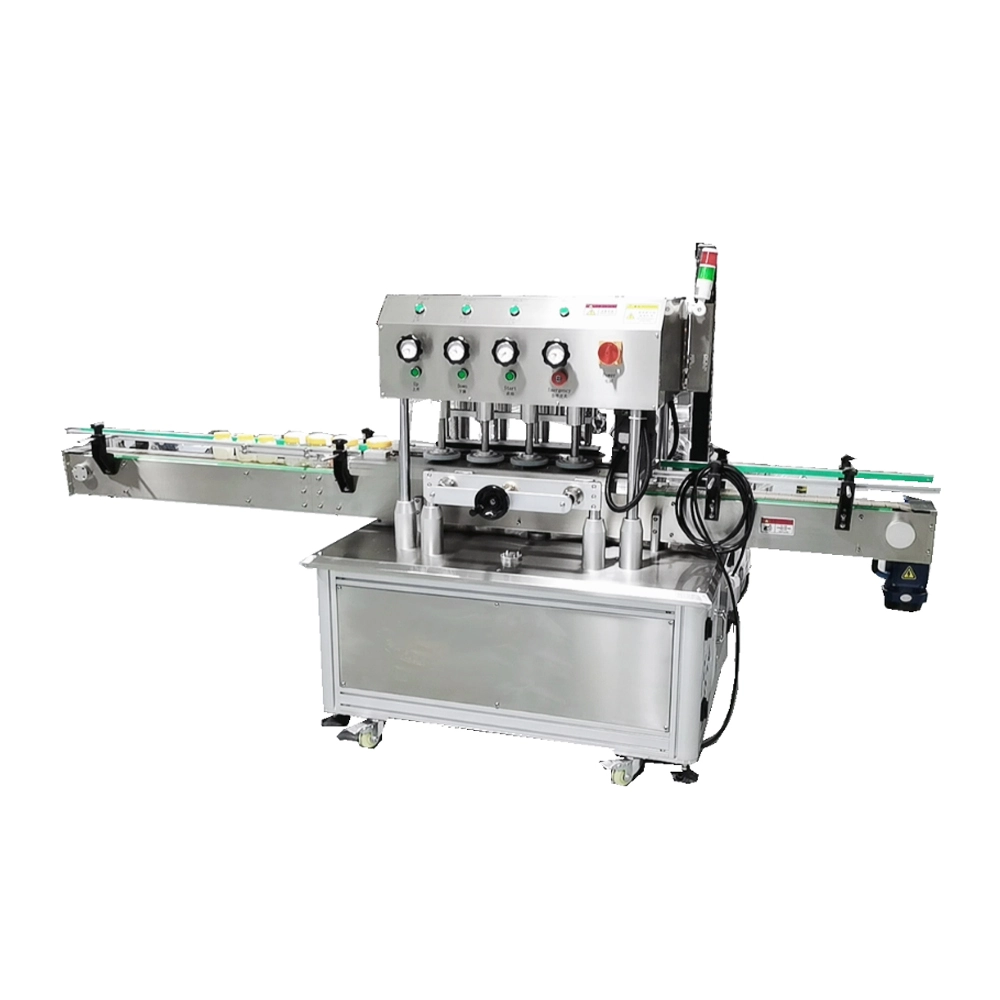
Automatic High Speed Capping Machine for Sale
The Yuanyang automatic high-speed capping machine is a kind of 8-wheel bottle-capping machine with fast working efficiency. The automatic capper is often used to close lids of containers such as bottles and jars, especially for plastic bottles, which are widely used in food, medicine, chemical, cosmetic, and other industries for mass production and continuous production lines.
Features:
⦁ Electric drive;
⦁ Automated fast speed;
⦁ Suitable for various screw caps, pumps, and spray bottles.
 Scan QR Code
Facebook
YouTube
LinkedIn
Whatsapp: +8613434139712
Guangzhou Yuanyang Machinery