





Integrating a Homogenizing Mixer Into Your Production Line
- Planning the Integration of a Mixing Tank and Homogenizer
- Assessing production requirements and process goals
- Sizing the mixing tank and homogenizer
- Placement and piping layout
- Design and Technical Considerations for Reliable Operation
- Mechanical integration: mounts, scrapers and seals
- Control systems and automation
- Hygiene, materials and regulatory compliance
- Operational Best Practices: From Start-up to Scale-up
- Startup and commissioning checklist
- Process optimization: shear rate, recirculation and recipe tuning
- Maintenance and downtime reduction
- Quality, Efficiency and ROI: What a Homogenizing Mixer Delivers
- Product quality improvements
- Throughput and cost comparisons
- Measuring success: KPIs to track
- Yuanyang Homogenizing Mixer for Sale — Product Fit and Brand Advantages
- Why Yuanyang is suitable for mixing tank integrations
- Technical support, customization and compliance
- Case example: Shampoo production line
- Frequently Asked Questions (FAQ)
- Q: Can I retrofit a homogenizing mixer to my existing mixing tank?
- Q: How do I choose between an in-line homogenizer and a mounted tank homogenizer?
- Q: What maintenance should I expect for a high-shear homogenizer?
- Q: Will a homogenizer damage fragile actives (e.g., vitamins, proteins)?
- Q: What controls and sensors should be part of the integration?
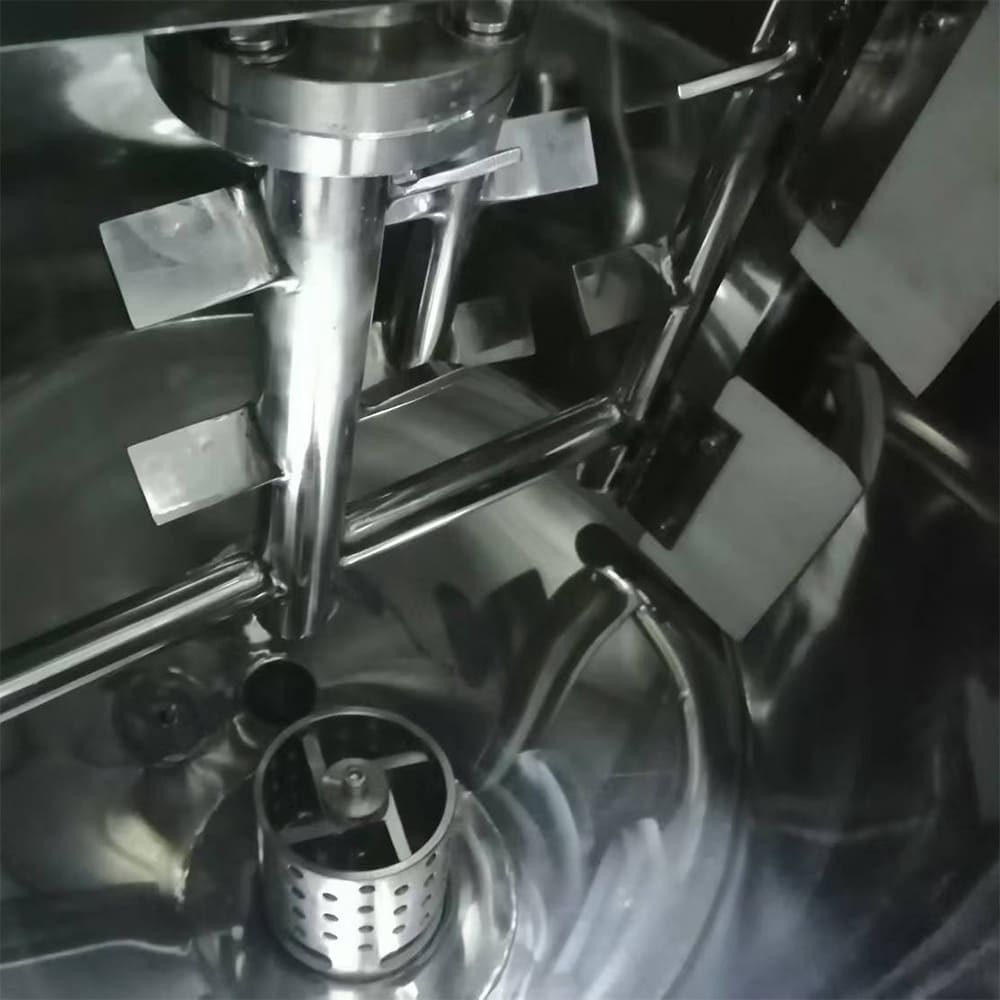
Integrating a homogenizing mixer into your production line can dramatically improve product uniformity, reduce batch times, and enable stable emulsions and suspensions in viscous formulations. This guide is designed for production engineers, line managers, and formulators who use a mixing tank and want step-by-step, technically sound advice to plan layout, select equipment, and optimize controls while maintaining sanitation and regulatory compliance.
Planning the Integration of a Mixing Tank and Homogenizer
Assessing production requirements and process goals
Before adding a homogenizing mixer, clearly define objectives: reduce particle size, increase emulsion stability, decrease viscosity variations, shorten processing time, or enable continuous vs. batch operation. Typical targets for liquid soap and personal care lines include consistent droplet sizes for emulsions and a uniform distribution of active ingredients. Use metrics such as target viscosity (cP or Pa·s), droplet size distribution (D50, D90), and cycle time reduction to evaluate success.
Sizing the mixing tank and homogenizer
Match homogenizer capacity to the mixing tank volume and desired throughput. For batch processing, choose a homogenizer capable of processing at least the full batch volume within the allocated mixing time. For continuous lines, size the homogenizer for steady-state flow rates. Consider headspace for liquid expansion, recirculation ports, and clearance for wall scrapers. Semantic keywords to keep in mind include tank agitator, high-shear mixer, stainless steel vessel, wall scrapers, and CIP (clean-in-place).
Placement and piping layout
Place the homogenizer to minimize dead legs and avoid long suction lines that can introduce air and reduce performance. For bottom-mounted homogenizers, ensure proper sump design and a reliable recirculation loop. Install isolation valves and sanitary tri-clamps for easy maintenance. Consider a bypass line so the mixing tank can still be used with the main agitator if the homogenizer requires servicing.
Design and Technical Considerations for Reliable Operation
Mechanical integration: mounts, scrapers and seals
Choose robust mounting to withstand high torque from high-shear operations. PTFE wall scrapers and a top-driven agitator are commonly paired with a bottom high-shear homogenizer to prevent product build-up on vessel walls and ensure homogenization throughout the tank. Select mechanical seals rated for the expected temperatures and formulations or consider magnetic drive options for aggressive chemistries. Keywords: PTFE wall scrapers, mechanical seal, magnetic drive.
Control systems and automation
Integrate the homogenizer into the electric control system of the mixing tank to allow synchronized start/stop, ramping, and recipe control. Use variable frequency drives (VFDs) to control rotor speeds and shear rates, and add sensors for torque, temperature, and pressure. Modern PLC/SCADA integration enables recipe-based settings that reproduce results batch-to-batch and supports remote monitoring and data logging for traceability.
Hygiene, materials and regulatory compliance
For personal care and household cleaners, use food-grade or pharmaceutical-grade stainless steel (typically 316L) with sanitary surface finish. Design for Clean-in-Place (CIP) with adequate spray balls and recirculation capability to remove residues without full disassembly. Follow relevant guidance such as mixing and processing principles described by industry sources like Mixing (process engineering) - Wikipedia to ensure best practices are applied.
Operational Best Practices: From Start-up to Scale-up
Startup and commissioning checklist
Follow a structured commissioning plan: verify mechanical clearances, test VFD and PLC parameters, perform no-load run tests, and conduct initial CIP cycles. Validate that wall scrapers and the high-shear rotor-stator are properly aligned. Check for leaks at seals and tri-clamps, and confirm that temperature and torque readings are stable under a small test load before processing full batches.
Process optimization: shear rate, recirculation and recipe tuning
Homogenizing efficiency depends on shear rate, rotor speed, gap settings, and residence time. Start with manufacturer-recommended settings and adjust in small increments. Use recirculation through the homogenizer for uniform particle size reduction, and monitor viscosity and droplet size as tuning metrics. A common strategy is to perform coarse mixing with the top agitator and finish with a bottom high-shear homogenizer to achieve the final product texture.
Maintenance and downtime reduction
Implement a preventive maintenance schedule: inspect seals, bearings, scrapers, and rotor/stator wear parts at defined intervals based on operating hours and abrasive nature of the product. Keep critical spares (seals, rotors, bearings) on hand to minimize downtime. Document maintenance actions in the control system logs to build a reliability history that supports continuous improvement.
Quality, Efficiency and ROI: What a Homogenizing Mixer Delivers
Product quality improvements
High-shear homogenization provides measurable benefits: narrower particle/droplet distributions, higher product stability, smoother texture and improved optical clarity for certain formulations. For liquid soaps, this means fewer phase separations over shelf life and consistent performance across lots. Cite mixing fundamentals from Homogenization (chemistry) - Wikipedia for principle explanations about dispersions and emulsions.
Throughput and cost comparisons
Although homogenizers can increase capital cost, they frequently reduce cycle times and rework, lowering total cost per unit. Below is a simplified comparison table to help evaluate options when you already have a mixing tank in your line.
| Feature | Top Agitator Only | High-Shear Homogenizer + Tank |
|---|---|---|
| Particle/droplet size control | Moderate, wider distribution | Tight distribution, better stability |
| Cycle time | Longer (requires extended mixing) | Shorter (efficient size reduction) |
| Energy consumption | Lower peak, longer run | Higher peak power, lower total energy per batch |
| Maintenance complexity | Lower | Higher (rotor/stator wear, seals) |
| Suitability for viscous products | Limited as viscosity increases | Excellent for viscous liquids and emulsions |
Measuring success: KPIs to track
Track KPIs such as batch cycle time, rejection/rework rate, droplet size D50, viscosity variance, energy per batch, and overall equipment effectiveness (OEE). Data-driven optimization helps you quantify the ROI from installing a homogenizing mixer into a mixing tank–based production line.
Yuanyang Homogenizing Mixer for Sale — Product Fit and Brand Advantages
Below is the product introduction for reference in your procurement decision:
Yuanyang homogenizing mixer is a liquid mixing tank with a high-shear homogenizer. The homogeneous mixing machine is the core part for the liquid soap production line for shampoo, body wash, laundry detergent, dish soap, hand sanitizer, and other thick liquids.
Features:
⦁ Flat top half-open lid, electric control system.
⦁ Suitable for various liquid cleaning products and sauces.
⦁ PTFE wall scrapers stirring at top, high shear homogenizer at bottom.
Why Yuanyang is suitable for mixing tank integrations
Yuanyang combines a stainless steel mixing tank with a bottom-mounted high-shear homogenizer and PTFE wall scrapers, a configuration designed for viscous and surfactant-rich formulations. The integrated electric control system enables synchronized operation with upstream dosing and downstream filling equipment. This makes it particularly suited for liquid soap production lines where reproducibility and sanitation are essential.
Technical support, customization and compliance
Yuanyang offers customization for tank volumes, rotor-stator geometries, and CIP arrangements to match your specific mixing tank layout and throughput goals. The product can be configured with sanitary fittings and finishes to meet regulatory requirements for household and personal care products. Manufacturer support for commissioning and training reduces risk during integration and ramp-up.
Case example: Shampoo production line
In a typical shampoo line, coarse mixing of thickeners and surfactants is performed first. The Yuanyang homogenizing mixer then performs high-shear dispersion to stabilize the emulsion and ensure consistent rheology. The result: reduced batch-to-batch variability, smoother texture, and fewer downstream filtration issues.
Frequently Asked Questions (FAQ)
Q: Can I retrofit a homogenizing mixer to my existing mixing tank?
A: Yes. Many homogenizers are designed for retrofit with bottom or side mounts, but retrofit requires evaluating tank structural strength, piping, and control integration. Ensure there is sufficient clearance for the homogenizer and consider adding PTFE wall scrapers if wall build-up is an issue.
Q: How do I choose between an in-line homogenizer and a mounted tank homogenizer?
A: In-line homogenizers are ideal for continuous processing and when integrating with existing pump recirculation; mounted tank homogenizers are better for batch processes and simplify cleaning. Choose based on your production mode, available floor space, and CIP preferences.
Q: What maintenance should I expect for a high-shear homogenizer?
A: Expect periodic replacement of rotor/stator sets, inspection/replacement of mechanical seals or gaskets, and bearing checks. The frequency depends on operating hours and product abrasiveness. Keep OEM spare kits on hand and follow a preventive schedule to minimize downtime.
Q: Will a homogenizer damage fragile actives (e.g., vitamins, proteins)?
A: High shear can stress delicate ingredients. Use staged mixing—introduce sensitive actives after the main homogenization step at lower shear or use gentler mixing modes to disperse them. Consult formulation scientists and run trials to validate stability.
Q: What controls and sensors should be part of the integration?
A: Essential controls include VFD-driven speed control, PLC recipe control, temperature sensors, torque monitoring, and CIP cycle control. Optional sensors include inline particle size analyzers and viscometers for real-time quality control.
System integration must align with standards, making regulatory compliance and validation for mixing tank systems a final checkpoint.If you have further questions or want to evaluate a Yuanyang Homogenizing Mixer for Sale for your mixing tank, contact our sales team or view the product page to request a quote and technical drawings.
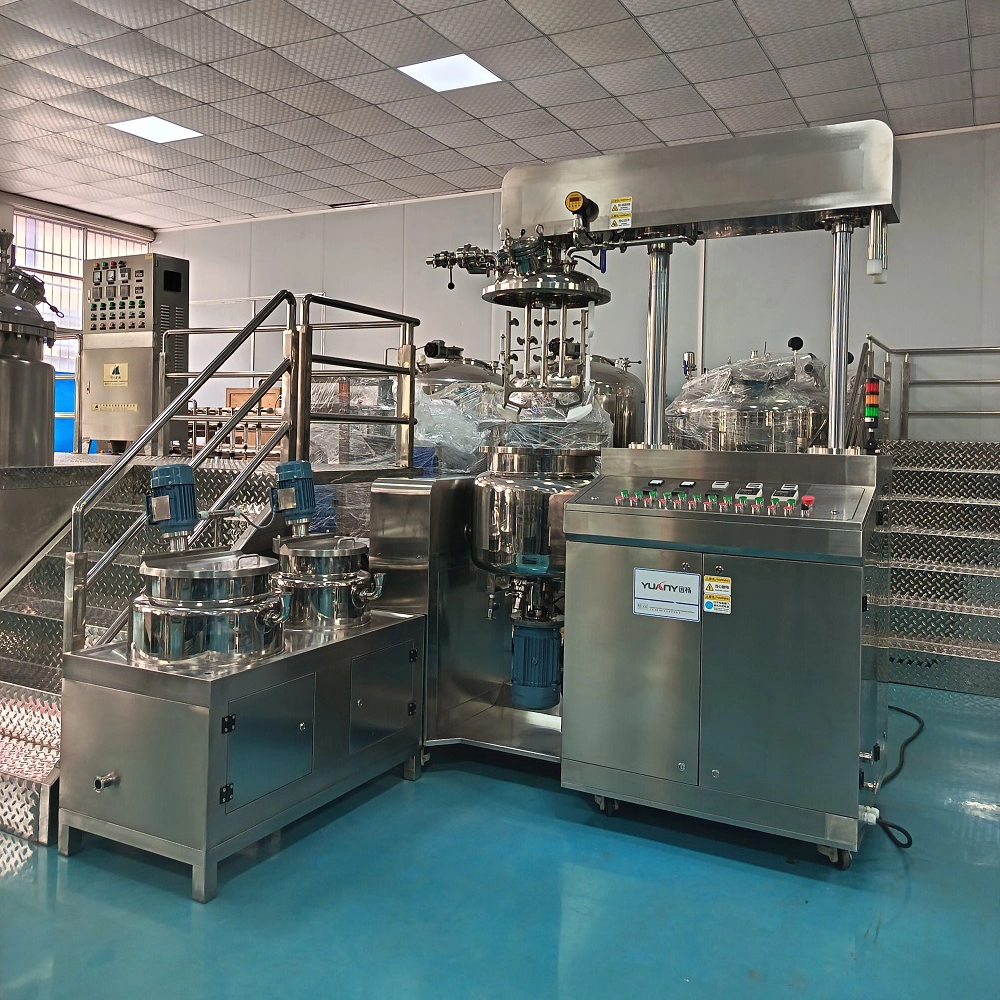
50L Hydraulic Vacuum Emulsifier: Key Features Overview
How to Choose the automatic inkjet printer manufacturer and supplier in Europe?
What are the application scenarios of heat induction sealing machine?
What are the different types of inkjet printers?
Liquid Soap Mixer Machine
How can you guarantee the bottom homogenizer will not leak liquids?
The bottom homogenizer adopts German mechanical sealing, As long as clients operate correctly, follow the instructions, this leakage is hardly to happen for over tens years or longer. But once the leakage accrues, just contact us to get a mechanical sealing to replace it.
Machine seal, as an indispensable sealing element in mechanical equipment, its core function is reflected in many aspects. First of all, it effectively prevents the leakage of liquid, gas or solid particles inside the machine through a tight sealing effect, as well as the intrusion of external impurities, so as to ensure that the internal environment of the machine is dry and clean.
This function is essential for extending the service life of machine equipment. Secondly, when the machine is sealed at high speed, it can prevent the condensation of water vapor caused by the heat generated by friction and play an anti-fog role. At the same time, it can effectively isolate the dust, particles and impurities generated during the work process to protect the equipment from damage.
In addition, the seal can also play an excellent waterproof role in wet environments, ensuring that the inside of the equipment is not affected by water erosion. In summary, the seal not only protects the normal operation of the mechanical equipment, but also provides a strong guarantee for the production and family life of all walks of life through its excellent sealing performance.
Do you use brand parts for the mixing tank?
Yes, our we cooperate with core parts brand, such as Siemens motor, Beide motor, ABB motor, Delixi electricity, Schneider Electric, Delta frequency converter, Siemens PLC ,Mitsubishi touch screen, Mitsubishi frequency converter, German mechanical sealing, NSK bearing...
Yuany’s philosophy is quality first, service first, thus we get a good reputation in the market.
Vertical Filling Machine
What’s the pressure it requires?
This semi automatic filling machine is full pneumatic drive, need an air compressor. The working pressure is 0.4-0.6Mpa.
Detergent powder mixer
Can you also help to purchase raw powder for the washing powder mixer?
Sure, we have professional partner who has been engaged in raw powder supply for over 20 years. The price is competitive in the market. If clients need to purchase together, it is recommend to take a container.
Liquid Soap Mixer
How many layers is the soap mixer tank?
The standard tanks has 1 layer for non-heating type,two layers for only cooling purpose,3 layers for cooling and heating purpose.
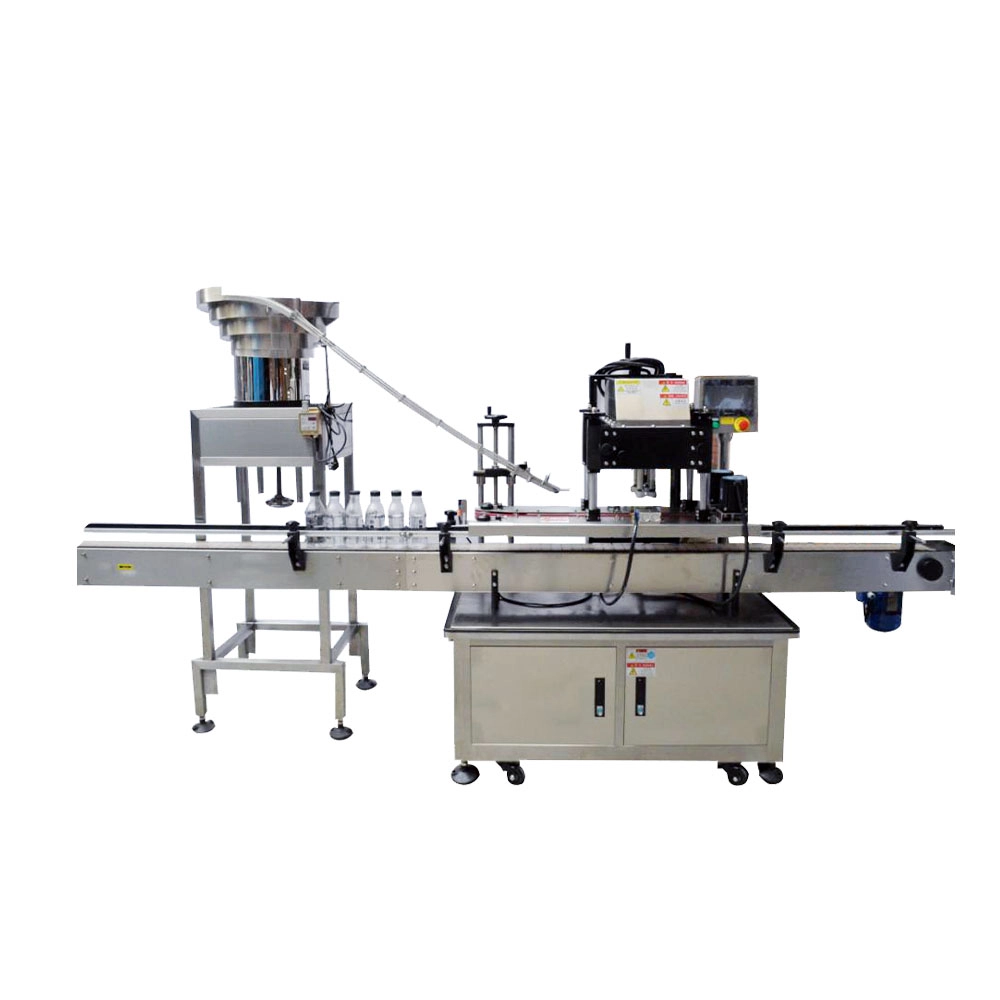
Automatic Plastic Caps Capping Machine with Vibrating Cap Feeder for Sale
Yuanyang automatic screw capping machine is a kind of four-wheel bottle capping machine. The automatic screw capper is often used to close lids of containers such as bottles and jars, especially for plastic bottles, which are widely used in food, medicine, chemical, cosmetic, and other industries for mass production and continuous production lines.
Features:
⦁ Full pneumatic drive;
⦁ Automated fast speed;
⦁ Suitable for various screw caps, pumps, and spray bottles.
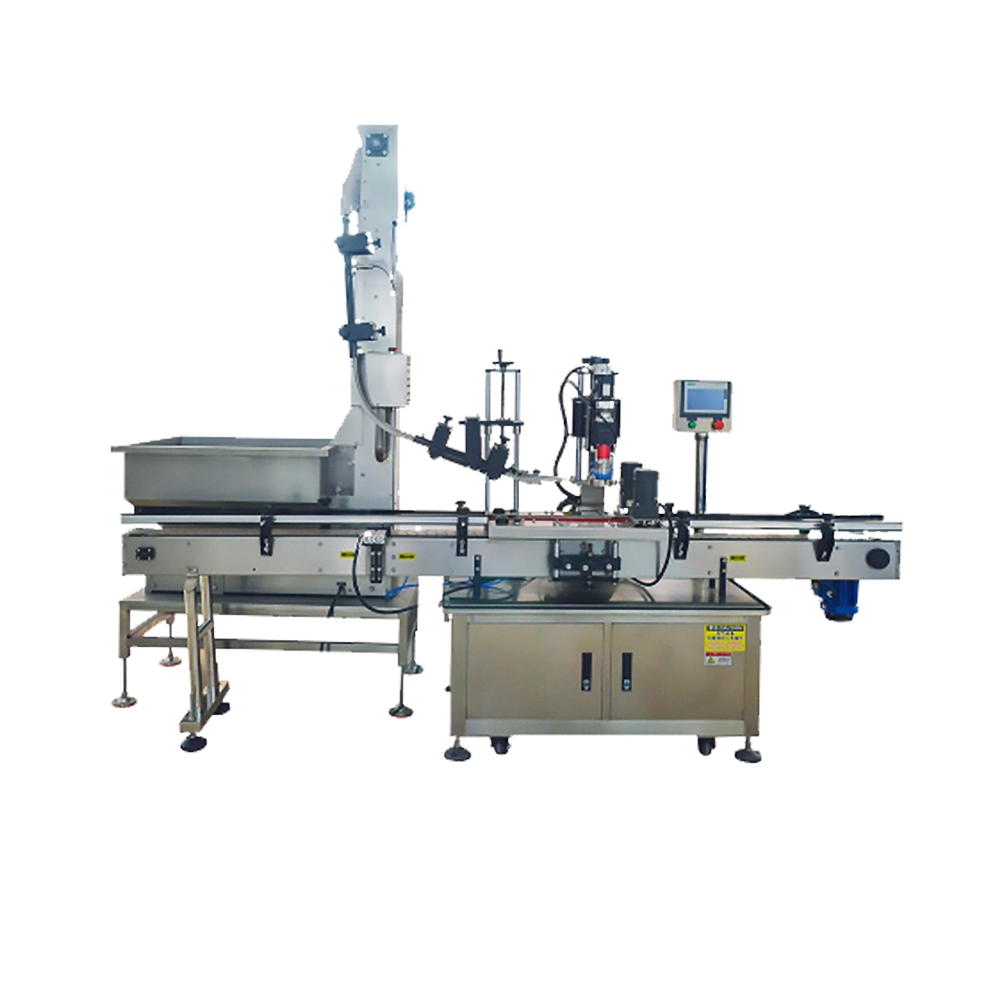
Automatic Metal Caps Capping Machine for Sale
Yuanyang automatic metal cap capping machine is a bottle capper for bottles with metal caps, which is often used to close lids of containers such as bottles and jars. The glass bottle metal capping machine is widely used in food, medicine, chemical, cosmetic, and other industries for mass production and continuous production line .
Features:
⦁ Pneumatic and electric drive;
⦁ Automated fast speed;
⦁ Suitable for glass bottles with metal caps.
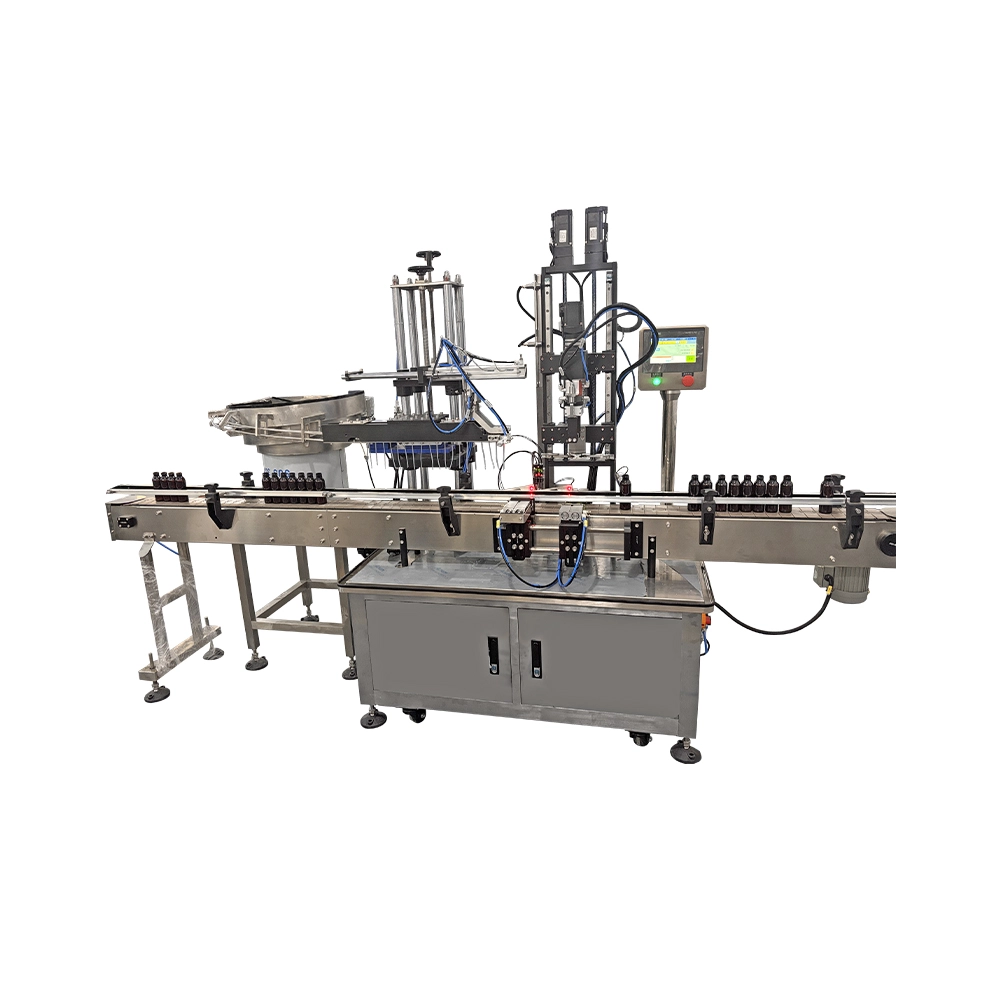
Automatic Pump Head Feeding and Capping Machine for Sale
Yuanyang automatic pump head feeding and capping machine is a bottle cap sorter and capper for bottles with pump heads, which is often used to close lids of containers such as nail polish, sprayers, and shampoo. The capping machine with a pump head feeder is widely used in food, medicine, chemical, cosmetic, and other industries for mass production and continuous production line .
Features:
⦁ Pneumatic and electric drive;
⦁ Automated fast speed;
⦁ Suitable for various types of caps.
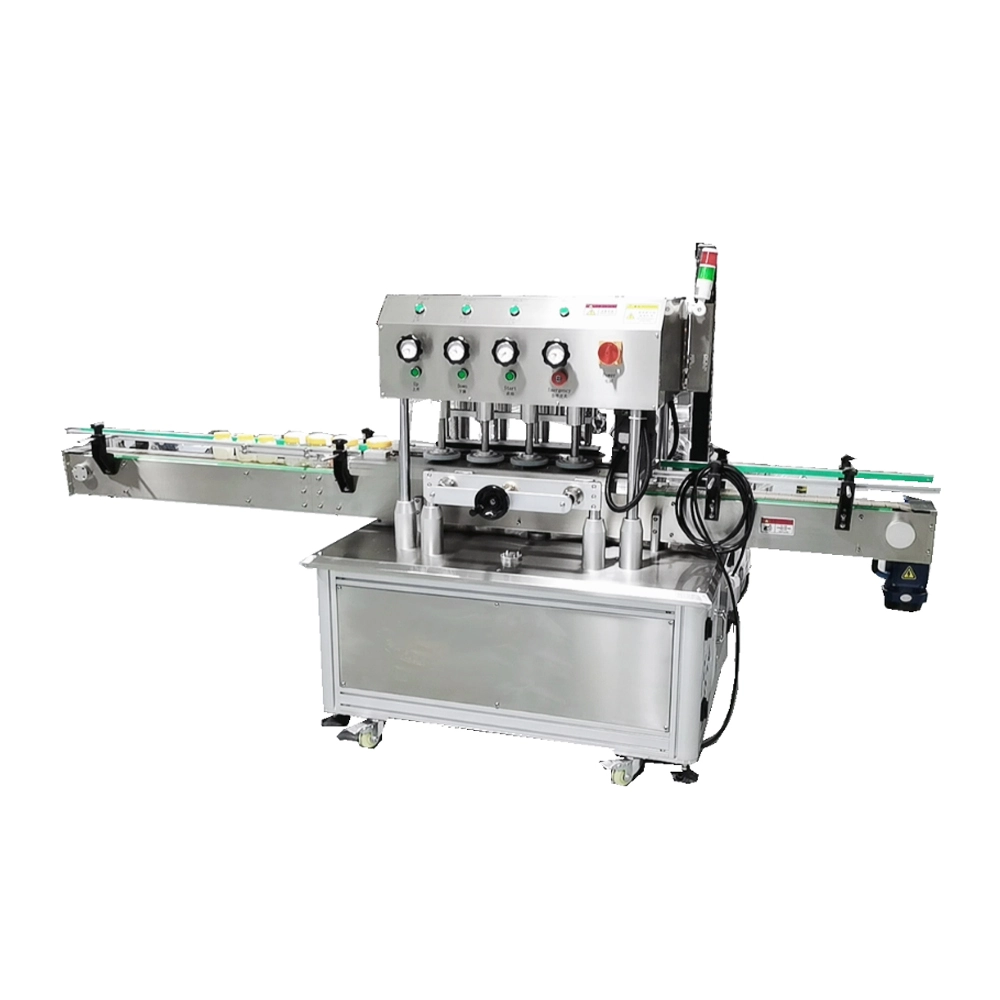
Automatic High Speed Capping Machine for Sale
The Yuanyang automatic high-speed capping machine is a kind of 8-wheel bottle-capping machine with fast working efficiency. The automatic capper is often used to close lids of containers such as bottles and jars, especially for plastic bottles, which are widely used in food, medicine, chemical, cosmetic, and other industries for mass production and continuous production lines.
Features:
⦁ Electric drive;
⦁ Automated fast speed;
⦁ Suitable for various screw caps, pumps, and spray bottles.
 Scan QR Code
Facebook
YouTube
LinkedIn
Whatsapp: +8613434139712
Guangzhou Yuanyang Machinery