





Regulatory Compliance and Validation for Mixing Tank Systems
- Design and Material Requirements for Mixing Tanks
- Sanitary construction and materials
- Agitator and scraper selection
- Clean-in-place (CIP) and maintenance accessibility
- Validation Strategy: IQ / OQ / PQ for Homogenizing Mixing Tanks
- Installation Qualification (IQ)
- Operational Qualification (OQ)
- Performance Qualification (PQ)
- Regulatory Standards, Documentation, and Risk Management
- Applicable standards and guidance
- Risk-based validation and CCPs
- Documentation: protocols and traceability
- Practical Considerations for Homogenizing Mixers in Production
- Process parameters and scale-up
- Cleaning validation and microbial control
- Instrumentation, controls and data integrity
- Comparison: Key Validation Milestones and Deliverables
- Brand Focus: How Yuanyang Supports Compliance with the Homogenizing Mixer for Sale
- Compliance-oriented engineering
- Validation support and documentation
- After-sales service and spare parts traceability
- Implementation Checklist for Compliance Teams
- Pre-installation
- During commissioning
- Post-commissioning
- FAQs
- Q: What is the difference between validation and qualification for a mixing tank?
- Q: Do I need a high-shear homogenizer on my mixing tank for detergents?
- Q: How often should I revalidate my mixing tank system?
- Q: Can Yuanyang provide documentation for IQ/OQ/PQ?
Regulatory compliance and validation for mixing tank systems are essential to guarantee product safety, traceability, and consistent performance in processes like shampoo, body wash, laundry detergent, dish soap, and hand sanitizer production. A validated mixing tank and homogenizer reduce batch-to-batch variability, minimize contamination risk, and support audits by regulatory bodies. This guide covers practical validation steps, sanitary design best practices, required documentation, and how to align a homogenizing mixer implementation with GMP, HACCP and other industry expectations.
Design and Material Requirements for Mixing Tanks
Sanitary construction and materials
Mixing tank systems intended for cosmetic, detergent or food applications must use sanitary construction practices: smooth internal surfaces, minimal dead legs, polished stainless steel (typically 304 or 316L), and chemically compatible gaskets and seals. A homogenizer-equipped mixing tank should also prevent crevices where residues or microbes can accumulate. For guidance on sanitary design principles, see Good Manufacturing Practice (GMP).
Agitator and scraper selection
Select agitators and wall scrapers to match product rheology. PTFE wall scrapers are commonly used in mixing tanks for thick liquids to prevent build-up and ensure heat transfer. For dispersions and emulsions, rotor-stator homogenizers (high-shear homogenizers) provide controlled shear rates to achieve target droplet sizes and stable emulsions. The combination of top scrapers and bottom high-shear homogenizers helps manage viscosity control and consistent mixing in viscous formulations.
Clean-in-place (CIP) and maintenance accessibility
CIP capability is a regulatory expectation for many product categories. Design mixing tanks with drain angles, accessible nozzles, and CIP spray balls to enable validated cleaning cycles. Material traceability for wetted parts and a maintainable homogenizer assembly also support compliance and simplify periodic inspections.
Validation Strategy: IQ / OQ / PQ for Homogenizing Mixing Tanks
Installation Qualification (IQ)
IQ documents that the mixing tank system, including the homogenizer, has been supplied and installed according to design specifications. Key IQ deliverables: equipment serial numbers, material certificates (e.g., 316L stainless steel), weld records, and verification of utilities (power, steam, compressed air). For equipment like the Homogenizing Mixer for Sale, include manufacturer declarations and drawings in IQ to ensure traceability.
Operational Qualification (OQ)
OQ demonstrates the mixing tank and homogenizer perform across the range of operational parameters—speed, temperature, shear rate, and safety interlocks. Testing typically includes: torque and motor load under different viscosities, homogenizer RPM and energy input checks, control system alarm tests, and verification of CIP effectiveness at set cycles. A well-documented OQ reduces the likelihood of out-of-spec batches.
Performance Qualification (PQ)
PQ verifies that the process consistently produces product meeting specifications under routine production conditions. For mixing tanks with high-shear homogenizers, PQ focuses on critical quality attributes (CQAs) such as viscosity, droplet size distribution (for emulsions), pH, and microbial limits where applicable. Incorporate representative production batches and statistical acceptance criteria for PQ.
Regulatory Standards, Documentation, and Risk Management
Applicable standards and guidance
Depending on product category, mixing tank systems must align with various standards. Examples include:
- GMP requirements for pharmaceuticals and cosmetics — see GMP.
- FDA guidance on process validation for pharmaceutical processes: FDA Process Validation Guidance.
- HACCP principles for food safety: HACCP.
Risk-based validation and CCPs
Apply a risk-based approach to identify critical process parameters (CPPs) and critical control points (CCPs) for your mixing tank system. Use Failure Mode and Effects Analysis (FMEA) to prioritize validation efforts—e.g., homogenizer rotor wear affecting droplet size is a higher risk than a non-critical instrument that only affects logging. This targeted approach can save time while maintaining compliance.
Documentation: protocols and traceability
Maintain a clear documentation hierarchy: design documents, IQ/OQ/PQ protocols and reports, calibration records, maintenance logs, and batch records. Material certificates (e.g., ERW/forged parts), supplier quality agreements, and change control logs are essential for audits. Digital record-keeping and timestamped electronic signatures support traceability and regulatory expectations.
Practical Considerations for Homogenizing Mixers in Production
Process parameters and scale-up
When scaling a process from lab to production, match shear rate, energy input (kW/m3), and mixing time rather than only geometry. Homogenizers are characterized by rotor-stator speed and gap, which directly affect droplet size. Use pilot runs and design of experiments (DoE) to establish robust operating windows for the mixing tank that will be validated in OQ/PQ.
Cleaning validation and microbial control
Cleaning validation for mixing tanks often requires swab and rinse tests and analytical limits for residues. For products with microbial sensitivity (e.g., hand sanitizer with botanical extracts), demonstrate acceptable bioburden levels post-cleaning. Adopt preventive maintenance for seals and scrapers (e.g., PTFE scrapers) to reduce contamination risk.
Instrumentation, controls and data integrity
Control system validation (including PLC/HMI and recipe control) is a compliance focus. Ensure accurate sensors for temperature, torque, and RTD, and implement secure access controls and audit trails for digital records. Follow ALCOA+ principles for data integrity where applicable.
Comparison: Key Validation Milestones and Deliverables
| Stage | Main Deliverables | Typical Tests |
|---|---|---|
| IQ | Installation records, material certificates, wiring diagrams | Physical verification, utility checks, drawing approvals |
| OQ | Operational protocol, alarm tests, control logic verification | Speed/load tests, CIP tests, sensor calibration |
| PQ | Performance report, CQAs, reproducibility evidence | Representative production runs, droplet size analysis, viscosity |
Brand Focus: How Yuanyang Supports Compliance with the Homogenizing Mixer for Sale
Product introduction:
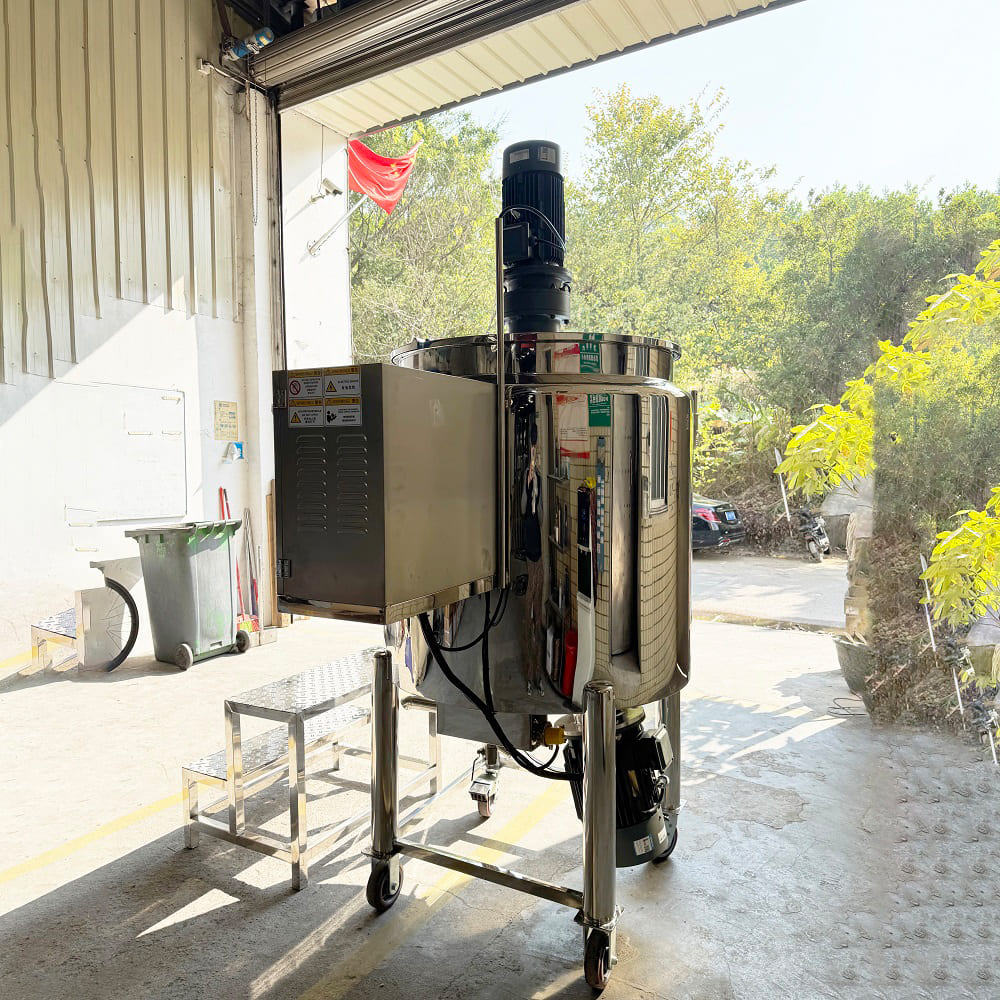
Yuanyang homogenizing mixer is a liquid mixing tank with a high-shear homogenizer. The homogeneous mixing machine is the core part for the liquid soap production line for shampoo, body wash, laundry detergent, dish soap, hand sanitizer, and other thick liquids.
Features:
⦁ Flat top half-open lid, electric control system.
⦁ Suitable for various liquid cleaning products and sauces.
⦁ PTFE wall scrapers stirring at top, high shear homogenizer at bottom.
Compliance-oriented engineering
Yuanyang designs the Homogenizing Mixer for Sale with sanitary finishes, accessible maintenance points, and materials suitable for CIP and regulatory audits. Supplier material certificates and welding documentation are provided to support IQ activities.
Validation support and documentation
Yuanyang supplies installation and operation manuals, wiring diagrams, and performance baseline data to accelerate OQ and PQ. For customers needing full validation packages, the company can provide testing protocols and factory acceptance test (FAT) reports.
After-sales service and spare parts traceability
Available spare parts, recommended preventive maintenance schedules, and calibration service support help maintain validated states. PTFE scrapers and homogenizer rotors/stators are stocked for quick replacement to minimize downtime and ensure consistent mixing tank performance.
Implementation Checklist for Compliance Teams
Pre-installation
- Verify material certificates for all wetted parts (316L where required).
- Review vendor-supplied drawings and utility requirements.
- Define critical process parameters (CPPs) and critical quality attributes (CQAs).
During commissioning
- Execute IQ protocol and confirm mechanical completion.
- Run OQ tests across operational ranges, record sensor calibrations.
- Validate CIP cycles and document rinse/sampling results.
Post-commissioning
- Perform PQ using representative batches and record statistical acceptance.
- Finalize batch records and put change control in place for process changes.
- Schedule routine requalification where required by regulation or risk assessment.
FAQs
Q: What is the difference between validation and qualification for a mixing tank?
A: Qualification (IQ/OQ/PQ) is the documented evidence that equipment is installed, operates, and performs as intended. Validation is the broader activity demonstrating that the entire process consistently produces product meeting specifications. Qualification is a component of validation.
Q: Do I need a high-shear homogenizer on my mixing tank for detergents?
A: Many detergent and personal care formulas benefit from a high-shear homogenizer to achieve uniform dispersion and stable emulsions. If your formulation requires small droplet sizes, reduced foaming variability, or faster solubilization of actives, a homogenizer is recommended.
Q: How often should I revalidate my mixing tank system?
A: Revalidation frequency depends on risk assessment, regulatory requirements, and changes to process, materials, or equipment. Common triggers include major repairs, process changes, or periodic schedules defined in your quality plan (e.g., annually or every 2–3 years depending on product risk).
Q: Can Yuanyang provide documentation for IQ/OQ/PQ?
A: Yes. Yuanyang provides installation and operation documentation, FAT reports, and can support validation protocols for the Homogenizing Mixer for Sale to accelerate your IQ/OQ/PQ activities.
After addressing compliance requirements, buyers often revisit how to choose the right mixing tank for your product to finalize specifications with confidence.Need help selecting a compliant mixing tank or validating your production line? Contact our technical team to discuss process-specific validation plans or to view the Homogenizing Mixer for Sale. Visit product page or contact sales today for a quote and validation package.
Homogenizer Mixer vs High-Shear Mixer: Which Is Better?
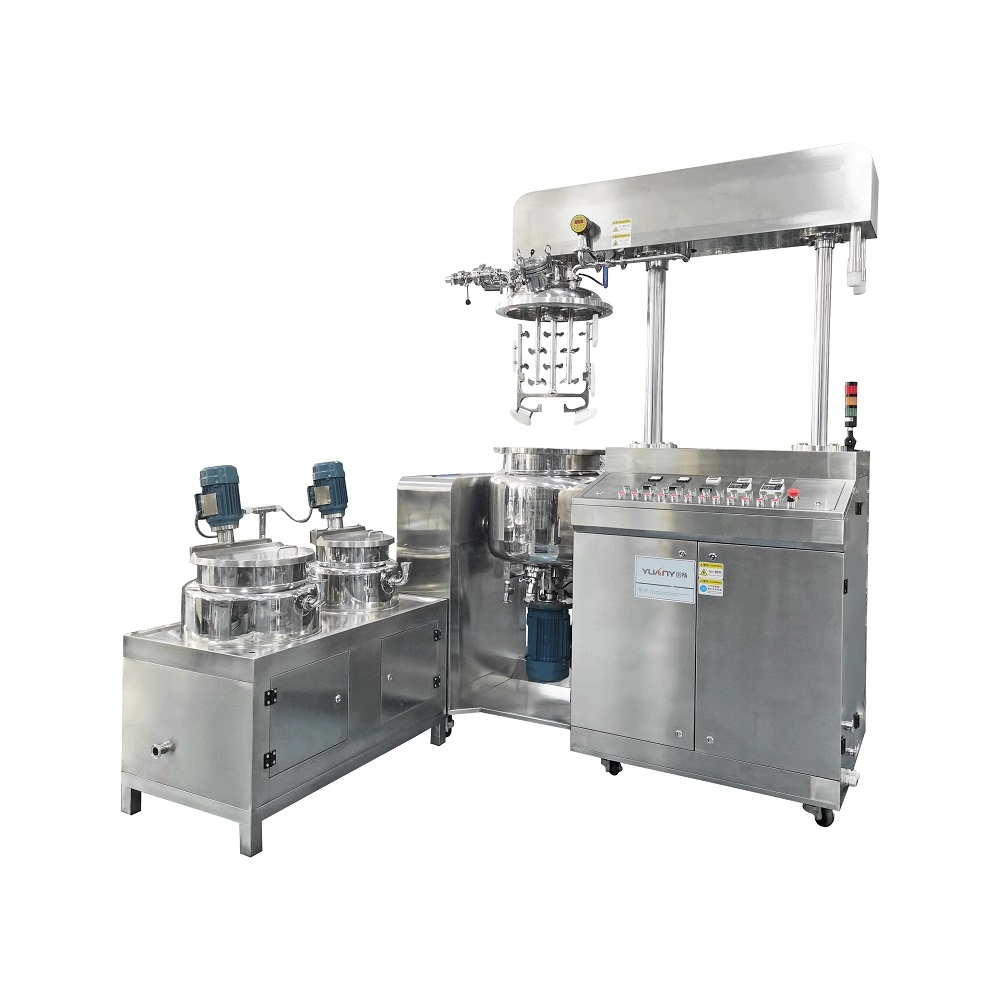
Choosing the Right Emulsion Mixer for High-Volume Production
Wholesale reverse osmosis water treatment machine manufacturer and supplier in Asia
How to start the beer can labeling machine business ?
High shear homogneizer
What’s the working principle of high shear homogenizer?
The shear mixer mainly through the high-speed relative rotation of the rotor and the stator to produce a strong shear force to achieve the refinement and homogenization of the material.
Ribbon mixer
Can you customized contact materials stainless steel 316L for the detergent powder making machine ?
Yes, we provide customization service upon requirements. The contact parts can be SUS304 or SUS316L. But the cost will be more.
Washing Powder
What is the production capacity?
Capacity depends on the specific model and production requirements. We recommend suitable equipment based on your needs.
Melting Tank
I want to connect the melting tank with my filling machine, can you help to customize the height to 70cm and provide adapters?
Yes, we would like to help give solutions according to actual situation. Yuany is a professional solution provider. Purchasing machines from Yuany not only saves cost but also saves energy and time.
Automatic Piston Filling Machine
How to add liquids into the hopper of the fully automatic bottle filling machines?
The automatic liquid filling machine requires a pump to transfer liquids into hopper, and it can stop automatically with a liquid sensor inserted inside the hopper.
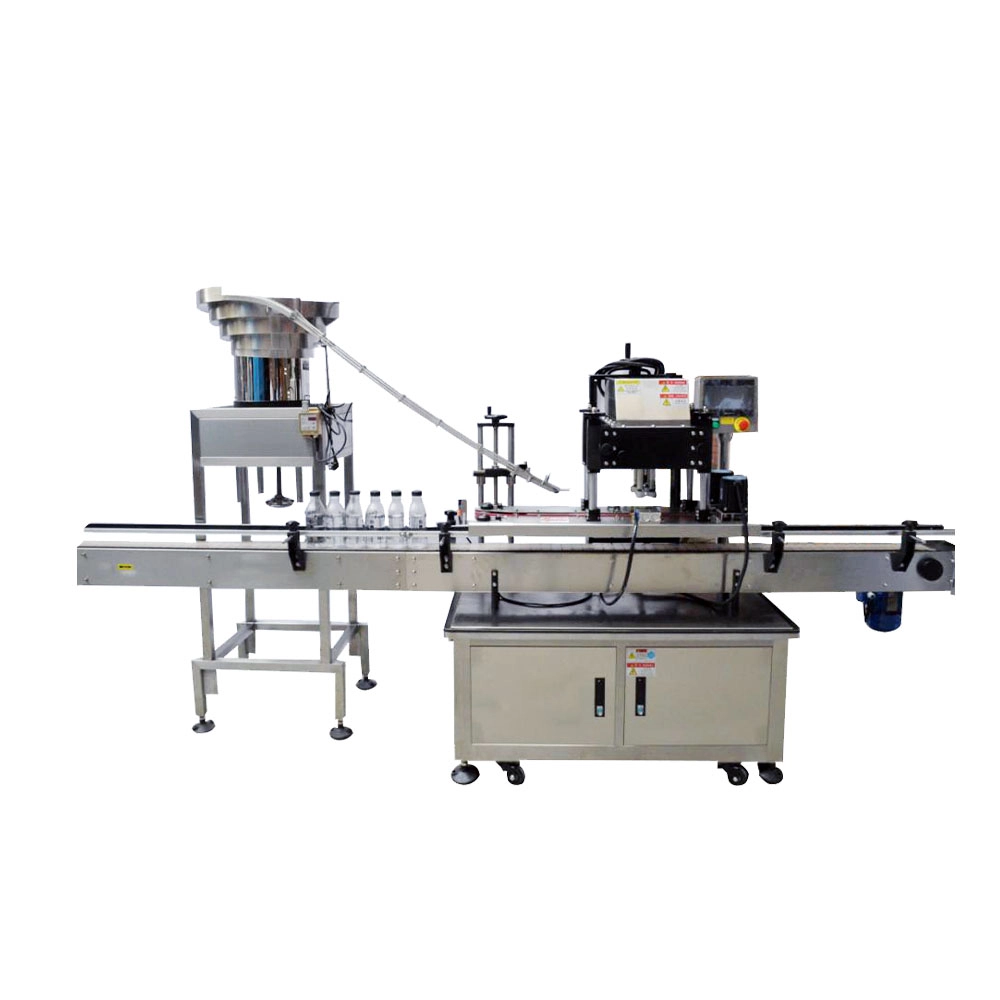
Automatic Plastic Caps Capping Machine with Vibrating Cap Feeder for Sale
Yuanyang automatic screw capping machine is a kind of four-wheel bottle capping machine. The automatic screw capper is often used to close lids of containers such as bottles and jars, especially for plastic bottles, which are widely used in food, medicine, chemical, cosmetic, and other industries for mass production and continuous production lines.
Features:
⦁ Full pneumatic drive;
⦁ Automated fast speed;
⦁ Suitable for various screw caps, pumps, and spray bottles.
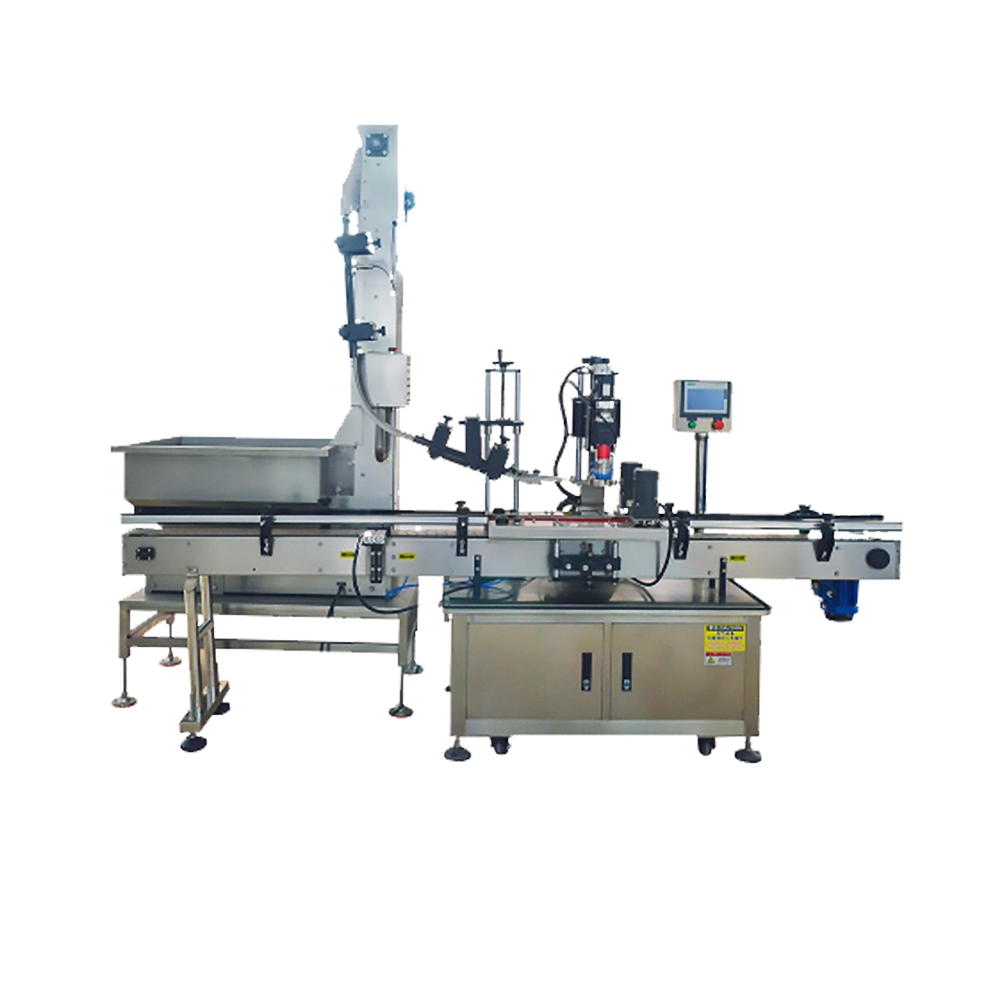
Automatic Metal Caps Capping Machine for Sale
Yuanyang automatic metal cap capping machine is a bottle capper for bottles with metal caps, which is often used to close lids of containers such as bottles and jars. The glass bottle metal capping machine is widely used in food, medicine, chemical, cosmetic, and other industries for mass production and continuous production line .
Features:
⦁ Pneumatic and electric drive;
⦁ Automated fast speed;
⦁ Suitable for glass bottles with metal caps.
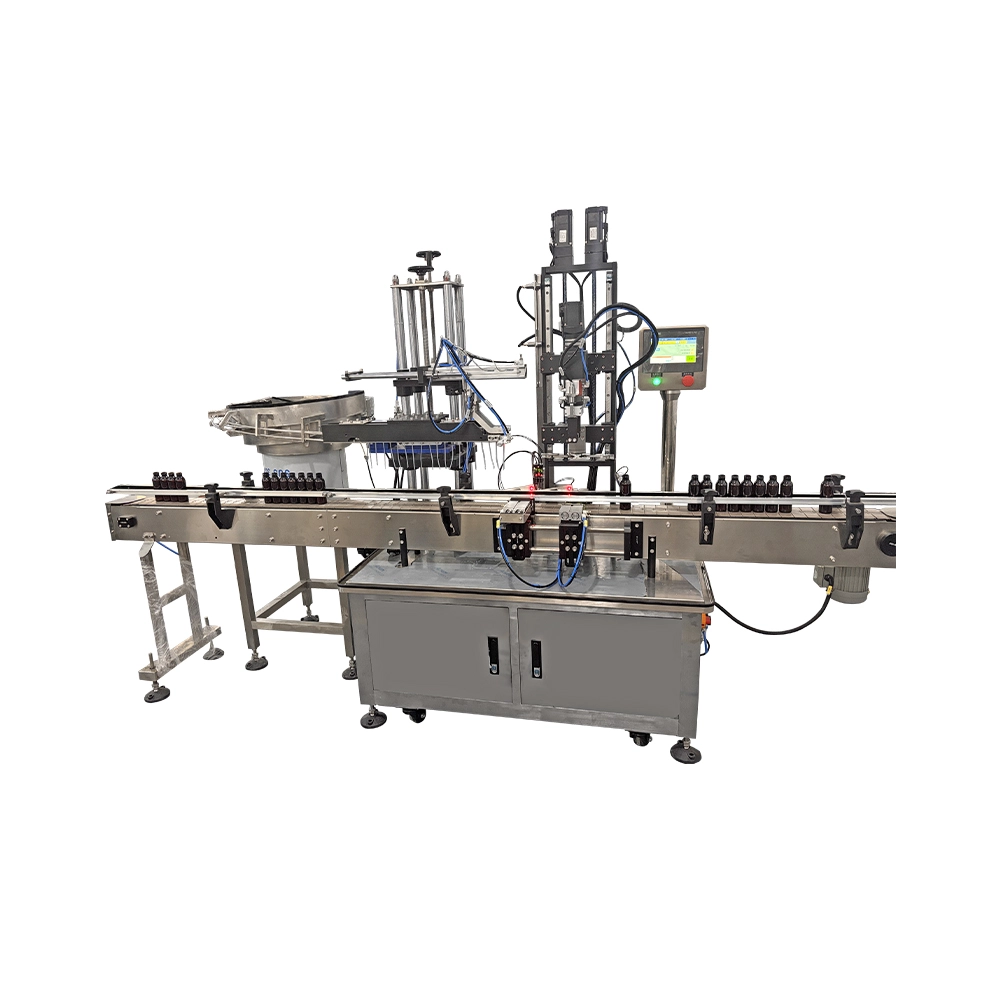
Automatic Pump Head Feeding and Capping Machine for Sale
Yuanyang automatic pump head feeding and capping machine is a bottle cap sorter and capper for bottles with pump heads, which is often used to close lids of containers such as nail polish, sprayers, and shampoo. The capping machine with a pump head feeder is widely used in food, medicine, chemical, cosmetic, and other industries for mass production and continuous production line .
Features:
⦁ Pneumatic and electric drive;
⦁ Automated fast speed;
⦁ Suitable for various types of caps.
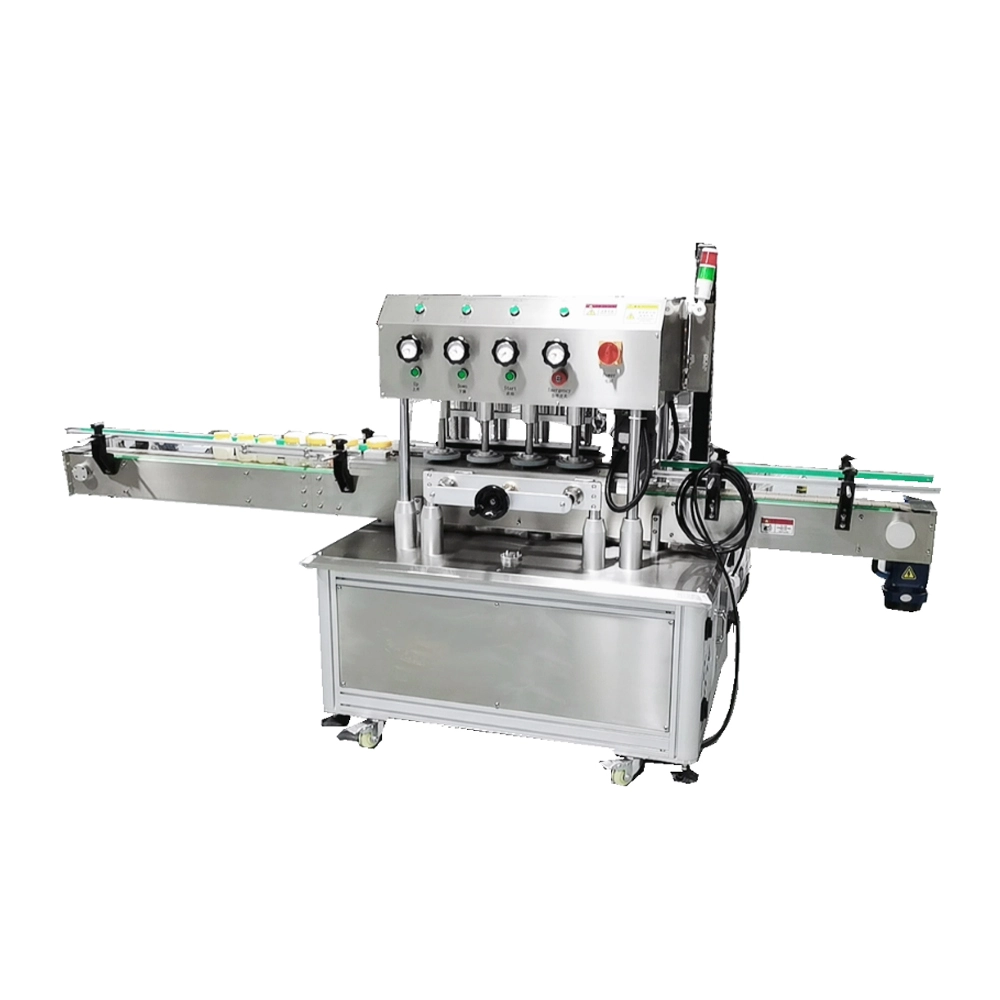
Automatic High Speed Capping Machine for Sale
The Yuanyang automatic high-speed capping machine is a kind of 8-wheel bottle-capping machine with fast working efficiency. The automatic capper is often used to close lids of containers such as bottles and jars, especially for plastic bottles, which are widely used in food, medicine, chemical, cosmetic, and other industries for mass production and continuous production lines.
Features:
⦁ Electric drive;
⦁ Automated fast speed;
⦁ Suitable for various screw caps, pumps, and spray bottles.
 Scan QR Code
Facebook
YouTube
LinkedIn
Whatsapp: +8613434139712
Guangzhou Yuanyang Machinery