





Integrating an Emulsion Mixer into GMP Manufacturing Lines
- Integrating an Emulsion Mixer into GMP Manufacturing Lines
- Why an emulsion mixer is essential for GMP manufacturing
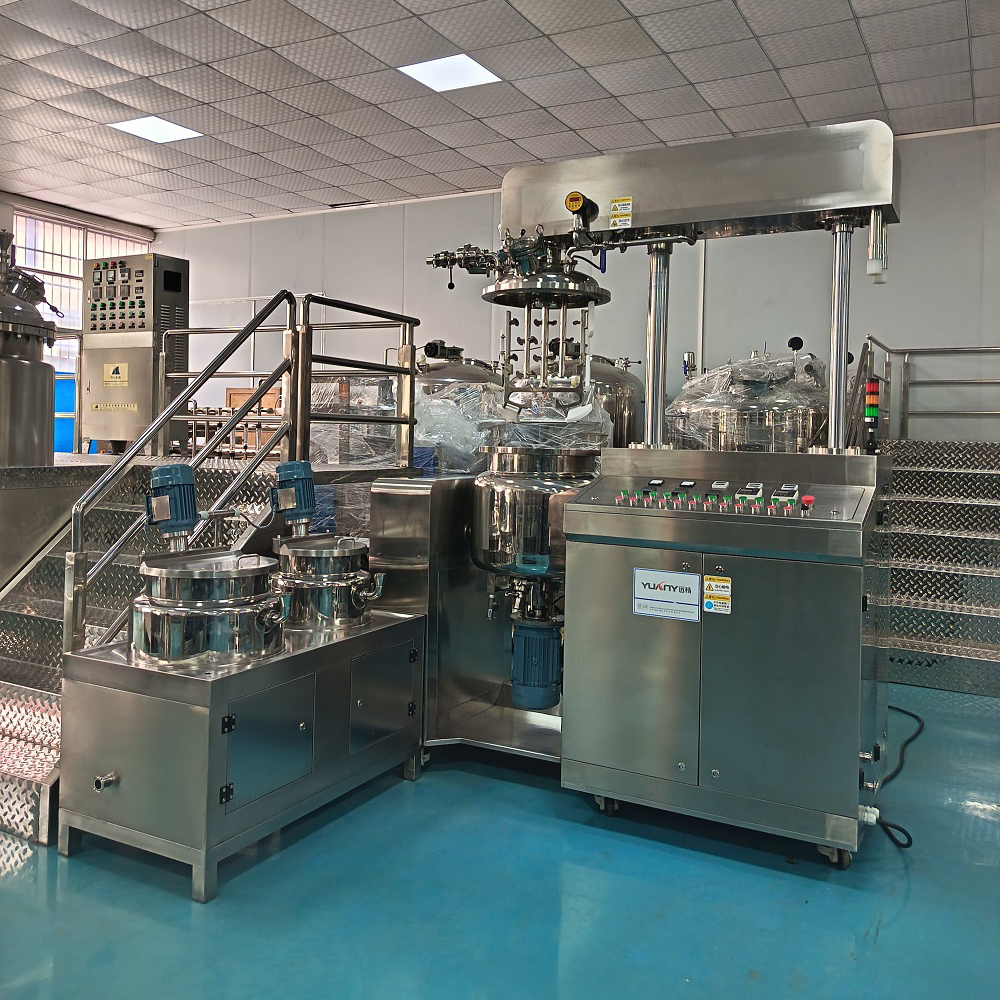
- Overview of the 50L Hydraulic Lift Vacuum Emulsifier
- Key technical considerations when integrating an emulsion mixer into GMP lines
- Process design and facility layout for GMP integration
- Cleaning, validation and documentation (GMP-focused)
- Quality control: ensuring consistent emulsion quality
- Scale-up and production planning: using 50L units for development and GMP pilot runs
- Safety, maintenance and operator training
- Economic impact and ROI of integrating a vacuum emulsifier
- Practical implementation tips for smooth integration
- Why choose Yuanyang 50L Hydraulic Lift Vacuum Emulsifier for GMP lines
- FAQ — Frequently Asked Questions
- Q: Is the 50L Hydraulic Lift Vacuum Emulsifier suitable for sterile pharmaceutical manufacturing?
- Q: What product viscosities can this emulsifier handle?
- Q: How do you validate droplet size performance?
- Q: Does the unit support CIP or SIP?
- Q: What are common failure modes and how can they be mitigated?
- Contact sales or view the product
- Authoritative references
Integrating an Emulsion Mixer into GMP Manufacturing Lines
Why an emulsion mixer is essential for GMP manufacturing
Emulsions are the backbone of many pharmaceutical, cosmetic and food products. Achieving consistent droplet size distribution, long-term stability and microbial safety are required attributes under Good Manufacturing Practice (GMP). An emulsion mixer with integrated vacuum homogenizing capabilities reduces entrapped air, improves particle (droplet) size control and aids repeatability across batches. Using a purpose-built emulsion mixer in a validated GMP line helps manufacturers meet regulatory expectations for product quality, traceability and process control. Within GMP environments, performance validation relies on clear quality control metrics when evaluating emulsion mixers.
Overview of the 50L Hydraulic Lift Vacuum Emulsifier
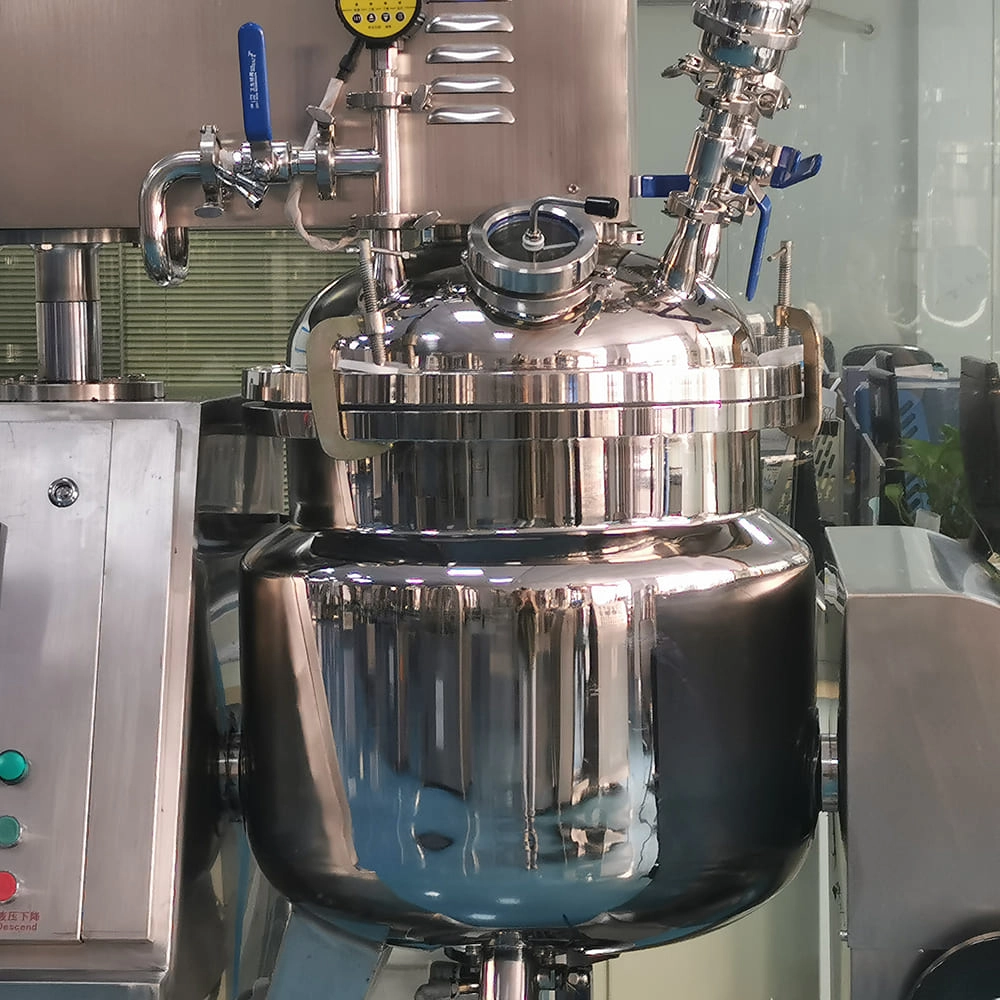
Yuanyang hydraulic lift vacuum emuslifier is a combined mixing equipment with a main vacuum homogenizer tank, a water tank, and an oil tank, which is an integrated equipment with a mixing, dispersing, homogenizing, emulsifying, vacuumizing and powder absorption system that is widely used in cosmetics, food, pharmaceutical, and chemical fields.
Features:
⦁ With a hydraulic lift lid & tilting pot, vacuum system, and electric control system.
⦁ Suitable for products of 10,000~50,000 cps viscosity.
⦁ Perfect particle size of 2 microns and evenly distributed.
The 50L Hydraulic Lift Vacuum Emulsifier is designed as a compact yet fully featured unit for pilot and small-scale GMP production. Its integrated vacuum homogenizer tank, separate oil and water tanks and powder absorption system simplify typical production flows for creams, ointments, lotions and high-viscosity formulations.
Key technical considerations when integrating an emulsion mixer into GMP lines
When adding an emulsion mixer such as the 50L Hydraulic Lift Vacuum Emulsifier into a GMP line, several technical topics must be addressed to ensure compliance and performance:
- Material of construction: Use 316L stainless steel wetted parts with sanitary finishes to prevent contamination and facilitate cleaning.
- Surface finish and weld quality: Ra values and polish level should meet product-specific microbial and cleaning demands.
- Seals and gaskets: Select FDA/USP-grade elastomers and document sourcing for qualification.
- CIP/SIP compatibility: Verify CIP flow paths, spray devices and heating options for sterilizable formulations.
- Vacuum performance: Confirm vacuum level and pump capacity to remove air quickly and reliably for better droplet distribution.
- Homogenization specification: Ensure rotor-stator/homogenizer design can reach the required energy density to deliver target droplet size (e.g., 2 microns).
- Control and automation: PLC/HMI with recipe management, batch recording and electronic audit trails helps meet GMP recordkeeping needs.
Process design and facility layout for GMP integration
Thoughtful process and layout design reduce cross-contamination risk and improve operational efficiency. Consider the following in your plant layout:
- Segregation: Maintain dedicated areas or temporal separation for incompatible product families.
- Material flows: Design forward flow from raw materials to finished product with minimal backtracking.
- Operator access and ergonomics: The hydraulic lift lid and tilting pot on the 50L ensure safe loading/unloading and simplify manual additions or cleaning.
- Utility placement: Position vacuum pumps, steam/glycol connections and compressed air to minimize pressure drops and maintain performance.
- CIP/SIP routing: Place return lines and drains to collect CIP waste safely and avoid cross-connections.
Cleaning, validation and documentation (GMP-focused)
GMP requires documented evidence that cleaning and process controls consistently produce acceptable product. Key activities include:
- Cleaning Validation: Develop a cleaning validation protocol that demonstrates removal of active ingredients, excipients, residues and bioburden to pre-defined limits. Swab and rinse sampling strategies should be justified.
- IQ/OQ/PQ: Commissioning and qualification are essential. Installation Qualification verifies hardware matches specifications. Operational Qualification demonstrates all functions (vacuum, homogenizer speeds, hydraulic lift) operate within set limits. Performance Qualification shows product performance (particle size, viscosity, stability) under normal production.
- SOPs and batch records: Create clear SOPs for setup, operation, cleaning and maintenance. Batch records must capture key parameters, deviations and corrective actions.
- Electronic records: If using PLC/HMI, ensure compliance with 21 CFR Part 11 (where applicable) or local electronic records regulations.
Quality control: ensuring consistent emulsion quality
To meet GMP expectations, implement in-process controls and final product testing:
- Droplet size analysis: Laser diffraction or dynamic light scattering to confirm target distribution (e.g., mean ~2 microns) and monitor process drift.
- Viscosity and rheology: Monitor at standardized shear rates to ensure fillability, spreadability and stability.
- pH and conductivity: Critical for stability and compatibility with preservatives.
- Microbial testing: Bioburden and preservative efficacy where applicable.
- Stability testing: Accelerated and real-time studies to support shelf-life claims.
Scale-up and production planning: using 50L units for development and GMP pilot runs
The 50L Hydraulic Lift Vacuum Emulsifier is ideal for R&D, clinical manufacturing and small commercial batches. Use it to de-risk formulations and generate robust process parameters before scaling. Key scale-up considerations:
- Maintain energy density: Match rotor tip speed and homogenizer shear intensity when moving to larger equipment.
- Residence time and batch size: Keep mixing times proportional and verify thermal profiles.
- Geometric similarity: Consider impeller and tank geometry differences and adjust mixing schedules accordingly.
Below is a comparison table to help plan capacity and scale-up strategy.
| Parameter | 50L Hydraulic Lift Vacuum Emulsifier (Pilot) | Medium-scale Vacuum Emulsifier (200–500L) | Large-scale Production (1000L+) |
|---|---|---|---|
| Typical use | R&D, clinical, small-batch GMP | Scale-up, early commercial | Full commercial production |
| Control complexity | High (recipe control, flexible) | Moderate | High (integrated MES) |
| Validation effort | Standard IQ/OQ/PQ | Standard + scale considerations | Comprehensive, extensive sampling |
| Typical droplet size achievable | ~2 microns (with correct settings) | 1–3 microns | 1–3 microns |
| Cleaning approach | Manual + CIP adaptions | Full CIP/SIP | Automated CIP/SIP |
Safety, maintenance and operator training
Operators must be trained on hydraulic systems, vacuum safety and homogenizer hazards. Common safety controls and maintenance practices:
- Interlocks: Ensure lid and tilt interlocks prevent operation when open or tilted.
- Vacuum pump protection: Filtration and condensate traps to protect vacuum pumps and prevent contamination of vacuum system.
- Scheduled maintenance: Bearings, seals and hydraulic components should follow a preventive schedule recorded in a maintenance log.
- Spare parts: Stock critical spares such as seals, rotor-stator sets and vacuum pump consumables to minimize downtime.
Economic impact and ROI of integrating a vacuum emulsifier
Investment in a high-quality emulsion mixer often pays back through:
- Reduced batch failures and rework due to better droplet control and consistent processing.
- Shorter process times when vacuum homogenization accelerates de-aeration and reduces mixing cycles.
- Less raw material waste from tighter control and smaller test batches for R&D.
When calculating ROI, include acquisition cost, qualification and validation expenses, expected reductions in waste/rework and potential throughput improvements.
Practical implementation tips for smooth integration
- Run representative pilot batches in GMP-like conditions to capture true cleaning and cycle time needs.
- Define key process parameters (KPIs) such as homogenizer speed, vacuum level and mixing time and embed them into recipes.
- Create acceptance criteria for in-process tests (droplet size, viscosity) tied to batch release.
- Engage cross-functional teams (QA, engineering, production) early to align on requirements and avoid retrofit surprises.
- Document deviation handling, change control and corrective/preventive actions for process improvements.
Why choose Yuanyang 50L Hydraulic Lift Vacuum Emulsifier for GMP lines
The Yuanyang 50L Hydraulic Lift Vacuum Emulsifier combines features tailored to GMP environments:
- Integrated vacuum homogenizer and separate oil/water tanks support staged additions and controlled emulsification.
- Hydraulic lift lid and tilting pot improve operator ergonomics and cleaning access, reducing manual handling and contamination risk.
- Capability for 10,000–50,000 cps products covers high-viscosity creams and gels common in cosmetics and topical pharmaceuticals.
- Ability to achieve ~2 micron particle size supports product stability and enhanced bioavailability/skin feel when required.
- Electric control systems and optional automation support recipe control, electronic records and integration into quality systems.
FAQ — Frequently Asked Questions
Q: Is the 50L Hydraulic Lift Vacuum Emulsifier suitable for sterile pharmaceutical manufacturing?
A: The unit can be incorporated into GMP sterile workflows when configured with appropriate materials, CIP/SIP capability, validated sterilization procedures and environmental controls. For aseptic fills additional containment and validated sterile transfer protocols are required.
Q: What product viscosities can this emulsifier handle?
A: It is suitable for products in the 10,000–50,000 cps viscosity range. Adjust rotor/stator and mixing schedules for heavy, thixotropic formulations.
Q: How do you validate droplet size performance?
A: Use particle sizing methods like laser diffraction. Perform repeated qualification batches under PQ conditions and document target distributions (mean and D90/D10). Establish in-process controls to confirm reproducibility.
Q: Does the unit support CIP or SIP?
A: The standard 50L design supports cleaning and can be adapted for CIP. SIP compatibility depends on the specific configuration and must be validated if required for your process.
Q: What are common failure modes and how can they be mitigated?
A: Common issues include seal wear, vacuum pump contamination and inconsistent homogenizer performance. Mitigations: predefined preventive maintenance, vacuum traps/filters, spare parts inventory and operator training.
Contact sales or view the product
To discuss specifications, validation support or to request a quotation for the 50L Hydraulic Lift Vacuum Emulsifier, contact our sales team: [email protected]. View product details and downloadable datasheets at: /products/50l-hydraulic-lift-vacuum-emulsifier
Authoritative references
Below are trusted sources commonly referenced for GMP and pharmaceutical manufacturing guidance:
- U.S. Food and Drug Administration (FDA) — Good Manufacturing Practice resources: https://www.fda.gov/drugs/pharmaceutical-quality-resources/drug-manufacturing
- European Medicines Agency (EMA) — Good Manufacturing Practice: https://www.ema.europa.eu/en/human-regulatory/research-development/compliance/good-manufacturing-practice
- World Health Organization (WHO) — Good manufacturing practices for pharmaceutical products (Annex 3, TRS 986): https://www.who.int/publications/i/item/trs-986-annex-3
- International Organization for Standardization — ISO 9001 quality management overview: https://www.iso.org/iso-9001-quality-management.
- Wikipedia — Emulsifier: https://en.wikipedia.org/wiki/Emulsifier
- Wikipedia — Homogenizer: https://en.wikipedia.org/wiki/Homogenizer
References and design choices should be adapted for your local regulatory jurisdiction and product category. Engage regulatory and quality experts early in design and qualification to ensure a smooth GMP integration.
How to Choose the butter melting tank manufacturer and supplier in Germany?
Why choose YUANYANG as your powder disperser supplier
Minimizing Downtime: Maintenance Best Practices for Emulsifying Mixers
Top 10 best stainless steel liquid mixing tank Manufacturers and Supplier Brands
Vertical Filling Machine
How to adjust the filling weight?
There is weight regulator for client to refer. Just adjust several times until you get the accurate filling weight. Remember the reference number, next time directly use for the same materials and bottles.
Washing Powder
Does Yuanyang equipment support custom formulas?
Yes, our machines are highly flexible to accommodate various client-specific formulas.
Chemicals
How is the safety of the equipment ensured?
The equipment is equipped with multiple safety protection measures and meets chemical industry safety standards.
Sachet Packaging Machine
What materials does this plastic bag packing machine can pack?
This packing machinery can pack liquids, cream, paste, sauce, shampoo and similar materials.
Vacuum Emulsifier
What type of homogenizer do you use for this vacuum homogenizer emulsifier?
There are two types of homogenizer, one is with regular standard mechanical sealing type, another is water cooling type. Clients can choose the preferred type according to needs.
Automatic Plastic Caps Capping Machine with Vibrating Cap Feeder for Sale
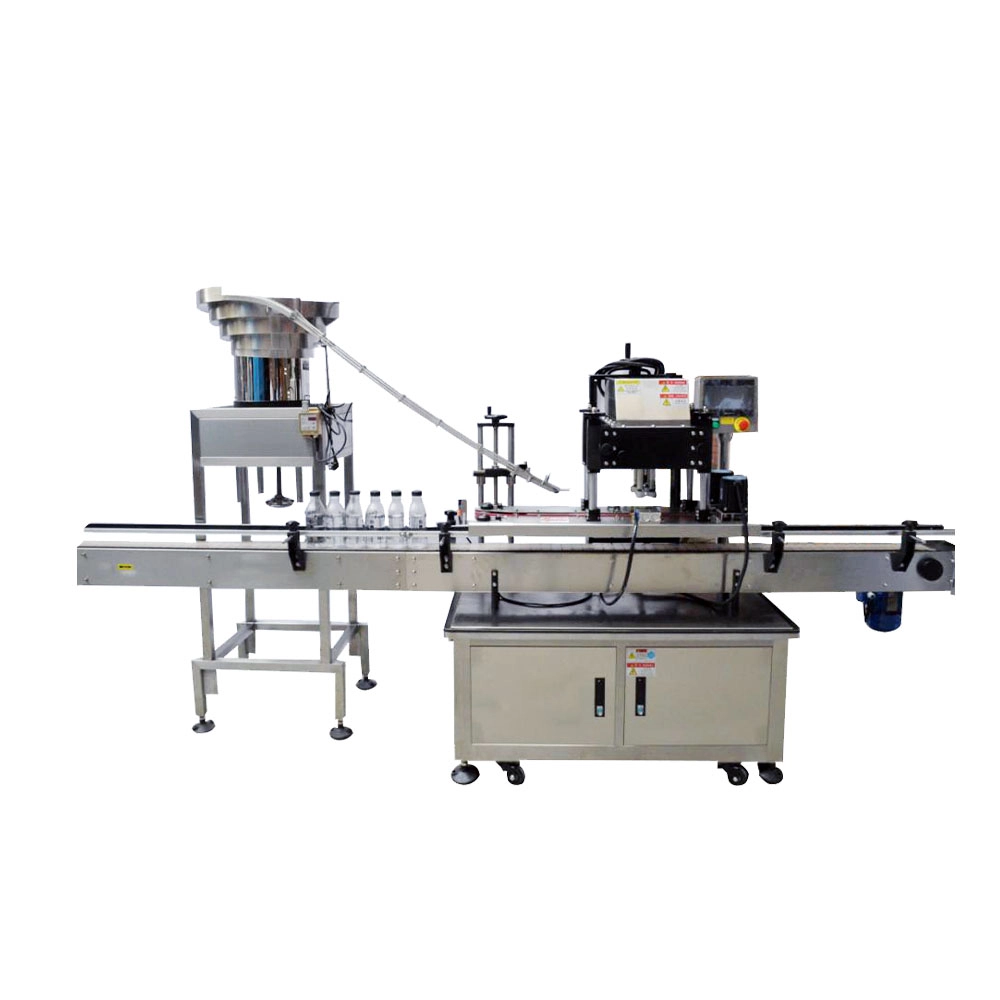
Yuanyang automatic screw capping machine is a kind of four-wheel bottle capping machine. The automatic screw capper is often used to close lids of containers such as bottles and jars, especially for plastic bottles, which are widely used in food, medicine, chemical, cosmetic, and other industries for mass production and continuous production lines.
Features:
⦁ Full pneumatic drive;
⦁ Automated fast speed;
⦁ Suitable for various screw caps, pumps, and spray bottles.
Automatic Metal Caps Capping Machine for Sale
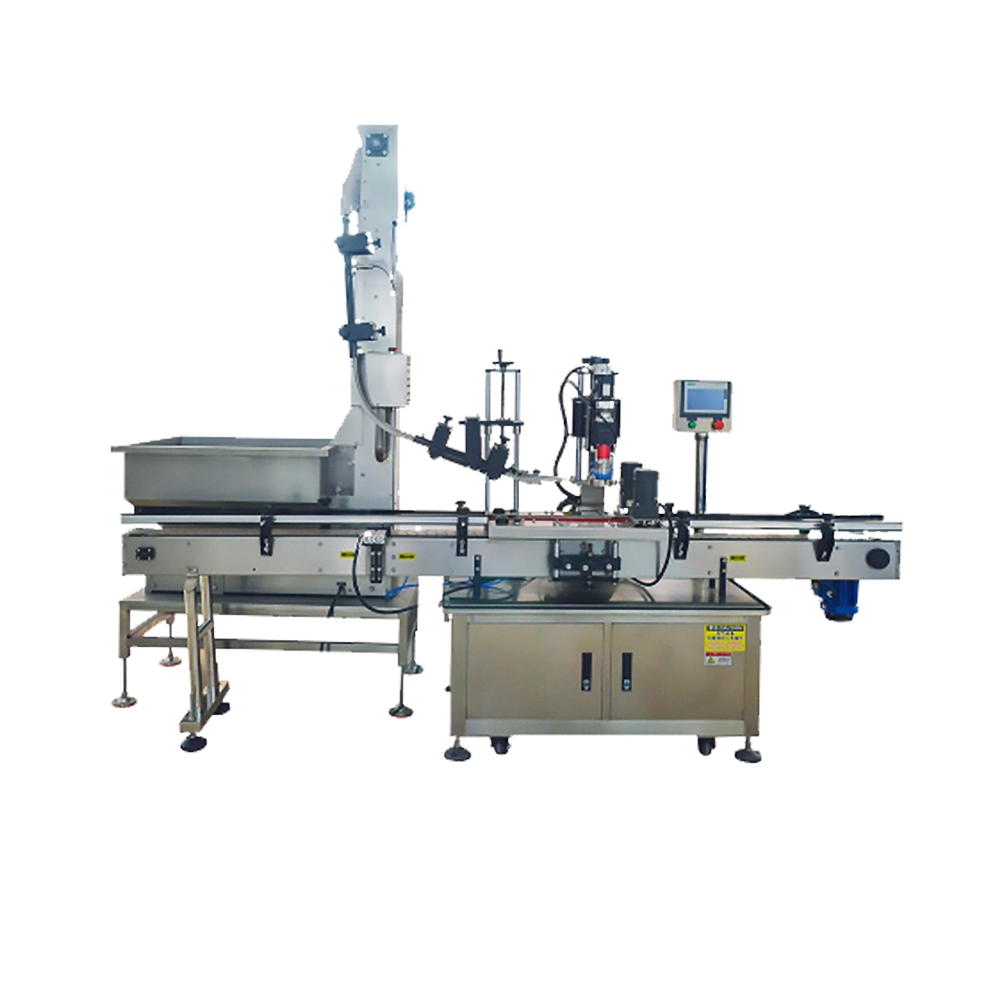
Yuanyang automatic metal cap capping machine is a bottle capper for bottles with metal caps, which is often used to close lids of containers such as bottles and jars. The glass bottle metal capping machine is widely used in food, medicine, chemical, cosmetic, and other industries for mass production and continuous production line .
Features:
⦁ Pneumatic and electric drive;
⦁ Automated fast speed;
⦁ Suitable for glass bottles with metal caps.
Automatic Pump Head Feeding and Capping Machine for Sale
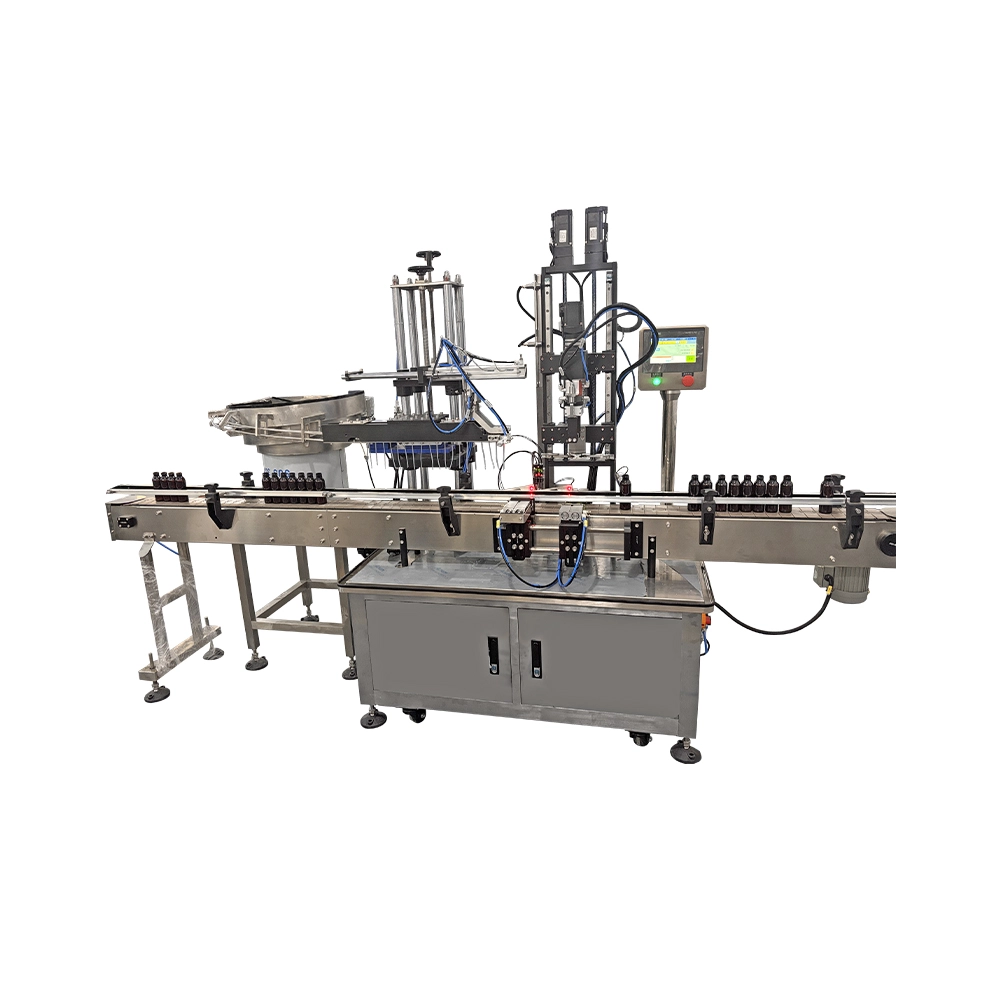
Yuanyang automatic pump head feeding and capping machine is a bottle cap sorter and capper for bottles with pump heads, which is often used to close lids of containers such as nail polish, sprayers, and shampoo. The capping machine with a pump head feeder is widely used in food, medicine, chemical, cosmetic, and other industries for mass production and continuous production line .
Features:
⦁ Pneumatic and electric drive;
⦁ Automated fast speed;
⦁ Suitable for various types of caps.
Automatic High Speed Capping Machine for Sale
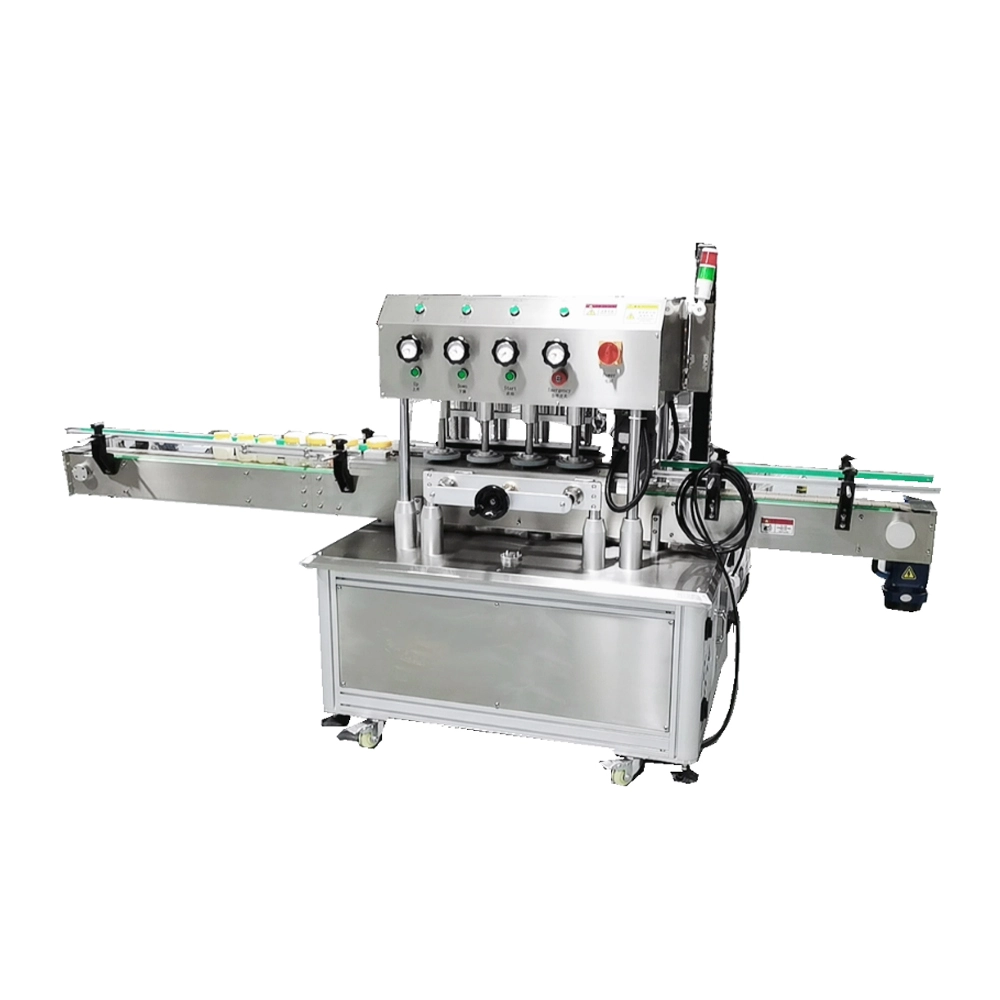
The Yuanyang automatic high-speed capping machine is a kind of 8-wheel bottle-capping machine with fast working efficiency. The automatic capper is often used to close lids of containers such as bottles and jars, especially for plastic bottles, which are widely used in food, medicine, chemical, cosmetic, and other industries for mass production and continuous production lines.
Features:
⦁ Electric drive;
⦁ Automated fast speed;
⦁ Suitable for various screw caps, pumps, and spray bottles.
 Scan QR Code
Facebook
YouTube
LinkedIn
Whatsapp: +8613434139712
Guangzhou Yuanyang Machinery