





Maintenance Checklist for Homogenizing Mixers and Mixing Tanks
- Comprehensive Maintenance Strategy for High-Shear Homogenizing Systems
- Why a formal maintenance plan matters
- Key components to include in your program
- Risk-based scheduling
- Daily and Routine Maintenance for Mixing Tanks
- Daily start-up and shutdown checks
- Routine lubrication, alignment, and cleaning
- Sanitation and CIP (clean-in-place) best practices
- Periodic Inspections, Wear Management and Troubleshooting
- Monthly and quarterly inspections
- Common failure modes and remedies
- Troubleshooting guide for process anomalies
- Safety, Documentation and Brand Support
- Safety checks and lockout-tagout (LOTO)
- Documentation, traceability, and training
- Manufacturer support and spare parts strategy
- Practical Tools: Checklist and Maintenance Matrix
- Brand Integration: Why Choose Yuanyang Homogenizing Mixer for Sale
- Brand maintenance advantages
- Implementation tips for integration
- FAQ — Common questions about Maintenance for Homogenizing Mixers and Mixing Tanks
- How often should I replace the rotor-stator in a high-shear homogenizer?
- What are the signs of a failing shaft seal?
- Can CIP damage PTFE scrapers or homogenizer internals?
- Do I need vibration analysis for a mixing tank?
- Contact and Next Steps

This article provides a practical, step-by-step maintenance checklist for homogenizing mixers and mixing tanks used in liquid detergent, shampoo, body wash, hand sanitizer, and sauce production. It is designed for operations teams and maintenance personnel who need clear, actionable tasks to protect equipment such as high-shear rotor-stator homogenizers and sanitary process tanks. Semantic keywords included throughout: mixing tank, homogenizer, high-shear mixer, tank agitator, mixing vessel, CIP, vessel cleaning, rotor-stator, sanitary mixing tank. Proper maintenance planning also supports smooth expansion when integrating a homogenizing mixer into your production line.
Comprehensive Maintenance Strategy for High-Shear Homogenizing Systems
Why a formal maintenance plan matters
A structured maintenance strategy reduces unplanned downtime, prevents product contamination, and optimizes energy use. Homogenizing mixers combine mechanical shear and tank agitation: the high-shear homogenizer (rotor-stator) does emulsification while the mixing tank and PTFE wall scrapers ensure uniform heat transfer and product movement. A documented plan helps preserve seal integrity, alignment, and surface finish of the mixing vessel, which are critical in sanitary product lines.
Key components to include in your program
Ensure your checklist explicitly covers: the high-shear homogenizer assembly (rotor, stator, bearings), shaft and agitator seals, PTFE wall scrapers, lid/gasket surfaces, electric control system, motor drives, coupling alignment, and the mixing tank's interior finish. Also include CIP (clean-in-place) validation steps and inspection of sight glasses, valves, and temperature sensors. For background on mixing principles see Mixing (process engineering).
Risk-based scheduling
Adopt a risk-based schedule: high-risk items (shaft seals, rotor-stator wear parts) on a short cycle; medium-risk (bearing lubrication, scraper wear) on a medium cycle; low-risk (tank external structure, paint) on a long cycle. This approach balances cost and reliability and is especially important when running continuous batches in a production line for liquids like detergents or hand sanitizers.
Daily and Routine Maintenance for Mixing Tanks
Daily start-up and shutdown checks
Before each production run, inspect the mixing tank for visible damage, verify that CIP and drain lines are clear, and confirm the electric control system has no fault codes. Check the lid seals and ensure the flat top half-open lid is secure if present. At shutdown, perform a visual inspection for leaks and ensure valves are tagged and closed if required. These simple checks prevent contamination and immediate mechanical failures.
Routine lubrication, alignment, and cleaning
Lubricate bearings per manufacturer recommendations; over-lubrication and under-lubrication both cause accelerated bearing failure. Check coupling alignment using a dial indicator or laser alignment tool every month or after any motor replacement. Maintain the PTFE wall scrapers to prevent build-up on the tank walls which can cause hot spots or incomplete mixing. Maintain records of lubrication and alignment to meet audit and QA requirements.
Sanitation and CIP (clean-in-place) best practices
For sanitary mixing tanks, validate your CIP cycles to ensure temperature, concentration, and contact time reach the required microbial reduction targets. Rinse and inspect spray balls, nozzles, and return lines. A typical CIP checklist should include pre-rinse, caustic wash, intermediate rinse, acid rinse (if required), final rinse, and verification sampling. For more on homogenization science consult Homogenization (chemistry).
Periodic Inspections, Wear Management and Troubleshooting
Monthly and quarterly inspections
Perform vibration analysis on the motor and homogenizer assembly monthly to detect bearing or rotor imbalance early. Inspect seals for extrusion or hardening quarterly and replace them proactively. Check the PTFE scrapers and stator surfaces for abrasion. Inspect tank internals for pitting or corrosion, especially if handling aggressive detergents or acidic cleaners. Keep a log of wear rates to forecast spare parts needs.
Common failure modes and remedies
Typical issues include rotor-stator wear leading to loss of homogenization efficiency, seal failure (leakage), bearing overheating, and scraper wear causing wall buildup. Remedies: replace rotor and stator sets according to measured gap tolerances; use OEM seal kits and ensure correct installation torque; monitor bearing temperatures and change lubrication intervals if trending high; maintain a stock of wear parts matched to your mixing tank model to minimize downtime.
Troubleshooting guide for process anomalies
If product shows inconsistent viscosity or poor emulsification: check rotor-stator clearance and speed, inspect motor drive for parameter deviations, ensure feed rates are steady, and confirm scrapers are functioning to prevent dead zones. If odors or contamination are suspected, verify CIP effectiveness and inspect gasket surfaces and sight glasses. Use process data (temperature, torque, motor current) to correlate mechanical events with product quality changes.
Safety, Documentation and Brand Support
Safety checks and lockout-tagout (LOTO)
Always follow LOTO procedures before any maintenance that involves disassembly of the homogenizer or mixing tank internals. Confirm isolation of electrical, pneumatic, and hydraulic sources. Ensure pressure is released from the vessel and any hot liquids have cooled. Provide staff with clear permits-to-work and ensure PPE requirements for chemical handling are documented and enforced.
Documentation, traceability, and training
Maintain an equipment history file: serial numbers, maintenance logs, parts replaced, alignment reports, and CIP validation results. Train operators and maintenance staff on daily checks and simple troubleshooting. Well-documented procedures not only improve reliability but support regulatory inspections and traceability for product safety and quality audits.
Manufacturer support and spare parts strategy
Partner with your homogenizer supplier for scheduled overhaul services and OEM spare parts. For example, consider stocking rotor-stator sets, gland seal kits, bearings, PTFE scraper modules, and gaskets. Use suppliers who provide clear wear criteria and service manuals to align your maintenance program with equipment design limits.
Practical Tools: Checklist and Maintenance Matrix
Below is a sample maintenance matrix you can adapt for your plant. It assigns frequencies, responsible roles, and tools required.
| Task | Frequency | Responsible | Tools/Notes |
|---|---|---|---|
| Visual inspection of tank, lid, seals | Daily | Operator | Checklist, flashlight |
| Check motor current & vibration | Weekly | Maintenance | Vibration meter, clamp meter |
| Verify CIP cycle & sample | Per batch/shift | QA/Operator | Thermometer, conductivity meter |
| Rotor-stator clearance measurement | Quarterly | Maintenance | Feeler gauges, micrometer |
| Replace seals & lubrication | Semi-annually / as needed | Maintenance | OEM kits, grease gun |
Brand Integration: Why Choose Yuanyang Homogenizing Mixer for Sale
Product overview:
Yuanyang homogenizing mixer is a liquid mixing tank with a high-shear homogenizer. The homogeneous mixing machine is the core part for the liquid soap production line for shampoo, body wash, laundry detergent, dish soap, hand sanitizer, and other thick liquids.
Features:
⦁ Flat top half-open lid, electric control system.
⦁ Suitable for various liquid cleaning products and sauces.
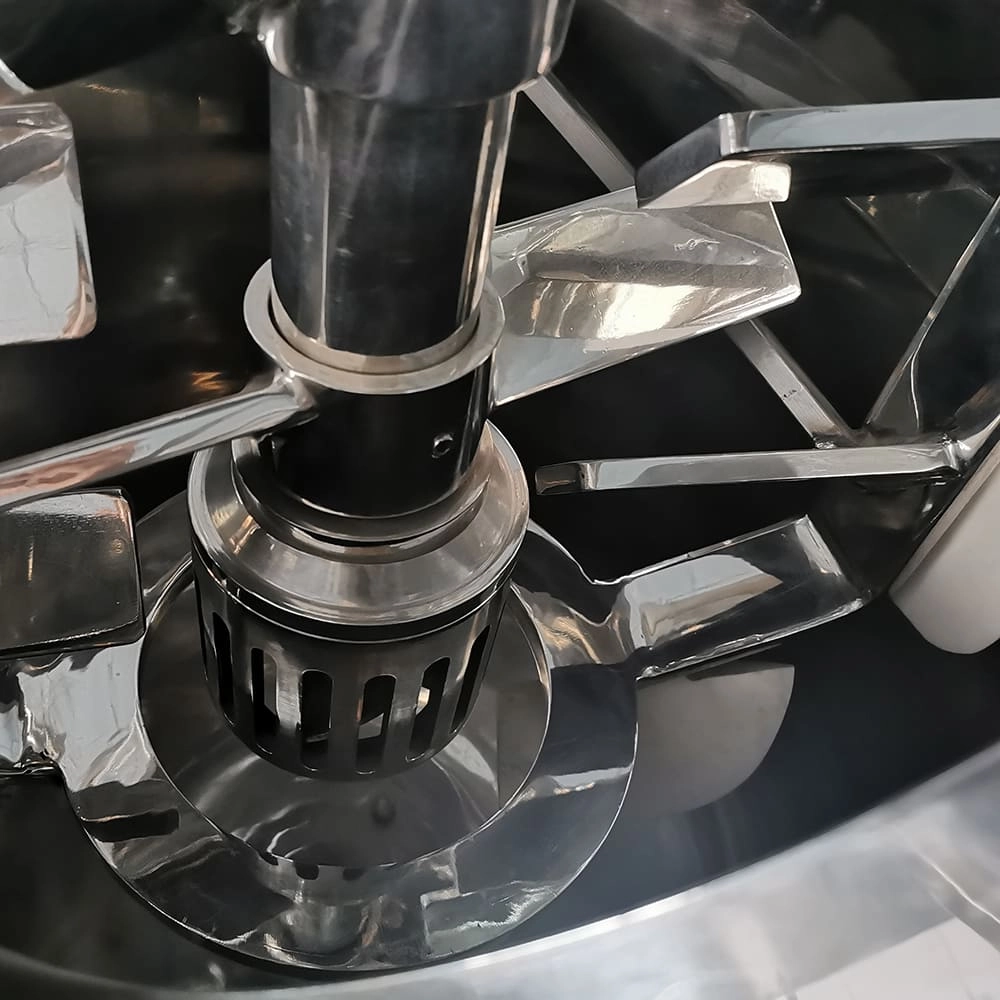
⦁ PTFE wall scrapers stirring at top, high shear homogenizer at bottom.
Yuanyang's design integrates a sanitary mixing tank with top scrapers and a bottom high-shear homogenizer, which reduces dead zones and improves heat transfer. The PTFE scrapers minimize abrasion while the electric control system allows precise speed and shear adjustments. These design choices simplify maintenance: scrapers are modular for quick replacement, rotor-stator assemblies are accessible, and the flat top lid provides safe access for inspections.
Brand maintenance advantages
Yuanyang provides clear service intervals, OEM spare kits, and technical documentation to support your maintenance program. This alignment between equipment design and maintenance procedures reduces Mean Time To Repair (MTTR) and simplifies audits. For equipment code and pressure vessel guidance, consult ASME resources.
Implementation tips for integration
When integrating a Yuanyang homogenizing mixer into your line, schedule a training session for operators and maintenance staff that covers daily checks, CIP validation, and simple rotor-stator replacement. Keep a digital log of maintenance activities and use the manufacturer’s recommended spare part list to build a kit that fits your runtime and supply chain constraints.
FAQ — Common questions about Maintenance for Homogenizing Mixers and Mixing Tanks
How often should I replace the rotor-stator in a high-shear homogenizer?
Replacement frequency depends on product abrasiveness, run hours, and acceptable performance loss. As a rule of thumb, inspect clearances quarterly; replace when you see a 10-20% drop in homogenization efficiency or when wear reaches manufacturer-specified tolerances. Keep spare rotor-stator sets in inventory to avoid production delays.
What are the signs of a failing shaft seal?
Leaks at the shaft area, sudden drops in lubricant level, increased motor current, and contamination in the product are common signs. Replace seals proactively if you detect extrusion, hardening, or compound breakdown. Use OEM seal kits and follow correct installation torque sequences.
Can CIP damage PTFE scrapers or homogenizer internals?
Correctly designed CIP cycles should not damage PTFE scrapers; however, overly aggressive chemicals or excessive temperature exposure can accelerate wear. Validate your CIP program and consult material compatibility charts when selecting detergents. Frequent mechanical cleaning to remove entrained solids can also reduce scraper wear.
Do I need vibration analysis for a mixing tank?
Yes—vibration analysis is a powerful preventive tool for early detection of bearing wear, imbalance, or misalignment in motors and homogenizer assemblies. Monthly or condition-based testing helps plan maintenance before catastrophic failure.
Contact and Next Steps
For tailored maintenance plans, spare parts, or to view the Homogenizing Mixer for Sale specifications, contact our technical sales team. We provide installation guidance, preventive maintenance schedules, and on-site training to help you maximize uptime and product quality. Request product details or a service quote: Contact Us / View Product.
Authoritative references used: Mixing (process engineering) - Wikipedia, Homogenization (chemistry) - Wikipedia, ASME - American Society of Mechanical Engineers.
Hygienic Materials and Seals for Emulsifying Mixers
Tips for buy 1000 liter mixing tank
What are the application scenarios of glass jar sealing machine?
How to Choose the food bag sealing machine manufacturer and supplier in America?
High Speed Dispersion Machine
Can the upper smaller blade move up or down?
Yes, the extra blades can be flexible fixed higher or lower based on materials depth.
Food
What is the production efficiency of the equipment?
Our equipment uses intelligent control systems and efficient processes to ensure high efficiency and stability, greatly enhancing production efficiency.
Automatic auger feeder machine
Can the discharge height of the powder feeder be customized?
Yes, the discharge height will be customized higher or lower according to specific cases.
Industries
Can the equipment handle various materials?
Yes, our equipment can handle a wide range of materials, including liquids, powders, pastes, and high-viscosity substances.
Automatic Screw Capping Machine
Can this capping machine for bottles be connected with filling machine,or labeling machine?
Yes, if client already has an old automatic labeling machine, just tell the conveyor height, we will customize our capping machine height.
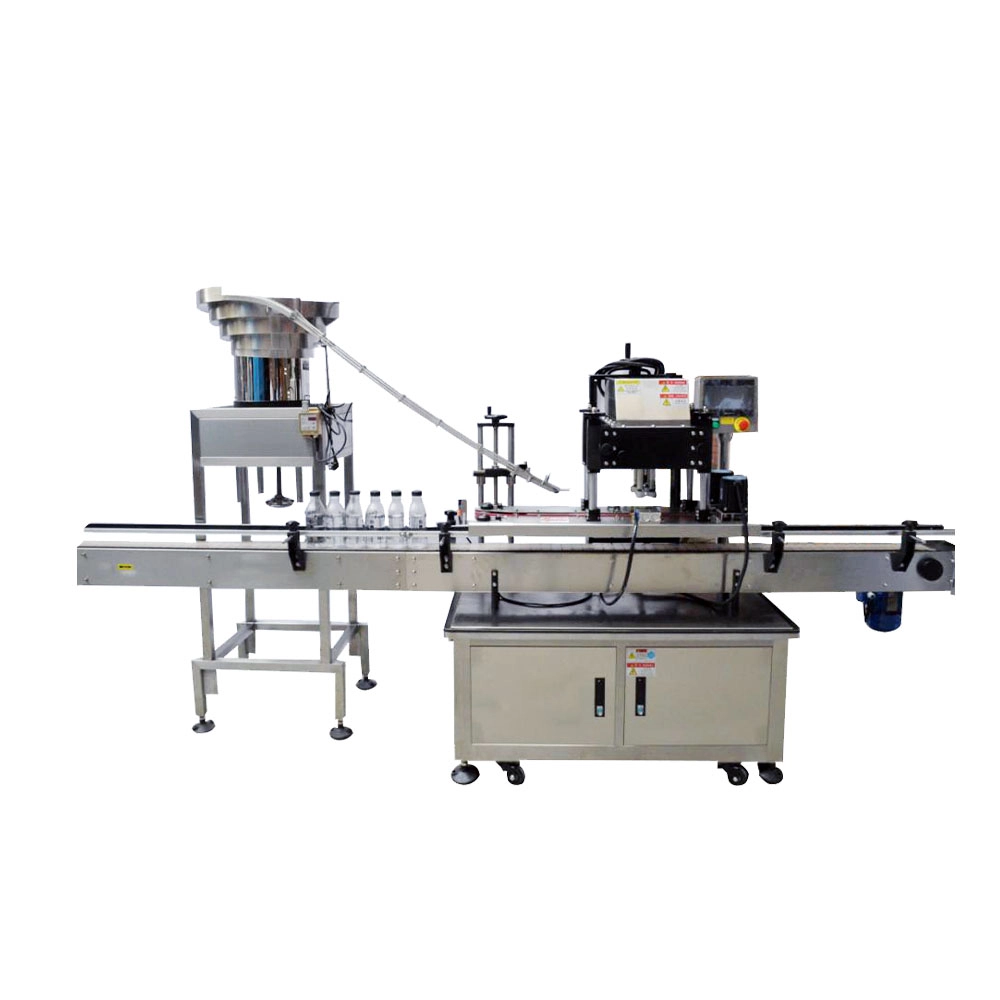
Automatic Plastic Caps Capping Machine with Vibrating Cap Feeder for Sale
Yuanyang automatic screw capping machine is a kind of four-wheel bottle capping machine. The automatic screw capper is often used to close lids of containers such as bottles and jars, especially for plastic bottles, which are widely used in food, medicine, chemical, cosmetic, and other industries for mass production and continuous production lines.
Features:
⦁ Full pneumatic drive;
⦁ Automated fast speed;
⦁ Suitable for various screw caps, pumps, and spray bottles.
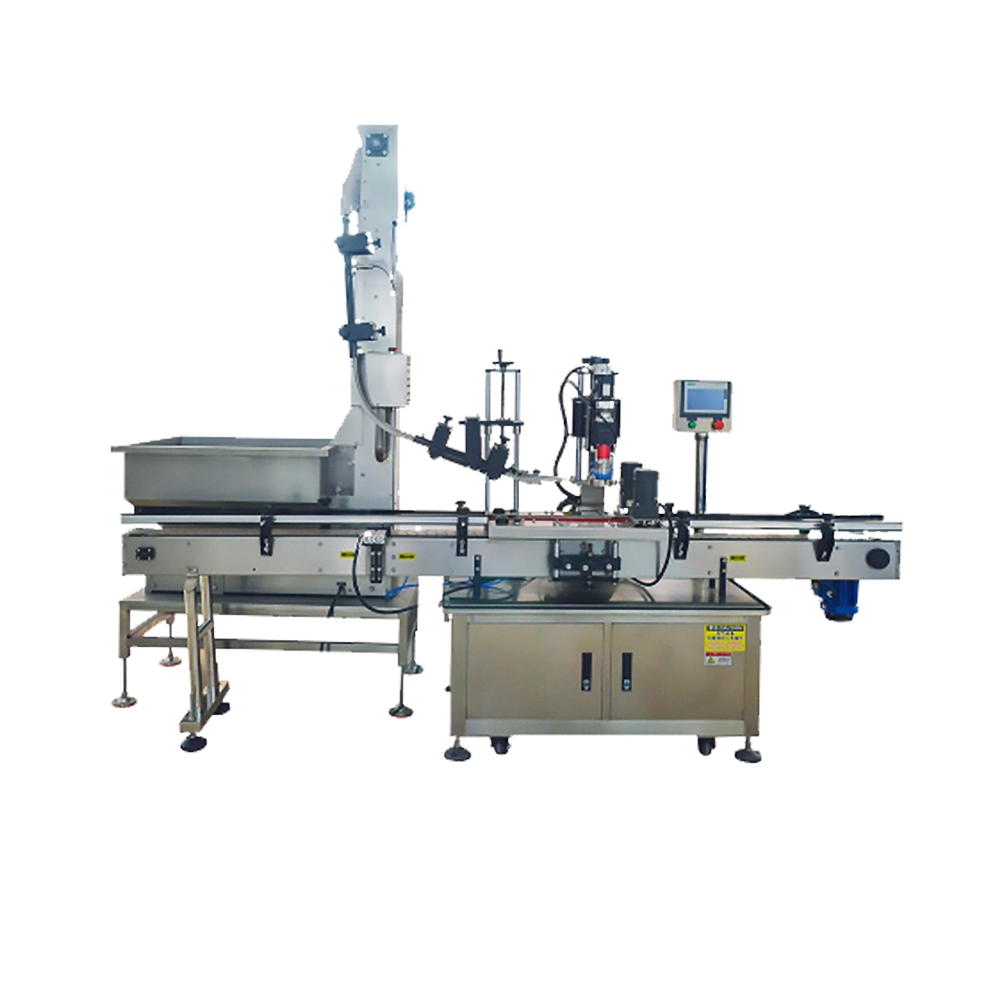
Automatic Metal Caps Capping Machine for Sale
Yuanyang automatic metal cap capping machine is a bottle capper for bottles with metal caps, which is often used to close lids of containers such as bottles and jars. The glass bottle metal capping machine is widely used in food, medicine, chemical, cosmetic, and other industries for mass production and continuous production line .
Features:
⦁ Pneumatic and electric drive;
⦁ Automated fast speed;
⦁ Suitable for glass bottles with metal caps.
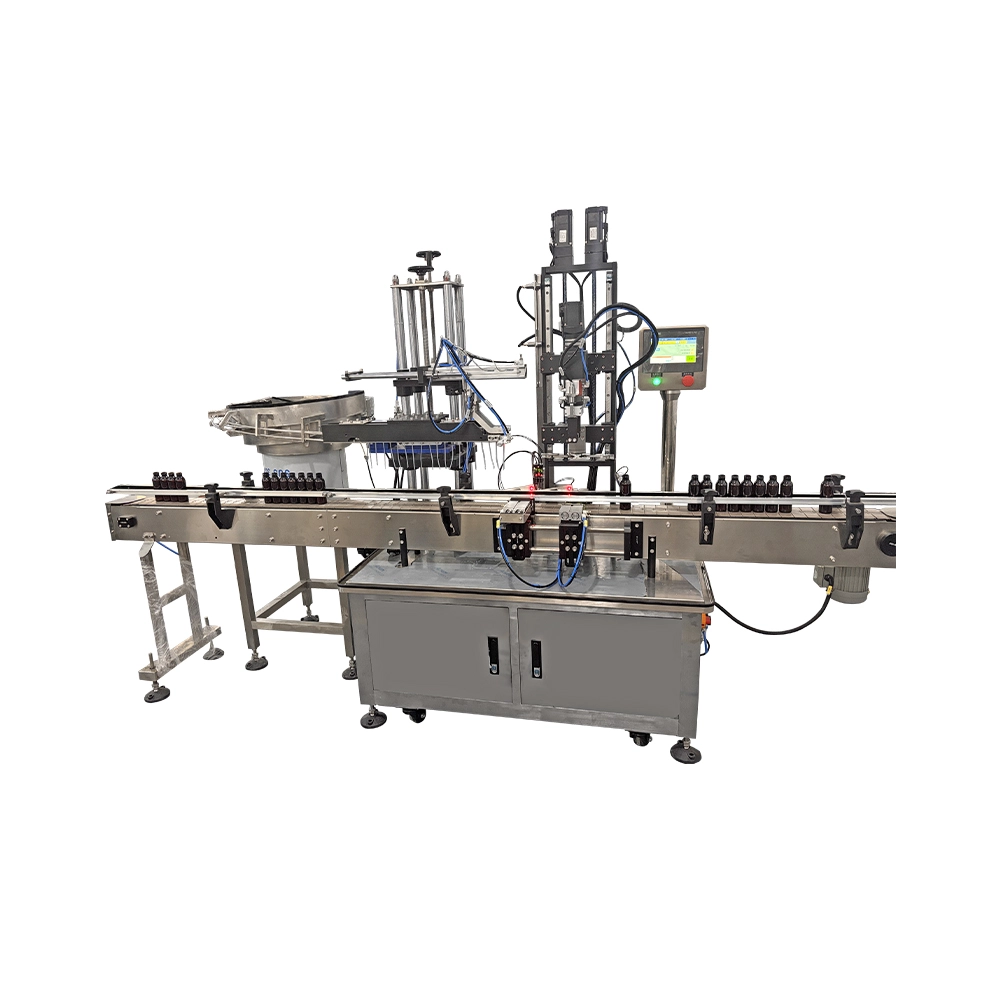
Automatic Pump Head Feeding and Capping Machine for Sale
Yuanyang automatic pump head feeding and capping machine is a bottle cap sorter and capper for bottles with pump heads, which is often used to close lids of containers such as nail polish, sprayers, and shampoo. The capping machine with a pump head feeder is widely used in food, medicine, chemical, cosmetic, and other industries for mass production and continuous production line .
Features:
⦁ Pneumatic and electric drive;
⦁ Automated fast speed;
⦁ Suitable for various types of caps.
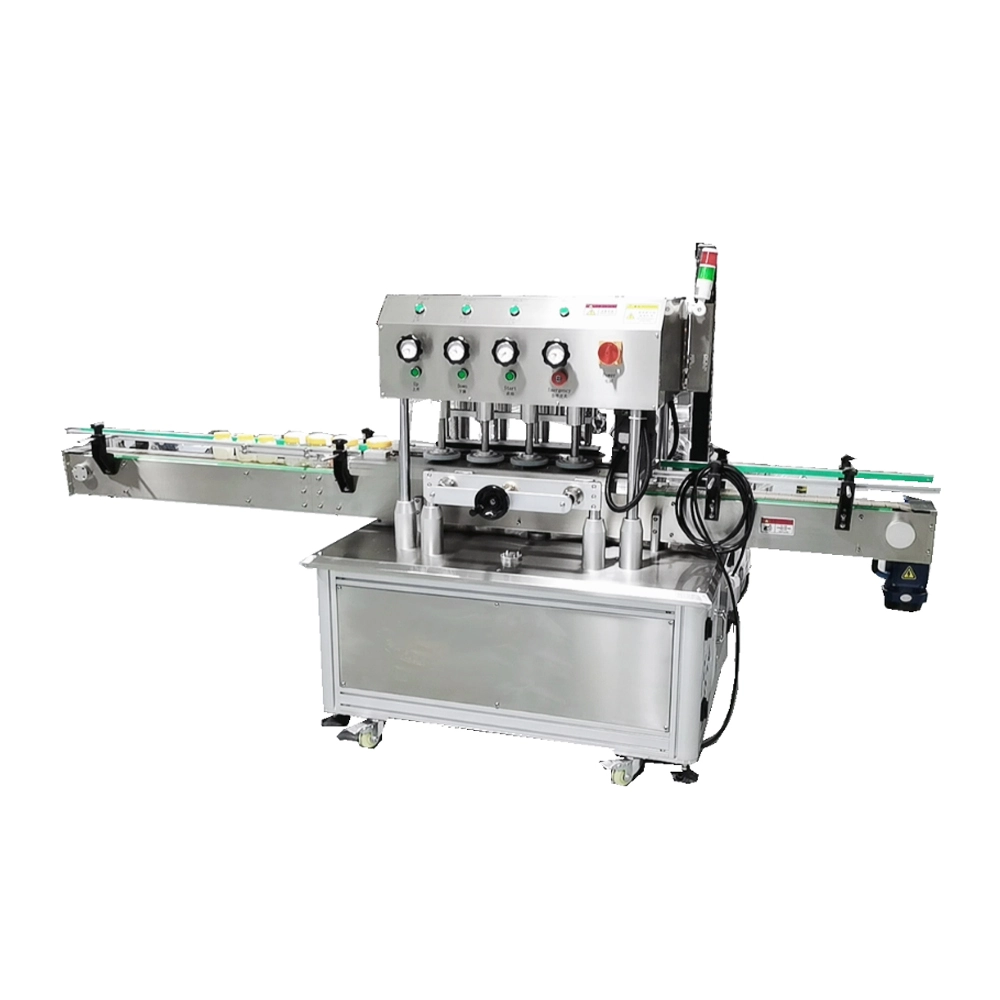
Automatic High Speed Capping Machine for Sale
The Yuanyang automatic high-speed capping machine is a kind of 8-wheel bottle-capping machine with fast working efficiency. The automatic capper is often used to close lids of containers such as bottles and jars, especially for plastic bottles, which are widely used in food, medicine, chemical, cosmetic, and other industries for mass production and continuous production lines.
Features:
⦁ Electric drive;
⦁ Automated fast speed;
⦁ Suitable for various screw caps, pumps, and spray bottles.
 Scan QR Code
Facebook
YouTube
LinkedIn
Whatsapp: +8613434139712
Guangzhou Yuanyang Machinery