





Maintenance Checklist for Stainless Steel Mixing Tanks
- Inspection and Daily Care for Operational Reliability
- Visual and Leak Checks
- Agitator and Drive Inspection
- Sanitary Connections and Seals
- Cleaning and Sanitation Protocols
- CIP (Clean-in-Place) Procedures
- Manual Cleaning and Access Considerations
- Sanitation Validation and Microbial Testing
- Preventive Mechanical Maintenance
- Bearings, Seals, and Lubrication
- Agitator Alignment and Vibration Monitoring
- Structural Integrity and Weld Inspections
- Planned Maintenance Schedule & Troubleshooting
- Maintenance Frequency Checklist (Example)
- Troubleshooting Common Issues
- Documentation and CMMS Integration
- Product-Specific Notes: Single Layer Agitator Tank for Sale
- Maintenance Tips for PTFE Scrapers and Half-Open Covers
- Low-Viscosity Liquids: Operational Considerations
- Spare Parts and Consumables
- Safety, Compliance, and Best Practices
- Lockout/Tagout and Confined Space Procedures
- Regulatory and Quality Considerations
- Reference Materials and Training
- Brand Advantages and Why Choose Yuanyang Tanks
- FAQ — Maintenance Checklist for Stainless Steel Mixing Tanks
- Q: How often should I replace mechanical seals on a stainless steel mixing tank?
- Q: Can I use any cleaning chemical for stainless steel tanks?
- Q: What are the signs that PTFE scrapers need replacement?
- Q: How do I minimize contamination risk with a half-open cover?
- Q: Where can I find guidance on stainless steel maintenance standards?

Maintaining a stainless steel mixing tank is essential for ensuring product quality, operational safety, and long equipment life. This guide provides a clear, actionable maintenance checklist tailored for stainless steel mixing tanks and agitator vessels used in cosmetics, pharmaceuticals, chemicals, and food manufacturing. It integrates best practices for cleaning, mechanical inspection, sanitary controls, and preventive maintenance, and references authoritative industry resources to help plant engineers and maintenance teams minimize downtime and contamination risk. As maintenance standards are established, process engineers often look to enhance output through optimizing mixing performance: agitator types and configurations.
Inspection and Daily Care for Operational Reliability
Visual and Leak Checks
Start each production shift with a visual inspection of your stainless steel mixing tank. Look for signs of leaks at weld seams, fittings, manways, and valves. Check the exterior and interior (if accessible) for dents, pitting, or discoloration that can indicate corrosion. Early detection prevents product loss and contamination. For guidance on metallurgy and corrosion behavior, see the stainless steel overview on Wikipedia: Stainless steel.
Agitator and Drive Inspection
Confirm the agitator shaft is running smoothly without abnormal vibration or noise. Inspect coupling bolts, motor mounts, and gearboxes for looseness and oil leaks. For tanks such as the Single Layer Agitator Tank for Sale, ensure paddles and PTFE scrapers are intact and not worn through, since damaged scrapers can reduce mixing efficiency and increase wall abrasion. Reference the agitator design principles here: Agitator (Wikipedia).
Sanitary Connections and Seals
Check gaskets, sight glasses, and sanitary clamps for wear. Replace elastomer seals on a scheduled basis to avoid product contamination. For food and pharmaceutical uses, verify that seals are compatible with cleaning agents and product temperatures. Keep spare seals in stock sized to the tank's manways and fittings.
Cleaning and Sanitation Protocols
CIP (Clean-in-Place) Procedures
CIP systems are the preferred method to sanitize stainless steel mixing tanks without disassembly. A typical CIP cycle includes pre-rinse, caustic wash, intermediate rinse, acid passivation (if required), and final rinse. Adjust temperature, concentration, and flow rates based on product soil and industry requirements. For an overview of mixing and process hygiene, see Mixing (process engineering).
Manual Cleaning and Access Considerations
For tanks lacking CIP or for intervals when manual cleaning is necessary, ensure the tank is properly isolated, de-energized, and ventilated before entry. Use approved cleaning agents and soft brushes that won't scratch the stainless steel surface. Pay special attention to weld toes and the tank bottom where solids can accumulate. Document manual cleaning with checklists and photos to maintain traceability.
Sanitation Validation and Microbial Testing
After cleaning, perform ATP testing or microbial swabs on critical zones (manway, agitator shaft, valves) to validate sanitation. Maintain records of microbial limits and test results to meet regulatory expectations for food and pharmaceutical production.
Preventive Mechanical Maintenance
Bearings, Seals, and Lubrication
Follow the manufacturer's lubrication schedule for bearings and seals. Use food-grade lubricants when operating in food or cosmetic lines. Check mechanical seals for leakage and replace them proactively rather than reactively to prevent contamination and costly downtime.
Agitator Alignment and Vibration Monitoring
Misalignment is a common cause of premature shaft and bearing failures. Perform periodic shaft alignment checks and use vibration analysis to detect bearing wear or imbalance. If vibration levels exceed recommended thresholds, take the agitator offline for inspection. Vibration monitoring can be scheduled monthly or quarterly depending on runtime.
Structural Integrity and Weld Inspections
Inspect tank supports, frames, and welds for cracks, fatigue, or corrosion. Use dye-penetrant testing or ultrasonic inspection for critical welds in high-pressure or safety-critical tanks. Document findings and perform repairs per ASME or local code requirements; consult ASME Boiler and Pressure Vessel Code if applicable.
Planned Maintenance Schedule & Troubleshooting
Maintenance Frequency Checklist (Example)
Below is a sample maintenance schedule for a stainless steel mixing tank such as a Single Layer Agitator Tank for Sale. Adjust intervals based on operating hours, product type, and regulatory needs.
| Task | Daily | Weekly | Monthly | Annually |
|---|---|---|---|---|
| Visual inspection (external) | ✔ | ✔ | ||
| Agitator operation & noise check | ✔ | ✔ | ✔ | ✔ |
| CIP sanitation cycle | ✔ | ✔ | ✔ | |
| Seal & gasket replacement review | ✔ | ✔ | ✔ | |
| Vibration analysis & alignment | ✔ | ✔ |
Troubleshooting Common Issues
Issue: Excessive foaming during mixing. Cause: Incorrect degassing, high shear, or incompatible surfactants. Fix: Reduce agitation speed, adjust impeller type, or add antifoam via dosing.
Issue: Poor mixing homogeneity. Cause: Worn paddles, inadequate baffles, or low RPM for viscous products. Fix: Inspect PTFE scrapers and paddles, retrofit baffles, or adjust impeller geometry.
Issue: Leakage at shaft seal. Cause: Mechanical seal wear or improper installation. Fix: Replace seal, verify seal face flatness and proper installation torque, confirm seal flush if required.
Documentation and CMMS Integration
Record every maintenance action in a Computerized Maintenance Management System (CMMS) to track part replacements, mean time between failures (MTBF), and maintenance costs. Good documentation supports root cause analysis and continuous improvement.
Product-Specific Notes: Single Layer Agitator Tank for Sale
Product introduction:
Yuanyang single-layer agitator tank is a mixing tank with agitator paddles, mainly applied for liquid materials mixing and blending, which is widely used to manufacture low-viscosity liquids and prepare for cosmetics, pharmaceuticals, chemicals, and food industries.
Features:
⦁ Half-open cover;
⦁ Frame mixing with PTFE scrapers
⦁ Suitable for products of low viscosity liquid products;
Maintenance Tips for PTFE Scrapers and Half-Open Covers
PTFE scrapers are excellent for minimizing product adhesion on stainless steel walls; however, they experience mechanical wear. Inspect scraper edges monthly for wear and replace when they no longer maintain close contact with the tank wall. The half-open cover allows easier access for manual cleaning but increases the risk of airborne contamination — ensure a strict sanitation protocol and HEPA-filtered air in sensitive environments.
Low-Viscosity Liquids: Operational Considerations
Because the Single Layer Agitator Tank is designed for low-viscosity products, monitor impeller speed and mixing time to avoid vortexing and excessive air entrainment. Check the tank’s inlet and outlet valves for clogging or wear from particulates or abrasive additives.
Spare Parts and Consumables
Keep a recommended spare parts kit that includes PTFE scraper inserts, mechanical seals, gaskets, and critical fasteners. For pharmaceutical and cosmetic production, retain traceability records for each replaced part.
Safety, Compliance, and Best Practices
Lockout/Tagout and Confined Space Procedures
Before any internal maintenance, implement lockout/tagout (LOTO) and confined space entry protocols. Ensure all personnel are trained and that atmospheric testing is completed before entry. Use harnesses and rescue plans as mandated by local safety regulations.
Regulatory and Quality Considerations
For food and pharma applications, maintain documentation to meet GMP requirements. Keep passivation records if acid treatments are used to restore stainless steel chromium oxide layers. When relevant, follow guidelines from recognized standards—ASME or local regulatory authorities—to maintain compliance.
Reference Materials and Training
Train operators and maintenance staff using written SOPs that include daily and periodic tasks. Reference materials such as Wikipedia's general explanations of mixing and stainless steel offer background, while manufacturer manuals should be followed for model-specific maintenance: Mixing (process engineering), Stainless steel.
Brand Advantages and Why Choose Yuanyang Tanks
Yuanyang’s Single Layer Agitator Tank for Sale is engineered with application-driven features that reduce maintenance burden while improving product quality. Key advantages include:
- Sanitary design: Smooth internal surfaces and PTFE scrapers reduce dead zones and simplify cleaning.
- Accessible maintenance: Half-open cover and straightforward agitator assembly reduce downtime for inspections and repairs.
- Application fit: Optimized for low-viscosity liquids common in cosmetics, pharmaceuticals, and food, minimizing shear and preserving product integrity.
These built-in design choices help lower total cost of ownership by reducing cleaning time, part wear, and the frequency of unplanned maintenance.
FAQ — Maintenance Checklist for Stainless Steel Mixing Tanks
Q: How often should I replace mechanical seals on a stainless steel mixing tank?
A: Replace seals based on observed leakage, operational hours, and product abrasiveness. For typical low-viscosity applications, inspect monthly and consider scheduled replacement annually or per manufacturer guidance.
Q: Can I use any cleaning chemical for stainless steel tanks?
A: Use chemicals compatible with stainless steel and seals. Avoid harsh chlorides or undiluted bleach on a regular basis, as chlorides can promote pitting corrosion. Follow manufacturer recommendations and validate via material compatibility charts.
Q: What are the signs that PTFE scrapers need replacement?
A: Look for visible thinning, loss of contact with the tank wall, or increased product residue after cleaning cycles. Worn scrapers decrease cleaning effectiveness and mixing homogeneity.
Q: How do I minimize contamination risk with a half-open cover?
A: Implement strict sanitation controls: HEPA-filtered air where needed, cover when not in use, frequent surface cleaning around the cover area, and validated CIP cycles. Limit manual open exposure during production runs.
Q: Where can I find guidance on stainless steel maintenance standards?
A: Refer to ASME guidelines (if applicable) and material standards for stainless steel. For general metallurgy and corrosion background, see Stainless steel.
If you have more questions or need a maintenance plan tailored to your facility, contact our technical team to discuss the Single Layer Agitator Tank for Sale or to request a service quote. Click here to contact us / view product: Single Layer Agitator Tank for Sale.
Custom china dispersing machine factory Manufacturers and Suppliers in Africa
Top 10 drink powder mixer Manufacturers and Supplier Brands in France
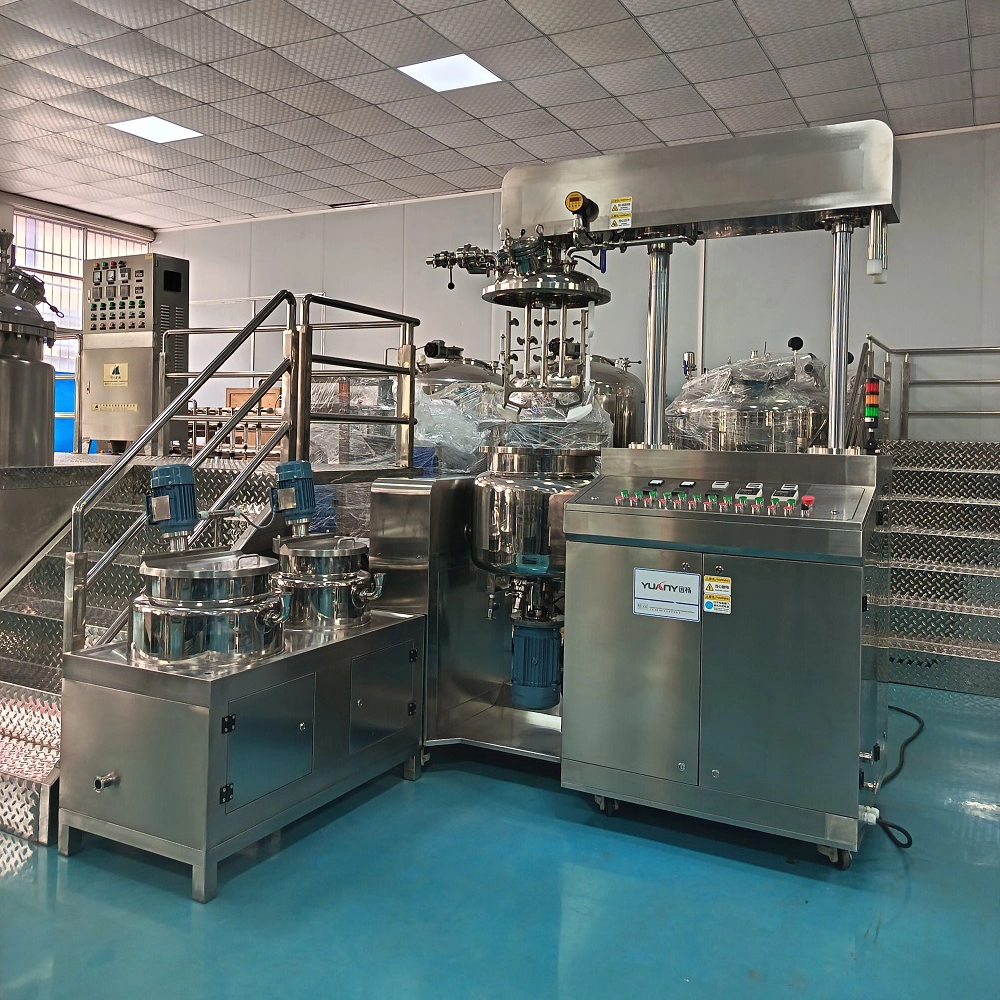
Integrating an Emulsion Mixer into GMP Manufacturing Lines
What is sealing machine for food ?
Liquid Soap Making Machine
Does the stainless steel mixing tank for liquid soap has jacket?
The mixing tank can be customized single layer, double layers, or three layers. The double layers type has one jacket for cooling purpose. The three layers type has double jacket, inner jacket for heating/cooling, outer jacket for insulation and protection purpose.
Water Cooling Induction Sealer
Can the induction sealing machine lift up and down?
Yes, there is handle wheel to adjust the height of sealing head according to different bottle height.
Powder Sachet Packaging Machine
Can the plastic powder packing machine print barcode also?
No, the standard type of coding machine on this packing machine for powders can only print date. To print barcode, customize service will recommend client another separated jet printer.
Semi Automatic Capping Machine
What minimum caps size can the desktop capping machine be suit for?
The minimum cap size is 20mm, it is recommend to send caps to test if it is around 20mm.
Liquid Mixing Tank
How to cool down fast? When the products is finished,the temperature is high, it takes a long time to get back to room temperature!
⦁The fast way is by using an external chiller to convey the cooling medium (usually cold water) through the pipe into the inner jacket,through water-circulation system to cool;
⦁Another way is directly continuously taking cooling medium (usually tap water) into the inner jacket of the agitator tank from inlet, and drain it from outlet to take away the heat.
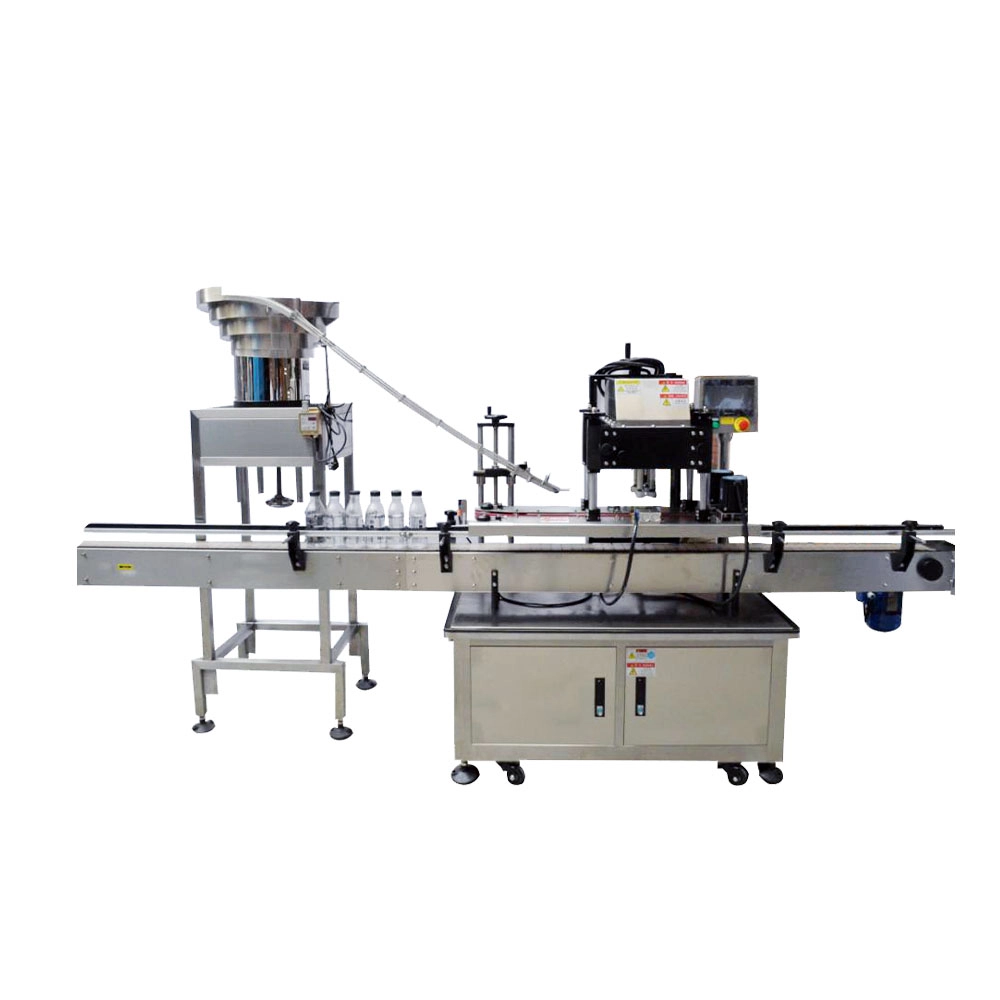
Automatic Plastic Caps Capping Machine with Vibrating Cap Feeder for Sale
Yuanyang automatic screw capping machine is a kind of four-wheel bottle capping machine. The automatic screw capper is often used to close lids of containers such as bottles and jars, especially for plastic bottles, which are widely used in food, medicine, chemical, cosmetic, and other industries for mass production and continuous production lines.
Features:
⦁ Full pneumatic drive;
⦁ Automated fast speed;
⦁ Suitable for various screw caps, pumps, and spray bottles.
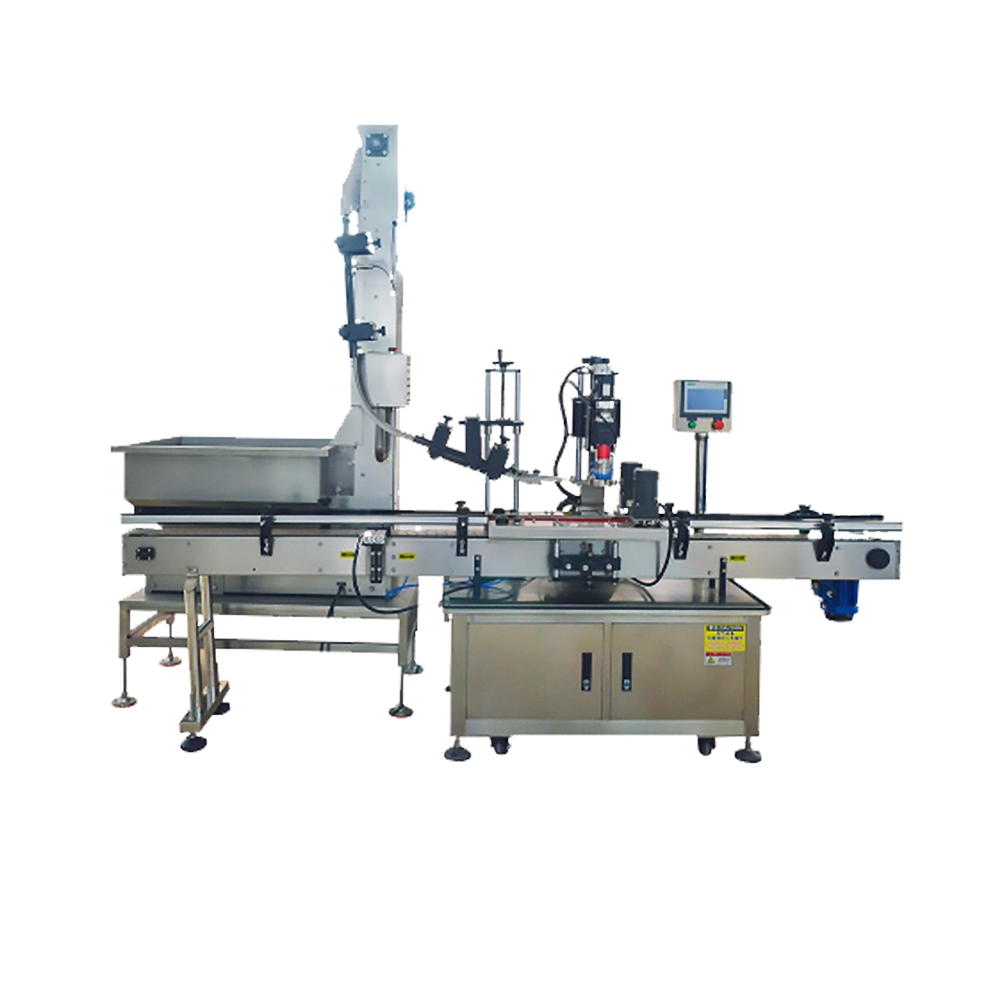
Automatic Metal Caps Capping Machine for Sale
Yuanyang automatic metal cap capping machine is a bottle capper for bottles with metal caps, which is often used to close lids of containers such as bottles and jars. The glass bottle metal capping machine is widely used in food, medicine, chemical, cosmetic, and other industries for mass production and continuous production line .
Features:
⦁ Pneumatic and electric drive;
⦁ Automated fast speed;
⦁ Suitable for glass bottles with metal caps.
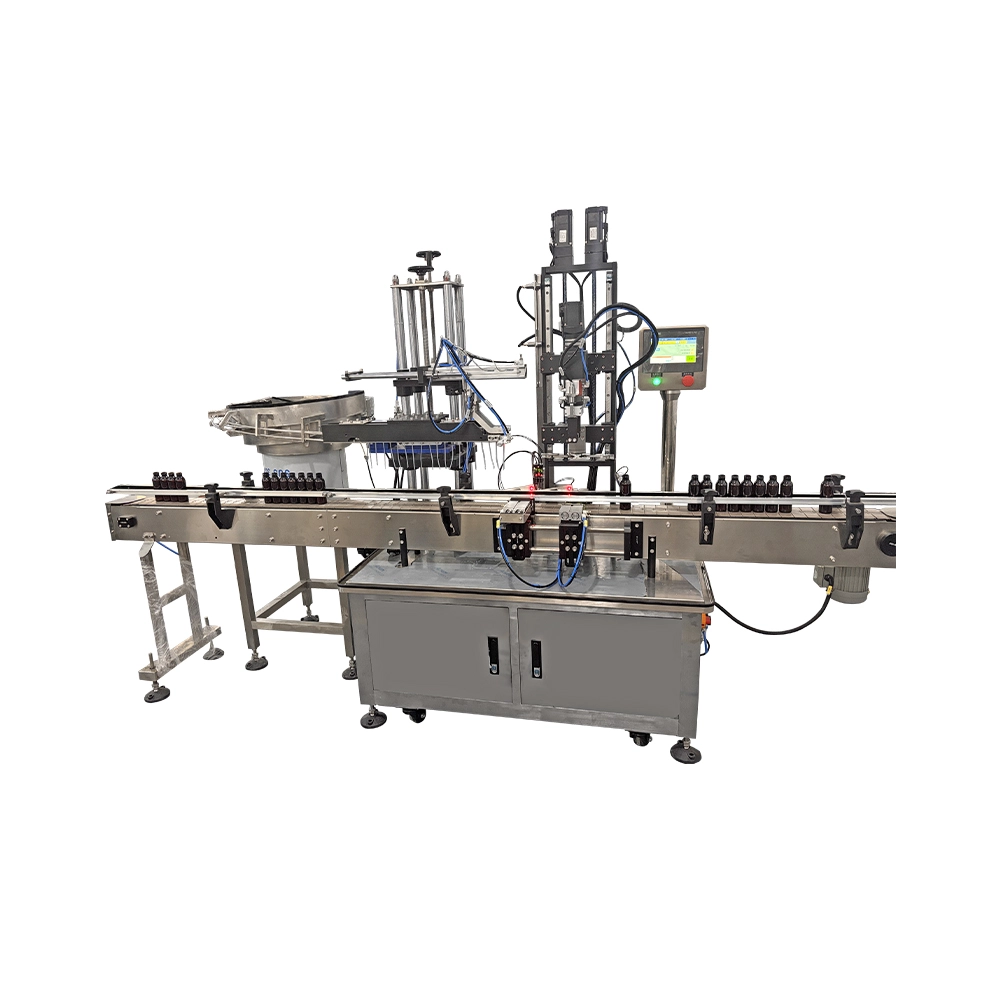
Automatic Pump Head Feeding and Capping Machine for Sale
Yuanyang automatic pump head feeding and capping machine is a bottle cap sorter and capper for bottles with pump heads, which is often used to close lids of containers such as nail polish, sprayers, and shampoo. The capping machine with a pump head feeder is widely used in food, medicine, chemical, cosmetic, and other industries for mass production and continuous production line .
Features:
⦁ Pneumatic and electric drive;
⦁ Automated fast speed;
⦁ Suitable for various types of caps.
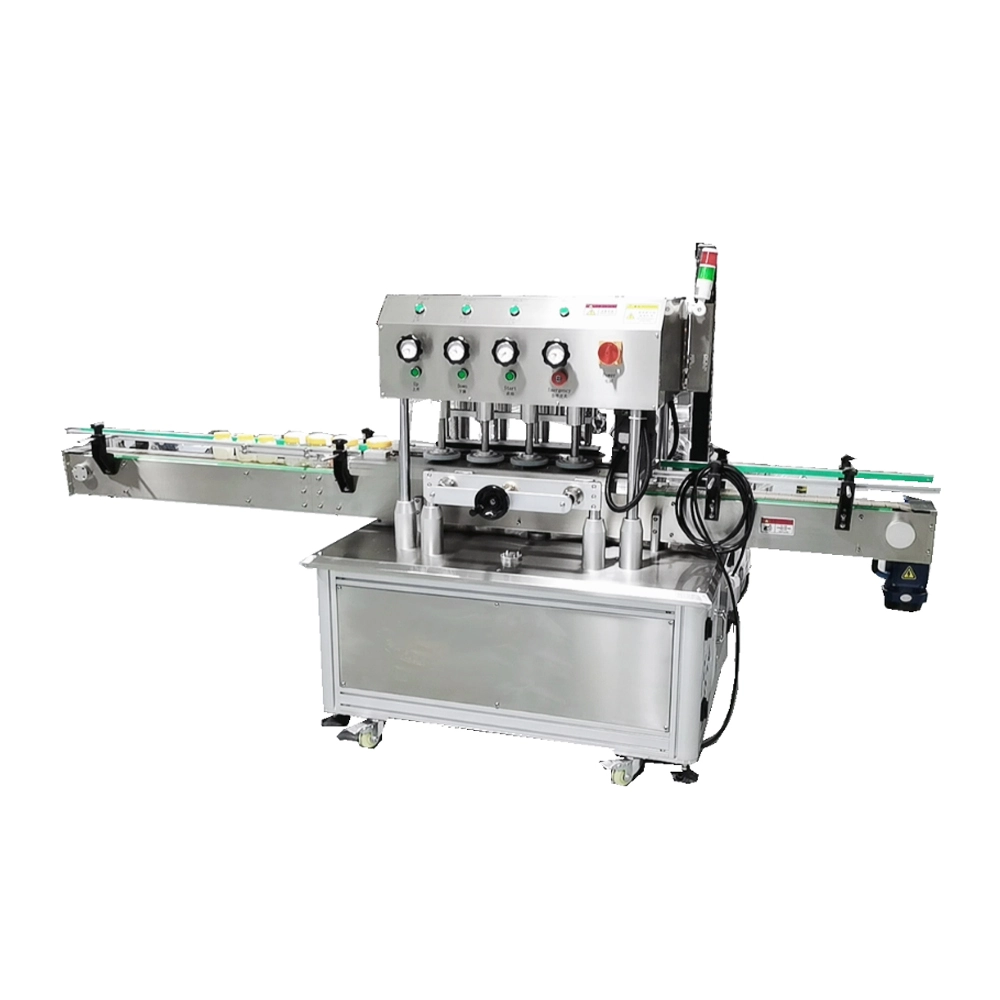
Automatic High Speed Capping Machine for Sale
The Yuanyang automatic high-speed capping machine is a kind of 8-wheel bottle-capping machine with fast working efficiency. The automatic capper is often used to close lids of containers such as bottles and jars, especially for plastic bottles, which are widely used in food, medicine, chemical, cosmetic, and other industries for mass production and continuous production lines.
Features:
⦁ Electric drive;
⦁ Automated fast speed;
⦁ Suitable for various screw caps, pumps, and spray bottles.
 Scan QR Code
Facebook
YouTube
LinkedIn
Whatsapp: +8613434139712
Guangzhou Yuanyang Machinery