





How to Choose the Right Mixing Tank for Your Product
- How to Choose the Right Mixing Tank for Your Product
- Understanding the term: mixing tank and why it matters
- Key product example: Homogenizing Mixer for Sale
- Why choosing the right mixing tank changes outcomes
- Key factors to evaluate when selecting a mixing tank
- 1. Product characteristics: viscosity, solids, and shear sensitivity
- 2. Functional requirement: mixing, emulsifying, dispersing, or homogenizing
- 3. Volume and batch size
- 4. Materials and sanitary design
- 5. Heating, cooling, and jackets
- 6. Sealing, vents, and atmosphere control
- 7. Cleanability, maintenance, and CIP
- 8. Automation, controls, and data logging
- Common mixing tank types — a quick comparison
- Sizing and scale-up practical steps
- Sanitary, regulatory, and material considerations
- Maintenance, spare parts, and lifecycle costs
- Energy efficiency and environmental considerations
- When to choose a homogenizing mixing tank
- Selecting a vendor and evaluating offers
- Installation, validation, and commissioning checklist
- Brand fit: Why consider Yuanyang Homogenizing Mixer
- Cost considerations and ROI
- Frequently Asked Questions (FAQ)
- Q1: What is the difference between a mixing tank and a homogenizer?
- Q2: How do I know if I need a high-shear homogenizer?
- Q3: What materials are best for mixing tanks for personal care products?
- Q4: How should I size an agitator motor for my tank?
- Q5: Can I retrofit an existing tank with a homogenizer?
- Contact and product inquiry / Call to action
- Authoritative references and further reading
How to Choose the Right Mixing Tank for Your Product
Understanding the term: mixing tank and why it matters
When manufacturers talk about a mixing tank they mean a vessel designed to blend, emulsify, heat/cool, or homogenize ingredients into a stable product. Choosing the right mixing tank affects product quality, consistency, production speed, regulatory compliance, and operating cost. For many liquid cleaning products (shampoo, body wash, laundry detergent, hand sanitizer) and food sauces, the mixing tank is the production bottleneck — get it right and you ensure reproducible product attributes at scale. After understanding how to choose the right mixing tank for your product, evaluating the key features to look in a homogenizing mixer for sale becomes the next critical step.
Key product example: Homogenizing Mixer for Sale
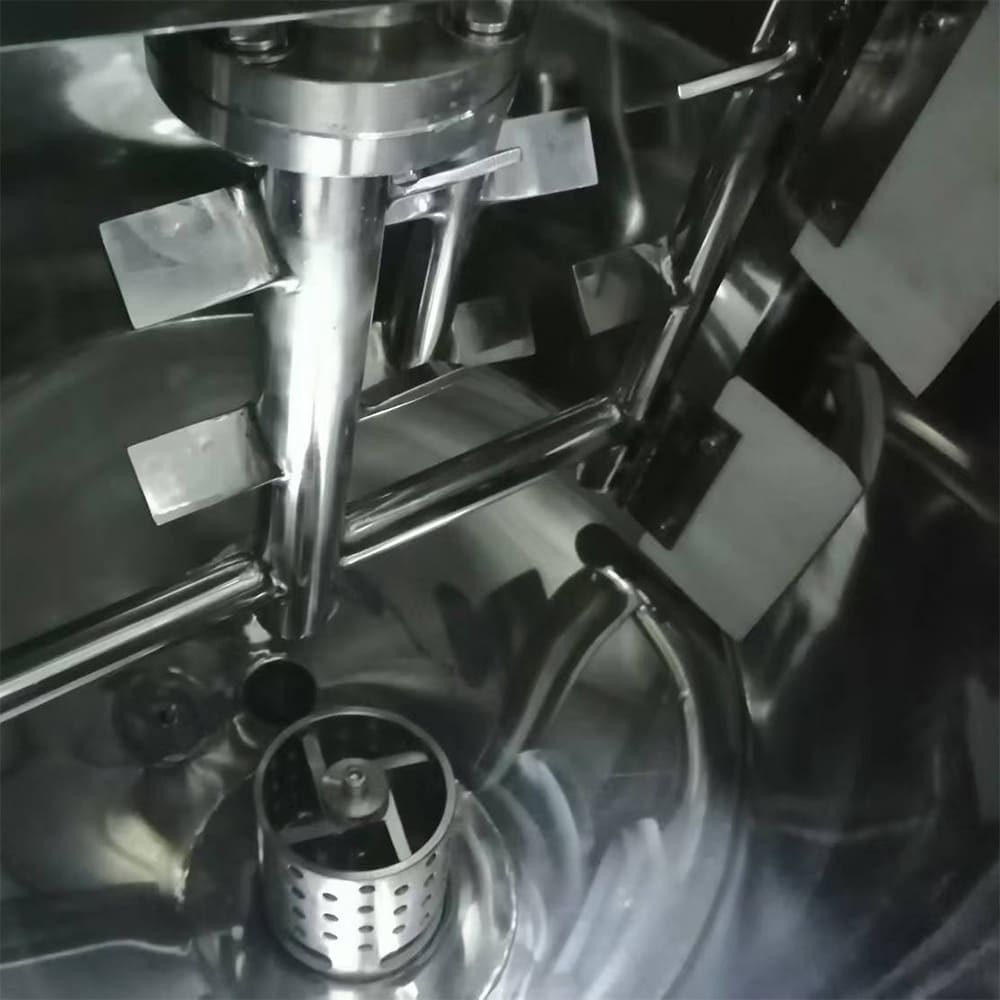
Yuanyang homogenizing mixer is a liquid mixing tank with a high-shear homogenizer. The homogeneous mixing machine is the core part for the liquid soap production line for shampoo, body wash, laundry detergent, dish soap, hand sanitizer, and other thick liquids.
Features:
⦁ Flat top half-open lid, electric control system.
⦁ Suitable for various liquid cleaning products and sauces.
⦁ PTFE wall scrapers stirring at top, high shear homogenizer at bottom.
Why choosing the right mixing tank changes outcomes
A correct mixing tank selection reduces batch-to-batch variability, decreases rework, and shortens production time. For products requiring emulsification or very fine dispersion (e.g., creamy shampoos, viscous detergents), the mixing tank must provide adequate shear and turbulence. For heat-sensitive products (e.g., some hand sanitizers or sauces), thermal controls and gentle mixing options are essential. The wrong tank can cause segregation, poor texture, insufficient dissolution of solids, or microbial contamination.
Key factors to evaluate when selecting a mixing tank
1. Product characteristics: viscosity, solids, and shear sensitivity
Viscosity is the single most important variable. Low-viscosity liquids mix easily with simple impellers; high-viscosity pastes or gels need more powerful agitation and often a different mixing geometry (anchor, double planetary, or high-shear rotor–stator). If the product must be shear-sensitive (breaks under high shear), you need a tank with both low-shear and high-shear options or staged mixing (low-shear premix followed by gentle homogenization).
2. Functional requirement: mixing, emulsifying, dispersing, or homogenizing
Different processes demand different equipment: if you need a stable emulsion or submicron droplet size, a high-shear homogenizer is appropriate. If only blending or dissolving is required, a standard agitator may suffice. For suspension of solids, scrapers or draft tubes can be beneficial.
3. Volume and batch size
Choose a tank sized for your typical batch and anticipated scale-up. Operating a tank at 15–40% of its maximum volume is common for good mixing performance; very small fill levels can create vortexing and poor mixing. Consider future growth — it’s often more economical to buy a slightly larger tank or design modular capacity than to outgrow equipment in a few years.
4. Materials and sanitary design
Product contact materials must be compatible with ingredients and cleanable to required standards. Stainless steel 316L is the industry standard for corrosive or sanitary applications. For food or personal care products, ensure the tank supports CIP (clean-in-place), has a sanitary finish (e.g., Ra ≤ 0.8 µm where needed), and meets relevant standards (3-A, FDA, or local regulations).
5. Heating, cooling, and jackets
Temperature control is vital for processes like melting waxes, controlling viscosity during mixing, or accelerating dissolution. Decide whether you need an external jacket, internal coils, or double-wall construction, and specify heating/cooling media (steam, hot water, glycol).
6. Sealing, vents, and atmosphere control
Consider seal types for shafts (mechanical seals vs. packed glands), venting with HEPA filters for sterile environments, or the need for nitrogen blanketing for oxidation-sensitive products. Explosion protection (ATEX) may be required for flammable solvents.
7. Cleanability, maintenance, and CIP
Design features such as full-radius transitions, drain angles, manways, and effective sprayballs help fast, reliable cleaning and reduce downtime. PTFE scrapers and polished surfaces assist in preventing product buildup. Also assess ease of replacing wear parts (scrapers, seals, homogenizer rotors).
8. Automation, controls, and data logging
Modern mixing tanks often include PLC control for speed profiling, recipe control, temperature regulation, and data logging for traceability. For regulated industries, electronic batch records and audit trails may be compulsory.
Common mixing tank types — a quick comparison
Below is a concise comparison table to help match tank type to product needs.
| Tank Type | Best for | Pros | Cons |
|---|---|---|---|
| Standard agitator tank (propeller, turbine) | Low to medium viscosity liquids | Simple, low cost, energy efficient | Poor for high viscosity or fine emulsions |
| High-shear homogenizing tank (rotor–stator) | Emulsions, fine dispersions, viscous liquids | Creates small droplet sizes; improves stability | Higher energy, wear on rotor/stator, costlier |
| Anchor/planetary mixer | Very high viscosity pastes, gels | Excellent wall scraping, uniform heat transfer | Slow, bulky, not for fine emulsions |
| Ribbon blender | Dry powders and some pastes | Good for solids blending | Not ideal for liquids requiring shear |
| Scraper-equipped tanks | Sticky or viscous fluids needing heat transfer | Prevents build-up on walls, improved heat transfer | Mechanically complex; higher maintenance |
Sizing and scale-up practical steps
To size a mixing tank, follow these steps:
- Define batch volume and operating fill range (e.g., 30–80%).
- Estimate target mixing time and power requirement—viscosity-dependent.
- Select impeller type and calculate shaft power based on empirical correlations or vendor data.
- Confirm vessel geometry (height-to-diameter ratio) for desired flow patterns.
- Prototype at lab or pilot scale if possible and perform scale-up using the constant tip-speed or constant Reynolds-number approach depending on whether shear or turbulence is critical.
When droplet size is key (e.g., emulsions), homogeneizer capacity and rotor tip speed are often the scaling drivers; work with suppliers to determine performance curves.
Sanitary, regulatory, and material considerations
For food, personal care, and pharmaceutical products, tank design must support sanitation and regulatory compliance. Common expectations include:
- Stainless steel 316L construction for corrosive products.
- Polished internal finishes (electropolished where necessary).
- CIP capability and documentation of cleanability.
- Compliance with local food safety and pharmaceutical guidance (FDA, EU regulations) and industry sanitary standards (3-A, EHEDG where applicable).
Maintenance, spare parts, and lifecycle costs
Evaluate lifecycle costs (purchase price, energy consumption, spare parts, planned maintenance). High-shear components (rotors, stators) wear and should be easy to replace. PTFE scrapers and seals are wear items; check lead times for spares. Good preventive maintenance reduces downtime and ensures consistent product quality.
Energy efficiency and environmental considerations
Mixing can be energy intensive, especially high-shear operations. Consider variable frequency drives (VFDs) to control motor speed, efficient motor sizing, and process optimization to minimize run time. For environmental compliance, evaluate solvent recovery, closed systems to reduce VOC emissions, and options for heat recovery from jacketed systems.
When to choose a homogenizing mixing tank
Choose a homogenizing mixing tank (a mixing tank with an integrated high-shear homogenizer) if your product requires:
- Stable emulsions or very fine droplet distributions (improved texture, clarity, or stability).
- Dispersion of hard-to-wet powders into liquids.
- High consistency in viscosity and product appearance between batches.
If your process matches these points, a Homogenizing Mixer for Sale like Yuanyang’s unit — combining PTFE wall scrapers with a bottom high-shear homogenizer, flat top half-open lid, and electric control system — can be a practical and versatile choice for liquid soap production and similar applications.
Selecting a vendor and evaluating offers
When evaluating suppliers, compare the following:
- Proven performance data for similar products (ask for case studies and reference sites).
- Technical support, local service availability, and spare-part logistics.
- Customization options (nozzles, CIP layout, control systems, ATEX or sanitary certifications).
- Detailed warranty, training, and commissioning scope.
Installation, validation, and commissioning checklist
Ensure the following during installation and start-up:
- Proper foundation and alignment for the mixer.
- Electrical and control integration with site PLC/SCADA as required.
- Leak and pressure tests on jackets and sealed penetrations.
- CIP trials and microbial/visual cleanliness verification.
- Performance verification using product-specific acceptance criteria (mixing time, droplet size, viscosity).
Brand fit: Why consider Yuanyang Homogenizing Mixer
For manufacturers of liquid soap products and sauces, the Yuanyang Homogenizing Mixer offers a practical package: a high-shear homogenizer integrated into a jacketed mixing tank with PTFE wall scrapers to handle viscous materials and improve heat transfer. Key practical benefits include an electric control system for repeatable recipes, a half-open flat lid for easy loading and inspection, and a design tailored to common liquid cleaning products. If your requirements include fine emulsification combined with robust cleaning and scraping, a homogenizing mixing tank of this type strikes a balance between performance and operational practicality.
Cost considerations and ROI
Consider CAPEX vs. OPEX trade-offs: a high-shear homogenizing tank costs more upfront but can reduce downstream stabilizers, shorten batch times, and improve product yield and quality. Calculate ROI using reduced rework, faster throughput, lower stabilizer or surfactant usage, and reduced labor/CIP times.
Frequently Asked Questions (FAQ)
Q1: What is the difference between a mixing tank and a homogenizer?
A mixing tank is a vessel with an agitator used to blend ingredients. A homogenizer (high-shear) is a device (often rotor–stator) that applies intense shear to reduce particle or droplet size. A homogenizing mixing tank integrates both functions to deliver blended and finely dispersed finished products in one unit.
Q2: How do I know if I need a high-shear homogenizer?
If your product requires stable emulsions, fine droplet sizes, or rapid dispersion of powders, you likely need a high-shear homogenizer. Perform small-scale trials to confirm — suppliers often provide pilot testing services.
Q3: What materials are best for mixing tanks for personal care products?
Stainless steel 316L is standard due to its corrosion resistance and cleanability. Polished finishes and PTFE contact parts can be used where chemical compatibility or non-stick properties are needed.
Q4: How should I size an agitator motor for my tank?
Motor sizing depends on fluid viscosity, impeller type, and heat transfer needs. Vendors calculate shaft power requirements based on empirical formulas and provide guidance. For viscous products, oversize slightly to maintain torque margin and avoid stalling.
Q5: Can I retrofit an existing tank with a homogenizer?
Often yes. Retrofitting depends on tank geometry, foundation strength, and sealing arrangements. Consult with an experienced vendor or fabricator to assess feasibility and costs.
Contact and product inquiry / Call to action
If you are evaluating mixing tanks for liquids, viscous cleaners, or sauces and want technical guidance or a quote for a Homogenizing Mixer for Sale, contact our technical sales team. We provide specification support, pilot testing options, spare part packages, and on-site commissioning to ensure your mixer meets production targets and regulatory needs.
Contact us to get a quote or arrange a pilot trial — check the product details and request a datasheet today.
Authoritative references and further reading
These sources provide background on mixing technology, homogenization, and sanitary standards:
- Mixing (process engineering) — Wikipedia: https://en.wikipedia.org/wiki/Mixing_(process_engineering)
- Homogenizer — Wikipedia: https://en.wikipedia.org/wiki/Homogenizer
- ASME (American Society of Mechanical Engineers): https://www.asme.org
- U.S. Food & Drug Administration (FDA): https://www.fda.gov
- 3-A Sanitary Standards (3-A SSI): https://www.3-a.org
For specific supplier datasheets, pilot testing, or validation protocols, request vendor documentation and material certificates to confirm compliance with your industry’s regulatory requirements.
Why choose YUANYANG as your glass bottle capping machine manufacturer in Asia
Top 10 heating mixing tank Manufacturers and Supplier Brands
Top 10 chemical dispersing machine factories Manufacturers and Supplier Brands in America
Custom big bag packing machine Manufacturers and Suppliers
Homogenizer Mixing Tank with Circulation System
I don’t need homogenizer, can you reduce it?
Yes, the homogenizer is an optional function, whether clients need it depends on your own products.
Automatic Round Bottle Labeling Machine
Can this label dispenser stick transparent labels?
Yes, if client’s label is transparent, we will add an electric eye for the automatic labeler machine.
Washing Powder
Do you provide installation and operation training?
Yes, we offer detailed training during installation and commissioning to ensure operators are proficient in using the equipment.
Detergent powder mixer
What’s the spraying system of the powder machine used for?
The spraying system is an optional function for adding liquid materials during mixing, such as perfume, essence...
Sachet Packaging Machine for Granules
Can packing machinery be used for different film size?
The sachet packing machine for powders is suitable for different film width, but need to customize the bag-former for specific film width, then clients just need to replace the corresponding model for another film width.
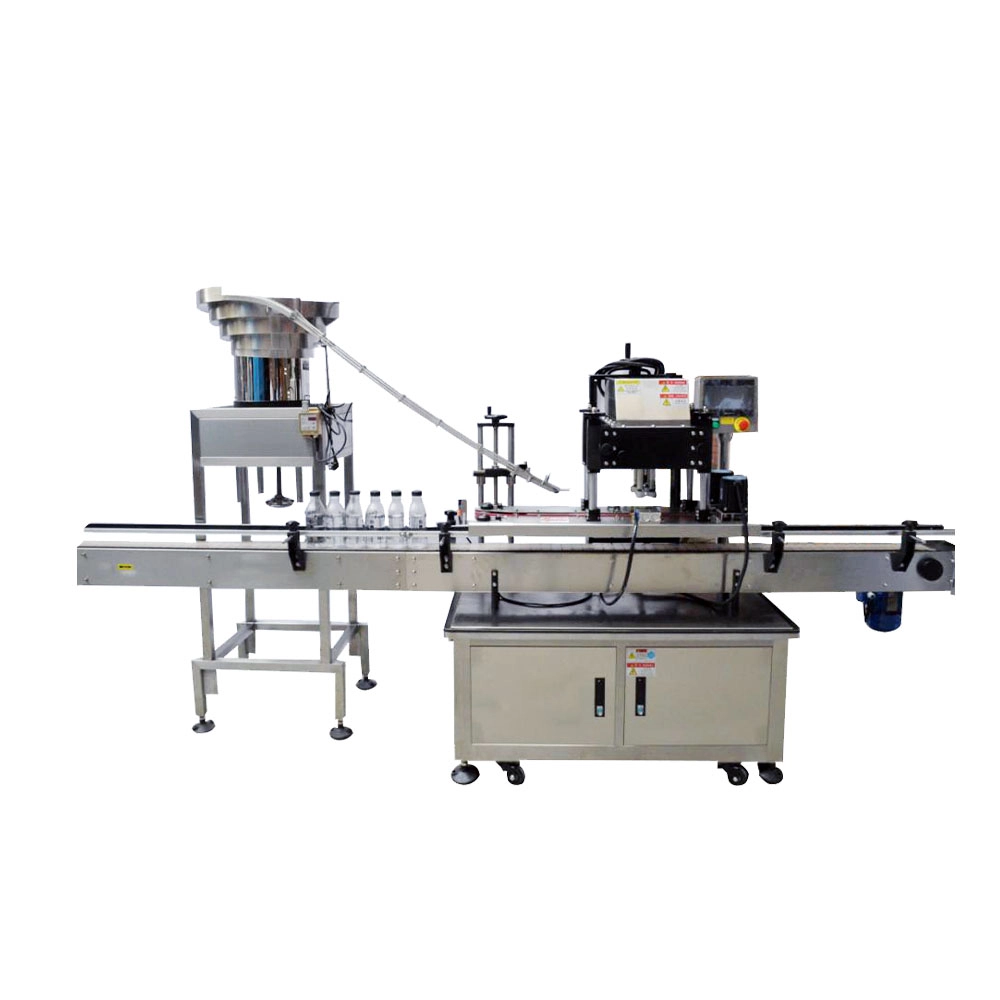
Automatic Plastic Caps Capping Machine with Vibrating Cap Feeder for Sale
Yuanyang automatic screw capping machine is a kind of four-wheel bottle capping machine. The automatic screw capper is often used to close lids of containers such as bottles and jars, especially for plastic bottles, which are widely used in food, medicine, chemical, cosmetic, and other industries for mass production and continuous production lines.
Features:
⦁ Full pneumatic drive;
⦁ Automated fast speed;
⦁ Suitable for various screw caps, pumps, and spray bottles.
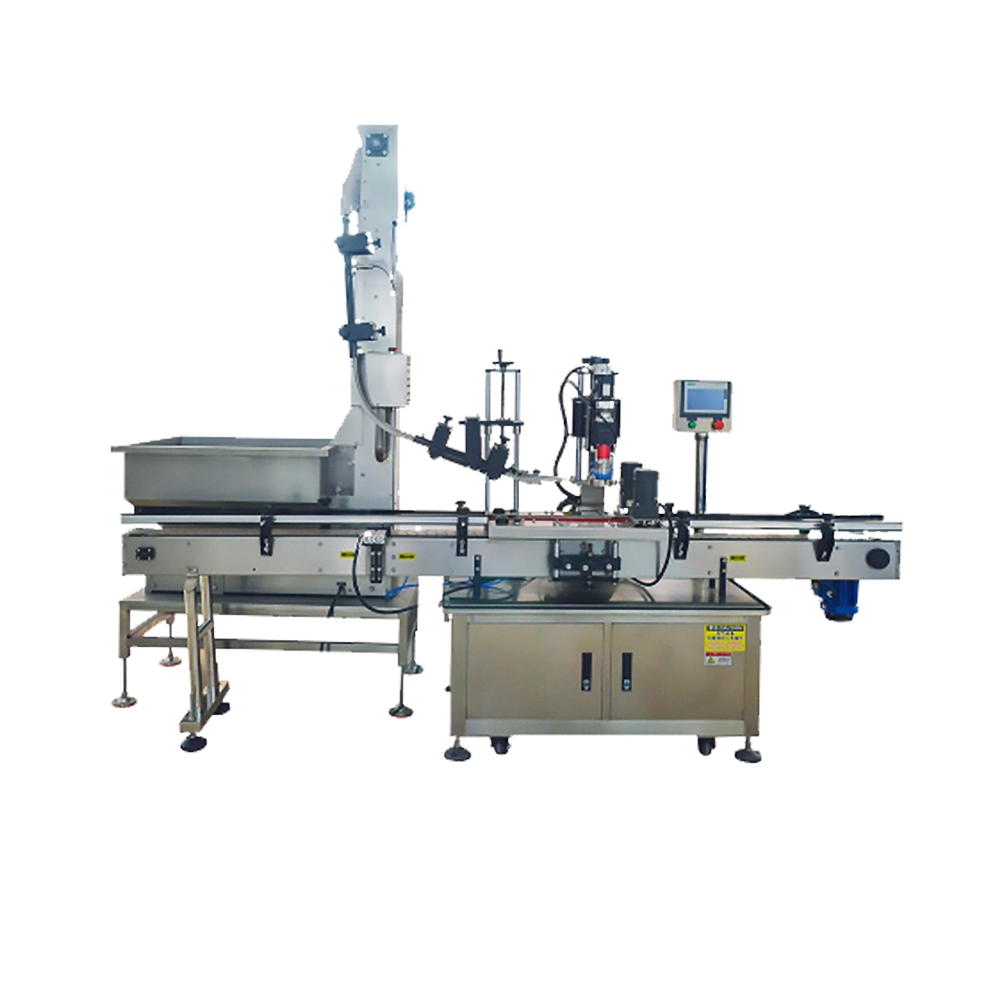
Automatic Metal Caps Capping Machine for Sale
Yuanyang automatic metal cap capping machine is a bottle capper for bottles with metal caps, which is often used to close lids of containers such as bottles and jars. The glass bottle metal capping machine is widely used in food, medicine, chemical, cosmetic, and other industries for mass production and continuous production line .
Features:
⦁ Pneumatic and electric drive;
⦁ Automated fast speed;
⦁ Suitable for glass bottles with metal caps.
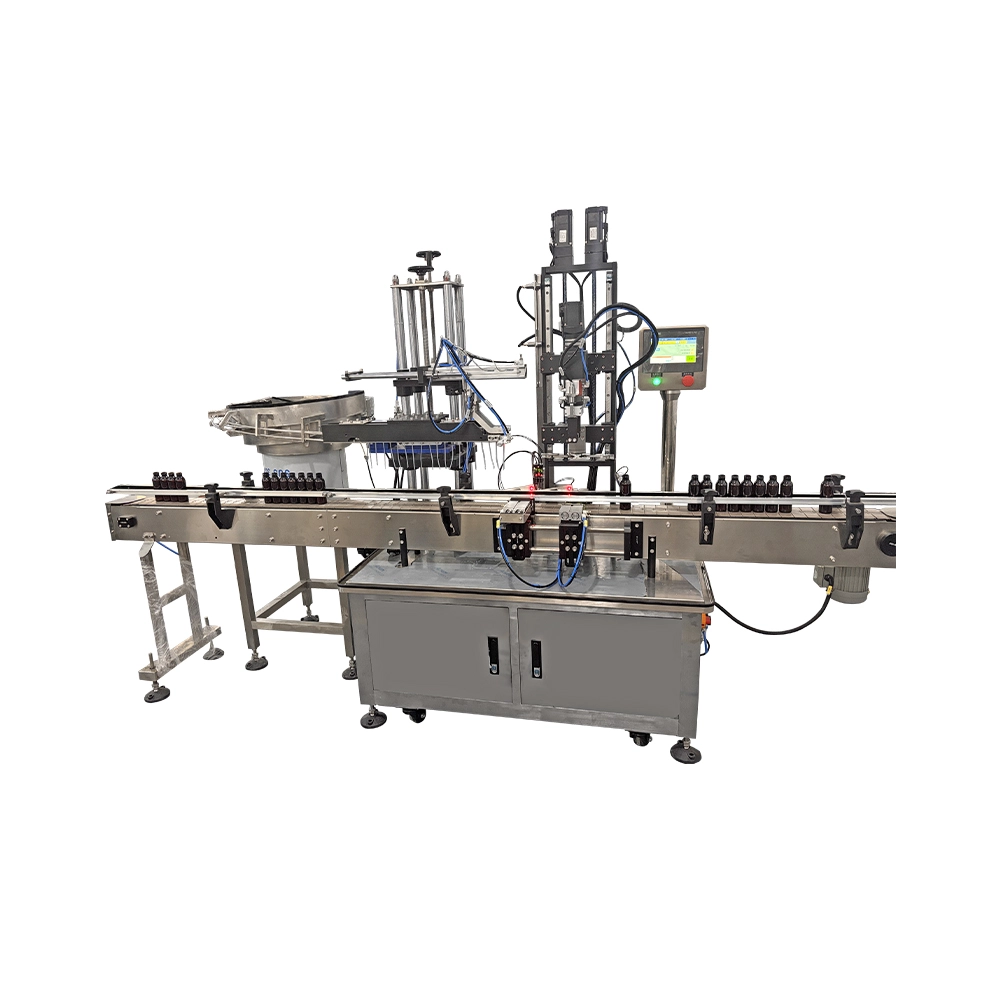
Automatic Pump Head Feeding and Capping Machine for Sale
Yuanyang automatic pump head feeding and capping machine is a bottle cap sorter and capper for bottles with pump heads, which is often used to close lids of containers such as nail polish, sprayers, and shampoo. The capping machine with a pump head feeder is widely used in food, medicine, chemical, cosmetic, and other industries for mass production and continuous production line .
Features:
⦁ Pneumatic and electric drive;
⦁ Automated fast speed;
⦁ Suitable for various types of caps.
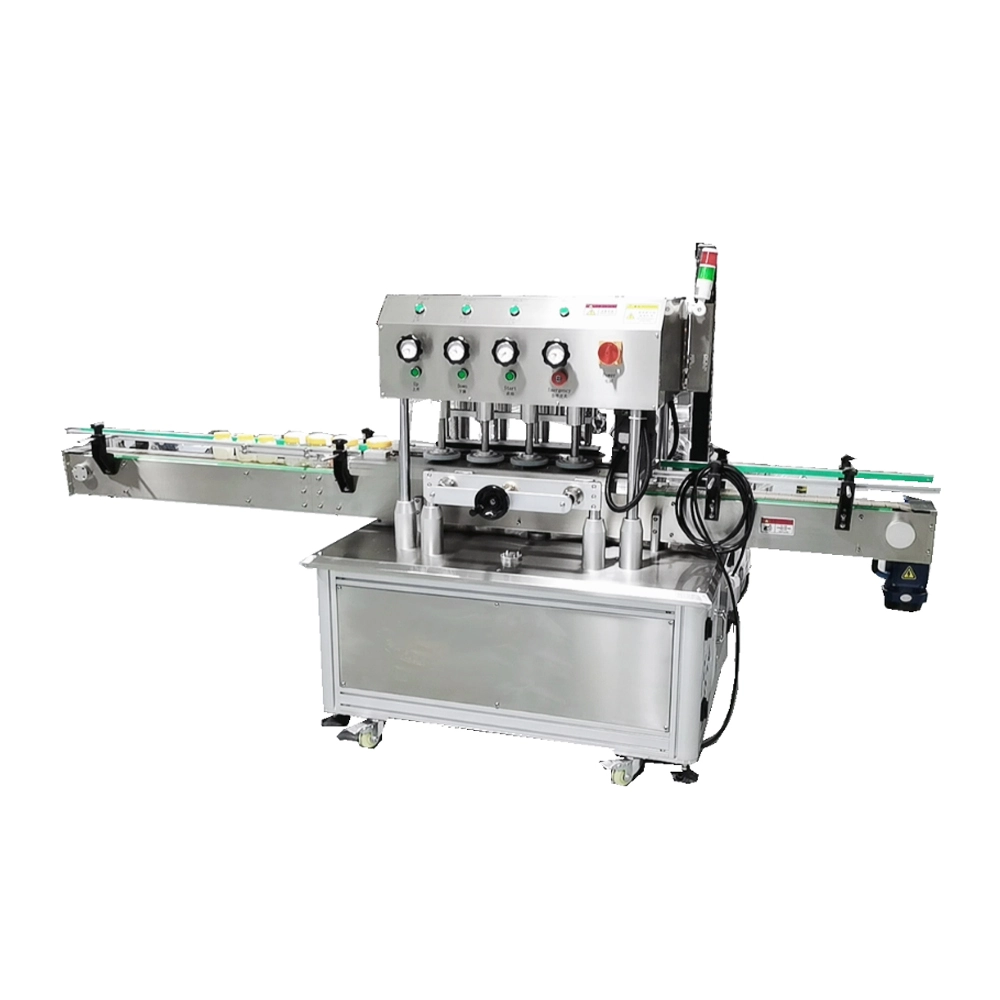
Automatic High Speed Capping Machine for Sale
The Yuanyang automatic high-speed capping machine is a kind of 8-wheel bottle-capping machine with fast working efficiency. The automatic capper is often used to close lids of containers such as bottles and jars, especially for plastic bottles, which are widely used in food, medicine, chemical, cosmetic, and other industries for mass production and continuous production lines.
Features:
⦁ Electric drive;
⦁ Automated fast speed;
⦁ Suitable for various screw caps, pumps, and spray bottles.
 Scan QR Code
Facebook
YouTube
LinkedIn
Whatsapp: +8613434139712
Guangzhou Yuanyang Machinery