





The latest trends for custom vacuum emulsifying mixer | YUANYANG Ultimate Insights
- Introduction: Why custom vacuum emulsifying mixers matter in 2025
- Trend 1 — Increasing demand for tailored equipment and turnkey solutions
- Trend 2 — Advanced homogenization technologies for finer emulsions
- Trend 3 — Integration of automation and Industry 4.0 features
- Trend 4 — Energy efficiency and sustainable design
- Trend 5 — Hygienic and regulatory compliance
- Trend 6 — Faster prototyping and shorter lead times
- Trend 7 — Focus on operator safety and ease of maintenance
- Trend 8 — Multi-function and flexible production lines
- Comparing custom vs. standard vacuum emulsifying mixers
- How to specify the right custom vacuum emulsifying mixer
- Key performance indicators (KPIs) to evaluate suppliers
- Case study snapshot: Typical commercial benefits
- Maintenance and lifecycle services
- Buying tips for procurement teams
- Why choose Yuanyang for a custom vacuum emulsifying mixer?
- Practical checklist before signing a contract
- Conclusion: What buyers should expect next
- References
Introduction: Why custom vacuum emulsifying mixers matter in 2025
Demand for stable, high-quality emulsions across cosmetics, pharmaceuticals, food, and chemical industries is driving growth in custom vacuum emulsifying mixer adoption. Buyers searching for a custom vacuum emulsifying mixer want machines that deliver repeatable particle size, fast batch turnaround, integrated vacuum de-aeration, and turnkey support from a trusted manufacturer.
Trend 1 — Increasing demand for tailored equipment and turnkey solutions
More manufacturers now choose a custom vacuum emulsifying mixer instead of off-the-shelf units. Commercial buyers prioritize customized vessel sizes, heating/cooling jackets, specific homogenizer types, and automation interfaces that integrate with existing lines. Yuanyang’s turnkey services—covering mixing equipment, storage tanks, filling, capping, labeling, sealing, inkjet printing and water treatment—meet this by reducing integration time and risk.
Trend 2 — Advanced homogenization technologies for finer emulsions
High-shear rotor-stator designs, multi-stage homogenizers, and adjustable gap systems are trending because they improve droplet size distribution and product stability. Customers choosing a custom vacuum emulsifying mixer now expect options for high-shear heads, in-line homogenizers, and ultrasonic or rotor-stator hybrids to achieve target textures for creams, ointments, and specialty foods.
Trend 3 — Integration of automation and Industry 4.0 features
Modern buyers look for PLC/HMI control, recipe management, data logging, and remote diagnostics. A custom vacuum emulsifying mixer equipped with SCADA-compatible controls reduces batch variability and supports traceability—key for regulated sectors like pharmaceuticals and personal care.
Trend 4 — Energy efficiency and sustainable design
Energy-conscious designs—improved motor efficiency, variable frequency drives (VFDs), better insulation, and optimized mixing profiles—are becoming standard expectations. A custom vacuum emulsifying mixer that reduces heating/cooling cycles and minimizes waste aligns with corporate sustainability goals and lowers operating costs.
Trend 5 — Hygienic and regulatory compliance
Hygienic design (smooth finishes, drainability, CIP compatibility) and materials compliant with food and pharma standards are non-negotiable for many buyers. Although CE certification is a safety and health mark rather than a quality certificate, many customers prefer CE-marked custom vacuum emulsifying mixer equipment as assurance of compliance with EU safety directives.
Trend 6 — Faster prototyping and shorter lead times
Competitive pressure drives demand for shorter lead times. Manufacturers offering modular designs, local fabrication options, and standardized sub-assemblies can supply a custom vacuum emulsifying mixer faster while keeping customization options. Yuanyang’s experience since 2008 supplying complete production lines helps reduce procurement friction for customers.
Trend 7 — Focus on operator safety and ease of maintenance
Safety interlocks, improved access ports, and modular parts for quick replacement are increasingly requested. A custom vacuum emulsifying mixer designed for straightforward maintenance reduces downtime and lifecycle costs—an important commercial consideration when comparing suppliers.
Trend 8 — Multi-function and flexible production lines
Many processors require flexible lines capable of running multiple products with minimal changeover. A custom vacuum emulsifying mixer that supports quick change of emulsifying heads, adjustable vacuum profiles, and CIP sequences helps manufacturers scale product variety without adding separate dedicated machines.
Comparing custom vs. standard vacuum emulsifying mixers
Below is a practical comparison to help purchasing teams evaluate options when choosing a custom vacuum emulsifying mixer for commercial use.
| Feature | Custom Vacuum Emulsifying Mixer | Standard Vacuum Emulsifying Mixer |
|---|---|---|
| Capacity | Tailored to specific batch sizes (from lab scale to multi-ton) | Fixed ranges; limited scalability |
| Homogenizer Options | Multiple choices (rotor-stator, in-line, multi-stage) | Single default homogenizer type |
| Lead Time | Longer initial design time; can be expedited by modular vendors | Shorter procurement time |
| Integration | Designed to integrate with existing filling and packaging lines | May need adaptation for line integration |
| Price | Higher upfront investment, lower long-term cost via efficiency | Lower initial cost, potential higher adaptation expense |
| Ideal for | Specialty products, regulated industries, scale-up projects | Standard formulations and small CAPEX projects |
How to specify the right custom vacuum emulsifying mixer
To procure the correct machine, define required batch size, target viscosity range, phase addition process, heating/cooling needs, preferred homogenization method, and required automation level. Include sanitary and regulatory requirements (e.g., materials like 316L stainless steel for pharma-grade, surface finish Ra values) to ensure the custom vacuum emulsifying mixer is compliant with your production and quality goals.
Key performance indicators (KPIs) to evaluate suppliers
When comparing offers, evaluate supplier KPIs such as reproducibility of droplet size, batch-to-batch variance, energy consumption per batch, uptime/maintenance intervals, lead time, warranty terms, and after-sales support. Request documented case studies and acceptance test procedures (FAT/SAT) for the delivered custom vacuum emulsifying mixer.
Case study snapshot: Typical commercial benefits
Processors upgrading to a custom vacuum emulsifying mixer commonly report improvements in emulsion stability, reduced cycle times, and lower waste. For example, switching from a standard batch mixer to a custom high-shear vacuum emulsifying mixer can reduce emulsification time by 20–50% depending on formulation and homogenization technology. Actual results depend on formulation complexity and equipment selection.
Maintenance and lifecycle services
Reliable manufacturers provide spare parts, preventive maintenance plans, remote troubleshooting, and on-site commissioning. Yuanyang offers free technical training and one-stop installation support as part of its turnkey services, helping customers shorten ramp-up time for their custom vacuum emulsifying mixer and maintain consistent production quality.
Buying tips for procurement teams
Ask for: 1) detailed technical specifications and 2) FAT/SAT protocols, 3) references from similar projects, 4) warranty and spare parts lead times, and 5) training and installation scope. Consider total cost of ownership (TCO) rather than only purchase price when evaluating a custom vacuum emulsifying mixer—factors like energy use, downtime, and maintenance impact ROI.
Why choose Yuanyang for a custom vacuum emulsifying mixer?
Yuanyang is one of China's leading industrial mixer and agitator manufacturers, producing vacuum homogenizers, vacuum emulsifying mixers, high-shear mixers and other vacuum mixers. Since 2008, Yuanyang has delivered complete production lines and offers free technical training, one-stop installation support and turnkey services. Multiple CE certifications underscore its compliance with EU safety directives, giving commercial buyers confidence in safety and regulatory fit for a custom vacuum emulsifying mixer.
Practical checklist before signing a contract
Ensure the contract includes scope of supply, acceptance criteria, commissioning plan, spare parts list, training schedule, data logging and recipe export formats, and clear warranty/after-sales conditions. For a custom vacuum emulsifying mixer, confirm mechanical drawings, P&ID, electrical diagrams, and FAT procedures before fabrication begins.
Conclusion: What buyers should expect next
The market for custom vacuum emulsifying mixer systems is evolving toward high customization, better energy performance, integrated automation and stronger service offerings. Buying teams should prioritize suppliers that can deliver validated performance, fast integration, and lifecycle support. Manufacturers like Yuanyang that offer turnkey capabilities, CE compliance and hands-on training are well positioned to reduce procurement risk and accelerate time-to-market for new emulsified products.
References
1. Grand View Research – industry reports on mixers and homogenizers (market trends and application growth).
2. MarketsandMarkets – industrial mixing equipment market reports (demand drivers in cosmetics, pharma, food).
3. European Commission – guidance on CE marking and product safety directives.
4. Company data and capabilities: Yuanyang Machinery (corporate history and product lines).
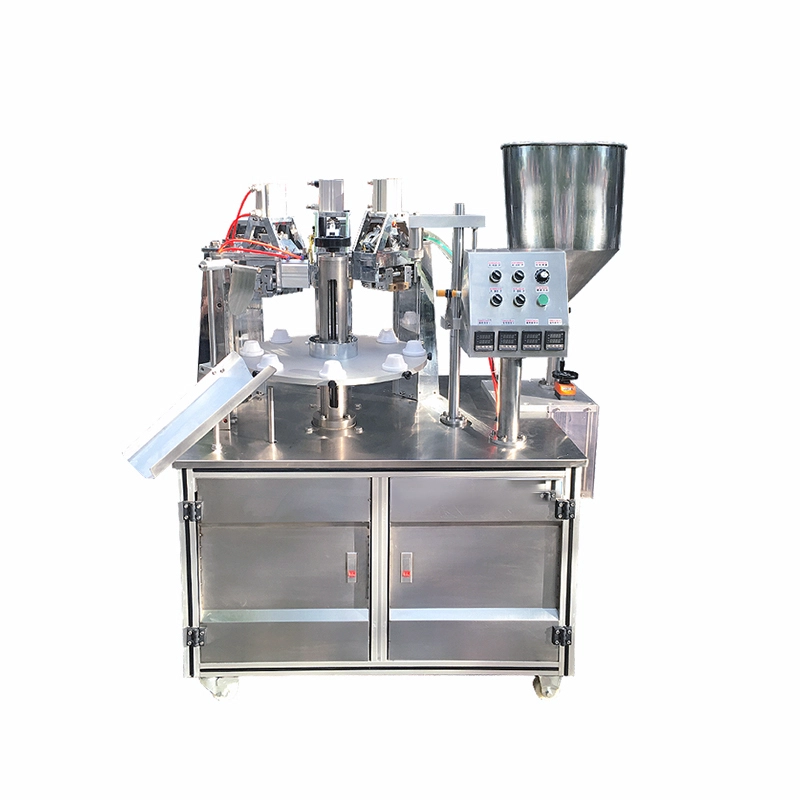
Quality & Compliance: Sealing Machines for Regulated Industries
What are the different types of food powder mixer machine?
The latest trends for pharmaceutical bottle filling machines
Wholesale laser coding machine manufacturer and supplier
Homogneizer mixer tank
Can I use city water to produce liquid detergent?
As you know, water takes 70-99% proportion of raw materials for liquid detergent production. So the quality of water is quite important to produce qualified liquid cleaning products. The raw water should be treated before taking into tank.
Automatic Piston Filling Machine
Can the filling capacity be adjusted on the screen?
Yes, definitely user can slightly adjust the filling capacity according to needs.
Food
What raw materials can the equipment process?
Our equipment can process liquids, powders, solids, pastes, viscous materials, and high-viscosity substances, meeting a wide range of food production needs.
Homogenizer Mixing Tank with Circulation System
Can you add load cell system also for the liquid detergent making machine?
Yes, we add load cell upon requirements. Each mixer with 3 sets of load cell, and signal box, and display panel.
Detergent powder mixer
Do you also provide formula of detergent powder if I purchase the detergent powder mixer machine?
Yes, Yuany offers technical support to help optimize formulas and adjust production processes, ensuring product stability and performance.
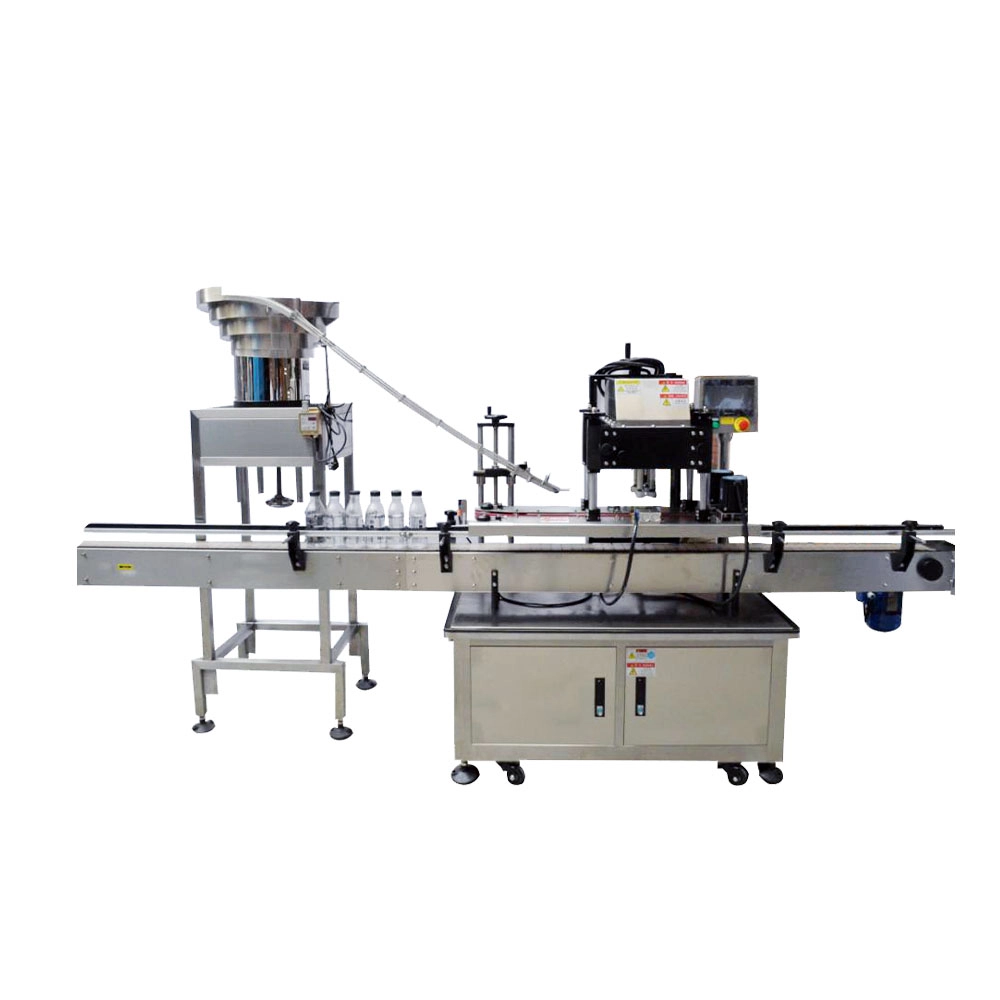
Automatic Plastic Caps Capping Machine with Vibrating Cap Feeder for Sale
Yuanyang automatic screw capping machine is a kind of four-wheel bottle capping machine. The automatic screw capper is often used to close lids of containers such as bottles and jars, especially for plastic bottles, which are widely used in food, medicine, chemical, cosmetic, and other industries for mass production and continuous production lines.
Features:
⦁ Full pneumatic drive;
⦁ Automated fast speed;
⦁ Suitable for various screw caps, pumps, and spray bottles.
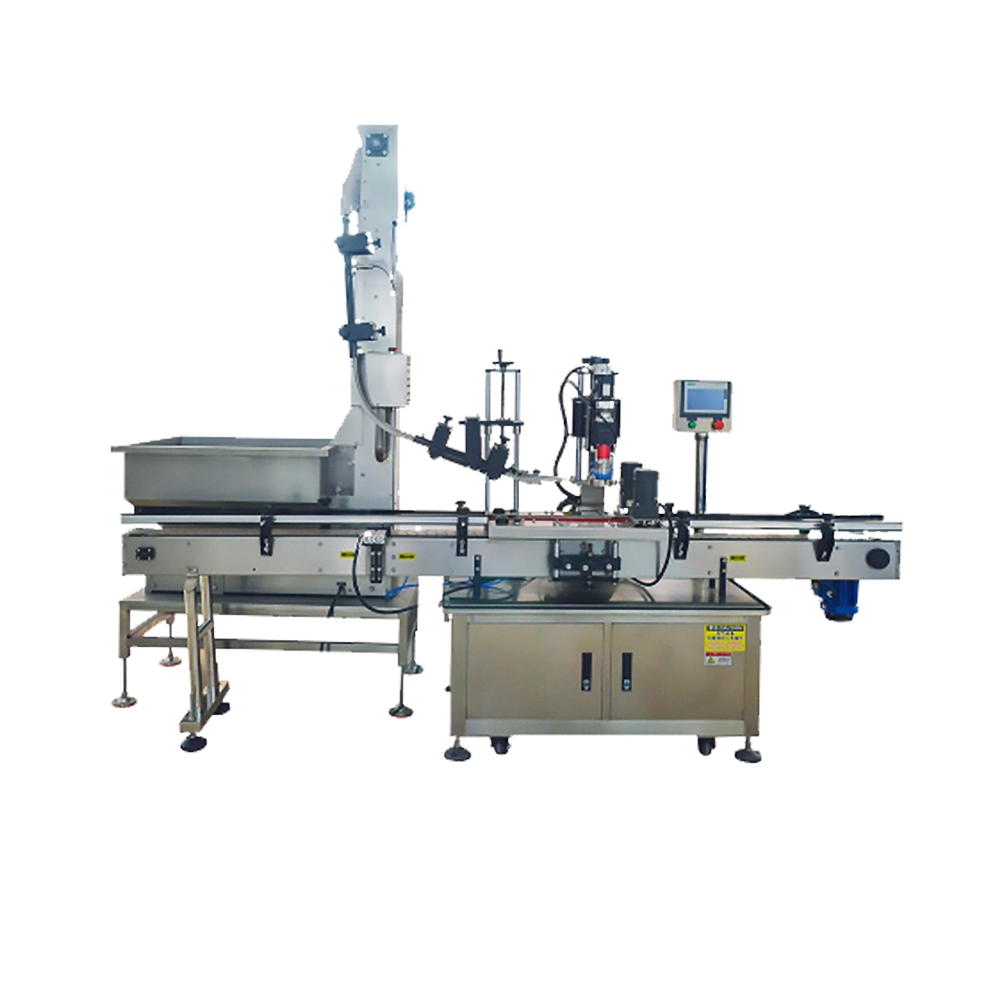
Automatic Metal Caps Capping Machine for Sale
Yuanyang automatic metal cap capping machine is a bottle capper for bottles with metal caps, which is often used to close lids of containers such as bottles and jars. The glass bottle metal capping machine is widely used in food, medicine, chemical, cosmetic, and other industries for mass production and continuous production line .
Features:
⦁ Pneumatic and electric drive;
⦁ Automated fast speed;
⦁ Suitable for glass bottles with metal caps.
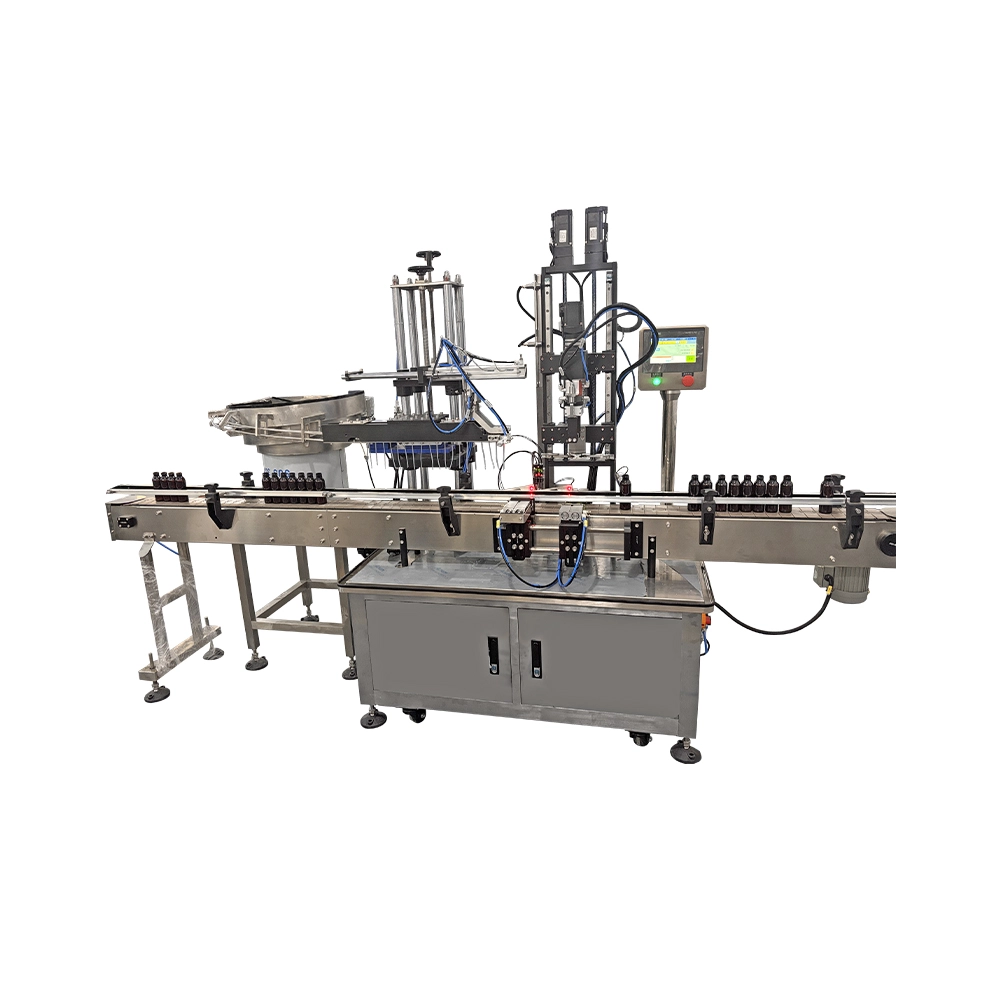
Automatic Pump Head Feeding and Capping Machine for Sale
Yuanyang automatic pump head feeding and capping machine is a bottle cap sorter and capper for bottles with pump heads, which is often used to close lids of containers such as nail polish, sprayers, and shampoo. The capping machine with a pump head feeder is widely used in food, medicine, chemical, cosmetic, and other industries for mass production and continuous production line .
Features:
⦁ Pneumatic and electric drive;
⦁ Automated fast speed;
⦁ Suitable for various types of caps.
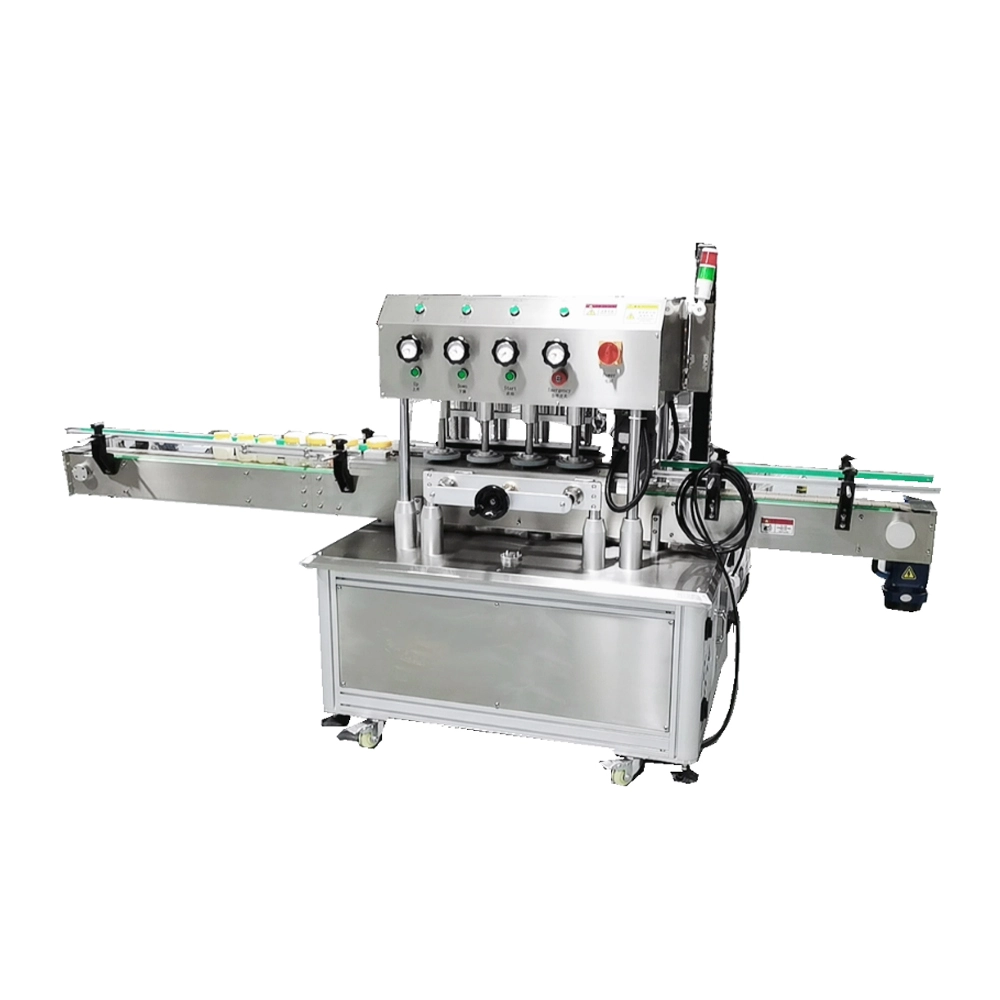
Automatic High Speed Capping Machine for Sale
The Yuanyang automatic high-speed capping machine is a kind of 8-wheel bottle-capping machine with fast working efficiency. The automatic capper is often used to close lids of containers such as bottles and jars, especially for plastic bottles, which are widely used in food, medicine, chemical, cosmetic, and other industries for mass production and continuous production lines.
Features:
⦁ Electric drive;
⦁ Automated fast speed;
⦁ Suitable for various screw caps, pumps, and spray bottles.
 Scan QR Code
Facebook
YouTube
LinkedIn
Whatsapp: +8613434139712
Guangzhou Yuanyang Machinery