





Energy Efficiency Tips for Industrial Mixing Tanks
- Optimizing Thermal Management in Mixing Tanks
- Reduce Heat Loss with Proper Insulation
- Optimize Heating and Cooling Loops
- Use Localized Heating for Viscous Fluids
- Improving Mechanical Efficiency and Mixing Performance
- Match Mixer Type and Size to the Process
- Implement Variable-Speed Drives (VSDs)
- Optimize Impeller Design and Placement
- Operational Strategies and Maintenance for Energy Savings
- Standardize Recipes and Batch Procedures
- Preventive Maintenance to Maintain Efficiency
- Use Monitoring and Predictive Analytics
- Selecting Energy-Efficient Homogenizers and Systems
- Evaluate Homogenizer Efficiency Metrics
- Choose Integrated Designs to Reduce Recirculation Losses
- Consider Modular Systems and Right-Sizing
- Practical Energy-Saving Measures and Case Comparisons
- Simple Operational Changes with Big Impact
- Compare Energy Strategies: Table
- Field Example: Liquid Soap Production Line
- Yuanyang Approach: Product Fit and Brand Advantages
- Semantic Keywords for Mixing Tank Context
- FAQs
- How much energy can I realistically save by upgrading to a modern homogenizing mixer?
- Is a homogenizing mixer better than a standard agitator for viscous liquids?
- What routine maintenance reduces energy waste in mixing tanks?
- How do I choose the right mixing tank for my production scale?
Effective energy management for a mixing tank directly reduces production costs, extends equipment life, and improves overall process sustainability. This guide compiles actionable tips for plant engineers, production managers, and procurement teams to optimize energy use in industrial mixing tanks, homogenizers, and stirred vessels without sacrificing product quality. It is applicable to liquid blending vessels used in detergents, shampoos, sauces, and other viscous products.
Optimizing Thermal Management in Mixing Tanks
Reduce Heat Loss with Proper Insulation
Thermal insulation is one of the simplest and highest-return investments for a process tank or mixing tank. Insulating jackets and removable covers minimize heat loss in heated tanks used for syrup, soap bases, or other temperature-sensitive blends. For a homogenizer-integrated liquid mixing tank, insulation reduces the need for continuous heating and lowers energy consumption during holding and mixing. Consider closed-cell mineral wool or polyurethane foam for high-temperature applications. For more on heat transfer basics, see Heat Transfer.
Optimize Heating and Cooling Loops
Many plants use steam or hot water coils inside the process tank. Converting oversized coils or running pumps continuously wastes energy. Use variable-speed pumps on the thermal loop and install properly sized control valves. Implementing a temperature PID loop that includes setback periods (lower holding temperature when not filling) reduces energy use. Heat recovery between process streams — for example, preheating incoming fluid with outgoing waste heat — can provide substantial savings in large-scale operations.
Use Localized Heating for Viscous Fluids
Viscous materials often require longer heating periods. Rather than increasing whole-tank energy input, use focused heating such as local immersion heaters or external heat exchangers paired with recirculation loops. This reduces the duty on the tank's primary heating system and can speed warm-up times for high-viscosity batches, improving energy efficiency and production throughput.
Improving Mechanical Efficiency and Mixing Performance
Match Mixer Type and Size to the Process
Choosing the correct agitator or homogenizer is essential. An oversized high-shear homogenizer consumes excess power; underpowered equipment delivers poor mixing and longer cycle times. Specify mixing tank equipment based on rheology (viscosity and yield stress), batch size, and required shear. When purchasing a Homogenizing Mixer for Sale, evaluate power-to-volume ratios and expected duty cycles to avoid wasted energy and cost.
Implement Variable-Speed Drives (VSDs)
Using a variable-frequency drive (VFD) or VSD on the agitator motor allows you to reduce speed during low-shear phases (heating, settling) and increase only when necessary. Speed control reduces electrical consumption nonlinearly — halving speed often reduces power draw to less than half. For mixing tank agitators, VSDs also enable softer start/stop sequences that reduce mechanical stress and extend equipment life, lowering maintenance-related energy losses.
Optimize Impeller Design and Placement
Impeller geometry, diameter, and position in the tank affect mixing time and energy consumption. Modern impellers (e.g., pitched blade turbines, hydrofoil designs) improve flow patterns and reduce recirculation losses. For tanks with wall scrapers or PTFE scrapers (common in viscous liquid cleaning product production), coordinate impeller speed with scraper action to avoid redundancy — the homogenizer or impeller should complement, not fight, the scraper.
Operational Strategies and Maintenance for Energy Savings
Standardize Recipes and Batch Procedures
Consistent batch recipes and well-defined mixing procedures reduce trial-and-error runs that waste energy. Document optimal mixing profiles for each product — including ramp-up speed, shear stages, and thermal setpoints — and store these as recipes in the control system. For production lines using a homogenizer integrated within a mixing tank, following the homogenizing sequence precisely reduces over-processing and motor run-time.
Preventive Maintenance to Maintain Efficiency
Mechanical wear, bearing friction, and misalignment increase power draw over time. Regular lubrication, shaft alignment checks, and timely replacement of seals and bearings keep the agitator operating near original efficiency. For high-shear homogenizers, maintain rotor-stator tolerances; worn tolerances force higher power draw for the same level of dispersion.
Use Monitoring and Predictive Analytics
Install power and temperature monitoring on critical mixing tank lines. Collecting and analyzing trending data helps detect gradual efficiency degradation. Modern industrial control systems can flag anomalies — for example, a 10% rise in motor current at a constant mixing profile — prompting inspection before major failures. Integrating energy meters with SCADA or a manufacturing execution system (MES) enables continuous improvement and measurable energy savings.
Selecting Energy-Efficient Homogenizers and Systems
Evaluate Homogenizer Efficiency Metrics
When comparing homogenizers for a liquid mixing tank, look beyond peak horsepower. Consider specific energy (kWh per ton processed), mixing time, and product quality at each energy level. A well-matched homogenizer can achieve the required particle size or emulsification with lower specific energy. The homogenizer technology page explains common designs and trade-offs.
Choose Integrated Designs to Reduce Recirculation Losses
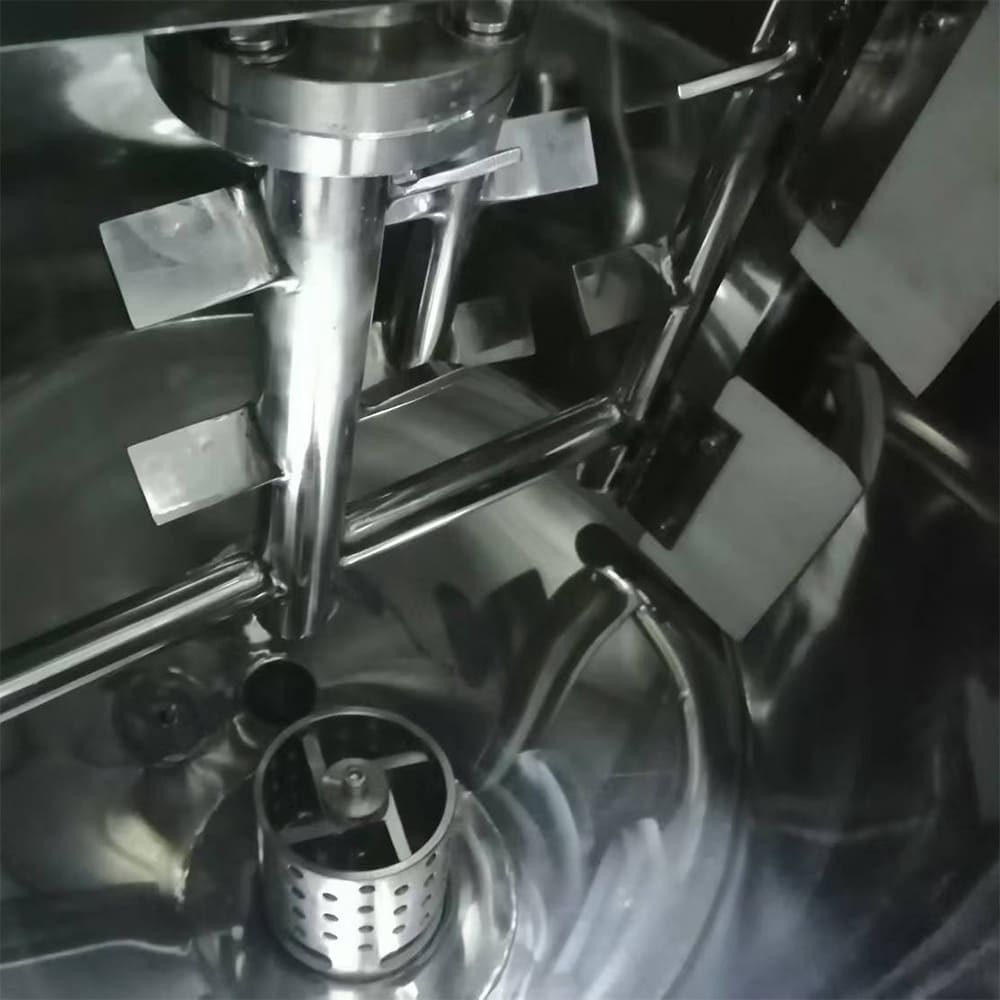
An integrated Homogenizing Mixer for Sale that places a high-shear homogenizer at the bottom of the mixing tank and PTFE wall scrapers at the top (as in Yuanyang's design) reduces internal recirculation losses and improves heat transfer uniformity. This configuration minimizes the need for external recirculation pumps and additional transfer energy, reducing the total electrical footprint for the production line.
Consider Modular Systems and Right-Sizing
Modular mixing systems allow you to scale capacity with demand. Right-sizing reduces idle energy. If your process frequently runs smaller batches, a modular array of smaller mixers or a single mixer with variable batch programming is more efficient than one large mixing tank running far below capacity.
Practical Energy-Saving Measures and Case Comparisons
Simple Operational Changes with Big Impact
Small changes like eliminating unnecessary pre-mix recirculation, combining heating and mixing phases intelligently, and using gentle ramp rates can yield measurable energy savings. Training operators to follow optimized SOPs and logging energy use per batch help institutionalize these gains.
Compare Energy Strategies: Table
| Strategy | Typical Savings | Implementation Complexity |
|---|---|---|
| Insulation & covers | 5–15% thermal energy | Low |
| Variable-speed drives | 10–40% electrical on motors | Medium |
| Optimized impeller & homogenizer | 10–30% process time/power | Medium–High |
| Heat recovery and loop optimization | 15–50% thermal system | High |
Field Example: Liquid Soap Production Line
In a typical liquid soap or detergent line, the combination of a well-sized homogenizer, PTFE wall scrapers, and a closed-top mixing tank reduced batch cycle time by 20% and energy per batch by ~18% compared to an older open-top stirred tank with external recirculation. The integrated homogenizer at tank bottom avoided extra pump energy for recirculation and improved homogenization uniformity, reducing rework.
Yuanyang Approach: Product Fit and Brand Advantages
The Homogenizing Mixer for Sale from Yuanyang combines a high-shear homogenizer at the bottom with PTFE wall scrapers stirring at the top and a flat top half-open lid with electric control system. This architecture is ideal for viscous and shear-sensitive products such as shampoo, body wash, laundry detergent, dish soap, and hand sanitizer. Benefits include reduced external recirculation, improved thermal uniformity, and minimized mechanical losses — all contributing to lower energy consumption per batch.
- Energy-conscious design: integrated homogenizer and scrapers reduce pump and mixing redundancy.
- Operational flexibility: flat half-open lid and electric control simplify maintenance and recipe control.
- Material compatibility: PTFE scrapers and robust homogenizer construction suit a wide range of cleaning products and sauces.
For a technical product introduction:
Yuanyang homogenizing mixer is a liquid mixing tank with a high-shear homogenizer. The homogeneous mixing machine is the core part for the liquid soap production line for shampoo, body wash, laundry detergent, dish soap, hand sanitizer, and other thick liquids.
Features:
⦁ Flat top half-open lid, electric control system.
⦁ Suitable for various liquid cleaning products and sauces.
⦁ PTFE wall scrapers stirring at top, high shear homogenizer at bottom.
Semantic Keywords for Mixing Tank Context
Common semantic keywords to use when researching or optimizing an industrial mixing tank include: agitator tank, stirred tank, high-shear mixer, homogenizer, liquid blending vessel, process tank, production vessel, industrial tank, mixing vessel, and homogenizing mixer. These terms help AI indexing and relevancy matching for equipment procurement and process optimization content.
FAQs
How much energy can I realistically save by upgrading to a modern homogenizing mixer?
Typical projects combining insulation, VSDs, and a purpose-built homogenizing mixer can save 15–35% of total process energy depending on baseline inefficiencies and production profile. Savings are higher where external recirculation pumps, oversized motors, or poor thermal control are present.
Is a homogenizing mixer better than a standard agitator for viscous liquids?
For many viscous and emulsified liquids (soaps, detergents, sauces), a high-shear homogenizer improves dispersion and reduces mixing time compared to a standard agitator alone. Combining a homogenizer with PTFE wall scrapers and a properly designed impeller often yields the best balance of quality and energy efficiency.
What routine maintenance reduces energy waste in mixing tanks?
Key maintenance items: check shaft alignment and bearings, replace worn seals, maintain rotor-stator clearances for homogenizers, clean heat exchange surfaces, and verify insulation integrity. Regular motor current monitoring helps identify rising friction or mechanical load.
How do I choose the right mixing tank for my production scale?
Consider batch size distribution (small vs. large), product rheology, required shear, heating/cooling needs, and available floor space. Right-sizing and modular options reduce idle energy. Work with vendors to model specific energy (kWh/ton) for candidate units.
Energy savings must not compromise hygiene, making sanitary design and CIP solutions for homogenizing mixers a core requirement.Contact our sales team to discuss energy-optimized mixing solutions or to request a quote on a Homogenizing Mixer for Sale. For product details and inquiries, contact us or view the product page to evaluate the best mixing tank for your process.
Authoritative references and further reading:
- Homogenizer — Wikipedia
- Mixing (process engineering) — Wikipedia
- Energy Efficiency — Wikipedia
- International Energy Agency (IEA)
Contact us: For personalized recommendations and to view the Homogenizing Mixer for Sale, please reach out to our sales department or visit our product catalog.
What are the different types of liquid mixing tank company?
What are the application scenarios of lab vacuum emulsifying mixer?
How to Choose Vacuum Emulsifying Mixers 2026
Custom automatic shrink sleeve labeling machine Manufacturers and Suppliers in UK
FAQs
Can your equipment produce multiple types of products?
Our equipment is flexible and suitable for producing a wide range of products. You can use the same equipment to produce various products such as creams, lotions, liquid soaps, shampoos, etc., while maintaining high efficiency during product switching.
Liquid Soap Mixer Machine
Do you also provide liquid soap formula and technical training for a new user?
Yes, Yuany is experienced in liquid soap production for many years. We can provide professional training and teach face to face for clients. Don’t hesitate to contact us.
How can you guarantee the bottom homogenizer will not leak liquids?
The bottom homogenizer adopts German mechanical sealing, As long as clients operate correctly, follow the instructions, this leakage is hardly to happen for over tens years or longer. But once the leakage accrues, just contact us to get a mechanical sealing to replace it.
Machine seal, as an indispensable sealing element in mechanical equipment, its core function is reflected in many aspects. First of all, it effectively prevents the leakage of liquid, gas or solid particles inside the machine through a tight sealing effect, as well as the intrusion of external impurities, so as to ensure that the internal environment of the machine is dry and clean.
This function is essential for extending the service life of machine equipment. Secondly, when the machine is sealed at high speed, it can prevent the condensation of water vapor caused by the heat generated by friction and play an anti-fog role. At the same time, it can effectively isolate the dust, particles and impurities generated during the work process to protect the equipment from damage.
In addition, the seal can also play an excellent waterproof role in wet environments, ensuring that the inside of the equipment is not affected by water erosion. In summary, the seal not only protects the normal operation of the mechanical equipment, but also provides a strong guarantee for the production and family life of all walks of life through its excellent sealing performance.
Is the speed adjustable with VFD?
The chemical mixer tank is often with frequency converter. But some clients may just need a fixed speed. So we customize upon requirements.
Water Cooling Induction Sealer
What type of film can the bottle sealer machine work for?
The sealing machine is mainly used for heating and sealing polyolefin (such as polyethylene, polypropylene, etc.) as the inner layer of composite film material sealing.
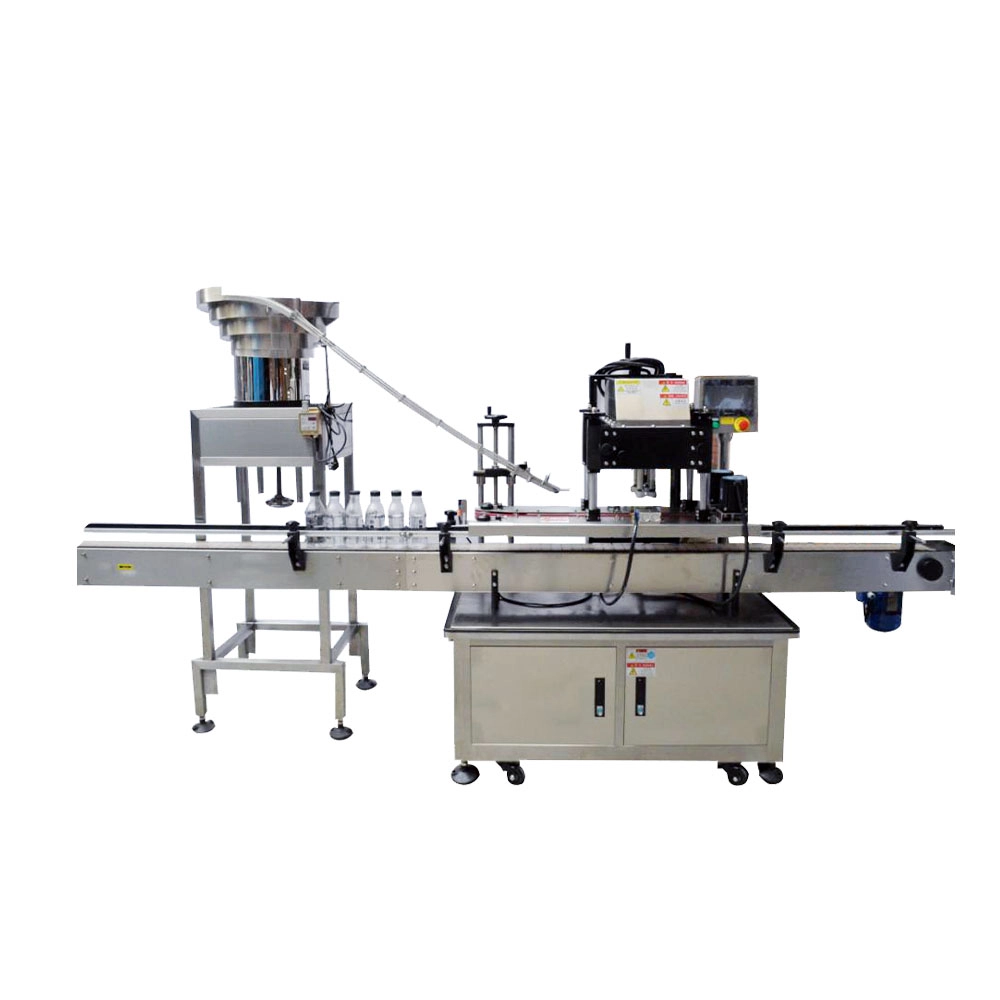
Automatic Plastic Caps Capping Machine with Vibrating Cap Feeder for Sale
Yuanyang automatic screw capping machine is a kind of four-wheel bottle capping machine. The automatic screw capper is often used to close lids of containers such as bottles and jars, especially for plastic bottles, which are widely used in food, medicine, chemical, cosmetic, and other industries for mass production and continuous production lines.
Features:
⦁ Full pneumatic drive;
⦁ Automated fast speed;
⦁ Suitable for various screw caps, pumps, and spray bottles.
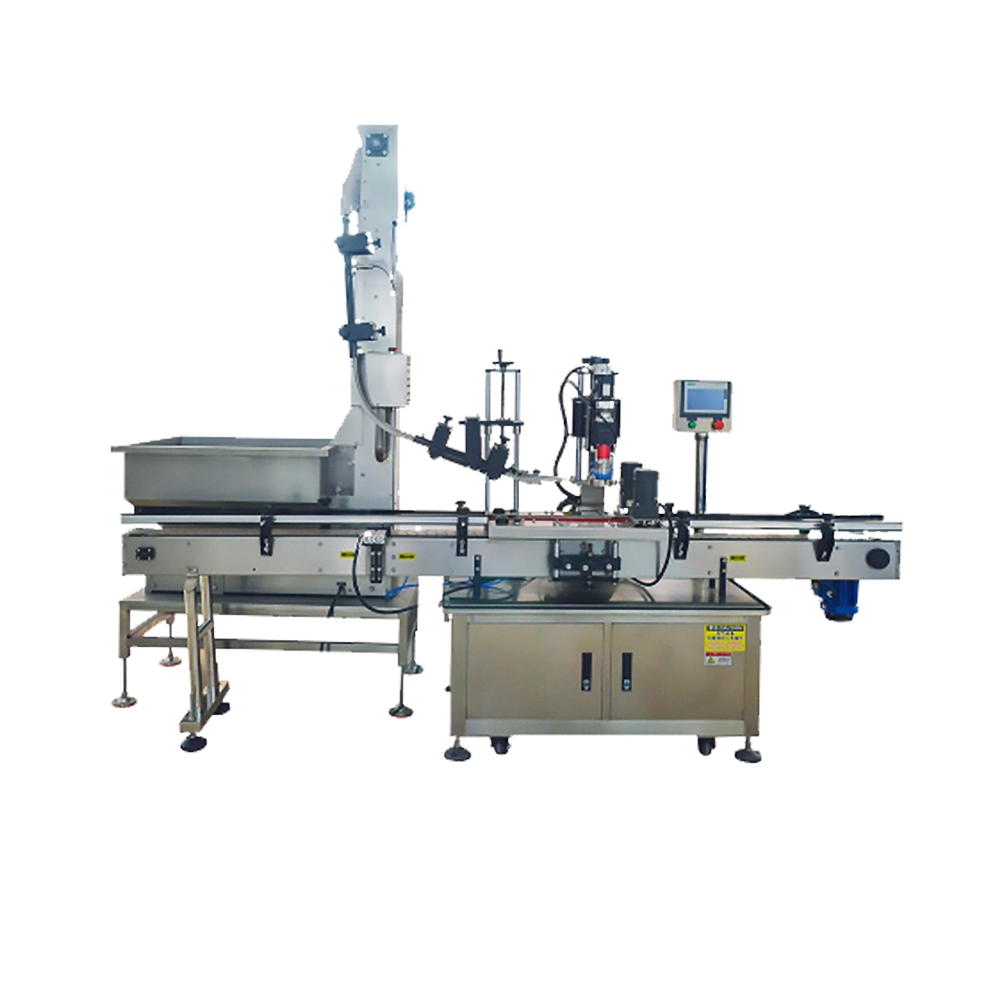
Automatic Metal Caps Capping Machine for Sale
Yuanyang automatic metal cap capping machine is a bottle capper for bottles with metal caps, which is often used to close lids of containers such as bottles and jars. The glass bottle metal capping machine is widely used in food, medicine, chemical, cosmetic, and other industries for mass production and continuous production line .
Features:
⦁ Pneumatic and electric drive;
⦁ Automated fast speed;
⦁ Suitable for glass bottles with metal caps.
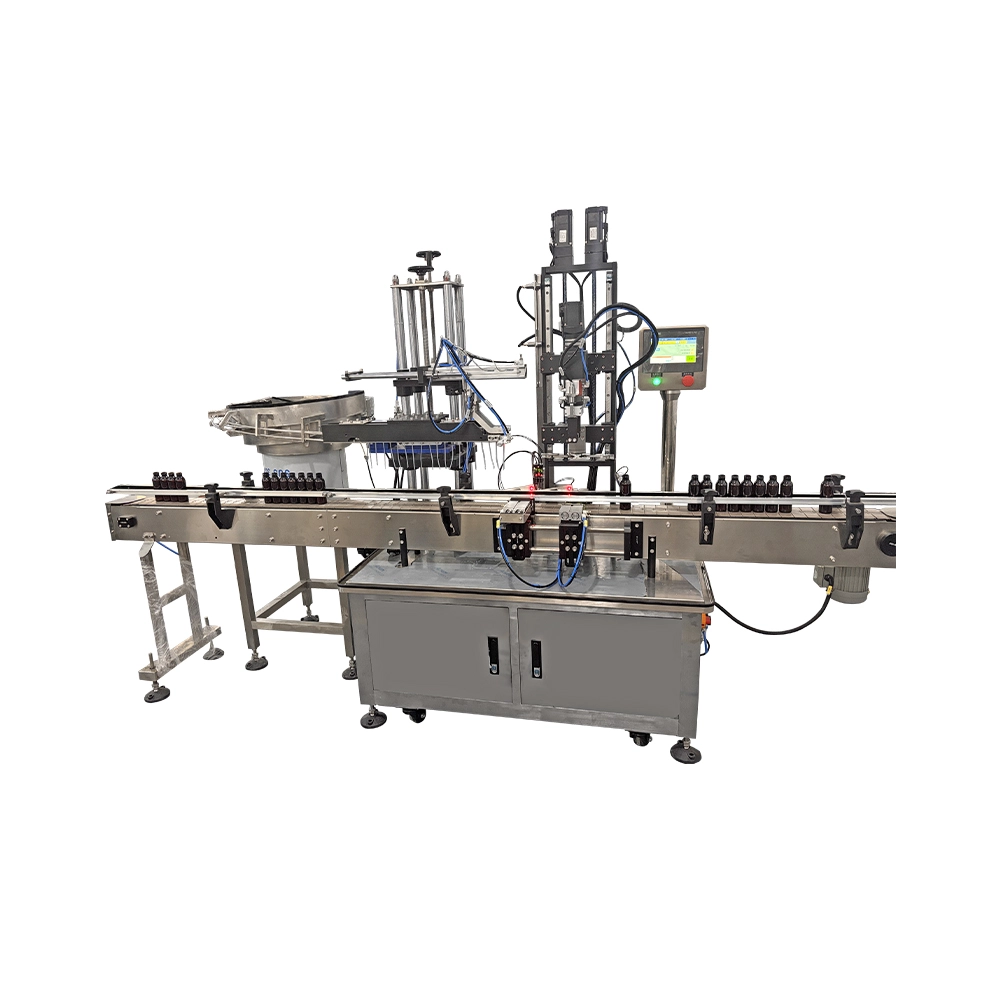
Automatic Pump Head Feeding and Capping Machine for Sale
Yuanyang automatic pump head feeding and capping machine is a bottle cap sorter and capper for bottles with pump heads, which is often used to close lids of containers such as nail polish, sprayers, and shampoo. The capping machine with a pump head feeder is widely used in food, medicine, chemical, cosmetic, and other industries for mass production and continuous production line .
Features:
⦁ Pneumatic and electric drive;
⦁ Automated fast speed;
⦁ Suitable for various types of caps.
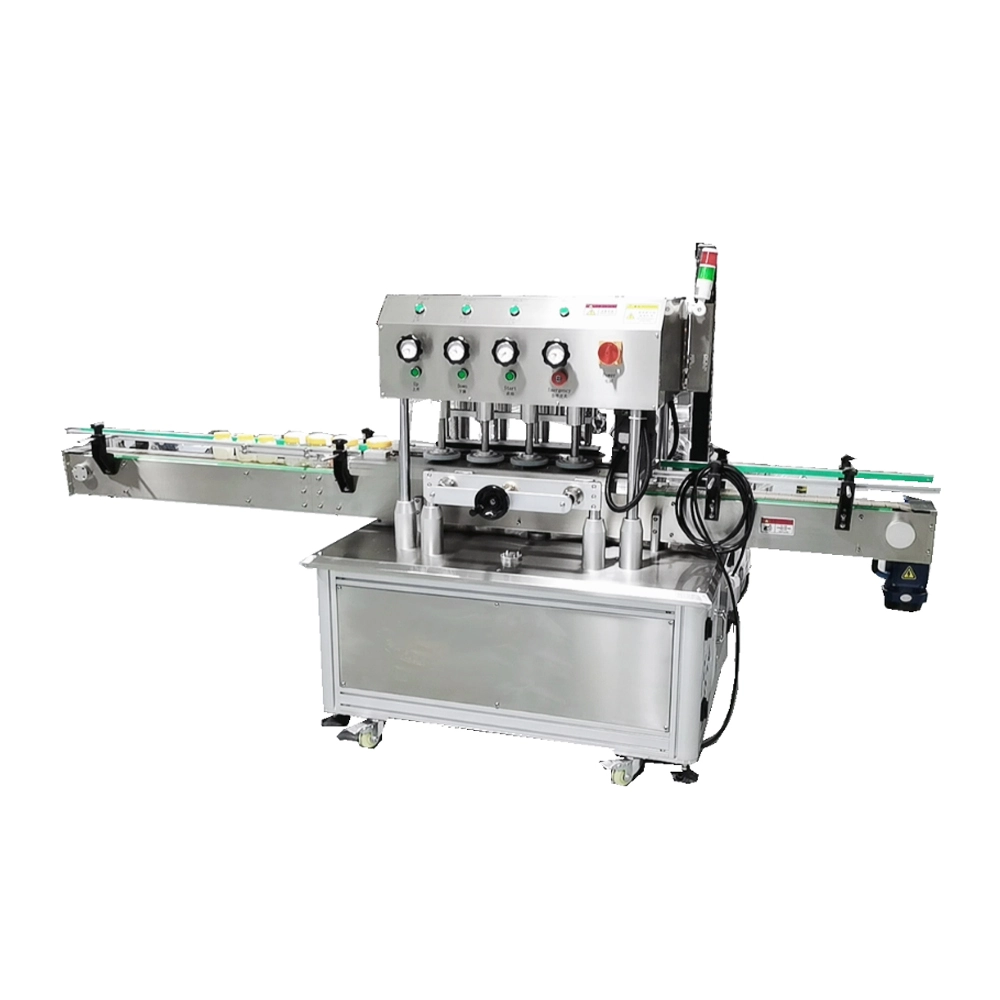
Automatic High Speed Capping Machine for Sale
The Yuanyang automatic high-speed capping machine is a kind of 8-wheel bottle-capping machine with fast working efficiency. The automatic capper is often used to close lids of containers such as bottles and jars, especially for plastic bottles, which are widely used in food, medicine, chemical, cosmetic, and other industries for mass production and continuous production lines.
Features:
⦁ Electric drive;
⦁ Automated fast speed;
⦁ Suitable for various screw caps, pumps, and spray bottles.
 Scan QR Code
Facebook
YouTube
LinkedIn
Whatsapp: +8613434139712
Guangzhou Yuanyang Machinery